You help make Hymnary.org possible. More than 10 million people from 200+ countries found hymns, liturgical resources and encouragement on Hymnary.org in 2025, including you. Every visit affirms the global impact of this ministry.

If Hymnary has been meaningful to you this year, would you take a moment today to help sustain it? A gift of any size—paired with a note of encouragement if you wish—directly supports the server costs, research work and curation that keep this resource freely available to the world.

Give securely online today, or mail a check to:
Hymnary.org
Calvin University
3201 Burton Street SE
Grand Rapids, MI 49546

Thank you for your partnership, and may the hope of Advent fill your heart.

Search Results

Meter:6.6.5.6.6.5.3.4.8.6

Planning worship? Check out our sister site, ZeteoSearch.org, for 20+ additional resources related to your search.

Texts

text icon
Text authorities
TextPage scansFlexScoreFlexPresent

Jesus, Priceless Treasure

Author: J. Franck, 1618-77; C. Winkworth, 1827-78 Meter: 6.6.5.6.6.5.3.4.8.6 Appears in 140 hymnals Lyrics: 1 Jesus, priceless Treasure, Fount of purest pleasure, Truest Friend to me. Ah, how long in anguish Shall my spirit languish, Yearning, Lord, for Thee? Thou art mine, O Lamb divine! I will suffer naught to hide Thee, Naught I ask beside Thee. 2 In Thine arms I rest me; Foes who would molest me Cannot reach me here. Though the earth be shaking, Ev'ry heart be quaking, Jesus calms my fear. Lightnings flash And thunders crash; Yet, though sin and hell assail me, Jesus will not fail me. 3 Satan, I defy thee; Death, I now decry thee; Fear, I bid thee cease. World, thou shalt not harm me Nor thy threats alarm me While I sing of peace. God's great pow'r Guards ev'ry hour; Earth and all its depths adore Him, Silent bow before Him. 4 Hence, all earthly treasure! Jesus is my Pleasure, Jesus is my Choice. Hence, all empty glory! Naught to me thy story Told with tempting voice. Pain or loss, Or shame or cross, Shall not from my Savior move me Since He deigns to love me. 5 Evil world, I leave thee; Thou canst not deceive me, Thine appeal is vain. Sin that once did blind me, Get thee far behind me, Come not forth again. Past thy hour, O pride and pow'r; Sinful life, thy bonds I sever, Leave thee now forever. 6 Hence, all fear and sadness! For the Lord of gladness, Jesus, enters in. Those who love the Father, Though the storms may gather, Still have peace within. Yea, whate'er I here must bear, Thou art still my purest Pleasure, Jesus, priceless Treasure! Topics: Jesus, Bread of Life; Lent 4 Scripture: Philippians 3:8-11 Used With Tune: JESU, MEINE FREUDE Text Sources: Tr. composite
Text

Christians, who with sorrow

Author: Hans Adolf Brorson, 1694-1764; J. C. Aaberg Meter: 6.6.5.6.6.5.3.4.8.6 Appears in 3 hymnals Lyrics: Christians, who with sorrow On this Easter morrow Watch the Savior’s tomb, Banish all your sadness, On this day of gladness Joy must vanquish gloom. Christ this hour With mighty power Crushed the foe who would detain Him; Nothing could restrain Him. Rise, ye feeble-hearted, Who have pined and smarted, Vexed by sin and dread. He has burst the prison And with might arisen, Jesus, Who was dead. And His bride For whom He died, He from sin and death now raises; Hail Him then with praises. When our sins aggrieve us, Jesus will receive us, All our debt He paid. We, who were transgressors Are now blest possessors Of His grace and aid. When in death He gave His breath To the cruel foe He yielded That we should be shielded. Earth! where are thy wonders! Hell! where are thy thunders! Death, where is thy sting! Jesus rose victorious, Reigns in heaven glorious As our Lord and King. Him, the Lord, Who did accord Us so great a joy and favor, We will praise forever.

Tunes

tune icon
Tune authorities
Page scansFlexScoreAudio

JESU, MEINE FREUDE

Meter: 6.6.5.6.6.5.3.4.8.6 Appears in 119 hymnals Composer and/or Arranger: J. Crüger, 1598-1662 Tune Key: c minor Incipit: 55432 11556 7171 Used With Text: Jesus, Priceless Treasure
Page scansFlexScoreAudio

LINDEMAN

Meter: 6.6.5.6.6.5.3.4.8.6 Appears in 28 hymnals Composer and/or Arranger: Ludvig M. Lindeman, 1812-1887 Tune Key: F Major Incipit: 32156 55431 32355 Used With Text: Jesus, priceless treasure

Instances

instance icon
Published text-tune combinations (hymns) from specific hymnals
TextPage scan

Jesus, Priceless Treasure

Author: J. Franck, 1618-77; C. Winkworth, 1827-78 Hymnal: Evangelical Lutheran Hymnary #263 (1996) Meter: 6.6.5.6.6.5.3.4.8.6 Lyrics: 1 Jesus, priceless Treasure, Fount of purest pleasure, Truest Friend to me. Ah, how long in anguish Shall my spirit languish, Yearning, Lord, for Thee? Thou art mine, O Lamb divine! I will suffer naught to hide Thee, Naught I ask beside Thee. 2 In Thine arms I rest me; Foes who would molest me Cannot reach me here. Though the earth be shaking, Ev'ry heart be quaking, Jesus calms my fear. Lightnings flash And thunders crash; Yet, though sin and hell assail me, Jesus will not fail me. 3 Satan, I defy thee; Death, I now decry thee; Fear, I bid thee cease. World, thou shalt not harm me Nor thy threats alarm me While I sing of peace. God's great pow'r Guards ev'ry hour; Earth and all its depths adore Him, Silent bow before Him. 4 Hence, all earthly treasure! Jesus is my Pleasure, Jesus is my Choice. Hence, all empty glory! Naught to me thy story Told with tempting voice. Pain or loss, Or shame or cross, Shall not from my Savior move me Since He deigns to love me. 5 Evil world, I leave thee; Thou canst not deceive me, Thine appeal is vain. Sin that once did blind me, Get thee far behind me, Come not forth again. Past thy hour, O pride and pow'r; Sinful life, thy bonds I sever, Leave thee now forever. 6 Hence, all fear and sadness! For the Lord of gladness, Jesus, enters in. Those who love the Father, Though the storms may gather, Still have peace within. Yea, whate'er I here must bear, Thou art still my purest Pleasure, Jesus, priceless Treasure! Topics: Jesus, Bread of Life; Lent 4 Scripture: Philippians 3:8-11 Languages: English Tune Title: JESU, MEINE FREUDE
TextPage scan

Jesus, Priceless Treasure

Author: Johann Franck Hymnal: The Lutheran Hymnal #347 (1941) Meter: 6.6.5.6.6.5.3.4.8.6 Lyrics: 1 Jesus, priceless Treasure, Fount of purest pleasure, Truest Friend to me. Ah, how long in anguish Shall my spirit languish, Yearning, Lord, for Thee? Thou art mine, O Lamb divine! I will suffer naught to hide Thee, Naught I ask beside Thee. 2 In Thine arms I rest me; Foes who would molest me Cannot reach me here. Tho' the earth be shaking, Ev'ry heart be quaking, Jesus calms my fear. Lightnings flash And thunders crash; Yet, tho' sin and hell assail me, Jesus will not fail me. 3 Satan, I defy thee; Death, I now decry thee; Fear, I bid thee cease. World, thou shalt not harm me Nor thy threats alarm me While I sing of peace. God's great pow'r Guards ev'ry hour; Earth and all its depths adore Him, Silent bow before Him. 4 Hence, all earthly treasure! Jesus is my Pleasure, Jesus is my Choice. Hence, all empty glory! Naught to me thy story Told with tempting voice. Pain or loss, Or shame or cross, Shall not from my Savior move me Since He deigns to love me. 5 Evil world, I leave thee; Thou canst not deceive me, Thine appeal is vain. Sin that once did blind me, Get thee far behind me, Come not forth again. Past thy hour, O pride and power; Sinful life, thy bonds I sever, Leave thee now forever. 6 Hence, all fear and sadness! For the Lord of gladness, Jesus, enters in. Those who love the Father, Though the storms may gather, Still have peace within. Yea, whate'er I here must bear, Thou art still my purest Pleasure, Jesus, priceless Treasure! Amen. Topics: The Redeemer Scripture: Matthew 13:46 Languages: English Tune Title: JESU, MEINE FREUDE
TextPage scan

Jesus, Priceless Treasure

Author: J. Franck, 1618-77; C. Winkworth, 1827-78 Hymnal: Evangelical Lutheran Hymnary #264 (1996) Meter: 6.6.5.6.6.5.3.4.8.6 Lyrics: 1 Jesus, priceless Treasure, Source of purest pleasure, Truest friend to me. Ah, how long I've panted And my heart hath fainted, Thirsting, Lord, for Thee. Thine I am, O spotless Lamb! I will suffer naught to hide Thee, Naught I ask beside Thee. 2 In Thine arms I rest me; Foes who would molest me Cannot reach me here. Though the earth be shaking, Ev'ry heart be quaking, Jesus calms my fear. Fires may flash And thunder crash; Yea, and sin and hell assail me, Jesus will not fail me. 3 Hence, with earthly treasure! Thou art all my Pleasure, Jesus, all my Choice. Hence, thou empty glory! Naught to me thy story Told with tempting voice. Pain or loss, Or shame or cross Shall not from my Savior move me Since He deigns to love me. 4 Fare thee well that errest, Thou that earth preferrest, Thou wilt tempt in vain. Fare thee well, transgression, Hence, abhorred possession, Come not forth again. Past your hour, O pride and pow'r, Worldly life, thy bonds I sever, Fare thee well forever! 5 Hence, all fear and sadness! For the Lord of gladness, Jesus, enters in. Those who love the Father, Though the storms may gather, Still have peace within. Yea, whate'er I here must bear, Thou art still my purest Pleasure, Jesus, priceless Treasure. Topics: Jesus, Bread of Life; Lent 4 Languages: English Tune Title: GUD SKAL ALTING MAGE

People

person icon
Authors, composers, editors, etc.

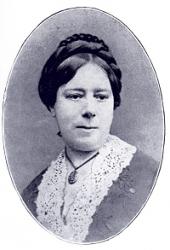
Catherine Winkworth

1827 - 1878 Person Name: C. Winkworth, 1827-78 Meter: 6.6.5.6.6.5.3.4.8.6 Translator of "Jesus, Priceless Treasure" in Evangelical Lutheran Hymnary Catherine Winkworth (b. Holborn, London, England, 1827; d. Monnetier, Savoy, France, 1878) is well known for her English translations of German hymns; her translations were polished and yet remained close to the original. Educated initially by her mother, she lived with relatives in Dresden, Germany, in 1845, where she acquired her knowledge of German and interest in German hymnody. After residing near Manchester until 1862, she moved to Clifton, near Bristol. A pioneer in promoting women's rights, Winkworth put much of her energy into the encouragement of higher education for women. She translated a large number of German hymn texts from hymnals owned by a friend, Baron Bunsen. Though often altered, these translations continue to be used in many modern hymnals. Her work was published in two series of Lyra Germanica (1855, 1858) and in The Chorale Book for England (1863), which included the appropriate German tune with each text as provided by Sterndale Bennett and Otto Goldschmidt. Winkworth also translated biographies of German Christians who promoted ministries to the poor and sick and compiled a handbook of biographies of German hymn authors, Christian Singers of Germany (1869). Bert Polman ======================== Winkworth, Catherine, daughter of Henry Winkworth, of Alderley Edge, Cheshire, was born in London, Sep. 13, 1829. Most of her early life was spent in the neighbourhood of Manchester. Subsequently she removed with the family to Clifton, near Bristol. She died suddenly of heart disease, at Monnetier, in Savoy, in July, 1878. Miss Winkworth published:— Translations from the German of the Life of Pastor Fliedner, the Founder of the Sisterhood of Protestant Deaconesses at Kaiserworth, 1861; and of the Life of Amelia Sieveking, 1863. Her sympathy with practical efforts for the benefit of women, and with a pure devotional life, as seen in these translations, received from her the most practical illustration possible in the deep and active interest which she took in educational work in connection with the Clifton Association for the Higher Education of Women, and kindred societies there and elsewhere. Our interest, however, is mainly centred in her hymnological work as embodied in her:— (1) Lyra Germanica, 1st Ser., 1855. (2) Lyra Germanica, 2nd Ser., 1858. (3) The Chorale Book for England (containing translations from the German, together with music), 1863; and (4) her charming biographical work, the Christian Singers of Germany, 1869. In a sympathetic article on Miss Winkworth in the Inquirer of July 20, 1878, Dr. Martineau says:— "The translations contained in these volumes are invariably faithful, and for the most part both terse and delicate; and an admirable art is applied to the management of complex and difficult versification. They have not quite the fire of John Wesley's versions of Moravian hymns, or the wonderful fusion and reproduction of thought which may be found in Coleridge. But if less flowing they are more conscientious than either, and attain a result as poetical as severe exactitude admits, being only a little short of ‘native music'" Dr. Percival, then Principal of Clifton College, also wrote concerning her (in the Bristol Times and Mirror), in July, 1878:— "She was a person of remarkable intellectual and social gifts, and very unusual attainments; but what specially distinguished her was her combination of rare ability and great knowledge with a certain tender and sympathetic refinement which constitutes the special charm of the true womanly character." Dr. Martineau (as above) says her religious life afforded "a happy example of the piety which the Church of England discipline may implant.....The fast hold she retained of her discipleship of Christ was no example of ‘feminine simplicity,' carrying on the childish mind into maturer years, but the clear allegiance of a firm mind, familiar with the pretensions of non-Christian schools, well able to test them, and undiverted by them from her first love." Miss Winkworth, although not the earliest of modern translators from the German into English, is certainly the foremost in rank and popularity. Her translations are the most widely used of any from that language, and have had more to do with the modern revival of the English use of German hymns than the versions of any other writer. -- John Julian, Dictionary of Hymnology (1907) ============================ See also in: Hymn Writers of the Church

Johann Crüger

1598 - 1662 Person Name: J. Crüger, 1598-1662 Meter: 6.6.5.6.6.5.3.4.8.6 Composer of "JESU, MEINE FREUDE" in Evangelical Lutheran Hymnary Johann Crüger (b. Grossbriesen, near Guben, Prussia, Germany, 1598; d. Berlin, Germany, 1662) Crüger attended the Jesuit College at Olmutz and the Poets' School in Regensburg, and later studied theology at the University of Wittenberg. He moved to Berlin in 1615, where he published music for the rest of his life. In 1622 he became the Lutheran cantor at the St. Nicholas Church and a teacher for the Gray Cloister. He wrote music instruction manuals, the best known of which is Synopsis musica (1630), and tirelessly promoted congregational singing. With his tunes he often included elaborate accom­paniment for various instruments. Crüger's hymn collection, Neues vollkomliches Gesangbuch (1640), was one of the first hymnals to include figured bass accompaniment (musical shorthand) with the chorale melody rather than full harmonization written out. It included eighteen of Crüger's tunes. His next publication, Praxis Pietatis Melica (1644), is considered one of the most important collections of German hymnody in the seventeenth century. It was reprinted forty-four times in the following hundred years. Another of his publications, Geistliche Kirchen Melodien (1649), is a collection arranged for four voices, two descanting instruments, and keyboard and bass accompaniment. Crüger also published a complete psalter, Psalmodia sacra (1657), which included the Lobwasser translation set to all the Genevan tunes. Bert Polman =============================== Crüger, Johann, was born April 9, 1598, at Gross-Breese, near Guben, Brandenburg. After passing through the schools at Guben, Sorau and Breslau, the Jesuit College at Olmütz, and the Poets' school at Regensburg, he made a tour in Austria, and, in 1615, settled at Berlin. There, save for a short residence at the University of Wittenberg, in 1620, he employed himself as a private tutor till 1622. In 1622 he was appointed Cantor of St. Nicholas's Church at Berlin, and also one of the masters of the Greyfriars Gymnasium. He died at Berlin Feb. 23, 1662. Crüger wrote no hymns, although in some American hymnals he appears as "Johann Krüger, 1610,” as the author of the supposed original of C. Wesley's "Hearts of stone relent, relent" (q.v.). He was one of the most distinguished musicians of his time. Of his hymn tunes, which are generally noble and simple in style, some 20 are still in use, the best known probably being that to "Nun danket alle Gott" (q.v.), which is set to No. 379 in Hymns Ancient & Modern, ed. 1875. His claim to notice in this work is as editor and contributor to several of the most important German hymnological works of the 16th century, and these are most conveniently treated of under his name. (The principal authorities on his works are Dr. J. F. Bachmann's Zur Geschichte der Berliner Gesangbücher 1857; his Vortrag on P. Gerhard, 1863; and his edition of Gerhardt's Geistliche Lieder, 1866. Besides these there are the notices in Bode, and in R. Eitner's Monatshefte für Musik-Geschichte, 1873 and 1880). These works are:— 1. Newes vollkömmliches Gesangbuch, Augspur-gischer Confession, &c, Berlin, 1640 [Library of St. Nicholas's Church, Berlin], with 248 hymns, very few being published for the first time. 2. Praxis pietatis melica. Das ist: Ubung der Gottseligkeit in Christlichen und trostreichen Gesängen. The history of this, the most important work of the century, is still obscure. The 1st edition has been variously dated 1640 and 1644, while Crüger, in the preface to No. 3, says that the 3rd edition appeared in 1648. A considerable correspondence with German collectors and librarians has failed to bring to light any of the editions which Koch, iv. 102, 103, quotes as 1644, 1647, 1649, 1650, 1651, 1652, 1653. The imperfect edition noted below as probably that of 1648 is the earliest Berlin edition we have been able to find. The imperfect edition, probably ix. of 1659, formerly in the hands of Dr. Schneider of Schleswig [see Mützell, 1858, No. 264] was inaccessible. The earliest perfect Berlin edition we have found is 1653. The edition printed at Frankfurt in 1656 by Caspar Röteln was probably a reprint of a Berlin edition, c. 1656. The editions printed at Frankfurt-am-Main by B. C. Wust (of which the 1666 is in the preface described as the 3rd) are in considerable measure independent works. In the forty-five Berlin and over a dozen Frankfurt editions of this work many of the hymns of P. Gerhardt, J. Franck, P. J. Spener, and others, appear for the first time, and therein also appear many of the best melodies of the period. 3. Geistliche Kirchen-Melodien, &c, Leipzig, 1649 [Library of St. Katherine's Church, Brandenburg]. This contains the first stanzas only of 161 hymns, with music in four vocal and two instrumental parts. It is the earliest source of the first stanzas of various hymns by Gerhardt, Franck, &c. 4. D. M. Luther's und anderer vornehmen geisU reichen und gelehrten Manner Geistliche Lieder und Psalmen, &c, Berlin, 1653 [Hamburg Town Library], with 375 hymns. This was edited by C. Runge, the publisher, and to it Crüger contributed some 37 melodies. It was prepared at the request of Luise Henriette (q.v.), as a book for the joint use of the Lutherans and the Re¬formed, and is the earliest source of the hymns ascribed to her, and of the complete versions of many hymns by Gerhardt and Franck. 5. Psalmodia Sacra, &c, Berlin, 1658 [Royal Library, Berlin]. The first section of this work is in an ed. of A. Lobwasser's German Psalter; the second, with a similar title to No. 4, and the date 1657, is practically a recast of No. 4,146 of those in 1653 being omitted, and the rest of the 319 hymns principally taken from the Praxis of 1656 and the hymn-books of the Bohemian Brethren. New eds. appeared in 1676, 1700, 1704, 1711, and 1736. [Rev. James Mearns, M.A.] -- Excerpt from John Julian, Dictionary of Hymnology (1907) ======================= Crüger, Johann, p. 271, ii. Dr. J. Zahn, now of Neuendettelsau, in Bavaria, has recently acquired a copy of the 5th ed., Berlin, 1653, of the Praxis. --John Julian, Dictionary of Hymnology, Appendix, Part II (1907)

Hans Adolf Brorson

1694 - 1764 Person Name: H. A. Brorson Meter: 6.6.5.6.6.5.3.4.8.6 Author of "Christians, Who With Sorrow" in Hymnal for Church and Home
It looks like you are using an ad-blocker. Ad revenue helps keep us running. Please consider white-listing Hymnary.org or getting Hymnary Pro to eliminate ads entirely and help support Hymnary.org.