

 My Starred Hymns
 My Hymnals
 My Purchased Files
Planning worship?
Check out our sister site, ZeteoSearch.org,
for 20+ additional resources related to your search.
- |
User Links
Search Results


Love divine, all loves excelling
Meter: 8.7 Appears in 1,940 hymnals Lyrics: 1 Love divine, all loves excelling,
Joy of heaven, to earth come down!
Fix in us Thy humble dwelling,
All Thy faithful mercies crown.
Jesus, Thou art all compassion,
Pure, unbounded love Thou art;
Visit us with Thy salvation,
Enter every trembling heart.
2 Breathe, O breathe Thy loving spirit
Into every troubled breast;
Let us all in Thee inherit,
Let us find Thy promised rest.
Take away the love of sinning,
Alpha and Omega be;
End of faith, as its Beginning,
Set our hearts at liberty.
3 Come, almighty to deliver,
Let us all Thy life receive;
Come to us, dear Lord, and never,
Never more Thy temples leave!
Thee we would be always blessing,
Serve Thee as Thy hosts above,
Pray, and praise Thee without ceasing,
Glory in Thy precious love.
4 Finish, then, Thy new creation,
Pure and spotless let us be;
Let us see Thy great salvation,
Perfectly restored in Thee,
Changed from glory into glory,
Till in heaven we take our place,
Till we cast our crowns before Thee,
Lost in wonder, love, and praise. Topics: Christ Love of; Holiness; Serving Christ Used With Tune: WORLD, FAREWELL! OF THEE I'M WEARY
Love divine, all loves excelling
Jesus, tender Shepherd, hear me
Author: Mary Duncan Meter: 8.7 Appears in 481 hymnals Lyrics: 1 Jesus, tender Shepherd, hear me;
Bless Thy little lamb tonight;
Through the darkness be Thou near me;
Keep me safe till morning light.
2 All this day Thy hand has led me,
And I thank Thee for Thy care;
Thou hast warmed me, clothed and fed me;
Listen to my evening prayer!
3 Let my sins be all forgiven;
Bless the friends I love so well:
Take us all at last to heaven,
Happy there with Thee to dwell.
Amen. Topics: For Children Used With Tune: [Jesus, tender Shepherd, hear me]
Jesus, tender Shepherd, hear me
Lead us, heavenly Father, lead us
Author: J. Edmeston Meter: 8.7 Appears in 363 hymnals Lyrics: 1 Lead us, heavenly Father, lead us
O'er the world's tempestuous sea;
Guard us, guide us, keep us, feed us,
For we have no help but Thee:
Yet possessing
Every blessing,
If our God our Father be.
2 Saviour, breathe forgiveness o'er us;
All our weakness Thou dost know;
Thou didst tread this earth before us;
Thou didst feel its keenest woe;
Lone and dreary,
Faint and weary,
Through the desert Thou didst go.
3 Spirit of our God, descending,
Fill our hearts with heavenly joy;
Love with every passion blending,
Pleasure that can never cloy:
Thus provided,
Pardoned, guided,
Nothing can our peace destroy. Topics: Guidance Used With Tune: [Lead us, heavenly Father, lead us]
Lead us, heavenly Father, lead us


[Look, ye saints; the sight is glorious]
Meter: 8.7 Appears in 119 hymnals Composer and/or Arranger: W. H. Monk, Mus. Doc. Incipit: 33551 13367 12352 Used With Text: Look, ye saints; the sight is glorious
[Look, ye saints; the sight is glorious]
SCHMÜCKE DICH, O LIEBE SEELE
Meter: 8.7 Appears in 160 hymnals Tune Key: E Flat Major Incipit: 32123 54353 43213 Used With Text: Holy Ghost, dispel our sadness
SCHMÜCKE DICH, O LIEBE SEELE


Invitation
Author: Toplady Hymnal: A Selection of Psalms and Hymns #CCCXII (1790) Meter: 8.7 First Line: Come ye sinners poor and wretched Lyrics: 1 Come ye sinners poor and wretched,
Weak and wounded, sick and sore
Jesus ready stands to save you,
Full of pity, love and pow'r;
He is able,
He is willing; doubt no more.
2 Ho! ye needy, come and welcome,
God's free bounty glorify
True belief and true repentance,
Every grace that brings you nigh
Without money
Come to Jesus Christ and buy.
3 Let not conscience make you linger
Nor of fitness fondly dream;
All the fitness he requireth
Is to feel you need of him
This he gives you,
'Tis the Spirit's glimm'ring beam.
4 Agonizing in the garden,
Lo your Maker prostrate lies!
On the bloody tree behold him,
Hear him cry before he dies,
It is finish'd"
Sinner will not this suffice?
5 Lo! th' incarnate God ascended,
Pleads the merit of his blood,
Venture on him, venture freely
Let no other trust intrude,
None but Jesus
Can do helpless sinners good.
6 Saints and angels join'd in concert
Sing the praises of the Lamb,
While the blissful seats of Heaven,
Sweetly echo with his Name.
Hallelujah!
Sinners here may do the same. Languages: English
Invitation
Gratitude for the Atonement
Author: L. H. C. Hymnal: A Selection of Hymns #LXXV (1792) Meter: 8.7 First Line: Hail! thou once despised Jesus Lyrics: 1 Hail! thou once despised Jesus,
Hail thou Galilean King!
Thou didst suffer to release us;
Thou didst fee salvation bring.
Hail, thou agonizing Savior,
Bearer of our sin and shame!
By thy merits we find favor;
Life is given through thy name.
2 Paschal Lamb, by God appointed,
All our sins on thee were laid:
By Almighty love anointed,
Thou hast full atonement made:
All thy people are forgiven
Through the virtue of thy blood:
Open'd is the gate of heaven:
Peace is made 'twixt man and God.
3 Jesus, hail, enthron'd in glory,
There for ever to abide!
All the heavenly hosts adore thee,
Seated at thy Father's side:
There for sinners thou art pleading,
There thou dost our place prepare;
Ever for us interceding,
Till in glory we appear.
4 Worship, honor, power, and blessing,
Thou art worthy to receive;
Loudest praises, without ceasing,
Meet it is for us to give:
Help, ye bright angelic spirits!
Bring your sweetest, noblest lays;
Help to sing our Savior's merits;
Help to chant Immanuel's praise.
Topics: Scripture Doctrines and Blessings Atonement; Gratitude for the Atonement of Christ; Contrite heart desired Languages: English
Gratitude for the Atonement
Isaiah IX, 2
Hymnal: A Selection of Psalms and Hymns #CCXCIX (1790) Meter: 8.7 First Line: Light of those whose dreary dwelling Lyrics: 1 Light of those whose dreary dwelling
Borders on the shades beneath,
Come and by thy love's revealing,
Dissipate the clouds beneath:
The new heav'n and earth's Creator,
In our deepest darkness rise!
Scatt'ring all the night of nature,
Pouring eye-sight on our eyes!
2 Still we wait for thine appearing,
Life and joy thy beams impart;
Chasing all our fears, and chearing
Ev'ry poor benighted heart:
Come, and manifest the favour
God has for our ransom'd race;
Come, thou All sufficient Saviour,
Come and bring thy gospel-grace.
3 Save us in thy great compassion,
O thou mild pacific Prince
Give the knowledge of salvation,
Give the pardon of our sins!
By thine all-restoring merit,
Ev'ry burden'd soul release;
Ev'ry weary, wand'ring spirit,
Guide into thy perfect peace.
Scripture: Isaiah 9:2 Languages: English
Isaiah IX, 2


J. M. Neale
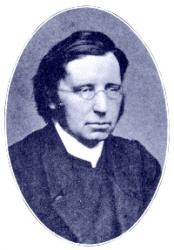
1818 - 1866 Person Name: Rev. J. M. Neale Meter: 8.7 Paraphraser of "Christ is made the sure foundation" in The Hymnal, Revised and Enlarged, as adopted by the General Convention of the Protestant Episcopal Church in the United States of America in the year of our Lord 1892 John M. Neale's life is a study in contrasts: born into an evangelical home, he had sympathies toward Rome; in perpetual ill health, he was incredibly productive; of scholarly temperament, he devoted much time to improving social conditions in his area; often ignored or despised by his contemporaries, he is lauded today for his contributions to the church and hymnody. Neale's gifts came to expression early–he won the Seatonian prize for religious poetry eleven times while a student at Trinity College, Cambridge, England. He was ordained in the Church of England in 1842, but ill health and his strong support of the Oxford Movement kept him from ordinary parish ministry. So Neale spent the years between 1846 and 1866 as a warden of Sackville College in East Grinstead, a retirement home for poor men. There he served the men faithfully and expanded Sackville's ministry to indigent women and orphans. He also founded the Sisterhood of St. Margaret, which became one of the finest English training orders for nurses.
Laboring in relative obscurity, Neale turned out a prodigious number of books and artic1es on liturgy and church history, including A History of the So-Called Jansenist Church of Holland (1858); an account of the Roman Catholic Church of Utrecht and its break from Rome in the 1700s; and his scholarly Essays on Liturgiology and Church History (1863). Neale contributed to church music by writing original hymns, including two volumes of Hymns for Children (1842, 1846), but especially by translating Greek and Latin hymns into English. These translations appeared in Medieval Hymns and Sequences (1851, 1863, 1867), The Hymnal Noted (1852, 1854), Hymns of the Eastern Church (1862), and Hymns Chiefly Medieval (1865). Because a number of Neale's translations were judged unsingable, editors usually amended his work, as evident already in the 1861 edition of Hymns Ancient and Modern; Neale claimed no rights to his texts and was pleased that his translations could contribute to hymnody as the "common property of Christendom."
Bert Polman
========================
Neale, John Mason, D.D., was born in Conduit Street, London, on Jan. 24, 1818. He inherited intellectual power on both sides: his father, the Rev. Cornelius Neale, having been Senior Wrangler, Second Chancellor's Medallist, and Fellow of St. John's College, Cambridge, and his mother being the daughter of John Mason Good, a man of considerable learning. Both father and mother are said to have been "very pronounced Evangelicals." The father died in 1823, and the boy's early training was entirely under the direction of his mother, his deep attachment for whom is shown by the fact that, not long before his death, he wrote of her as "a mother to whom I owe more than I can express." He was educated at Sherborne Grammar School, and was afterwards a private pupil, first of the Rev. William Russell, Rector of Shepperton, and then of Professor Challis. In 1836 he went up to Cambridge, where he gained a scholarship at Trinity College, and was considered the best man of his year. But he did not inherit his father's mathematical tastes, and had, in fact, the greatest antipathy to the study; and as the strange rule then prevailed that no one might aspire to Classical Honours unless his name had appeared in the Mathematical Tripos, he was forced to be content with an ordinary degree. This he took in 1840; had he been one year later, he might have taken a brilliant degree, for in 1841 the rule mentioned above was rescinded. He gained, however, what distinctions he could, winning the Members' Prize, and being elected Fellow and Tutor of Downing College; while, as a graduate, he won the Seatonian Prize no fewer than eleven times. At Cambridge he identified himself with the Church movement, which was spreading there in a quieter, but no less real, way than in the sister University. He became one of the founders of the Ecclesiological, or, as it was commonly called, the Cambridge Camden Society, in conjunction with Mr. E. J. Boyce, his future brother-in-law, and Mr. Benjamin Webb, afterwards the well-known Vicar of St. Andrew's, Wells Street, and editor of The Church Quarterly Review. In 1842 he married Miss Sarah Norman Webster, the daughter of an evangelical clergyman, and in 1843 he was presented to the small incumbency of Crawley in Sussex. Ill health, however, prevented him from being instituted to the living. His lungs were found to be badly affected; and, as the only chance of saving his life, he was obliged to go to Madeira, where he stayed until the summer of 1844. In 1846 he was presented by Lord Delaware to the Wardenship of Sackville College, East Grinstead. This can hardly be considered as an ecclesiastical preferment, for both his predecessor and his successor were laymen. In fact the only ecclesiastical preferment that ever was offered to him was the Provostship of St. Ninian's, Perth. This was an honourable office, for the Provostship is equivalent to a Deanery in England, but it was not a lucrative one, being worth only £100 a year. He was obliged to decline it, as the climate was thought too cold for his delicate health. In the quiet retreat of East Grinstead, therefore, Dr. Neale spent the remainder of his comparatively short life, dividing his time between literary work, which all tended, directly or indirectly, to the advancement of that great Church revival of which he was so able and courageous a champion, and the unremitting care of that sisterhood of which he was the founder. He commenced a sisterhood at Rotherfield on a very small scale, in conjunction with Miss S. A. Gream, daughter of the rector of the parish; but in 1856 he transferred it to East Grinstead, where, under the name of St. Margaret's, it has attained its present proportions. Various other institutions gradually arose in connection with this Sisterhood of St. Margaret's, viz., an Orphanage, a Middle Class School for girls, and a House at Aldershot for the reformation of fallen women. The blessing which the East Grinstead Sisters have been to thousands of the sick and suffering cannot here be told. But it must be mentioned that Dr. Neale met with many difficulties, and great opposition from the outside, which, on one occasion, if not more, culminated in actual violence. In 1857 he was attending the funeral of one of the Sisters at Lewes, when a report was spread that the deceased had been decoyed into St. Margaret's Home, persuaded to leave all her money to the sisterhood, and then purposely sent to a post in which she might catch the scarlet fever of which she died. To those who knew anything of the scrupulously delicate and honourable character of Dr. Neale, such a charge would seem absurd on the face of it; but mobs are not apt to reflect, and it was very easy to excite a mob against the unpopular practices and sentiments rife at East Grinstead; and Dr. Neale and some Sisters who were attending the funeral were attacked and roughly handled. He also found opponents in higher quarters; he was inhibited by the Bishop of the Diocese for fourteen years, and the Aldershot House was obliged to be abandoned, after having done useful work for some years, in consequence of the prejudice of officials against the religious system pursued. Dr. Neale's character, however, was a happy mixture of gentleness and firmness; he had in the highest degree the courage of his convictions, which were remarkably definite and strong; while at the same time he maintained the greatest charity towards, and forbearance with, others who did not agree with him. It is not surprising, therefore, that he lived all opposition down; and that, while from first to last his relations with the community at East Grinstead were of the happiest description, he was also, after a time, spared any molestation from without. The institution grew upon his hands, and he became anxious to provide it with a permanent and fitting home. His last public act was to lay the foundation of a new convent for the Sisters on St. Margaret's Day (July 20), 1865. He lived long enough to see the building progress, but not to see it completed. In the following spring his health, which had always been delicate, completely broke down, and after five months of acute suffering he passed away on the Feast of the Transfiguration (Aug. 6), 1866, to the bitter regret of the little community at East Grinstead and of numberless friends outside that circle. One trait of his singularly lovable character must not pass unnoticed. His charity, both in the popular and in the truer Christian sense of the word, was unbounded; he was liberal and almost lavish with his money, and his liberality extended to men of all creeds and opinions; while it is pleasing to record that his relations with his ecclesiastical superiors so much improved that he dedicated his volume of Seatonian Poems to the bishop of the diocese. If however success in life depended upon worldly advantages, Dr. Neale's life would have to be pronounced a failure; for, as his old friend, Dr. Littledale, justly complains, "he spent nearly half his life where he died, in the position of warden of an obscure Almshouse on a salary of £27 a year." But, measured by a different standard, his short life assumes very different proportions. Not only did he win the love and gratitude of those with whom he was immediately connected, but he acquired a world-wide reputation as a writer, and he lived to see that Church revival, to promote which was the great object of his whole career, already advancing to the position which it now occupies in the land of his birth.
Dr. Neale was an industrious and voluminous writer both in prose and verse; it is of course with the latter class of his writings that this sketch is chiefly concerned; but a few words must first be said about the former.
I.— Prose Writings.— His first compositions were in the form of contributions to The Ecclesiologist, and were written during his graduate career at Cambridge. Whilst he was in Madeira he began to write his Commentary on the Psalms, part of which was published in 1860. It was afterwards given to the world, partly written by him and partly by his friend, Dr. Littledale, in 4 vols., in 1874, under the title of A Commentary on the Psalms, from Primitive and Mediaeval Writers. This work has been criticised as pushing the mystical interpretation to an extravagant extent. But Dr. Neale has anticipated and disarmed such criticism by distinctly stating at the commencement that "not one single mystical interpretation throughout the present Commentary is original;" and surely such a collection has a special value as a wholesome correction of the materialistic and rationalistic tendencies of the age. His next great work, written at Sackville College, was The History of the Holy Eastern Church. The General Introduction was published in 1847; then followed part of the History itself, The Patriarchate of Alexandria, in 2 vols.; and after his death another fragment was published, The History of the Patriarchate of Antioch, to which was added, Constantius's Memoirs of the Patriarchs of Antioch, translated from the Greek, edited by the Rev. G. Williams, 1 vol. The whole fragment was published in 5 vols. (1847-1873). The work is spoken very highly of, and constantly referred to, by Dean Stanley in his Lectures on the History of the Eastern Church. Dr. Neale was naturally in strong sympathy with the struggling Episcopal Church of Scotland, and to show that sympathy he published, in 1856, The Life and Times of Patrick Torry, D.D., Bishop of St. Andrews, &c, with an Appendix on the Scottish Liturgy. In the same direction was his History of the so-called Jansenist Church in Holland, 1858. Next followed Essays on Liturgiology and Church History, with an Appendix on Liturgical Quotations from the Isapostolical Fathers by the Rev. G. Moultrie, 1863, a 2nd edition of which, with an interesting Preface by Dr. Littledale, was published in 1867. It would be foreign to the purpose of this article to dwell on his other prose works, such as his published sermons, preached in Sackville College Chapel, his admirable little devotional work, Readings for the Aged, which was a selection from these sermons; the various works he edited, such as the Tetralogia Liturgica, the Sequentiae ex Missalibus Germanicis, Anglicis, Gallicis, aliisque Medii Aevi Collectae; his edition of The Primitive Liturgies of S. Mark, S. Clement, S. James, S. Chrysostom and S. Basil, with a Preface by Dr. Littledale; his Translation of the same; his many stories from Church History, his Voices from the East, translated from the Russ, and his various articles contributed to the Ecclesiologist, The Christian Remembrance, The Morning Chronicle, and The Churchman's Companion. It is time to pass on to that with which we are directly concerned.
II. —Poetical Writings.— As a sacred poet, Dr. Neale may be regarded under two aspects, as an original writer and as a translator.
i. Original Writer.—Of his original poetry, the first specimen is Hymns for Children, published in 1842, which reached its 10th edition the year after his death. It consists of 33 short hymns, the first 19 for the different days of the week and different parts of the day, the last 14 for the different Church Seasons. This little volume was followed in 1844 by Hymns for the Young, which was intended to be a sequel to the former, its alternative title being A Second Series of Hymns for Children; but it is designed for an older class than the former, for young people rather than for children. The first 7 hymns are "for special occasions," as "on goiug to work," “leaving home” &c.; the next 8 on "Church Duties and Privileges," "Confirmation," "First Holy Communion," &c, the last 13 on "Church Festivals,” which, oddly enough, include the Four Ember Seasons, Rogation Days, and the Sundays in Advent. In both these works the severe and rigid style, copied, no doubt, from the old Latin hymns, is very observable. Perhaps this has prevented them from being such popular favourites as they otherwise might have been; but they are quite free from faults into which a writer of hymns for children is apt to fall. They never degenerate into mere prose in rhyme; and in every case the purity as well as the simplicity of their diction is very remarkable. In the same year (1844) he also published Songs and Ballads for Manufacturers, which were written during his sojourn in Madeira, and the aim of which (he tells us) was "to set forth good and sound principles in metaphors which might, from their familiarity, come home to the hearts of those to whom they were addressed." They are wonderfully spirited both in matter and manner, and their freedom of style is as remarkable as the rigidity of the former works. They were followed eleven years later (1855) by a similar little work entitled Songs and Ballads for the People. This is of a more aggressive and controversial character than the previous ones, dealing boldly with such burning questions as "The Teetotallers," "Why don't you go to Meeting?" &c. Passing over the Seatonian Poems, most of which were of course written before those noticed above, we next come to the Hymns for the Side, which is a fitting companion to the Readings for the Aged, and then to Sequences, Hymns, and other Ecclesiastical Verses, which was published just after the author's death (1866), and may be regarded as a sort of dying legacy to the world. In fact, the writer almost intimates as much in the preface, where he speaks of himself as "one who might soon be called to have done with earthly composition for ever." Many of the verses, indeed, were written earlier, "forty years ago," he says, which is evidently intended for twenty. The preface is dated "In the Octave of S. James, 1866," and within a fortnight, on the Feast of the Transfiguration, “the veil” (to use the touching words of his old friend, Dr. Littledale) "was withdrawn from before his eyes, and the song hushed on earth is now swelling the chorus of Paradise." Was it an accident that these verses dwell so much on death and the life beyond the grave? or did the coming event cast its shadow before? Not that there is any sadness of tone about them; quite the reverse. He contemplates death, but it is with the eye of a Christian from whom the sting of death has been removed. Most of the verses are on subjects connected with the Church Seasons, especially with what are called the "Minor Festivals:" but the first and last poems are on different subjects. The first, the "Prologue," is "in dear memory of John Keble, who departed on Maundy Thursday, 1866, "and is a most touching tribute from one sacred poet to another whom he was about to follow within a few months to the "land that is very far off." The last is a poetical version of the legend of "the Seven Sleepers of Ephesus," and is, the writer thinks, "the first attempt to apply to primitive Christianity that which is, to his mind, the noblest of our measures." That measure is the hexameter, and undoubtedly Dr. Neale employed it, as he did all his measures, with great skill and effect; but it may be doubted whether the English language, in which the quantities of syllables are not so clearly defined as in Latin and Greek, is quite adapted for that measure. Throughout this volume, Dr. Neale rises to a far higher strain than he had ever reached before.
ii. Translations.— It is in this species of composition that Dr. Neale's success was pre-eminent, one might almost say unique. He had all the qualifications of a good translator. He was not only an excellent classical scholar in the ordinary sense of the term, but he was also positively steeped in mediaeval Latin. An anecdote given in an appreciative notice by "G. M." [Moultrie] happily illustrates this:—
Dr. Neale "was invited by Mr. Keble and the Bishop of Salisbury to assist them with their new hymnal, and for this purpose he paid a visit to Hursley Parsonage." On one occasion Mr. Keble "having to go to another room to find some papers was detained a short time. On his return Dr. Neale said, ‘Why, Keble, I thought you told me that the "Christian Year" was entirely original.' ‘Yes,' he answered, 'it certainly is.' ‘Then how comes this?' and Dr. Neale placed before him the Latin of one of Keble's hymns. Keble professed himself utterly confounded. He protested that he had never seen this 'original,' no, not in all his life. After a few minutes Neale relieved him by owning that he had just turned it into Latin in his absence."
Again, Dr. Neale's exquisite ear for melody prevented him from spoiling the rhythm by too servile an imitation of the original; while the spiritedness which is a marked feature of all his poetry preserved that spring and dash which is so often wanting in a translation.
(i.) Latin.— Dr. Neale's translations from the Latin include
(1.) Mediaeval Hymns and Sequences (1851). He was the, first to introduce to the English reader Sequences, that is, as he himself describes them, " hymns sung between the Epistle and Gospel in the Mass," or, as he explains more definitely, "hymns whose origin is to be looked for in the Alleluia of the Gradual sung between the Epistle and the Gospel." He was quite an enthusiast about this subject:—
"It is a magnificent thing,” he says, "to pass along the far-stretching vista of hymns, from the sublime self-containedness of S. Ambrose to the more fervid inspiration of S. Gregory, the exquisite typology of Venantius Fortunatus, the lovely painting of St. Peter Damiani, the crystal-like simplicity of S. Notker, the scriptural calm of Godescalcus, the subjective loveliness of St. Bernard, till all culminate in the full blaze of glory which surrounds Adam of S. Victor, the greatest of them all."
Feeling thus what a noble task he had before him, it is no wonder that he spared no pains over it, or that he felt it his duty to adopt "the exact measure and rhyme of the original, at whatever inconvenience and cramping." That he succeeded in his difficult work, the verdict of the public has sufficiently proved. Of all the translations in the English language no one has ever been so popular as that of the Hora Novissima, in this volume, afterwards (1858) published separately, under the title of the Rhythm of Bernard de Morlaix, Monk of Cluny. Some original hymns may be as well known as "Jerusalem the Golden," "For thee, O dear, dear country," or "Brief life is here our portion,” but it would be hard to find any translations which come near them for extensive use. A second edition of the Mediaeval Hymns, much improved, came out in 1863, and a third, "with very numerous additions and corrections," in 1867.
(2.) We next come to the Hymnal Noted, in which 94 out of the 105 hymns are the work of Dr. Neale. These are all translations from the Latin. The first part appeared in 1852, the second in 1854. Dr. Neale has himself given us an interesting account of his connection with this work:—
"Some," he writes, "of the happiest and most instructive hours of my life were spent in the Sub-Committee of the Ecclesiological Society, appointed for the purpose of bringing out the Second Part of the Hymnal Noted It was my business to lay before them the translations I had prepared, and theirs to correct. The study which this required drew out the beauties of the original in a way which nothing else could have done, and the friendly collisions of various minds elicited ideas which a single translator would in all probability have missed." Preface, Mediaeval Hymns & Sequences
(3.) The last volume of translations from the Latin published by Dr. Neale appeared in 1865, under the title of Hymns, chiefly Mediaeval, on the Joys and Glories of Paradise. It was intended to be a companion volume to the Rhythm of Bernard of Cluny. In this work the writer gives the general reader an opportunity of comparing the translation with the original by printing the two together in parallel pages.
Before quitting the subject of Dr. Neale's translations from the Latin, it is only fair to notice that while they have been almost universally accepted by the English Church, and some of them adopted by dissenting congregations, they called down upon the translator a storm of indignation from an opposite quarter. The Roman Catholics accused him of deliberate deception because he took no pains to point out that he had either softened down or entirely ignored the Roman doctrines in those hymns. So far, they said, as the originals were concerned, these translations were deliberate misrepresentations. As however the translations were intended for the use of the Anglican Church, it was only to be expected that Neale should omit such hymns or portions of hymns as would be at variance with her doctrines and discipline.
(ii.) Greek.— Dr. Neale conferred even a greater boon upon the lovers of hymnology than by his translations from the Latin, when he published, in 1862, his Hymns of the Eastern Church. In his translations from the Latin he did what others had done before; but in his translations from the Greek he was opening entirely new ground. "It is," he says in his preface to the first edition, "a most remarkable fact, and one which shows how very little interest has been hitherto felt in the Eastern Church, that these are literally, I believe, the only English versions of any part of the treasures of Oriental Hymnology." As early as 1853 he had printed a few of his versions in The Ecclesiastic, but it was not till the appearance of the complete volume that the interest of the general public was awakened in them. Then they became wonderfully popular. His translations "Christian, dost thou see them?" "The day is past and over," "'Tis the day of Resurrection," and his Greek-inspired "Art thou weary," and "O happy band of pilgrims," are almost as great favourites as "Jerusalem the golden," and the first in his Hymns of the Eastern Church, "Fierce was the wild billow," deserves to be. Dr. Neale had a far more difficult task before him when he undertook these Greek hymns than he had with the Latin, and he appeals to the reader "not to forget the immense difficulty of an attempt so perfectly new as the present, when I have had no predecessors and therefore could have no master." That difficulty in comparison with the Latin cannot be better stated than in his own words:—
"Though the superior terseness and brevity of the Latin hymns renders a translation which shall represent those qualities a work of great labour, yet still the versifier has the help of the same metre; his version may be line for line; and there is a great analogy between the collects and the hymns, most helpful to the translator. Above all, we have examples enough of former translation by which we may take pattern. But in attempting a Greek canon, from the fact of its being in prose (metrical hymns are unknown) one is all at sea. What measure shall we employ? Why this more than that? Might we attempt the rhythmical prose of the original, and design it to be chanted? Again, the great length of the canons renders them un suitable for our churches as wholes. Is it better simply to form centos of the more beautiful passages? or can separate odes, each necessarily imperfect, be employed as separate hymns? . . . My own belief is that the best way to employ Greek hymnology for the uses of the English Church would be by centos."
That, in spite of these difficulties, Dr. Neale succeeded, is obvious. His Greek hymns are, indeed, adaptations rather than translations; but, besides their intrinsic beauty, they at any rate give some idea of what the Greek hymn-writers were. In this case, as in his translations from the Latin, he omitted what he held was not good from his Anglican point of view, e.g., the Doxologies to the Blessed Virgin Mary.
One point strikes us as very remarkable in these hymns, and indeed in all Dr. Neale's poetry, viz., its thorough manliness of tone. Considering what his surroundings were, one might have expected a feminine tone in his writings. Dr. Littledale, in his most vivid and interesting sketch of Dr. Neale's life, to which the present writer is largely indebted, has remarked the same with regard to his teaching: "Instead of committing the grave error of feminising his sermons and counsels [at St. Margaret's] because he had only women to deal with, he aimed at showing them the masculine side of Christianity also, to teach them its strength as well as its beauty."
In conclusion, it may be observed that no one had a higher opinion of the value of Dr. Neale's labours in the field of ancient and mediaeval hymnology than the one man whose competency to speak with authority on such a point Dr. Neale himself would assuredly have rated above that of all others. Over and over again Dr. Neale pays a tribute to the services rendered by Archbishop Trench in this domain; and the present sketch cannot more fitly close than with the testimony which Archbishop Trench has given of his sense of the services rendered by Dr. Neale. The last words of his preface to his Sacred Latin Poetry (ed. 1864) are:—" I will only, therefore, mention that by patient researches in almost all European lands, he [Dr. Neale] has brought to light a multitude of hymns unknown before: in a treatise on sequences, properly so-called, has for the first time explained their essential character; while to him the English reader owes versions of some of the best hymns, such as often successfully overcome the almost insuperable difficulties which many among them present to the translator." [Rev. J. H. Overton, D.D.]
Dr. Neale's original hymns and translations appeared in the following works, most of which are referred to in the preceding article, and all of which are grouped together here to facilitate reference:—
(1) Hymns for Children. Intended chiefly for Village Schools. London, Masters, 1842. (2) Hymns for the Sick. London, Masters, 1843, improved ed. 1849. (3) Hymns for the Young. A Second Series of Hymns for Children. London, Masters, 1844. (4) Songs and Ballads for Manufacturers. London, Masters, 1844. (5) Hymns for Children. A Third Series. London, Masters, 1846. (6) Mediaeval Hymns and Sequences. London, Masters. 1851; 2nd ed. 1861; 3rd. ed. 1863. (7) Hymnal Noted. London, Masters & Novello, 1852: enlarged 1854. Several of the translations were by other hands. Musical editions edited by the Rev. T. Helmore. It is from this work that a large number of Dr. Neale's translations from the Latin are taken. (8) Carols for Christmas and Eastertide. 1853. (9) Songs and Ballads for the People. 1855. (10) The Rhythm of Bernard de Morlaix, Monk of Cluny, on the Celestial Country. London, Hayes, 1st ed. 1858: 3rd ed., with revision of text, 1861. It contains both the Latin and the English translation. (11) Hymns of The Eastern Church, Translated with Notes and an Introduction. London, Hayes, 1862: 2nd ed. 1862: 3rd ed. 1866 : 4th ed., with Music and additional notes, edited by The Very Rev. S. G. Hatherly, Mus. B., Archpriest of the Patriarchal (Ecumenical Throne. London, Hayes, 1882. Several of these translations and notes appeared in The Ecclesiastic and Theologian, in 1853. (12) Hymns, Chiefly Mediaeval, on the Joys and Glories of Paradise. London, Hayes, 1865. This work contains notes on the hymns, and the Latin texts of the older amongst them. (13) Original Sequences, Hymns, and other Ecclesiastical Verses. London, Hayes, 1866. This collection of Original verse was published posthumously by Dr. Littledale.
In addition to these works Dr. Neale published collections of Latin verse as:—
1.) Hymni Ecclesiae e Breviariis quibusdam et Missalibus Gallicanis, Germanis, Hispanis, Lusitanis, desumpti. Oxford & Lond. J. H. Parker, 1851: and (2) Sequentiae e Missalibus Germanicis, Anglicis, Gallicis, aliisque Medii Aevi collectae. Oxford & Lond. J. H. Parker, 1852.
A few of his translations appeared from time to time in The Ecclesiastic; and a few of his original hymns in The Christian Remembrancer. In the collection compiled for use at St. Margaret's, East Grinstead, St. Margaret's Hymnal, Printed Privately for the use of the Community only, 1875, there are several of his hymns not traceable elsewhere. [Many of his translations and original compositions are not listed here].
Some of the original hymns in common use which remain to be noted are:—
i. From Hymns for Children, 1842.
1. No more sadness now, nor fasting. Christmas.
2. 0 Thou, Who through this holy week. Passiontide.
3. The day, 0 Lord, is spent. Evening.
4. The grass so green, the trees so tall. Morning of the Third Day.
5. Thou art gone up, 0 Lord, on high. Evening.
6. Thou, Who earnest from above. Whitsuntide.
7. With Thee, 0 Lord, begins the year. Circumcision, or, the New Year.
ii. From Hymns for the Sick, 1843.
8. By no new path untried before. Support in Sickness.
9. Count not, the Lord's Apostle saith. Communion of the Sick.
10. Lord, if he sleepeth, he shall sure do well. Watching.
11. 0 Thou, Who rising long before the day. In a sleepless Night.
12. The Lord hath given, the Lord hath taken away. Death and Burial.
13. There is a stream, whose waters rise. In dangerous Sickness or Fever.
14. They slumber not nor sleep. Guardian Angels.
15. Thy servants militant below. In Affliction.
iii. From Hymns for the Young, 2nd series, 1844.
16. Lord Jesus, Who shalt come with power. Ember Week in Advent.
17. 0 God, in danger and distress. In time of Trouble.
18. 0 God, we raise our hearts to Thee. Ember-Week in Advent. From this, "0 Lord, we come before Thee now” is taken.
19. 0 God, Who lovest to abide. Dedication of a Church.
20. 0 our Father, hear us now. Rogation. The first of three hymns on The Lord's Prayer.
21. 0 Saviour, Who hast call'd away. Death of a Minister.
22. 0 Thou, Who lov'st to send relief. In Sickness.
23. 0 Thou, Who once didst bless the ground. Ember-Week in September.
24. 0 Thou, Who, when Thou hadst begun. On going to Work.
25. Still, 0 Lord of hosts, we share. Rogation. The Second of his hymns on The Lord's Prayer.
26. Strangers and pilgrims here below. On entering a new Dwelling to reside there.
27. They whose course on earth is o'er. Communion of Saints. From this, "Those whom many a land divides," is taken.
2S. Till its holy hours are past. Rogation. The third of his hymns on The Lord's Prayer.
iv. Songs and Ballads for Manufacturers, 1844.
29. Work is over; God must speed it. Evening.
v. Hymns for Children, 3rd series, 1846.
30. Before Thy Face, 0 God of old. St. John the Baptist.
31. By pain, and weariness, and doubt. St. Stephen.
32. First of the twelvefold band that trod. St. James.
33. Four streams through happy Eden flow'd. St. Mark.
34. Is there one who sets his face. St. Bartholomew. From this "He, for man who suffered woe," is taken.
35. Not a single sight we view. St. Matthias.
36. 0 Great Physician of the soul. St. Luke.
37. 0 Heavenly Wisdom, hear our cry. Christmas. “0 Sapientia."
38. 0 Key of David, hailed by those. Christmas. "0 Clavis David."
39. 0 Root of Jesse, Thou on Whom. Christmas. “O Radix Jesse."
40. 0 Thou, on Whom the nations [Gentiles] wait. Christmas. "0 Rex Gentium."
41. 0 Thou, Who earnest down of old [to call] . Christmas. "0 Adonai."
42. 0 Thou, Whose Name is God with us. Christmas. "0 Emmanuel."
43. 0 Very God of Very God. Christmas. "0 Oriens."
44. Saints of God, whom faith united. SS. Simon and Jude.
45. Since the time that first we came. St. Andrew. From this, "Every bird that upward springs," is taken.
46. That love is mighty love indeed. St. Barnabas.
47. We cannot plead, as others may. St. Matthew.
48. We have not seen, we cannot see. St. Thomas.
49. Would we go when life is o'er? St. Peter.
v. Carols for Christmas and Eastertide. 1853.
50. Gabriel's message does away. Christmas.
51. Joy and gladness be to king and peasant. Christmas.
52. Joy to thee, joy to thee, Day of our victory. Easter.
53. Sing Alleluia, all ye lands. Easter.
54. The world itself keeps Easter Day. Easter. From this "There stood three Marys by the tomb," is taken.
55. With Christ we share a mystic grave. Easter or Holy Baptism.
vi. From Sequences, Hymns, &c, 1866.
56. Can it, Master, can it be? Maundy Thursday.
57. Need it is we raise our eyes. All Saints.
58. Prostrate fell the Lord of all things. Maundy Thursday.
59. Rear the column, high and stately. All Saints.
60. The Paschal moonlight almost past. Easter.
61. Though the Octave-rainbow sometimes. Low Sunday.
62. When the earth was full of darkness. St. Margaret.
63. Young and old must raise the lay. Christmas Carol.
vi. From the St. Margaret's Hymnal, 1875.
64. O gracious God, Who bid'st me now. On Leaving Some.
65. Thou Who came to save Thy people. For a School.
66. Thy praise the holy Infants shewed. Holy Innocents.
These 66 hymns now in common use by no means represent Dr. Neale's position in modern hymnody. Many others must be added thereto. Even then, although the total is very large, it but feebly represents and emphasises the enormous influence which Di. Neale has exercised over modern hymnody.
--John Julian, Dictionary of Hymnology (1907)
J. M. Neale
James Edmeston
1791 - 1867 Person Name: J. Edmeston Meter: 8.7 Author of "Lead us, heavenly Father, lead us" in The Hymnal, Revised and Enlarged, as adopted by the General Convention of the Protestant Episcopal Church in the United States of America in the year of our Lord 1892 Edmeston, James, born Sept. 10, 1791. His maternal grandfather was the Rev. Samuel Brewer, who for 50 years was the pastor of an Independent congregation at Stepney. Educated as an architect and surveyor, in 1816 he entered upon his profession on his own account, and continued to practice it until his death on Jan. 7, 1867. The late Sir G. Gilbert Scott was his pupil. Although an Independent by descent he joined the Established Church at a comparatively early age, and subsequently held various offices, including that of churchwarden, in the Church of St. Barnabas, Homerton. His hymns number nearly 2000. The best known are “Lead us, Heavenly Father, lead us” and "Saviour, breathe an evening blessing." Many of his hymns were written for children, and from their simplicity are admirably adapted to the purpose. For many years he contributed hymns of various degrees of merit to the Evangelical Magazine, His published works are:—
(1) The Search, and other Poems, 1817. (2) Sacred Lyrics, 1820, a volume of 31 hymns and one poem. This was followed by a second Series, 1821, with 35; and a third Series, 1822, with 27 pieces respectively. (3) The Cottage Minstrel; or, Hymns for the Assistance of Cottagers in their Domestic Worship, 1821. This was published at the suggestion of a member of the Home Missionary Society, and contains fifty hymns. (4) One Hundred Hymns for Sunday Schools, and for Particular Occasions, 1821. (5) Missionary Hymns, 1822. (6) Patmos, a Fragment, and Other Poems, 1824. (7) The Woman of Shunam, and Other Poems, 1829. (8) Fifty Original Hymns, 1833. (9) Hymns for the Chamber of Sickness, 1844. (10) Closet Hymns and Poems, 1844. (11) Infant Breathings, being Hymns for the Young, 1846. (12) Sacred Poetry, 1847.
In addition to those of his hymns which have attained to an extensive circulation, as those named above, and are annotated in this work under their respective first lines, there are also the following in common use in Great Britain and America:—
1. Along my earthly way. Anxiety. In his Sacred Lyrics, third set, 1822, in 8 stanzas of 4 lines. It is given in several collections, but usually in an abbreviated form, and generally somewhat altered.
2. Dark river of death that is [art] flowing. Death Anticipated. Given in his Sacred Lyrics, 3rd set, 1822, p. 39, in 9 stanzas of 4 lines. It is usually given in an abbreviated form, and sometimes as, "Dark river of death that art flowing."
3. Come, sacred peace, delightful guest. Peace. Appeared in his Closet Hymns, &c, 1844, in 4 stanzas of 4 lines.
4. Eternal God, before thy throne, Three nations. National Fast.
5. For Thee we pray and wait. Second Advent.
6. God intrusts to all. Parable of the Talents. This is No. 13 of his Infant Breathings, 1846, in 5 stanzas of 4 lines. It is a simple application of the parable to the life of a child. It is widely used.
7. God is here; how sweet the sound. Omnipresence. Given as No. 9 in his Sacred Lyrics, 1st set, 1820, in 6 stanzas of 4 lines. In the Baptist Hymnal, 1879, No. 45. St. i.-iii. are from this text, and iv. and v. are from another source.
8. How sweet the light of Sabbath eve. Sunday Evening. No. 10 in theCottage Minstrel, 1821, slightly altered.
9. Is there a time when moments flow. Sunday Evening. No. 5 of his Sacred Lyrics, 1st set, 1820, in 7 stanzas of 4 lines.
10. Little travellers Zionward. Burial of Children. No. 25 of his Infant Breathings, &c, 1846, in 3 stanzas of 8 lines. In the Leeds Hymn Book, 1853, it begins with stanza ii., "Who are they whose little feet?"
11. May we, Lord, rejoicing say. National Thanksgiving. Dated 1849 by the author in Spurgeon's Our Own Hymnbook, No. 1008.
12. Music, bring thy sweetest treasures. Holy Trinity. Dated 1837 by the author in Spurgeon's Our Own Hymnbook, No. 167. It is in his Sacred Poetry, 1847.
13. Roll on, thou mighty ocean. Departure of Missionaries. In his Missionary Hymns, 1822, in 4 stanzas of 4 lines. It is in common use in America.
14. Sweet is the light of Sabbath eve. Sunday Evening. In 5 stanzas of 41., from the Cottage Minstrel, 1821, where it is given as No. 10, and entitled "The Cottager's Reflections upon the Sabbath Evening."
15. The light of Sabbath eve. Sunday Evening. In 5 stanzas of 4 lines, as No. 11 in the Cottage Minstrel, 1821, p. 14, and headed, "Solemn Questions for the Sabbath Evening."
16. Wake, harp of Zion, wake again. Missions to the Jews. Dated 1846 by the author in Spurgeon's Our Own Hymnbook. It is in his Sacred Poetry, 1847.
17. When shall the voice of singing? In his Missionary Hymns, 1822. It is in a few American collections.
18. When the worn spirit wants repose. Sunday. No. 18, of his Sacred Lyrics, 1st set, 1820, in 4 stanzas of 4 lines. It is somewhat popular, and is given in several collections in Great Britain and America, as the Baptist Psalms & Hymns, 1858-80; the Church Praise Book, N. Y., 1881, &c.
19. Why should I, in vain repining? Consolation. No. 14 in the 1st set of his Sacred Lyrics, 1820, in 4 stanzas of 4 lines.
-- John Julian, Dictionary of Hymnology (1907)
=========================
Edmeston, James, p. 321, ii. Other hymns are:—
1. O Thou Whose mercy guides my way. Resignation. In his Sacred Lyrics, 1st set, 1820, p. 24, in 3 stanzas of 4 lines, and again in his Hymns for the Chamber of Sickness, 1844.
2. Parting soul, the flood awaits thee. Death anticipated. In his Sacred Lyrics, 1st set, 1820, p. 18, in 3 stanza of 8 lines, and based upon the passage in the Pilgrim's Progress:—"Now I further saw that betwixt them and the gate was a river, but there was no bridge to go over, and the river was very deep."
3. 'Tis sweet upon our pilgrimage. Praise. In hi3 Closet Hymns and Poems, 1846, in 3 stanzas of 4 lines, and headed "An Ebenezer Raided."
4. Welcome, brethren, enter in. Reception of Church Officers. Miller says, in his Singers and Songs, 1869, p. 420:—"This is No. 1 of five hymns supplied by Mr. Edmeston, at the request of a friend, for insertion in a provincial hymn-book, on the subject of admitting members," but he does not give the name of the book, neither have we identified It. The hymn, as given in the New Congregational Hymn Book, 1859, No. 840, is in 5 stanzas of 4 lines, of which Millet says stanza iii. is by another hand.
--John Julian, Dictionary of Hymnology, Appendix, Part II (1907)
James Edmeston
Thomas Kelly
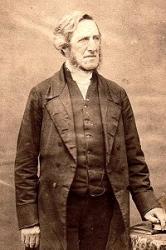
1769 - 1855 Person Name: Rev. Thomas Kelly Meter: 8.7 Author of "Look, ye saints; the sight is glorious" in The Hymnal, Revised and Enlarged, as adopted by the General Convention of the Protestant Episcopal Church in the United States of America in the year of our Lord 1892 Kelly, Thomas, B.A., son of Thomas Kelly, a Judge of the Irish Court of Common Pleas, was born in Dublin, July 13, 1769, and educated at Trinity College, Dublin. He was designed for the Bar, and entered the Temple, London, with that intention; but having undergone a very marked spiritual change he took Holy Orders in 1792. His earnest evangelical preaching in Dublin led Archbishop Fowler to inhibit him and his companion preacher, Rowland Hill, from preaching in the city. For some time he preached in two unconsecrated buildings in Dublin, Plunket Street, and the Bethesda, and then, having seceded from the Established Church, he erected places of worship at Athy, Portarlington, Wexford, &c, in which he conducted divine worship and preached. He died May 14, 1854. Miller, in his Singers & Songs of the Church, 1869, p. 338 (from which some of the foregoing details are taken), says:—
"Mr. Kelly was a man of great and varied learning, skilled in the Oriental tongues, and an excellent Bible critic. He was possessed also of musical talent, and composed and published a work that was received witli favour, consisting of music adapted to every form of metre in his hymn-book. Naturally of an amiable disposition and thorough in his Christian piety, Mr. Kelly became the friend of good men, and the advocate of every worthy, benevolent, and religious cause. He was admired alike for his zeal and his humility; and his liberality found ample scope in Ireland, especially during the year of famine."
Kelly's hymns, 765 in all, were composed and published over a period of 51 years, as follows:—
(1) A Collection of Psalms and Hymns extracted from Various Authors, by Thomas Kelly, A.B., Dublin, 1802. This work contains 247 hymns by various authors, and an Appendix of 33 original hymns by Kelly.
(2) Hymns on Various Passages of Scripture, Dublin, 1804. Of this work several editions were published: 1st, 1804; 2nd, 1806; 3rd, 1809; 4th, 1812. This last edition was published in two divisions, one as Hymns on Various Passages of Scripture, and the second as Hymns adapted for Social Worship. In 1815 Kelly issued Hymns by Thomas Kelly, not before Published. The 5th edition, 1820, included the two divisions of 1812, and the new hymns of 1815, as one work. To the later editions of 1820, 1826, 1836, 1840, 1846, and 1853, new hymns were added, until the last published by M. Moses, of Dublin, 1853, contained the total of 765.
As a hymn-writer Kelly was most successful. As a rule his strength appears in hymns of Praise and in metres not generally adopted by the older hymn writers. His "Come, see the place where Jesus lay" (from "He's gone, see where His body lay"),"From Egypt lately come"; “Look, ye saints, the sight is glorious"; "On the mountain's top appearing"; "The Head that once was crowned with thorns"; "Through the day Thy love has spared us"; and “We sing the praise of Him Who died," rank with the first hymns in the English language. Several of his hymns of great merit still remain unknown through so many modern editors being apparently adverse to original investigation. In addition to the hymns named and others, which are annotated under their respective first lines, the following are also in common use:—
i. From the Psalms and Hymns, 1802:—
1. Grant us, Lord, Thy gracious presence. Commencement of Divine Worship.
2. Jesus, Immortal King, go on [display]. Missions.
3. Saviour, through the desert lead us. Divine Guidance Desired.
4. The day of rest once more [again] comes round. Sunday.
5. We've no abiding city here. Seeking Heaven.
ii. From the Hymns on Varous Passages of Scripture, first edition, 1804 :—
6. Boundless glory, Lord, be thine. Praise for the Gospel.
7. By whom shall Jacob now arise? Epiphany.
8. Glory, glory to our King. Praise to Christ as King.
9. How pleasant is the sound of praise. Praise for Redemption.
10. How sweet to leave the world awhile. In Retirement, or For a Retreat.
11. Inform I long had bowed the knee. Jesus, the Saviour, or Praise for Salvation.
12. It is finished! sinners, hear it. Good Friday.
13. Jesus, the Shepherd of the sheep. The Good Shepherd.
14. Let reason vainly boast her power. Death.
15. Poor and afflicted, Lord, are Thine. Affliction.
16. Praise we Him to Whose kind favour. Close of Service.
11. Spared a little longer. Safety in God.
18. Stricken, smitten, and afflicted. Passiontide.
ii. From the Hymns, &c, second edition, 1806:—
19. Far from us be grief and sadness. Joy of Believers.
20. Give us room that we may dwell. Missions.
21. Glory, glory everlasting. Praise of Jesus.
22. God has.turned my grief to gladness. Joy after Sorrow.
23. Happy they who trust in Jesus. Peace in Jesus.
24. Hark, the notes of angels singing. Angels praising Jesus.
25. Hark! 'tis a martial sound. Christian Life a Warfare.
26. I hear a sound [voice] that comes from far. The Gospel Message.
27. Jesus is gone up on high. Divine Worship.
28. Now [O] may the Gospel's conquering power. Home Missions. In the 1853 edition of the Hymns it begins “O may the Gospel's conqu'ring force."
29. O Zion, when I think on thee. Desiring Heaven.
30. Praise the Saviour, ye who know Him. Praise of Jesus.
31. See from Zion's sacred mountain. The Fountain of Life.
32. The atoning work is done. Jesus the High Priest.
33. Zion is Jehovah's dwelling. The Church of God.
34. Zion stands by hills surrounded. The Safety of the Church.
35. Zion's King shall reign victorious. Missions.
iv. From the Hymns, &c, 3rd edition, 1809:—
36. Behold the Temple of the Lord. The Church a Spiritual Temple.
37. Blessed Fountain, full of grace. Fountain for Sin.
38. Brethren, come, our Saviour bids us. Holy Communion.
39. Fly, ye seasons, fly still faster. Second Advent Desired.
40. God of Israel, we adore Thee. Evening.
41. Gracious Lord, my heart is fixed. Trust and Peace.
42. Hark, a voice! it comes from heaven. Death.
43. Hark, that shout of rapt'rous joy. Second Advent.
44. If our warfare be laborious. Labour and Rest .
45. Lo, He comes, let all adore Him. Missions.
46. Nothing know we of the season. Time of Second Advent uncertain.
47. O had I the wings of a dove. Holiness and Heaven desired.
48. O where is now that glowing love. Despondency.
49. Our Father sits on yonder throne. God the Father.
50. Ours is a rich and royal Feast. Holy Communion.
51. Shepherd of the chosen number. Safety in the
Good Shepherd.
52. We're bound for yonder land. Life, a Voyage.
53. Welcome sight! the Lord descending. The Advent.
54. What is life? 'tis but a vapour. Death anticipated.
55. Who is this that comes from Edom? Ascension.
56. Why those fears ? Behold 'tis Jesus. Stilling the Sea.
57. Without blood is no remission. Passiontide.
58. Yes, we trust the day is breaking. Missions.
v. FromHymns: Not before Published, 1815:—
59. Behold the Lamb with glory crowned. Exaltation of Christ.
60. God is love, His word has said it. God is Love.
61. God of our salvation, hear us. Opening or Close of Divine Worship.
62. In Thy Name, O Lord, assembling. Commencement of Divine Worship.
63. Keep us, Lord, O [and] keep us ever. Divine Worship.
64. Let sinners saved give thanks, and sing. Praise for Salvation.
65. Praise the Lord Who died to save us. Passiontide.
66. Salvation is of God alone. God the Author of Salvation.
67. Saviour, come, Thy [saints] friends await Thee [are waiting] . Second Advent desired.
68. Sweet were the sounds that reached our ears. Divine Mercy.
69. We'll sing of the Shepherd that died. The Lost Sheep.
70. When we cannot see our way. Trust and Peace.
71. Who is this that calms the ocean? Stilling the Sea.
vi. From the Hymns on F. Passages of Scripture, &c, eds. 1820 and 1826 :-—
72. Grace is the sweetest sound. Divine Grace.
73. Now let a great effectual door. Missions.
74. Now may the mighty arm awake. Missions.
75. Now may the Spirit from above. Home Missions.
76. Sing, sing His lofty praise. Praise of Jesus.
77. Sound, 6ound the truth abroad. Missions.
78. Speed Thy servants, Saviour, speed them. Departure of Missionaries.
vii. From the Hymns on Various Passages, &c, 1836:—
79. Come, O Lord, the heavens rending. Prayer for Blessings.
80. The night is far spent, the day is at hand. The Second Advent.
viii. From the Hymns on Various Passages, &c, circa 1845:—
81. Joyful be the hours today. Sunday.
82. Lord, behold us few and weak. Opening of Divine Service.
83. Meet Thy people, Saviour, meet us. Meetings for Prayer.
84. Saviour, send a blessing to us. Prayer for Blessings.
85. Sing of Jesus, sing for ever. Praise of Jesus.
ix. From the Hymns on Various Passages, &c, 1853:—
86. Precious volume, what thou doest. Holy Scripture.
87. Unfold to us, O Lord, unfold. Divine aid to reading Holy Scripture.
All these hymns, together with those annotated under their respective first lines are in the 1853 edition of Kelly's Hymns published in Dublin by M. Moses, and in London by Simpkin, Marshall & Co. Kelly's musical editions are issued by the same publishers.
-- John Julian, Dictionary of Hymnology (1907)
==================
Kelly, Thomas, p. 615, i. Other hymns in common use are:
1. Behold the Man! How glorious He. (1809.) Good Friday.
2. Jesus the [Thou] Shepherd of the Sheep. (1804.) Good Shepherd.
3. Saved ourselves by Jesu's blood. (1802.) For a Revival.
4. Saviour, 'tis to [unto] Thee. (1853*.) Lent.
5. See the vineyard lately planted. (1806.) Missions. Sometimes given as "See, O Lord, the vineyard planted."
6. Sing aloud to God our strength. (1809.) Praise to the Father.
7. Sing, sing His lofty praise. (1820.) Praise to Jesus. Sometimes as "Hail our eternal King" (p. 615, No. 76).
8. Sing of Him Who bore our guilt. (1853*.) Praise to Jesus.
9. Sing we praise to God above, God our Saviour, &c. (1815.) Praise for Divine Mercy.
10. Sing we praise to God above, Sing we praise, &c. (1853*.) Praise.
11. Sons of Zion, raise your songs. (1820-26) The Exalted Saviour.
12. The Lord Himself will keep. (1809.) From “We're bound for yonder land" (sec p. 615, No. 52.)
13. The God [Lord] of glory dwells on high. (1809.) Humility and Love of Christ.
14. The people of the Lord Are on their way, &c. (1820.) Life a Pilgrimage.
15. Thus saith God of His Anointed. (1809.) Missions.
16. 'Tis to us no cause of sorrow. (1815.) Resignation.
17. To the Ark away, or perish. (1815.) Safety in Jesus only.
18. To our Lord a throne is given. (1838.) Christ the King.
19. Trust ye in the Lord for ever. (1853*.) Trust in God.
20. We'll sing in spite of scorn. (1806.) Christmas. From this "The long-expected morn" is taken.
21. What tongue can tell, what fancy paint. (1806.) Saints in Glory
22. What were Sinai's awful wonders. (1809.) Advent.
23. Whence those sounds symphonious? (1815.) Christmas.
24. While in the [this] world we still [yet] remain. (1806.) Communion of Saints.
25. Yes, 'tis a rough and thorny road. (1809.) Resignation. Sometimes given as "Though rough and thorny be the way."
The dates given above are those of the various editions of Kelly's Hymns. The date 1853* indicates that the hymn is in the 1853 ed. of the Hymns, but had also appeared in a previous edition which we have not seen.
--John Julian, Dictionary of Hymnology, Appendix, Part II (1907)
Thomas Kelly





