You help make Hymnary.org possible. More than 10 million people from 200+ countries found hymns, liturgical resources and encouragement on Hymnary.org in 2025, including you. Every visit affirms the global impact of this ministry.

If Hymnary has been meaningful to you this year, would you take a moment today to help sustain it? A gift of any size—paired with a note of encouragement if you wish—directly supports the server costs, research work and curation that keep this resource freely available to the world.

Give securely online today, or mail a check to:
Hymnary.org
Calvin University
3201 Burton Street SE
Grand Rapids, MI 49546

Thank you for your partnership, and may the hope of Advent fill your heart.

Person Results

Meter:8.7.8.7 with refrain
In:person

Planning worship? Check out our sister site, ZeteoSearch.org, for 20+ additional resources related to your search.
Showing 1 - 10 of 477Results Per Page: 102050

James Montgomery

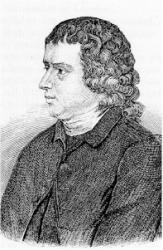
1771 - 1854 Meter: 8.7.8.7 with refrain Author of "Angels from the Realms of Glory" in Psalter Hymnal (Gray) James Montgomery (b. Irvine, Ayrshire, Scotland, 1771; d. Sheffield, Yorkshire, England, 1854), the son of Moravian parents who died on a West Indies mission field while he was in boarding school, Montgomery inherited a strong religious bent, a passion for missions, and an independent mind. He was editor of the Sheffield Iris (1796-1827), a newspaper that sometimes espoused radical causes. Montgomery was imprisoned briefly when he printed a song that celebrated the fall of the Bastille and again when he described a riot in Sheffield that reflected unfavorably on a military commander. He also protested against slavery, the lot of boy chimney sweeps, and lotteries. Associated with Christians of various persuasions, Montgomery supported missions and the British Bible Society. He published eleven volumes of poetry, mainly his own, and at least four hundred hymns. Some critics judge his hymn texts to be equal in quality to those of Isaac Watts and Charles Wesley . Many were published in Thomas Cotterill's Selection of Psalms and Hymns (1819 edition) and in Montgomery's own Songs of Zion (1822), Christian Psalmist (1825), and Original Hymns (1853). Bert Polman ======================== Montgomery, James, son of John Montgomery, a Moravian minister, was born at Irvine, Ayrshire, Nov. 4, 1771. In 1776 he removed with his parents to the Moravian Settlement at Gracehill, near Ballymena, county of Antrim. Two years after he was sent to the Fulneck Seminary, Yorkshire. He left Fulneck in 1787, and entered a retail shop at Mirfield, near Wakefield. Soon tiring of that he entered upon a similar situation at Wath, near Rotherham, only to find it quite as unsuitable to his taste as the former. A journey to London, with the hope of finding a publisher for his youthful poems ended in failure; and in 1792 he was glad to leave Wath for Shefield to join Mr. Gales, an auctioneer, bookseller, and printer of the Sheffield Register newspaper, as his assistant. In 1794 Mr. Gales left England to avoid a political prosecution. Montgomery took the Sheffield Register in hand, changed its name to The Sheffield Iris, and continued to edit it for thirty-one years. During the next two years he was imprisoned twice, first for reprinting therein a song in commemoration of "The Fall of the Bastille," and the second for giving an account of a riot in Sheffield. The editing of his paper, the composition and publication of his poems and hynms, the delivery of lectures on poetry in Sheffield and at the Royal Institution, London, and the earnest advocacy of Foreign Missions and the Bible Society in many parts of the country, gave great variety but very little of stirring incident to his life. In 1833 he received a Royal pension of £200 a year. He died in his sleep, at the Mount, Sheffield, April 30, 1854, and was honoured with a public funeral. A statue was erected to his memory in the Sheffield General Cemetery, and a stained glass window in the Parish Church. A Wesleyan chapel and a public hall are also named in his honour. Montgomery's principal poetical works, including those which he edited, were:— (1) Prison Amusements, 1797; (2) The Wanderer of Switzerland, 1806; (3) The West Indies, 1807; (4) The World before the Flood, 1813; (5) Greenland and Other Poems, 1819; (6) Songs of Zion, 1822; (7) The Christian Psalmist, 1825; (8) The Christian Poet, 1825; (9) The Pelican Island, 1828; (10) The Poet’s Portfolio, 1835; (11) Original Hymns for Public, Private, and Social Devotion, 1853. He also published minor pieces at various times, and four editions of his Poetical Works, the first in 1828, the second in 1836, the third in 1841, and the fourth in 1854. Most of these works contained original hymns. He also contributed largely to Collyer's Collection, 1812, and other hymnbooks published during the next 40 years, amongst which the most noticeable was Cotterill's Selections of 1819, in which more than 50 of his compositions appeared. In his Christian Psalmist, 1825, there are 100 of his hymns, and in his Original Hymns, 1853, 355 and 5 doxologies. His Songs of Zion, 1822, number 56. Deducting those which are repeated in the Original Hymns, there remain about 400 original compositions. Of Montgomery's 400 hymns (including his versions of the Psalms) more than 100 are still in common use. With the aid of Montgomery's MSS. we have given a detailed account of a large number. The rest are as follows:— i. Appeared in Collyer's Collection, 1812. 1. Jesus, our best beloved Friend. Personal Dedication to Christ. 2. When on Sinai's top I see. Sinai, Tabor, and Calvary. ii. Appeared in Cotterill's Selection, 1819. 3. Come to Calvary's holy mountain. The Open Fountain. 4. God in the high and holy place. God in Nature. The cento in Com. Praise, 1879, and others, "If God hath made this world so fair," is from this hymn. 5. Hear me, O Lord, in my distress. Ps. cxliii. 6. Heaven is a place of rest from sin. Preparation for Heaven. 7. I cried unto the Lord most just. Ps. cxlii. 8. Lord, let my prayer like incense rise. Ps. cxxxix. 9. O bless the Lord, my soul! His grace to thee proclaim. Ps. ciii. 10. Out of the depths of woe. Ps. cxxx. Sometimes "When from the depths of woe." 11. The world in condemnation lay. Redemption. 12. Where are the dead? In heaven or hell? The Living and the Dead. iii. Appeared in his Songs of Zion, 1822. 13. Give glory to God in the highest. Ps. xxix. 14. Glad was my heart to hear. Ps. cxxii. 15. God be merciful to me. Ps. lxix. 16. God is my strong salvation. Ps. xxvii. 17. Hasten, Lord, to my release. Ps. lxx. 18. Have mercy on me, O my God. Ps. li. 19. Hearken, Lord, to my complaints. Ps. xlii. 20. Heralds of creation cry. Ps. cxlviii. 21. How beautiful the sight. Ps. cxxxiii. 22. How precious are Thy thoughts of peace. Ps. cxxxix. 23. I love the Lord, He lent an ear. Ps. cxvi. 24. In time of tribulation. Ps. lxxvii. 25. Jehovah is great, and great be His praise. Ps. xlviii. Sometimes, "0 great is Jehovah, and great is His Name." 26. Judge me, O Lord, in righteousness. Ps. xliii. 27. Lift up your heads, ye gates, and wide. Ps.xxiv. 28. Lord, let me know mine [my] end. Ps. xxxi. 29. Of old, 0 God, Thine own right hand. Ps. lxxx. 30. O God, Thou art [my] the God alone. Ps. lxiii. 31. 0 Lord, our King, how excellent. Ps. viii. Sometimes, "0 Lord, how excellent is Thy name." 32. O my soul, with all thy powers. Ps. ciii. 33. One thing with all my soul's desire. Ps. xxvii. From this, "Grant me within Thy courts a place." 34. Searcher of hearts, to Thee are known. Ps. cxxxix. 35. Thank and praise Jehovah's name. Ps. cvii. 36. Thee will I praise, O Lord in light. Ps. cxxxviii. 37. The Lord is King; upon His throne. Ps. xciii. 38. The Lord is my Shepherd, no want shall I know. Ps. xxiii. 39. The tempter to my soul hath said. Ps. iii. 40. Thrice happy he who shuns the way. Ps. i. 41. Thy glory, Lord, the heavens declare. Ps. xix. 42. Thy law is perfect, Lord of light. Ps. xix. 43. Who make the Lord of hosts their tower. Ps. cxxv. 44. Yea, I will extol Thee. Ps. xxx. iv. Appeared in his Christian Psalmist. 1825. 45. Fall down, ye nations, and adore. Universal adoration of God desired. 46. Food, raiment, dwelling, health, and friends. The Family Altar. 47. Go where a foot hath never trod. Moses in the desert. Previously in the Leeds Congregational Collection, 1822. 48. Green pastures and clear streams. The Good Shepherd and His Flock. 49. Less than the least of all. Mercies acknowledged. 50. Not to the mount that burned with fire [flame]. Communion of Saints. 51. On the first Christian Sabbath eve. Easter Sunday Evening. 52. One prayer I have: all prayers in one. Resignation. 53. Our heavenly Father hear. The Lord's Prayer. 54. Return, my soul, unto thy rest. Rest in God. 55. Spirit of power and might, behold. The Spirit's renewing desired. 56. The Christian warrior, see him stand. The Christian Soldier. Sometimes, "Behold the Christian warrior stand." 57. The days and years of time are fled. Day of Judgment. 58. The glorious universe around. Unity. 59. The pure and peaceful mind. A Children's Prayer. 60. This is the day the Lord hath made (q. v.). Sunday. 61. Thy word, Almighty Lord. Close of Service. 62. What secret hand at morning light ? Morning. 63. While through this changing world we roam. Heaven. 64. Within these walls be peace. For Sunday Schools. v. Appeared in his Original Hymns, 1853. 65. Behold yon bright array. Opening a Place of Worship. 66. Behold the book whose leaves display. Holy Scriptures. 67. Come ye that fear the Lord. Confirmation. 68. Home, kindred, friends, and country, these. Farewell to a Missionary. 69. Let me go, the day is breaking. Jacob wrestling. 70. Not in Jerusalem alone. Consecration of a Church. 71. Praise the high and holy One. God the Creator. In common with most poets and hymnwriters, Montgomery strongly objected to any correction or rearrangement of his compositions. At the same time he did not hesitate to alter, rearrange, and amend the productions of others. The altered texts which appeared in Cotterill's Selections, 1819, and which in numerous instances are still retained in some of the best hymnbooks, as the "Rock of Ages," in its well-known form of three stanzas, and others of equal importance, were made principally by him for Cotterill's use. We have this confession under his own hand. As a poet, Montgomery stands well to the front; and as a writer of hymns he ranks in popularity with Wesley, Watts, Doddridge, Newton, and Cowper. His best hymns were written in his earlier years. In his old age he wrote much that was unworthy of his reputation. His finest lyrics are "Angels from the realms of glory," "Go to dark Gethsemane," "Hail to the Lord's Anointed," and "Songs of praise the angels sang." His "Prayer is the soul's sincere desire," is an expanded definition of prayer of great beauty; and his "Forever with the Lord" is full of lyric fire and deep feeling. The secrets of his power as a writer of hymns were manifold. His poetic genius was of a high order, higher than most who stand with him in the front rank of Christian poets. His ear for rhythm was exceedingly accurate and refined. His knowledge of Holy Scripture was most extensive. His religious views were broad and charitable. His devotional spirit was of the holiest type. With the faith of a strong man he united the beauty and simplicity of a child. Richly poetic without exuberance, dogmatic without uncharitableness, tender without sentimentality, elaborate without diffusiveness, richly musical without apparent effort, he has bequeathed to the Church of Christ wealth which could onlv have come from a true genius and a sanctified! heart. --John Julian, Dictionary of Hymnology (1907)

W. Chatterton Dix

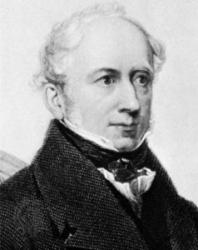
1837 - 1898 Person Name: William C. Dix Meter: 8.7.8.7 with refrain Author of "What Child is This" in The Presbyterian Hymnal Most British hymn writers in the nineteenth century were clergymen, but William C. Dix (b. Bristol, England, 1837; d. Cheddar, Somerset, England, 1898) was a notable exception. Trained in the business world, he became the manager of a marine insurance company in Glasgow, Scotland. Dix published various volumes of his hymns, such as Hymns of Love and Joy (1861) and Altar Songs: Verses on the Holy Eucharist (1867). A number of his texts were first published in Hymns Ancient and Modern (1861). Bert Polman ======================== Dix, William Chatterton, son of John Dix, surgeon, of Bristol, author of the Life of Chatterton; Local Legends, &c, born at Bristol, June 14, 1837, and educated at the Grammar School of that city. Mr. Chatterton Dix's contributions to modern hymnody are numerous and of value. His fine Epiphany hymn, "As with gladness men of old,” and his plaintive ”Come unto Me, ye weary," are examples of his compositions, many of which rank high amongst modern hymns. In his Hymns of Love and Joy, 1861, Altar Songs, Verses on the Holy Eucharist, 1867; Vision of All Saints, &c, 1871; and Seekers of a City, 1878, some of his compositions were first published. The greater part, however, were contributed to Hymns Ancient & Modern; St. Raphaels Hymnbook, 1861; Lyra Eucharidica, 1863; Lyra Messianica, 1864; Lyra Mystica, 1865; The People's Hymns, 1867; The Hymnary, 1872; Church Hymns, 1871, and others. Many of his contributions are renderings in metrical form of Dr. Littledale's translation from the Greek in his Offices . . . of the Holy Eastern Church, 1863; and of the Rev. J. M. Rodwell's translation of hymns of the Abyssinian Church. These renderings of the "songs of other Churches" have not received the attention they deserve, and the sources from whence they come are practically unknown to most hymnal compilers. Mr. Dix has also written many Christmas and Easter carols, the most widely known of which is "The Manger Throne."   In addition to detached pieces in prose and verse for various magazines, he has published two devotional works, Light; and The Risen Life, 1883; and a book of instructions for children entitled The Pattern Life, 1885. The last-named contains original hymns by Mr. Dix not given elsewhere. In addition to the more important of Mr. Dix's hymns which are annotated under their respective first lines, the following are also in common use:- 1. God cometh, let the heart prepare.  Advent. In his Vision of All Saints, &c, 1871.      2. Holy, holy, holy, to Thee our vows we pay.  Holy Communion.   Published in his Altar Songs, 1867, in 6 stanzas of 6 lines, and headed "Eucharistic Processional for Dedication Feast."    In the Society for Promoting Christian Knowledge Church Hymns, 1871, and others in an abridged form.      3. How long, O Lord, how long, we ask.   Second Advent.   Appeared in the Appendix to the Society for Promoting Christian Knowledge Psalms & Hymns, 1869, and repeated in several collections.        4. In our work and in our play.    Children's Hymn. Published in his Hymns and Carols for Children, 1869, and is largely adopted  in  children's  hymnbooks, as  Mrs. Brock's Children's Hymnbook, 1881, and others.   Also in the Society for Promoting Christian Knowledge Church Hymns, 1871.      5.  In the hollow of Thine hand.   For Fair Weather. Appeared in the People's Hymns, 1867, and repeated in several others.      6.  Joy fills our inmost heart today.    Christmas. Printed in the Church Times, and  then on a Flysheet by Gr. J. Palmer, as the third of Four Joyful Hymns for Christmas, circa 1865. It is in the Society for Promoting Christian Knowledge Church Hymns, 1871, and other hymnals. It is also one of Mr. Dix's Christmas Customs & Christmas Carols, not dated.      7. Lift up your songs, ye thankful.   St. Ambrose. Contributed to the People's Hymns, 1867.  8. Now in numbers softly flowing.    St. Cecilia. Contributed to the People's Hymns, 1867.    9.  Now, our Father, we adore Thee.   Praise to the Father.   Appeared in the Appendix to the S. P. C. K. Psalms & Hymns, 1869.   10.  O Christ, Thou Son of Mary.   St. Crispin.   First printed in the Union Review, Sept., 1866, and thence into the People's Hymns, 1887.   11. O Cross which only canst allay.   Glorying and Trusting in the Cross.   Published in the People's Hymns, 1867.   12. O Thou the Eternal Son of God.   Good Friday. Appeared in Lyra Messianica, 1864; the author's Hymns and Carols for Children, 1869; the S. P. C. K. Church Hymns, 1871, &c.   13. On the waters dark and drear.   For use at Sea. Published in Hymns for Public Worship, &c. (St. Raphael's, Bristol), 1861; the S. P. C. K. Church Hymns, 1871, &c.   14. Only one prayer to-day.   Ash Wednesday.   Contributed to the People's Hymns, 1867.   15. Sitting at receipt of custom.  St. Matthew.  Appeared in the People's Hymns, 1867.   16. The Cross is on thy brow.   Confirmation.   In the 1869 Appendix to the S. P. C. K. Psalms & Hymns.   17.  The stars above our head.   Work and Humility. In the 1869 Appendix to the S. P. C. K. Psalms & Hymns.  18. When the shades of night are falling.   Evening Hymn to the Good Shepherd.   In the author's Seekers of a City, &c. [1878]. Most of Mr. Dix's best-known hymns, and also some of those named above, are in common use in America and other English-speaking countries. In Great Britain and America from 30 to 40 are in common use.  He died Sept. 9, 1898. -- John Julian, Dictionary of Hymnology (1907) ====================== Dix, William Chatterton, p. 302, ii. Additional hymns by Mr. Dix now in common use are:— 1. Lift up your songs, ye angel choirs. Ascension. 2. Now, my soul rehearse the story. Christ Feeding the Multitude. 3. Within the temple's hallowed courts. Blessed Virgin Mary. These hymns are from his Altar Songs, 1867. --John Julian, Dictionary of Hymnology, Appendix, Part II (1907)

Francis H. Rowley

1854 - 1952 Meter: 8.7.8.7 with refrain Author of "I Will Sing the Wondrous Story" in Trinity Hymnal (Rev. ed.) Rv Francis Harold Rowley DD USA 1854-1952. Born at Hilton, NH, the son of a doctor, he graduated from Rochester University in 1875 and Rochester Theological Seminary of NY in 1878. He married Ida Amelia Babcock in 1878, and they had four children: John, Alice, Charles, and Esmond. He became a Baptist minister, animal welfare campaigner, and hymn writer. He pastored for over 30 years at Titusville, PA, North Adams, MA (1884-1892), Oak Park, IL, Fall River, MA, and the First Baptist Church at Boston, MA, until 1910. He preached at Appleton Chapel, Harvard University. He was also a trustee of the University of Chicago Divinity School (1894-1896). While at North Adams, MA, Peter Bilhorn, a fine musician and his assistant minister, asked him to write a hymn for Bilhorn to set to music. He wrote the hymn text overnight. The hymn was presented to Ira Sankey and he altered the text some before publishing it. Visiting in London, he once heard a Salvation Army band playing his hymn. They had no idea he was nearby. Rowley became aware of dismemberment of animals in slaughter houses across the country and lobbied for the animals to be rendered unconscious before being cut open. From 1892-1900 he was Secretary of the American Humane Association. In 1915, through his influence, a building was made to house the MA Society for the Prevention of Cruelty to Animals. He was president of that organization and of the American Humane Education Society from 1908-1945, and the Angell Memorial Animal Hospital. He was also Chairman of the Animal Protection Committee for the MA Committee on Public Safety and VP of the American Society for the Humane Regulation of Vivisection. In 1947 the Rowley School of Human Understanding was established in his honor. In 1948 the MA Society for the Prevention of Cruelty to Animals named the Rowley Memorial Hospital in Springfield, MA, for him. A humanitarian, he also worked with hospitals: Robert Brigham Hospital (for incurables) and N E Baptist Hospital of Boston. He was a member of the advisory council at Yenching University, China; a member of the alumni committee, University of Rochester, NY; member Alpha Delta Phi, Phi Beta Kappa. Rochester University gave him an honorary Doctor of Divinity degree. He died at Boston, MA. Oglethorpe University, Atlanta, GA, named the Rowley School of Humanities after him. John Perry

Judson W. Van DeVenter

1855 - 1939 Person Name: Judson W. VanDeVenter Meter: 8.7.8.7 with refrain Author of "All to Jesus I Surrender" in Trinity Hymnal (Rev. ed.) Judson W. Van DeVenter was born 15 December 1855 on a farm near the village of Dundee, Michigan. He was educated in the country and village schools, and at Hillsdale College. He later moved to St. Petersburg, Florida. He wrote about 100 hymns. Dianne Shapiro, from "The Singers and Their Songs: sketches of living gospel hymn writers" by Charles Hutchinson Gabriel (Chicago: The Rodeheaver Company, 1916)

P. P. Bliss

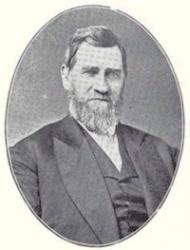
1838 - 1876 Person Name: Philip P. Bliss Meter: 8.7.8.7 with refrain Author of "I Will Sing of My Redeemer" in Trinity Hymnal (Rev. ed.) Philip P. Bliss (b. Clearfield County, PA, 1838; d. Ashtabula, OH, 1876) left home as a young boy to make a living by working on farms and in lumber camps, all while trying to continue his schooling. He was converted at a revival meeting at age twelve. Bliss became an itinerant music teacher, making house calls on horseback during the winter, and during the summer attending the Normal Academy of Music in Genesco, New York. His first song was published in 1864, and in 1868 Dwight L. Moody advised him to become a singing evangelist. For the last two years of his life Bliss traveled with Major D. W. Whittle and led the music at revival meetings in the Midwest and Southern United States. Bliss and Ira D. Sankey published a popular series of hymn collections entitled Gospel Hymns. The first book of the series, Gospel Songs, was published in 1874. Bliss's tragic death at the age of thirty-eight happened near the end of 1876. Philip P. Bliss and his wife were traveling to Chicago to sing for the evangelistic services led by Daniel W. Whittle at Dwight L. Moody's Tabernacle. But a train wreck and fire en route claimed their lives. Bert Polman ================= Bliss, Philip, b. at Clearfield County, Pennsylvania, July 9, 1838. In 1864 he went to Chicago in the employ of Dr. George F. Root, the musician, where he was engaged in conducting musical Institutes, and in composing Sunday School melodies. Originally a Methodist, he became, about 1871, a choirman of the First Congregational Church, Chicago, and the Superintendent of its Sunday Schools. In 1874 he joined D. W. Whittle in evangelical work. To this cause he gave (although a poor man) the royalty of his Gospel Songs, which was worth some thirty thousand dollars. His death was sudden. It occurred in the railway disaster at Ashtabula, Ohio, Dec. 30, 1876. ... Some of his verses have obtained wide popularity in most English-speaking countries. The more widely known, and specially those which are found in collections in use in G. Britain, are in the following American works:— i. The Prize, 1870. 1. I should like to die. Death anticipated. This is one of his earliest compositions, and is unworthy of the position it holds. 2. Through the valley of the shadow I must go. Death anticipated. 3. Whosoever heareth, shout, shout the sound. Jesus the Way. Written during the winter of 1869-70 after hearing Mr. H. Moorhouse (from England) preach on St. John iii. 16. ii. The Charm, 1871. 4. Almost persuaded now to believe. Procrastination. This was suggested by the following passage in a sermon by the Rev. Mr. Brundnge, Bliss being present at its delivery:—" He who is almost persuaded is almost saved, but to be almost saved is to be entirely lost." 5. Ho! my comrades! see the signal. Faithfulness. 6. O! Jerusalem, the golden city, bright, &c. Heaven. 7. On what Foundation do [did] you build? Christ the Foundation. iii. The Song Tree, 1872. 8. Light in the darkness, sailor, day is at hand. Safety. This hymn, “The Life-Boat," has attained to great popularity. The incident upon which it is based, that of the rescue of a ship's crew by a life-boat, is given in detail by Mr. Sankey in his Sacred Songs, &c, No. 99 (large ed.). It is sometimes known by its refrain, "Pull for the shore," &c. iv. The Joy, 1873. 9. In me ye may have peace. Peace. 10. To die is gain. Death anticipated. v. Sunshine, 1873. 11. Down life's dark vale we wander. Death anticipated. 12. More holiness give me. For Holiness. 13. Only an armour-bearer. Soldiers of the Cross. 14. Standing by a purpose true. Faithfulness. 15. This loving Saviour stands patiently. Invitation. vi. Gospel Songs, 1874. 16. A long time I wandered. Peace and Joy. 17. Brightly beams our Father's mercy. Mercy. 18. Come, brethren, as we march along. Praise. 19. Free from the law, O happy condition. Redemption. 20. Have you on the Lord believed? Fullness of Grace. This hymn arose out of the following circumstances :—" A vast fortune was left in the hands of a minister for one of his poor parishioners. Fearing that it might be sqmandered if suddenly bestowed upon him, the wise minister sent him a little at a time, with a note saying, “This is thine; use it wisely; there is more to follow.” Hence also the refrain ‘More to follow,’ by which the hymn is known." 21. How much owest thou? Divine Claims. 22. I know not the hour when my Lord will come. Death anticipated. Suggested by reading the book, The Gates Ajar. 23. See the gentle Shepherd standing. The Good Shepherd. 24. Though the way be sometimes dreary. Divine Leading. 25. Will you meet me at the fountain? Fountain of Living Water. The incident out of which this hymn arose is thus stated in The Christian, No. 365, "At the Industrial Exposition at Chicago it was an everyday appointment to meet at the Central Fountain. Mr. P. P. Bliss, whose mind seemed always set on things above, caught up the words, and wrote this hymn, 'Meet me at the Fountain.'" vii. Gospel Hymns, No. 1, 1875. 26. One offer of salvation. The Name of Jesus. 27. Wandering afar from the dwellings of men. The Lepers. viii. The International Lesson Monthly, 1875. 28. Weary gleaner, whence comest thou? Duty. 29. The whole world was lost in the darkness of Sin. Light of the world. 30. Man of sorrows! what a name. Redemption. 31. The Spirit, O sinner, in mercy doth move. Holy Spirit. ix. Gospel Hymns, No. 2, 1876. 32. At the feet of Jesus. The good choice. 33. Come, sing the Gospel's joyful sound. Salvation. 34. Cut it down, cut it down. Justice and Mercy. 35. Do you see the Hebrew captive? Prayer. 36. Hallelujah, He is risen. Easier. Written in the spring of 1876 and first sung by Bliss on Easter afternoon, 1876, in the Court House Square, Augusta, Georgia, to 5900 people. 37. In Zion's rock abiding. Safety. 38. Repeat the story o'er and o'er. Grace and Peace. 39. Tenderly the Shepherd. The Good Shepherd. x. Gospel Hymns, No. 3, 1878. 40. Hear ye the glad good news from heaven. Faith and Salvation. 41. I will sing of my Redeemer. Praise. xi. Gospel Hymns, No. 4, 1881. 42. 'Tis known on earth and heaven too. More about Jesus. xii. Various. 43. Sing over again to me. Words of Life. This appeared in a paper entitled Words of Life, 1874, The following are undated:— 44. March to the battle-field. Duty and Victory. 45. There is sin in the camp. Hinderances. 46. 'Tis the promise of God. Praise. 47. While the silvery moon-beams, fall, New Birth. 48. God is always near me. Omnipresence. Two hymns," I am so glad that our Father in heaven," and " Sowing the seed by the daylight [dawnlight] fair," (sometimes given as " Sowing our seed in the morning fair ") are usually attributed to Mr. Bliss. In his Gospel Songs, Cincinnati, 1874, however, he lays claim to the music only. Mr. Sankey attributes this last to "E. A. Oakey." With the exception of No. 48, these hymns are given in Mr. Sankey's Sacred Songs & Solos, Pts. i. and ii. Their popularity is far beyond their literary merits, and is mainly due to the simple melodies to which they are wedded. As a writer of hymns of this class Mr. Bliss is second only to Mrs. Van Alstyne. Many anecdotes concerning hymns of this class are given in American Evangelists; an Account of their work in England and America, by the Rev. Elias Nason, Boston, U.S., Lathrop & Co., 1877. Mr. Bliss is usually known as "P. P. Bliss." This is found on the title-pages of his collections. On his own authority, however, we are enabled to say that his name originally stood thus : “Philipp Bliss.” Early in life he separated the final p from his Christian name, constituted it a capital P, and thus produced "P. P. Bliss." (For this article we are mainly indebted to Professor F. M. Bird, and Mr. H. P. Main.) -John Julian, Dictionary of Hymnology (1907) ======================== Bliss, Philip , p. 151, i. "Sowing the seed by the daylight fair" is in the Family Treasury , Edinburgh, 1861, pt. i., p. 84. It is said to be by Miss Emily Sullivan Oakey; born at Albany, N. York, Oct. 8, 1829, died May 11, 1883. Note also that Bliss's hymn, No. 43. on p. 150, ii., should read, "Sing them over again to me." --John Julian, Dictionary of Hymnology, Appendix, Part II (1907) ===================== Bliss, P., p. 150, i. Two works have been brought to our notice, since the issue of our first edition of this Dictionary, which concern this author, viz.:— 1. Memoirs of Philip P. Bliss. Edited by D. W. Whittle. Contributions by Rev. E. P. Goodwin, Ira D. Sankey, and Geo. F. Root. Introduction by D. L. Moody. New York, &c.: A. S. Barnes & Co., 1877. 2. My Life and Sacred Songs. By Ira D. Sankey. With an Introduction by Theodore L. Cuyler, D.D). London: Hodder & Stoughton, and Morgan & Scott, 1906. These works have a special interest for those who use I. D. Sankey's Sacred Songs & Solos, and all of P. Bliss's publications. To Mr. Sankey's My Life, &c, we direct special attention for P. Bliss's hymns:— “Do you see the Hebrew captive kneeling?" p. 294. "Down life's dark vale we wander." p. 285. "Ho! my comrades, see the signal." p. 105. "'Tis the promise of God full salvation to give." p. 99. --John Julian, Dictionary of Hymnology, New Supplement (1907)

Louisa M. R. Stead

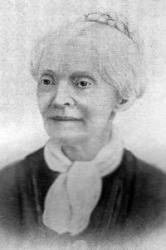
1850 - 1917 Meter: 8.7.8.7 with refrain Author of "'Tis So Sweet to Trust in Jesus" in Trinity Hymnal (Rev. ed.) Louisa (Louise) Maria Rouse Stead Wodehouse b. Dover, Kent, 1 February 1846 [registered Louisa Maria Rouse, but often known as Louise] d. Penkridge, Southern Rhodesia, 18 January 1917 She grew up in England, in Kent and Sussex, becoming governess to a family in Lyminge, Kent, before emigrating to America, c. 1871. While living in Cincinnati, Ohio, she attended a camp meeting in Urbana, Ohio, and wrote her first hymn, ‘Precious Saviour, thou hast saved me’, which was published in Winnowed Hymns, 1873, with music by Dora Boole. In September 1873 she married George Stead, of Hempstead, Long Island, at St Paul Methodist Episcopal Church, Cincinnati, and moved to Hempstead. Her verses, ‘Saved from the power and the bondage of sin’ were published in The Advocate of Christian Holiness, August 1875. She was apparently in England from April to July 1876, with their infant daughter, Louise, when her husband drowned in Hempstead Bay in May 1876, while saving the life of his little boy (a son from his previous marriage). In 1880, she was still living in Hempstead with Louise (aged 5), but shortly afterwards went to South Africa, where she married Robert Wodehouse in Port Elizabeth in January 1882. Her best known-hymn, ‘Tis so sweet to trust in Jesus’, with music by William J. Kirkpatrick, was published in Songs of Triumph, 1882. They served as missionaries in Africa for about 15 years, before returning to Long Island, USA, where he was pastor of the Methodist Episcopal Church at East Meadow for several years. They returned to Africa in January 1901, to work in Umtali, Rhodesia. After retiring in 1911, she lived near Mutambara mission station, fifty miles from Umtali. Her daughter Louise (sometimes known as Lillie), followed her mother to Africa, where she married the Rev. David A. Carson, and was able to care for her mother in her later years. Gordon Taylor (research for Companion to the 2015 Song Book of the Salvation Army)

E. E. Hewitt

1851 - 1920 Person Name: Eliza E. Hewitt Meter: 8.7.8.7 with refrain Author of "When We All Get to Heaven" in The United Methodist Hymnal Pseudonym: Li­die H. Ed­munds. Eliza Edmunds Hewitt was born in Philadelphia 28 June 1851. She was educated in the public schools and after graduation from high school became a teacher. However, she developed a spinal malady which cut short her career and made her a shut-in for many years. During her convalescence, she studied English literature. She felt a need to be useful to her church and began writing poems for the primary department. she went on to teach Sunday school, take an active part in the Philadelphia Elementary Union and become Superintendent of the primary department of Calvin Presbyterian Church. Dianne Shapiro, from "The Singers and Their Songs: sketches of living gospel hymn writers" by Charles Hutchinson Gabriel (Chicago: The Rodeheaver Company, 1916)

William Hunter

1811 - 1877 Meter: 8.7.8.7 with refrain Author of "The Great Physician" in Baptist Hymnal 1991 Hunter, William, D.D, son of John Hunter, was born near Ballymoney, County Antrim, Ireland, May 26, 1811. He removed to America in 1817, and entered Madison College in 1830. For some time he edited the Conference Journal, and the Christian Advocate. In 1855 he was appointed Professor of Hebrew in Alleghany College: and subsequently Minister of the Methodist Episcopal Church, at Alliance, Stark Country, Ohio. He died in 1877. He edited Minstrel of Zion, 1845; Select Melodies, 1851; and Songs of Devotion, 1859. His hymns, over 125 in all, appeared in these works. Some of these have been translated into various Indian languages. The best known are :— 1. A home in heaven; what a joyful thought. Heaven a Home. From his Minstrel of Zion, 1845, into the Methodist Scholar's Hymn Book, London, 1870, &c. 2. Joyfully, joyfully onward I [we] move. Pressing towards Heaven. This hymn is usually dated 1843. It was given in his Minstrel of Zion, 1845, and Select Melodies, 1851, and his Songs of Devotion, 1859. It has attained to great popularity. Two forms of the hymn are current, the original, where the second stanza begins "Friends fondly cherished, have passed on before"; and the altered form, where it reads: “Teachers and Scholars have passed on before." Both texts are given in W. F. Stevenson's Hymns for Church & Home, 1873, Nos. 79, 80, c. 3. The [My] heavenly home is bright and fair. Pressing towards Heaven. From his Minstrel of Zion, 1845, into the Cottage Melodies, New York, 1859, and later collections. 4. The Great Physician now is near. Christ the Physician. From his Songs of Devotion, 1859 5. Who shall forbid our grateful[chastened]woe? This hymn, written in 1843, was published in his Minstrel of Zion, 1845, and in his Songs of Devotion, 1859. [ Rev. F. M. Bird, M.A.] --John Julian, Dictionary of Hymnology (1907)

Mary D. James

1810 - 1883 Meter: 8.7.8.7 with refrain Author of "All for Jesus" in The Celebration Hymnal Mary Dagworthy Yard James USA 1810-1883. Born at Trenton, NJ, she began teaching Sunday school at age 13 in the Methodist Episcopal Church. She married Henry B James, and they had four children: Joseph, Mary, Ann, and Charles.. She became a prominent figure in the Wesleyan Holiness movement of the early 1800s, assisting Phoebe Palmer (also a hymnist) and often leading meetings at Ocean Grove, NJ, and elsewhere. She wrote articles that appeared in the “Guide to holiness”, “The New York Christian advocate”, “The contributor”, “The Christian witness:, “The Christian woman”, “The Christian standard”, and the “Ocean Grove record”. She wrote a biography of Edmund J Yard entitled, “The soul winner” (1883). She strived to live a life as close to Christ as possible. She died in New York City. John Perry

Robert Robinson

1735 - 1790 Meter: 8.7.8.7 with refrain Author of "Come, Thou Fount of Every Blessing" in Baptist Hymnal 2008 Robert Robinson was born at Swaffham, Norfolk, in 1735. In 1749, he was apprenticed to a hairdresser, in Crutched Friars, London. Hearing a discourse preached by Whitefield on "The Wrath to Come," in 1752, he was deeply impressed, and after a period of much disquietude, he gave himself to a religious life. His own peculiar account of this change of life is as follows:--"Robertus Michaelis Marineque Robinson filius. Natus Swaffhami, comitatu Norfolciae, Saturni die Sept. 27, 1735. Renatus Sabbati die, Maii 24, 1752, per predicationem potentem Georgii Whitefield. Et gustatis doloribus renovationis duos annos mensesque septem, absolutionem plenam gratuitamque, per sanguinem pretiosum i secula seculorum. Amen." He soon after began to preach, and ministered for some time in connection with the Calvinistic Methodists. He subsequently joined the Independents, but after a short period preferred the Baptist connection. In 1761, he became pastor of a Baptist congregation at Cambridge. About the year 1780, he began to incline towards Unitarianism, and at length his people deemed it essential to procure his resignation. While arrangements for this purpose were in progress he died suddenly at Bingham, in June 1790. He wrote and published a good many works of ability. --Annotations of the Hymnal, Charles Hutchins, M.A. 1872. ============================= Robinson, Robert, the author of "Come, Thou fount of every blessing," and "Mighty God, while angels bless Thee," was born at Swaffham, in Norfolk, on Sept. 27, 1735 (usually misgiven, spite of his own authority, as Jan. 8), of lowly parentage. Whilst in his eighth year the family migrated to Scarning, in the same county. He lost his father a few years after this removal. His widowed mother was left in sore straits. The universal testimony is that she was a godly woman, and far above her circumstances. Her ambition was to see her son a clergyman of the Church of England, but poverty forbade, and the boy (in his 15th year) was indentured in 1749 to a barber and hairdresser in London. It was an uncongenial position for a bookish and thoughtful lad. His master found him more given to reading than to his profession. Still he appears to have nearly completed his apprenticeship when he was released from his indentures. In 1752 came an epoch-marking event. Out on a frolic one Sunday with like-minded companions, he joined with them in sportively rendering a fortune-telling old woman drunk and incapable, that they might hear and laugh at her predictions concerning them. The poor creature told Robinson that he would live to see his children and grandchildren. This set him a-thinking, and he resolved more than ever to "give himself to reading”. Coincidently he went to hear George Whitefield. The text was St. Matthew iii. 7, and the great evangelist's searching sermon on "the wrath to come" haunted him blessedly. He wrote to the preacher six years later penitently and pathetically. For well nigh three years he walked in darkness and fear, but in his 20th year found "peace by believing." Hidden away on a blank leaf of one of his books is the following record of his spiritual experience, the Latin doubtless having been used to hold it modestly private:— "Robertus, Michaelis Mariseque Robinson filius. Natus Swaffhami, comitatu Norfolciae, Saturni die Sept. 27, 1735. Renatus Sabbati die, Maii 24,1752, per predicationem potentem Georgii Whitefield. Et gustatis doloribus renovationis duos annosque septem absolutionem plenam gratuitamque, per sanguinem pretiosum Jesu Christi, inveni (Tuesday, December 10, 1755) cui sit honor et gloria in secula seculorum. Amen." Robinson remained in London until 1758, attending assiduously on the ministry of Gill, Wesley, and other evangelical preachers. Early in this year he was invited as a Calvinistic Methodist to the oversight of a chapel at Mildenhall, Norfolk. Thence he removed within the year to Norwich, where he was settled over an Independent congregation. In 1759, having been invited by a Baptist Church at Cambridge (afterwards made historically famous by Robert Hall, John Foster, and others) he accepted the call, and preached his first sermon there on Jan. 8, 1759, having been previously baptized by immersion. The "call" was simply "to supply the pulpit," but he soon won such regard and popularity that the congregation again and again requested him to accept the full pastoral charge. This he acceded to in 1761, alter persuading the people to "open communion." In 1770 he commenced his abundant authorship by publishing a translation from Saurin's sermons, afterwards completed. In 1774 appeared his masculine and unanswerable Arcana, or the Principles of the Late Petitioners to Parliament for Relief in the matter of Subscription. In 1776 was published A Plea for the Divinity of our Lord Jesus Christ in a Pastoral Letter to a Congregation of Protestant Dissenters at Cambridge. Dignitaries and divines of the Church of England united with Nonconformists in lauding this exceptionally able, scholarly, and pungently written book. In 1777 followed his History and Mystery of Good Friday. The former work brought him urgent invitations to enter the ministry of the Church of England, but he never faltered in his Nonconformity. In 1781 he was asked by the Baptists of London to prepare a history of their branch of the Christian Church. This resulted, in 1790, in his History of Baptism and Baptists, and in 1792, in his Ecclesiastical Researches. Other theological works are included in the several collective editions of his writings. He was prematurely worn out. He retired in 1790 to Birmingham, where he was somehow brought into contact with Dr. Priestley, and Unitarians have made much of this, on exceedingly slender grounds. He died June 9, 1790. His Life has been fully written by Dyer and by William Robinson respectively, both with a bias against orthodoxy. His three changes of ecclesiastical relationship show that he was somewhat unstable and impulsive. His hymns are terse yet melodious, evangelical but not sentimental, and on the whole well wrought. His prose has all…that vehement and enthusiastic glow of passion that belongs to the orator. (Cf. Dyer and Robinson as above, and Gadsby's Memoirs of Hymn-Writers(3rd ed., 1861); Belcher's Historical Sketches of Hymns; Millers Singers and Songs of the Church; Flower's Robinson's Miscellaneous Works; Annual Review, 1805, p. 464; Eclectic Review, Sept. 1861. [Rev. A. B. Grosart, D.D., LL.D.] --John Julian, Dictionary of Hymnology (1907)

Pages


Export as CSV
It looks like you are using an ad-blocker. Ad revenue helps keep us running. Please consider white-listing Hymnary.org or getting Hymnary Pro to eliminate ads entirely and help support Hymnary.org.