You help make Hymnary.org possible. More than 10 million people from 200+ countries found hymns, liturgical resources and encouragement on Hymnary.org in 2025, including you. Every visit affirms the global impact of this ministry.

If Hymnary has been meaningful to you this year, would you take a moment today to help sustain it? A gift of any size—paired with a note of encouragement if you wish—directly supports the server costs, research work and curation that keep this resource freely available to the world.

Give securely online today, or mail a check to:
Hymnary.org
Calvin University
3201 Burton Street SE
Grand Rapids, MI 49546

Thank you for your partnership, and may the hope of Advent fill your heart.

Person Results

Text Identifier:"^all_praise_to_him_who_reigns_above_in_ma$"
In:people

Planning worship? Check out our sister site, ZeteoSearch.org, for 20+ additional resources related to your search.
Showing 1 - 10 of 11Results Per Page: 102050

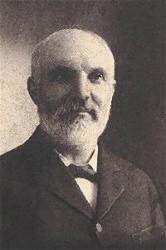
R. E. Hudson

1843 - 1901 Person Name: Ralph E. Hudson, 1843-1901 Refrain Author of "Blessed Be the Name" in Hymnal of the Church of God Ralph Hudson (1843-1901) was born in Napoleon, OH. He served in the Union Army in the Civil War. After teaching for five years at Mt. Union College in Alliance he established his own publishing company in that city. He was a strong prohibitionist and published The Temperance Songster in 1886. He compiled several other collections and supplied tunes for gospel songs, among them Clara Tear Williams' "All my life long I had panted" (Satisfied). See 101 More Hymn Stories, K. Osbeck, Grand Rapids, MI: Kregel Publications, 1985). Mary Louise VanDyke

Anonymous

Person Name: Anon. Author of "Blessed Be the Name" in Glad Hosannas In some hymnals, the editors noted that a hymn's author is unknown to them, and so this artificial "person" entry is used to reflect that fact. Obviously, the hymns attributed to "Author Unknown" "Unknown" or "Anonymous" could have been written by many people over a span of many centuries.

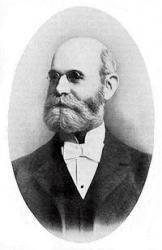
William J. Kirkpatrick

1838 - 1921 Person Name: William James Kirkpatrick, 1838-1921 Arranger of "EVAN" in Hymnal of the Church of God William J. Kirkpatrick (b. Duncannon, PA, 1838; d. Philadelphia, PA, 1921) received his musical training from his father and several other private teachers. A carpenter by trade, he engaged in the furniture business from 1862 to 1878. He left that profession to dedicate his life to music, serving as music director at Grace Methodist Church in Philadelphia. Kirkpatrick compiled some one hundred gospel song collections; his first, Devotional Melodies (1859), was published when he was only twenty-one years old. Many of these collections were first published by the John Hood Company and later by Kirkpatrick's own Praise Publishing Company, both in Philadelphia. Bert Polman

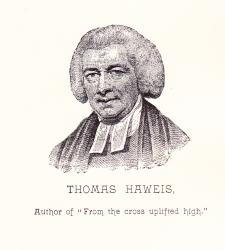
Thomas Haweis

1734 - 1820 Composer of "CHESTERFIELD" in Church Hymnal, Mennonite Thomas Haweis (b. Redruth, Cornwall, England, 1734; d. Bath, England, 1820) Initially apprenticed to a surgeon and pharmacist, Haweis decided to study for the ministry at Oxford and was ordained in the Church of England in 1757. He served as curate of St. Mary Magdalen Church, Oxford, but was removed by the bishop from that position because of his Methodist leanings. He also was an assistant to Martin Madan at Locke Hospital, London. In 1764 he became rector of All Saints Church in Aldwinkle, Northamptonshire, and later served as administrator at Trevecca College, Wales, a school founded by the Countess of Huntingdon, whom Haweis served as chaplain. After completing advanced studies at Cambridge, he published a Bible commentary and a volume on church history. Haweis was strongly interested in missions and helped to found the London Mission Society. His hymn texts and tunes were published in Carmino Christo, or Hymns to the Savior (1792, expanded 1808). Bert Polman ============================ Haweis, Thomas, LL.B., M.D., born at Truro, Cornwall, 1732. After practising for a time as a Physician, he entered Christ's College, Cambridge, where he graduated. Taking Holy Orders, he became Assistant Preacher to M. Madan at the Lock Hospital, London, and subsequently Rector of All Saints, Aldwincle, Northamptonshire. He was also Chaplain to Lady Huntingdon, and for several years officiated at her Chapel in Bath. He died at Bath, Feb. 11, 1820. He published several prose works, including A History of the Church, A Translation of the New Testament, and A Commentary on the Holy Bible. His hymns, a few of which are of more than ordinary merit, were published in his Carmina Christo; or, Hymns to the Saviour. Designed for the Use and Comfort of Those who worship the Lamb that was slain. Bath, S. Hayward, 1792 (139 hymns), enlarged. London, 1808 (256 hymns). In 1794, or sometime after, but before the enlarged edition was published, two hymns "For the Fast-day, Feb. 28, 1794," were added to the first edition. These were, "Big with events, another year," and "Still o'er the deep the cannon's roar." The most popular and widely used of his hymns are, "Behold the Lamb of God, Who bore," &c.; "Enthroned on high, Almighty Lord"; and “O Thou from Whom all goodness flows." The rest, all being from Carmina Christo, first edition 1792, are:— 1. Dark was the night and cold the ground. Gethsemane. 2. From the cross uplifted high. Christ in Glory. 3. Great Spirit, by Whose mighty power. Whitsuntide. 4. Submissive to Thy will, my God. Resignation. 5. The happy morn is come. Easter. 6. Thou Lamb of God, that on the tree. Good Friday. The hymn, "Thy Head, the crown of thorns that wears," in Stryker & Main's Church Praise Book, N. Y., 1882, begins with st. ii. of this hymn. 7. To Thee, my God and Saviour, My heart, &c. Praise for Redemption. --John Julian, Dictionary of Hymnology (1907)

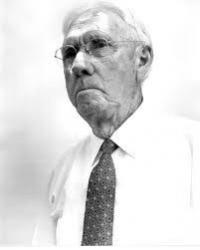
Nolan Williams

Person Name: Nolan Williams, Jr. b. 1969 Arranger of "BLESSED NAME" in African American Heritage Hymnal

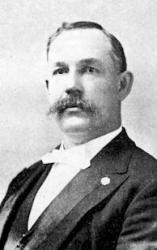
E. O. Excell

1851 - 1921 Person Name: E. O. E. Arranger of "[All praise to Him Who reigns above]" in Praises Edwin Othello Excel USA 1851-1921. Born at Uniontown, OH, he started working as a bricklayer and plasterer. He loved music and went to Chicago to study it under George Root. He married Eliza Jane “Jennie” Bell in 1871. They had a son, William, in 1874. A member of the Methodist Episcopal Church, he became a prominent publisher, composer, song leader, and singer of music for church, Sunday school, and evangelistic meetings. He founded singing schools at various locations in the country and worked with evangelist, Sam Jones, as his song leader for two decades. He established a music publishing house in Chicago and authored or composed over 2,000 gospel songs. While assisting Gypsy Smith in an evangelistic campaign in Louisville, KY, he became ill, and died in Chicago, IL. He published 15 gospel music books between 1882-1925. He left an estate valued at $300,000. John Perry

William H. Clark

1854 - 1925 Person Name: W.H. Clark, 19th Century Author of "Blessed Be the Name" in Hymnal of the Church of God Clark, William Henry. (Racine, Wisconsin, April 8, 1854--November 8, 1925, Rome, New York). Free Methodist. In his infancy, his parents returned to their former home in New York State, where his mother soon died, and his father married a close friend of hers, who forecast, after William's conversion in 1873, that one day he would be a bishop. He served the Susquehanna Conference of his denomination as a pastor and district superintendent from 1876 until 1919, when his stepmother's prediction came true. Meanwhile, he had been a member of the joint commission of the Free and Wesleyan Methodist Churches which compiled the Hymnal of 1910, and contributed some items to it. He died in office, requesting no eulogy at his funeral. --Arlene Clyde, DNAH Archives, rev. Hugh McKellar

Austin Taylor

1881 - 1973 Person Name: A. T. Arranger of "[All praise to Him who reigns above]" in Songs of the Reapers Austin Taylor (October 14, 1881 – January 1, 1973) Austin Taylor was born October 14, 1881 in Morgantown, Kentucky. He served Churches of Christ, one of three branches of the Stone-Campbell Movement for all of his long life as a song writer, song leader, minister, preacher, teacher, and singing school leader. The school he helped to found, the Texas Normal Singing School, still holds its camp every Summer. The Taylors moved to Sherman, TX in 1890. There Austin began his music career as a singing school teacher and song writer. Two of his outstanding teachers were Horatio Richmond Palmer (1834-1907) of New York, who wrote songs such as “Master the Tempest is Raging,” “Angry Words,” and “O Lord, Our Lord,” and Dr. Horace Neely Lincoln (1859-1948) of St. Louis who specialized in lyrics. His first song book, “The Gospel Messenger,” was published in 1905. He has published some twenty-five song books, just for [the] Firm Foundation in Austin, TX. His songs can be found in some fifty plus songbooks. Practically all the song books published by members of the church contain “Closer to Thee” and “Do All In the Name of the Lord.” In the early part of the 1900’s churches received their musical instruction by singing conventions. Taylor continued teaching of singing conventions and influenced many students to follow. Some of his students began the Hartford Music Company in Nacogdoches, TX. Albert Brumley became a student of the Hartford school and later bought out the company. Austin Taylor paid the way for Will Slater to go with him to some of his schools. Slater later became a publisher and had his business in Fort Worth, TX. Frank Grammer, another student of Austin Taylor’s, founded a publishing company in California. Teaching conventions and singing for gospel meetings and revivals was a full-time career for Taylor. Austin Taylor had created a good reputation for himself on the circuit of the singing conventions, so he started receiving many invitations to lead singing for gospel meetings. For many years this became one of his main works. In 1911 Austin Taylor was appointed as music editor of the Firm Foundation Publishing Co. operated by G. H. P. Showalter. The majority of his song books were sold between 1910 and 1930. They were printed in Cincinnati. In 1914 he published Gospel Songs No. 2 for the Firm Foundation. It sold over 500,000 in one year. There were nearly one million of the paperback copies sold in a 15-year period. Taylor published over 50 different hymn books in his lifetime, many at his own expense. Edited by D. J. Bulls, from James Tackett, paperlesshymnal.com; "A Song is Born," Robert Taylor (2004 Taylor Publications);m "Our Garden of Song," Gene C. Finley (1980, Howard Publishing Co.) "The Songs of Austin Taylor," John R. Furr (Texas Normal Singing School), additional editing by Dianne Shapiro)

W. E. M. Hackleman

1868 - 1927 Arranger of "[All praise to Him Who reigns above]" in Gold Tried in the Fire William Edward Michael Hackleman USA 1868-1927. Born at Orange, IN, he grew up on a farm. At age 17 he was teaching singing classes and leading singing in meetings. He later taught public school for four years and studied music in Toronto, Canada, at the Conservatory of Music, under Italian composer, Francesco d'Auria, and also with other private teachers in New York City. He married Pearl C MNU, and they had four children: Edwin, Florence, Grace, and Gladys. He edited songbooks, composed music and lead music at state and national conventions of the Christian Church. He was an evangelist and served as president of the National Association of Church Musicians, and for five years was secretary to the Indiana Missionary Society. He led singing at the Centennial Convention in 1909 at Forbes Field in Pittsburgh, PA, for an estimated crowd of 30,000. He also ran the Hackleman Music Company in Indianapolis, IN. He published 15 religious songbooks, some lyrics and many tunes. He died in an auto accident in St. Elmo, IL, enroute to a church convention. John Perry

C. C. Cline

1848 - 1920 Arranger of "[All praise to Him Who reigns above]" in Popular Hymns Number 2

Pages


Export as CSV
It looks like you are using an ad-blocker. Ad revenue helps keep us running. Please consider white-listing Hymnary.org or getting Hymnary Pro to eliminate ads entirely and help support Hymnary.org.