You help make Hymnary.org possible. More than 10 million people from 200+ countries found hymns, liturgical resources and encouragement on Hymnary.org in 2025, including you. Every visit affirms the global impact of this ministry.

If Hymnary has been meaningful to you this year, would you take a moment today to help sustain it? A gift of any size—paired with a note of encouragement if you wish—directly supports the server costs, research work and curation that keep this resource freely available to the world.

Give securely online today, or mail a check to:
Hymnary.org
Calvin University
3201 Burton Street SE
Grand Rapids, MI 49546

Thank you for your partnership, and may the hope of Advent fill your heart.

Person Results

Text Identifier:"^blessed_is_the_man_that_walketh_no_chant$"
In:person

Planning worship? Check out our sister site, ZeteoSearch.org, for 20+ additional resources related to your search.
Showing 1 - 10 of 13Results Per Page: 102050

Ron Hamilton

1950 - 2023 Composer of "[Blessed is the man that walketh not]" in Bible Truth Hymns

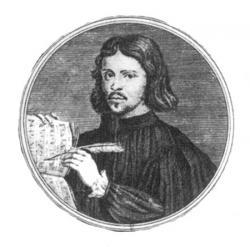
Thomas Tallis

1505 - 1585 Person Name: Thomas Tallis (1529-1585) Arranger of "[Blessed is the man that walketh not in the counsel of the ungodly]" in Songs of Praise Thomas Tallis (b. Leicestershire [?], England, c. 1505; d. Greenwich, Kent, England 1585) was one of the few Tudor musicians who served during the reigns of Henry VIII: Edward VI, Mary, and Elizabeth I and managed to remain in the good favor of both Catholic and Protestant monarchs. He was court organist and composer from 1543 until his death, composing music for Roman Catholic masses and Anglican liturgies (depending on the monarch). With William Byrd, Tallis also enjoyed a long-term monopoly on music printing. Prior to his court connections Tallis had served at Waltham Abbey and Canterbury Cathedral. He composed mostly church music, including Latin motets, English anthems, settings of the liturgy, magnificats, and two sets of lamentations. His most extensive contrapuntal work was the choral composition, "Spem in alium," a work in forty parts for eight five-voice choirs. He also provided nine modal psalm tunes for Matthew Parker's Psalter (c. 1561). Bert Polman

Richard Farrant

1525 - 1580 Composer of "[Bessed is the man that walketh not in the counsel]" in Cantus Christi Like many composers of his day, the early years of Richard Farrant’s (c.1525- November 30, 1580) life are not well documented. The first acknowledgment of him is in a list of the Gentleman of the Chapel Royal in 1552. It is assumed from that list that his birth was around 1525. Although, that cannot be accurately determined. During his life he was able to establish himself as a successful composer, develop the English drama considerably, founded the first Blackfriar Theatre, and be the first to write verse-anthems. He married Anne Bower, daughter of Richard Bower who was Master of the Chapel Royal choristers at the time. With Anne he conceived ten children, one of whom was also named, Richard. As a member of the Gentleman of the Chapel Royal, Farrant was active in ceremonies surrounding the royal family. He began his work with the Chapel Royal around 1550 under the reign of Edward VI. Fortunately, for Farrant, this is a time that saw huge developments in Latin Church Music. Composers like William Byrd and Christopher Tye were busy expanding and elaborating on the Church Music of the day. In Farrant's twelve years with the Chapel Royal, he was able to participate in funerals for Edward VI and Mary I, and coronations for Mary I and Elizabeth I. After his work there, he took up a post as organist at St. George’s Chapel at Windsor. For Farrant, the post at at Windsor became a permanent one that he retained for the rest of his life. Along with this, he also acquired the position of Master of the Chapel Royal choristers in November of 1569. Having the choirs of both of these institutions at his disposal gave him an outlet to showcase all of his compositions and plays. In fact, every winter he was able to produce a play for the Queen herself. These positions also allowed him to move back to London in 1576 and begin a public theater of sorts where he rehearsed some of his choir music openly. It was soon after, in 1580, that he passed away, having left his house to his wife. Unlike many composers of his day that stuck to only music composition, Farrant also wrote many plays. One of his most important contributions to drama in England is of course the creation of the first Blackfriars Theatre. This eventually became one of the most important places in London for drama to develop during the Renaissance. Farrant is also one of the earliest and most well known composers that began to mix the two mediums of music and drama. It was this uncommon mixture that allowed him to begin to develop the composition style of 'verse.' This becomes prominent in a lot of his pieces including the anthems "When as we sat in Babylon" and "Call to remembrance" and "Hide not thou thy face." --en.wikipedia.org/wiki/

William Crotch

1775 - 1847 Person Name: W. Crotch, 1775 - 1847 Composer of "[Blessed is the man that walketh] (Crotch)" in The Hymnary William Crotch (5 July 1775 – 29 December 1847) was an English composer, organist and artist. Born in Norwich, Norfolk to a master carpenter he showed early musical talent as a child prodigy. The three and a half year old Master William Crotch was taken to London by his ambitious mother, where he not only played on the organ of the Chapel Royal in St James's Palace, but for King George III. The London Magazine of April 1779 records: He appears to be fondest of solemn tunes and church musick, particularly the 104th Psalm. As soon as he has finished a regular tune, or part of a tune, or played some little fancy notes of his own, he stops, and has some of the pranks of a wanton boy; some of the company then generally give him a cake, an apple, or an orange, to induce him to play again... Crotch was later to observe that this experience led him to become a rather spoiled child, excessively indulged so that he would perform. He was for a time organist at Christ Church, Oxford, from which he was later to graduate with a Bachelor of Music degree. His composition The Captivity of Judah was played at Trinity Hall, Cambridge, on 4 June 1789; his most successful composition in adulthood was the oratorio Palestine (1812). He may have composed the Westminster Chimes in 1793. In 1797 Crotch was given a professorship at Oxford University, and in 1799 he acquired a doctorate in music. While at Oxford, he became acquainted with the musician and artist John Malchair, and took up sketching. He followed Malchair's style in recording the exact time and date of each of his pictures, and when he met John Constable in London in 1805, he passed the habit along to the more famous artist. In 1834, to commemorate the installation of the Duke of Wellington as chancellor of the University of Oxford, Crotch penned a second oratorio titled The Captivity of Judah. The 1834 work bears little resemblance to the oratorio he wrote as a child in 1789. In 1822, Crotch was appointed to the Royal Academy of Music as its first Principal, but resigned ten years later.[2] He spent his last years at his son's house in Taunton, Somerset, where he died suddenly in 1847. Among his notable pupils were William Sterndale Bennett, Lucy Anderson, Stephen Codman, George Job Elvey, Cipriani Potter, and Charles Kensington Salaman --en.wikipedia.org/

Edwin George Monk

1819 - 1900 Person Name: Monk Composer of "[Blessed is the man that hath not walked in the counsel of the ungodly, nor stood in the way of sinners]" in The Sunday-School Hymnal and Service Book (Ed. A)

Samuel Wesley

1766 - 1837 Person Name: S. Wesley Composer of "[Blessed is the man that walketh not in the counsel of the ungodly]" in The Methodist Hymn-Book with Tunes Samuel Wesley; b. Feb. 24, 1766, Bristol; d. Oct. 11, 1837, London; composer and organist. Son of Charles Wesley, grandson of Samuel Wesley, 1662-1735

Jonathan Battishill

1738 - 1801 Person Name: J. Battishill Composer of "[Blessed is the man that hath not walked in the counsel of the ungodly nor stood in the way of sinners]" in The Church Service Book Jonathan Battishill born in London, 1738; composer of operas, sacred music and glees. He died at Islington, December 9, 1801. A Dictionary of Musical Information by John Weeks Moore, O. Ditson, Boston, c. 1876

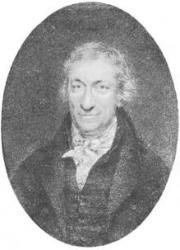
Robert Cooke

1768 - 1814 Person Name: R. Cooke, 1768 - 1814 Composer of "[Blessed is the man that walketh]" in The Hymnary

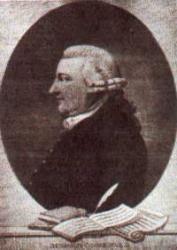
Benjamin Cooke

1734 - 1793 Composer of "[Blessed is the man that walketh not in the counsel of the ungodly]" in Songs for the Lord's House Born: November 28, 1734, Lon­don, Eng­land. Died: Sep­tem­ber 14, 1793, Lon­don, Eng­land. Buried: In the west cloister of West­min­ster Ab­bey, Lon­don, Eng­land. Son of Ben­ja­min Cooke, a Co­vent Gar­den mu­sic pub­lish­er, Cooke stu­died un­der Pep­usch start­ing at age 9, and with­in three years was able to serve as as­sist­ant to John Ro­bin­son, or­gan­ist at West­min­ster Ab­bey. He suc­ceeded Pep­usch as con­duct­or at the Acad­e­my of An­cient Mu­sic in 1752. At West­min­ster Ab­bey, he be­came mas­ter of the chor­ist­ers 1757, lay vi­car in 1758, and or­gan­ist in 1762. Cooke was ed­u­cat­ed at Cam­bridge (MusD 1775) and Ox­ford (doc­tor­ate 1782). He be­came org­anist at St. Mar­tin-in-the-Fields in 1782, with his son Ro­bert suc­ceed­ing him there in 1784. He be­came as­sist­ant di­rect­or at the Han­del Com­mem­o­ra­tion in 1784, and re­signed the con­duct­or­ship at the Acad­e­my of An­cient Mu­sic in 1784. --www.hymntime.com/tch

Stephen Elvey

1805 - 1860 Person Name: Elvey Composer of "[Blessed is the man that hath not walked in the counsel of the ungodly, nor stood in the way of sinners]" in The Sunday-School Hymnal and Service Book (Ed. A)

Pages


Export as CSV
It looks like you are using an ad-blocker. Ad revenue helps keep us running. Please consider white-listing Hymnary.org or getting Hymnary Pro to eliminate ads entirely and help support Hymnary.org.