You help make Hymnary.org possible. More than 10 million people from 200+ countries found hymns, liturgical resources and encouragement on Hymnary.org in 2025, including you. Every visit affirms the global impact of this ministry.

If Hymnary has been meaningful to you this year, would you take a moment today to help sustain it? A gift of any size—paired with a note of encouragement if you wish—directly supports the server costs, research work and curation that keep this resource freely available to the world.

Give securely online today, or mail a check to:
Hymnary.org
Calvin University
3201 Burton Street SE
Grand Rapids, MI 49546

Thank you for your partnership, and may the hope of Advent fill your heart.

Person Results

Text Identifier:"^make_channels_for_the_streams_of_love$"
In:person

Planning worship? Check out our sister site, ZeteoSearch.org, for 20+ additional resources related to your search.
Showing 1 - 10 of 15Results Per Page: 102050

Charles H. Webb

b. 1933 Person Name: Charles H. Webb, 1933- Composer of "LAND OF REST" in Singing the Living Tradition

C. G. Gläser

1784 - 1829 Person Name: Gläzer Composer of "AZMON" in Hymnal Amore Dei Carl Gotthelf Gläser Germany 1781-1829. Born at Weissenfels, Burgenlandkreis, Sachsen-Anhalt, Germany, he received musical training from his father, after which he attended St. Thomas school in Leipzig. He became an author and composer. At Barmen he taught voice, piano, and violin. He also wrote and conducted chorale music. He died at Barmen. John Perry

Samuel Webbe

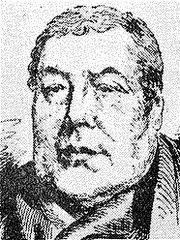
1740 - 1816 Person Name: S. Webbe Composer of "EMANUEL" in Song-Hymnal of Praise and Joy Samuel Webbe (the elder; b. London, England, 1740; d. London, 1816) Webbe's father died soon after Samuel was born without providing financial security for the family. Thus Webbe received little education and was apprenticed to a cabinet­maker at the age of eleven. However, he was determined to study and taught himself Latin, Greek, Hebrew, French, German, and Italian while working on his apprentice­ship. He also worked as a music copyist and received musical training from Carl Barbant, organist at the Bavarian Embassy. Restricted at this time in England, Roman Catholic worship was freely permitted in the foreign embassies. Because Webbe was Roman Catholic, he became organist at the Portuguese Chapel and later at the Sardinian and Spanish chapels in their respective embassies. He wrote much music for Roman Catholic services and composed hymn tunes, motets, and madrigals. Webbe is considered an outstanding composer of glees and catches, as is evident in his nine published collections of these smaller choral works. He also published A Collection of Sacred Music (c. 1790), A Collection of Masses for Small Choirs (1792), and, with his son Samuel (the younger), Antiphons in Six Books of Anthems (1818). Bert Polman

Thomas Augustine Arne

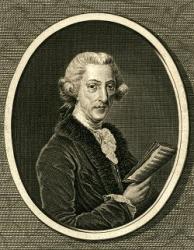
1710 - 1778 Person Name: T. A. Arne Composer of "ARLINGTON" in Isles of Shoals Hymn Book and Candle Light Service Dr. Thomas Augustine Arne was born March 12, 1710, in London; became early celebrated as a composer, and established his reputation by settling Milton's "Comus" to music - light, airy, and original; he composed many songs, and nearly all his attempts were successful; died March 5, 1778, aged 68. A Dictionary of Musical Information by John W. Moore, Boston: Oliver, Ditson & Company, 1876

Orlando Gibbons

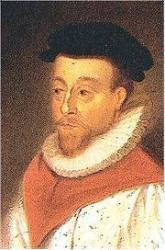
1583 - 1625 Composer of "SONG 67" in Hymns of the Spirit for Use in the Free Churches of America Orlando Gibbons (baptised 25 December 1583 – 5 June 1625) was an English composer, virginalist and organist of the late Tudor and early Jacobean periods. He was a leading composer in the England of his day. Gibbons was born in Cambridge and christened at Oxford the same year – thus appearing in Oxford church records. Between 1596 and 1598 he sang in the Choir of King's College, Cambridge, where his brother Edward Gibbons (1568–1650), eldest of the four sons of William Gibbons, was master of the choristers. The second brother Ellis Gibbons (1573–1603) was also a promising composer, but died young. Orlando entered the university in 1598 and achieved the degree of Bachelor of Music in 1606. James I appointed him a Gentleman of the Chapel Royal, where he served as an organist from at least 1615 until his death. In 1623 he became senior organist at the Chapel Royal, with Thomas Tomkins as junior organist. He also held positions as keyboard player in the privy chamber of the court of Prince Charles (later King Charles I), and organist at Westminster Abbey. He died at age 41 in Canterbury of apoplexy, and a monument to him was built in Canterbury Cathedral. A suspicion immediately arose that Gibbons had died of the plague, which was rife in England that year. Two physicians who had been present at his death were ordered to make a report, and performed an autopsy, the account of which survives in The National Archives: We whose names are here underwritten: having been called to give our counsels to Mr. Orlando Gibbons; in the time of his late and sudden sickness, which we found in the beginning lethargical, or a profound sleep; out of which, we could never recover him, neither by inward nor outward medicines, & then instantly he fell in most strong, & sharp convulsions; which did wring his mouth up to his ears, & his eyes were distorted, as though they would have been thrust out of his head & then suddenly he lost both speech, sight and hearing, & so grew apoplectical & lost the whole motion of every part of his body, & so died. Then here upon (his death being so sudden) rumours were cast out that he did die of the plague, whereupon we . . . caused his body to be searched by certain women that were sworn to deliver the truth, who did affirm that they never saw a fairer corpse. Yet notwithstanding we to give full satisfaction to all did cause the skull to be opened in our presence & we carefully viewed the body, which we found also to be very clean without any show or spot of any contagious matter. In the brain we found the whole & sole cause of his sickness namely a great admirable blackness & syderation in the outside of the brain. Within the brain (being opened) there did issue out abundance of water intermixed with blood & this we affirm to be the only cause of his sudden death. His death was a shock to peers and the suddenness of his passing drew comment more for the haste of his burial – and of its location at Canterbury rather than the body being returned to London. His wife, Elizabeth, died a little over a year later, aged in her mid-30s, leaving Orlando's eldest brother, Edward, to care for the children left orphans by this event. Of these children only the eldest son, Christopher Gibbons, went on to become a musician. One of the most versatile English composers of his time, Gibbons wrote a quantity of keyboard works, around thirty fantasias for viols, a number of madrigals (the best-known being "The Silver Swan"), and many popular verse anthems. His choral music is distinguished by his complete mastery of counterpoint, combined with his wonderful gift for melody. Perhaps his most well known verse anthem is This is the record of John, which sets an Advent text for solo countertenor or tenor, alternating with full chorus. The soloist is required to demonstrate considerable technical facility at points, and the work at once expresses the rhetorical force of the text, whilst never being demonstrative or bombastic. He also produced two major settings of Evensong, the Short Service and the Second Service. The former includes a beautifully expressive Nunc dimittis, while the latter is an extended composition, combining verse and full sections. Gibbons's full anthems include the expressive O Lord, in thy wrath, and the Ascension Day anthem O clap your hands together for eight voices. He contributed six pieces to the first printed collection of keyboard music in England, Parthenia (to which he was by far the youngest of the three contributors), published in about 1611. Gibbons's surviving keyboard output comprises some 45 pieces. The polyphonic fantasia and dance forms are the best represented genres. Gibbons's writing exhibits full mastery of three- and four-part counterpoint. Most of the fantasias are complex, multisectional pieces, treating multiple subjects imitatively. Gibbons's approach to melody in both fantasias and dances features a capability for almost limitless development of simple musical ideas, on display in works such as Pavane in D minor and Lord Salisbury's Pavan and Galliard. In the 20th century, the Canadian pianist Glenn Gould championed Gibbons's music, and named him as his favorite composer. Gould wrote of Gibbons's hymns and anthems: "ever since my teen-age years this music ... has moved me more deeply than any other sound experience I can think of." In one interview, Gould compared Gibbons to Beethoven and Webern: ...despite the requisite quota of scales and shakes in such half-hearted virtuoso vehicles as the Salisbury Galliard, one is never quite able to counter the impression of music of supreme beauty that lacks its ideal means of reproduction. Like Beethoven in his last quartets, or Webern at almost any time, Gibbons is an artist of such intractable commitment that, in the keyboard field, at least, his works work better in one's memory, or on paper, than they ever can through the intercession of a sounding-board. To this day, Gibbons's obit service is commemorated every year in King's College Chapel, Cambridge. --wikipedia.org

Henry Purcell

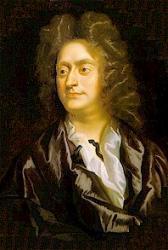
1659 - 1695 Composer of "COLCHESTER" in Christian Science Hymnal (Rev. and enl.) Henry Purcell (b. Westminster, London, England, 1659; d. Westminster, 1695), was perhaps the greatest English composer who ever lived, though he only lived to the age of thirty-six. Purcell's first piece was published at age eight when he was also a chorister in the Chapel Royal. When his voice changed in 1673, he was appointed assistant to John Hingston, who built chamber organs and maintained the king's instruments. In 1674 Purcell began tuning the Westminster Abbey organ and was paid to copy organ music. Given the position of composer for the violins in 1677, he also became organist at Westminster Abbey in 1679 (at age twenty) and succeeded Hingston as maintainer of the king's instruments (1683). Purcell composed music for the theater (Dido and Aeneas, c. 1689) and for keyboards, provided music for royal coronations and other ceremonies, and wrote a substantial body of church music, including eighteen full anthems and fifty-six verse anthems. Bert Polman

William Vincent Wallace

1812 - 1865 Person Name: Wallace Composer of "[Make channels for the streams of love]" in Good-Will Songs

William Jones

1726 - 1800 Composer of "ST. STEPHEN" in The Beacon Hymnal Born: Ju­ly 30, 1726, Lo­wick, North­amp­ton­shire, Eng­land. Died: Jan­u­ary 6, 1800, Hol­ling­bourne, Kent, Eng­land. Pseudonym: Jones of Nay­land. Jones was ed­u­cat­ed at Char­ter­house and Un­i­ver­si­ty Coll­ege, Ox­ford. He be­came Vi­car of Beth­ers­den, Kent (1764); Pluck­ley, Kent; and Pas­ton, North­amp­ton­shire; per­pe­tu­al Cur­ate of Nay­land, Suf­folk (1777); and Rec­tor of Hol­ling­bourne, Kent (1798). He be­came a Fel­low of the Roy­al So­ci­e­ty in 1775. His works in­clude: The Ca­tho­lic Doc­trine of the Trin­i­ty, 1756 Fairchild Dis­cours­es, 1775 Physiological Dis­qui­si­tions, 1781 A Treatise on the Art of Mu­sic, 1784 Church Piec­es for the Or­gan with Four An­thems in Score, 1789 Jones was a de­scend­ant of the Col. J. Jones, who was one of the sig­na­tor­ies to the death war­rant of King Charles I of Eng­land. He used to reg­u­lar­ly ob­serve Jan­u­a­ry 30 as a day of fast­ing and hu­mil­i­a­tion for his an­ces­tor’s sin. Music: ST. STEPHEN --www.hymntime.com/tch/

James Turle

1802 - 1882 Person Name: J. Turle Composer of "WESTMINSTER" in Worship Song TURLE, JAMES (1802–1882), organist and composer, son of James Turle, an amateur 'cello-player, was born at Taunton, Somerset, on 5 March 1802. From July 1810 to December 1813 he was a chorister at Wells Cathedral under Dodd Perkins, the organist. At the age of eleven he came to London, and was articled to John Jeremiah Goss, but he was largely self-taught. He had an excellent voice and frequently sang in public. John Goss [q. v.], his master's nephew, was his fellow student, and thus the future organists of St. Paul's Cathedral and Westminster Abbey were pupils together. Turle was organist of Christ Church, Surrey (Blackfriars Road), 1819–1829, and of St. James's, Bermondsey, 1829–31. His connection with Westminster Abbey began in 1817, when he was only fifteen. He was at first pupil of and assistant to G. E. Williams, and subsequently deputy to Thomas Greatorex [q. v.], Williams's successor as organist of the abbey. On the death of Greatorex on 18 July 1831, Turle was appointed organist and master of the choristers, an office which he held for a period of fifty-one years. Turle played at several of the great musical festivals, e.g. Birmingham and Norwich, under Mendelssohn and Spohr, but all his interests were centred in Westminster Abbey. His playing at the Handel festival in 1834 attracted special attention. At his own request the dean and chapter relieved him of the active duties of his post on 26 Sept. 1875, when his service in D was sung, and Dr. (now Professor Sir John Frederick) Bridge, the present organist, became permanent deputy-organist. Turle continued to hold the titular appointment till his death, which took place at his house in the Cloisters on 28 June 1882. The dean offered a burial-place within the precincts of the abbey, but he was interred by his own express wish beside his wife in Norwood cemetery. A memorial window, in which are portraits of Turle and his wife, was placed in the north aisle of the abbey by one of his sons, and a memorial tablet has been affixed to the wall of the west cloister. Turle married, in 1823, Mary, daughter of Andrew Honey, of the exchequer office. She died in 1869, leaving nine children. Henry Frederic Turle [q. v.] was his fourth son. His younger brother Robert was for many years organist of Armagh Cathedral. Turle was an able organist of the old school, which treated the organ as essentially a legato instrument. He favoured full ‘rolling’ chords, which had a remarkable effect on the vast reverberating space of the abbey. He had a large hand, and his ‘peculiar grip’ of the instrument was a noticeable feature of his playing. His accompaniments were largely traditional of all that was best in his distinguished predecessors, and he greatly excelled in his extemporaneous introductions to the anthems. Like Goss, he possessed great facility in reading from a ‘figured bass.’ Of the many choristers who passed through his hands, one of the most distinguished is Mr. Edward Lloyd, the eminent tenor singer. His compositions include services, anthems, chants, and hymn-tunes. Several glees remain in manuscript. In conjunction with Professor Edward Taylor [q. v.] he edited ‘The People's Music Book’ (1844), and ‘Psalms and Hymns’ (S. P. C. K. 1862). His hymn-tunes were collected by his daughter, Miss S. A. Turle, and published in one volume (1885). One of these, ‘Westminster,’ formerly named ‘Birmingham,’ has become widely known, and is very characteristic of its composer. --en.wikisource.org/

Richard Chenevix Trench

1807 - 1886 Author of "Make channels for the streams of love" in Isles of Shoals Hymn Book and Candle Light Service Trench, Richard Chenevix, D.D. was born in North Frederick Street, Dublin, on Sept. 9th, 1807, during a visit of his parents of some mouths to Ireland. His father was Richard Trench, 6th son of Frederick Trench, of Woodlands, Co. Galway; his mother Melesina, only grandchild and heiress of Richard Chenevix, Bishop of Waterford, and widow of Colonel St. George. On his mother's side he was almost purely French, the grandfather of Bishop Chenevix of Waterford, Philip Chenevix of d'Eply of Loraine having only taken refuge in England on the revocation of the Edict of Nantes. The Huguenot refugee families married for a long time within themselves, and in Mrs. Richard Trench, four distinct foreign strains were blended. Her sons (the Archbishop and his brothers, besides his two sisters) were the only descendants of the Refugee Philip, either in the male or female line, all the other branches having come to an end. Trench's home in childhood was Elm Lodge, close to the village of Bursledon, not far from Southampton. In February, 1816 he proceeded to Twyford School, and in 1819 to Harrow, where he won great distinction. In October 1825 he was entered at Trinity College, Cambridge. His mother's correspondence is full of references to a little periodical called The Translator, begun in 1825, or immediately on his becoming an undergraduate. She was his ardent co-worker both as contributor and critic. In 1826 he had acquired Spanish, and in that year applied himself to preparing and publishing a volume of Miscellanies, of which the "profits were to be sent to the committee formed for the relief of the exiled Spaniards." On May 27th, 1827, his mother died at Malvern. The Letters and Memorials (1888) give vivid and exciting details of his continuous interest and daring personal service and sacrifices on behalf of Spain. It was during the winter days of 1829-30 that the consultations and schemes respecting Spain were discussed in John Sterling's apartment. Robert Boyd, Trench's cousin, threw himself and his entire fortune into the plot by purchasing a small ship in the Thames and storing it with arms, in which General Torrijos and fifty picked Spaniards were to sail for the new adventure of the Golden Fleece. The enterprise ended tragically. Boyd and others perished by the inevitable vengeance of the Spanish sovereign when captured. By the hand of God, Trench was safe in Gibraltar. Till far up in young manhood he was undecided as to his calling, Law rather than Divinity colouring his thoughts and plans. He left Cambridge on February 1st, 1829, and rejoined his widowed father at Elm Lodge, near Southampton. He married, at the Abbey Church, Bath, on May 31st, 1832, his own cousin, Frances Mary Trench, daughter of his uncle, Francis Trench (2nd son of Frederick Trench, of Woodlawn, co. Galway, Ireland, and next brother to the 1st Lord Ashtown). On October 7th, 1832, he received Deacon's Orders in Norwich Cathedral at the hands of the aged Bishop Bathurst of Norwich. His first curacy was at Hadleigh, Norfolk, with H. J. Rose. He was ordained priest early in July, 1835, by Bishop Sumner, of Winchester. He published in 1835 The Story of Justin Martyr, and other Poems (Moxon). This was (practically) his first book. In 1838 followed Sabbation, Honor Neale, and other Poems, with Notes. In 1840 appeared his first prose work, Notes on the Parables of our Lord, subsequently companioned with Notes on the Miracles of our Lord (1846). In 1841 "the loving discipline of pain" visited his heart and hearth by the death of his eldest born, a deep sorrow which gave its subtlest and finest inspiration to his Elegiac Poems. A third volume of poetry, Poems from Eastern Sources, the Steadfast Prince, and other Poems, was published early in 1842; and a fourth, Genoveva, later in the same year. Early in 1843 he delivered his Five Sermons before the University of Cambridge, published in 1844. In 1844 also was published Exposition of the Sermon on the Mount, drawn from the Writings of St. Augustine, with Observations. In this same year he became Vicar of Itchen Stoke. In 1845 he delivered a lecture "On Language as an instrument of Knowledge," which expanded into his famous and suggestive Study of Words. In 1846 he was appointed Professor of Divinity at King's College, London, later changed into "Professor of the Exegesis of the New Testament,” which he held until 1858. The friendship between Trench and Maurice here was very beautiful. In 1846 also came the Hulsean Lectures, their subject being Christ "the Desire of all Nations." In 1849 appeared his Sacred Latin Poetry. This is an inestimable book. In 1852, Lessons on Proverbs and Study of Words, and in 1855 English Past and Present appeared. His Synonyms of the New Testament (1854) was a permanent contribution and inspiration to Philology and Theology. Life's Dream: the Great Theatre of the World, from the Spanish of Calderon, with an Essay on his Life and Genius, was published in 1856; 2nd ed. in 1880. The Crimean war drew from him his finest verse, Poems written during the Russian War (1854-55). In 1856 he was appointed Dean of Westminster. In 1861 was published his Commentary on the Epistles to the Seven Churches in Asia. On New Year's Day, 1864, he was consecrated Archbishop of Dublin in Christ Church Cathedral. He instantly took a foremost place in the regard of the entire community. His published Sermons, including his Studies on the Gospels (1867), are amongst the most thoughtful and quietly eloquent in our language; as are his Lectures on Plutarch (1873), and others. Timolem (1881) was his last poem. His final confirmation was in St. Bartholomew's Church on May 16th, 1884. On November 28th, 1884, he resigned his Archbishopric. He died in London, March 28, 1886. Few have left behind them a more stainless, a more loveable, a more enviable memory. He was sweetness and light embodied. [Rev. A. B. Grosart, D.D., LL.D] In the strict sense of the word Archbishop Trench, although a poet, was not a hymn-writer. Some of his poetical pieces are used as hymns, but their use is limited. These include:— 1. High thoughts at first, and visions high. Ordination. Appeared in his Story of Justin Martyr, &c, 1835, p. 53, in 1 stanza of 8 lines, and entitled "To a Friend entering the Ministry." Its use as a hymn is in an abbreviated form. 2. I say to thee, do thou repeat. Safety in Divine Guidance. Published in his Story of Justin Martyr, &c, 1835, in 10 stanzas of 3 lines, again in his Poems, 1865, p. 98, and ed. 1885, i. p. 140. It is headed, "The Kingdom of God." 3. Let all men know that all men move. Love of God. Published in his Story of Justin Martyr, &c, 1835, p. 111. 4. Lord, weary of a painful way. Evening. Appeared in his Sabbation, Honor Neale, &c, 1838, p. 117; and Poems, 1885, i. p. 207. 5. Not Thou from us, 0 Lord, hut we. Divine Love. Published in his Story of Justin Martyr, &c, 1835, p. 52, in 14 1., and in his Poems, 1885, i. p. 109. 6. Pour forth the oil, pour boldly forth. The Law of Love. Appeared in his Sabbation, Honor Neale, and Other Poems, 1838, p. 132, in 5 stanzas of 4 lines, and entitled "The Law of Love," also in his Poems, 1865, p. 150, and ed. 1885, i. p. 215. From this is taken the hymn, Make channels for the stream of love." 7. Some murmur when their sky is clear. Contentment. Published in the Sabbation, Honor Neale, and Other Poems, 1838, p. 116, in 2 st. of 8 1., in his Poems, 1865, p. 113, and ed. 1885, i. p. 142. 8. Thou inevitable day. Death. From his Sabbation, Honor Neale, &c, 1838, p. 99, in 14 stanzas of 3 lines, and headed, "The Day of Death." Also in Poems, 1885, i. p. 213. -- Excerpts from John Julian, Dictionary of Hymnology (1907)

Pages


Export as CSV
It looks like you are using an ad-blocker. Ad revenue helps keep us running. Please consider white-listing Hymnary.org or getting Hymnary Pro to eliminate ads entirely and help support Hymnary.org.