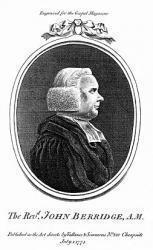
O happy saints [that] who dwell in light, And walk with Jesu, &c. J. Berridge. [Saints in Glory.] Published in his Zion's Songs, &c, 1785, No. 143, in 6 stanzas of 4 lines, and headed, “At Thy right hand are pleasures for evermore." Psalms xvi. l.1 (edition 1842, p. 139). Although seldom found in English collections, its use in America, sometimes abbreviated as in the Baptist Service of Song, Boston. 1871, is somewhat extensive. It is based upon Ralph Erskine's "Aurora veils her rosy face." The second stanza in Berridge reads:—
" Releas'd from sin, and toil, and grief,
Death was their gate to endless life;
An open'd cage to let them fly,
And build their happy nest on high."
This reads in Erskine's original:—
"Death is to us a sweet repose,
The bud was ope'd to show the rose;
The cage was broke to let us fly
And build our happy nest on high."
The rest of the hymn follows Erskine's line of thought, but there is no repetition of his actual words.
--John Julian, Dictionary of Hymnology (1907)


 My Starred Hymns
 My FlexScores
 My Hymnals
 My Purchased Files