You help make Hymnary.org possible. More than 10 million people from 200+ countries found hymns, liturgical resources and encouragement on Hymnary.org in 2025, including you. Every visit affirms the global impact of this ministry.

If Hymnary has been meaningful to you this year, would you take a moment today to help sustain it? A gift of any size—paired with a note of encouragement if you wish—directly supports the server costs, research work and curation that keep this resource freely available to the world.

Give securely online today, or mail a check to:
Hymnary.org
Calvin University
3201 Burton Street SE
Grand Rapids, MI 49546

Thank you for your partnership, and may the hope of Advent fill your heart.

Search Results

Text Identifier:"^with_happy_voices_ringing$"

Planning worship? Check out our sister site, ZeteoSearch.org, for 20+ additional resources related to your search.

Texts

text icon
Text authorities

With happy voices ringing

Author: William G. Tarrant Meter: 7.6.7.6 D Appears in 90 hymnals Topics: Worship and Praise Used With Tune: ST. THEODULPH

Tunes

tune icon
Tune authorities
Audio

ST. THEODULPH

Meter: 7.6.7.6 D Appears in 653 hymnals Composer and/or Arranger: Melchior Teschner Tune Key: C Major Incipit: 15567 11321 17151 Used With Text: With happy voices ringing
Page scansAudio

AURELIA

Appears in 1,162 hymnals Composer and/or Arranger: Samuel Sebastian Wesley Incipit: 33343 32116 54345 Used With Text: With happy voices ringing
Page scansAudio

HOMELAND

Appears in 144 hymnals Composer and/or Arranger: Arthur S. Sullivan Incipit: 13366 55431 17113 Used With Text: With happy voices singing

Instances

instance icon
Published text-tune combinations (hymns) from specific hymnals
Text

With Happy Voices Ringing

Author: William G. Tarrant Hymnal: Children's Hymnal #8 (1957) Lyrics: 1 With happy voices ringing, Thy children, Lord, appear; Their joyous praises bringing In anthems full and clear. For skies of golden splendor, For azure rolling sea, For blossoms sweet and tender, O Lord, we worship thee. 2 What though no eye beholds thee, No hand thy touch may feel, Thy universe unfolds thee, Thy starry heavens reveal. The earth and all its glory, Our homes and all we love, Tell forth the wondrous story Of One who reigns above. 3 And shall we not adore thee, With more than joyous song, And live in truth before thee, All beautiful and strong? Lord, bless our weak endeavor Thy servants true to be, And through all life, forever, To live our praise to thee. Amen. Topics: Songs Suitable for Juniors; Praise Hymns; Service; Universe Languages: English Tune Title: [With happy voices ringing]
Text

With Happy Voices Ringing

Author: William G. Tarrant Hymnal: The Hymnal of The Evangelical United Brethren Church #31 (1957) Meter: 7.6.7.6 D Lyrics: 1 With happy voices ringing, Thy children, Lord, appear, Their joyous praises bringing In anthems sweet and clear. For skies of golden splendor, For azure rolling sea, For blossoms sweet and tender, O Lord, we worship Thee. 2 What though no eye beholds Thee, No hand Thy hand may feel, Thy universe unfolds Thee, Thy starry heavens reveal. The earth and all its glory, Our homes and all we love, Tell forth the wondrous story Of One who reigns above. 3 And shall we not adore Thee, With more than joyous song, And live in truth before Thee, All beautiful and strong? Lord, bless our souls' endeavor Thy servants true to be, And through all life, forever, To live our praise to Thee. Amen. Topics: Worship Opening Scripture: Psalm 100 Tune Title: FAITHFUL
TextPage scan

With Happy Voices Ringing

Author: William George Tarrant Hymnal: The Hymnbook #463 (1955) Meter: 7.6.7.6 D Lyrics: 1 With happy voices ringing, Thy children, Lord, appear; Their joyous praises bringing In anthems sweet and clear. For skies of golden splendor, For azure rolling sea, For blossoms sweet and tender, O Lord, we worship Thee. 2 What though no eye beholds Thee, No hand Thy hand may feel, Thy universe unfolds Thee, Thy starry heavens reveal; The earth and all its glory, Our homes and all we love, Tell forth the wondrous story Of One who reigns above. 3 And shall we not adore Thee, With more than joyous song, And live in truth before Thee, All beautiful and strong? Lord, bless our souls' endeavor Thy servants true to be, And through all life, forever, To live our praise to Thee. Amen. Topics: Adoration and Praise; Cheerfulness; God Nature, in; Young, Hymns for the; Church, The Young, Hymns for the Scripture: Psalm 100 Tune Title: TOURS

People

person icon
Authors, composers, editors, etc.

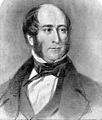
Samuel Sebastian Wesley

1810 - 1876 Composer of "AURELIA" in Services for Congregational Worship. The New Hymn and Tune Book Samuel Sebastian Wesley (b. London, England, 1810; d. Gloucester, England, 1876) was an English organist and composer. The grandson of Charles Wesley, he was born in London, and sang in the choir of the Chapel Royal as a boy. He learned composition and organ from his father, Samuel, completed a doctorate in music at Oxford, and composed for piano, organ, and choir. He was organist at Hereford Cathedral (1832-1835), Exeter Cathedral (1835-1842), Leeds Parish Church (1842­-1849), Winchester Cathedral (1849-1865), and Gloucester Cathedral (1865-1876). Wesley strove to improve the standards of church music and the status of church musicians; his observations and plans for reform were published as A Few Words on Cathedral Music and the Music System of the Church (1849). He was the musical editor of Charles Kemble's A Selection of Psalms and Hymns (1864) and of the Wellburn Appendix of Original Hymns and Tunes (1875) but is best known as the compiler of The European Psalmist (1872), in which some 130 of the 733 hymn tunes were written by him. Bert Polman

Henry Thomas Smart

1813 - 1879 Person Name: Henry Smart Composer of "[With happy voices singing]" in Gospel Carols Henry Smart (b. Marylebone, London, England, 1813; d. Hampstead, London, 1879), a capable composer of church music who wrote some very fine hymn tunes (REGENT SQUARE, 354, is the best-known). Smart gave up a career in the legal profession for one in music. Although largely self taught, he became proficient in organ playing and composition, and he was a music teacher and critic. Organist in a number of London churches, including St. Luke's, Old Street (1844-1864), and St. Pancras (1864-1869), Smart was famous for his extemporiza­tions and for his accompaniment of congregational singing. He became completely blind at the age of fifty-two, but his remarkable memory enabled him to continue playing the organ. Fascinated by organs as a youth, Smart designed organs for impor­tant places such as St. Andrew Hall in Glasgow and the Town Hall in Leeds. He composed an opera, oratorios, part-songs, some instrumental music, and many hymn tunes, as well as a large number of works for organ and choir. He edited the Choralebook (1858), the English Presbyterian Psalms and Hymns for Divine Worship (1867), and the Scottish Presbyterian Hymnal (1875). Some of his hymn tunes were first published in Hymns Ancient and Modern (1861). Bert Polman

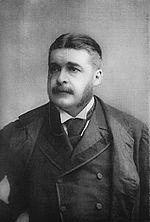
Arthur Sullivan

1842 - 1900 Person Name: Arthur S. Sullivan Composer of "HOMELAND" in A Hymnal for Joyous Youth Arthur Seymour Sullivan (b Lambeth, London. England. 1842; d. Westminster, London, 1900) was born of an Italian mother and an Irish father who was an army band­master and a professor of music. Sullivan entered the Chapel Royal as a chorister in 1854. He was elected as the first Mendelssohn scholar in 1856, when he began his studies at the Royal Academy of Music in London. He also studied at the Leipzig Conservatory (1858-1861) and in 1866 was appointed professor of composition at the Royal Academy of Music. Early in his career Sullivan composed oratorios and music for some Shakespeare plays. However, he is best known for writing the music for lyrics by William S. Gilbert, which produced popular operettas such as H.M.S. Pinafore (1878), The Pirates of Penzance (1879), The Mikado (1884), and Yeomen of the Guard (1888). These operettas satirized the court and everyday life in Victorian times. Although he com­posed some anthems, in the area of church music Sullivan is best remembered for his hymn tunes, written between 1867 and 1874 and published in The Hymnary (1872) and Church Hymns (1874), both of which he edited. He contributed hymns to A Hymnal Chiefly from The Book of Praise (1867) and to the Presbyterian collection Psalms and Hymns for Divine Worship (1867). A complete collection of his hymns and arrangements was published posthumously as Hymn Tunes by Arthur Sullivan (1902). Sullivan steadfastly refused to grant permission to those who wished to make hymn tunes from the popular melodies in his operettas. Bert Polman
It looks like you are using an ad-blocker. Ad revenue helps keep us running. Please consider white-listing Hymnary.org or getting Hymnary Pro to eliminate ads entirely and help support Hymnary.org.