You help make Hymnary.org possible. More than 10 million people from 200+ countries found hymns, liturgical resources and encouragement on Hymnary.org in 2025, including you. Every visit affirms the global impact of this ministry.

If Hymnary has been meaningful to you this year, would you take a moment today to help sustain it? A gift of any size—paired with a note of encouragement if you wish—directly supports the server costs, research work and curation that keep this resource freely available to the world.

Give securely online today, or mail a check to:
Hymnary.org
Calvin University
3201 Burton Street SE
Grand Rapids, MI 49546

Thank you for your partnership, and may the hope of Advent fill your heart.

Person Results

Topics:celebration+of+faith
In:people

Planning worship? Check out our sister site, ZeteoSearch.org, for 20+ additional resources related to your search.
Showing 1 - 10 of 173Results Per Page: 102050

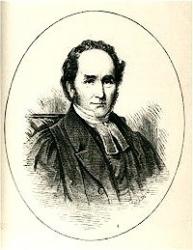
John Chandler

1806 - 1876 Person Name: John Chandler, 1806-76 Topics: Celebration of Faith Translator of "Christ is our cornerstone" in Together in Song John Chandler, one of the most successful translators of hymns, was born at Witley in Surrey, June 16, 1806. He was educated at Corpus Christi College, Oxford, B.A. 1827, M.A. 1830. Ordained deacon in 1831 and priest in 1832, he succeeded his father as the patron and vicar of Whitley, in 1837. His first volume, entitled The Hymns of the Primitive Church, now first Collected, Translated and Arranged, 1837, contained 100 hymns, for the most part ancient, with a few additions from the Paris Breviary of 1736. Four years later, he republished this volume under the title of hymns of the Church, mostly primitive, collected, translated and arranged for public use, 1841. Other publications include a Life of William of Wykeham, 1842, and Horae sacrae: prayers and meditations from the writings of the divines of the Anglican Church, 1854, as well as numerous sermons and tracts. Chandler died at Putney on July 1, 1876. --The Hymnal 1940 Companion =============== Chandler, John, M.A.,one of the earliest and most successful of modern translators of Latin hymns, son of the Rev. John F. Chandler, was born at Witley, Godalming, Surrey, June 16, 1806, and educated at Corpus Christi College, Oxford, where he graduated in 1827. He took Holy Orders in 1831, and became Vicar of Witley in 1837. He died at Putney, July 1, 1876. Besides numerous Sermons and Tracts, his prose works include Life of William of Wykeham, 1842; and Horae Sacrae; Prayers and Meditations from the writings of the Divines of the Anglican Church, with an Introduction, 1844. His translations, he says, arose out of his desire to see the ancient prayers of the Anglican Liturgy accompanied by hymns of a corresponding date of composition, and his inability to find these hymns until he says, "My attention was a short time ago directed to some translations [by Isaac Williams] which appeared from time to time in the British Magazine, very beautifully executed, of some hymns extracted from the Parisian Breviary,with originals annexed. Some, indeed, of the Sapphic and Alcaic and other Horatian metres, seem to be of little value; but the rest, of the peculiar hymn-metre, Dimeter Iambics, appear ancient, simple, striking, and devotional—in a word in every way likely to answer our purpose. So I got a copy of the Parisian Breviary [1736], and one or two other old books of Latin Hymns, especially one compiled by Georgius Cassander, printed at Cologne, in the year 1556, and regularly applied myself to the work of selection and translation. The result is the collection I now lay before the public." Preface, Hymns of the Primitive Church, viii., ix. This collection is:— (1) The Hymns of the Primitive Church, now first Collected, Translated, and Arranged, by the Rev. J. Chandler. London, John W. Parker, 1837. These translations were accompanied by the Latin texts. The trsanslations rearranged, with additional translations, original hymns by Chandler and a few taken from other sources, were republished as (2) The Hymns of the Church, mostly Primitive, Collected, Translated, and Arranged/or Public Use, by the Rev. J. Chandler, M.A. London, John W. Parker, 1841. From these works from 30 to 40 translations have come gradually into common use, some of which hold a foremost place in modern hymnals, "Alleluia, best and sweetest;" "Christ is our Corner Stone;" "On Jordan's bank the Baptist's cry;" "Jesus, our Hope, our hearts' Desire;" "Now, my soul, thy voice upraising;" "Once more the solemn season calls;" and, "O Jesu, Lord of heavenly grace;" being those which are most widely used. Although Chandler's translations are somewhat free, and, in a few instances, doctrinal difficulties are either evaded or softened down, yet their popularity is unquestionably greater than the translations of several others whose renderings are more massive in style and more literal in execution. --John Julian, Dictionary of Hymnology (1907)

W. H. Havergal

1793 - 1870 Person Name: William Henry Havergal, 1793-1870 Topics: Celebration of Faith Harmonizer of "STUTTGART" in Together in Song Havergal, William Henry, M.A, son of William Havergal, was born at High Wycombe, Buckinghamshire, 1793, and was educated at St. Edmund's Hall, Oxford (B.A. 1815, M.A. 1819). On taking Holy Orders he became in 1829 Rector of Astley, Worcestershire; in 1842, Rector of St. Nicholas, Worcester; and in 1860, Rector of Shareshill, near Wolverhampton. He was also Hon. Canon in Worcester Cathedral from 1845. He died April 18, 1870. His hymns, about 100 in all, were in many instances written for special services in his own church, and printed as leaflets. Several were included in W. Carus Wilson's Book of General Psalmody, 1840 (2nd ed., 1842); and in Metrical Psalms & Hymns for Singing in Churches, Worcester, Deighton, 1849, commonly known as the Worcester Diocesan Hymn Book, and of which he was the Editor. In Life Echoes, 1883, his hymns are given with those of Miss Havergal. Of those in common use the greater part are in Mercer, and Snepp's Songs of Grace & Glory. Although his hymns are all good, and two or three are excellent, it is not as a hymnwriter but as a musician that Canon Havergal is best known. His musical works and compositions included, in addition to numerous individual hymn tunes and chants, the Gresham Prize Service, 1836; the Gresham Prize Anthem, 1845; Old Church Psalmody, 1849; History of the Old 100th Psalm tune, 1854, &c. He also reprinted Ravenscroft’s Psalter of 1611. His hymns in common use include:— 1. Blessed Jesus, lord and Brother. School Festivals, 1833. Published in Life Echoes, 1883. 2. Brighter than meridian splendour. Christ the glory of His Church. 1830. Published in W. C. Wilson's Book of General Psalms, 1840; the Worcester Psalms & Hymns, 1849, &c. 3. Christians, awake to joy and praise. Christmas Carol, c. 1860. Printed on broadsheet, with music by the author, and sold on behalf of the Lancashire Cotton Distress Fund. 4. Come, Shepherds, come, 'tis just a year. Christmas Carol. 1860. Published in Snepp's Songs of Grace & Glory, 5. For ever and for ever, Lord. Missions, 1866, for the Church Mission Society. Published in Snepp's Songs of Grace & Glory, 1872, and the Life Echoes, 1883. 6. Hallelujah, Lord, our voices. Sunday. 1828. Published in W. C. Wilson's Book of General Psalms, 1840; the Worcester Psalms & Hymns, 1849; Life Echoes, 1883, &c. 7. Heralds of the Lord of glory. Missions. First sung in Astley Church, Sep. 23, 1827. Published in Miss Havergal's Starlight through the Shadows, 1880; Snepp's Songs of Grace & Glory, 1872, &c. 8. Hosanna, raise the pealing hymn. Praise to Christ, 1833, and first sung in Astley Church, June 9, 1833. Published in W. C. Wilson's Book of General Psalmody, 1840; the Worcester Psalms & Hymns, 1849; Life Echoes 1883, &c. 9. How vast the field of souls. Missions. 1858. Printed for Shareshill Church Miss. Anniversary, 1863, and published in Snepp's Songs of Grace & Glory, 1872, and the Life Echoes, 1883. 10. In doubt and dread dismay. Missions. Written in 1837, and published in W. C. Wilson's Book of General Psalmody, 1840; the Worcester Psalms & Hymns, 1849, &c. 11. Jerusalem the golden, The home of saints shall be. Heaven. Published in Life Echoes, 1883. 12. My times are in Thy hand, Their best, &c. 1860. Published in Snepp's Songs of Grace & Glory, 1872, the Records of the author's life and work, and Life Echoes, 1883. The editor of the Records says (p. 159) "this hymn has been much appreciated, and well illustrates the devotional and cheerful spirit of the writer." 13. No dawn of holy light. Sunday. 1825. Printed in 1831 on a leaflet, and published in W. C. Wilson's Book of General Psalmody, 1840; the Worcester Psalms & Hymns, 1849; Life Echoes, 1883, &c. 14. Our faithful God hath sent us. Harvest. Written at Shareshill in 1863, for a Harvest Festival. Published in Snepp's Songs of Grace & Glory 1872, and Life Echoes, 1883. 15. Shout, 0 earth! from silence waking. Praise to Jesus for Redemption. 1841. Published in the Worcester Psalms & Hymns, 1849; Snepp's Songs of Grace & Glory, 1872, &c. 16. So happy all the day. Christmas Carol, c. 1834. Published in Snepp's Songs of Grace & Glory, 1872. 17. Soon the trumpet of salvation. Missions. 1826. Published in Snepp's Songs of Grace & Glory, 1872. 18. To praise our Shepherd's [Saviour's] care. The Good Shepherd. Written after witnessing the death of Elizabeth Edwards, aged 12, of St. Nicholas, Worcester, and printed as a leaflet. Published in W. C. Wilson's Book of General Psalmody, 1840; the Worcester Psalms & Hymns, 1849; Life Echoes, &c, 1883. The author also published a Memoir of the child. 19. Widely 'midst the slumbering nations. Missions. 1828. Published in the Worcester Psalms & Hymns, 1849; Snepp's Songs of Grace & Glory, 1872, &c. In addition to these hymns, his carols, "How grand, and how bright," "Our festal morn is come," and others are annotated under their respective first lines. Most of these carols and hymns were reprinted in Christmas Carols & Sacred Songs, Chiefly by the Rev. W. H. Havergal, London, Nisbet, 1869. --John Julian, Dictionary of Hymnology (1907) ===================== Havergal, W. H., p. 498, i. Other hymns are: — 1. Lord, if judgments now are waking. Second Advent. Published in W. Carus Wilson's Book of General Psalmody, 1840; in Kennedy, 1863, &c. 2. Remember, Lord, Thy word of old displayed. Missions. "Composed for a special prayer-meeting for missionary labourers, held in the author's schoolroom, in the parish of St. Nicholas's, Worcester." (W. F. Stevenson's Hymns for Church and Home, 1873, where the original text is also given.) It must be noted that No. 17, at p. 498, ii., "Soon the trumpet of salvation," was first published in A Collection of Original Airs adapted to Hymns, &c, 1826. --John Julian, Dictionary of Hymnology, Appendix, Part II (1907)

Edmond Budry

1854 - 1932 Person Name: Edmond Louis Budry, 1854-1932 Topics: Celebration of Faith Author of "Yours be the glory, risen, conquering Son" in Together in Song

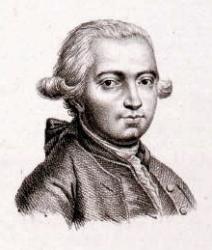
Felice Giardini

1716 - 1796 Person Name: Felice Giardini, 1716-196 Topics: Celebration of Faith Composer of "MOSCOW" in Together in Song Felice Giardini, born in Italy. When young, he studied singing, harpsichord, and violin. He became a composer and violin virtuoso. By age 12 he was playing in theatre orchestras. His most instructive lesson: While playing a solo passage during an opera, he decided to show off his skills by improvising several bravura variations that the composer, Jommelli, had not written . Although the audience applauded loudly, Jomelli, who happened to be there, went up and slapped Giardini in the face. He learned a lesson from that. He toured Europe as a violinist, considered one of the greatest musical artists of his time. He served as orchestra leader and director of the Italian Opera in London, giving concerts. He tried to run a theatre in Naples, but encountered adversity. He went to Russia, but had little fortune there, where he died. John Perry

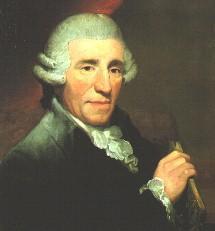
Joseph Haydn

1732 - 1809 Person Name: Franz Joseph Haydn, 1732-1809 Topics: Celebration of Faith Composer of "AUSTRIA" in Together in Song Franz Joseph Haydn (b. Rohrau, Austria, 1732; d. Vienna, Austria, 1809) Haydn's life was relatively uneventful, but his artistic legacy was truly astounding. He began his musical career as a choirboy in St. Stephen's Cathedral, Vienna, spent some years in that city making a precarious living as a music teacher and composer, and then served as music director for the Esterhazy family from 1761 to 1790. Haydn became a most productive and widely respected composer of symphonies, chamber music, and piano sonatas. In his retirement years he took two extended tours to England, which resulted in his "London" symphonies and (because of G. F. Handel's influence) in oratorios. Haydn's church music includes six great Masses and a few original hymn tunes. Hymnal editors have also arranged hymn tunes from various themes in Haydn's music. Bert Polman

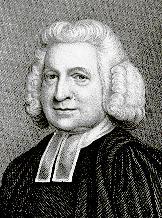
Charles Wesley

1707 - 1788 Person Name: Charles Wesley, 1707-88 Topics: Celebration of Faith Author of "And can it be that I should gain" in Together in Song Charles Wesley, M.A. was the great hymn-writer of the Wesley family, perhaps, taking quantity and quality into consideration, the great hymn-writer of all ages. Charles Wesley was the youngest son and 18th child of Samuel and Susanna Wesley, and was born at Epworth Rectory, Dec. 18, 1707. In 1716 he went to Westminster School, being provided with a home and board by his elder brother Samuel, then usher at the school, until 1721, when he was elected King's Scholar, and as such received his board and education free. In 1726 Charles Wesley was elected to a Westminster studentship at Christ Church, Oxford, where he took his degree in 1729, and became a college tutor. In the early part of the same year his religious impressions were much deepened, and he became one of the first band of "Oxford Methodists." In 1735 he went with his brother John to Georgia, as secretary to General Oglethorpe, having before he set out received Deacon's and Priest's Orders on two successive Sundays. His stay in Georgia was very short; he returned to England in 1736, and in 1737 came under the influence of Count Zinzendorf and the Moravians, especially of that remarkable man who had so large a share in moulding John Wesley's career, Peter Bonier, and also of a Mr. Bray, a brazier in Little Britain. On Whitsunday, 1737, [sic. 1738] he "found rest to his soul," and in 1738 he became curate to his friend, Mr. Stonehouse, Vicar of Islington, but the opposition of the churchwardens was so great that the Vicar consented that he "should preach in his church no more." Henceforth his work was identified with that of his brother John, and he became an indefatigable itinerant and field preacher. On April 8, 1749, he married Miss Sarah Gwynne. His marriage, unlike that of his brother John, was a most happy one; his wife was accustomed to accompany him on his evangelistic journeys, which were as frequent as ever until the year 1756," when he ceased to itinerate, and mainly devoted himself to the care of the Societies in London and Bristol. Bristol was his headquarters until 1771, when he removed with his family to London, and, besides attending to the Societies, devoted himself much, as he had done in his youth, to the spiritual care of prisoners in Newgate. He had long been troubled about the relations of Methodism to the Church of England, and strongly disapproved of his brother John's "ordinations." Wesley-like, he expressed his disapproval in the most outspoken fashion, but, as in the case of Samuel at an earlier period, the differences between the brothers never led to a breach of friendship. He died in London, March 29, 1788, and was buried in Marylebone churchyard. His brother John was deeply grieved because he would not consent to be interred in the burial-ground of the City Road Chapel, where he had prepared a grave for himself, but Charles said, "I have lived, and I die, in the Communion of the Church of England, and I will be buried in the yard of my parish church." Eight clergymen of the Church of England bore his pall. He had a large family, four of whom survived him; three sons, who all became distinguished in the musical world, and one daughter, who inherited some of her father's poetical genius. The widow and orphans were treated with the greatest kindness and generosity by John Wesley. As a hymn-writer Charles Wesley was unique. He is said to have written no less than 6500 hymns, and though, of course, in so vast a number some are of unequal merit, it is perfectly marvellous how many there are which rise to the highest degree of excellence. His feelings on every occasion of importance, whether private or public, found their best expression in a hymn. His own conversion, his own marriage, the earthquake panic, the rumours of an invasion from France, the defeat of Prince Charles Edward at Culloden, the Gordon riots, every Festival of the Christian Church, every doctrine of the Christian Faith, striking scenes in Scripture history, striking scenes which came within his own view, the deaths of friends as they passed away, one by one, before him, all furnished occasions for the exercise of his divine gift. Nor must we forget his hymns for little children, a branch of sacred poetry in which the mantle of Dr. Watts seems to have fallen upon him. It would be simply impossible within our space to enumerate even those of the hymns which have become really classical. The saying that a really good hymn is as rare an appearance as that of a comet is falsified by the work of Charles Wesley; for hymns, which are really good in every respect, flowed from his pen in quick succession, and death alone stopped the course of the perennial stream. It has been the common practice, however for a hundred years or more to ascribe all translations from the German to John Wesley, as he only of the two brothers knew that language; and to assign to Charles Wesley all the original hymns except such as are traceable to John Wesley through his Journals and other works. The list of 482 original hymns by John and Charles Wesley listed in this Dictionary of Hymnology have formed an important part of Methodist hymnody and show the enormous influence of the Wesleys on the English hymnody of the nineteenth century. -- Excerpts from John Julian, Dictionary of Hymnology (1907) ================== Charles Wesley, the son of Samuel Wesley, was born at Epworth, Dec. 18, 1707. He was educated at Westminster School and afterwards at Christ Church, Oxford, where he graduated M.A. In 1735, he took Orders and immediately proceeded with his brother John to Georgia, both being employed as missionaries of the S.P.G. He returned to England in 1736. For many years he engaged with his brother in preaching the Gospel. He died March 29, 1788. To Charles Wesley has been justly assigned the appellation of the "Bard of Methodism." His prominence in hymn writing may be judged from the fact that in the "Wesleyan Hymn Book," 623 of the 770 hymns were written by him; and he published more than thirty poetical works, written either by himself alone, or in conjunction with his brother. The number of his separate hymns is at least five thousand. --Annotations of the Hymnal, Charles Hutchins, M.A., 1872.

Brent Chambers

b. 1948 Person Name: Brent Chambers, 1948- Topics: Celebration of Faith Author of "In the presence of your people" in Together in Song Brent Sinclair Chambers (b. Napier, Hawkes Bay, New Zealand, 1948) composed this song after experiencing an evening of ethnic music and dance in 1977. Chambers attended the Bible College of New Zealand and Auckland University and then became a self-employed painting contractor and song writer. He has written or co-written over five hundred songs, a number of which have been recorded or published. He based the text on Psalm 22:3, 22 and Psalm 145:7, though the words of the first line could also have been taken from Psalm 52:9b. He named his tune CELEBRATION, and both text and music were published in Scripture in Song (1977), one of the most important Scripture-chorus collections (initially from New Zealand) of the 1970s. The vocable "lai," suggested for the descant line on the repetition of the music, can be replaced with combinations of "ah" and "alleluia." Other stanzas can be added as well. --www.hymnary.org/hymn/PsH/160

S. J. Stone

1839 - 1900 Person Name: Samuel J. Stone, 1839-1900 Topics: Church; Eternal Life/Heaven; Faith; Journey; Pilgrim Church; Saints; Unity; Church; Eternal Life/Heaven; Faith; Journey; Pilgrim Church; Saints; Unity; Church; Eternal Life/Heaven; Faith; Journey; Pilgrim Church; Saints; Unity; Service Music for Mass: Introductory Rites Entrance Song; Sunday Celebrations in the Absence of a Priest Entrance Song Author of "The Church's One Foundation" in Journeysongs (2nd ed.) Stone, Samuel John, a clergyman of the Church of England, the son of Rev. William Stone, was born at Whitmore, Staffordshire, April 25, 1839. He was educated at Pembroke College, Oxford, where he was graduated B.A. in 1862. Later he took orders and served various Churches. He succeeded his father at St. Paul's, Haggerstown, in 1874. He was the author of many original hymns and translations, which were collected and published in 1886. His hymns are hopeful in spirit and skillfully constructed. He published several poetic volumes. He died November 19, 1900 --Hymn Writers of the Church, 1915 (Charles Nutter) ============================ Stone, Samuel John, M.A., son of the Rev. William Stone, M.A., was born at Whitmore, Staffordshire, April 25, 1839, and educated at the Charterhouse; and at Pembroke College, Oxford, B.A. 1862; and M.A. 1872. On taking Holy Orders he became Curate of Windsor in 1862, and of St. Paul's, Haggerston, 1870. In 1874 he succeeded his father, at St. Paul's, Haggerston. Mr. Stone's poetical works are (1) Lyra Fidelium, 1866; (2) The Knight of Intercession and Other Poems, 1872, 6th edition, 1887; (3) Sonnets of the Christian Year, first printed in the Leisure Hour, and then published by the R. T. Society, 1875; (4) Hymns, a collection of his original pieces and translations, 1886. He has also published Order of The Consecutive Church Service for Children, with Original Hymns, 1883. Mr. Stone's hymns, most of which are in common use, and several of which have a wide popularity, include:— 1. A sower went to sow his seed. The Sower. In his Hymns, 1886, the author says this hymn was ”Written specially in allusion to the sixteen years' work of the first Vicar [his Father] of St. Paul's, Haggerston, to whom the Parish was given in 1858, without Church, or School, or "Vicarage, or Endowment." 2. Bear the troubles of thy life. Patience. A translation of Thomas a Kempis's “Ad versa mundi tolera" (p. 23, ii.) made for the Rev. S. Kettlewell's Thomas á Kempis, 1882. 3. By Paul at war in Gentile lands. St. Mark. Written at Windsor in 1870, and published in his Knight of Intercession, 1872. 4. By Shepherds first was heard. Carol. Written in 1885, and published in the Parochial Magazine, 1885. 5. By Thy love which shone for aye. Litany of the Love of God. Written at Haggerston in 1883, and printed in the Monthly Packet, 1884. 6. Christ the Wisdom and the Power. For Church Workers. Written for the Church Society of St. Paul's, Haggerston in 1812, and published in The Knight of Intercession, 1872. 7. Dark is the sky that overhangs my soul. Sorrow succeeded by Joy. Written at Windsor in 1869 for the Monthly Packet, and printed therein 1869. Published in The Knight of Intercession, 1872, under the title of "Light at Eventide." 8. Deeply dark and deeply still. The Transfiguration. Written in 1871 and published in The Knight of Intercession, 1872. 9. Eastward, ever eastward. Processional for Sunday Morning. Written at Haggerston in 1876, and published in the Monthly Packet, 1884. 10. Faith, who sees beyond the portal. Faith, Hope, and Charity. Written at Windsor in 1869, and published in the Monthly Packet, 1869, and The Knight of Intercession, 1872. 11. Far off our brethren's voices. Missions. Written for the First Day of Intercession for Foreign Missions, 1871, and published in The Knight of Intercession, 1872. "For Colonial Missions." 12. Give the word, Eternal King. Missions. Written for the First Day of Intercession for Foreign Missions, 1871. 13. Glory in heaven to God. Christmas Carol. Written in 1882 for G. H. Leslie's Cantata The First Christmas Morn, 1882. 14. God the Father, All, and One. For Unity. Written in 1883 for Canon G. Venables's Service for Unity, and appeared in the Monthly Packet, 1884. 15. God the Father's Only Son. Offices of Christ. Published in his Lyra Fidelium, 1866, on Article ii.of the Apostles' Creed, "And in Jesus Christ His Only Son our Lord." 16. God the Spirit, we adore Thee. The Holy Ghost. Published in his Lyra Fidelium, 1866, or) Article viii. of the Apostles' Creed, "I believe in the Holy Ghost." 17. Great Captain of God's armies. For Purity. Written in 1884 for the Church of England Purity Society, and printed in Church Bells, April 10, 1885. 18. Homeward we pass in peace. Close of Divine Service. Written in 1884 at Haggerston; and included in the author's Hymns, 1886, as a "Hymn after Benediction." 19. How can we praise Thee, Father? For the Fatherless. Written by request for "The Church of England Central Home for Waifs and Strays," 1882, and printed in the Monthly Packet, 1884. 20. Is there no hope for those who lie? Missions. Written in 1870 for the Monthly Packet; and also included in The Knight of Intercession, 1872. 21. Jesu, to my heart most precious. Jesus, All in All. A translation of Thomas á Kempis's "De dulcedine Jesu," made for the Rev. S. Kettlewell's Thomas á Kempis, 1882. 22. Lo! They were, and they are, and shall be. St. Michael and All Angels. Written in 1875 for The Scottish Guardian, in which it was given in 1875. 23. Lord Christ, my Master dear. For Church Workers. Written for the Sunday School Teachers of St. Paul's, Haggerston, 1885, and given in his Hymns, 1886. 24. Lord of the harvest, it is right and meet. Missions, Thanksgiving. Written for the Second Day of Intercession for Foreign Missions, 1871, and published in The Knight of Intercession, 1872. In the 1889 Appendix to Hymns Ancient & Modern it is somewhat altered. 25. Most true, most High; O Trinity. Holy Trinity. A translation of Thomas á Kempis's "O vera summa Trinitas" made for the Rev. S. Kettlewell's Thomas á Kempis, 1882. 26. My Saviour! I behold Thy life. Passiontide. Published in his Lyra Fidelium, 1866, on Article iv. of the Apostles' Creed, "Suffered under Pontius Pilate, was Crucified, Dead, and Buried." 27. Need hath the golden city none. Evening. Written at Windsor in 1869, and was published in the Monthly Packet in 1870. Also in The Knight of Intercession, 1872. 28. None else but Thee for evermore. God the Father. The opening hymn of his Lyra Fidelium, 1866, on Article i. of the Apostles' Creed, "I believe in God the Father Almighty, Maker of Heaven and Earth." 29. 0 joy, the purest, noblest. Evening. A translation in two parts of Thomas á Kempis's "O qualis quantaque laetitia" made for the Rev. S. Kettlewell's Thomas á Kempis, 1882. Pt. ii. begins "State of divinest splendour!" 30. 0 Thou by Whom the saints abide. Litany of the Holy Spirit. Written for a Confirmation at Haggerston, 1875, and included in the 3rd edition of The Knight of Intercession, 1875. 31. 0 Thou Whose love paternal. Holy Matrimony. Written at Windsor in 1863. 32. On Olivet a little band. Ascension. Published in his Lyra Fidelium, 1866, on Article vi. of the Apostles’ Creed, “He ascended into Heaven," &c. 33. Peace: legacy of mystic power. Peace . Written in 1882 for The Society of St. Katharine for Invalids, and published in the Monthly Packet, 1884. 34. Remember Me, show forth My death. Holy Communion. Written at Windsor for the Monthly Packet, in 1870; and included in The Knight of Intercession, 1872. 35. The Son forsook the Father's home. Christmas. Published in his Lyra Fidelium, 1866, on Art. iii. of the Apostles' Creed, “Who was conceived by the Holy Ghost, Born of the Virgin Mary." 36. The old year's long campaign is o'er. The New Year. Written at Windsor in 1868, and published in The Knight of Intercession, 1872. 37. The whole creation groans and cries. Travail of the Creation. Written at Windsor for the Monthly Packet, 1869, and included in The Knight of Intercession, 1872. 38. The world is sad with hopes that die. Everlasting Life. Published in his Lyra Fidelium, 1866, on Art. xii. of the Apostles' Creed, "The Life Everlasting." 39. Their names are names of Kings. Saints Days. Written at Windsor for the Monthly Packet in 1869, and included in The Knight of Intercession, 1872. 40. There is an ancient river. The Spiritual River. Written at Windsor for the Monthly Packet, in 1870; and given in The Knight of Intercession, 1872. 41. Thou Who hast charged Thine elder sons. For School Teachers. Written in 1881 for St. Katharine's Training College for Mistresses; and subsequently adapted for use by teachers of both sexes. 42. Thou Who didst love us when our woes began. Temperance. Written for the Church of England Temperance Society Magazine, 1866. 43. Through midnight gloom from Macedon. Missions. Written for the First Day of Intercession for Foreign Missions, 1871. 44. Unchanging God, hear from eternal heaven. On behalf of the Jews. Written for the East London Mission to the Jews, 1885. It is included in an abridged form in the 1889 Appendix to Hymns Ancient & Modern. 45. While the Shepherds kept their vigil. Christmas Carol. Written at Windsor in 1868. 46. Winter in his heart of gloom. The Resurrection of the Body. Published in his Lyra Fidelium, 1866, on Article xi. of the Apostles' Creed, "The Resurrection of the Body." 47. Wistful are our waiting eyes. The Judgment. Published in his Lyra Fidelium, 1866, on Art. vii. of the Apostles' Creed, "From thence He shall come to judge the quick and the dead." 48. Ye faithful few of Israel's captive days. Holy Scriptures. Written at Windsor for the Monthly Packet, in 1869. Some of Mr. Stone's finer hymns, including "Round the Sacred City gather;" "The Church's One Foundation;" "Weary of earth and laden with my sin," and others, are annotated under their respective first lines. These, together with the 48 above, are given in his Hymns, 1886, some of the translations being recast. Additional translations from Thomas á Kempis are also noted under his name. Another hymn, inseparably associated with Mr. Stone's name is:— 49. Lord of our Soul's salvation. National Thanksgiving. This was ordered by command of Her Majesty the Queen to be sung at the Thanksgiving for the recovery of H. R. H. The Prince of Wales, on Feb. 27, 1872. In its original form it was in 7 stanzas of 8 lines, and was thus sung throughout the country. Owing however to the necessary restrictions as to time in the Cathedral service, a selection of four verses only--the First, a combination of the 2nd and 4th, the 6th, and the 7th--was adapted by the author for use in St. Paul's." The full text was included in The Knight of Intercession, 1872. Mr. Stone's hymns vary considerably in metre and subject, and thus present a pleasing variety not always found in the compositions of popular hymnwriters. His best hymns are well designed and clearly expressed. The tone is essentially dogmatic and hopeful. The absence of rich poetic thought and graceful fancy is more than atoned for by a masterly condensation of Scripture facts and of Church teaching given tersely and with great vigour. His changes and antitheses are frequently abrupt, in many instances too much so for congregational purposes, and his vocabulary is somewhat limited. His rhythm, except where broken either by long or by compound words, is rarely at fault, and his rhyme is usually perfect. A few of his hymns are plaintive and pathetic, as the tender "Weary of earth and laden with my sin;" others are richly musical, as "Lord of the harvest! it is right and meet:" but the greater part are strongly outspoken utterances of a manly faith, where dogma, prayer, and praise are interwoven with much skill. Usually the keynote of his song is Hope. He died Nov. 19, 1900. -- John Julian, Dictionary of Hymnology (1907) ===================== Stone, S. J. , p. 1095, i. Of his hymns noted there the following appeared in Mission Life, 1872, vol. iii., pt. ii., pp. 685-88. No. 11, "Far off our brethren's voices," for Church Missionary Hymn Book, Colonial Missions, and No. 12, "Give the word, Eternal King," and No. 43, "Through midnight gloom from Macedon," for "Foreign Missions." In addition the following are also in common use:— 1. Awake, 0 Lord, the zeal of those who stand. Intercession for the Clergy. In the Church Missionary Hymn Book, 1899. 2. England, by thine own Saint Alban. St. Alban. In C. W. A. Brooke's Additional Hymns, 1903. 3. Our God of love Who reigns above. For Children. Appeared in the Church Monthly, July 1899, and Hymns Ancient & Modern, 1904. --John Julian, Dictionary of Hymnology, New Supplement (1907)

William Croft

1678 - 1727 Topics: Aging; Celebrating Time; Evening; Faithfulness; Guidance; Hope; Morning; Providence; Sovereignty of God Composer (attributed to) of "ST. ANNE" in Glory to God William Croft, Mus. Doc. was born in the year 1677 and received his musical education in the Chapel Royal, under Dr. Blow. In 1700 he was admitted a Gentleman Extraordinary of the Chapel Boyd; and in 1707, upon the decease of Jeremiah Clarke, he was appointed joint organist with his mentor, Dr. Blow. In 1709 he was elected organist of Westminster Abbey. This amiable man and excellent musician died in 1727, in the fiftieth year of his age. A very large number of Dr. Croft's compositions remain still in manuscript. Cathedral chants of the XVI, XVII & XVIII centuries, ed. by Edward F. Rimbault, London: D. Almaine & Co., 1844

Michael Praetorius

1571 - 1621 Topics: Celebrating Time; Evening; Faith; Gift of the Holy Spirit; Light; Morning Adapter of "PUER NOBIS NASCITUR" in Glory to God Born into a staunchly Lutheran family, Michael Praetorius (b. Creuzburg, Germany, February 15, 1571; d. Wolfenbüttel, Germany, February 15, 1621) was educated at the University of Frankfort-an-der-Oder. In 1595 he began a long association with Duke Heinrich Julius of Brunswick, when he was appoint­ed court organist and later music director and secretary. The duke resided in Wolfenbüttel, and Praetorius spent much of his time at the court there, eventually establishing his own residence in Wolfenbüttel as well. When the duke died, Praetorius officially retained his position, but he spent long periods of time engaged in various musical appointments in Dresden, Magdeburg, and Halle. Praetorius produced a prodigious amount of music and music theory. His church music consists of over one thousand titles, including the sixteen-volume Musae Sionae (1605-1612), which contains Lutheran hymns in settings ranging from two voices to multiple choirs. His Syntagma Musicum (1614-1619) is a veritable encyclopedia of music and includes valuable information about the musical instruments of his time. Bert Polman

Pages


Export as CSV
It looks like you are using an ad-blocker. Ad revenue helps keep us running. Please consider white-listing Hymnary.org or getting Hymnary Pro to eliminate ads entirely and help support Hymnary.org.