

 My Starred Hymns
 My FlexScores
 My Hymnals
 My Purchased Files
Planning worship?
Check out our sister site, ZeteoSearch.org,
for 20+ additional resources related to your search.
- |
User Links
Person Results
Timothy Dwight
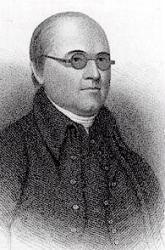
1752 - 1817 Topics: Christian Life and Hope The Consummation: Hope of Resurrection and Future Life; Christian Life and Hope The Consummation: Hope of Resurrection and Future Life Author of "Shall man, O God of light and life" in Evangelical Lutheran hymnal Timothy Dwight (b. Northampton, MA, 1752; d. Philadelphia, PA, 1817) was a grandson of Jonathan Edwards who became a Congregationalist pastor, a Revolutionary War army chaplain, a tutor and professor at Yale College, and president of Yale from 1795 to 1817. As president he continued to teach and serve as chaplain and was instrumental in improving both the academic and the spiritual life of the college.
Bert Polman
===============
Dwight, Timothy, D.D. This is the most important name in early American hymnology, as it is also one of the most illustrious in American literature and education. He was born at Northampton, Massachusetts, May 14, 1752, and graduated at Yale College, 1769; was a tutor there from 1771 to 1777. He then became for a short time a chaplain in the United States Army, but passed on in 1783 to Fairfield, Connecticut, where he held a pastorate, and taught in an Academy, till his appointment, in 1795, as President of Yale College. His works are well known, and need no enumeration. He died at New Haven, Jan. 11, 1817. In 1797 the General Association of Connecticut, being dissatisfied with Joel Barlow's 1785 revision of Watts, requested Dwight to do the work de novo. This he did liberally, furnishing in some instances several paraphrases of the same psalm, and adding a selection of hymns, mainly from Watts. The book appeared as—
"The Psalms of David, &c.... By I. Watts, D.D. A New Edition in which the Psalms omitted by Dr. Watts are versified, local passages are altered, and a number of Psalms are versified anew in proper metres. By Timothy Dwight, D.D., &c….To the Psalms is added a Selection of Hymns," 1800.
Dwight's lyrics are all professedly psalms, but they are by no means literal versions. His original compositions number 33. Of these many are still in common use, the most important being:—
1. Blest be the Lord, Who heard my prayer. Psalm xxviii. This is the second part of Psalm xxviii., in 5 stanzas of 4 lines. It is in the English New Congregational Hymn Book, 1859.
2. I Love Thy kingdom, Lord. Psalm cxxxvii. This is version three of Ps. 137, in 8 stanzas of 4 lines, and is in extensive use at the present time throughout the States. It is also included in many English, Irish, and Scottish collections, sometimes in the original form, as in Alford's Year of Praise, 1867; again as, "I love Thy Church, 0 God," which opens with the second stanza, as in the Scottish Evangelical Union Hymnal, 1878, in 3 stanzas, and "We love Thy kingdom, Lord," in the Irish Church Hymnal, 1873. In Cleveland's Lyra Sacra Americana six stanzas only are given from the original.
Next to this in popularity are his 2nd and 3rd renderings of Psalm lxxxviii.:—
3. Shall man, 0 God of life and light. (3rd stanza)
4. While life prolongs its precious light. (2nd stanza) Both of which are in extensive use. From his 4th version of the same Psalm (88), the following hymns have been compiled, each opening with the stanza indicated:—
5. Just o'er the grave I hung. Stanza ii.
6. I saw beyond the tomb. Stanza iv.
7. Ye sinners, fear the Lord. Stanza xii. This last is found in Spurgeon's 0ur Own Hymnbook. The original version consists of 13 stanzas.
8. 0 Thou Whose sceptre earth and seas obey. Psalm lxxii. This is his second version of this Psalm, and was given in the Comprehensive Rippon, 1844.
The following, most of which are of a more jubilant character, are well known:—
9. How pleasing is Thy voice. Psalm lxv.
10. In Zion's sacred gates. Psalm cl.
11. Lord of all worlds, incline Thy gracious [bounteous] ear. Psalm llii.
12. Now to Thy sacred house. Psalm xliii., st. 3.
13. Sing to the Lord most high. Psalm c.
14. In barren wilds shall living waters spring. Psalm liii.
15. Lord, in these dark and dismal days. Psalm cxxxvii.
No. 9 is found in Lyra Sacra Americana, pp. 101-2, the seven stanzas of the original being abbreviated to five.
In addition to the Psalms, Dr. Dwight published three poems, "The Conquest of Canaan," 1785; "Greenfield Hill," 1794; "Triumph of Infidelity," 1788. [Rev. F. M. Bird, M.A.]
- John Julian, Dictionary of Hymnology (1907)
Timothy Dwight
William B. Bradbury

1816 - 1868 Person Name: William Batchelder Bradbury Topics: Christian Life and Hope The Consummation: Hope of Resurrection and Future Life; Christian Life and Hope The Consummation: Hope of Resurrection and Future Life Composer of "OLIVE'S BROW" in Evangelical Lutheran hymnal William Batchelder Bradbury USA 1816-1868. Born at York, ME, he was raised on his father's farm, with rainy days spent in a shoe-shop, the custom in those days. He loved music and spent spare hours practicing any music he could find. In 1830 the family moved to Boston, where he first saw and heard an organ and piano, and other instruments. He became an organist at 15. He attended Dr. Lowell Mason's singing classes, and later sang in the Bowdoin Street church choir. Dr. Mason became a good friend. He made $100/yr playing the organ, and was still in Dr. Mason's choir. Dr. Mason gave him a chance to teach singing in Machias, ME, which he accepted. He returned to Boston the following year to marry Adra Esther Fessenden in 1838, then relocated to Saint John, New Brunswick. Where his efforts were not much appreciated, so he returned to Boston. He was offered charge of music and organ at the First Baptist Church of Brooklyn. That led to similar work at the Baptist Tabernacle, New York City, where he also started a singing class. That started singing schools in various parts of the city, and eventually resulted in music festivals, held at the Broadway Tabernacle, a prominent city event. He conducted a 1000 children choir there, which resulted in music being taught as regular study in public schools of the city. He began writing music and publishing it. In 1847 he went with his wife to Europe to study with some of the music masters in London and also Germany. He attended Mendelssohn funeral while there. He went to Switzerland before returning to the states, and upon returning, commenced teaching, conducting conventions, composing, and editing music books. In 1851, with his brother, Edward, he began manufacturring Bradbury pianos, which became popular. Also, he had a small office in one of his warehouses in New York and often went there to spend time in private devotions. As a professor, he edited 59 books of sacred and secular music, much of which he wrote. He attended the Presbyterian church in Bloomfield, NJ, for many years later in life. He contracted tuberculosis the last two years of his life.
John Perry
William B. Bradbury
Anne Steele
1717 - 1778 Person Name: Anna Steele Topics: Christian Life and Hope The Walk of Godliness: Call to Grace and Admonition to Holiness; Christian Life and Hope The Walk of Godliness: Call to Grace and Admonition to Holiness Author of "The Savior calls; let ev'ry ear" in Evangelical Lutheran hymnal Anne Steele was the daughter of Particular Baptist preacher and timber merchant William Steele. She spent her entire life in Broughton, Hampshire, near the southern coast of England, and devoted much of her time to writing. Some accounts of her life portray her as a lonely, melancholy invalid, but a revival of research in the last decade indicates that she had been more active and social than what was previously thought. She was theologically conversant with Dissenting ministers and "found herself at the centre of a literary circle that included family members from various generations, as well as local literati." She chose a life of singleness to focus on her craft. Before Christmas in 1742, she declined a marriage proposal from contemporary minister-hymnist Benjamin Beddome. All the same, some of Steele's sufferings were very real. She lost her mother at age 3, a potential suitor at age 20, her step mom at 43, and her sister-in-law at 45. She spent many years caring for her father until his death in 1769. For most of her life, she exhibited symptoms of malaria, including persistent pain, fever, headaches, and stomach aches. Caleb Evans, in his preface to Steele's posthumous Miscellaneous Pieces in Verse and Prose (1780), noted that she had been bed ridden for "some years" before her death: When the interesting hour came, she welcomed its arrival, and though her feeble body was excruciated with pain, her mind was perfectly serene. . . . She took the most affectionate leave of her weeping friends around her, and at length, the happy moment of her dismission arising, she closed her eyes, and with these animating words on her dying lips, "I know that my Redeemer liveth," gently fell asleep in Jesus. Historically, her most popular hymn has been "When I survey life's varied scene" (and its shortened form, "Father, whate'er of earthly bliss"), a hymn that turns earthly loss or denial into a spirit of thankfulness, published in over 800 North American hymnals since 1792. Not all of her work deals with personal agony. Her hymns span a wide doctrinal and ecclesiastical range, some crafted and used for her father's congregation. Her metrical psalms are among the finest of the genre. Steele's hymns and psalms were published in two volumes in 1760, Poems on Subjects Chiefly Devotional, under the pseudonym Theodosia, with an additional volume of material published after her death, in Miscellaneous Pieces in Verse and Prose, 1780. Another small collection, Verses for Children, was issued in 1788, with two other editions given in 1803 and 1806. Sixty-two of her hymns, including new material and some revisions by Steele, were published in a hymnal for Baptists in 1769, A Collection of Hymns Adapted to Public Worship, edited by Caleb Evans and John Ash. Forty seven were included in John Rippon's A Selection of Hymns from the Best Authors in 1787; the only author with larger representation was Philip Doddridge, with 101. These collections represent the earliest attempts to anthologize Baptist hymns and were vital for bringing Steele's hymns into wider public worship, where they have been a mainstay for over two hundred years.
Chris Fenner adapted from The Towers (Southern Baptist Theological Seminary, August 2015)
Recommended Bibliography:
Cynthia Y. Aalders, To Express the Ineffable: The Hymns and Spirituality of Anne Steele (Milton Keynes, U.K.: Paternoster, 2008).
Cynthia Y. Aalders, "In melting grief and ardent love: Anne Steele's contribution to eighteenth-century hymnody," The Hymn (summer 2009), 16-25.
J.R. Broome, A Bruised Reed: The Life and Times of Anne Steele (Harpenden, U.K.: Gospel Standard Trust Publications, 2007).
Joseph Carmichael, The Hymns of Anne Steele in John Rippon's Selection of Hymns: A Theological Analysis in the Context of the English Particular Baptist Revival (2012), dissertation, http://digital.library.sbts.edu/handle/10392/4112
Priscilla Wong, Anne Steele and Her Spiritual Vision (Grand Rapids: Reformation Heritage Books, 2012).
Timothy Whelan & Julia B. Griffin, eds., Nonconformist Women Writers, 1720–1840, vols. 1 & 2 (London: Pickering & Chatto, 2011).
========================
Steele, Anne, born in 1716, was the daughter of Mr. Wm. Steele, a timber merchant, and pastor, without salary, of the Baptist Church at Broughton, in Hampshire. At an early age she showed a taste for literature, and would often entertain her friends by her poetical compositions. But it was not until 1760 that she could be prevailed upon to publish. In that year two volumes appeared under the title of Poems on Subjects chiefly Devotional, by Theodosia. After her death, which occurred in November, 1778, a new edition was published with an additional volume and a Preface by the Rev. Dr. Caleb Evans, of Bristol (Bristol, 1780). In the three volumes are 144 hymns, 34 Psalms in verse, and about 30 short poems. They have been reprinted in one vol. by D. Sedgwick, 1863….
Among Baptist hymnwriters Miss Steele stands at the head, if we regard either the number of her hymns which have found a place in the hymnals of the last 120 years, or the frequency with which they have been sung. Although few of them can be placed in the first rank of lyrical compositions, they are almost uniformly simple in language, natural and pleasing in imagery, and full of genuine Christian feeling. Miss Steele may not inappropriately be compared with Miss F. R. Havergal, our "Theodosia" of the 19th century. In both there is the same evangelic fervour, in both the same intense personal devotion to the Lord Jesus. But whilst Miss Steele seems to think of Him more frequently as her "bleeding, dying Lord "—dwelling on His sufferings in their physical aspect—Miss Havergal oftener refers to His living help and sympathy, recognizes with gladness His present claims as "Master" and "King," and anticipates almost with ecstasy His second coming. Looking at the whole of Miss Steele's hymns, we find in them a wider range of thought than in Miss Havergal's compositions. She treats of a greater variety of subjects. On the other hand, Miss Havergal, living in this age of missions and general philanthropy, has much more to say concerning Christian work and personal service for Christ and for humanity. Miss Steele suffered from delicacy of health and from a great sorrow, which befell her in the death of her betrothed under peculiarly painful circumstances. In other respects her life was uneventful, and occupied chiefly in the discharge of such domestic and social duties as usually fall to the lot of the eldest daughter of a village pastor. She was buried in Broughton churchyard. [Rev W. R. Stevenson, M.A.]
A large number of Miss Steele's hymns are in common use, the larger proportion being in American hymnbooks. In addition to "Almighty Maker of my frame," “Far from these narrow scenes of night," "Father of mercies in Thy word," and others annotated under their respective first lines, there are also:—
i. From her Poems on Subjects Chiefly Devotional, 1760, vols. i., ii.
1. Come, let our souls adore the Lord. Pleading for Mercy. One of two hymns "On the Fast, Feb. 11, 1757," the first being "While justice waves her vengeful hand."
2. Come, tune ye saints, your noblest strains. Christ Dying and Rising.
3. Deep are the wounds which sin has made. Christ, the Physician.
4. Enslaved by sin, and bound in chains. Redemption.
5. Eternal power, almighty God. Divine Condescension.
6. Eternal Source of joys divine. Divine Assurance desired.
7. Great God, to Thee my evening song. Evening.
8. Great Source of boundless power and grace. Desiring to Trust in God.
9. Hear, gracious [God] Lord, my humble moan [prayer] . The presence of God desired.
10. Hear, O my God, with pity hear. Ps. cxliii.
11. How long shall earth's alluring toys ? On Longing after unseen pleasures.
12. How lovely, how divinely sweet. Ps. lxxziv.
13. How oft, alas, this wretched heart. Pardoning Love.
14. In vain my roving thoughts would find. Lasting Happiness.
15. Jesus, the spring of joys divine. Christ the Way.
16. Lord, how mysterious are Thy ways. Providence.
17. Lord, Thou hast been Thy Children's God. Ps. xc.
18. Lord, we adore Thy boundless grace. Divine Bounty.
19. Lord, when my [our] raptured thought surveys. Creation and Providence.
20. Lord, when my thoughts delighted rove. Passiontide.
21. My God, 'tis to Thy mercy seat. Divine Mercy.
22. My God, to Thee I call. Lent.
23. O for a sweet, inspiring ray. The Ascended Saviour.
24. O Thou Whose tender mercy hears. Lent.
25. Permit me, Lord, to seek Thy face. Strength and Safety in God alone.
26. Should famine o'er the mourning field. During Scarcity.
27. So fades the lovely, blooming flower. Death of a Child.
28. Stretched on the Cross the Saviour dies. Good Friday.
29. The Lord, my Shepherd and my Guide. Ps.xxiii.
30. The Lord, the God of glory reigns. Ps. xciii.
31. The Saviour calls; let every ear. The Invitation.
32. There is a glorious world on high. True Honour.
33. Thou lovely [only] Source of true delight. Desiring to know Jesus.
34. Thou only Sovereign of my heart. Life in Christ alone.
35. To Jesus, our exalted Lord. Holy Communion.
36. To our Redeemer's glorious Name. Praise to the Redeemer.
37. To your Creator, God. A Rural Hymn.
38. When I survey life's varied scene. Resignation.
39. When sins and fears prevailing rise. Christ the Life of the Soul.
40. Where is my God? does He retire. Rreathing after God.
41. While my Redeemer's near. The Good Shepherd.
42. Why sinks my weak desponding mind? Hope in God.
43. Ye earthly vanities, depart. Love for Christ desired.
44. Ye glittering toys of earih adieu. The Pearl of great Price.
45. Ye humble souls, approach your God. Divine Goodness.
ii. From the Bristol Baptist Collection of Ash & Evans, 1769.
46. Come ye that love the Saviour's Name. Jesus, the King of Saints.
47. How helpless guilty nature lies. Need of Receiving Grace.
48. Praise ye the Lord let praise employ. Praise.
iii. Centos and Altered Texts,
49. How blest are those, how truly wise. True honour. From "There is a glorious world on high."
50. How far beyond our mortal view. Christ the Supreme Beauty. From "Should nature's charms to please the eye," 1760, st. iii.
51. In vain I trace creation o'er. True happiness. From "When fancy spreads her boldest wings," 1760, st. ii.
52. Jesus, and didst thou leave the sky? Praise to Jesus. From “Jesus, in Thy transporting name," 1760, st. iv.
53. Look up, my soul, with cheerful eye. Breathing after God. From No. 40, st. v.
54. Lord, in the temple of Thy grace. Christ His people's Joy. From "The wondering nations have beheld," 1760, st. iii.
55. My God, O could I make the claim. Part of No. 9 above.
56. My soul, to God, its source, aspires. God, the Soul's only Portion. From "In vain the world's alluring smile," st. iii.
57. O could our thoughts and wishes fly. Part of No. 11 above, st. iv.
58. O for the eye of faith divine. Death anticipated. From "When death appears before my sight," 1760, st. iii., vii., viii. altered, with opening stanzas from another source.
59. O Jesus, our exalted Head. Holy Communion. From "To Jesus, our exalted Lord." See No. 35.
60. O world of bliss, could mortal eyes. Heaven. From "Far from these narrow scenes of night."
61. See, Lord, Thy willing subjects bow. Praise to Christ. From "O dearer to my thankful heart," 1780, st. 5.
62. Stern winter throws his icy chains. Winter. From "Now faintly smile day's hasty hours," 1760, st. ii.
63. Sure, the blest Comforter is nigh. Whitsuntide. From "Dear Lord, and shall Thy Spirit rest," 1760, st. iii.
64. The God of my salvation lives. In Affliction. From, "Should famine, &c," No. 26, st. iv.
65. The Gospel, O what endless charms. The Gospel of Redeeming Love. From "Come, Heavenly Love, inspire my song."
66. The mind was formed lo mount sublime. The Fettered Mind. From "Ah! why should this immortal mind?" 1760, st. ii.
67. The once loved form now cold and dead. Death of a Child. From "Life is a span, a fleeting hour," 1760, st. iii.
68. Thy gracious presence, O my God. Consolation in Affliction. From "In vain, while dark affliction spreads," 1780, st. iv.
69. Thy kingdom, Lord, for ever stands. Ps. cxlv. From "My God, my King, to Thee I'll raise," 1760, st. xii.
70. Triumphant, Christ ascends on high. Ascension. From "Come, Heavenly Love, inspire my song," 1760, st. xxxii.
71. When blest with that transporting view. Christ the Redeemer. From "Almighty Father, gracious Lord," 1760, st. xi.
72. When death before my sight. Death Anticipated. From "When death appears before my sight," 1760.
73. When gloomy thoughts and boding fears. Com¬forts of Religion. From "O blest religion, heavenly fair," 1760, st. ii.
74. When weary souls with sin distrest. Invitation to Rest. From "Come, weary souls, with sin distressed," 1760.
75. Whene'er the angry passions rise. Example of Christ. From “And is the gospel peace and love?" 1760, st. ii.
All the foregoing hymns are in D. Sedgwick's reprint of Miss Steele's Hymns, 1863.
--Excerpts from John Julian, Dictionary of Hymnology (1907)
====================
Steele, Anne, p. 1089, i., Additional hymns in common use:
1. Amazing love that stoop'd so low. Thankfulness. From "O dearer to my thankful heart," 1780, iii.
2. Bright scenes of bliss, unclouded skies. Saved by Hope. Poems, 1760, i. p. 228.
3. Jesus demands this heart of mine. Pardon De¬sired. Poems, 1760, i. p. 120.
4. Jesus, Thou Source divine. Christ the Way. Poems, 1760, i. p. 53, altered.
5. Lord, how mysterious are Thy ways. Mysteries of Providence. Poems, 1760, i. p. 131.
6. Lord^in Thy great, Thy glorious Name. Ps. xxxi. Poems, 1760, ii. p. 158.
--John Julian, Dictionary of Hymnology, Appendix, Part II (1907)
Anne Steele
Edward Caswall
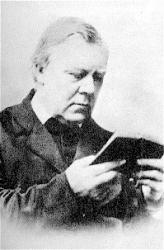
1814 - 1878 Person Name: Edward Caswell Topics: Christian Life and Hope The Walk of Godliness: Christian Resolve and Holiness; Christian Life and Hope The Walk of Godliness: Christian Resolve and Holiness Translator of "My God, I love Thee, not because" in Evangelical Lutheran hymnal Edward Caswall was born in 1814, at Yately, in Hampshire, where his father was a clergyman. In 1832, he went to Brasenose College, Oxford, and in 1836, took a second-class in classics. His humorous work, "The Art of Pluck," was published in 1835; it is still selling at Oxford, having passed through many editions. In 1838, he was ordained Deacon, and in 1839, Priest. He became perpetural Curate of Stratford-sub-Castle in 1840. In 1841, he resigned his incumbency and visited Ireland. In 1847, he joined the Church of Rome. In 1850, he was admitted into the Congregation of the Oratory at Birmingham, where he has since remained. He has published several works in prose and poetry.
--Annotations of the Hymnal, Charles Hutchins, M.A. 1872
=====================
Caswall, Edward, M.A., son of the Rev. R. C. Caswall, sometime Vicar of Yately, Hampshire, born at Yately, July 15, 1814, and educated at Brasenose College, Oxford, graduating in honours in 1836. Taking Holy Orders in 1838, he became in 1840 Incumbent of Stratford-sub-Castle, near Salisbury, and resigned the same in 1847. In 1850 (Mrs. Caswall having died in 1849) he was received into the Roman Catholic communion, and joined Dr. Newman at the Oratory, Edgbaston. His life thenceforth, although void of stirring incidents, was marked by earnest devotion to his clerical duties and a loving interest in the poor, the sick, and in little children. His original poems and hymns were mostly written at the Oratory. He died at Edgbaston, Jan. 2, 1878, and was buried on Jan. 7 at Redwall, near Bromsgrove, by his leader and friend Cardinal Newman. Caswall's translations of Latin hymns from the Roman Breviary and other sources have a wider circulation in modern hymnals than those of any other translator, Dr. Neale alone excepted. This is owing to his general faithfulness to the originals, and the purity of his rhythm, the latter feature specially adapting his hymns to music, and for congregational purposes. His original compositions, although marked by considerable poetical ability, are not extensive in their use, their doctrinal teaching being against their general adoption outside the Roman communion. His hymns appeared in:—
(1) Lyra Catholica, which contained 197 translations from the Roman Breviary, Missal, and other sources. First ed. London, James Burns, 1849. This was reprinted in New York in 1851, with several hymns from other sources added thereto. This edition is quoted in the indices to some American hymn-books as Lyra Cath., as in Beecher's Plymouth Collection, 1855, and others.
(2) Masque of Mary, and Other Poems, having in addition to the opening poem and a few miscellaneous pieces, 53 translations, and 51 hymns. 1st ed. Lon., Burns and Lambert, 1858.
(3) A May Pageant and Other Poems, including 10 original hymns. Lon., Burns and Lambert, 1865.
(4) Hymns and Poems, being the three preceding volumes embodied in one, with many of the hymns rewritten or revised, together with elaborate indices. 1st ed. Lon., Burns, Oates & Co., 1873. Of his original hymns about 20 are given in the Roman Catholic Crown of Jesus Hymn Book, N.D; there are also several in the Hymns for the Year, N.D., and other Roman Catholic collections.
--John Julian, Dictionary of Hymnology (1907)
======================
Caswall, E. , p. 214, ii. Additional original hymns by Caswall are in the Arundel Hymns, 1902, and other collections. The following are from the Masque of Mary, &c, 1858:—
1. Christian soul, dost thou desire. After Holy Communion.
2. Come, let me for a moment cast. Holy Communion.
3. O Jesu Christ [Lord], remember. Holy Communion.
4. Oft, my soul, thyself remind. Man's Chief End.
5. Sleep, Holy Babe. Christmas. Appeared in the Rambler, June 1850, p. 528. Sometimes given as "Sleep, Jesus, sleep."
6. The glory of summer. Autumn.
7. This is the image of the queen. B. V. M.
His "See! amid the winter's snow,” p. 1037, i., was published in Easy Hymn Tunes, 1851, p. 36. In addition the following, mainly altered texts or centos of his translations are also in common use:—
1. A regal throne, for Christ's dear sake. From "Riches and regal throne," p. 870, ii.
2. Come, Holy Ghost, Thy grace inspire. From "Spirit of grace and union," p. 945, i.
3. Hail! ocean star, p. 99, ii,, as 1873. In the Birmingham Oratory Hymn Book, 1850, p. 158.
4. Lovely flow'rs of martyrs, hail. This is the 1849 text. His 1873 text is "Flowers of martyrdom," p. 947, i.
5. None of all the noble cities. From "Bethlehem! of noblest cities," p. 946, ii.
6. O Jesu, Saviour of the World. From “Jesu, Redeemer of the world," p. 228, ii.
7. 0 Lady, high in glory raised. From "O Lady, high in glory, Whose," p. 945, i.
The Parochial Hymn Book, 1880, has also the following original hymns by Caswall. As their use is confined to this collection, we give the numbers only:—
IS os. 1, 2, 3, 159 (Poems, 1873, p. 453), 209 (1873, p. 288), 299, 324 (1873, p. 323), 357, 402, 554, 555, 558, 569 (1873, p. 334). These are from his Masque of Mary 1858. Nos. 156, 207 (1873, p. 296), 208 (1873, p. 297), 518. These are from his May Pageant, 1865.
As several of these hymns do not begin with the original first lines, the original texts are indicated as found in his Poems, 1873. [Rev. James Mearns, M.A.]
--John Julian, Dictionary of Hymnology, New Supplement (1907)
Edward Caswall
Isaac Watts
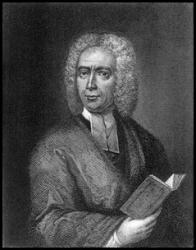
1674 - 1748 Topics: Christian Life and Hope The Consummation: Hope of Resurrection and Future Life; Christian Life and Hope The Consummation: Hope of Resurrection and Future Life Author of "And must this body die?" in Evangelical Lutheran hymnal Isaac Watts was the son of a schoolmaster, and was born in Southampton, July 17, 1674. He is said to have shown remarkable precocity in childhood, beginning the study of Latin, in his fourth year, and writing respectable verses at the age of seven. At the age of sixteen, he went to London to study in the Academy of the Rev. Thomas Rowe, an Independent minister. In 1698, he became assistant minister of the Independent Church, Berry St., London. In 1702, he became pastor. In 1712, he accepted an invitation to visit Sir Thomas Abney, at his residence of Abney Park, and at Sir Thomas' pressing request, made it his home for the remainder of his life. It was a residence most favourable for his health, and for the prosecution of his literary labours. He did not retire from ministerial duties, but preached as often as his delicate health would permit.
The number of Watts' publications is very large. His collected works, first published in 1720, embrace sermons, treatises, poems and hymns. His "Horae Lyricae" was published in December, 1705. His "Hymns" appeared in July, 1707. The first hymn he is said to have composed for religious worship, is "Behold the glories of the Lamb," written at the age of twenty. It is as a writer of psalms and hymns that he is everywhere known. Some of his hymns were written to be sung after his sermons, giving expression to the meaning of the text upon which he had preached. Montgomery calls Watts "the greatest name among hymn-writers," and the honour can hardly be disputed. His published hymns number more than eight hundred.
Watts died November 25, 1748, and was buried at Bunhill Fields. A monumental statue was erected in Southampton, his native place, and there is also a monument to his memory in the South Choir of Westminster Abbey. "Happy," says the great contemporary champion of Anglican orthodoxy, "will be that reader whose mind is disposed, by his verses or his prose, to imitate him in all but his non-conformity, to copy his benevolence to men, and his reverence to God." ("Memorials of Westminster Abbey," p. 325.)
--Annotations of the Hymnal, Charles Hutchins, M.A., 1872.
=================================
Watts, Isaac, D.D. The father of Dr. Watts was a respected Nonconformist, and at the birth of the child, and during its infancy, twice suffered imprisonment for his religious convictions. In his later years he kept a flourishing boarding school at Southampton. Isaac, the eldest of his nine children, was born in that town July 17, 1674. His taste for verse showed itself in early childhood. He was taught Greek, Latin, and Hebrew by Mr. Pinhorn, rector of All Saints, and headmaster of the Grammar School, in Southampton. The splendid promise of the boy induced a physician of the town and other friends to offer him an education at one of the Universities for eventual ordination in the Church of England: but this he refused; and entered a Nonconformist Academy at Stoke Newington in 1690, under the care of Mr. Thomas Rowe, the pastor of the Independent congregation at Girdlers' Hall. Of this congregation he became a member in 1693.
Leaving the Academy at the age of twenty, he spent two years at home; and it was then that the bulk of the Hymns and Spiritual Songs (published 1707-9) were written, and sung from manuscripts in the Southampton Chapel. The hymn "Behold the glories of the Lamb" is said to have been the first he composed, and written as an attempt to raise the standard of praise. In answer to requests, others succeeded. The hymn "There is a land of pure delight" is said to have been suggested by the view across Southampton Water. The next six years of Watts's life were again spent at Stoke Newington, in the post of tutor to the son of an eminent Puritan, Sir John Hartopp; and to the intense study of these years must be traced the accumulation of the theological and philosophical materials which he published subsequently, and also the life-long enfeeblement of his constitution.
Watts preached his first sermon when he was twenty-four years old. In the next three years he preached frequently; and in 1702 was ordained pastor of the eminent Independent congregation in Mark Lane, over which Caryl and Dr. John Owen had presided, and which numbered Mrs. Bendish, Cromwell's granddaughter, Charles Fleetwood, Charles Desborough, Sir John Hartopp, Lady Haversham, and other distinguished Independents among its members. In this year he removed to the house of Mr. Hollis in the Minories. His health began to fail in the following year, and Mr. Samuel Price was appointed as his assistant in the ministry. In 1712 a fever shattered his constitution, and Mr. Price was then appointed co-pastor of the congregation which had in the meantime removed to a new chapel in Bury Street. It was at this period that he became the guest of Sir Thomas Abney, under whose roof, and after his death (1722) that of his widow, he remained for the rest of his suffering life; residing for the longer portion of these thirty-six years principally at the beautiful country seat of Theobalds in Herts, and for the last thirteen years at Stoke Newington. His degree of D.D. was bestowed on him in 1728, unsolicited, by the University of Edinburgh. His infirmities increased on him up to the peaceful close of his sufferings, Nov. 25, 1748. He was buried in the Puritan restingplace at Bunhill Fields, but a monument was erected to him in Westminster Abbey.
His learning and piety, gentleness and largeness of heart have earned him the title of the Melanchthon of his day. Among his friends, churchmen like Bishop Gibson are ranked with Nonconformists such as Doddridge. His theological as well as philosophical fame was considerable. His Speculations on the Human Nature of the Logos, as a contribution to the great controversy on the Holy Trinity, brought on him a charge of Arian opinions. His work on The Improvement of the Mind, published in 1741, is eulogised by Johnson. His Logic was still a valued textbook at Oxford within living memory. The World to Come, published in 1745, was once a favourite devotional work, parts of it being translated into several languages. His Catechisms, Scripture History (1732), as well as The Divine and Moral Songs (1715), were the most popular text-books for religious education fifty years ago. The Hymns and Spiritual Songs were published in 1707-9, though written earlier. The Horae Lyricae, which contains hymns interspersed among the poems, appeared in 1706-9. Some hymns were also appended at the close of the several Sermons preached in London, published in 1721-24. The Psalms were published in 1719. The earliest life of Watts is that by his friend Dr. Gibbons. Johnson has included him in his Lives of the Poets; and Southey has echoed Johnson's warm eulogy. The most interesting modern life is Isaac Watts: his Life and Writings, by E. Paxton Hood. [Rev. H. Leigh Bennett, M.A.]
A large mass of Dr. Watts's hymns and paraphrases of the Psalms have no personal history beyond the date of their publication. These we have grouped together here and shall preface the list with the books from which they are taken.
(l) Horae Lyricae. Poems chiefly of the Lyric kind. In Three Books Sacred: i.To Devotion and Piety; ii. To Virtue, Honour, and Friendship; iii. To the Memory of the Dead. By I. Watts, 1706. Second edition, 1709. (2) Hymns and Spiritual Songs. In Three Books: i. Collected from the Scriptures; ii. Composed on Divine Subjects; iii. Prepared for the Lord's Supper. By I. Watts, 1707. This contained in Bk i. 78 hymns; Bk. ii. 110; Bk. iii. 22, and 12 doxologies. In the 2nd edition published in 1709, Bk. i. was increased to 150; Bk. ii. to 170; Bk. iii. to 25 and 15 doxologies. (3) Divine and Moral Songs for the Use of Children. By I. Watts, London, 1715. (4) The Psalms of David Imitated in the Language of the New Testament, And apply'd to the Christian State and Worship. By I. Watts. London: Printed by J. Clark, at the Bible and Crown in the Poultry, &c, 1719. (5) Sermons with hymns appended thereto, vol. i., 1721; ii., 1723; iii. 1727. In the 5th ed. of the Sermons the three volumes, in duodecimo, were reduced to two, in octavo. (6) Reliquiae Juveniles: Miscellaneous Thoughts in Prose and Verse, on Natural, Moral, and Divine Subjects; Written chiefly in Younger Years. By I. Watts, D.D., London, 1734. (7) Remnants of Time. London, 1736.
454 Hymns and Versions of the Psalms, in addition to the centos are all in common use at the present time.
--Excerpts from John Julian, Dictionary of Hymnology (1907)
==================================
Watts, I. , p. 1241, ii. Nearly 100 hymns, additional to those already annotated, are given in some minor hymn-books.
--John Julian, Dictionary of Hymnology, Appendix, Part II (1907)
=================
Watts, I. , p. 1236, i. At the time of the publication of this Dictionary in 1892, every copy of the 1707 edition of Watts's Hymns and Spiritual Songs was supposed to have perished, and all notes thereon were based upon references which were found in magazines and old collections of hymns and versions of the Psalms. Recently three copies have been recovered, and by a careful examination of one of these we have been able to give some of the results in the revision of pp. 1-1597, and the rest we now subjoin.
i. Hymns in the 1709 ed. of Hymns and Spiritual Songs which previously appeared in the 1707 edition of the same book, but are not so noted in the 1st ed. of this Dictionary:—
On pp. 1237, L-1239, ii., Nos. 18, 33, 42, 43, 47, 48, 60, 56, 58, 59, 63, 75, 82, 83, 84, 85, 93, 96, 99, 102, 104, 105, 113, 115, 116, 123, 124, 134, 137, 139, 146, 147, 148, 149, 162, 166, 174, 180, 181, 182, 188, 190, 192, 193, 194, 195, 197, 200, 202.
ii. Versions of the Psalms in his Psalms of David, 1719, which previously appeared in his Hymns and Spiritual Songs, 1707:—
On pp. 1239, U.-1241, i., Nos. 241, 288, 304, 313, 314, 317, 410, 441.
iii. Additional not noted in the revision:—
1. My soul, how lovely is the place; p. 1240, ii. 332. This version of Ps. lxiv. first appeared in the 1707 edition of Hymns & Spiritual Songs, as "Ye saints, how lovely is the place."
2. Shine, mighty God, on Britain shine; p. 1055, ii. In the 1707 edition of Hymns & Spiritual Songs, Bk. i., No. 35, and again in his Psalms of David, 1719.
3. Sing to the Lord with [cheerful] joyful voice, p. 1059, ii. This version of Ps. c. is No. 43 in the Hymns & Spiritual Songs, 1707, Bk. i., from which it passed into the Ps. of David, 1719.
A careful collation of the earliest editions of Watts's Horae Lyricae shows that Nos. 1, 7, 9, 10, 11, 12, 14, 16, p. 1237, i., are in the 1706 ed., and that the rest were added in 1709. Of the remaining hymns, Nos. 91 appeared in his Sermons, vol. ii., 1723, and No. 196 in Sermons, vol. i., 1721. No. 199 was added after Watts's death. It must be noted also that the original title of what is usually known as Divine and Moral Songs was Divine Songs only.
--John Julian, Dictionary of Hymnology, New Supplement (1907)
===========
See also in:
Hymn Writers of the Church
Isaac Watts
Hans G. Nägeli
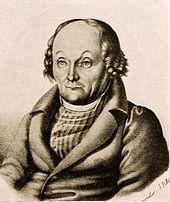
1773 - 1836 Person Name: Johann Georg Nägeli Topics: Christian Life and Hope The Walk of Godliness: Christian Resolve and Holiness; Christian Life and Hope The Walk of Godliness: Christian Resolve and Holiness Composer of "DENNIS" in Evangelical Lutheran hymnal Johann G. Nageli (b. Wetzikon, near Zurich, Switzerland, 1773; d. Wetzikon, 1836) was an influential music educator who lectured throughout Germany and France. Influenced by Johann Pestalozzi, he published his theories of music education in Gangbildungslehre (1810), a book that made a strong impact on Lowell Mason. Nageli composed mainly" choral works, including settings of Goethe's poetry. He received his early instruction from his father, then in Zurich, where he concentrated on the music of. S. Bach. In Zurich, he also established a lending library and a publishing house, which published first editions of Beethoven’s piano sonatas and music by Bach, Handel, and Frescobaldi.
Bert Polman
Hans G. Nägeli
George F. Root
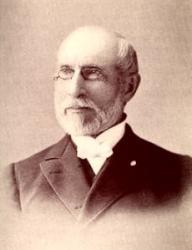
1820 - 1895 Person Name: Geo. F. Root Topics: Christian Life and Hope The Consummation: Hope of Resurrection and Future Life; Christian Life and Hope The Consummation: Hope of Resurrection and Future Life Arranger of "VARINA" in Evangelical Lutheran hymnal Root, George F., MUS. DOC, born in Sheffield, Berkshire County, Mass., Aug. 30, 1820. He is much more widely known as a composer of popular music than as a hymn writer. Four of his hymns are in I. D. Sankey's Sacred Songs & Solos, 1878. Nos. 16, 100, 293, and 297. A sympathetic biographical sketch, with portrait, is in The Tonic Sol-Fa Reporter, Sep. 1886. He died Aug. 6, 1895.
--John Julian, Dictionary of Hymnology, Appendix, Part II (1907)
=====================
George Frederick Root was born in Sheffield, Mass., August 30, 1820. His father moved to North Reading, near Boston, when the boy was six years old, and there his youth was spent.
He was always fond of music— not singing at all as a boy, but played upon every kind of instrument that came in his way. At thirteen it was his pride that he could "play a tune" on as many instruments as he was years old. His dream of life was to be a musician, although such an ambition was looked down upon by all his relatives and friends, excepting a fond mother. In the fall of 1838 he went to Boston and made an engagement to work for Mr. A. N. Johnson and take lessons on the piano.
His father and one of the brothers were at the time in South America, and the mother, with six younger children, was at home on the farm. When he secured the engagement with Mr. Johnson to receive three dollars a week and board and lessons, the neighbors became interested and encouraged him to go ahead, they promising to help look after the farm and see that the family got along. The young man's happiness over these events can better be imagined than described.
On the second day of October, 1838, he entered upon his duties in his new heaven on earth located at Harmony Hall, Mr. Johnson's music-room, in Boston. His duties were to see to the fires, care for the room, answer callers, give information about Mr. Johnson when he was out, and practice his lessons when not otherwise engaged. He worked industriously and made steady progress. It was but a few weeks till Mr. Johnson had him playing for the prayer-meeting, and but a few more till he began turning over pupils to him. In about seven weeks' time Mr. Johnson encouraged him by a considerable increase of salary. A most important event to him was meeting Dr. Lowell Mason and being accepted as a bass singer in the celebrated Bowdoin Street choir. Also, on Mr. Johnson's recommendation, he began taking private voice lessons of Mr. Geo. Jas. Webb, the then celebrated voice teacher of Boston. He continued at least a year with Mr. Webb.
His first real singing class was taught the following fall, 1839, at the North End. It lasted nearly through the winter, and on the closing night his class made him a present of a silver goblet, suitably engraved, which he kept among his treasures.
Before the first year was up Mr. Johnson proposed a five year partnership, by which Mr. Root was to receive one-third of their earnings, and the former was to have the privilege of visiting Germany part of the time if he chose. They then changed their quarters to three rooms in the basement of Park Street Church. The annual rental was six hundred dollars. They were kept quite busy.
At this time Dr. Mason's music teaching in the public schools was a growing success, and Messrs. Johnson and Root were employed to assist him. Drs. Mason and Webb had introduced what is now called Musical Conventions a year or two previous to this. They called them "The Teachers' Class." Teachers and singers were called to Boston from surrounding territory to study and practice pretty much as they do now at normals.
In 1841 Mr. Root became one of the teachers in this class. He taught vocal training and continued this work for years afterward in Dr. Mason's teachers' classes, and later incorporated the same method in his own normals. During this year Mr. Johnson went to Germany, and left the two large church choirs (Winter Street and Park Street) in charge of Mr. Root. One of the organs was played by a pupil — Mr. S. A. Bancroft.
Everything went smoothly during Mr. Johnson's absence as it did also after his return. During the last year of the five-year partnership, Mr. Root was called to take the organ at Bowdoin Street, Mr. Mason changing to Winter Street. An amicable settlement was made between Messrs. Johnson and Root, and the partnership dissolved.
In 1811, Mr. Jacob Abbott (father of Lyman Abbott)and his three brothers had established a young ladies' school in New York City. They wanted a music teacher, and offered the position to Mr. Root. They also secured him the organ and choir of the Mercer Street Church, with prospects for other good work. It required pretty strong persuasive arguments to tempt Mr. Root to leave Boston, he was doing well there, and as the sequel shows, there was an attraction in Boston that held him in too tight a grasp to be relinquished by the mere offer of greater power and place. He made up his mind, however, only after getting the consent of the powders of Boston to take with him this [to him] the greatest attraction of the city — Miss Mary Olive Woodman — an accomplished lady, a sweet singer, and a member of a prominent family of musicians. He went to New York first to prepare a home, and in August, 1845, returned for his bride, who took her place in his New York choir as leading soprano, and through his long and eventful career she was ever at his side, a true helpmeet.
He was soon employed at Rutger's Female Institute, Miss Haines' School for Young Ladies, Union Theological Seminary and the New York State Institution for the Blind. Within six weeks after he arrived in New York his time was fully occupied. He continued with Mr. Abbott's young ladies' school ten years.
While teaching in New York he continued his summer work with Messrs. Mason and Webb in Teachers' Classes. Up to the year 1849 he had written but little music; only a few hymn tunes while in Boston. He needed more music for the young ladies of his schools, so he made his first book, The Young Ladies' Choir, of which he had enough copies made for his own use, as he had no thought of offering it to the public. Then in connection with Mr. J. E. Sweetser, they compiled the Root and Sweetser's Collection.
Mr. Root did work enough for two men, hence broke down in health. Mr. Abbott suggested that he take a trip to Paris. After weighing the matter carefully, in December, 1853, he sailed, and in due time arrived at Paris, where he began studying French, voice culture and piano under celebrated teachers. After spending nearly a year abroad, he returned home in improved health and ready for active work. He began to feel the need of new music for his classes, and after some thought decided upon a musical play ; the subject and title, The Flower Queen.
At the Institution for the Blind was a young lady, a former pupil, but now a teacher who had shown some poetical talent. He asked her to help him with the words. He would suggest in prose what the flowers might say and she would put it into rhyme. She did it so well that it seldom needed any alteration. This lady was the now famous Fanny Crosby. The cantata became very popular. About this time Mr. Root wrote a half dozen simple songs for the people. They all sold pretty well, but Hazel Dell and Rosalie, the Prairie Flower, became the most popular, and had a large sale.
It was in the summer of 1853 that the first real normal was held. Mr. Root originated it, and held it in New York. The principal teachers were Messrs. Mason, Root, Hastings, and Bradbury. This school became famous. Sessions were also held at North Reading, Mass., a village near Mr. Root's "Willow Farm Home," with Dr. Mason, Mr. Webb, Mr. Bradbury and himself as principal teachers.
About this time Mr. Root decided to give up his work in New York, and devote himself entirely to conventions, normal work and authorship. He was eminently successful. Among the most eminent teachers and composers of our country have been students in Dr. Geo. F. Root's Normal Musical Institute.
In 1860 Dr. Root settled in Chicago and entered the music publishing business with his brother E. T. Root, and C. M. Cady, as "Root & Cady," Mr. Root's reputation being the most important capital of the firm. His books and popular songs soon made the new firm prosperous. Then came the war with its horror. Dr. Root wielded his musical sword in the way of writing war songs, which made him famous. The Battle Cry of Freedom, Just Before the Battle, Mother, and others, made thousands of dollars for the music house.
In the great Chicago fire of 1871 the interests of the firm of Root & Cady became engulfed in the general ruin. Their loss was upward of a quarter of a million dollars. They then sold their book catalogue, plates and copyrights to John Church & Co., of Cincinnati, and the sheet music plates and copyrights to S. Brainard's Sons, Cleveland. These sales realized about §130,000. The final result was that Dr. Root, his talented son F. W., and others became connected with John Church & Co. Under this new business relationship Mr. Root went right on with his normal and convention work; also issued a great many new books and cantatas. In 1872 the Chicago University very worthily conferred upon him the degree Doctor of Music.
In 1886 he made a trip to Scotland and England, and arranged with publishers to issue some of his cantatas. He was royally received.
Dr. Root was the author of about seventy-five books, nearly two hundred songs in sheet form, and many popular gospel songs. Dr. Root occupies a prominent place in the musical history of this country. It was Dr. Mason who lifted music from almost nothing and gave it an impetus, but he left no better follower than Dr. Root to carry on his work. He was a man of spotless integrity and high Christian character, and to know him was to love him.
At the time of Dr. Root's death he was at Bailey Island, Maine, a summer resort, where he and other relatives had cottages. On August 6, 1895, he was seized with neuralgia of the heart — and died within one hour. He was buried at North Reading, Mass., his old home.
--Hall, J. H. (c1914). Biographies of Gospel Song and Hymn Writers. New York: Fleming H. Revell Company.
George F. Root
Henry Francis Lyte
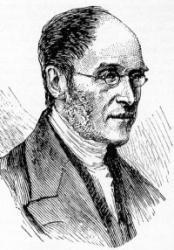
1793 - 1847 Topics: Christian Life and Hope The Walk of Godliness: Christian Resolve and Holiness; Christian Life and Hope The Walk of Godliness: Christian Resolve and Holiness Author of "Jesus, I my cross have taken" in Evangelical Lutheran hymnal Lyte, Henry Francis, M.A., son of Captain Thomas Lyte, was born at Ednam, near Kelso, June 1, 1793, and educated at Portora (the Royal School of Enniskillen), and at Trinity College, Dublin, of which he was a Scholar, and where he graduated in 1814. During his University course he distinguished himself by gaining the English prize poem on three occasions. At one time he had intended studying Medicine; but this he abandoned for Theology, and took Holy Orders in 1815, his first curacy being in the neighbourhood of Wexford. In 1817, he removed to Marazion, in Cornwall. There, in 1818, he underwent a great spiritual change, which shaped and influenced the whole of his after life, the immediate cause being the illness and death of a brother clergyman. Lyte says of him:—
"He died happy under the belief that though he had deeply erred, there was One whose death and sufferings would atone for his delinquencies, and be accepted for all that he had incurred;"
and concerning himself he adds:—
"I was greatly affected by the whole matter, and brought to look at life and its issue with a different eye than before; and I began to study my Bible, and preach in another manner than I had previously done."
From Marazion he removed, in 1819, to Lymington, where he composed his Tales on the Lord's Prayer in verse (pub. in 1826); and in 1823 he was appointed Perpetual Curate of Lower Brixham, Devon. That appointment he held until his death, on Nov. 20, 1847. His Poems of Henry Vaughan, with a Memoir, were published in 1846.
His own Poetical works were:—
(1) Poems chiefly Religious 1833; 2nd ed. enlarged, 1845. (2) The Spirit of the Psalms, 1834, written in the first instance for use in his own Church at Lower Brixham, and enlarged in 1836; (3) Miscellaneous Poems (posthumously) in 1868. This last is a reprint of the 1845 ed. of his Poems, with "Abide with me" added. (4) Remains, 1850.
Lyte's Poems have been somewhat freely drawn upon by hymnal compilers; but by far the larger portion of his hymns found in modern collections are from his Spirit of the Psalms. In America his hymns are very popular. In many instances, however, through mistaking Miss Auber's (q. v.) Spirit of the Psalms, 1829, for his, he is credited with more than is his due. The Andover Sabbath Hymn Book, 1858, is specially at fault in this respect. The best known and most widely used of his compositions are "Abide with me, fast falls the eventide;” “Far from my heavenly home;" "God of mercy, God of grace;" "Pleasant are Thy courts above;" "Praise, my soul, the King of heaven;" and "There is a safe and secret place." These and several others are annotated under their respective first lines: the rest in common use are:—
i. From his Poems chiefly Religious, 1833 and 1845.
1. Above me hangs the silent sky. For Use at Sea.
2. Again, 0 Lord, I ope mine eyes. Morning.
3. Hail to another Year. New Year.
4. How good, how faithful, Lord, art Thou. Divine care of Men.
5. In tears and trials we must sow (1845). Sorrow followed by Joy.
6. My [our] rest is in heaven, my [our] rest is not here. Heaven our Home.
7. 0 Lord, how infinite Thy love. The Love of God in Christ.
8. Omniscient God, Thine eye divine. The Holy Ghost Omniscient.
9. The leaves around me falling. Autumn.
10. The Lord hath builded for Himself. The Universe the Temple of God.
11. Vain were all our toil and labour. Success is of God.
12. When at Thy footstool, Lord, I bend. Lent.
13. When earthly joys glide swift away. Ps. cii.
14. Wilt Thou return to me, O Lord. Lent.
15. With joy we hail the sacred day. Sunday.
ii. From his Spirit of the Psalms, 1834.
16. Be merciful to us, O God. Ps. lvii.
17. Blest is the man who knows the Lord. Ps. cxii.
18. Blest is the man whose spirit shares. Ps. xli.
19. From depths of woe to God I cry. Ps. cxxxx.
20. Gently, gently lay Thy rod. Ps. vi.
21. Glorious Shepherd of the sheep. Ps. xxiii.
22. Glory and praise to Jehovah on high. Ps. xxix.
23. God in His Church is known. Ps. lxxvi.
24. God is our Refuge, tried and proved. Ps. xlvi.
25. Great Source of my being. Ps. lxxiii.
26. Hear, O Lord, our supplication. Ps. lxiv.
27. How blest the man who fears the Lord. Ps.cxxviii.
28. Humble, Lord, my haughty spirit. Ps. cxxxi.
29. In this wide, weary world of care. Ps. cxxxii.
30. In vain the powers of darkness try. Ps.lii.
31. Jehovah speaks, let man be awed. Ps. xlix.
32. Judge me, O Lord, and try my heart. Ps. xxvi.
33. Judge me, O Lord, to Thee I fly. Ps. xliii.
34. Lord, I have sinned, but O forgive. Ps. xli.
35. Lord, my God, in Thee I trust. Ps. vii.
36. Lord of the realms above, Our Prophet, &c. Ps.xlv.
37. Lone amidst the dead and dying. Ps. lxii.
38. Lord God of my salvation. Ps. lxxxviii.
39. Lord, I look to Thee for all. Ps. xxxi.
40. Lord, I would stand with thoughtful eye. Ps. lxix.
41. Lord, my God, in Thee I trust. Ps. vii.
42. My God, my King, Thy praise I sing. Ps. cviii.
43. My God, what monuments I see. Ps. xxxvi.
44. My spirit on [to] Thy care. Ps. xxxi.
45. My trust is in the Lord. Ps. xi.
46. Not unto us, Almighty Lord [God]. Ps. cxv.
47. O God of glory, God of grace. Ps. xc.
48. O God of love, how blest are they. Ps. xxxvii.
49. O God of love, my God Thou art. Ps. lxiii.
50. O God of truth and grace. Ps. xviii.
51. O had I, my Saviour, the wings of a dove. Ps. lv.
52. O how blest the congregation. Ps. lxxxix.
53. O how safe and [how] happy he. Ps. xci.
54. O plead my cause, my Saviour plead. Ps. xxxv.
55. O praise the Lord, 'tis sweet to raise. Ps. cxlvii.
56. O praise the Lord; ye nations, pour. Ps. cxvii.
57. O praise ye the Lord With heart, &c. Ps. cxlix.
58. O that the Lord's salvation. Ps. xiv.
59. O Thou Whom thoughtless men condemn. Ps. xxxvi.
60. Of every earthly stay bereft. Ps. lxxiv.
61. Our hearts shall praise Thee, God of love. Ps. cxxxviii.
62. Pilgrims here on earth and strangers. Ps. xvi.
63. Praise for Thee, Lord, in Zion waits. Ps. lxv.
64. Praise to God on high be given. Ps. cxxxiv.
65. Praise ye the Lord, His servants, raise. Ps. cxiii.
66. Redeem'd from guilt, redeem'd from fears. Ps. cxvi.
67. Save me by Thy glorious name. Ps. liv.
68. Shout, ye people, clap your hands. Ps. xlvii.
69. Sing to the Lord our might. Ps. lxxxi.
70. Strangers and pilgrims here below. Ps. cix.
71. Sweet is the solemn voice that calls. Ps. cxxii.
72. The Church of God below. Ps. lxxxvii.
73. The Lord is King, let earth be glad. Ps. xcvii.
74. The Lord is on His throne. Ps. xciii.
75. The Lord is our Refuge, the Lord is our Guide. Ps. xlvii.
76. The mercies of my God and King. Ps. lxxxix.
77. The Lord Who died on earth for men. Ps. xxi.
78. Tis a pleasant thing to fee. Ps. cxxxiii.
79. Thy promise, Lord, is perfect peace. Ps. iii.
80. Unto Thee I lift mine [my] eyes. Ps. cxxiii.
81. Whom shall [should] we love like Thee? Ps. xviii.
Lyte's versions of the Psalms are criticised where their sadness, tenderness and beauty are set forth. His hymns in the Poems are characterized by the same features, and rarely swell out into joy and gladness.
--John Julian, Dictionary of Hymnology (1907)
==================
Lyte, Henry Francis, p. 706, i. Additional versions of Psalms are in common use:--
1. Lord, a thousand foes surround us. Psalms lix.
2. Praise, Lord, for Thee in Zion waits. Psalms lxv.
3. The Christian like his Lord of old. Psalms cxl.
4. The Lord of all my Shepherd is. Psalms xxiii.
5. The Lord of heaven to earth is come. Psalms xcviii.
6. Thy mercy, Lord, the sinner's hope. Psalms xxxvi.
7. To Thee, O Lord, in deep distress. Psalms cxlii. Sometimes given as "To God I turned in wild distress."
8. Uphold me, Lord, too prone to stray. Psalms i.
9. When Jesus to our [my] rescue came. Psalms cxxvi. These versions appeared in the 1st edition of Lyte's Spirit of the Psalms, 1834. It must be noted that the texts of the 1834, the 1836, and the 3rd ed., 1858, vary considerably, but Lyte was not responsible for the alterations and omissions in the last, which was edited by another hand for use at St. Mark's, Torquay.
Lyte's version of Psalms xxix., "Glory and praise to Jehovah on high" (p. 706, ii., 22), first appeared in his Poems, 1st ed., 1833, p. 25. Read also No. 39 as "Lord, I look for all to Thee."
--John Julian, Dictionary of Hymnology, Appendix, Part II (1907)
Henry Francis Lyte
John Bacchus Dykes
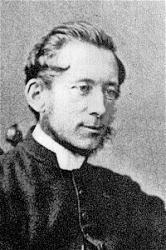
1823 - 1876 Person Name: Rev. John Bacchus Dykes Topics: Christian Life and Hope The Consummation: Hope of Resurrection and Future Life; Christian Life and Hope The Consummation: Hope of Resurrection and Future Life Composer of "ST. AGNES (Durham)" in Evangelical Lutheran hymnal As a young child John Bacchus Dykes (b. Kingston-upon-Hull' England, 1823; d. Ticehurst, Sussex, England, 1876) took violin and piano lessons. At the age of ten he became the organist of St. John's in Hull, where his grandfather was vicar. After receiving a classics degree from St. Catherine College, Cambridge, England, he was ordained in the Church of England in 1847. In 1849 he became the precentor and choir director at Durham Cathedral, where he introduced reforms in the choir by insisting on consistent attendance, increasing rehearsals, and initiating music festivals. He served the parish of St. Oswald in Durham from 1862 until the year of his death. To the chagrin of his bishop, Dykes favored the high church practices associated with the Oxford Movement (choir robes, incense, and the like). A number of his three hundred hymn tunes are still respected as durable examples of Victorian hymnody. Most of his tunes were first published in Chope's Congregational Hymn and Tune Book (1857) and in early editions of the famous British hymnal, Hymns Ancient and Modern.
Bert Polman
John Bacchus Dykes
James Montgomery
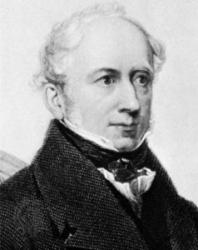
1771 - 1854 Topics: Christian Life and Hope The Walk of Godliness: Christian Resolve and Holiness; Christian Life and Hope The Walk of Godliness: Christian Resolve and Holiness Author of "Father of all our mercies, Thou" in Evangelical Lutheran hymnal James Montgomery (b. Irvine, Ayrshire, Scotland, 1771; d. Sheffield, Yorkshire, England, 1854), the son of Moravian parents who died on a West Indies mission field while he was in boarding school, Montgomery inherited a strong religious bent, a passion for missions, and an independent mind. He was editor of the Sheffield Iris (1796-1827), a newspaper that sometimes espoused radical causes. Montgomery was imprisoned briefly when he printed a song that celebrated the fall of the Bastille and again when he described a riot in Sheffield that reflected unfavorably on a military commander. He also protested against slavery, the lot of boy chimney sweeps, and lotteries. Associated with Christians of various persuasions, Montgomery supported missions and the British Bible Society. He published eleven volumes of poetry, mainly his own, and at least four hundred hymns. Some critics judge his hymn texts to be equal in quality to those of Isaac Watts and Charles Wesley . Many were published in Thomas Cotterill's Selection of Psalms and Hymns (1819 edition) and in Montgomery's own Songs of Zion (1822), Christian Psalmist (1825), and Original Hymns (1853).
Bert Polman
========================
Montgomery, James, son of John Montgomery, a Moravian minister, was born at Irvine, Ayrshire, Nov. 4, 1771. In 1776 he removed with his parents to the Moravian Settlement at Gracehill, near Ballymena, county of Antrim. Two years after he was sent to the Fulneck Seminary, Yorkshire. He left Fulneck in 1787, and entered a retail shop at Mirfield, near Wakefield. Soon tiring of that he entered upon a similar situation at Wath, near Rotherham, only to find it quite as unsuitable to his taste as the former. A journey to London, with the hope of finding a publisher for his youthful poems ended in failure; and in 1792 he was glad to leave Wath for Shefield to join Mr. Gales, an auctioneer, bookseller, and printer of the Sheffield Register newspaper, as his assistant. In 1794 Mr. Gales left England to avoid a political prosecution. Montgomery took the Sheffield Register in hand, changed its name to The Sheffield Iris, and continued to edit it for thirty-one years. During the next two years he was imprisoned twice, first for reprinting therein a song in commemoration of "The Fall of the Bastille," and the second for giving an account of a riot in Sheffield. The editing of his paper, the composition and publication of his poems and hynms, the delivery of lectures on poetry in Sheffield and at the Royal Institution, London, and the earnest advocacy of Foreign Missions and the Bible Society in many parts of the country, gave great variety but very little of stirring incident to his life. In 1833 he received a Royal pension of £200 a year. He died in his sleep, at the Mount, Sheffield, April 30, 1854, and was honoured with a public funeral. A statue was erected to his memory in the Sheffield General Cemetery, and a stained glass window in the Parish Church. A Wesleyan chapel and a public hall are also named in his honour. Montgomery's principal poetical works, including those which he edited, were:—
(1) Prison Amusements, 1797; (2) The Wanderer of Switzerland, 1806; (3) The West Indies, 1807; (4) The World before the Flood, 1813; (5) Greenland and Other Poems, 1819; (6) Songs of Zion, 1822; (7) The Christian Psalmist, 1825; (8) The Christian Poet, 1825; (9) The Pelican Island, 1828; (10) The Poet’s Portfolio, 1835; (11) Original Hymns for Public, Private, and Social Devotion, 1853. He also published minor pieces at various times, and four editions of his Poetical Works, the first in 1828, the second in 1836, the third in 1841, and the fourth in 1854. Most of these works contained original hymns. He also contributed largely to Collyer's Collection, 1812, and other hymnbooks published during the next 40 years, amongst which the most noticeable was Cotterill's Selections of 1819, in which more than 50 of his compositions appeared. In his Christian Psalmist, 1825, there are 100 of his hymns, and in his Original Hymns, 1853, 355 and 5 doxologies. His Songs of Zion, 1822, number 56. Deducting those which are repeated in the Original Hymns, there remain about 400 original compositions.
Of Montgomery's 400 hymns (including his versions of the Psalms) more than 100 are still in common use. With the aid of Montgomery's MSS. we have given a detailed account of a large number. The rest are as follows:—
i. Appeared in Collyer's Collection, 1812.
1. Jesus, our best beloved Friend. Personal Dedication to Christ.
2. When on Sinai's top I see. Sinai, Tabor, and Calvary.
ii. Appeared in Cotterill's Selection, 1819.
3. Come to Calvary's holy mountain. The Open Fountain.
4. God in the high and holy place. God in Nature. The cento in Com. Praise, 1879, and others, "If God hath made this world so fair," is from this hymn.
5. Hear me, O Lord, in my distress. Ps. cxliii.
6. Heaven is a place of rest from sin. Preparation for Heaven.
7. I cried unto the Lord most just. Ps. cxlii.
8. Lord, let my prayer like incense rise. Ps. cxxxix.
9. O bless the Lord, my soul! His grace to thee proclaim. Ps. ciii.
10. Out of the depths of woe. Ps. cxxx. Sometimes "When from the depths of woe."
11. The world in condemnation lay. Redemption.
12. Where are the dead? In heaven or hell? The Living and the Dead.
iii. Appeared in his Songs of Zion, 1822.
13. Give glory to God in the highest. Ps. xxix.
14. Glad was my heart to hear. Ps. cxxii.
15. God be merciful to me. Ps. lxix.
16. God is my strong salvation. Ps. xxvii.
17. Hasten, Lord, to my release. Ps. lxx.
18. Have mercy on me, O my God. Ps. li.
19. Hearken, Lord, to my complaints. Ps. xlii.
20. Heralds of creation cry. Ps. cxlviii.
21. How beautiful the sight. Ps. cxxxiii.
22. How precious are Thy thoughts of peace. Ps. cxxxix.
23. I love the Lord, He lent an ear. Ps. cxvi.
24. In time of tribulation. Ps. lxxvii.
25. Jehovah is great, and great be His praise. Ps. xlviii. Sometimes, "0 great is Jehovah, and great is His Name."
26. Judge me, O Lord, in righteousness. Ps. xliii.
27. Lift up your heads, ye gates, and wide. Ps.xxiv.
28. Lord, let me know mine [my] end. Ps. xxxi.
29. Of old, 0 God, Thine own right hand. Ps. lxxx.
30. O God, Thou art [my] the God alone. Ps. lxiii.
31. 0 Lord, our King, how excellent. Ps. viii. Sometimes, "0 Lord, how excellent is Thy name."
32. O my soul, with all thy powers. Ps. ciii.
33. One thing with all my soul's desire. Ps. xxvii. From this, "Grant me within Thy courts a place."
34. Searcher of hearts, to Thee are known. Ps. cxxxix.
35. Thank and praise Jehovah's name. Ps. cvii.
36. Thee will I praise, O Lord in light. Ps. cxxxviii.
37. The Lord is King; upon His throne. Ps. xciii.
38. The Lord is my Shepherd, no want shall I know. Ps. xxiii.
39. The tempter to my soul hath said. Ps. iii.
40. Thrice happy he who shuns the way. Ps. i.
41. Thy glory, Lord, the heavens declare. Ps. xix.
42. Thy law is perfect, Lord of light. Ps. xix.
43. Who make the Lord of hosts their tower. Ps. cxxv.
44. Yea, I will extol Thee. Ps. xxx.
iv. Appeared in his Christian Psalmist. 1825.
45. Fall down, ye nations, and adore. Universal adoration of God desired.
46. Food, raiment, dwelling, health, and friends. The Family Altar.
47. Go where a foot hath never trod. Moses in the desert. Previously in the Leeds Congregational Collection, 1822.
48. Green pastures and clear streams. The Good Shepherd and His Flock.
49. Less than the least of all. Mercies acknowledged.
50. Not to the mount that burned with fire [flame]. Communion of Saints.
51. On the first Christian Sabbath eve. Easter Sunday Evening.
52. One prayer I have: all prayers in one. Resignation.
53. Our heavenly Father hear. The Lord's Prayer.
54. Return, my soul, unto thy rest. Rest in God.
55. Spirit of power and might, behold. The Spirit's renewing desired.
56. The Christian warrior, see him stand. The Christian Soldier. Sometimes, "Behold the Christian warrior stand."
57. The days and years of time are fled. Day of Judgment.
58. The glorious universe around. Unity.
59. The pure and peaceful mind. A Children's Prayer.
60. This is the day the Lord hath made (q. v.). Sunday.
61. Thy word, Almighty Lord. Close of Service.
62. What secret hand at morning light ? Morning.
63. While through this changing world we roam. Heaven.
64. Within these walls be peace. For Sunday Schools.
v. Appeared in his Original Hymns, 1853.
65. Behold yon bright array. Opening a Place of Worship.
66. Behold the book whose leaves display. Holy Scriptures.
67. Come ye that fear the Lord. Confirmation.
68. Home, kindred, friends, and country, these. Farewell to a Missionary.
69. Let me go, the day is breaking. Jacob wrestling.
70. Not in Jerusalem alone. Consecration of a Church.
71. Praise the high and holy One. God the Creator.
In common with most poets and hymnwriters, Montgomery strongly objected to any correction or rearrangement of his compositions. At the same time he did not hesitate to alter, rearrange, and amend the productions of others. The altered texts which appeared in Cotterill's Selections, 1819, and which in numerous instances are still retained in some of the best hymnbooks, as the "Rock of Ages," in its well-known form of three stanzas, and others of equal importance, were made principally by him for Cotterill's use. We have this confession under his own hand.
As a poet, Montgomery stands well to the front; and as a writer of hymns he ranks in popularity with Wesley, Watts, Doddridge, Newton, and Cowper. His best hymns were written in his earlier years. In his old age he wrote much that was unworthy of his reputation. His finest lyrics are "Angels from the realms of glory," "Go to dark Gethsemane," "Hail to the Lord's Anointed," and "Songs of praise the angels sang." His "Prayer is the soul's sincere desire," is an expanded definition of prayer of great beauty; and his "Forever with the Lord" is full of lyric fire and deep feeling. The secrets of his power as a writer of hymns were manifold. His poetic genius was of a high order, higher than most who stand with him in the front rank of Christian poets. His ear for rhythm was exceedingly accurate and refined. His knowledge of Holy Scripture was most extensive. His religious views were broad and charitable. His devotional spirit was of the holiest type. With the faith of a strong man he united the beauty and simplicity of a child. Richly poetic without exuberance, dogmatic without uncharitableness, tender without sentimentality, elaborate without diffusiveness, richly musical without apparent effort, he has bequeathed to the Church of Christ wealth which could onlv have come from a true genius and a sanctified! heart.
--John Julian, Dictionary of Hymnology (1907)
James Montgomery
Pages




