

 My Starred Hymns
 My FlexScores
 My Hymnals
 My Purchased Files
Planning worship?
Check out our sister site, ZeteoSearch.org,
for 20+ additional resources related to your search.
- |
User Links
Person Results
Catherine Winkworth
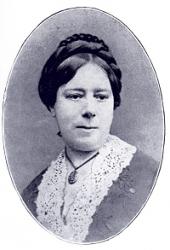
1827 - 1878 Topics: Nineteenth Sunday after Trinity Translator of "Faith is a living pow'r from heav'n " in Evangelical Lutheran hymnal Catherine Winkworth (b. Holborn, London, England, 1827; d. Monnetier, Savoy, France, 1878) is well known for her English translations of German hymns; her translations were polished and yet remained close to the original. Educated initially by her mother, she lived with relatives in Dresden, Germany, in 1845, where she acquired her knowledge of German and interest in German hymnody. After residing near Manchester until 1862, she moved to Clifton, near Bristol. A pioneer in promoting women's rights, Winkworth put much of her energy into the encouragement of higher education for women. She translated a large number of German hymn texts from hymnals owned by a friend, Baron Bunsen. Though often altered, these translations continue to be used in many modern hymnals. Her work was published in two series of Lyra Germanica (1855, 1858) and in The Chorale Book for England (1863), which included the appropriate German tune with each text as provided by Sterndale Bennett and Otto Goldschmidt. Winkworth also translated biographies of German Christians who promoted ministries to the poor and sick and compiled a handbook of biographies of German hymn authors, Christian Singers of Germany (1869).
Bert Polman
========================
Winkworth, Catherine, daughter of Henry Winkworth, of Alderley Edge, Cheshire, was born in London, Sep. 13, 1829. Most of her early life was spent in the neighbourhood of Manchester. Subsequently she removed with the family to Clifton, near Bristol. She died suddenly of heart disease, at Monnetier, in Savoy, in July, 1878. Miss Winkworth published:—
Translations from the German of the Life of Pastor Fliedner, the Founder of the Sisterhood of Protestant Deaconesses at Kaiserworth, 1861; and of the Life of Amelia Sieveking, 1863.
Her sympathy with practical efforts for the benefit of women, and with a pure devotional life, as seen in these translations, received from her the most practical illustration possible in the deep and active interest which she took in educational work in connection with the Clifton Association for the Higher Education of Women, and kindred societies there and elsewhere. Our interest, however, is mainly centred in her hymnological work as embodied in her:—
(1) Lyra Germanica, 1st Ser., 1855. (2) Lyra Germanica, 2nd Ser., 1858. (3) The Chorale Book for England (containing translations from the German, together with music), 1863; and (4) her charming biographical work, the Christian Singers of Germany, 1869.
In a sympathetic article on Miss Winkworth in the Inquirer of July 20, 1878, Dr. Martineau says:—
"The translations contained in these volumes are invariably faithful, and for the most part both terse and delicate; and an admirable art is applied to the management of complex and difficult versification. They have not quite the fire of John Wesley's versions of Moravian hymns, or the wonderful fusion and reproduction of thought which may be found in Coleridge. But if less flowing they are more conscientious than either, and attain a result as poetical as severe exactitude admits, being only a little short of ‘native music'"
Dr. Percival, then Principal of Clifton College, also wrote concerning her (in the Bristol Times and Mirror), in July, 1878:—
"She was a person of remarkable intellectual and social gifts, and very unusual attainments; but what specially distinguished her was her combination of rare ability and great knowledge with a certain tender and sympathetic refinement which constitutes the special charm of the true womanly character."
Dr. Martineau (as above) says her religious life afforded "a happy example of the piety which the Church of England discipline may implant.....The fast hold she retained of her discipleship of Christ was no example of ‘feminine simplicity,' carrying on the childish mind into maturer years, but the clear allegiance of a firm mind, familiar with the pretensions of non-Christian schools, well able to test them, and undiverted by them from her first love."
Miss Winkworth, although not the earliest of modern translators from the German into English, is certainly the foremost in rank and popularity. Her translations are the most widely used of any from that language, and have had more to do with the modern revival of the English use of German hymns than the versions of any other writer.
-- John Julian, Dictionary of Hymnology (1907)
============================
See also in:
Hymn Writers of the Church
Catherine Winkworth
John Stainer

1840 - 1901 Person Name: J. Stainer Topics: The Church Year Nineteenth Sunday after Trinity Composer of "[Thou hidden love of God, whose height]" in The Lutheran Hymnary
John Stainer
Isaac Watts
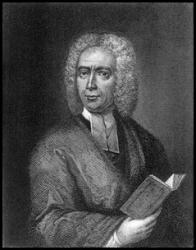
1674 - 1748 Person Name: Watts Topics: Nineteenth Sunday after Trinity Author of "Show pity, Lord; O Lord! forgive" in Church Book Isaac Watts was the son of a schoolmaster, and was born in Southampton, July 17, 1674. He is said to have shown remarkable precocity in childhood, beginning the study of Latin, in his fourth year, and writing respectable verses at the age of seven. At the age of sixteen, he went to London to study in the Academy of the Rev. Thomas Rowe, an Independent minister. In 1698, he became assistant minister of the Independent Church, Berry St., London. In 1702, he became pastor. In 1712, he accepted an invitation to visit Sir Thomas Abney, at his residence of Abney Park, and at Sir Thomas' pressing request, made it his home for the remainder of his life. It was a residence most favourable for his health, and for the prosecution of his literary labours. He did not retire from ministerial duties, but preached as often as his delicate health would permit.
The number of Watts' publications is very large. His collected works, first published in 1720, embrace sermons, treatises, poems and hymns. His "Horae Lyricae" was published in December, 1705. His "Hymns" appeared in July, 1707. The first hymn he is said to have composed for religious worship, is "Behold the glories of the Lamb," written at the age of twenty. It is as a writer of psalms and hymns that he is everywhere known. Some of his hymns were written to be sung after his sermons, giving expression to the meaning of the text upon which he had preached. Montgomery calls Watts "the greatest name among hymn-writers," and the honour can hardly be disputed. His published hymns number more than eight hundred.
Watts died November 25, 1748, and was buried at Bunhill Fields. A monumental statue was erected in Southampton, his native place, and there is also a monument to his memory in the South Choir of Westminster Abbey. "Happy," says the great contemporary champion of Anglican orthodoxy, "will be that reader whose mind is disposed, by his verses or his prose, to imitate him in all but his non-conformity, to copy his benevolence to men, and his reverence to God." ("Memorials of Westminster Abbey," p. 325.)
--Annotations of the Hymnal, Charles Hutchins, M.A., 1872.
=================================
Watts, Isaac, D.D. The father of Dr. Watts was a respected Nonconformist, and at the birth of the child, and during its infancy, twice suffered imprisonment for his religious convictions. In his later years he kept a flourishing boarding school at Southampton. Isaac, the eldest of his nine children, was born in that town July 17, 1674. His taste for verse showed itself in early childhood. He was taught Greek, Latin, and Hebrew by Mr. Pinhorn, rector of All Saints, and headmaster of the Grammar School, in Southampton. The splendid promise of the boy induced a physician of the town and other friends to offer him an education at one of the Universities for eventual ordination in the Church of England: but this he refused; and entered a Nonconformist Academy at Stoke Newington in 1690, under the care of Mr. Thomas Rowe, the pastor of the Independent congregation at Girdlers' Hall. Of this congregation he became a member in 1693.
Leaving the Academy at the age of twenty, he spent two years at home; and it was then that the bulk of the Hymns and Spiritual Songs (published 1707-9) were written, and sung from manuscripts in the Southampton Chapel. The hymn "Behold the glories of the Lamb" is said to have been the first he composed, and written as an attempt to raise the standard of praise. In answer to requests, others succeeded. The hymn "There is a land of pure delight" is said to have been suggested by the view across Southampton Water. The next six years of Watts's life were again spent at Stoke Newington, in the post of tutor to the son of an eminent Puritan, Sir John Hartopp; and to the intense study of these years must be traced the accumulation of the theological and philosophical materials which he published subsequently, and also the life-long enfeeblement of his constitution.
Watts preached his first sermon when he was twenty-four years old. In the next three years he preached frequently; and in 1702 was ordained pastor of the eminent Independent congregation in Mark Lane, over which Caryl and Dr. John Owen had presided, and which numbered Mrs. Bendish, Cromwell's granddaughter, Charles Fleetwood, Charles Desborough, Sir John Hartopp, Lady Haversham, and other distinguished Independents among its members. In this year he removed to the house of Mr. Hollis in the Minories. His health began to fail in the following year, and Mr. Samuel Price was appointed as his assistant in the ministry. In 1712 a fever shattered his constitution, and Mr. Price was then appointed co-pastor of the congregation which had in the meantime removed to a new chapel in Bury Street. It was at this period that he became the guest of Sir Thomas Abney, under whose roof, and after his death (1722) that of his widow, he remained for the rest of his suffering life; residing for the longer portion of these thirty-six years principally at the beautiful country seat of Theobalds in Herts, and for the last thirteen years at Stoke Newington. His degree of D.D. was bestowed on him in 1728, unsolicited, by the University of Edinburgh. His infirmities increased on him up to the peaceful close of his sufferings, Nov. 25, 1748. He was buried in the Puritan restingplace at Bunhill Fields, but a monument was erected to him in Westminster Abbey.
His learning and piety, gentleness and largeness of heart have earned him the title of the Melanchthon of his day. Among his friends, churchmen like Bishop Gibson are ranked with Nonconformists such as Doddridge. His theological as well as philosophical fame was considerable. His Speculations on the Human Nature of the Logos, as a contribution to the great controversy on the Holy Trinity, brought on him a charge of Arian opinions. His work on The Improvement of the Mind, published in 1741, is eulogised by Johnson. His Logic was still a valued textbook at Oxford within living memory. The World to Come, published in 1745, was once a favourite devotional work, parts of it being translated into several languages. His Catechisms, Scripture History (1732), as well as The Divine and Moral Songs (1715), were the most popular text-books for religious education fifty years ago. The Hymns and Spiritual Songs were published in 1707-9, though written earlier. The Horae Lyricae, which contains hymns interspersed among the poems, appeared in 1706-9. Some hymns were also appended at the close of the several Sermons preached in London, published in 1721-24. The Psalms were published in 1719. The earliest life of Watts is that by his friend Dr. Gibbons. Johnson has included him in his Lives of the Poets; and Southey has echoed Johnson's warm eulogy. The most interesting modern life is Isaac Watts: his Life and Writings, by E. Paxton Hood. [Rev. H. Leigh Bennett, M.A.]
A large mass of Dr. Watts's hymns and paraphrases of the Psalms have no personal history beyond the date of their publication. These we have grouped together here and shall preface the list with the books from which they are taken.
(l) Horae Lyricae. Poems chiefly of the Lyric kind. In Three Books Sacred: i.To Devotion and Piety; ii. To Virtue, Honour, and Friendship; iii. To the Memory of the Dead. By I. Watts, 1706. Second edition, 1709. (2) Hymns and Spiritual Songs. In Three Books: i. Collected from the Scriptures; ii. Composed on Divine Subjects; iii. Prepared for the Lord's Supper. By I. Watts, 1707. This contained in Bk i. 78 hymns; Bk. ii. 110; Bk. iii. 22, and 12 doxologies. In the 2nd edition published in 1709, Bk. i. was increased to 150; Bk. ii. to 170; Bk. iii. to 25 and 15 doxologies. (3) Divine and Moral Songs for the Use of Children. By I. Watts, London, 1715. (4) The Psalms of David Imitated in the Language of the New Testament, And apply'd to the Christian State and Worship. By I. Watts. London: Printed by J. Clark, at the Bible and Crown in the Poultry, &c, 1719. (5) Sermons with hymns appended thereto, vol. i., 1721; ii., 1723; iii. 1727. In the 5th ed. of the Sermons the three volumes, in duodecimo, were reduced to two, in octavo. (6) Reliquiae Juveniles: Miscellaneous Thoughts in Prose and Verse, on Natural, Moral, and Divine Subjects; Written chiefly in Younger Years. By I. Watts, D.D., London, 1734. (7) Remnants of Time. London, 1736.
454 Hymns and Versions of the Psalms, in addition to the centos are all in common use at the present time.
--Excerpts from John Julian, Dictionary of Hymnology (1907)
==================================
Watts, I. , p. 1241, ii. Nearly 100 hymns, additional to those already annotated, are given in some minor hymn-books.
--John Julian, Dictionary of Hymnology, Appendix, Part II (1907)
=================
Watts, I. , p. 1236, i. At the time of the publication of this Dictionary in 1892, every copy of the 1707 edition of Watts's Hymns and Spiritual Songs was supposed to have perished, and all notes thereon were based upon references which were found in magazines and old collections of hymns and versions of the Psalms. Recently three copies have been recovered, and by a careful examination of one of these we have been able to give some of the results in the revision of pp. 1-1597, and the rest we now subjoin.
i. Hymns in the 1709 ed. of Hymns and Spiritual Songs which previously appeared in the 1707 edition of the same book, but are not so noted in the 1st ed. of this Dictionary:—
On pp. 1237, L-1239, ii., Nos. 18, 33, 42, 43, 47, 48, 60, 56, 58, 59, 63, 75, 82, 83, 84, 85, 93, 96, 99, 102, 104, 105, 113, 115, 116, 123, 124, 134, 137, 139, 146, 147, 148, 149, 162, 166, 174, 180, 181, 182, 188, 190, 192, 193, 194, 195, 197, 200, 202.
ii. Versions of the Psalms in his Psalms of David, 1719, which previously appeared in his Hymns and Spiritual Songs, 1707:—
On pp. 1239, U.-1241, i., Nos. 241, 288, 304, 313, 314, 317, 410, 441.
iii. Additional not noted in the revision:—
1. My soul, how lovely is the place; p. 1240, ii. 332. This version of Ps. lxiv. first appeared in the 1707 edition of Hymns & Spiritual Songs, as "Ye saints, how lovely is the place."
2. Shine, mighty God, on Britain shine; p. 1055, ii. In the 1707 edition of Hymns & Spiritual Songs, Bk. i., No. 35, and again in his Psalms of David, 1719.
3. Sing to the Lord with [cheerful] joyful voice, p. 1059, ii. This version of Ps. c. is No. 43 in the Hymns & Spiritual Songs, 1707, Bk. i., from which it passed into the Ps. of David, 1719.
A careful collation of the earliest editions of Watts's Horae Lyricae shows that Nos. 1, 7, 9, 10, 11, 12, 14, 16, p. 1237, i., are in the 1706 ed., and that the rest were added in 1709. Of the remaining hymns, Nos. 91 appeared in his Sermons, vol. ii., 1723, and No. 196 in Sermons, vol. i., 1721. No. 199 was added after Watts's death. It must be noted also that the original title of what is usually known as Divine and Moral Songs was Divine Songs only.
--John Julian, Dictionary of Hymnology, New Supplement (1907)
===========
See also in:
Hymn Writers of the Church
Isaac Watts
Charlotte Elliott
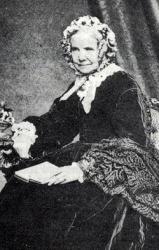
1789 - 1871 Topics: Nineteenth Sunday after Trinity Author of "Just as I am, without one plea" in Church Book Elliott, Charlotte, daughter of Charles Elliott, of Clapham and Brighton, and granddaughter of the Rev. H. Venn, of Huddersfield, was born March 18, 1789. The first 32 years of her life were spent mostly at Clapham. In 1823 she removed to Brighton, and died there Sept. 22, 1871. To her acquaintance with Dr. C. Malan, of Geneva, is attributed much of the deep spiritual-mindedness which is so prominent in her hymns. Though weak and feeble in body, she possessed a strong imagination, and a well-cultured and intellectual mind. Her love of poetry and music was great, and is reflected in her verse. Her hymns number about 150, a large percentage of which are in common use. The finest and most widely known of these are, "Just as I am” and "My God, my Father, while I stray." Her verse is characterized by tenderness of feeling, plaintive simplicity, deep devotion, and perfect rhythm. For those in sickness and sorrow she has sung as few others have done. Her hymns appeared in her brother's Psalms & Hymns and elsewhere as follows:—
(1) Psalms and Hymns for Public, Private, and Social Worship; selected by the Rev. H. V. Elliott, &c., 1835-48. In this Selection her signature is "C. E." (2) The Christian Remembrancer Pocket Book. This was originally edited by Miss Kiernan, of Dublin. Miss Elliott undertook the editorship in 1834. (3) The Invalid's Hymn Book. This was originally compiled by Miss Kiernan, but before publication was re-arranged by Miss Elliott, who also added 23 hymns in the first edition., 1834. These were increased in the following edition to the sixth in 1854, when her contributions amounted to 112. From that date no change was made in the work. (4) Hours of Sorrow Cheered and Comforted; or, Thoughts in Verse, 1836. (5) Morning and Evening Hymns for a Week, printed privately in 1839 for sale for a benevolent institution in Brighton, and published in 1842. (6) Thoughts in Verse on Sacred Subjects, 1869.
Miss Elliott's Poems were published, with a Memoir by her sister, Mrs. Babington, in 1873, and an additional volume of Leaves from her unpublished Journals and Poems, also appeared in 1870.
In addition to her more important hymns, which are annotated under their respective first lines, there are in common use:—
i. From The Invalid's Hymn-book, 1834-1841:—
1. Clouds and darkness round about thee. (1841.) Resignation.
2. Not willingly dost Thou afflict [reject]. (1841.) Divine Chastisement.
3. O God, may I look up to Thee. (1841.) Teach us to Pray.
4. This is enough; although 'twere sweet. (1834.) On being debarred from Divine Worship.
5. With tearful eyes I look around. (1841.) The Invitation "Come Unto Me."
ii. From H. V. Elliott's Psalms & Hymns, 1835-1839:—
6. Glorious was that primal light. Christmas.
7. Hail, holy day, most blest, most dear. Easter.
8. My only Saviour, when I feel. Jesus His people's Rest.
9. Now let our heavenly plants and flowers. Monday Morning.
10. The Sabbath-day has reached its close. Sunday Evening.
iii. From Miss Elliott's Hours of Sorrow, 1836:—
11. Father, when Thy child is dying. Prayer for a Departing Spirit.
12. Leaning on Thee, my Guide, my Friend. Death Anticipated.
13. My God, is any hour so sweet? The Hour of Prayer.
14. O faint and feeble-hearted. Resignation enforced.
15. There is a holy sacrifice. The Contrite Heart.
iv. From her Hymns for a Week, 1839:—
16. Guard well thy lips; none, none can know. Thursday Morning.
17. There is a spot of consecrated ground. Pt. i.
18. This is the mount where Christ's disciples see. Pt. ii. Monday Evening.
19. This is the day to tune with care. Saturday Morning.
v. From Thoughts in Verse on Sacred Subjects, 1869:—
20. As the new moons of old were given. On a Birthday.
21. I need no other plea. Pt. i.
22. I need no prayers to saints. Pt. ii. Christ, All in All.
23. Jesus, my Saviour, look on me. Christ, All in All.
Several of the earlier of these hymns were repeated in the later works, and are thus sometimes attributed to the wrong work. [Rev. James Davidson, B.A.]
-- John Julian, Dictionary of Hymnology (1907)
================
Elliott, Charlotte, p. 328, i. Other hymns are:—
1. O how I long to reach my home. Heaven desired. From the Invalid's Hymn Book, 1834.
2. The dawn approaches, golden streaks. Second Advent. From Thoughts in Verse, &c, 1869.
Of her hymns noted on p. 328, Nos. 6, 7, 8, 9, 10,11, and 13, all appeared in the 1st edition of Elliott's Psalms & Hymns, 1835.
--John Julian, Dictionary of Hymnology, Appendix, Part II (1907)
========================
Elliott, Charlotte, pp. 328, i.; 1561, ii. Further research enables us to give amended dates to some of her hymns as follows:—
1. With tearful eyes I look around (No. 5). This is in the 1835 Appendix to The Invalid's Hymn Book.
2. My only Saviour, when I feel (No. 8). Also in the 1835 Appendix.
3. Father, when Thy child is dying (No. 11). In the 1833 Appendix.
4. I want that adorning divine, p. 559, i. In the Christian Remembrancer 1848, p. 22.
--John Julian, Dictionary of Hymnology, New Supplement (1907)
Charlotte Elliott
John Zundel
1815 - 1882 Topics: Nineteenth Sunday after Trinity Composer of "LOVE DIVINE" in Evangelical Lutheran hymnal John Zundel; b. 1815, near Stuttgart, Germany; organist in Brooklyn, N. Y., from 1847 to 1878; d. Cannstadt, Germany, 1882
Evangelical Lutheran Hymnal, 1908
John Zundel
Horatius Bonar
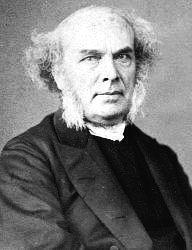
1808 - 1889 Topics: Nineteenth Sunday after Trinity Author of "I lay my sins on Jesus" in Church Book Horatius Bonar was born at Edinburgh, in 1808. His education was obtained at the High School, and the University of his native city. He was ordained to the ministry, in 1837, and since then has been pastor at Kelso. In 1843, he joined the Free Church of Scotland. His reputation as a religious writer was first gained on the publication of the "Kelso Tracts," of which he was the author. He has also written many other prose works, some of which have had a very large circulation. Nor is he less favorably known as a religious poet and hymn-writer. The three series of "Hymns of Faith and Hope," have passed through several editions.
--Annotations of the Hymnal, Charles Hutchins, M.A. 1872
================================
Bonar, Horatius, D.D. Dr. Bonar's family has had representatives among the clergy of the Church of Scotland during two centuries and more. His father, James Bonar, second Solicitor of Excise in Edinburgh, was a man of intellectual power, varied learning, and deop piety.
Horatius Bonar was born in Edinburgh, Dec. 19th, 1808; and educated at the High School and the University of Edinburgh. After completing his studies, he was "licensed" to preach, and became assistant to the Rev. John Lewis, minister of St. James's, Leith. He was ordained minister of the North Parish, Kelso, on the 30th November, 1837, but left the Established Church at the "Disruption," in May, 1848, remaining in Kelso as a minister of the Free Church of Scotland. The University of Aberdeen conferred on him the doctorate of divinity in 1853. In 1866 he was translated to the Chalmers Memorial Church, the Grange, Edinburgh; and in 1883 he was chosen Moderator of the General Assembly of of the Free Church of Scotland.
Dr. Bonar's hymns and poems were, he tells us, composed amid a great variety of circumstances; in many cases he cannot himself recall these circumstances; they also appeared in several publications, but nearly all have boen published or republished in the following:— (i) Songs for the Wilderness, 1843-4. (2) The Bible Hymn Book, 1845. (3) Hymns, Original and Selected, 1846. (4) Hymns of Faith and Hope, First Series, 1857; Second Series, 1861; Third Series, 1866. (5) The Song of the New Creation, 1872. (6) My Old Letters, a long poem, 1877. (7) Hymns of the Nativity, 1879. (8) Communion Hymns, 1881. In addition to numerous prose works, he has also edited The New Jerusalem; a Hymn of the Olden Time, 1852, &c.
Dr. Bonar's poems—-including many beautiful lyrics, several psalm versions, and translations from the Greek and Latin, a large number of hymns, and a long meditative poem—-are very numerous, too numerous, perhaps, for their permanent fame as a whole.
Dr. Bonar's scholarship is thorough and extensive; and his poems display the grace of style and wealth of allusion which are the fruit of ripe culture. Affected very slightly by current literary moods, still less by the influence of other religious poetry, they reveal extreme susceptibility to the emotional power which the phases of natural and of spiritual life exercise; the phases of natural life being recognised chiefly as conveying and fashioning spiritual life, used chiefly for depicting spiritual life, and handled for this purpose with greater delicacy of touch than in the Olney Hymns, and with less conscious purpose than in the Christian Year. As a result of this susceptibility, and from habitual contemplation of the Second Advent as the era of this world's true bliss, his hymns and poems are distinguished by a tone of pensive reflection, which some might call pessimism. But they are more than the record of emotion; another element is supplied by his intellectual and personal grasp of Divine truth, these truths particularly:—The gift of a Substitute, our Blessed Saviour; Divine grace, righteous, yet free and universal in offer; the duty of immediate reliance upon the privilege of immediate assurance through that grace; communion with God, especially in the Lord's Supper, respecting which he insists on the privilege of cherishing the highest conceptions which Scripture warrants; and finally, the Second Advent of our Lord: by his vigorous celebration of these and other truths as the source and strength of spiritual life, his hymns are protected from the blight of unhealthy, sentimental introspection.
To sum up: Dr. Bonar's hymns satisfy the fastidious by their instinctive good taste; they mirror the life of Christ in the soul, partially, perhaps, but with vivid accuracy; they win the heart by their tone of tender sympathy; they sing the truth of God in ringing notes; and although, when taken as a whole, they are not perfect ; although, in reading them, we meet with feeble stanzas, halting rhythm, defective rhyme, meaningless Iteration; yet a singularly large number have been stamped with approval, both in literary circles and by the Church.
In Great Britain and America nearly 100 of Dr. Bonar's hymns are in common use. They are found in almost all modern hymnals from four in Hymns Ancient & Modern to more than twenty in the American Songs for the Sanctuary, N. Y., 1865-72. The most widely known are, "A few more years shall roll;" "Come, Lord, and tarry not;" "Here, O my Lord, I see Thee face to face;" "I heard the Voice of Jesus say;" "The Church has waited long;" and "Thy way, not mine, O Lord."
In addition to these and others which are annotated under their respective first lines, the following are also in common use:—
From Songs for the Wilderness, No. 1, 1843.
1. For Thee we long and pray. Sunday Morning.
2. Holy Father, hear my cry. A Child's Prayer.
3. I thought upon my sins and I was sad. Christ our Peace.
4. Peace to the world, our Lord is come. A Millennial Song.
5. Spirit of everlasting grace. The Vision of Dry Bones.
ii. From Songs for the Wilderness, No. 2,1844.
6. Ho, ye thirsty, parched and fainting. Invitation.
7. 0 'tis not what we fancied it. The world renounced.
8. Sing them, my children, sing them still. Children exhorted to Praise.
9. Time's sun is fast setting. Advent.
10. Weep, pilgrim, weep, yet 'tis not for the sorrow. Faith.
11. Yes, for me, for me He careth. Christ the Elder Brother .
iii. From The Bible Hymn Book, 1845.
12. Jesus, my sorrow lies too deep. Jesus, the Great High Priest.
13. There is a Morning Star, my soul. The Morning Star.
14. This is not my place of resting. Pressing towards heaven.
iv. From Hymns, Original and Selected, 1845.
15. Let there be light, Jehovah said. Creation.
v. From Hymns of Faith and Hope, 1st series, 1857.
16. Be brave, my brother. The Fight of Faith.
17. Blessed be God, our God. Good Friday.
18. Everlasting praises. Doxology.
19. Go up, go up, my heart. Heavenly aspirations desired.
20. I close my heavy eye. Evening. Sometimes given as "We close our heavy eyes."
21. I see the crowd in Pilate's hall. Good Friday.
22. Jesus, while this rongh desert soil. Strength by the Way.
23. Jesus, Whom angel-hosts adore. The Word made Flesh. From "The Son of God, in mighty love."
24. Make haste, 0 man, to live. Exhortation to lay hold of Life.
25. No seas again shall sever. Heaven.
26. Oppressed with noonday's scorching heat. Shadow of the Cross.
27. Rest for the toiling hand. Burial. From "Lie down, frail body, here."
28. Shall this life of mine be wasted? Exhortation to Duty.
29. These are the crowns that we shall wear. Heaven.
30. Thy works, not mine, O Christ [Lord]. The Sin-bearer.
31. Where the faded flower shall freshen. Heaven.
vi. From Hymns of Faith and Hope. 2nd series, 1861.
32. Be still, my soul, Jehovah loveth Thee. Rest in the Love of God.
33. Christ has done the mighty work. Good Friday.
34. Come, mighty Spirit, penetrate. Whitsuntide.
35. Deep down beneath the unresting surge. Burial at Sea.
36. Fear not the foe, thou flock of God [thou little flock]. Battle-Song of the Church.
37. For lack of love I languish. Lent.
38. From this bleak hill of storms. Eternal Rest desired.
39. He liveth long who liveth well. The True Life.
40. Here shall death's triumph end: the rock-barred door. Easter. From "The tomb is empty: wouldst thou have it full."
41. Jesus, Sun and Shield art Thou. Jesus the First and Last.
42. Jesus, the Christ of God. Praise to Christ.
43. Light of the world, for ever, ever shining. Christ the Light of the World. From "Why walk in darkness? Has the dear light vanished?"
44. Make use of me, my God. Duty desired.
45. Not what I am, 0 Lord, but what Thou art. The Love of God.
46. 0 Light of Light, shine in. Cry of the Weary.
47. 0 love of God, how strong and true. Love of God.
48. 0 love that casts out fear. Love of God.
49. 0 strong to save and bless. Lent.
50. 0 this soul, how dark and blind. Lent.
51. Safe across the waters. Thanksgiving at end of a journey.
52. Silent, like men in solemn haste. Pressing onwards.
53. Speak, lips of mine. Exhortation to Praise.
54. The Bridegroom comes. Advent.
vii. From Hymns of Faith and Hope. 3rd series, 1866.
55. Bear Thou my burden, Thou Who bar'st my sin. Lent or Passiontide.
56. Done is the work that saves. Easter.
57. Father, our children keep. Prayer on behalf of Children.
58. Fill Thou my life, 0 Lord my God. Life's Praise.
59. Finish Thy work, the time is short. Earnest labour to the end.
60. From the Cross the blood is falling. Good Friday.
61. He called them, and they left. Obedience.
62. Help me, my [0] God to speak. Truth desired.
63. Holy Father, Mighty God. Holy Trinity.
64. How are my troubles multiplied. Ps. iii.
65. How sweetly doth He show His face Flower Service.
66. Light hath arisen, we walk in its brightness. Sustaining power of Faith.
67. Lo, God, our God has come. Christmas.
68. Lord, give me light to do Thy work. Divine guidance desired.
69. No, not despairingly. Lent.
70. Not to ourselves again. Life in Christ, or, Living unto God.
71. Now in parting, Father, bless us. Post Communion.
72. Sounds the trumpet from afar. Battle-Song of the Church.
73. Thee in the loving bloom of morn. God in all.
74. Through good report and evil, Lord. Faithfulness.
75. To Jehovah, God of might. Praise to the Father.
76. To the name of God on high. Doxology.
77. Upward, where the stars are burning. Heavenward Aspirations.
78. We take the peace which He hath won. The Gift of Peace.
79. When the weary, seeking rest. Intercession for all Conditions of Men.
viii. From The Song of the New Creation,1872.
80. For the Bread and for the Wine. Holy Communion.
81. Light of life so softly shining. Light of Life.
82. Yet there is room. The Lamb's bright hall of song. Home Missions.
ix. From Hymns of the Nativity, 1879.
83. Great Ruler of the land and sea. Sailors' Liturgy. From Communion Hymns, 1881.
84. Beloved, let us love. Brotherly Love.
In several instances these hymns are given in an abbreviated form, and sometimes alterations are also introduced. In this latter respect however Dr. Bonar has suffered less than most modern hymn-writers. [Rev. James Mearns, M.A.]
-- John Julian, Dictionary of Hymnology (1907)
====================
Bonar, Horatius, p. 161, i. He died at Edinburgh, July 31, 1889. In 1890 his son published a posthumous volume of his poetical pieces as Until the Day Break and other Hymns and Poems left behind. The following additional hymns are in common use:—
1. Almighty Comforter and Friend. (1866.) Whitsuntide.
2. Father, make use of me. An altered form of No. 44, p. 162, ii.
3. I ask a perfect creed. (1861.) Creed not Opinions. From this is also taken "O True One, give me truth."
4. Long, long deferred, now come at last. Marriage of the Lamb. Part of "Ascend, Beloved, to the joy." (1861.)
5. Nay 'tis not what we fancied it. (1857.) Vanity of the World.
6. No blood, no altar now. (1861.) The Finished Sacrifice.
7. No shadows yonder. (1857.) Heaven Anticipated.
8. Not with the light and vain. (1857.) Godly Companionship.
9. O Love invisible, yet infinite. (1866.) Divine Love.
10. On the great love of God I lean. (1866.) Love of God our Resting-place.
11. On Thee, O Jesus, strongly leaning. (1866.) Fellowship with Christ.
12. Peace upon peace, like wave on wave. (1866.) Divine Peace.
13. Sower divine, sow the good seed in me. (1857.) Heavenly Sowing.
14. Speaketh the sinner's sin within my heart. (1866.) Ps. xxxvi.
15. Still one in life and one in death. (1857.) Communion of Saints. Part of "'Tis thus they press the hand and part."
16. Surely, yon heaven, where angels see God's face. (1857.) Heaven Anticipated.
17. That city with the jewelled crest. (1857.) Heaven. Part of "These are the crowns that we shall wear." Another cento from the same is "Yon city, with the jewelled crest."
18. That clime is not like this dull clime of ours. (1843.) Heaven.
19. The Free One makes you free: He breaks the rod. (1857.) Freedom in Christ. From "Of old they sang the song of liberty."
20. There is a Morning-star, my soul. (1357.) Christ the Morning Star.
21. This is the day of toil. (1866.) Pressing Onwards.
22. Thy thoughts are here, my God. (1866.) Holy Scripture.
23. Till the day dawn. (1857.) Life's Journey.
24. To Him Who spread the skies. (1866.) Creation's Song.
25. Trustingly, trustingly. (1866.) Trust.
26. Unto th' eternal hills. (1866.) Ps. cxxi.
The above dates are: 1843, Songs in the Wilderness; 1857, Hymns of Faith and Hope, 1st Series; 1861, same, 2nd Ser. (not 1864); 1866, same, 3rd Ser. (not 1867), The dates 1857, 1864,1867, were given by Dr. Bonar, but the British Museum copies are 1857, 1861, 1866 respectively.
--John Julian, Dictionary of Hymnology, Appendix, Part II (1907)
==============
Bonar, H., pp. 161, i.; 1554, i. The Rev. H. N. Bonar, Dr. Bonar's son, published in 1904, Hymns by Horatius Bonar, Selected and Arranged by his Son H. N. Bonar, With a brief History of some of the Hymns, &c. (London: H. Frowde). From this work we must correct the date of his Song of the New Creation to 1872. We have also enriched our pages by additional and expanded notes on several of Dr. Bonar's most widely used hymns. In his biographical notes, Mr. Bonar refers to Dr. Bonar's work as editor of the Quarterly Journal of Prophecy, begun in 1848, to which he contributed a hymn for each number. We find that the number of hymns contributed thereto is 101.
With Dr. Bonar's poetical productions great difficulty has been encountered by the historian and annotator because of his absolute indifference to dates and details. It was enough for him that he had written, and that the Church of Christ approved and gladly used what, out of the fulness of his heart, he had given her.
--Excerpt from John Julian, Dictionary of Hymnology, New Supplement (1907)
Horatius Bonar
John S. B. Monsell
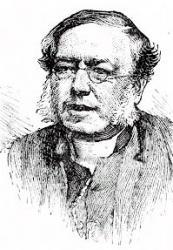
1811 - 1875 Person Name: John S.B. Monsell Topics: The Church Year Nineteenth Sunday after Trinity; The Church Year Nineteenth Sunday after Trinity Author of "To Thee, O dear, dear Savior!" in The Lutheran Hymnary John Samuel Bewley Monsell (b. St. Colomb's, Londonderry, Ireland, 1811; d. Guilford, Surrey, England, 1875) was educated at Trinity College in Dublin and served as a chaplain and rector of several churches in Ireland after his ordination in 1835. Transferred to England in 1853, he became rector of Egham in Surrey and was rector of St. Nicholas Church in Guilford from 1870 until his death (caused by a construction accident at his church). A prolific poet, Monsell published his verse in eleven volumes. His three hundred hymns, many celebrating the seasons of the church year, were issued in collections such as Hymns and Miscellaneous Poems (1837), Spiritual Songs (1857), Hymns of Love and Praise (1863), and The Parish Hymnal (1873).
Bert Polman
===============================
Monsell, John Samuel Bewley, L.L.D., son of Thomas Bewley Monsell, Archdeacon of Londonderry, was born at St. Columb's, Londonderry, March 2,1811, and educated at Trinity College, Dublin (B.A. 1832, LL.D. 1856). Taking Holy Orders in 1834, "he was successively Chaplain to Bishop Mant, Chancellor of the diocese of Connor, Rector of Ramoan, Vicar of Egham, diocese Worcester, and Rector of St. Nicholas's, Guildford. He died in consequence of a fall from the roof of his church, which was in the course of rebuilding, April 9, 1875. His prose works include Our New Vicar, 1867; The Winton Church Catechist, &c. His poetical works are:—
(1) Hymns and Miscellaneous Poems, Dublin, W. Curry, Jun., & Co., 1837; (2) Parish Musings, or Devotional Poems, 1850; (3) Spiritual Songs for the Sundays and Holy Days throughout the Year. 1857 (People's Ed., 1875); (4) His Presence, not His Memory, 1855, 1858; (5) Hymns of Love and Praise for the Church's Year, 1863 (2nd ed. 1866); (6) The Passing Bell; Ode to The Nightingales, and Other Poems, 1867; (7) Litany Hymns, 1869; (8) The Parish Hymnal after the Order of The Book of Common Prayer, 1873; (9)Watches by the Cross, 1874; (10) Simon the Cyrenian; and Other Poems; (11) Nursery Carols.
In these works several hymns which appeared in the earlier books are repeated in the later, and thus at first sight his compositions seem to be more in number than they really are. The total amounts to nearly 300, and of these about one-fourth are in common use. The most popular of these are, "God is love; that anthem olden"; "God of that glorious gift of grace"; "Holy offerings, rich and rare"; “Lord of the living harvest"; "Mighty Father, Blessed Son"; and "Sing to the Lord a joyful song." In addition to those which are annotated under their respective first lines, the following are in common use:—
i. Appeared in his Hymns and Miscellaneous Poems, Dublin, 1837.
1. Birds have their quiet nests. Humility of Christ.
2. Dark and dim the day-light rose. Good Friday.
3. Friend of the friendless and the lone. Jesus, the Friend.
4. My God, what wondrous love was Thine. Whitsuntide.
5. O for a heart more fervent. Holiness desired.
6. O for the time when on the world. Missions.
7. The springtide hour brings leaf and flower. Spring.
8. This day the Lord is risen. Easter.
9. When cold our hearts and far from Thee. Teach us to Pray.
10. Why restless, why so weary? Providence.
11. Yes, I do feel, my God, that I am Thine. Assurance.
ii. Appeared in his Parish Musings, 1850.
12. In Thee, my [O] God, will we rejoice. Trust in God.
13. Lord, dependent on Thy promise. Holy Baptism.
14. Members of Christ, Children of God. Confirmation.
15. So teach me, Lord, to number. The Old and New Year.
16. Soon [soon] and for ever. Death anticipated.
17. The broken, contrite heart oppress'd. Promises of God.
18. Thou art near, yes, Lord, I feel it. Divine Support.
19. Would'st thou learn the depths of sin? Passiontide.
iii. Appeared in his Spiritual Songs, 1857.
20. A few bright leaders of her host. All Saints.
21. A happy, happy [merry, merry] Christmas. New Year's Day.
22. Blessed hope, that we the fallen [sinful]. Hope.
23. Heart in heart, and hand in hand. SS. Simon and Jude.
24. Jesus, my loving Lord! I know. Resignation.
25. Last Sunday of the work-day year. Sunday after Christmas Day.
26. Loved by God the Father. Holy Baptism.
27. Mercy, mercy, God the Father. Lent.
28. My head is low, my heart is sad. Confirmation. (Penitential.)
29. Oft doth the Christian's heart inquire. Christian Duty.
30. 0 God, most mighty, listen now. Charities. From "When languid frame or throbbing pulse."
31. 0 holy Sabbath day. Sunday.
32. 0 Lord, what records of Thy love. St. Barnabas. Sometimes, “Lord God, what records of Thy love."
33. 0 love, divine and golden. Holy Matrimony. From this, "Love divine and tender" is taken.
34. One lesson more the Church must learn. Waiting on God. From this, “One lesson Christ His own would teach" is taken.
35. Proudly in his [the] hall of judgment. Tuesday before Easter.
36. Sinful, sighing to be blest. Lent.
37. The Church of God, with equal care. St. James.
38. The journey done; The rest begun. Burial.
39. The simple trust that can confide. Trust.
40. Weary and sad, a wanderer from Thee. Lent.
iv. Appeared, in his Hymns of Love and Praise, 1863, and 2nd ed., 1866.
41. Bounteous blesser of the seedtime. Sexagesima. Seed Time.
42. Brightly hopeful for the future. God's mercy through life.
43. Christ is risen! Alleluia! Easter.
44. Come and deck the grave with flowers. Easter Eve.
45. Fight the good fight with all thy might. Fight of Faith.
46. Holy Spirit, long expected. Whitsuntide.
47. Hours and days and months and years. The Circumcision.
48. I have no comfort but Thy love. The Comfort of Love.
49. I knew Thee in the land of drought. A Song of Love.
60. I think of Thee, my God by night. Evening.
61. Jesu, gentle Sufferer, say. Good Friday.
52. Labouring and heavy-laden. Lent.
53. Light of the world, we hail Thee. Missions.
54. Lord, to whom except to Thee? Holy Communion.
55. My sins, my sins, my Saviour. Ash Wednesday.
56. O'er the distant mountains breaking. Second Advent.
57. Other Name than our dear Lord's. Jesus All and in All.
58. Pity on us, heavenly Father. Litany Hymn for Lent.
59. Praise the Lord, rejoice, ye Gentiles. Advent, or Missions.
60. Rest of the weary, joy of the sad. Jesus, the Saviour and Friend.
61. Shadow of a mighty Rock. Jesus, the Rock of Ages.
62. Sing, 0 heaven; 0 earth rejoice. Ascension.
63. Sweet is the gentle voice of spring. Seed Time.
64. Sweet is Thy mercy, Lord. Divine Mercy.
65. Teach me to do the thing that pleaseth Thee. Divine Teaching.
66. The good old times, how glorious. Advent.
67. The world may in its wealth delight. Rejoicing in the Lord. An altered form of "Let others in their wealth delight."
68. Though Thou slay me, I will trust. Faith.
69. To Christ the Lord! The Incarnate Word. Christmas.
70. When I had wandered from His fold. The Love of God.
v. Appeared in his Litany Hymns, 1869.
71. Lay the precious body, In the quiet grave. Burial.
72. My sins have taken such a hold on me. Litany of Repentance.
vi. Appeared in his Parish Hymnal, 1873.
73. I hunger and I thirst. Septuagesima.
Dr. Monsell’s hymns are as a whole bright, joyous, and musical; but they lack massiveness, concentration of thought, and strong emotion. A few only are of enduring excellence.
--John Julian, Dictionary of Hymnology 1907
=====================
Monsell, J, S. B., p. 762, ii. Additional hymns in common use include:—
1. Blessed Lord, Who, till the morning. Holy Scriptures. From his Spiritual Songs, 1857.
2. Christ incarnate in His poor. Christ in His Poor. From his Hymns of Love and Praise, 1863.
3. We ask for life, and mean thereby. Life and Work. From his Hymns of Love and Praise, 1863.
--John Julian, Dictionary of Hymnology, Appendix, Part II (1907)
====================
Monsell, J. S. B. Since the article on pp. 762-3 was written, copies of the original editions of Dr. Monsell's works have come into our hands, and from them we have to make the following corrections, the numbers following being those given to the first lines of the hymns on pp. 762-3:—
15. So teach me, &c. Hymns and Misc. Poems, 1837, p. 30.
17. The broken, &c. Hymns and Misc. Poems, 1837, p. 49.
18. Thou art near, &c. Hymns and Misc. Poems, 1837, p. 21.
19. Would'st thou, &c. Hymns and Misc. Poems, 1837, p. 14.
26. Loved by God, &c. Parish Hymnal, 1873, No. 181.
27. Mercy, mercy, &c. Prayers and Litanies, 1861,
p. 119.
28. My head is low, &c. Hymns of Love and Praise, 1866,
p. 125.
33. O Love divine, &c. Hymns of Love and Praise, p. 131.
38. The journey done, &c. Hymns of Love and Praise, p. 134.
40. Weary and sad, &c. Parish Hymnal, 1873, No. 209.
41-50. Hymns of Love and Praise, 1863.
51. See "Day of loss," &c, p. 282, i.
52. Labouring, &c. Prayers and Litanies, 1861, p. 116. 53-57. Hymns of Love and Praise, 1863.
58. Pity on us, &c. Prayers and Litanies, 1861, p. 125.
59. Praise the Lord, &c. Hymns of Love and Praise, 1863,
p. 13.
60. 61, 62, 64, 65. Prayers and Litanies, 1861.
63, 66-70. Hymns of Love and Praise, 1863.
72. My sins, &c. Hymns of Love and Praise, 1866, p. 34.
73. I hunger, &c. Hymns of Love and Praise, 1866, p. 128.
It will be seen from this list of additions and corrections that Dr. Monsell multiplied his works by giving much the same material under new titles, and that his Prayers and Litanies of 1861 were unknown to us when the original article was written. "We can sincerely add that few hymn writers are so perplexing to the annotator as Dr. Monsell. [Rev. James Mearns, M.A.]
--John Julian, Dictionary of Hymnology, New Supplement (1907)
John S. B. Monsell
Hans Leo Hassler
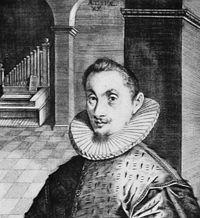
1564 - 1612 Person Name: H. L. Hassler Topics: The Church Year Nineteenth Sunday after Trinity; The Church Year Nineteenth Sunday after Trinity Composer of "[O Jesus, our salvation]" in The Lutheran Hymnary Hans Leo Hassler Germany 1564-1612. Born at Nuremberg, Germany, he came from a family of famous musicians and received early education from his father. He then studied in Venice, Italy, with Andrea Gabrieli, uncle of Giovanni Gabrieli, his friend, with whom he composed a wedding motet. The uncle taught him to play the organ. He learned the polychoral style and took it back to Germany after Andrea Gabrieli's death. He served as organist and composer for Octavian Fugger, the princely art patron of Augsburg (1585-1601). He was a prolific composer but found his influence limited, as he was Protestant in a still heavily Catholic region. In 1602 he became director of town music and organist in the Frauenkirche in Nuremberg until 1608. He married Cordula Claus in 1604. He was finally court musician for the Elector of Saxony in Dresden, Germany, evenually becoming Kapellmeister (1608-1612). A Lutheran, he composed both for Roman Catholic liturgy and for Lutheran churches. He produced two volumns of motets, a famous collection of court songs, and a volume of simpler hymn settings. He published both secular and religious music, managing to compose much for the Catholic church that was also usable in Lutheran settings. He was also a consultant to organ builders. In 1596 he, with 53 other organists, had the opportunity to examine a new instrument with 59 stops at the Schlosskirche, Groningen. He was recognized for his expertise in organ design and often was called on to examine new instruments. He entered the world of mechanical instrument construction, developing a clockwork organ that was later sold to Emperor Rudolf II. He died of tuberculosis in Frankfurt, Germany.
John Perry
Hans Leo Hassler
Francis Scott Key
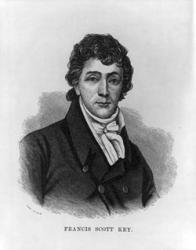
1779 - 1843 Topics: Nineteenth Sunday after Trinity Author of "Lord, with glowing heart I'd praise Thee" in Church Book Frances Scott Key USA 1779-1843. Born in Frederick County, MD, and educated at St. John’s College, Annapolis, MD, a devout Episcopalian, he practiced law in Washington, DC for four decades. He was U.S. District Attorney for the District of Columbia until his death. He argued some of his cases at the Supreme Court. Key served briefly in a Georgetown militia unit. He married Mary Tayloe Lloyd in 1802, and they had eleven children: Elizabeth, Maria, Francis, John, Anna. Edward, Daniel, Philip, Ellen, Maria, and Charles. He also wrote a few hymn lyrics. During the War of 1812, which Key was against, the British invaded the U.S. and burned the White House, Capitol Building, and Library of Congress. One of Key’s friends, Dr. William Beanes, accused of helping in the arrest of British soldiers, was taken prisoner by the British. With the permission of President James Madison, Keys went to Baltimore to try to secure his release with a prisoner exchange. Sailing on a sloup flying a flag of truce for several miles at sea, they found the Tonnant, the ship Beanes was held on, and finally negotiated the release, After showing the British letters from grateful wounded British troups that had been treated by Dr. Beanes. They tried to leave the area, but were temporarily prevented, as the British were bombarding Fort McHenry. Major George Armistead, Commander of Ft. McHenry, had asked that a large flag be made so British vessels could see it over the fort from a great distance. The flag made of cotton bunting was 24 x30 feet in size. When hoisted, it looked huge. Detained, and watching from a ship about eight miles away, Key saw the British fail to destroy the Fort, or even the flag flying over it. The British could not move in cfloser with their ships, as close-range bombardment from Americans had already sunk 22 vessels. After firing 1500 bomb shells, each weighing as much as 220 lbs. from a distance of several miles out the British gave up trying. Key penned his famous lines about the incident, then finished the poem in a hotel room later. The poem was printed in newspapers, and soon a popular drinking tune, “Anacreon in Heaven”, by John Stafford Smith, was chosen to accompany it, and people began referring to the song as “the star-spangled banner”. Four stanzas were written, but usually only one verse, the first, is sung. Key’s brother-in-law, Joseph Nicholson, noted that Key’s words fit the song, so he took the poem to a printer in Baltimore and had it printed. Two known copies of the printing have survived. His famous song was sung in 1897 at baseball opening day ceremonies in Philadelphia. In 1899 the U.S. Navy adopted the song. In 1916, President Woodrow Wilson announced that it should be played at all official events. In 1918 it was sung during the 7th inning of the World Series . It was adopted as the National Anthem in March 1931. During WWII it was sung at every baseball game. Key was a slave owner for years, but an opponent of slave trafficking. He eventually became a leader of the American Colonization Society which sent freed slaves to Africa, and he freed his slaves, even giving free legal representation to some seeking their freedom. He also represented owners of run-away slaves. In 1841 Key became a member of President Andrew Jackson’s “kitchen cabinet” a group of informal close advisors that did not hold public office but met with the president from time to time. In 1823 Key helped found the Virginia Theological Seminary. He supported the Episcopal Church for decades, taking an active roll in Christ Church and St. John’s Church in Georgetown, and Trinity Church in Washington, DC. He served as a lay rector for many years, leading services and visiting the sick. Of his many poems, religious themes were frequent, and most of his works were printed, collected and published in New York as “Poems” in 1857. Key died in Baltimore, MD, of pleurisy. Honors include: two bridges names after him (in Arlington, VA & Baltimore, MD), St. John’s College auditorium, Inducted in Songwriter’s Hall of Fame, Key Hall at University of MD, a residence hall at George Washington U, a high school in rural MD, a middle school in Houston, TX, elementary schools in several states, a mall in MD, a Baltimore minor league baseball team, A San Francisco monument (torn down in 2020 by a radical group after a $140,000 renovation), a WWII Liberty ship, and a U.S. Navy submarine.
Special note: In 2001, after the 9/11 catastrophe in New York, Queen Elizabeth II allowed her guards at Buckingham Palace to play the song, and the next day, at St. Paul’s Cathedral, she joined in the singing of it at a memorial service.
John Perry
=================
Key, Francis Scott, was born in Frederick County, Maryland, 1779, and educated at St. John's College, Annapolis. He practised as a lawyer in Washington, District of Columbia, and was the United States District Attorney there till his death on Jan. 11, 1843. His poetical pieces, which were printed in various works, were collected and published in New York as Poems in 1857. His hymns in common use include:—
1. Before the lord we bow. National Thanksgiving. This Thanksgiving hymn for the 4th July was published in 1832, and was probably written for the celebration of that year. It is in use in Great Britain and America.
2. If life's pleasures charm [cheer] thee. The heart for God only. Appeared in The Christian Lyre, 1830.
3. Faith is the Christian's evidence. Faith.
4. Lord, with glowing heart I'll praise Thee. Praise for Pardon and Peace. Published in Dr. Mühlenberg's Church Poetry, 1823, the Prayer Book Collection, 1826, &c.; and altered as "Lord, with fervor I would praise Thee," in the Unitarian Hymns for the Church of Christ, Boston, 1853. In the Oberlin, Ohio, Manual of Praise, 1880, it begins with st. ii., "Praise, my soul, the God that sought thee."
Of these hymns Nos. 1, 2, and 4 are in the Lyra Sacra Americana, 1868, together with the following:—
5. Behold the grant the King of kings. All things in Christ.
6. My God, my Father, may I dare. God, the Father.
7. When troubles, wave on wave, assail'd. Efficacy of Prayer.
F. S. Key was also the author of "The Star Spangled Banner" (1814). For original text of his pieces see the Poems, 1857. [Rev. F. M. Bird, M.A.]
-- John Julian, Dictionary of Hymnology (1907)
Francis Scott Key
Augustus Toplady
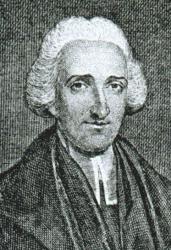
1740 - 1778 Person Name: Augustus M. Toplady Topics: Nineteenth Sunday after Trinity Author of "Rock of Ages, cleft for me" in Church Book Toplady, Augustus Montague, the author of "Rock of Ages," was born at Farnham, Surrey, November 4, 1740. His father was an officer in the British army. His mother was a woman of remarkable piety. He prepared for the university at Westminster School, and subsequently was graduated at Trinity College, Dublin. While on a visit in Ireland in his sixteenth year he was awakened and converted at a service held in a barn in Codymain. The text was Ephesians ii. 13: "But now, in Christ Jesus, ye who sometimes were far off are made nigh by the blood of Christ." The preacher was an illiterate but warm-hearted layman named Morris. Concerning this experience Toplady wrote: "Strange that I, who had so long sat under the means of grace in England, should be brought nigh unto God in an obscure part of Ireland, amidst a handful of God's people met together in a barn, and under the ministry of one who could hardly spell his name. Surely this is the Lord's doing, and it is marvelous." In 1758, through the influence of sermons preached by Dr. Manton on the seventeenth chapter of John, he became an extreme Calvinist in his theology, which brought him later into conflict with Mr. Wesley and the Methodists. He was ordained to the ministry in the Church of England in 1762, and in 1768 he became vicar of Broadhembury, a small living in Devonshire, which he held until his death. The last two or three years of his life he passed in London, where he preached in a chapel on Orange Street. His last sickness was of such a character that he was able to make a repeated and emphatic dying testimony. A short time before his death he asked his physician what he thought. The reply was that his pulse showed that his heart was beating weaker every day. Toplady replied with a smile: "Why, that is a good sign that my death is fast approaching; and, blessed be God, I can add that my heart beats stronger and stronger every day for glory." To another friend he said: "O, my dear sir, I cannot tell you the comforts I feel in my soul; they are past expression. . . . My prayers are all converted into praise." He died of consumption August 11, 1778. His volume of Psalms and Hymns for Public and Private Worship was published in 1776. Of the four hundred and nineteen hymns which it contained, several were his own productions.
If on a quiet sea 446
Rock of ages, cleft for me 279
Hymn Writers of the Church, 1915 by Charles S. Nutter
===============================================
Toplady, Augustus Montague, M.A. The life of Toplady has been repeatedly and fully written, the last, a somewhat discursive and slackly put together book, yet matterful, by W. Winters (1872). Summarily, these data may be here given: he was born at Farnham, in Surrey, on November 4, 1740. His father, Richard Toplady, was a Major in the British array, and was killed at the siege of Carthagena (1741) soon after the birth of his son. His widowed mother placed him at the renowned Westminster school, London. By-and-by circumstances led her to Ireland, and young Augustus was entered at Trinity College, Dublin, where he completed his academical training, ultimately graduating M.A. He also received his "new birth" in Ireland under remarkable conditions, as he himself tells us with oddly mixed humility and lofty self-estimate, as "a favourite of heaven," common to his school:—
"Strange that I who had so long sat under the means of grace in England should be brought right unto God in an obscure part of Ireland, midst a handful of people met together in a barn, and by the ministry of one who could hardly spell his own name. Surely it was the Lord's doing and is marvellous. The excellency of such power must be of God and cannot be of man. The regenerating spirit breathes not only on whom but likewise, when and where and as He listeth."
Toplady received orders in the Church of England on June 6, 1762, and after some time was appointed to Broadhembury. His Psalms and Hymns of 1776 bears that he was then “B.A." and Vicar of Broadhembury. Shortly thereafter be is found in London as minister of the Chapel of the French Calvinists in Leicester Fields. He was a strong and partizan Calvinist, and not well-informed theologically outside of Calvinism. We willingly and with sense of relief leave unstirred the small thick dust of oblivion that has gathered on his controversial writings, especially his scurrilous language to John Wesley because of his Arminianism, as we do John Wesley's deplorable misunderstanding and misrepresentation of Calvinism.
Throughout Toplady lacked the breadth of the divine Master's watchword "Forbid him not, for he that is not against us is for us" (St. Luke ix. 50). He was impulsive, rash-spoken, reckless in misjudgment; but a flame of genuine devoutness burned in the fragile lamp of his overtasked and wasted body. He died on August 11, 1778. The last edition of his works is in 6 vols., 8 vo., 1825. An accurate reproduction of most of his genuine hymns was one of the reprints of Daniel Sedgwick, 1860. His name occurs and recurs in contemporary memoirs and ecclesiastical histories, e.g., in Tyerman's Life of John Wesley. The reader will find in their places annotations on the several hymns of Toplady, and specially on his "Rock of Ages,” a song of grace that has given him a deeper and more inward place in millions of human hearts from generation to generation than almost any other hymnologist of our country, not excepting Charles Wesley. Besides the "Rock of Ages" must be named, for power, intensity, and higher afflatus and nicer workmanship, "Object of my first desire,” and "Deathless principle arise." It is to be regretted that the latter has not been more widely accepted. It is strong, firm, stirring, and masterful. Regarded critically, it must be stated that the affectionateness with which Toplady is named, and the glow and passion of his faith and life, and yearning after holiness, have led to an over-exaltation of him as a hymnwriter. Many of his hymns have been widely used, and especially in America, and in the Evangelical hymnbooks of the Church of England. Year by year, however, the number in use is becoming less. The reason is soon found. He is no poet or inspired singer. He climbs no heights. He sounds no depths. He has mere vanishing gleams of imaginative light. His greatness is the greatness of goodness. He is a fervent preacher, not a bard. [Rev. A. B. Grosart, D.D., LL.D.]
Toplady's hymns and poetical pieces were published in his:—
(1) Poems on Sacred Subjects wherein The Fundamental Doctrines of Christianity, with many other interesting Points, are occasionally introduced. . . Dublin: Printed by S. Powell, in Crane-lane, MDCCLIX.; (2) his Psalms & Hymns for Public and Private Worship, 1776; (3) in The Gospel Magazine, 1771-1776; and (4) in Hymns and Sacred Poems on a variety of Divine Subjects, &c. D. Sedgwick's reprint, 1860. His Works, with a Memoir by W. Row, were published in 6 volumes, in 1794. Walter How was also the editor of the 2nd and some later editions of the Psalms & Hymns. He was a most careless editor, and attributed several hymns by C. Wesley and others to Toplady.
The following additional hymns in common use together with centos indicated in the sub-lines, are from:—
i. His Poems on Sacred Subjects, 1759.
1. Can my heaven-born soul submit? All for Christ.
2. Come from on high, my King and God. Holiness desired.
(1.) 0 might this worthless heart of mine.
3. Earnest of future bliss. The Witness of the Spirit.
4. From Thy supreme tribunal, Lord. Christ's Righteousness a Refuge.
(1.) The spotless Saviour lived for me.
5. Great God, Whom heaven, and earth, and sea. For Peace.
6. I saw, and lo! a countless throng. Saints' Days. Revised form in the Gospel Magazine, 1774, p. 449.
7. Immovable our hope remains. Divine Faithfulness.
8. Jesus, God of love, attend. Divine Worship. Pt. ii. is "Prayer can mercy's door unlock."
9. Jesus, Thy power I fain would feel. Lent.
10. Lord, I feel a carnal mind. Mind of Christ desired.
11. My yielding heart dissolves as wax. On behalf of Arians, &c.
(1.) 0 Jesus, manifest Thy grace.
12. Not to myself I owe. Praise for Conversion,
(1.) Not to ourselves we owe.
(2.) The Father's grace and love.
13. 0 that my heart was right with Thee. Dedication to God desired.
14. 0 Thou that hearest the prayer of faith. Christ the Propitiation.
15. 0 Thou Who didst Thy glory leave. Thanksgiving for Redemption.
16. 0 when wilt Thou my Saviour be. Trust in Jesus.
(1.) Jesus, the sinner's Rest Thou art.
17. Redeemer, whither should I flee? Safety in the Cross.
18. Remember, Lord, that Jesus bled. Pardon.
19. Surely Christ thy griefs hath borne. Redemption. Revised text in Gospel Magazine, 1774, p. 548.
(1.) Weary sinner, keep thine eyes.
(2.) Weeping soul, no longer mourn.
ii. From the Gospel Magazine.
20. Compared with Christ, in all besides. Christ All in All. Feb. 1772.
21. Eternal Hallelujahs Be to the Father given. Holy Trinity, Dec. 1774.
22. From whence this fear and unbelief. Reviving Faith, Feb. 1772.
23. How vast the benefits divine. Redemption. Dec. 1774. From this "Not for the works which we have done" is taken.
24. Whom have I in heaven but Thee? Christ All and in All, Feb. 1772. From this "If my Lord Himself reveal" is taken.
25. Jesus, immutably the same. Jesus, the True Vine. June, 1771.
All these hymns, together with "O precious blood, 0 glorious death" (Death of Christ), are in D. Sedgwick's reprint of Toplady's Hymns, &c, 1860. We have met with several other hymns to which Toplady's name is appended, but for this we can find no authority whatever.
-- Excerpts from John Julian, Dictionary of Hymnology (1907)
Augustus Toplady
Pages




