You help make Hymnary.org possible. More than 10 million people from 200+ countries found hymns, liturgical resources and encouragement on Hymnary.org in 2025, including you. Every visit affirms the global impact of this ministry.

If Hymnary has been meaningful to you this year, would you take a moment today to help sustain it? A gift of any size—paired with a note of encouragement if you wish—directly supports the server costs, research work and curation that keep this resource freely available to the world.

Give securely online today, or mail a check to:
Hymnary.org
Calvin University
3201 Burton Street SE
Grand Rapids, MI 49546

Thank you for your partnership, and may the hope of Advent fill your heart.

Person Results

Topics:people+of+god
In:people

Planning worship? Check out our sister site, ZeteoSearch.org, for 20+ additional resources related to your search.
Showing 1 - 10 of 757Results Per Page: 102050

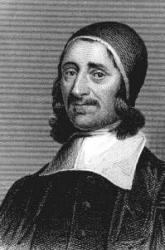
Richard Baxter

1615 - 1691 Person Name: Richard Baxter, 1615-91 Topics: People of God Author of "You holy angels bright" in Together in Song Baxter, Richard. Only s. of Richard Baxter, yeoman, Eaton Constantine, Shropshire, b. at Rowton, Shropshire, Nov. 12,1615. He was educated at Wroxeter School, and for a time held the Mastership of the Dudley Grammar School. On taking Holy Orders, he became, in 1640, Ourate of Kidderminster. Subsequently he was for some time chaplain to one of Cromwell's regiments. Through weakness he had to take an enforced rest, during which he wrote his Saints’ Everlasting Rest. On regaining his health he returned to Kidderminster, where he remained until 1660, when he removed to London. At the Restoration he became chaplain to Charles II and was offered the bishopric of Hereford, which he refused. On the passing of the Act of Uniformity, he retired from active duty as a Minister of the Church of England. In or about 1673 he took out a licence as a Nonconformist Minister and commenced lecturing in London. He d. Dec. 8, 1691. His prose works are very numerous. His poetical are :— (1) Poetical Fragments: Heart Imployment with God and Itself; The Concordant Discord of a Broken-healed Heart, tendon, Printed by T. Snowdon for B. Simmons, at the 3 Golden Cocks, &c, 1681 (2nd ed. 1689; 3rd ed. 1699). It consists of accounts of his religious experiences in verse, and is dated "London, at the Door of Eternity; Rich. Baxter, Aug. 1, 1681." (2) Additions to the Poetical Fragments of Rich. Baxter, written for himself, and Communicated to such as are more for serious Verse than smooth, London, Printed for B. Simmons at the Three Golden Cocks at the Westend of St. Pauls, 1683. (3) A Paraphrase on the Psalms, With other Hymns Left fitted for the Press, pub. the year following his death (1692). [Early English Hymnody, x., and English Psalters, 6 xii.] The Poetical Fragments were republished by Pickering, Lond., 1821. From this work his well-known hymn, " Now [Lord] it belongs not to my care," is taken (see "My whole, though broken, heart, O Lord.") -John Julian, Dictionary of Hymnology (1907) See also in: Hymn Writers of the Church

S. J. Stone

1839 - 1900 Person Name: S. J. Stone (1839-1900) Topics: Pentecost 2 The People of God Author of "The church’s one foundation" in Hymns for Today's Church (2nd ed.) Stone, Samuel John, a clergyman of the Church of England, the son of Rev. William Stone, was born at Whitmore, Staffordshire, April 25, 1839. He was educated at Pembroke College, Oxford, where he was graduated B.A. in 1862. Later he took orders and served various Churches. He succeeded his father at St. Paul's, Haggerstown, in 1874. He was the author of many original hymns and translations, which were collected and published in 1886. His hymns are hopeful in spirit and skillfully constructed. He published several poetic volumes. He died November 19, 1900 --Hymn Writers of the Church, 1915 (Charles Nutter) ============================ Stone, Samuel John, M.A., son of the Rev. William Stone, M.A., was born at Whitmore, Staffordshire, April 25, 1839, and educated at the Charterhouse; and at Pembroke College, Oxford, B.A. 1862; and M.A. 1872. On taking Holy Orders he became Curate of Windsor in 1862, and of St. Paul's, Haggerston, 1870. In 1874 he succeeded his father, at St. Paul's, Haggerston. Mr. Stone's poetical works are (1) Lyra Fidelium, 1866; (2) The Knight of Intercession and Other Poems, 1872, 6th edition, 1887; (3) Sonnets of the Christian Year, first printed in the Leisure Hour, and then published by the R. T. Society, 1875; (4) Hymns, a collection of his original pieces and translations, 1886. He has also published Order of The Consecutive Church Service for Children, with Original Hymns, 1883. Mr. Stone's hymns, most of which are in common use, and several of which have a wide popularity, include:— 1. A sower went to sow his seed. The Sower. In his Hymns, 1886, the author says this hymn was ”Written specially in allusion to the sixteen years' work of the first Vicar [his Father] of St. Paul's, Haggerston, to whom the Parish was given in 1858, without Church, or School, or "Vicarage, or Endowment." 2. Bear the troubles of thy life. Patience. A translation of Thomas a Kempis's “Ad versa mundi tolera" (p. 23, ii.) made for the Rev. S. Kettlewell's Thomas á Kempis, 1882. 3. By Paul at war in Gentile lands. St. Mark. Written at Windsor in 1870, and published in his Knight of Intercession, 1872. 4. By Shepherds first was heard. Carol. Written in 1885, and published in the Parochial Magazine, 1885. 5. By Thy love which shone for aye. Litany of the Love of God. Written at Haggerston in 1883, and printed in the Monthly Packet, 1884. 6. Christ the Wisdom and the Power. For Church Workers. Written for the Church Society of St. Paul's, Haggerston in 1812, and published in The Knight of Intercession, 1872. 7. Dark is the sky that overhangs my soul. Sorrow succeeded by Joy. Written at Windsor in 1869 for the Monthly Packet, and printed therein 1869. Published in The Knight of Intercession, 1872, under the title of "Light at Eventide." 8. Deeply dark and deeply still. The Transfiguration. Written in 1871 and published in The Knight of Intercession, 1872. 9. Eastward, ever eastward. Processional for Sunday Morning. Written at Haggerston in 1876, and published in the Monthly Packet, 1884. 10. Faith, who sees beyond the portal. Faith, Hope, and Charity. Written at Windsor in 1869, and published in the Monthly Packet, 1869, and The Knight of Intercession, 1872. 11. Far off our brethren's voices. Missions. Written for the First Day of Intercession for Foreign Missions, 1871, and published in The Knight of Intercession, 1872. "For Colonial Missions." 12. Give the word, Eternal King. Missions. Written for the First Day of Intercession for Foreign Missions, 1871. 13. Glory in heaven to God. Christmas Carol. Written in 1882 for G. H. Leslie's Cantata The First Christmas Morn, 1882. 14. God the Father, All, and One. For Unity. Written in 1883 for Canon G. Venables's Service for Unity, and appeared in the Monthly Packet, 1884. 15. God the Father's Only Son. Offices of Christ. Published in his Lyra Fidelium, 1866, on Article ii.of the Apostles' Creed, "And in Jesus Christ His Only Son our Lord." 16. God the Spirit, we adore Thee. The Holy Ghost. Published in his Lyra Fidelium, 1866, or) Article viii. of the Apostles' Creed, "I believe in the Holy Ghost." 17. Great Captain of God's armies. For Purity. Written in 1884 for the Church of England Purity Society, and printed in Church Bells, April 10, 1885. 18. Homeward we pass in peace. Close of Divine Service. Written in 1884 at Haggerston; and included in the author's Hymns, 1886, as a "Hymn after Benediction." 19. How can we praise Thee, Father? For the Fatherless. Written by request for "The Church of England Central Home for Waifs and Strays," 1882, and printed in the Monthly Packet, 1884. 20. Is there no hope for those who lie? Missions. Written in 1870 for the Monthly Packet; and also included in The Knight of Intercession, 1872. 21. Jesu, to my heart most precious. Jesus, All in All. A translation of Thomas á Kempis's "De dulcedine Jesu," made for the Rev. S. Kettlewell's Thomas á Kempis, 1882. 22. Lo! They were, and they are, and shall be. St. Michael and All Angels. Written in 1875 for The Scottish Guardian, in which it was given in 1875. 23. Lord Christ, my Master dear. For Church Workers. Written for the Sunday School Teachers of St. Paul's, Haggerston, 1885, and given in his Hymns, 1886. 24. Lord of the harvest, it is right and meet. Missions, Thanksgiving. Written for the Second Day of Intercession for Foreign Missions, 1871, and published in The Knight of Intercession, 1872. In the 1889 Appendix to Hymns Ancient & Modern it is somewhat altered. 25. Most true, most High; O Trinity. Holy Trinity. A translation of Thomas á Kempis's "O vera summa Trinitas" made for the Rev. S. Kettlewell's Thomas á Kempis, 1882. 26. My Saviour! I behold Thy life. Passiontide. Published in his Lyra Fidelium, 1866, on Article iv. of the Apostles' Creed, "Suffered under Pontius Pilate, was Crucified, Dead, and Buried." 27. Need hath the golden city none. Evening. Written at Windsor in 1869, and was published in the Monthly Packet in 1870. Also in The Knight of Intercession, 1872. 28. None else but Thee for evermore. God the Father. The opening hymn of his Lyra Fidelium, 1866, on Article i. of the Apostles' Creed, "I believe in God the Father Almighty, Maker of Heaven and Earth." 29. 0 joy, the purest, noblest. Evening. A translation in two parts of Thomas á Kempis's "O qualis quantaque laetitia" made for the Rev. S. Kettlewell's Thomas á Kempis, 1882. Pt. ii. begins "State of divinest splendour!" 30. 0 Thou by Whom the saints abide. Litany of the Holy Spirit. Written for a Confirmation at Haggerston, 1875, and included in the 3rd edition of The Knight of Intercession, 1875. 31. 0 Thou Whose love paternal. Holy Matrimony. Written at Windsor in 1863. 32. On Olivet a little band. Ascension. Published in his Lyra Fidelium, 1866, on Article vi. of the Apostles’ Creed, “He ascended into Heaven," &c. 33. Peace: legacy of mystic power. Peace . Written in 1882 for The Society of St. Katharine for Invalids, and published in the Monthly Packet, 1884. 34. Remember Me, show forth My death. Holy Communion. Written at Windsor for the Monthly Packet, in 1870; and included in The Knight of Intercession, 1872. 35. The Son forsook the Father's home. Christmas. Published in his Lyra Fidelium, 1866, on Art. iii. of the Apostles' Creed, “Who was conceived by the Holy Ghost, Born of the Virgin Mary." 36. The old year's long campaign is o'er. The New Year. Written at Windsor in 1868, and published in The Knight of Intercession, 1872. 37. The whole creation groans and cries. Travail of the Creation. Written at Windsor for the Monthly Packet, 1869, and included in The Knight of Intercession, 1872. 38. The world is sad with hopes that die. Everlasting Life. Published in his Lyra Fidelium, 1866, on Art. xii. of the Apostles' Creed, "The Life Everlasting." 39. Their names are names of Kings. Saints Days. Written at Windsor for the Monthly Packet in 1869, and included in The Knight of Intercession, 1872. 40. There is an ancient river. The Spiritual River. Written at Windsor for the Monthly Packet, in 1870; and given in The Knight of Intercession, 1872. 41. Thou Who hast charged Thine elder sons. For School Teachers. Written in 1881 for St. Katharine's Training College for Mistresses; and subsequently adapted for use by teachers of both sexes. 42. Thou Who didst love us when our woes began. Temperance. Written for the Church of England Temperance Society Magazine, 1866. 43. Through midnight gloom from Macedon. Missions. Written for the First Day of Intercession for Foreign Missions, 1871. 44. Unchanging God, hear from eternal heaven. On behalf of the Jews. Written for the East London Mission to the Jews, 1885. It is included in an abridged form in the 1889 Appendix to Hymns Ancient & Modern. 45. While the Shepherds kept their vigil. Christmas Carol. Written at Windsor in 1868. 46. Winter in his heart of gloom. The Resurrection of the Body. Published in his Lyra Fidelium, 1866, on Article xi. of the Apostles' Creed, "The Resurrection of the Body." 47. Wistful are our waiting eyes. The Judgment. Published in his Lyra Fidelium, 1866, on Art. vii. of the Apostles' Creed, "From thence He shall come to judge the quick and the dead." 48. Ye faithful few of Israel's captive days. Holy Scriptures. Written at Windsor for the Monthly Packet, in 1869. Some of Mr. Stone's finer hymns, including "Round the Sacred City gather;" "The Church's One Foundation;" "Weary of earth and laden with my sin," and others, are annotated under their respective first lines. These, together with the 48 above, are given in his Hymns, 1886, some of the translations being recast. Additional translations from Thomas á Kempis are also noted under his name. Another hymn, inseparably associated with Mr. Stone's name is:— 49. Lord of our Soul's salvation. National Thanksgiving. This was ordered by command of Her Majesty the Queen to be sung at the Thanksgiving for the recovery of H. R. H. The Prince of Wales, on Feb. 27, 1872. In its original form it was in 7 stanzas of 8 lines, and was thus sung throughout the country. Owing however to the necessary restrictions as to time in the Cathedral service, a selection of four verses only--the First, a combination of the 2nd and 4th, the 6th, and the 7th--was adapted by the author for use in St. Paul's." The full text was included in The Knight of Intercession, 1872. Mr. Stone's hymns vary considerably in metre and subject, and thus present a pleasing variety not always found in the compositions of popular hymnwriters. His best hymns are well designed and clearly expressed. The tone is essentially dogmatic and hopeful. The absence of rich poetic thought and graceful fancy is more than atoned for by a masterly condensation of Scripture facts and of Church teaching given tersely and with great vigour. His changes and antitheses are frequently abrupt, in many instances too much so for congregational purposes, and his vocabulary is somewhat limited. His rhythm, except where broken either by long or by compound words, is rarely at fault, and his rhyme is usually perfect. A few of his hymns are plaintive and pathetic, as the tender "Weary of earth and laden with my sin;" others are richly musical, as "Lord of the harvest! it is right and meet:" but the greater part are strongly outspoken utterances of a manly faith, where dogma, prayer, and praise are interwoven with much skill. Usually the keynote of his song is Hope. He died Nov. 19, 1900. -- John Julian, Dictionary of Hymnology (1907) ===================== Stone, S. J. , p. 1095, i. Of his hymns noted there the following appeared in Mission Life, 1872, vol. iii., pt. ii., pp. 685-88. No. 11, "Far off our brethren's voices," for Church Missionary Hymn Book, Colonial Missions, and No. 12, "Give the word, Eternal King," and No. 43, "Through midnight gloom from Macedon," for "Foreign Missions." In addition the following are also in common use:— 1. Awake, 0 Lord, the zeal of those who stand. Intercession for the Clergy. In the Church Missionary Hymn Book, 1899. 2. England, by thine own Saint Alban. St. Alban. In C. W. A. Brooke's Additional Hymns, 1903. 3. Our God of love Who reigns above. For Children. Appeared in the Church Monthly, July 1899, and Hymns Ancient & Modern, 1904. --John Julian, Dictionary of Hymnology, New Supplement (1907)

Edmond Budry

1854 - 1932 Person Name: Edmond Budry, 1854-1932 Topics: The Church The People of God Author of "Thine is the glory" in Service Book and Hymnal of the Lutheran Church in America

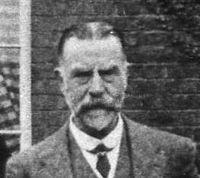
John Oxenham

1852 - 1941 Person Name: John Oxenham, 1852 - 1941 Topics: The Church The People of God Author of "In Christ there is no east or west" in Service Book and Hymnal of the Lutheran Church in America John Oxenham is a pseudonym for William Arthur Dunkerley, and is used as the name authority by the Library of Congress.

John H. Stockton

1813 - 1877 Topics: People of God / Church Family of God; People of God / Church Serving Composer of "MINERVA" in Psalms for All Seasons Stockton, John Hart, a Methodist minister, was born in 1813, and died in 1877. He was a member of the New Jersey Annual Conference of the Methodist Episcopal Church, and the successive pastoral charges that he filled as a member of that Conference are found in the Conference Journal. He was not only a preacher, but a musician and composer of tunes, as well as hymn writer. He published two gospel song books: Salvation Melodies, 1874, and Precious Songs, 1875. Hymn Writers of the Church by Charles Nutter, 1911 =============== Stockton, John Hart, b. April 19, 1813, and d. March 25, 1877, was the author of "Come, every soul by sin oppressed" (Invitation), in I.D. Sankey's Sacred Songs and Solos, 1878, and of "The Cross, the Cross, the blood¬stained Cross" (Good Friday) in the same collection. --John Julian, Dictionary of Hymnology, Appendix, Part II (1907) =============== Stockton, John Hart. (New Hope, Pennsylvania, April 19, 1813--March 25, 1877). Born of Presbyterian parents, he was converted at a Methodist camp meeting in 1838, being received into full membership in the New Jersey Conference in 1857. Because of ill health he twice took the "supernumerary relations." He withdrew from actual pastoral work in 1874 and engaged in compiling and publishing gospel hymn books, issuing Salvation Melodies that year and Precious Songs in 1875, writing both words and music for a number of the songs. He died suddenly after attending a Sunday morning service at Arch Street Church, Philadelphia. Our Hymnody, McCutchan, has, perhaps, the fullest account of him readily available. --Robert G. McCutchan, DNAH Archives

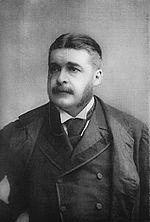
Arthur Sullivan

1842 - 1900 Person Name: Arthur Seymour Sullivan, 1942-1900 Topics: The Temple The People of God Composer of "ST GERTRUDE" in The Irish Presbyterian Hymnbook Arthur Seymour Sullivan (b Lambeth, London. England. 1842; d. Westminster, London, 1900) was born of an Italian mother and an Irish father who was an army band­master and a professor of music. Sullivan entered the Chapel Royal as a chorister in 1854. He was elected as the first Mendelssohn scholar in 1856, when he began his studies at the Royal Academy of Music in London. He also studied at the Leipzig Conservatory (1858-1861) and in 1866 was appointed professor of composition at the Royal Academy of Music. Early in his career Sullivan composed oratorios and music for some Shakespeare plays. However, he is best known for writing the music for lyrics by William S. Gilbert, which produced popular operettas such as H.M.S. Pinafore (1878), The Pirates of Penzance (1879), The Mikado (1884), and Yeomen of the Guard (1888). These operettas satirized the court and everyday life in Victorian times. Although he com­posed some anthems, in the area of church music Sullivan is best remembered for his hymn tunes, written between 1867 and 1874 and published in The Hymnary (1872) and Church Hymns (1874), both of which he edited. He contributed hymns to A Hymnal Chiefly from The Book of Praise (1867) and to the Presbyterian collection Psalms and Hymns for Divine Worship (1867). A complete collection of his hymns and arrangements was published posthumously as Hymn Tunes by Arthur Sullivan (1902). Sullivan steadfastly refused to grant permission to those who wished to make hymn tunes from the popular melodies in his operettas. Bert Polman

John Marriott

1780 - 1825 Person Name: John Marriott, 1720-1825 Topics: People of God Author of "Lord, your almighty word" in Together in Song Marriott, John, M.A, son of E. Marriott, D.D., Rector of Cottesbach, near Lutterworth, was born at Cottesbach, in 1780, and educated at Rugby, and Christ Church, Oxford. He was the second of two who obtained honours in the schools in 1802, the first year in which there was a public examination for honours at Oxford. He was also Student of Christ Church, and for about two years a private tutor in the family of the Duke of Buccleuch. The Duke presented him to the Rectory of Church Lawford, Warwickshire. This he retained to his death, although his wife's health compelled him to reside in Devonshire, where he was successively curate of St. Lawrence and other parishes in Exeter, and of Broadclyst, near Exeter, where he died March 31, 1825. His published works include a volume of Sermons which he issued in 1818, and a posthumous volume of Sermons, published by his sons in 1838. His hymns were never published by himself, nor in book form by any one. A few appeared in print during his lifetime, but without his permission. These include:— 1. A saint? 0 would that I could claim. Holiness desired. "Written off almost at the moment, on hearing the name applied in a scornful way at a party, about 1813." It was printed in The Friendly Visitor, 1834. 2. Thou, Whose Almighty word. Missions. Written, his son says, "about 1813." It was printed in The Friendly Visitor, July, 1825, in 4 st. of 11., with the Title "Missionary Hymn," and without signature. This text differs only in two or three words from the original as supplied by the author's son to Dr. Rogers and published by him in his Lyra Brittanica, 1867, p. 395. Two texts are known which are received as original, the first the undoubted text in Lyra Brittanica, and the second that given by Lord Selborne from the Collection of Dr. Baffles, Congregational Minister of Liverpool. 3. When Christ our human form did bear. Christ's love of Children. “Written in 1816 for the Parochial Schools, Upottery, Devon." -- John Julian, Dictionary of Hymnology (1907) ================= Marriott, J. , p. 715, i., No. 1, is in the Fuller-Maitland Hymns for Private Devotion, 1827. --John Julian, Dictionary of Hymnology, Appendix, Part II (1907)

Cyril Taylor

1907 - 1991 Person Name: Cyril Vincent Taylor, 1907091 Topics: People of God Composer of "ABOT'S LEIGH" in Together in Song Cyril V. Taylor (b. Wigan, Lancashire, England, 1907; d. Petersfield, England, 1991) was a chorister at Magdalen College School, Oxford, and studied at Christ Church, Oxford, and Westcott House, Cambridge. Ordained a priest in the Church of England in 1932, he served the church as both pastor and musician. His positions included being a producer in the religious broadcasting department of the BBC (1939­-1953), chaplain of the Royal School of Church Music (1953-1958), vicar of Cerne Abbas in Dorsetshire (1958-1969), and precentor of Salisbury Cathedral (1969-1975). He contributed twenty hymn tunes to the BBC Hymn Book (1951), which he edited, and other tunes to the Methodist Hymns and Psalms (1983). He also edited 100 Hymns for Today (1969) and More Hymns for Today (1980). Writer of the booklet Hymns for Today Discussed (1984), Taylor was chairman of the Hymn Society of Great Britain and Ireland from 1975 to 1980. Bert Polman

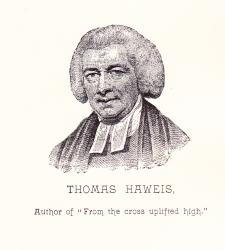
Thomas Haweis

1734 - 1820 Person Name: Thomas Haweis, 1734 - 1820 Topics: The Church The People of God Composer of "RICHMOND (CHESTERFIELD)" in Service Book and Hymnal of the Lutheran Church in America Thomas Haweis (b. Redruth, Cornwall, England, 1734; d. Bath, England, 1820) Initially apprenticed to a surgeon and pharmacist, Haweis decided to study for the ministry at Oxford and was ordained in the Church of England in 1757. He served as curate of St. Mary Magdalen Church, Oxford, but was removed by the bishop from that position because of his Methodist leanings. He also was an assistant to Martin Madan at Locke Hospital, London. In 1764 he became rector of All Saints Church in Aldwinkle, Northamptonshire, and later served as administrator at Trevecca College, Wales, a school founded by the Countess of Huntingdon, whom Haweis served as chaplain. After completing advanced studies at Cambridge, he published a Bible commentary and a volume on church history. Haweis was strongly interested in missions and helped to found the London Mission Society. His hymn texts and tunes were published in Carmino Christo, or Hymns to the Savior (1792, expanded 1808). Bert Polman ============================ Haweis, Thomas, LL.B., M.D., born at Truro, Cornwall, 1732. After practising for a time as a Physician, he entered Christ's College, Cambridge, where he graduated. Taking Holy Orders, he became Assistant Preacher to M. Madan at the Lock Hospital, London, and subsequently Rector of All Saints, Aldwincle, Northamptonshire. He was also Chaplain to Lady Huntingdon, and for several years officiated at her Chapel in Bath. He died at Bath, Feb. 11, 1820. He published several prose works, including A History of the Church, A Translation of the New Testament, and A Commentary on the Holy Bible. His hymns, a few of which are of more than ordinary merit, were published in his Carmina Christo; or, Hymns to the Saviour. Designed for the Use and Comfort of Those who worship the Lamb that was slain. Bath, S. Hayward, 1792 (139 hymns), enlarged. London, 1808 (256 hymns). In 1794, or sometime after, but before the enlarged edition was published, two hymns "For the Fast-day, Feb. 28, 1794," were added to the first edition. These were, "Big with events, another year," and "Still o'er the deep the cannon's roar." The most popular and widely used of his hymns are, "Behold the Lamb of God, Who bore," &c.; "Enthroned on high, Almighty Lord"; and “O Thou from Whom all goodness flows." The rest, all being from Carmina Christo, first edition 1792, are:— 1. Dark was the night and cold the ground. Gethsemane. 2. From the cross uplifted high. Christ in Glory. 3. Great Spirit, by Whose mighty power. Whitsuntide. 4. Submissive to Thy will, my God. Resignation. 5. The happy morn is come. Easter. 6. Thou Lamb of God, that on the tree. Good Friday. The hymn, "Thy Head, the crown of thorns that wears," in Stryker & Main's Church Praise Book, N. Y., 1882, begins with st. ii. of this hymn. 7. To Thee, my God and Saviour, My heart, &c. Praise for Redemption. --John Julian, Dictionary of Hymnology (1907)

Federico J. Pagura

1923 - 2016 Topics: People of God / Church Citizens of Heaven; People of God / Church Suffering Translator (into Spanish) of "The Lord's My Shepherd" in Psalms for All Seasons Federico José Pagura was an Argentine Methodist bishop and author and translator of hymns. Leland Bryant Ross

Pages


Export as CSV
It looks like you are using an ad-blocker. Ad revenue helps keep us running. Please consider white-listing Hymnary.org or getting Hymnary Pro to eliminate ads entirely and help support Hymnary.org.