You help make Hymnary.org possible. More than 10 million people from 200+ countries found hymns, liturgical resources and encouragement on Hymnary.org in 2025, including you. Every visit affirms the global impact of this ministry.

If Hymnary has been meaningful to you this year, would you take a moment today to help sustain it? A gift of any size—paired with a note of encouragement if you wish—directly supports the server costs, research work and curation that keep this resource freely available to the world.

Give securely online today, or mail a check to:
Hymnary.org
Calvin University
3201 Burton Street SE
Grand Rapids, MI 49546

Thank you for your partnership, and may the hope of Advent fill your heart.

Person Results

Topics:power+of+god
In:people

Planning worship? Check out our sister site, ZeteoSearch.org, for 20+ additional resources related to your search.
Showing 1 - 10 of 792Results Per Page: 102050

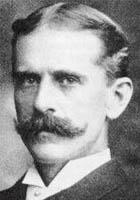
Henry Van Dyke

1852 - 1933 Person Name: Henry van Dyke, 1852-1933 Topics: Power of God; Power of God; Power of God Author of "Joyful, Joyful, We Adore You" in Journeysongs (2nd ed.) See biography and works at CCEL

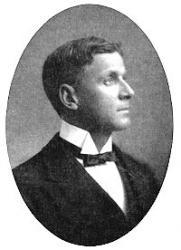
Maltbie D. Babcock

1858 - 1901 Person Name: Maltbie D. Babcock (1858-1901) Topics: God the Father Power of God in Nature Author of "This Is My Father's World" in Seventh-day Adventist Hymnal Maltbie D. Babcock (b. Syracuse, NY, 1858; d. Naples, Italy, 1901) graduated from Syracuse University, New York, and Auburn Theological Seminary (now associated with Union Theological Seminary in New York) and became a Presbyterian minister. He served the Brown Memorial Presbyterian Church in Baltimore, Maryland, and the Brick Presbyterian Church in New York City. In Baltimore he was especially popular with students from Johns Hopkins University, but he ministered to people from all walks of life. Babcock wrote hymn texts and devotional, poems, some of which were published in The School Hymnal (1899). Bert Polman =================== Babcock, Maltbie Davenport, D.D., was born at Syracuse, N.Y., Aug. 3, 1858. Graduating from Syracuse University, he was ordained to the Presbyterian Ministry and was pastor of churches in Lockport, N.Y., Baltimore, and N.Y. City. He died at Naples, Italy, May 18th, 1901. He was richly gifted, and his short career was memorable for the extraordinary influence of his personality and his preaching. Extracts from his sermons and poems were published in 1901 as Thoughts for Every Day Living; and his Biography by Dr. C. E. Robinson in 1904. He contributed to the Presbyterian School Hymnal, 1899, the following hymns:— 1. Gaily the bells are ringing. Faster. 2. O blessed Saviour, Lord of love. Unto Me. 3. Shining Sun, shining sun. Child's Hymn. The tunes to these hymns were of his own composing. In The Pilgrim Hymnal, 1904, there is:— 4. Rest in the Lord, my soul. Trust and Peace and in the American Methodist Hymnal, 1905:— 5. Be strong: we are not here to play. Activity in God's Service. Nos. 4 and 5 are from Thoughts for Every Day Living, 1901; but undated. [Rev. L. F. Benson, D.D.] --John Julian, Dictionary of Hymnology, New Supplement (1907)

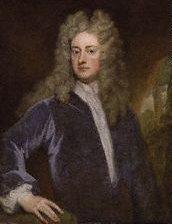
Joseph Addison

1672 - 1719 Person Name: Joeseph Addison Topics: God the Father Power of God in Nature Author of "The Spacious Firmament" in Seventh-day Adventist Hymnal Addison, Joseph, born at Milston, near Amesbury, Wiltshire, May 1, 1672, was the son of the Rev. Lancelot Addison, sometime Dean of Lichfield, and author of Devotional Poems, &c, 1699. Addison was educated at the Charterhouse, and at Magdalen College, Oxford, graduating B.A. 1691 and M.A. 1693. Although intended for the Church, he gave himself to the study of law and politics, and soon attained, through powerful influence, to some important posts. He was successively a Commissioner of Appeals, an Under Secretary of State, Secretary to the Lord Lieutenant of Ireland, and Chief Secretary for Ireland. He married, in 1716, the Dowager Countess of Warwick, and died at Holland House, Kensington, June 17, 1719. Addison is most widely known through his contributions to The Spectator, The Toiler, The Guardian, and The Freeholder. To the first of these he contributed his hymns. His Cato, a tragedy, is well known and highly esteemed. Addison's claims to the authorship of the hymns usually ascribed to him, or to certain of them, have been called in question on two occasions. The first was the publication, by Captain Thompson, of certain of those hymns in his edition of the Works of Andrew Marvell, 1776, as the undoubted compositions of Marvell; and the second, a claim in the Athenaeum, July 10th, 1880, on behalf of the Rev. Richard Richmond. Fully to elucidate the subject it will be necessary, therefore, to give a chronological history of the hymns as they appeared in the Spectator from time to time. i. The History of the Hymns in The Spectator. This, as furnished in successive numbers of the Spectator is :— 1. The first of these hymns appeared in the Spectator of Saturday, July 26, 1712, No. 441, in 4 stanzas of 6 lines. The article in which it appeared was on Divine Providence, signed “C." The hymn itself, "The Lord my pasture shall prepare," was introduced with these words:— "David has very beautifully represented this steady reliance on God Almighty in his twenty-third psalm, which is a kind of pastoral hymn, and filled with those allusions which are usual in that kind of writing As the poetry is very exquisite, I shall present my readers with the following translation of it." (Orig. Broadsheet, Brit. Mus.) 2. The second hymn appeared in the Spectator on Saturday, Aug. 9, 1712, No. 453, in 13 st. of 4 1., and forms the conclusion of an essay on " Gratitude." It is also signed " C," and is thus introduced:— “I have already obliged the public with some pieces of divine poetry which have fallen into my hands, and as they have met with the reception which they deserve, I shall, from time to time, communicate any work of the same nature which has not appeared in print, and may be acceptable to my readers." (Orig. Broadsheet, British Museum) Then follows the hymn:—"When all Thy mercies, 0 my God." 3. The number of the Spectator for Tuesday, Aug. 19, 1712, No. 461, is composed of three parts. The first is an introductory paragraph by Addison, the second, an unsigned letter from Isaac Watts, together with a rendering by him of Ps. 114th; and the third, a letter from Steele. It is with the first two we have to deal. The opening paragraph by Addison is:— “For want of time to substitute something else in the Boom of them, I am at present obliged to publish Compliments above my Desert in the following Letters. It is no small Satisfaction, to have given Occasion to ingenious Men to employ their Thoughts upon sacred Subjects from the Approbation of such Pieces of Poetry as they have seen in my Saturday's papers. I shall never publish Verse on that Day but what is written by the same Hand; yet shall I not accompany those Writings with Eulogiums, but leave them to speak for themselves." (Orig. Broadsheet, British Museum

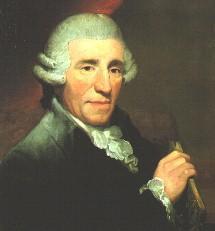
Joseph Haydn

1732 - 1809 Person Name: F. J. Haydn Topics: God the Father Power of God in Nature Arr. from of "CREATION" in Seventh-day Adventist Hymnal Franz Joseph Haydn (b. Rohrau, Austria, 1732; d. Vienna, Austria, 1809) Haydn's life was relatively uneventful, but his artistic legacy was truly astounding. He began his musical career as a choirboy in St. Stephen's Cathedral, Vienna, spent some years in that city making a precarious living as a music teacher and composer, and then served as music director for the Esterhazy family from 1761 to 1790. Haydn became a most productive and widely respected composer of symphonies, chamber music, and piano sonatas. In his retirement years he took two extended tours to England, which resulted in his "London" symphonies and (because of G. F. Handel's influence) in oratorios. Haydn's church music includes six great Masses and a few original hymn tunes. Hymnal editors have also arranged hymn tunes from various themes in Haydn's music. Bert Polman

William Henry Monk

1823 - 1889 Person Name: William H. Monk Topics: God Power of Harmonizer of "ELLACOMBE" in Voices Together William H. Monk (b. Brompton, London, England, 1823; d. London, 1889) is best known for his music editing of Hymns Ancient and Modern (1861, 1868; 1875, and 1889 editions). He also adapted music from plainsong and added accompaniments for Introits for Use Throughout the Year, a book issued with that famous hymnal. Beginning in his teenage years, Monk held a number of musical positions. He became choirmaster at King's College in London in 1847 and was organist and choirmaster at St. Matthias, Stoke Newington, from 1852 to 1889, where he was influenced by the Oxford Movement. At St. Matthias, Monk also began daily choral services with the choir leading the congregation in music chosen according to the church year, including psalms chanted to plainsong. He composed over fifty hymn tunes and edited The Scottish Hymnal (1872 edition) and Wordsworth's Hymns for the Holy Year (1862) as well as the periodical Parish Choir (1840-1851). Bert Polman

Lowell Mason

1792 - 1872 Topics: Power of God Harmonizer of "DUKE STREET" in The Sing! Hymnal Dr. Lowell Mason (the degree was conferred by the University of New York) is justly called the father of American church music; and by his labors were founded the germinating principles of national musical intelligence and knowledge, which afforded a soil upon which all higher musical culture has been founded. To him we owe some of our best ideas in religious church music, elementary musical education, music in the schools, the popularization of classical chorus singing, and the art of teaching music upon the Inductive or Pestalozzian plan. More than that, we owe him no small share of the respect which the profession of music enjoys at the present time as contrasted with the contempt in which it was held a century or more ago. In fact, the entire art of music, as now understood and practiced in America, has derived advantage from the work of this great man. Lowell Mason was born in Medfield, Mass., January 8, 1792. From childhood he had manifested an intense love for music, and had devoted all his spare time and effort to improving himself according to such opportunities as were available to him. At the age of twenty he found himself filling a clerkship in a banking house in Savannah, Ga. Here he lost no opportunity of gratifying his passion for musical advancement, and was fortunate to meet for the first time a thoroughly qualified instructor, in the person of F. L. Abel. Applying his spare hours assiduously to the cultivation of the pursuit to which his passion inclined him, he soon acquired a proficiency that enabled him to enter the field of original composition, and his first work of this kind was embodied in the compilation of a collection of church music, which contained many of his own compositions. The manuscript was offered unavailingly to publishers in Philadelphia and in Boston. Fortunately for our musical advancement it finally secured the attention of the Boston Handel and Haydn Society, and by its committee was submitted to Dr. G. K. Jackson, the severest critic in Boston. Dr. Jackson approved most heartily of the work, and added a few of his own compositions to it. Thus enlarged, it was finally published in 1822 as The Handel and Haydn Society Collection of Church Music. Mason's name was omitted from the publication at his own request, which he thus explains, "I was then a bank officer in Savannah, and did not wish to be known as a musical man, as I had not the least thought of ever making music a profession." President Winchester, of the Handel and Haydn Society, sold the copyright for the young man. Mr. Mason went back to Savannah with probably $500 in his pocket as the preliminary result of his Boston visit. The book soon sprang into universal popularity, being at once adopted by the singing schools of New England, and through this means entering into the church choirs, to whom it opened up a higher field of harmonic beauty. Its career of success ran through some seventeen editions. On realizing this success, Mason determined to accept an invitation to come to Boston and enter upon a musical career. This was in 1826. He was made an honorary member of the Handel and Haydn Society, but declined to accept this, and entered the ranks as an active member. He had been invited to come to Boston by President Winchester and other musical friends and was guaranteed an income of $2,000 a year. He was also appointed, by the influence of these friends, director of music at the Hanover, Green, and Park Street churches, to alternate six months with each congregation. Finally he made a permanent arrangement with the Bowdoin Street Church, and gave up the guarantee, but again friendly influence stepped in and procured for him the position of teller at the American Bank. In 1827 Lowell Mason became president and conductor of the Handel and Haydn Society. It was the beginning of a career that was to win for him as has been already stated the title of "The Father of American Church Music." Although this may seem rather a bold claim it is not too much under the circumstances. Mr. Mason might have been in the average ranks of musicianship had he lived in Europe; in America he was well in advance of his surroundings. It was not too high praise (in spite of Mason's very simple style) when Dr. Jackson wrote of his song collection: "It is much the best book I have seen published in this country, and I do not hesitate to give it my most decided approbation," or that the great contrapuntist, Hauptmann, should say the harmonies of the tunes were dignified and churchlike and that the counterpoint was good, plain, singable and melodious. Charles C. Perkins gives a few of the reasons why Lowell Mason was the very man to lead American music as it then existed. He says, "First and foremost, he was not so very much superior to the members as to be unreasonably impatient at their shortcomings. Second, he was a born teacher, who, by hard work, had fitted himself to give instruction in singing. Third, he was one of themselves, a plain, self-made man, who could understand them and be understood of them." The personality of Dr. Mason was of great use to the art and appreciation of music in this country. He was of strong mind, dignified manners, sensitive, yet sweet and engaging. Prof. Horace Mann, one of the great educators of that day, said he would walk fifty miles to see and hear Mr. Mason teach if he could not otherwise have that advantage. Dr. Mason visited a number of the music schools in Europe, studied their methods, and incorporated the best things in his own work. He founded the Boston Academy of Music. The aim of this institution was to reach the masses and introduce music into the public schools. Dr. Mason resided in Boston from 1826 to 1851, when he removed to New York. Not only Boston benefited directly by this enthusiastic teacher's instruction, but he was constantly traveling to other societies in distant cities and helping their work. He had a notable class at North Reading, Mass., and he went in his later years as far as Rochester, where he trained a chorus of five hundred voices, many of them teachers, and some of them coming long distances to study under him. Before 1810 he had developed his idea of "Teachers' Conventions," and, as in these he had representatives from different states, he made musical missionaries for almost the entire country. He left behind him no less than fifty volumes of musical collections, instruction books, and manuals. As a composer of solid, enduring church music. Dr. Mason was one of the most successful this country has introduced. He was a deeply pious man, and was a communicant of the Presbyterian Church. Dr. Mason in 1817 married Miss Abigail Gregory, of Leesborough, Mass. The family consisted of four sons, Daniel Gregory, Lowell, William and Henry. The two former founded the publishing house of Mason Bros., dissolved by the death of the former in 1869. Lowell and Henry were the founders of the great organ manufacturer of Mason & Hamlin. Dr. William Mason was one of the most eminent musicians that America has yet produced. Dr. Lowell Mason died at "Silverspring," a beautiful residence on the side of Orange Mountain, New Jersey, August 11, 1872, bequeathing his great musical library, much of which had been collected abroad, to Yale College. --Hall, J. H. (c1914). Biography of Gospel Song and Hymn Writers. New York: Fleming H. Revell Company.

John Warrington Hatton

1710 - 1793 Person Name: John Hatton (c.1710-1793) Topics: God the Father Majesty and Power of God Composer of "DUKE STREET" in Seventh-day Adventist Hymnal John Warrington Hatton (b. Warrington, England, c. 1710; d, St. Helen's, Lancaster, England, 1793) was christened in Warrington, Lancashire, England. He supposedly lived on Duke Street in Lancashire, from where his famous tune name comes. Very little is known about Hatton, but he was most likely a Presbyterian, and the story goes that he was killed in a stagecoach accident. Bert Polman

Athelstan Riley

1858 - 1945 Person Name: Athelsta Riley (1858-1945) Topics: God the Father Majesty and Power of God Author of "Ye Watchers and Ye Holy Ones" in Seventh-day Adventist Hymnal Riley, John Athelstan Laurie, M.A., s. of John Riley, Mytholmroyd, Yorks, was born in London, Aug. 10, 1858, and educated at Eton and at Pembroke College, Oxford (B.A. 1881, M.A. 1883). He has been since 1892 a member of the House of Laymen of the Province of Canterbury. He was one of the compilers of The English Hymnal, 1906, and contributed to it seven translations from the Latin (34, 185, 193, 195, 213, 242, 321, with No. 97 previously published), and one from the Greek, beginning, "What sweet of life endureth," from Iiola rod fiiov, p. 899, i., and the following originals:— 1. Come, let us join the Church above. Martyrs. 2. Saints of God! Lo, Jesu’s people. St. Bartholomew. The initials of the lines form the acrostic Saint Bartholomew; it is really a general hymn for Apostles. 3. Ye watchers and ye holy ones. Universal Praise to God. [Rev. James Mearns, M.A.] --John Julian, Dictionary of Hymnology, New Supplement (1907)

George F. Root

1820 - 1895 Person Name: G. F. Root (1820-1895) Topics: God the Father Majesty and Power of God Composer of "VARINA" in Seventh-day Adventist Hymnal Root, George F., MUS. DOC, born in Sheffield, Berkshire County, Mass., Aug. 30, 1820. He is much more widely known as a composer of popular music than as a hymn writer. Four of his hymns are in I. D. Sankey's Sacred Songs & Solos, 1878. Nos. 16, 100, 293, and 297. A sympathetic biographical sketch, with portrait, is in The Tonic Sol-Fa Reporter, Sep. 1886. He died Aug. 6, 1895. --John Julian, Dictionary of Hymnology, Appendix, Part II (1907) ===================== George Frederick Root was born in Sheffield, Mass., August 30, 1820. His father moved to North Reading, near Boston, when the boy was six years old, and there his youth was spent. He was always fond of music— not singing at all as a boy, but played upon every kind of instrument that came in his way. At thirteen it was his pride that he could "play a tune" on as many instruments as he was years old. His dream of life was to be a musician, although such an ambition was looked down upon by all his relatives and friends, excepting a fond mother. In the fall of 1838 he went to Boston and made an engagement to work for Mr. A. N. Johnson and take lessons on the piano. His father and one of the brothers were at the time in South America, and the mother, with six younger children, was at home on the farm. When he secured the engagement with Mr. Johnson to receive three dollars a week and board and lessons, the neighbors became interested and encouraged him to go ahead, they promising to help look after the farm and see that the family got along. The young man's happiness over these events can better be imagined than described. On the second day of October, 1838, he entered upon his duties in his new heaven on earth located at Harmony Hall, Mr. Johnson's music-room, in Boston. His duties were to see to the fires, care for the room, answer callers, give information about Mr. Johnson when he was out, and practice his lessons when not otherwise engaged. He worked industriously and made steady progress. It was but a few weeks till Mr. Johnson had him playing for the prayer-meeting, and but a few more till he began turning over pupils to him. In about seven weeks' time Mr. Johnson encouraged him by a considerable increase of salary. A most important event to him was meeting Dr. Lowell Mason and being accepted as a bass singer in the celebrated Bowdoin Street choir. Also, on Mr. Johnson's recommendation, he began taking private voice lessons of Mr. Geo. Jas. Webb, the then celebrated voice teacher of Boston. He continued at least a year with Mr. Webb. His first real singing class was taught the following fall, 1839, at the North End. It lasted nearly through the winter, and on the closing night his class made him a present of a silver goblet, suitably engraved, which he kept among his treasures. Before the first year was up Mr. Johnson proposed a five year partnership, by which Mr. Root was to receive one-third of their earnings, and the former was to have the privilege of visiting Germany part of the time if he chose. They then changed their quarters to three rooms in the basement of Park Street Church. The annual rental was six hundred dollars. They were kept quite busy. At this time Dr. Mason's music teaching in the public schools was a growing success, and Messrs. Johnson and Root were employed to assist him. Drs. Mason and Webb had introduced what is now called Musical Conventions a year or two previous to this. They called them "The Teachers' Class." Teachers and singers were called to Boston from surrounding territory to study and practice pretty much as they do now at normals. In 1841 Mr. Root became one of the teachers in this class. He taught vocal training and continued this work for years afterward in Dr. Mason's teachers' classes, and later incorporated the same method in his own normals. During this year Mr. Johnson went to Germany, and left the two large church choirs (Winter Street and Park Street) in charge of Mr. Root. One of the organs was played by a pupil — Mr. S. A. Bancroft. Everything went smoothly during Mr. Johnson's absence as it did also after his return. During the last year of the five-year partnership, Mr. Root was called to take the organ at Bowdoin Street, Mr. Mason changing to Winter Street. An amicable settlement was made between Messrs. Johnson and Root, and the partnership dissolved. In 1811, Mr. Jacob Abbott (father of Lyman Abbott)and his three brothers had established a young ladies' school in New York City. They wanted a music teacher, and offered the position to Mr. Root. They also secured him the organ and choir of the Mercer Street Church, with prospects for other good work. It required pretty strong persuasive arguments to tempt Mr. Root to leave Boston, he was doing well there, and as the sequel shows, there was an attraction in Boston that held him in too tight a grasp to be relinquished by the mere offer of greater power and place. He made up his mind, however, only after getting the consent of the powders of Boston to take with him this [to him] the greatest attraction of the city — Miss Mary Olive Woodman — an accomplished lady, a sweet singer, and a member of a prominent family of musicians. He went to New York first to prepare a home, and in August, 1845, returned for his bride, who took her place in his New York choir as leading soprano, and through his long and eventful career she was ever at his side, a true helpmeet. He was soon employed at Rutger's Female Institute, Miss Haines' School for Young Ladies, Union Theological Seminary and the New York State Institution for the Blind. Within six weeks after he arrived in New York his time was fully occupied. He continued with Mr. Abbott's young ladies' school ten years. While teaching in New York he continued his summer work with Messrs. Mason and Webb in Teachers' Classes. Up to the year 1849 he had written but little music; only a few hymn tunes while in Boston. He needed more music for the young ladies of his schools, so he made his first book, The Young Ladies' Choir, of which he had enough copies made for his own use, as he had no thought of offering it to the public. Then in connection with Mr. J. E. Sweetser, they compiled the Root and Sweetser's Collection. Mr. Root did work enough for two men, hence broke down in health. Mr. Abbott suggested that he take a trip to Paris. After weighing the matter carefully, in December, 1853, he sailed, and in due time arrived at Paris, where he began studying French, voice culture and piano under celebrated teachers. After spending nearly a year abroad, he returned home in improved health and ready for active work. He began to feel the need of new music for his classes, and after some thought decided upon a musical play ; the subject and title, The Flower Queen. At the Institution for the Blind was a young lady, a former pupil, but now a teacher who had shown some poetical talent. He asked her to help him with the words. He would suggest in prose what the flowers might say and she would put it into rhyme. She did it so well that it seldom needed any alteration. This lady was the now famous Fanny Crosby. The cantata became very popular. About this time Mr. Root wrote a half dozen simple songs for the people. They all sold pretty well, but Hazel Dell and Rosalie, the Prairie Flower, became the most popular, and had a large sale. It was in the summer of 1853 that the first real normal was held. Mr. Root originated it, and held it in New York. The principal teachers were Messrs. Mason, Root, Hastings, and Bradbury. This school became famous. Sessions were also held at North Reading, Mass., a village near Mr. Root's "Willow Farm Home," with Dr. Mason, Mr. Webb, Mr. Bradbury and himself as principal teachers. About this time Mr. Root decided to give up his work in New York, and devote himself entirely to conventions, normal work and authorship. He was eminently successful. Among the most eminent teachers and composers of our country have been students in Dr. Geo. F. Root's Normal Musical Institute. In 1860 Dr. Root settled in Chicago and entered the music publishing business with his brother E. T. Root, and C. M. Cady, as "Root & Cady," Mr. Root's reputation being the most important capital of the firm. His books and popular songs soon made the new firm prosperous. Then came the war with its horror. Dr. Root wielded his musical sword in the way of writing war songs, which made him famous. The Battle Cry of Freedom, Just Before the Battle, Mother, and others, made thousands of dollars for the music house. In the great Chicago fire of 1871 the interests of the firm of Root & Cady became engulfed in the general ruin. Their loss was upward of a quarter of a million dollars. They then sold their book catalogue, plates and copyrights to John Church & Co., of Cincinnati, and the sheet music plates and copyrights to S. Brainard's Sons, Cleveland. These sales realized about §130,000. The final result was that Dr. Root, his talented son F. W., and others became connected with John Church & Co. Under this new business relationship Mr. Root went right on with his normal and convention work; also issued a great many new books and cantatas. In 1872 the Chicago University very worthily conferred upon him the degree Doctor of Music. In 1886 he made a trip to Scotland and England, and arranged with publishers to issue some of his cantatas. He was royally received. Dr. Root was the author of about seventy-five books, nearly two hundred songs in sheet form, and many popular gospel songs. Dr. Root occupies a prominent place in the musical history of this country. It was Dr. Mason who lifted music from almost nothing and gave it an impetus, but he left no better follower than Dr. Root to carry on his work. He was a man of spotless integrity and high Christian character, and to know him was to love him. At the time of Dr. Root's death he was at Bailey Island, Maine, a summer resort, where he and other relatives had cottages. On August 6, 1895, he was seized with neuralgia of the heart — and died within one hour. He was buried at North Reading, Mass., his old home. --Hall, J. H. (c1914). Biographies of Gospel Song and Hymn Writers. New York: Fleming H. Revell Company.

Jean Sibelius

1865 - 1957 Topics: Power of God Composer of "FINLANDIA" in The Sing! Hymnal Johann Julius Christian [Jean] Sibelius DM Finland 1865-1957. Born at Hameenlinna, Finland, the son of a Swedish-speaking medical doctor, he lost his father to typhoid in 1868, leaving the family in substantial debt. His mother, again pregnant, had to sell their property and move in with her widowed mother. His aunt Julia gave him piano lessons when he was seven on the family upright piano, wrapping him on the knuckles when he played a wrong note. He learned to improvise as he played. His uncle, Pehr Ferdinand Sibelius, was interested in music, especially the violin, and gave Jean a violin when he was 10. As his musical advisor his uncle encouraged him to play and compose music. He played music with sister on piano, brother on cello, and himself on violin. He attended a Finnish-speaking prep school in 1874 and continued his education at the Hameenlinna Normal Lyceum thereafter. Jean also showed a strong interest in nature, frequently walking around the countryside when the family moved to the Loviisa coast for the summer months. In 1881 he took violin lessons from the local bandmaster, and developed a strong interest in violin. He became an accomplished player, and thought of becoming a virtuoso, but realizing he began study too late in life for that, instead opted to compose. He often played music in quartets with neighboring families, adding to his chamber music experience. He took the French form of his name, Jean. He studied law at the Imperial Alexander University in Finland, but showed far more interest in music. He then studied music at the Helsinki Music Institute (now Sibelius Academy) from 1885-1889. The school’s founder, Martin Wegelius, did much to support education development in Finland and gave Sibelius his first lessons in composition. Another teacher,,Ferruccio Busoni, a pianist-composer, helped him as well and became a life-long friend. Other friends, pianist Adolf Paul, and conductor-to-be, Armas Jarnefelt, also helped him. In 1892 he married Armas ‘s sister, Aino Jarnefelt, daughter of General Alexander Jarnefelt, governor of Vaasa. They had six daughters, Eva, Ruth, Kirsti, Katarina, Margareta, and Heidi. He continued his musical studies in Berlin (1889-1890) with Albert Becker, and in Vienna (1890-1891) with Robert Fuchs and Karl Goldmark. In Berlin he had opportunity to attend concerts and operas. In Vienna he turned to orchestral composition and had much success, although he had gallstone surgery during that period. He also traveled to the UK, France, Germany, and the USA during this time in his life, composing, conducting, and socializing. In 1892 he took on teaching assignments at the Music Institute and at Kajanus’s conducting school, but this left him with little time for composing. Sibelius’ works were more and more appreciated in Helsinki concert halls as he composed and conducted symphonies in the mid-1890s. In 1898 he was awarded a substantial grant, initially for 10 years, and later extended for life, allowing him to concentrate on composition. Much of his music became popular in Finland and in Germany. In 1899 he began work on his first symphony. It went well, but other patriotic music hehad composed did even better, since Russia was trying to restrict the powers of the Grand Duchy of Finland. In 1900 Sibelius went on an international tour with Kajanus and his orchestra, presenting his recent works. In 1901 he wrote his second symphony, which received rave reviews. He continued to compose as he became popular and well-known. In 1903 he had a new home built near Lake Tuusula north of Helsinki, calleed Ainola (after his wife). He gave concerts in and around Finland, spending more and more time away from home, to the chagrin of his wife. After a time he returned home and composed from there. He spent much time wining and dining in Helsinki, and it had a disastrous effect on his wife, who finally entered a sanitorium. He resolved again to give up drinking and concentrate on composing his 3rd symphony. He met Gustav Mahler in Helsinki and they became friends. He performed his 3rd symphony in St Petersburg, Russia. In 1907 he underwent a serious operation for suspected throat cancer, and spent time in the hospital in 1908. His smoking and drinking had now become life-threatening. He cancelled concerts for Rome, Warsaw, and Berlin, but kept one in London. His health deteriorated further, And his brush with death inspired him to compose his 4th symphony. In 1909 his successful throat operation resulted in renewed happiness for him and his wife, Aino. He continued conducting concerts, and met Claude Debussy, who further encouraged his musical efforts. He began working on his 4th symphony in 1910, but had to write other music to compensate for dwindling funds. He finished his 4th symphony in Berlin and conducted concerts in Sweden in 1911. In 1912 he completed short orchestral works. Over the next several years he continued producing a variety of pieces of music, well-received, especially in America. He was given an honorary DM degree from Yale University and also another from the University of Helsinki about the same time. WW1 interrupted his music royalties in 1915, and he was forced to compose smaller works for publication to make ends meet. He completed his 5th symphony at age 50, but he was dissatisfied with it and reworked it three times In 1917 he starting drinking again, triggering arguments with his wife. The Russian Revolution in 1917 caused an improvement in their personal relationship, and he wrote his ‘Jager March’ to celebrate Finnish independence from Russia. The next year the Finnish Civil War began, putting a damper on his march. In 1919, after the war, he completed his 6th symphony. In 1920 George Eastman , of Eastman Kodak, asked him to teach for a year in New York, but he declined. He did enjoy a trip conducting several concerts in England in 1921. He premiered his 6th symphony in 1923. In 1924 he completed his 7th symphony. The next year he composed a number of small pieces. He began drinking again. He did write a few more major works, but for the last thirty years of his life he avoided publicly talking about his music. He tried to write an 8th symphony, but was unsatisfied with it and burned the scores. In fact, he burned a laundry basket full of music he had written, to the chagrin of his wife. But, afterward, he became calmer and gradually had a lighter mood. In 1935 he was awarded the Goethe-Metal, with a certificate signed by Adolf Hitler. A Soviet invasion of Finland in 1939 was repelled, but Finland gave up territory to Russia as a result. In 1941 Sibelius and his wife returned to their Finland home, Ainola, after a long absence. He did not compose much the last few years, and died at Ainola. His wife outlived him by 12 years. John Perry

Pages


Export as CSV
It looks like you are using an ad-blocker. Ad revenue helps keep us running. Please consider white-listing Hymnary.org or getting Hymnary Pro to eliminate ads entirely and help support Hymnary.org.