

 My Starred Hymns
 My FlexScores
 My Hymnals
 My Purchased Files
Planning worship?
Check out our sister site, ZeteoSearch.org,
for 20+ additional resources related to your search.
- |
User Links
Person Results
Mary A. Lathbury
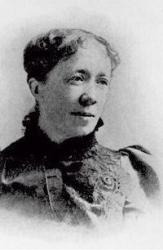
1841 - 1913 Person Name: Mary Artemisia Lathbury, 1841-1913 Topics: The Church of Jesus Christ The Scriptures Author of "Break Thou the bread of life" in Complete Mission Praise Lathbury, Mary Ann, was born in Manchester, Ontario County, New York, Aug. 10, 1841. Miss Lathbury writes somewhat extensively for the American religious periodical press, and is well and favourably known (see the Century Magazine, Jan., 1885, p. 342). Of her hymns which have come into common use we have:—
1. Break Thou the bread of life. Communion with God. A "Study Song" for the Chautauqua Literary and Scientific Circle, written in the summer of 1880. It is in Horder's (Eng.) Congregational Hymns, 1884.
2. Day is dying in the west. Evening. "Written at the request of the Rev. John H. Vincent, D.D., in the summer of 1880. It was a "Vesper Song," and has been frequently used in the responsive services of the Chautauqua Literary and Scientific Circle." It is in the Laudes Domini, N. Y., 1884.
For these details we are indebted to S. W. Duffield's English Hymns, &c, N. Y., 1886.
--John Julian, Dictionary of Hymnology (1907)
==================
Lathbury, Mary A., p. 640, i. Another hymn by this writer is, "Lift up, lift up thy voice with singing." [Praise to Christ), in Sankey's Sacred Songs & Solos, 1878.
--John Julian, Dictionary of Hymnology, Appendix, Part II (1907)
Mary A. Lathbury
William Henry Draper
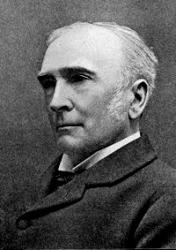
1855 - 1933 Person Name: William Henry Draper, 1855-1933 Topics: The Church of Jesus Christ Harvest Translator of "All creatures of our God and King" in Complete Mission Praise Draper, William Henry, M.A., son of Henry and Lucy Mary Draper, was born at Kenilworth, Dec. 19, 1855, and educated at Keble College, Oxford; B.A. in honours, M.A. 1880. Ordained in 1880, he was Curate of St. Mary's, Shrewsbury; Vicar of Alfreton; of the Abbey Church, Shrewsbury; and since 1899 Rector of Adel, Leeds. Mr. Draper's hymns in common use include the following:—
1. Come forth, ye sick and poor. [Harvest.] Written in 1001 and printed in the Guardian, Sept. 18, 1901. In 1905 it was given, somewhat altered, in The Council School Hymn Book, No. 132. It was also published by Novello & Co., with Music by J. H. Maunder.
2. From homes of quiet peace. [In Time of War.] Published by Novello & Co. in their series of Hymns in Time of War, 1900, and repeated in The Public School Hymn Book 1903, The Council School Hymn Book, 1905, and others.
3. How blest the land where God is known. (National Hymn.] Written for Novello's Eight Hymns, with Tunes , for use in services held in connection with the Coronation of King Edward VII., in 1902. It was included in The Council School Hymn Book, 1905, No. 91.
4. How fair was the land of God's people of old. [National Hymn.] Written for use in Day Schools, and rir»t published in The Council School Hymn Book, 1905, No. 121.
5. In our day of thanksgiving one psalm let us offer. [Dedication of a Church.] Written for use at the service at the reopening of the Abbey Church, Shrewsbury, after restoration, in 1894. It was also used at the Shrewsbury Church Congress, 1896; and elsewhere on other occasions. In 1904 it was included in the new edition of Hymns Ancient & Modern.
6. Lord, through this Holy Week of our Salvation. [Holy Week.] First published in Hymns for Holy Week, 1898, and included in Hymns Ancient & Modern 1904, No. 109.
7. Man shall not live by bread alone. [Divine Providence.] First published in The Church Monthly, and again in The Council School Hymn Book, 1905, No. 103.
8. Rejoice, ye angels in the sky. [Whitsuntide.] Written for the Leeds Whitsuntide Hymns, 1902 (to Gounod's tune for "O come, O come, Emmanuel"), and included in The Council School Hymn Book, 1905.
9. We love God's acre round the Church. [Burial.] Printed in the Guardian, Aug. 1, 1900, with the title, "Hymn for those who die far from home and country"; later by Novello, with music by Dr. V. Roberts; and again, with slight alterations, in Brookes's Additional Hymns, 1903.
10. What can I do for England. [National Hymn.] Written in 1905 for The Council School Hymn Book, and included therein in the same year.
11. Ye sons of God, arise. [Processional. Choral Festivals.) Written for a Choral Festival in Gloucester Cathedral, June 8th, 1893; reprinted for the Leeds Whitsuntide Hymns, 1901; and again for the Choir Festival in Chester Cathedral, 1905.
In addition to these hymns which have come into common use. Mr. Draper has written many others of merit which are worthy of attention. They include:—
1. Hymns for Holy Week, being translations from Hymns of the Greek Church, with Six Originals, &c. . . . London: H. Frowde, 1898 (see No. 6 above). This contains 13 original and translated hymns.
2. The Victoria Book of Hymns, 1897.
3. A Memorial Service for them that are Fallen Asleep in Christ. London: H. Frowde, 1898, 4 hymns (including No. 9 above).
4. The Way of the Cross (Oxford: A. R. Mowbray & Co.), n.d., with music by Dr. Sweeting.
Mr. Draper's hymns are so scattered in the Guardian, Church Monthly, and sundry magazines that it is a matter of some difficulty to trace them out. They exceed sixty in all, and are worthy, taken as a whole, to be published as a volume of sacred verse.
--John Julian, Dictionary of Hymnology, New Supplement (1907)
William Henry Draper
John Fawcett
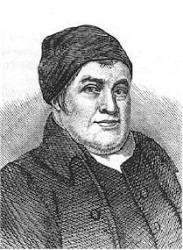
1740 - 1817 Person Name: John Fawcett, 1740-1817 Topics: The Church of Jesus Christ Unity of the Church; The Church of Jesus Christ Marriage Author of "Blest be the tie that binds" in Complete Mission Praise An orphan at the age of twelve, John Fawcett (b. Lidget Green, Yorkshire, England, 1740; d. Hebden Bridge, Yorkshire, 1817) became apprenticed to a tailor and was largely self-educated. He was converted by the preaching of George Whitefield at the age of sixteen and began preaching soon thereafter. In 1765 Fawcett was called to a small, poor, Baptist country church in Wainsgate, Yorkshire. Seven years later he received a call from the large and influential Carter's Lane Church in London, England. Fawcett accepted the call and preached his farewell sermon. The day of departure came, and his family's belongings were loaded on carts, but the distraught congregation begged him to stay. In Singers and Songs of the Church (1869), Josiah Miller tells the story associated with this text:
This favorite hymn is said to have been written in 1772, to commemorate the determination of its author to remain with his attached people at Wainsgate. The farewell sermon was preached, the wagons were loaded, when love and tears prevailed, and Dr. Fawcett sacrificed the attraction of a London pulpit to the affection of his poor but devoted flock.
Fawcett continued to serve in Wainsgate and in the nearby village of Hebden Bridge for the remainder of his active ministry.
Bert Polman
===============
Fawcett, John, D.D., was born Jan. 6, 1739 or 1740, at Lidget Green, near Bradford, Yorks. Converted at the age of sixteen under the ministry of G. Whitefield, he at first joined the Methodists, but three years later united with the Baptist Church at Bradford. Having begun to preach he was, in 1765, ordained Baptist minister at Wainsgate, near Hebden Bridge, Yorks. In 1772 he was invited to London, to succeed the celebrated Dr. J. Gill, as pastor of Carter's Lane; the invitation had been formally accepted, the farewell sermon at Wainsgate had been preached and the wagons loaded with his goods for removal, when the love and tears of his attached people prevailed and he decided to remain. In 1777 a new chapel was built for him at Hebden Bridge, and about the same time he opened a school at Brearley Hall, his place of residence. In 1793 he was invited to become President of the Baptist Academy at Bristol, but declined. In 1811 he received from America the degree of D.D., and died in 1817, at the age of 78. Dr. Fawcett was the author of a number of prose works on Practical Religion, several of which attained a large circulation. His poetical publications are:—
(1) Poetic Essays, 1767; (2) The Christian's Humble Plea, a Poem, in answer to Dr. Priestley against the Divinity of our Lord Jesus Christ, 1772; (3) Three hymns, in the Gospel Magazine, 1777; (4) The Death of Eumenio, a Divine Poem, 1779; (5) Another poem, suggested by the decease of a friend, The Reign of Death, 1780; and (6) Hymns adapted to the circumstances of Public Worship and Private Devotion, Leeds, G. Wright & Son. 1782. They are 166 in number, and were mostly composed to be sung after sermons by the author.
Whilst not attaining a high degree of excellence as poetry, they are "eminently spiritual and practical," and a number of them are found in all the Baptist and Congregational hymn-books that have appeared during the last 100 years. The best known of these are, “Infinite excellence is Thine;" "How precious is the Book divine;" "Thus far my God hath led me on;" "Religion is the chief concern;" "Blest be the tie that binds;" “I my Ebenezer raise;" and "Praise to Thee, Thou great Creator." These hymns, together with others by Fawcett, are annotated under their respective first lines. [Rev. W. R. Stevenson, M.A.]
In addition the following hymns, also by Fawcett, but of less importance, are in common use:
1. Behold the sin-atoning Lamb. Passiontide. No. 60 of his Hymns, 1782, in 7 stanzas of 4 lines. In several hymnals in Great Britain and America.
2. I my Ebenezer raise. Birthday. No. 102 of his Hymns, in 10 stanzas of 4 lines. Usually given in an abbreviated form.
3. Infinite excellence is Thine. Jesus the Desire of Nations. No. 42 of his Hymns, in 12 stanzas of 4 lines. In several hymn-books in Great Britain and America in an abridged form.
4. Jesus, the heavenly Lover, gave. Redemption in Christ. No. 10 of his Hymns, &c., 1782, in 7 stanzas of 4 lines, and headed, "The marriage between Christ and the Soul." In Snepp's Songs of Grace & Glory, 1872, it reads, “Jesus, the heavenly Bridegroom, gave," and stanza v. is omitted.
5. Lord, hast Thou made me know Thy ways? Perseverance. No. 122 of his Hymns, &c., 1782, in 8 stanza of 4 lines. In the Baptist Hymnal, 1879, No. 451, stanzas iv.-vii. are omitted.
6. 0 God, my Helper, ever near. New Year. No. 108 of his Hymns, &c., 1782, in 6 stanzas of 4 lines. The New Congregational Hymn Book, 1859-69 omits st. vi.
7. 0, my soul, what means this sadness? Sorrow turned to Joy. No. 111 of his Hymns, &c., 1782, in 5 stanzas of 6 lines, and based upon the words, "Why art Thou cast down, O my soul?" &c. It is in common use in America, and usually with the omission of stanza ii. as in Dr. Hatfield's Church Hymn Book, 1872.
8. Sinners, the voice of God regard. Invitation to Repentance. No. 63 of his Hymns, &c., 1782, in 7 stanzas of 4 lines on Isaiah lv. 7, "Let the wicked forsake his way," &c. It is in common use in America, but usually in an abbreviated form.
9. Thy presence, gracious God, afford. Before Sermon. No 165 in his Hymns, &c., in 4 stanzas of 4 lines, and a chorus of two lines. In Dr. Hatfield's Church Hymnbook, 1872, No. 126, the chorus is omitted. Fawcett has another hymn on the same subject (No. 79) and beginning, "Thy blessing, gracious God, afford," but this is not in common use.
10. Thy way, 0 God, is in the sea. Imperfect Knowledge of God. No. 66 in his Hymns, &c., 1782, in 7 stanzas of 4 lines on 1 Corinthians xiii. 9, "We know in part," &c. It is in several American collections, usually abbreviated, and sometimes as, "Thy way, O Lord, is in the sea." In this form it is in The Sabbath Hymn Book, 1858, &c.
11. With humble heart and tongue. Prayer for Guidance in Youth. No. 86 in his Hymns, &c., 1782, in 7 stanzas of 4 lines on Psalms cxix. 9. "Wherewith shall a young man cleanse his way." It is No. 954 in the Baptist Psalms and Hymns, 1858-80.
About 20 of Fawcett's hymns are thus still in common use. Two hymns which have been ascribed to him from time to time, but concerning which there are some doubts, are fully annotated under their respective first lines. These are," Humble souls that seek salvation," and "Lord, dismiss us with Thy blessing."
-- John Julian, Dictionary of Hymnology (1907)
John Fawcett
Harry Emerson Fosdick
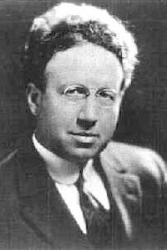
1878 - 1969 Person Name: Henry Emerson Fosdick, 1878-1969 Topics: The Church of Jesus Christ Life of the Church Author of "God of grace and God of glory" in Complete Mission Praise Born: May 24, 1878, Buffalo, New York.
Died: October 5, 1969, Bronxville, New York.
Fosdick attended Colgate University, Union Theological Seminary, and Columbia University. Ordained in 1903, he pastored at the First Baptist Church in Montclair, New Jersey, from 1904 to 1915. At Union Theological Seminary, he lectured on Baptist principles and homiletics (1908-1915) and was professor of practical theology (1915-1946). He also found time to serve as associate minister at the First Presbyterian Church in Manhattan, New York (1919-1925), and pastor of Park Avenue Baptist Church (1929-1946). His picture was on the cover of Time magazine, September 21, 1925. His works include:
A Guide to Understanding the Bible, 1938
The Living of These Days (an autobiography), 1956
A Book of Public Prayers, 1960
© The Cyber Hymnal™ (www.hymntime.com/tch)
Harry Emerson Fosdick
Henry Alford
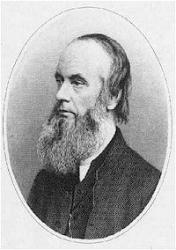
1810 - 1871 Person Name: Henry Alford, 1810-71 Topics: The Church of Jesus Christ Harvest Author of "Come, you thankful people, come" in Complete Mission Praise Alford, Henry, D.D., son of the Rev. Henry Alford, Rector of Aston Sandford, b. at 25 Alfred Place, Bedford Row, London, Oct. 7, 1810, and educated at Trinity College, Cambridge, graduating in honours, in 1832. In 1833 he was ordained to the Curacy of Ampton. Subsequently he held the Vicarage of Wymeswold, 1835-1853,--the Incumbency of Quebec Chapel, London, 1853-1857; and the Deanery of Canterbury, 1857 to his death, which took. place at Canterbury, Jan. 12, 1871. In addition he held several important appointments, including that of a Fellow of Trinity, and the Hulsean Lectureship, 1841-2. His literary labours extended to every department of literature, but his noblest undertaking was his edition of the Greek Testament, the result of 20 years' labour. His hymnological and poetical works, given below, were numerous, and included the compiling of collections, the composition of original hymns, and translations from other languages. As a hymn-writer he added little to his literary reputation. The rhythm of his hymns is musical, but the poetry is neither striking, nor the thought original. They are evangelical in their teaching, but somewhat cold and conventional. They vary greatly in merit, the most popular being "Come, ye thankful people, come," "In token that thou shalt not fear," and "Forward be our watchword." His collections, the Psalms and Hymns of 1844, and the Year of Praise, 1867, have not achieved a marked success. His poetical and hymnological works include—
(1) Hymns in the Christian Observer and the Christian Guardian, 1830. (2) Poems and Poetical Fragments (no name), Cambridge, J. J. Deighton, 1833. (3) The School of the Heart, and other Poems, Cambridge, Pitt Press, 1835. (4) Hymns for the Sundays and Festivals throughout the Year, &c.,Lond., Longman ft Co., 1836. (5) Psalms and Hymns, adapted for the Sundays and Holidays throughout the year, &c, Lond., Rivington, 1844. (6) Poetical Works, 2 vols., Lond., Rivington, 1845. (7) Select Poetical Works, London, Rivington, 1851. (8) An American ed. of his Poems, Boston, Ticknor, Reed & Field, 1853(9) Passing away, and Life's Answer, poems in Macmillan's Magazine, 1863. (10) Evening Hexameters, in Good Words, 1864. (11) On Church Hymn Books, in the Contemporary Review, 1866. (12) Year of Praise, London, A. Strahan, 1867. (13) Poetical Works, 1868. (14) The Lord's Prayer, 1869. (15) Prose Hymns, 1844. (16) Abbot of Muchelnaye, 1841. (17) Hymns in British Magazine, 1832. (18) A translation of Cantemus cuncti, q.v.
-- John Julian, Dictionary of Hymnology (1907)
==================
Alford, Henry, p. 39, ii. The following additional hymns by Dean Alford are in common use:—
1. Herald in the wilderness. St. John Baptist. (1867.)
2. Let the Church of God rejoice. SS. Simon and Jude. (1844, but not in his Psalms & Hymns of that year.)
3. Not in anything we do. Sexagesima. (1867.)
4. O Thou at Whose divine command. Sexagesima. (1844.)
5. 0 why on death so bent? Lent. (1867.)
6. Of all the honours man may wear. St. Andrew's Day. (1867.)
7. Our year of grace is wearing to a close. Close of the Year. (1867.)
8. Saviour, Thy Father's promise send. Whit-sunday. (1844.)
9. Since we kept the Saviour's birth. 1st Sunday after Trinity. (1867.)
10. Thou that art the Father's Word. Epiphany. (1844.)
11. Thou who on that wondrous journey. Quinquagesima. (1867.)
12. Through Israel's coasts in times of old. 2nd Sunday after Epiphany. (1867.)
13. Thy blood, O Christ, hath made our peace. Circumcision . (1814.)
14. When in the Lord Jehovah's name. For Sunday Schools. (1844.)
All these hymns are in Dean Alford's Year of Praise, 1867, and the dates are those of their earliest publication, so far as we have been able to trace the same.
--Excerpts from John Julian, Dictionary of Hymnology, Appendix, Part II (1907)
Henry Alford
Judson W. Van DeVenter
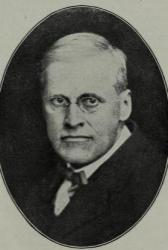
1855 - 1939 Person Name: Judson W Van de Venter, 1855-1939 Topics: The Church of Jesus Christ Baptisms, Dedications and Presentation of Infants Author of "All to Jesus I surrender" in Complete Mission Praise Judson W. Van DeVenter was born 15 December 1855 on a farm near the village of Dundee, Michigan. He was educated in the country and village schools, and at Hillsdale College. He later moved to St. Petersburg, Florida. He wrote about 100 hymns.
Dianne Shapiro, from "The Singers and Their Songs: sketches of living gospel hymn writers" by Charles Hutchinson Gabriel (Chicago: The Rodeheaver Company, 1916)
Judson W. Van DeVenter
William Williams
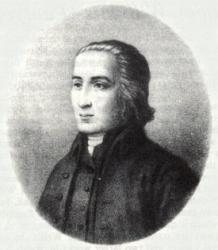
1717 - 1791 Person Name: William Williams, 1717-91 Topics: The Church of Jesus Christ Bereavement and Funerals Author of "Guide me, O thou great Jehovah" in Complete Mission Praise William Williams, called the "Watts of Wales," was born in 1717, at Cefn-y-coed, near Llandovery, Carmarthenshire. He originally studied medicine, but abandoned it for theology. He was ordained Deacon in the Church of England, but was refused Priest's Orders, and subsequently attached himself to the Calvinistic Methodists. For half a century he travelled in Wales, preaching the Gospel. He died in 1791. Williams composed his hymns chiefly in the Welsh language; they are still largely used by various religious bodies in the principality. Many of his hymns have appeared in English, and have been collected and published by Sedgwick. His two principal poetical works are "Hosannah to the Son of David," and "Gloria in Excelsis."
--Annotations of the Hymnal, Charles Hutchins, M.A. 1872.
=====================
Williams, William, of Pantycelyn, was the Sweet Singer of Wales. He was born at Cefn-y-Coed, in the Parish of Llanfair-y-bryn, near Llandovery, in 1717. He was ordained a deacon of the Established Church in 1740, by Dr. Claget, Bishop of St. Davids, and for three years he served the Curacies of Llan-wrtyd and Llanddewi-Abergwesyn. He never received Priest's Orders. He became early acquainted with the revivalist Daniel Rowlands, and for thirty-five years he preached once a month at Llanllian and Caio and Llansawel, besides the preaching journeys he took in North and South Wales. He was held in great esteem as a preacher. In 1744 his first book of hymns appeared under the title of Halleluiah, and soon ran through three editions. In1762, he published another book under the title of Y Môr o Wydr, which soon went through five editions. His son John published an excellent edition of his hymns in the year 181lines In addition to his Welsh hymns Williams also published several in English as:—
(1.) Hosannah to the Son of David; or, Hymns of Praise to God, For our glorious Redemption by Christ. Some few translated from the Welsh Hymn-Book, but mostly composed on new Subjects. By William Williams. Bristol: Printed by John Grabham, in Narrow-Wine Street, 1759. This contains 51 hymns of which 11 are translated from his Welsh hymns. This little book was reprinted by D. Sedgwick in 1859.
(2.) Gloria in Excelsis: or, Hymns of Praise to God and the Lamb. By W. Williams . . . Carmarthen. Printed for the Author by John Ross, removed to Priory Street, near the Church, M.DCC.LXXI. This contains 70 hymns, not including parts.
From these volumes the following hymns are in common use:—
i. From the Hosannah, 1759:—
1. Jesus, my Saviour is enough. Jesus, All in All.
2. My God, my God, Who art my all. Communion with God desired.
3. The enormous load of human guilt. God's love unspeakable.
ii. From the Gloria in Excelsis, 1772.
4. Awake, my soul, and rise. Passiontide.
5. Beneath Thy Cross I lay me down. Passiontide.
6. Hark! the voice of my Beloved. The Voice of Jesus.
7. Jesus, lead us with Thy power. Divine Guidance Desired. Sometimes given as "Father, lead us with Thy power."
8. Jesus, Whose Almighty sceptre. Jesus as King.
9. Saviour, look on Thy beloved. The Help of Jesus desired.
10. White and ruddy is my Beloved. Beauties of Jesus.
Williams is most widely known through his two hymns, "Guide me, O Thou great Jehovah," and "O'er those gloomy hills of darkness." Williams died at Pantycelyn, Jan. 11, 1791. [Rev. W. Glanffrwd Thomas]
-- John Julian, Dictionary of Hymnology (1907)
=================
See also in:
Hymn Writers of the Church
William Williams
Folliott Sandford Pierpoint
1835 - 1917 Person Name: Folliott Pierpoint, 1835-1917 Topics: The Church of Jesus Christ Harvest Author of "For the beauty of the earth" in Complete Mission Praise In the spring of 1863, Folliott S. Pierpoint (b. Bath, Somerset, England, 1835; d. Newport, Monmouthshire, England, 1917) sat on a hilltop outside his native city of Bath, England, admiring the country view and the winding Avon River. Inspired by the view to think about God's gifts in creation and in the church, Pierpont wrote this text. Pierpont was educated at Queen's College, Cambridge, England, and periodically taught classics at Somersetshire College. But because he had received an inheritance, he did not need a regular teaching position and could afford the leisure of personal study and writing. His three volumes of poetry were collected in 1878; he contributed hymns to The Hymnal Noted (1852) and Lyra Eucharistica (1864). "For the Beauty of the Earth" is the only Pierpont hymn still sung today.
Bert Polman
==================
Pierpoint, Folliott Sandford, M.A., son of William Home Pierpoint of Bath, was born at Spa Villa, Bath, Oct. 7, 1835, and educated at Queen's College, Cambridge, graduating in classical honours in 1871. He has published The Chalice of Nature and Other Poems, Bath, N.D. This was republished in 1878 as Songs of Love, The Chalice of Nature, and Lyra Jesu. He also contributed hymns to the Churchman's Companion (London Masters), the Lyra Eucharistica, &c. His hymn on the Cross, "0 Cross, O Cross of shame," appeared in both these works. He is most widely known through:—
"For the beauty of the earth." Holy Communion, or Flower Service. This was contributed to the 2nd edition of Orby Shipley's Lyra Eucharistica, 1864, in 8 stanzas of 6 lines, as a hymn to be sung at the celebration of Holy Communion. In this form it is not usually found, but in 4, or sometimes in 5, stanzas, it is extensively used for Flower Services and as a Children's hymn.
--John Julian, Dictionary of Hymnology (1907)
Folliott Sandford Pierpoint
John S. B. Monsell
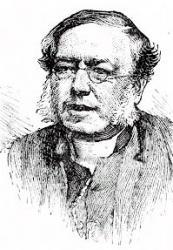
1811 - 1875 Person Name: John Samuel Bewley Monsell, 1811-75 Topics: The Church of Jesus Christ Baptisms, Dedications and Presentation of Infants Author of "Fight the good fight" in Complete Mission Praise John Samuel Bewley Monsell (b. St. Colomb's, Londonderry, Ireland, 1811; d. Guilford, Surrey, England, 1875) was educated at Trinity College in Dublin and served as a chaplain and rector of several churches in Ireland after his ordination in 1835. Transferred to England in 1853, he became rector of Egham in Surrey and was rector of St. Nicholas Church in Guilford from 1870 until his death (caused by a construction accident at his church). A prolific poet, Monsell published his verse in eleven volumes. His three hundred hymns, many celebrating the seasons of the church year, were issued in collections such as Hymns and Miscellaneous Poems (1837), Spiritual Songs (1857), Hymns of Love and Praise (1863), and The Parish Hymnal (1873).
Bert Polman
===============================
Monsell, John Samuel Bewley, L.L.D., son of Thomas Bewley Monsell, Archdeacon of Londonderry, was born at St. Columb's, Londonderry, March 2,1811, and educated at Trinity College, Dublin (B.A. 1832, LL.D. 1856). Taking Holy Orders in 1834, "he was successively Chaplain to Bishop Mant, Chancellor of the diocese of Connor, Rector of Ramoan, Vicar of Egham, diocese Worcester, and Rector of St. Nicholas's, Guildford. He died in consequence of a fall from the roof of his church, which was in the course of rebuilding, April 9, 1875. His prose works include Our New Vicar, 1867; The Winton Church Catechist, &c. His poetical works are:—
(1) Hymns and Miscellaneous Poems, Dublin, W. Curry, Jun., & Co., 1837; (2) Parish Musings, or Devotional Poems, 1850; (3) Spiritual Songs for the Sundays and Holy Days throughout the Year. 1857 (People's Ed., 1875); (4) His Presence, not His Memory, 1855, 1858; (5) Hymns of Love and Praise for the Church's Year, 1863 (2nd ed. 1866); (6) The Passing Bell; Ode to The Nightingales, and Other Poems, 1867; (7) Litany Hymns, 1869; (8) The Parish Hymnal after the Order of The Book of Common Prayer, 1873; (9)Watches by the Cross, 1874; (10) Simon the Cyrenian; and Other Poems; (11) Nursery Carols.
In these works several hymns which appeared in the earlier books are repeated in the later, and thus at first sight his compositions seem to be more in number than they really are. The total amounts to nearly 300, and of these about one-fourth are in common use. The most popular of these are, "God is love; that anthem olden"; "God of that glorious gift of grace"; "Holy offerings, rich and rare"; “Lord of the living harvest"; "Mighty Father, Blessed Son"; and "Sing to the Lord a joyful song." In addition to those which are annotated under their respective first lines, the following are in common use:—
i. Appeared in his Hymns and Miscellaneous Poems, Dublin, 1837.
1. Birds have their quiet nests. Humility of Christ.
2. Dark and dim the day-light rose. Good Friday.
3. Friend of the friendless and the lone. Jesus, the Friend.
4. My God, what wondrous love was Thine. Whitsuntide.
5. O for a heart more fervent. Holiness desired.
6. O for the time when on the world. Missions.
7. The springtide hour brings leaf and flower. Spring.
8. This day the Lord is risen. Easter.
9. When cold our hearts and far from Thee. Teach us to Pray.
10. Why restless, why so weary? Providence.
11. Yes, I do feel, my God, that I am Thine. Assurance.
ii. Appeared in his Parish Musings, 1850.
12. In Thee, my [O] God, will we rejoice. Trust in God.
13. Lord, dependent on Thy promise. Holy Baptism.
14. Members of Christ, Children of God. Confirmation.
15. So teach me, Lord, to number. The Old and New Year.
16. Soon [soon] and for ever. Death anticipated.
17. The broken, contrite heart oppress'd. Promises of God.
18. Thou art near, yes, Lord, I feel it. Divine Support.
19. Would'st thou learn the depths of sin? Passiontide.
iii. Appeared in his Spiritual Songs, 1857.
20. A few bright leaders of her host. All Saints.
21. A happy, happy [merry, merry] Christmas. New Year's Day.
22. Blessed hope, that we the fallen [sinful]. Hope.
23. Heart in heart, and hand in hand. SS. Simon and Jude.
24. Jesus, my loving Lord! I know. Resignation.
25. Last Sunday of the work-day year. Sunday after Christmas Day.
26. Loved by God the Father. Holy Baptism.
27. Mercy, mercy, God the Father. Lent.
28. My head is low, my heart is sad. Confirmation. (Penitential.)
29. Oft doth the Christian's heart inquire. Christian Duty.
30. 0 God, most mighty, listen now. Charities. From "When languid frame or throbbing pulse."
31. 0 holy Sabbath day. Sunday.
32. 0 Lord, what records of Thy love. St. Barnabas. Sometimes, “Lord God, what records of Thy love."
33. 0 love, divine and golden. Holy Matrimony. From this, "Love divine and tender" is taken.
34. One lesson more the Church must learn. Waiting on God. From this, “One lesson Christ His own would teach" is taken.
35. Proudly in his [the] hall of judgment. Tuesday before Easter.
36. Sinful, sighing to be blest. Lent.
37. The Church of God, with equal care. St. James.
38. The journey done; The rest begun. Burial.
39. The simple trust that can confide. Trust.
40. Weary and sad, a wanderer from Thee. Lent.
iv. Appeared, in his Hymns of Love and Praise, 1863, and 2nd ed., 1866.
41. Bounteous blesser of the seedtime. Sexagesima. Seed Time.
42. Brightly hopeful for the future. God's mercy through life.
43. Christ is risen! Alleluia! Easter.
44. Come and deck the grave with flowers. Easter Eve.
45. Fight the good fight with all thy might. Fight of Faith.
46. Holy Spirit, long expected. Whitsuntide.
47. Hours and days and months and years. The Circumcision.
48. I have no comfort but Thy love. The Comfort of Love.
49. I knew Thee in the land of drought. A Song of Love.
60. I think of Thee, my God by night. Evening.
61. Jesu, gentle Sufferer, say. Good Friday.
52. Labouring and heavy-laden. Lent.
53. Light of the world, we hail Thee. Missions.
54. Lord, to whom except to Thee? Holy Communion.
55. My sins, my sins, my Saviour. Ash Wednesday.
56. O'er the distant mountains breaking. Second Advent.
57. Other Name than our dear Lord's. Jesus All and in All.
58. Pity on us, heavenly Father. Litany Hymn for Lent.
59. Praise the Lord, rejoice, ye Gentiles. Advent, or Missions.
60. Rest of the weary, joy of the sad. Jesus, the Saviour and Friend.
61. Shadow of a mighty Rock. Jesus, the Rock of Ages.
62. Sing, 0 heaven; 0 earth rejoice. Ascension.
63. Sweet is the gentle voice of spring. Seed Time.
64. Sweet is Thy mercy, Lord. Divine Mercy.
65. Teach me to do the thing that pleaseth Thee. Divine Teaching.
66. The good old times, how glorious. Advent.
67. The world may in its wealth delight. Rejoicing in the Lord. An altered form of "Let others in their wealth delight."
68. Though Thou slay me, I will trust. Faith.
69. To Christ the Lord! The Incarnate Word. Christmas.
70. When I had wandered from His fold. The Love of God.
v. Appeared in his Litany Hymns, 1869.
71. Lay the precious body, In the quiet grave. Burial.
72. My sins have taken such a hold on me. Litany of Repentance.
vi. Appeared in his Parish Hymnal, 1873.
73. I hunger and I thirst. Septuagesima.
Dr. Monsell’s hymns are as a whole bright, joyous, and musical; but they lack massiveness, concentration of thought, and strong emotion. A few only are of enduring excellence.
--John Julian, Dictionary of Hymnology 1907
=====================
Monsell, J, S. B., p. 762, ii. Additional hymns in common use include:—
1. Blessed Lord, Who, till the morning. Holy Scriptures. From his Spiritual Songs, 1857.
2. Christ incarnate in His poor. Christ in His Poor. From his Hymns of Love and Praise, 1863.
3. We ask for life, and mean thereby. Life and Work. From his Hymns of Love and Praise, 1863.
--John Julian, Dictionary of Hymnology, Appendix, Part II (1907)
====================
Monsell, J. S. B. Since the article on pp. 762-3 was written, copies of the original editions of Dr. Monsell's works have come into our hands, and from them we have to make the following corrections, the numbers following being those given to the first lines of the hymns on pp. 762-3:—
15. So teach me, &c. Hymns and Misc. Poems, 1837, p. 30.
17. The broken, &c. Hymns and Misc. Poems, 1837, p. 49.
18. Thou art near, &c. Hymns and Misc. Poems, 1837, p. 21.
19. Would'st thou, &c. Hymns and Misc. Poems, 1837, p. 14.
26. Loved by God, &c. Parish Hymnal, 1873, No. 181.
27. Mercy, mercy, &c. Prayers and Litanies, 1861,
p. 119.
28. My head is low, &c. Hymns of Love and Praise, 1866,
p. 125.
33. O Love divine, &c. Hymns of Love and Praise, p. 131.
38. The journey done, &c. Hymns of Love and Praise, p. 134.
40. Weary and sad, &c. Parish Hymnal, 1873, No. 209.
41-50. Hymns of Love and Praise, 1863.
51. See "Day of loss," &c, p. 282, i.
52. Labouring, &c. Prayers and Litanies, 1861, p. 116. 53-57. Hymns of Love and Praise, 1863.
58. Pity on us, &c. Prayers and Litanies, 1861, p. 125.
59. Praise the Lord, &c. Hymns of Love and Praise, 1863,
p. 13.
60. 61, 62, 64, 65. Prayers and Litanies, 1861.
63, 66-70. Hymns of Love and Praise, 1863.
72. My sins, &c. Hymns of Love and Praise, 1866, p. 34.
73. I hunger, &c. Hymns of Love and Praise, 1866, p. 128.
It will be seen from this list of additions and corrections that Dr. Monsell multiplied his works by giving much the same material under new titles, and that his Prayers and Litanies of 1861 were unknown to us when the original article was written. "We can sincerely add that few hymn writers are so perplexing to the annotator as Dr. Monsell. [Rev. James Mearns, M.A.]
--John Julian, Dictionary of Hymnology, New Supplement (1907)
John S. B. Monsell
Dorothy Frances Gurney
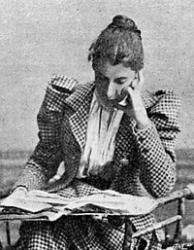
1858 - 1932 Person Name: Dorothy Gurney, 1858-1932 Topics: The Church of Jesus Christ Marriage Author of "O perfect Love" in Complete Mission Praise Blomfield, Dorothy F. , was born at 3 Finsbury Circus, Oct. 4, 1858. Miss Blomfield is the eldest daughter of the late Rev. F. G. Blomfield, sometime Rector of St. Andrew's Undershaft, London, and granddaughter of the late Dr. Blomfield, Bishop of London. Her very beautiful hymn for Holy Matrimony, “O perfect Love, all human thought transcending," was written for her sister's marriage in 1883, and was intended to be sung to Strength and Stay, in Hymns Ancient & Modern, No. 12. Subsequently it was set as an anthem by J. Barnby for the marriage of the Duke of Fife with the Princess Louise of Wales, on July 27, 1889. In 1889 it was included in the Supplemental Hymns to Hymns Ancient & Modern, and in 1890 in the Hymnal Companion.
--John Julian, Dictionary of Hymnology, Appendix, Part II (1907)
===============
Gurney, Dorothy Frances, née Blomfield, p. 1553, ii. Married to Mr. Gerald Gurney. Mrs. Gurney's personal account of her hymn, "O perfect Love," &c, is given in detail in the Rev. J. Brownlie's Hymns and Hymn Writers of The Church Hymnary, 1899, p. 248. Her hymn is given in most hymn books published since 1889.
--John Julian, Dictionary of Hymnology, New Supplement (1907)
Dorothy Frances Gurney
Pages




