You help make Hymnary.org possible. More than 10 million people from 200+ countries found hymns, liturgical resources and encouragement on Hymnary.org in 2025, including you. Every visit affirms the global impact of this ministry.

If Hymnary has been meaningful to you this year, would you take a moment today to help sustain it? A gift of any size—paired with a note of encouragement if you wish—directly supports the server costs, research work and curation that keep this resource freely available to the world.

Give securely online today, or mail a check to:
Hymnary.org
Calvin University
3201 Burton Street SE
Grand Rapids, MI 49546

Thank you for your partnership, and may the hope of Advent fill your heart.

Person Results

Topics:third+sunday+after+trinity
In:people

Planning worship? Check out our sister site, ZeteoSearch.org, for 20+ additional resources related to your search.
Showing 1 - 10 of 204Results Per Page: 102050

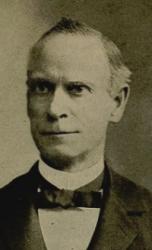
Joseph P. Holbrook

1822 - 1888 Topics: The Catechism The Redeemer; Sixth Sunday after Trinity; Third Sunday after Epiphany; Twenty First Sunday after Trinity; Twenty Fourth Sunday after Trinity Composer of "JESUS, LOVER OF MY SOUL" in Evangelical Lutheran hymnal Joseph P. Holbrook was a tune writer in the parlor music style, and used the popular melodies of Mason and Hastings, Bradbury and Root, Greatorex and Kingsley in his collections. He furnished settings for the choir hymns in Songs for the Sanctuary in his Quartet and chorus Choir (New York, 1871, and sought more recogniation than had been given him in a hymnal of his own, Worship in Song (New York, 1880); a book that found no welcome. from The English hymn: its development and use in worship By Louis FitzGerald Benson

Asa Hull

1828 - 1907 Topics: Twenty Third Sunday after Trinity Composer of "JERUSALEM THE GOLDEN" in Evangelical Lutheran hymnal Asa Hull USA 1828-1907. Born in Keene, NY, he became a music publisher in New York City. He married Emma F Atherton, and they had a daughter, Harriett. He wrote many tunes and authored temperance rallying songs. He published 33 works, of which 21 were songbooks, between 1863-1895. He died in Philadelphia, PA. John Perry

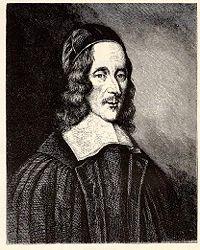
George Herbert

1593 - 1633 Topics: Twenty Third Sunday after Trinity Author of "Teach me, my God and King" in Church Book Herbert, George, M.A., the fifth son of Richard Herbert and Magdalen, the daughter of Sir Richard Newport, was born at his father's seat, Montgomery Castle, April 3, 1593. He was educated at Westminster School, and at Trinity College, Cambridge, graduating B.A. in 1611. On March 15, 1615, he became Major Fellow of the College, M.A. the same year, and in 1619 Orator for the University. Favoured by James I., intimate with Lord Bacon, Bishop Andrewes, and other men of influence, and encouraged in other ways, his hopes of Court preferment were somewhat bright until they were dispelled by the deaths of the Duke of Richmond, the Marquis of Hamilton, and then of King James himself. Retiring into Kent, he formed the resolution of taking Holy Orders. He was appointed by the Bishop of Lincoln to the Prebend of Lcighton Ecclesia and to the living of Leighton Bromswold, Hunts, July 15, 1626. He remained until 1629, when an attack of ague obliged him to remove to his brother's, house at Woodford, Essex. Not improving in health at Woodford, he removed to Dantsey, in Wiltshire, and then as Rector to Bemerton, to which he was inducted, April 26, 1630, where he died Feb. 1632. The entry in the register of Bemerton is "Mr. George Herbert, Esq., Parson of Foughleston and Bemerton, was buried 3 day of March 1632." His life, by Izaak Walton, is well known; another Memoir, by Barnabas Oley, is forgotten. Herbert's prose work, Priest to the Temple, appeared several years after his death: but The Temple, by which he is best known, he delivered to Nicholas Ferrar (q.v.), about three weeks before his death, and authorized him to publish it if he thought fit. This was done iu 1633. The work became popular, and the 13th edition was issued in 1709. It is meditative rather than hymnic in character, and was never intended for use in public worship. In 1697 a selection from The Temple appeared under the title Select Hymns Taken out of Mr. Herbert's Temple & turned into the Common Metre To Be Sung In The Tunes Ordinarily us'd in Churches. London, Parkhurst, 1697. In 1739, J. & C. Wesley made a much more successful attempt to introduce his hymns into public worship by inserting over 40 in a much-altered form in their Hymns & Sacred Poems. As some few of these came into their collection of Psalms & Hymns, 1741, revised 1743, they were long sung by the Methodists, but do not now form part of the Wesleyan Hymn Book. No further attempt seems to have been made to use the Temple poems as hymns until 1853, when some altered and revised by G. Rawson were given in the Leeds Hymn Book of that year. From that time onward more attention was paid to Herbert alike by Churchmen and Nonconformists, and some of his hymns are now widely accepted. Many editions of his works have been published, the most popular being that of the Rev. Robert Aris Wilmott, Lond., Geo. Routledge & Son, 1857; but Dr. Grosart's privately printed edition issued in his Fuller Worthies Library in 1874, in three volumes, is not only the most complete and correct, but included also his psalms not before reprinted, and several poems from a ms. in the Williams Library, and not before published. The Temple has also been pub¬lished in facsimile by Elliott Stock, 1876, with preface by Dr. Grosart; and in ordinary type, 1882, by Wells Gardner, with preface by J. A. Shorthouse. The quaintness of Herbert's lyrics and the peculiarity of several of their metres have been against their adoption for congregational purposes. The best known are: "Let all the world in every corner sing"; "My stock lies dead, and no increase"; "Throw away Thy rod"; "Sweet day, so cool, so calm"; and "Teach me, my God, and King." [William T. Brooke] --John Julian, Dictionary of Hymnology (1907)

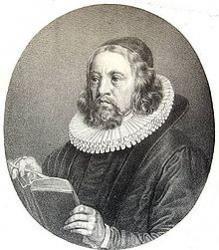
Johann Heermann

1585 - 1647 Person Name: John Heermann Topics: Third Sunday after Trinity Author of "O Christ, our true and only Light" in Church Book Johann Heermann's (b. Raudten, Silesia, Austria, 1585; d. Lissa, Posen [now Poland], 1647) own suffering and family tragedy led him to meditate on Christ's undeserved suffering. The only surviving child of a poor furrier and his wife, Heermann fulfilled his mother's vow at his birth that, if he lived, he would become a pastor. Initially a teacher, Heermann became a minister in the Lutheran Church in Koben in 1611 but had to stop preaching in 1634 due to a severe throat infection. He retired in 1638. Much of his ministry took place during the Thirty Years' War. At times he had to flee for his life and on several occasions lost all his possessions. Although Heermann wrote many of his hymns and poems during these devastating times, his personal faith and trust in God continued to be reflected in his lyrics. He is judged to be the finest hymn writer in the era between Martin Luther and Paul Gerhardt, one whose work marks a transition from the objective hymns of the Reformation to the more subjective hymns of the seventeenth century. His hymn texts were published in collections such as Devoti Musica Cordis, Hauss- und Hertz-Musica (1630, expanded in 1636, 1644), and Sontags- und Fest-evangelia (1636). Bert Polman =================== Heermann, Johann, son of Johannes Heermann, furrier at Baudten, near Wohlau, Silesia, was born at Baudten, Oct. 11, 1585. He was the fifth but only surviving child of his parents, and during a severe illness in his childhood his mother vowed that if he recovered she would educate him for the ministry, even though she had to beg the necessary money. He passed through the schools at Wohlau; at Fraustadt (where he lived in the house of Valerius Herberger, q. v., who took a great interest in him); the St. Elizabeth gymnasium at Breslau; and the gymnasium at Brieg. At Easter, 1609, he accompanied two young noblemen (sons of Baron Wenzel von Rothkirch), to whom he had been tutor at Brieg, to the University of Strassburg; but an affection of the eyes caused him to return to Baudten in 1610. At the recommendation of Baron Wenzel he was appointed diaconus of Koben, a small town on the Oder, not far from Baudten, and entered on his duties on Ascension Day, 1611, and on St. Martin's Day, 1611, was promoted to the pastorate there. After 1623 he suffered much from an affection of the throat, which compelled him to cease preaching in 1634, his place being supplied by assistants. In October, 1638, he retired to Lissa in Posen, and died there on Septuagesima Sunday (Feb. 17), 1647. (Koch, iii. 16-36; Allgemeine Deutsche Biographie, xi. 247-249, &c.) Much of Heermann's manhood was spent amid the distressing scenes of the Thirty Years' War; and by his own ill health and his domestic trials he was trained to write his beautiful hymns of “Cross and Consolation." Between 1629 and 1634, Koben was plundered four times by the Lichtenstein dragoons and the rough hordes under Wallenstein sent into Silesia by the King of Austria in order to bring about the Counter-Reformation and restore the Roman Catholic faith and practice; while in 1616 the town was devastated by fire, and in 1631 by pestilence. In these troublous years Heermann several times lost all his moveables; once he had to keep away from Koben for seventeen weeks; twice he was nearly sabred; and once, while crossing the Oder in a frail boat loaded almost to sinking, he heard the bullets of the pursuing soldiers whistle just over his head. He bore all with courage and patience, and he and his were wonderfully preserved from death and dishonour. He was thus well grounded in the school of affliction, and in his House and Heart Music some of his finest hymns are in the section entitled "Songs of Tears. In the time of the persecution and distress of pious Christians." As a hymnwriter Heermann ranks with the beat of his century, some indeed regarding him as second only to Gerhardt. He had begun writing Latin poems about 1605, and was crowned as a poet at Brieg on Oct. 8, 1608. He marks the transition from the objective standpoint of the hymnwriters of the Reformation period to the more subjective and experimental school that followed him. His hymns are distinguished by depth and tenderness of feeling; by firm faith and confidence in face of trial; by deep love to Christ, and humble submission to the will of God. Many of them became at once popular, passed into the hymnbooks, and still hold their place among the classics of German hymnody. They appeared principally in— (1) Devoti Musica Cordis. Hauss-und Hertz-Musica &c. Leipzig and Breslau, 1630, with 49 hymns (2nd edition 1636, with 64; 3rd edition 1644, with 69). The first section is entitled "Hymns of Penitence and Consolation from the words of the Ancient Fathers of the Church." Seven of these, however, have no mention in their individual titles of the sources from which they are derived; and the remainder are mostly based not on Latin hymns, but on the prose meditations in Martin Moller's Meditationes sanctorum patrum, or on the mediaeval compilations known as the Meditationes and the Manuale of St. Augustine. (2) Sontags-und Fest-Evangelia. Leipzig and Breslau, 1636, being hymns on the Gospels for Sundays and festivals. (3) Poetische Erquickstunden, Nürnberg, 1656; and its Fernere Fortsetzung, also Nürnberg, 1656 [both in Wernigerode], are poems rather than hymns. The hymns of the Hauss-und Hertz-Musica, with a representative selection from Heermann's other poetical works, were edited by C. E. P. Wackernagel, prefaced by a long biographical and critical introduction, and published at Stuttgart, 1855. Six of the most important of Heermann's hymns are annotated under their respective first lines. The other hymns by Heermann which have passed into English are :— I. Hymns in English common use:-- i. 0 Jesu, du mein Bräutigam. Holy Communion. In his Devoti Musica Cordis, Breslau, 1630, p. 78, in 12 stanzas of 4 lines. Thence in Mützell, 1858, No. 34, in Wackernagel's ed. of his Geistliche Lieder, No. 22, and the Unverfälschter Liedersegen, 1851, No. 283. Seems to be founded on Meditation xi. in the mediaeval compilation known as St. Augustine's Manuale. Translated as:— 0 Jesu, Lord, who once for me, a good translation of stanzas i., ii., iv., v., viii., by A. T. Russell, as No. 158 in his Psalms & Hymns, 1851. Other translations are: (l) 0 Jesu! Bridegroom of my Soul," by J. C. Jacobi, 1722, p. 44 (1732, p. 73). (2) "Dear Saviour, who for me hast borne," by Miss Dunn, 1857. ii. Rett, 0 Herr Jesu, rett dein Ehr. In Time of Trouble. A prayer for deliverance and peace for the Church. In his Devoti Musica Cordis, 1630, p. 119, in 5 stanzas of 4 lines, among the "Songs of Tears." Thence in Mützell, 1858, No. 48, in Wackernagel’s ed., No. 36, and the Unverfälschter Liedersegen, 1851, No. 245. Translated as:— Thine honour rescue, righteous Lord, in full, by Dr. M. Loy, in the Ohio Lutheran Hymnal, 1880. iii. Treuer Wächter Israel. In Time of War. 1630, p. 115, in 13 stanzas of 7 lines, among the "Songs of Tears." In Mützell, 1858, No. 47; in Wackernagel's edition, No. 35, and the Unverfälschter Liedersegen, 1851, No. 594. Lauxmann, in Koch, viii. 549, says of it:— "It is a powerful hymn filled with that prevailing prayer that takes heaven by force," and relates of st. vii.,11. v-7, "Eine Mauer um uns bau," that on Jan. 6, 1814, the Allied Forces were about to enter Schleswig. A poor widow with her daughter and grandson lived in a little house near the entrance of the town. The grandson was reading in his hymnbook those in time of war, and when he came to this said, “It would be a good thing, grandmother, if our Lord God would build a wall around us." Next day all through the town cries of distress were heard, but all was still before their door. On the following morning they had courage to open the door, and lo a snowdrift concealed them from the view of the enemy. On this incident Clemens Brentano composed a beautiful poem "Draus vor Schleswig." It is translated as:— Jesu! as a Saviour, aid. A good tr. of st; vii., viii., xiii., by A. T. Russell, as No. 138 in his Psalms & Hymns, 1851. iv. Zionklagt mit Angst und Schmerzen. Church of Christ. First published in his Devoti Musica Cordis, 2nd ed., 1636 (1644, p. 196), in 6 stanzas of 8 lines, entitled, "From the beautiful golden saying of Isaiah, Chapter xlix." In Mützell, 1858, No. 101, in Wackernagel’s ed., No. 53, and the Unverfälschter Liedersegen, 1851, No. 256. Translated as:— Sion bow'd with anguish weepeth A good translation of stanzas i., iii., v., by A. T. Russell, as No. 141 in his Psalms & Hymns, 1851. Another translation is: "Zion mourns in fear and anguish," by Miss Winkworth, 1869, p. 198. II. Hymns not in English common use:-- v. Ach Jesu! dessen Treu. Love to Christ. 1630, p. 144, in 33 stanzas. One of his finest hymns, full of deep love to Christ, but from its great length very little used in Germany. Translated as, "Ah! Jesus! Lord! whose faithfulness," by Miss Burlingham, in the British Herald, May, 1867, p. 72. vi. Der Tod klopft bei mir an. For the Dying. 1656, p. 22, in 121. Translated as, "That Death is at my door," by Miss Winkworth, 1869, p. 201. vii. Du weinest für Jerusalem. Christ weeping over Jerusalem. 1630, p. 81, in 6 stanzas, entitled, "On the Tears of Christ." Founded on St. Luke xix. 41-44, part of the Gospel for the 10 Sundays after Trinity. The translations are: (1) "With tears o'er lost Jerusalem," by Miss Cox, 1841, p. 159. (2) "Our Lord wept o'er Jerusalem," by Dr. H. Mills, 1845 (1856, p. 295). (3) "Thou weepest o'er Jerusalem," by Miss Winkworth, 1855,p. 70. viii. Herr Jesu Christe mein getreuer Hirte. Holy Communion. 1630, p. 74, in 9 stanzas, founded on M. Moller's Meditationes sanctorum patrum, pt. i. c. 11, and pt. v. c. 2. The translations are: (1) "Dear Saviour, Thou my faithful Shepherd, come” by Miss Dunn, 1857, p. 111. (2) "Lord Jesus Christ, my faithful Shepherd, hear," by Miss Winkworth, 1858, p. 93, repeated in Lyra Eucharistica, 1863-64. ix. Herr unser Gott, lass nicht zu Schanden werden. Christ's Church. 1630, p. 114, as one of the "Songs of Tears," in 5 stanzas. Translated as, "Ah! Lord our God, let them not be confounded," by Miss Winkworth, 1869, p. 197. x. Hilf mir, mein Oott, hilf dass nach dir. Christian Conduct. 1630, p. 32, in 7 stanzas, entitled, "For a better life. From the words of Augustine." Founded on No. i. of the Meditationes current under the name of St. Augustine. This meditation is apparently by St. Anselm of Canterbury. Translated as, "Lord, raise in me a constant Flame," by J. C. Jacobi, 1725, p. 27 (1732, p. 105). xi. Jesu, der du tausend Schmerzen. In Sickness. 1656, in the Fernere Fortsetzung, p. 79, in 12 lines, entitled, "In great bodily pain." Translated as, “Jesu, who didst stoop to prove," by Miss Winkworth, 1869, p. 200. xii. Jesu Tilger meiner Sünden. Lent. 1656, in the Fernere Fortsetzung, p. 1, in 10 lines, entitled, "For Victory in Temptation." Translated as, "Jesu, Victor over sin," by Miss Winkworth, 1869, p. 201. xiii. 0 Jesu, Jesu, Gottes Sohn. Love to Christ, 1630, p. 83, in 7 stanzas, entitled, “Of the Love, which a Christian heart bears to Christ, and will still bear." A beautiful expansion of his motto "Mihi omnia Jesus." The translations are: (1) "What causes me to mourn is this," a translation of stanza ii. by P. H. Molther, as No. 371, in the Moravian Hymn Book, 1789 (1886, No. 461). (2) "O Jesus, Jesus, Son of God," by Miss Burlingham, in the British Herald, Oct. 1865, p. 153, and in Reid's Praise Book, 1872. xiv. Treuer Gott ich muss dir klagen. In Trouble. 1630, p. 103, in 12 stanzas, entitled, "Hymn of a sorrowful heart for increase of faith." Translated as, "Faithful God! I lay before Thee," by J. C. Jacobi, 1720, p. 9(1722, p. 70; 1732, p. 117), and as No. 538 in pt. i. of the Moravian Hymn Book, 1754. xv. Wollt ihr euch nicht, o ihr frommen Christen. Second Advent. 1636, p. 210, in 9 stanzas, entitled, "On the day of the Holy Bishop Nicolaus. Gospel of Luke, 12 Chapter." Translated as: (l) "0 dear Christians, as 'tis needful, wou'd ye," as No. 153 in pt. i. of the Moravian Hymn Book, 1754. (2) “Help us, 0 Christ, to watch and pray," a tr. of st. ix. as st. iii. of No. 868 in the Moravian Hymn Book, 1789 (1849, No. 1221). xvi. Wo soll ich fliehen hin. Lent. 1630, p. 20, in 11 stanzas, entitled, "A hymn of consolation in which a troubled heart lays all its sins in true faith upon Christ. From Tauler." Based on M. Moller's Meditationes, vol. i. pt. i., No. 10. Translated as, "0 whither shall I fly," as No. 447 in pt. i. of the Moravian Hymn Book, 1754. In 1886, No. 279, it begins with "0 Jesus, source of Grace" (stanza ii.). [Rev. James Mearns, M.A.] --John Julian, Dictionary of Hymnology (1907)

Thomas Kingo

1634 - 1703 Person Name: Kingo Topics: Twenty third Sunday after Trinity Sunday; Twenty third Sunday after Trinity Sunday Author of "Give Gud i Himmerige" in Salmebog for Lutherske Kristne i Amerika

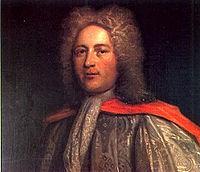
William Croft

1678 - 1727 Topics: Church Year Sundays after Easter; Third Sunday after Easter; Sixth Sunday after Easter; Trinity, Eleventh Sunday; Names and Office of Christ Desire of Nations; Names and Office of Christ Hope and Expectation; Names and Office of Christ God; Names and Office of Christ Joy; Names and Office of Christ Maker; Names and Office of Christ Redeemer; Names and Office of Christ Reward; Names and Office of Christ Word; Mercy of God Composer of "ST. ANNE" in The Hymnal and Order of Service William Croft, Mus. Doc. was born in the year 1677 and received his musical education in the Chapel Royal, under Dr. Blow. In 1700 he was admitted a Gentleman Extraordinary of the Chapel Boyd; and in 1707, upon the decease of Jeremiah Clarke, he was appointed joint organist with his mentor, Dr. Blow. In 1709 he was elected organist of Westminster Abbey. This amiable man and excellent musician died in 1727, in the fiftieth year of his age. A very large number of Dr. Croft's compositions remain still in manuscript. Cathedral chants of the XVI, XVII & XVIII centuries, ed. by Edward F. Rimbault, London: D. Almaine & Co., 1844

William Henry Monk

1823 - 1889 Person Name: W. H. Monk Topics: Third Sunday after Trinity Harmonizer of "DIX (Treuer Heiland, wir sind hier)" in Evangelical Lutheran hymnal William H. Monk (b. Brompton, London, England, 1823; d. London, 1889) is best known for his music editing of Hymns Ancient and Modern (1861, 1868; 1875, and 1889 editions). He also adapted music from plainsong and added accompaniments for Introits for Use Throughout the Year, a book issued with that famous hymnal. Beginning in his teenage years, Monk held a number of musical positions. He became choirmaster at King's College in London in 1847 and was organist and choirmaster at St. Matthias, Stoke Newington, from 1852 to 1889, where he was influenced by the Oxford Movement. At St. Matthias, Monk also began daily choral services with the choir leading the congregation in music chosen according to the church year, including psalms chanted to plainsong. He composed over fifty hymn tunes and edited The Scottish Hymnal (1872 edition) and Wordsworth's Hymns for the Holy Year (1862) as well as the periodical Parish Choir (1840-1851). Bert Polman

Thomas Augustine Arne

1710 - 1778 Topics: The Catechism Faith; Third Sunday after Epiphany; Second Sunday in Lent; Twenty First Sunday after Trinity Composer of "ARLINGTON" in Evangelical Lutheran hymnal Dr. Thomas Augustine Arne was born March 12, 1710, in London; became early celebrated as a composer, and established his reputation by settling Milton's "Comus" to music - light, airy, and original; he composed many songs, and nearly all his attempts were successful; died March 5, 1778, aged 68. A Dictionary of Musical Information by John W. Moore, Boston: Oliver, Ditson & Company, 1876

Wilhelm Andreas Wexels

1797 - 1866 Person Name: Wexels Topics: Twenty third Sunday after Trinity Sunday Author of "O se, hvor lifligt det dog er" in Salmebog for Lutherske Kristne i Amerika Wexels, Wilhelm Andreas. (Copenhagen, Denmark, March 29, 1797--May 14, 1866, Oslo, Norway). Lutheran. After studies in Copenhagen and Christiana (Oslo), became catechist and curate of Our Savior's Lutheran Church in Christiana. Preached against the inroads of rationalism, emphasizing the need for spiritual revival. Church historians claim that his ministry was the turning point in the Church of Norway. Failed in his attempt to give Norway a hymnal, but many of his hymns survived. --J. Irving Erickson, DNAH Archives

Catherine Winkworth

1827 - 1878 Person Name: Miss Winkworth Topics: Third Sunday after Trinity Translator of "O Christ, our true and only Light" in Church Book Catherine Winkworth (b. Holborn, London, England, 1827; d. Monnetier, Savoy, France, 1878) is well known for her English translations of German hymns; her translations were polished and yet remained close to the original. Educated initially by her mother, she lived with relatives in Dresden, Germany, in 1845, where she acquired her knowledge of German and interest in German hymnody. After residing near Manchester until 1862, she moved to Clifton, near Bristol. A pioneer in promoting women's rights, Winkworth put much of her energy into the encouragement of higher education for women. She translated a large number of German hymn texts from hymnals owned by a friend, Baron Bunsen. Though often altered, these translations continue to be used in many modern hymnals. Her work was published in two series of Lyra Germanica (1855, 1858) and in The Chorale Book for England (1863), which included the appropriate German tune with each text as provided by Sterndale Bennett and Otto Goldschmidt. Winkworth also translated biographies of German Christians who promoted ministries to the poor and sick and compiled a handbook of biographies of German hymn authors, Christian Singers of Germany (1869). Bert Polman ======================== Winkworth, Catherine, daughter of Henry Winkworth, of Alderley Edge, Cheshire, was born in London, Sep. 13, 1829. Most of her early life was spent in the neighbourhood of Manchester. Subsequently she removed with the family to Clifton, near Bristol. She died suddenly of heart disease, at Monnetier, in Savoy, in July, 1878. Miss Winkworth published:— Translations from the German of the Life of Pastor Fliedner, the Founder of the Sisterhood of Protestant Deaconesses at Kaiserworth, 1861; and of the Life of Amelia Sieveking, 1863. Her sympathy with practical efforts for the benefit of women, and with a pure devotional life, as seen in these translations, received from her the most practical illustration possible in the deep and active interest which she took in educational work in connection with the Clifton Association for the Higher Education of Women, and kindred societies there and elsewhere. Our interest, however, is mainly centred in her hymnological work as embodied in her:— (1) Lyra Germanica, 1st Ser., 1855. (2) Lyra Germanica, 2nd Ser., 1858. (3) The Chorale Book for England (containing translations from the German, together with music), 1863; and (4) her charming biographical work, the Christian Singers of Germany, 1869. In a sympathetic article on Miss Winkworth in the Inquirer of July 20, 1878, Dr. Martineau says:— "The translations contained in these volumes are invariably faithful, and for the most part both terse and delicate; and an admirable art is applied to the management of complex and difficult versification. They have not quite the fire of John Wesley's versions of Moravian hymns, or the wonderful fusion and reproduction of thought which may be found in Coleridge. But if less flowing they are more conscientious than either, and attain a result as poetical as severe exactitude admits, being only a little short of ‘native music'" Dr. Percival, then Principal of Clifton College, also wrote concerning her (in the Bristol Times and Mirror), in July, 1878:— "She was a person of remarkable intellectual and social gifts, and very unusual attainments; but what specially distinguished her was her combination of rare ability and great knowledge with a certain tender and sympathetic refinement which constitutes the special charm of the true womanly character." Dr. Martineau (as above) says her religious life afforded "a happy example of the piety which the Church of England discipline may implant.....The fast hold she retained of her discipleship of Christ was no example of ‘feminine simplicity,' carrying on the childish mind into maturer years, but the clear allegiance of a firm mind, familiar with the pretensions of non-Christian schools, well able to test them, and undiverted by them from her first love." Miss Winkworth, although not the earliest of modern translators from the German into English, is certainly the foremost in rank and popularity. Her translations are the most widely used of any from that language, and have had more to do with the modern revival of the English use of German hymns than the versions of any other writer. -- John Julian, Dictionary of Hymnology (1907) ============================ See also in: Hymn Writers of the Church

Pages


Export as CSV
It looks like you are using an ad-blocker. Ad revenue helps keep us running. Please consider white-listing Hymnary.org or getting Hymnary Pro to eliminate ads entirely and help support Hymnary.org.