You help make Hymnary.org possible. More than 10 million people from 200+ countries found hymns, liturgical resources and encouragement on Hymnary.org in 2025, including you. Every visit affirms the global impact of this ministry.

If Hymnary has been meaningful to you this year, would you take a moment today to help sustain it? A gift of any size—paired with a note of encouragement if you wish—directly supports the server costs, research work and curation that keep this resource freely available to the world.

Give securely online today, or mail a check to:
Hymnary.org
Calvin University
3201 Burton Street SE
Grand Rapids, MI 49546

Thank you for your partnership, and may the hope of Advent fill your heart.

Person Results

Topics:admonition+and+invitation
In:person

Planning worship? Check out our sister site, ZeteoSearch.org, for 20+ additional resources related to your search.
Showing 1 - 10 of 82Results Per Page: 102050

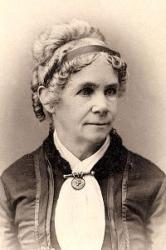
Mary Dana Shindler

1810 - 1883 Person Name: Mary S. B. Dana Topics: Admonition and Invitation Author of "Flee as a Bird" in The Baptist Standard Hymnal Shindler, Mary Stanley Bunce, née Palmer, better known as Mrs. Dana, was born in Beaufort, South Carolina, Feb. 15, 1810. In 1835 she was married to Charles E. Dana, of New York, and removed with him to Bloomington, now Muscatine, Iowa, in 1838. Mr. Dana died in 1839, and Mrs. Dana returned to South Carolina. Subsequently she was married to the Rev. Robert D. Shindler, who was Professor in Shelby College, Kentucky, in 1851, and afterwards in Texas. Mrs. Shindler, originally a Presbyterian, was for some time an Unitarian; but of late years she has been a member of the Protestant Episcopal Church. As Mary S. B. Dana she published the Southern Harp, 1840, and the Northern Harp, 1841. From these works her hymns have been taken, 8 of which are in T. O. Summers's Songs of Zion, 1851. The best known are:— 1. Fiercely came the tempest sweeping. Christ stilling the storm. (1841.) 2. I'm a pilgrim, and I'm a stranger. A Christian Pilgrim. (1841.) 3. O sing to me of heaven. Heaven contemplated. (1840.) Sometimes given as "Come, sing to me of heaven." [Rev. F. M. Bird, M.A.] -- John Julian, Dictionary of Hymnology (1907) =================== Shindler, Mary S. B., p. 1055, i. Other hymns usually attributed to this writer, are "Prince of Peace, control my will" (Perfect Peace), in the Church of England Magazine, March 3, 1858, in 32 lines; and " Once upon the heaving ocean" (Jesus calming the Sea). --John Julian, Dictionary of Hymnology, Appendix, Part II (1907)

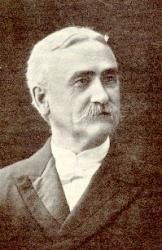
H. R. Palmer

1834 - 1907 Topics: Admonition and Invitation Composer of "COME, SINNER, COME!" in The Baptist Standard Hymnal Palmer, Horatio Richmond, MUS. DOC, was born April 26, 1834. He is the author of several works on the theory of music; and the editor of some musical editions of hymnbooks. To the latter he contributed numerous tunes, some of which have attained to great popularity, and 5 of which are in I. D. Sankey's Sacred Songs and Solos, London, 1881. His publications include Songs of Love for the Bible School; and Book of Anthems, the combined sale of which has exceeded one million copies. As a hymnwriter he is known by his "Yield not to temptation," which was written in 1868, and published in the National Sunday School Teachers' Magazine, from which it passed, with music by the author, into his Songs of Love, &c, 1874, and other collections. In America its use is extensive. Dr. Palmer's degree was conferred by the University of Chicago in 1880. -- John Julian, Dictionary of Hymnology (1907) =============== Palmer, H. R., p. 877, i. The hymn "Would you gain the best in life" (Steadfastness), in the Congregational Sunday School Supplement, 1891, the Council School Hymn Book, 1905, and others, is by this author. --John Julian, Dictionary of Hymnology, New Supplement (1907)

El Nathan

1840 - 1901 Topics: Admonition and Invitation Author of "Why Not Now?" in The Baptist Standard Hymnal Pseudonymn used by D. W. Whittle. See also Whittle, D. W. (Daniel Webster), 1840-1901

Hugh Wilson

1766 - 1824 Topics: Admonition and Invitation Composer of "AVON" in The Baptist Standard Hymnal Hugh Wilson (b. Fenwick, Ayrshire, Scotland, c. 1766; d. Duntocher, Scotland, 1824) learned the shoemaker trade from his father. He also studied music and mathematics and became proficient enough in various subjects to become a part-­time teacher to the villagers. Around 1800, he moved to Pollokshaws to work in the cotton mills and later moved to Duntocher, where he became a draftsman in the local mill. He also made sundials and composed hymn tunes as a hobby. Wilson was a member of the Secession Church, which had separated from the Church of Scotland. He served as a manager and precentor in the church in Duntocher and helped found its first Sunday school. It is thought that he composed and adapted a number of psalm tunes, but only two have survived because he gave instructions shortly before his death that all his music manuscripts were to be destroyed. Bert Polman

J. Hart

1712 - 1768 Person Name: Joseph Hart Topics: Admonition and Invitation Author of "Come, Ye Sinners, Poor and Needy" in The Baptist Standard Hymnal Hart, Joseph, was born in London in 1712. His early life is involved in obscurity. His education was fairly good; and from the testimony of his brother-in-law, and successor in the ministry in Jewin Street, the Rev. John Hughes, "his civil calling was" for some time "that of a teacher of the learned languages." His early life, according to his own Experience which he prefaced to his Hymns, was a curious mixture of loose conduct, serious conviction of sin, and endeavours after amendment of life, and not until Whitsuntide, 1757, did he realize a permanent change, which was brought about mainly through his attending divine service at the Moravian Chapel, in Fetter Lane, London, and hearing a sermon on Rev. iii. 10. During the next two years many of his most earnest and impassioned hymns were written. These appeared as:— Hymns composed on Various Subjects, with the Author's Experience, London, 1759. During this year he became the Minister of the Independent Chapel, Jewin Street, London. In 1762 he added a Supplement to his Hymns; and in 1765 an Appendix. In modern editions of his Hymns these three are embodied in one volume as:— Hymns composed on Various Subjects: With the Author's Experience, The Supplement and Appendix. By the Rev. Joseph Hart, late Minister of the Gospel in Jewin Street, London. Allott & Co. [no date]. Hart died on May 24, 1768. At one time his hymns were widely used, especially by Calvinistic Nonconformists. Many of them are of merit, and are marked by great earnestness, and passionate love of the Redeemer. The best known are: “Come, Holy Spirit, come"; “Come, ye sinners, poor and wretched"; "This God is the God we adore"; and "Lord, look on all assembled here." Those which are more limited in their use include:— i. From his Hymns, &c, 1759. 1. Descend from heaven, celestial Dove. Whitsuntide. No. 6, in 6 stanzas of 6 lines. In Snepp's Songs of Grace & Glory., 1872, No. 374, st. iv., v. are omitted. It is in extensive use in America. 2. Great High Priest, we view Thee stooping. High Priesthood of Christ. No. 56, pt. ii., in 3 stanzas of 8 lines. In Snepp's Songs of Grace & Glory, 1872, No. 236; Hatfield's Church Hymn Book, N. Y., 1872, No. 435, &c. 8. How wondrous are the works of God. Redeeming Love. No. 21, in 9 stanzas of 4 lines. In the Scottish Evangelical Union Hymnal, 1878, st. i.-iv. are given as No. 11. 4. If ever it could come to pass. Final Perseverance. No. 58, in 3 stanzas of 6 lines. Repeated in Snepp's Songs of Grace & Glory, 1872, No. 729. 6. Jesus is our God and Saviour . Faith and Repentance. No. 54, in 7 stanzas of 8 lines. In Snepp's Songs of Grace & Glory, 1872, No. 146, st. iv. is omitted. In the London Hymn Book (enlarged), 1879, st. iii. and v. are given as "Nothing but Thy blood, 0 Jesus." 6. Jesus, while He dwelt below. Gethsemane. No. 75, in 23 stanzas of 6 lines. In Snepp's Songs of Grace & Glory, 1872, No. 230, sixteen stanzas are broken up into three parts: (i.) "Jesus, while He dwelt below"; (ii.) "Full of love to man's lost race"; (iii.) "There my God bore all my guilt." A cento is also given in Hatfield's Church Hymn Book, N. Y., 1872, No. 441, as "Many woes had Christ [He] endured." It is composed of st. viii., ix., xiii., xx., xxiii., slightly altered. In the Scottish Evangelical Union Hymnal, 1878, No. 34, 8 stanzas are given in two parts: pt. i. as, "Jesus, while He dwelt below"; pt. ii. "Eden from each flowery bed." 7. Lamb of God, we fall before Thee. Christ All in All. No. 17 in 4 stanzas of 8 lines. It is in various collections, and as altered in Kennedy , 1863, No. 1171, is much improved. 8. Let us all with grateful praises. Christmas. No. 14 in 7 stanzas of 8 lines. In Spurgeon's 0ur Own Hymn Book, 1866, it is reduced to 4 stanzas of 4 lines. 9. Lord, look on all assembled here. For a Public Fast. No. 96, in 8 stanzas of 4 lines. It is in several of the older hymnbooks. 10. Lord, we lie before Thy feet. Lent. No. 74, in 6 stanzas of 6 lines, and based on 2 Chron. xx. 20. In Spurgeon's 0ur Own Hymn Book, 1866, stanza i., iii., vi. are given as No. 585. 11. Mercy is welcome news indeed. God's Mercy in pardoning Sin. No. 51, in 6 stanzas of 4 lines, on St. Luke vii. 42. In Spurgeon, 1866, No. 544. 12. Much we talk of Jesu's blood. Passiontide. No. 41, in 4 st. of 8 lines, on Lam. i. 12. In Spurgeon, 1866, it is abridged to 4 stanzas of 4 lines. 13. Bow from the garden to the cross. Good Friday. No. 63, in 9 stanzas of 4 lines, and entitled, "The Crucifixion." In Spurgeon, 1866, No. 274, st. ii.-v., vi.-ix. are given as "See how the patient Jesus stands." 14. The Fountain of Christ Assist me to sing. The Fountain. No. 86, in 8 stanzas of 8 lines on Zech. xiii. 1. In Spurgeon, 1866, st. i., v., vii., viii., are given as No. 375. 15. The moon and stars shall lose their light. Advent. No. 48, in 4 stanzas of 4 lines, on St. Matt. xxiv. 35. In Spurgeon, 1866. 16. The sinner that truly believes. Saving Faith. No. 88, in 5 stanzas of 4 lines, and entitled, "Saving Faith" In Spurgeon, 1866, No. 533, st. ii. is omitted, and the opening line is altered to "The moment a sinner believes." ii. From his Supplement, 1762. 17. Behold what awful pomp. Advent. No. 52, in 8 stanzas of 4 lines. It is usually abridged as in the American Methodist Episcopal Hymns, 1849, No. 1107. 18. Christ is the Eternal Rock. The Offices of Christ. No. 27, in 6 stanzas of 8 lines. In Windle's Metrical Psalter & Hymnal, 1862, stanzas i., ii., v. are given as No. 53. 19. Christians, dismiss your fear. Easter. No. 33, in 4 stanzas of 8 lines into Dr. Alexander's Augustine Hymn Book, 1849, No. 79, in 7 stanzas of 4 lines. 20. Dismiss us with Thy blessing, Lord. Close of Service. No. 78, in 2 stanzas of 4 lines. In a few collections. 21. Gird thy loins up, Christian soldier. The Christian Armour . No. 29, in 5 stanzas of 8 lines, on Eph. vi. 11. Found in several of the older, and a few of the modern collections. 22. Glory to God on high, Our peace, &c. Holy Communion. No. 3, in 6 stanzas of 4 lines. In Hatfield's Church Hymn Book, 1872, No. 704, st. v., vi. are omitted. 23. Holy Ghost, inspire our praises. On behalf of Ministers. No. 77, in 5 stanzas of 8 lines. In the Scottish Evangelical Union Hymnal, 1878, No. 412, st. iii.-v. are given as, "Happy soul that hears and follows." 24. Jesus once for sinners slain. Holy Communion. No. 18, in 6 stanzas of 4 lines. In American use. 25. Lord, help us on Thy word to feed. Close of Service. No. 80, in 2 stanzas of 4 lines. In several modern hymnbooks. 26. O for a glance of heavenly day. Lent. No. 64, in 5 stanzas of 4 lines. In Hatfield's Church Hymn Book, 1872, and other American collections it is usually repeated in full. In Bickersteth's Christian Psalmody, 1833, it was given as, "Lord, shed a beam of heavenly day," and this is repeated in modern hymnbooks. 27. Once more before we part. Close of Service. No. 79, in 2 stanzas of 4 lines. Popular in Great Britain and America. 28. Once more we come before our God. Before a Sermon. No. 21, in 6 stanzas of 4 lines, into Hatfield, 1872, No. 111, and others. 29. Sons of God by bless'd adoption. Burial. No. 45, in 3 stanzas of 8 lines, into Snepp's Songs of Grace & Glory, 1872, No. 981, as "Sons of God by blest adoption." 30. Suffering Saviour, Lamb of God . Holy Communion. No. 14, in 8 stanzas of 4 lines. In W. F. Stevenson's Hymns for Church & Home, 1873, st. iii., vii. are omitted. 31. That doleful night before His death. Holy Communion. No. 17, in 2 stanzas of 8 lines. In the Scottish Evangelical Union Hymnal, 1878, st. i. 11. 4-8, and st. ii., are given as, "To keep Thy Feast, Lord, we are met." iii. From his Appendix, 1765. 32. Christians, in your several stations. Christian Duty. No. 7, in 5 stanzas of 6 lines. It is slightly altered in Snepp's Songs of Grace & Glory, 1872, No. 742, and dated 1759 in error. 33. Prayer was [is] appointed to convey. Prayer. No. 12 in 6 stanzas of 4 lines into Snepp's Songs of Grace & Glory, 1872, No. 542, with alterations and the omission of st. ii., v. In some American collections it begins, "Prayer is to God, the soul's sure way." --John Julian, Dictionary of Hymnology (1907) ======================= Hart, Joseph, p. 492, ii. Other hymns in common use are— 1. The blest memorials of Thy grief (1762). Holy Communion. 2. To comprehend the great Three-One (1759). Holy Trinity. 3. Vain man, thy fond pursuits forbear (1759). Death. 4. When the blest day of Pentecost (1759). Whitsuntide. --John Julian, Dictionary of Hymnology, Appendix, Part II (1907)

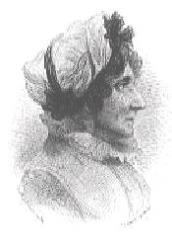
Mrs. Barbauld

1743 - 1825 Person Name: Anna Laetitia Barbauld Topics: Admonition and Invitation Author of "Come, Says Jesus' Sacred Voice" in The Baptist Standard Hymnal Barbauld, Anna Laetitia, née Aikin, daughter of the Rev. John Ailrin, D.D., a dissenting minister, was b. at Kibworth-Harcourt, Leicestershire, June 20, 1743. In 1753 Dr. Aikin became classical tutor at a dissenting academy at Warrington. During her residence there she contributed five hymns to Dr. W. Enfield's Hymns for Public Worship, &c, Warrington, 1772. In the following year these were included in her Poems, Lond., J. Johnson, 1773. In May, 1774, Miss Aikin was married to the Rev. Rochemont Barbauld, a descendant of a French Protestant family, and a dissenting minister. For some years Mr. Barbauld conducted, in addition to his pastoral work, a boarding school at Palgrave, Suffolk. From this he retired in 1785. In 1786 he undertook the charge of a small congregation at Hampstead, and from thence he passed to the dissenting chapel (formerly Dr. Price's) at Newington Green, in 1802. He d. Nov. 11, 1808. Mrs. Barbauld continued to reside in the neighbourhood until her death, March 9, 1825. In the latter part of the same year her niece published The Works of Anna Laetitia Barbauld, with Memoir, by Lucy Aikin, 2 vols., Lond., Longman, 1825. As a writer of hymns Mrs. Barbauld was eminently successful. Their use, however, with the exception of five contributed to Dr. W. Enfield's collection, is almost exclusively confined to the Unitarian hymnals of Great Britain and America. Including these hymnals, the whole of her hymns are still in common use. These hymns appeared thus:— i. In Dr. W. Enfield's Hymns, &c., 1772. 1. Again the Lord of life and light. Easter. 2. Awake, my soul, lift up thine eyes. Conflict. 3. Behold, where breathing love divine. Christian Charity. 4. Jehovah reigns, let every nation hear. God's Dominion. A part of this was given in Collyer's Sel., 1812, No. 586, as:— 5. This earthly globe, the creature of a day. 6. Praise to God, Immortal praise. Harvest. ii. Poems, 1773 (Preface dated Dec. 1, 1772). The whole of the above, and also:— 7. God of my life and author of my days. To God the Father. This is an “Address to the Deity," in 80 1. It is given in Martineau's Collection, 1840 and 1873. From it the following centos were given in Collyer's Selection> 1812:— 8. God, our kind Master, merciful as just. 9. If friendless in the vale of tears I stray. iii. Poems revised 1792. 10. Come, said [says] Jesus' sacred voice. Invitation. 11. How blest the sacred tie that binds. Christian Fellowship. 12. Lo where a crowd of pilgrims toil. Pilgrimage of Life. From this is taken:— 13. Our country is Immanuel's ground [land]. iv. Leisure Hour Improved (Ironbridge), 1809. 14. Sweet is the scene when virtue dies. Death. v. Supplement to the Unitarian Coll. of Kippis, Bees, and others, 1807. 15. When as returns the solemn day. Sunday. 16. Sleep, sleep to day, tormenting cares. Sunday. 17. How may earth and heaven unite. Worship. vi. Works, with Memoir, 1825. In vol. i. most of the above are reprinted, and the following are added :— 18. Joy to the followers of the Lord. Joy. (c. 1820.) 19. Pure spirit, O where art thou now. Bereavement. This is dated 1808. 20. Salt of the earth, ye virtuous few. Salt of the Earth. 21. When life as opening buds is sweet. Death. This is dated " November, 1814." The more important of these hymns are annotated in this Dictionary under their first lines. Mrs. Barbauld's Hymns in Prose for Children, originally published in 1781, were long popular and have been translated into French, Italian, Spanish, and other languages. -- John Julian, Dictionary of Hymnology (1907) =================== Barbauld, Anna L., p. 113, ii. No. 18 on p. 114, i.,should be dated circa 1820. Another hymn in common use from Mrs. Barbauld's Works, &c, 1825, is, "O Father! though the anxious fear" (E. Taylor, p. 1117, in error). --John Julian, Dictionary of Hymnology, Appendix, Part II (1907) See also in: Hymn Writers of the Church

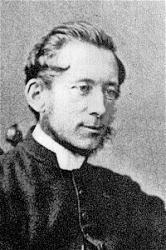
John Bacchus Dykes

1823 - 1876 Person Name: Rev. John B. Dykes Topics: Admonition and Invitation Composer of "ST. BEES" in The Baptist Standard Hymnal As a young child John Bacchus Dykes (b. Kingston-upon-Hull' England, 1823; d. Ticehurst, Sussex, England, 1876) took violin and piano lessons. At the age of ten he became the organist of St. John's in Hull, where his grandfather was vicar. After receiving a classics degree from St. Catherine College, Cambridge, England, he was ordained in the Church of England in 1847. In 1849 he became the precentor and choir director at Durham Cathedral, where he introduced reforms in the choir by insisting on consistent attendance, increasing rehearsals, and initiating music festivals. He served the parish of St. Oswald in Durham from 1862 until the year of his death. To the chagrin of his bishop, Dykes favored the high church practices associated with the Oxford Movement (choir robes, incense, and the like). A number of his three hundred hymn tunes are still respected as durable examples of Victorian hymnody. Most of his tunes were first published in Chope's Congregational Hymn and Tune Book (1857) and in early editions of the famous British hymnal, Hymns Ancient and Modern. Bert Polman

John H. Stockton

1813 - 1877 Person Name: J. H. S. Topics: Admonition and Invitation Author of "Only Trust Him" in The Baptist Standard Hymnal Stockton, John Hart, a Methodist minister, was born in 1813, and died in 1877. He was a member of the New Jersey Annual Conference of the Methodist Episcopal Church, and the successive pastoral charges that he filled as a member of that Conference are found in the Conference Journal. He was not only a preacher, but a musician and composer of tunes, as well as hymn writer. He published two gospel song books: Salvation Melodies, 1874, and Precious Songs, 1875. Hymn Writers of the Church by Charles Nutter, 1911 =============== Stockton, John Hart, b. April 19, 1813, and d. March 25, 1877, was the author of "Come, every soul by sin oppressed" (Invitation), in I.D. Sankey's Sacred Songs and Solos, 1878, and of "The Cross, the Cross, the blood¬stained Cross" (Good Friday) in the same collection. --John Julian, Dictionary of Hymnology, Appendix, Part II (1907) =============== Stockton, John Hart. (New Hope, Pennsylvania, April 19, 1813--March 25, 1877). Born of Presbyterian parents, he was converted at a Methodist camp meeting in 1838, being received into full membership in the New Jersey Conference in 1857. Because of ill health he twice took the "supernumerary relations." He withdrew from actual pastoral work in 1874 and engaged in compiling and publishing gospel hymn books, issuing Salvation Melodies that year and Precious Songs in 1875, writing both words and music for a number of the songs. He died suddenly after attending a Sunday morning service at Arch Street Church, Philadelphia. Our Hymnody, McCutchan, has, perhaps, the fullest account of him readily available. --Robert G. McCutchan, DNAH Archives

William Cowper

1731 - 1800 Topics: Admonition and Invitation Author of "Hark! My Soul, It Is the Lord" in The Baptist Standard Hymnal William Cowper (pronounced "Cooper"; b. Berkampstead, Hertfordshire, England, 1731; d. East Dereham, Norfolk, England, 1800) is regarded as one of the best early Romantic poets. To biographers he is also known as "mad Cowper." His literary talents produced some of the finest English hymn texts, but his chronic depression accounts for the somber tone of many of those texts. Educated to become an attorney, Cowper was called to the bar in 1754 but never practiced law. In 1763 he had the opportunity to become a clerk for the House of Lords, but the dread of the required public examination triggered his tendency to depression, and he attempted suicide. His subsequent hospitalization and friendship with Morley and Mary Unwin provided emotional stability, but the periods of severe depression returned. His depression was deepened by a religious bent, which often stressed the wrath of God, and at times Cowper felt that God had predestined him to damnation. For the last two decades of his life Cowper lived in Olney, where John Newton became his pastor. There he assisted Newton in his pastoral duties, and the two collaborated on the important hymn collection Olney Hymns (1779), to which Cowper contributed sixty-eight hymn texts. Bert Polman ============ Cowper, William, the poet. The leading events in the life of Cowper are: born in his father's rectory, Berkhampstead, Nov. 26, 1731; educated at Westminster; called to the Bar, 1754; madness, 1763; residence at Huntingdon, 1765; removal to Olney, 1768; to Weston, 1786; to East Dereham, 1795; death there, April 25, 1800. The simple life of Cowper, marked chiefly by its innocent recreations and tender friendships, was in reality a tragedy. His mother, whom he commemorated in the exquisite "Lines on her picture," a vivid delineation of his childhood, written in his 60th year, died when he was six years old. At his first school he was profoundly wretched, but happier at Westminster; excelling at cricket and football, and numbering Warren Hastings, Colman, and the future model of his versification. Churchill, among his contemporaries or friends. Destined for the Bar, he was articled to a solicitor, along with Thurlow. During this period he fell in love with his cousin, Theodora Cowper, sister to Lady Hesketh, and wrote love poems to her. The marriage was forbidden by her father, but she never forgot him, and in after years secretly aided his necessities. Fits of melancholy, from which he had suffered in school days, began to increase, as he entered on life, much straitened in means after his father's death. But on the whole, it is the playful, humorous side of him that is most prominent in the nine years after his call to the Bar; spent in the society of Colman, Bonnell Thornton, and Lloyd, and in writing satires for The Connoisseur and St. James's Chronicle and halfpenny ballads. Then came the awful calamity, which destroyed all hopes of distinction, and made him a sedentary invalid, dependent on his friends. He had been nominated to the Clerkship of the Journals of the House of Lords, but the dread of appearing before them to show his fitness for the appointment overthrew his reason. He attempted his life with "laudanum, knife and cord,"—-in the third attempt nearly succeeding. The dark delusion of his life now first showed itself—a belief in his reprobation by God. But for the present, under the wise and Christian treatment of Dr. Cotton (q. v.) at St. Albans, it passed away; and the eight years that followed, of which the two first were spent at Huntingdon (where he formed his lifelong friendship with Mrs. Unwin), and the remainder at Olney in active piety among the poor, and enthusiastic devotions under the guidance of John Newton (q. v.), were full of the realisation of God's favour, and the happiest, most lucid period of his life. But the tension of long religious exercises, the nervous excitement of leading at prayer meetings, and the extreme despondence (far more than the Calvinism) of Newton, could scarcely have been a healthy atmosphere for a shy, sensitive spirit, that needed most of all the joyous sunlight of Christianity. A year after his brother's death, madness returned. Under the conviction that it was the command of God, he attempted suicide; and he then settled down into a belief in stark contradiction to his Calvinistic creed, "that the Lord, after having renewed him in holiness, had doomed him to everlasting perdition" (Southey). In its darkest form his affliction lasted sixteen months, during which he chiefly resided in J. Newton's house, patiently tended by him and by his devoted nurse, Mrs. Unwin. Gradually he became interested in carpentering, gardening, glazing, and the tendance of some tame hares and other playmates. At the close of 1780, Mrs. Unwin suggested to him some serious poetical work; and the occupation proved so congenial, that his first volume was published in 1782. To a gay episode in 1783 (his fascination by the wit of Lady Austen) his greatest poem, The Task, and also John Gilpin were owing. His other principal work was his Homer, published in 1791. The dark cloud had greatly lifted from his life when Lady Hesketh's care accomplished his removal to Weston (1786): but the loss of his dear friend William Unwin lowered it again for some months. The five years' illness of Mrs. Unwin, during which his nurse of old became his tenderly-watched patient, deepened the darkness more and more. And her death (1796) brought “fixed despair," of which his last poem, The Castaway, is the terrible memorial. Perhaps no more beautiful sentence has been written of him, than the testimony of one, who saw him after death, that with the "composure and calmness" of the face there “mingled, as it were, a holy surprise." Cowper's poetry marks the dawn of the return from the conventionality of Pope to natural expression, and the study of quiet nature. His ambition was higher than this, to be the Bard of Christianity. His great poems show no trace of his monomania, and are full of healthy piety. His fame as a poet is less than as a letter-writer: the charm of his letters is unsurpassed. Though the most considerable poet, who has written hymns, he has contributed little to the development of their structure, adopting the traditional modes of his time and Newton's severe canons. The spiritual ideas of the hymns are identical with Newton's: their highest note is peace and thankful contemplation, rather than joy: more than half of them are full of trustful or reassuring faith: ten of them are either submissive (44), self-reproachful (17, 42, 43), full of sad yearning (1, 34), questioning (9), or dark spiritual conflict (38-40). The specialty of Cowper's handling is a greater plaintiveness, tenderness, and refinement. A study of these hymns as they stood originally under the classified heads of the Olney Hymns, 1779, which in some cases probably indicate the aim of Cowper as well as the ultimate arrangement of the book by Newton, shows that one or two hymns were more the history of his conversion, than transcripts of present feelings; and the study of Newton's hymns in the same volume, full of heavy indictment against the sins of his own regenerate life, brings out the peculiar danger of his friendship to the poet: it tends also to modify considerably the conclusions of Southey as to the signs of incipient madness in Cowper's maddest hymns. Cowper's best hymns are given in The Book of Praise by Lord Selborne. Two may be selected from them; the exquisitely tender "Hark! my soul, it is the Lord" (q. v.), and "Oh, for a closer walk with God" (q. v.). Anyone who knows Mrs. Browning's noble lines on Cowper's grave will find even a deeper beauty in the latter, which is a purely English hymn of perfect structure and streamlike cadence, by connecting its sadness and its aspiration not only with the “discord on the music" and the "darkness on the glory," but the rapture of his heavenly waking beneath the "pathetic eyes” of Christ. Authorities. Lives, by Hayley; Grimshaw; Southey; Professor Goldwin Smith; Mr. Benham (attached to Globe Edition); Life of Newton, by Rev. Josiah Bull; and the Olney Hymns. The numbers of the hymns quoted refer to the Olney Hymns. [Rev. H. Leigh Bennett, M.A.] --John Julian, Dictionary of Hymnology (1907) ================ Cowper, W. , p. 265, i. Other hymns are:— 1. Holy Lord God, I love Thy truth. Hatred of Sin. 2. I was a grovelling creature once. Hope and Confidence. 3. No strength of nature can suffice. Obedience through love. 4. The Lord receives His highest praise. Faith. 5. The saints should never be dismayed. Providence. All these hymns appeared in the Olney Hymns, 1779. --John Julian, Dictionary of Hymnology, Appendix, Part II (1907) ===================== Cowper, W., p. 265, i. Prof. John E. B. Mayor, of Cambridge, contributed some letters by Cowper, hitherto unpublished, together with notes thereon, to Notes and Queries, July 2 to Sept. 24, 1904. These letters are dated from Huntingdon, where he spent two years after leaving St. Alban's (see p. 265, i.), and Olney. The first is dated "Huntingdon, June 24, 1765," and the last "From Olney, July 14, 1772." They together with extracts from other letters by J. Newton (dated respectively Aug. 8, 1772, Nov. 4, 1772), two quotations without date, followed by the last in the N. & Q. series, Aug. 1773, are of intense interest to all students of Cowper, and especially to those who have given attention to the religious side of the poet's life, with its faint lights and deep and awful shadows. From the hymnological standpoint the additional information which we gather is not important, except concerning the hymns "0 for a closer walk with God," "God moves in a mysterious way," "Tis my happiness below," and "Hear what God, the Lord, hath spoken." Concerning the last three, their position in the manuscripts, and the date of the last from J. Newton in the above order, "Aug. 1773," is conclusive proof against the common belief that "God moves in a mysterious way" was written as the outpouring of Cowper's soul in gratitude for the frustration of his attempted suicide in October 1773. --John Julian, Dictionary of Hymnology, New Supplement (1907)

W. A. Ogden

1841 - 1897 Topics: Admonition and Invitation Composer of "[All things are ready, come to the feast]" in The Baptist Standard Hymnal William Augustine Ogden USA 1841-1897. Born at Franklin County, OH, his family moved to IN when he was age six. He studied music in local singing schools at age 8, and by age 10 could read church music fairly well. Later, he could write out a melody by hearing it sung or played. He enlisted in the American Civil War in the 30th IN Volunteer Infantry. During the war he organized a male choir which became well known throughout the Army of the Cumberland. After the war, he returned home, resumed music study, and taught school. He married Jennie V Headington, and they had two children: Lowell and Marian. He worked for the Iowa Normal School, Toledo Public School System. Among his teachers: Lowell Mason, Thomas Hastings, E E Baily and B F Baker, president of the Boston Music School. He wrote many hymns, both lyrics and/or music. He later issued his first song book, “The silver song” (1870). It became quite popular, selling 500,000 copies. He went on to publish other song books. Ogden also taught music at many schools in the U S and Canada. In 1887 he became superintendent of music in the public schools of Toledo, OH. His works include: “New silver songs for Sunday school” (1872), “Crown of life” (1875), “Notes of victory” (1885), “The way of life” (1886), “Gathering jewels” (1886). He was known as a very enthusiastic person in his work and a very congenial one as well. He died at Toledo, OH. John Perry

Pages


Export as CSV
It looks like you are using an ad-blocker. Ad revenue helps keep us running. Please consider white-listing Hymnary.org or getting Hymnary Pro to eliminate ads entirely and help support Hymnary.org.