

 My Starred Hymns
 My FlexScores
 My Hymnals
 My Purchased Files
Planning worship?
Check out our sister site, ZeteoSearch.org,
for 20+ additional resources related to your search.
- |
User Links
Person Results
Sarah Flower Adams
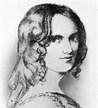
1805 - 1848 Person Name: Sarah F. Adams, 1805-1848 Topics: All Souls November 2nd Author of "Nearer, My God, to Thee" in Lead Me, Guide Me (2nd ed.) Adams, Sarah, nee Flower. born at Harlow, Essex, Feb. 22nd, 1805; died in London, Aug. 14, 1848, and was buried at Harlow, Aug. 21,1848. She was the younger daughter of Mr. Benjamin Flower, editor and proprietor, of The Cambridge Intelligencer; and was married, in 1834, to William B. Adams, a civil engineer. In 1841 she published Vivia Perpetua, a dramatic poem dealing with the conflict of heathenism and Christianity, in which Vivia Perpetua suffered martyrdom; and in 1845, The Flock at the Fountain; a catechism and hymns for children. As a member of the congregation of the Rev. W. J. Fox, an Unitarian minister in London, she contributed 13 hymns to the Hymns and Anthems, published by C. Fox, Lond., in 1841, for use in his chapel. Of these hymns the most widely known are— "Nearer,my God,to Thee," and "He sendeth sun, He sendeth shower." The remaining eleven, most of which have come into common use, more especially in America, are:—
Creator Spirit! Thou the first. Holy Spirit.
Darkness shrouded Calvary. Good Friday.
Gently fall the dews of eve. Evening.
Go, and watch the Autumn leaves. Autumn.
O hallowed memories of the past. Memories.
O human heart! thou hast a song. Praise.
O I would sing a song of praise. Praise.
O Love! thou makest all things even. Love.
Part in Peace! is day before us? Close of Service.
Sing to the Lord! for His mercies are sure. Praise.
The mourners came at break of day. Easter.
Mrs. Adams also contributed to Novello's musical edition of Songs for the Months, n. d. Nearly all of the above hymns are found in the Unitarian collections of Great Britain, and America. In Martineau's Hymns of Praise & Prayer, 1873, No. 389, there is a rendering by her from Fenelon: —" Living or dying, Lord, I would be Thine." It appeared in the Hymns and Anthems, 1841.
-John Julian, Dictionary of Hymnology (1907)
Sarah Flower Adams
Bernard, of Cluny
1100 - 1199 Person Name: Bernard of Cluny, 12th century Topics: Funerals, Commemoration, Remembrance and All Souls Author of "Jerusalem the golden" in Common Praise Bernard of Morlaix, or of Cluny, for he is equally well known by both titles, was an Englishman by extraction, both his parents being natives of this country. He was b., however, in France very early in the 12th cent, at Morlaix, Bretagne. Little or nothing is known of his life, beyond the fact that he entered the Abbey of Cluny, of which at that time Peter the Venerable, who filled the post from 1122 to 1156, was the head. There, so far as we know, he spent his whole after-life, and there he probably died, though the exact date of his death, as well as of his birth is unrecorded. The Abbey of Cluny was at that period at the zenith of its wealth and fame. Its buildings, especially its church (which was unequalled by any in France); the services therein, renowned for the elaborate order of their ritual; and its community, the most numerous of any like institution, gave it a position and an influence, such as no other monastery, perhaps, ever reached. Everything about it was splendid, almost luxurious. It was amid such surroundings that Bernard of Cluny spent his leisure hours in composing that wondrous satire against the vices and follies of his age, which has supplied—and it is the only satire that ever did so—some of the most widely known and admired hymns to the Church of today. His poem De Contemptu Mundi remains as an imperishable monument of an author of whom we know little besides except his name, and that a name overshadowed in his own day and in ours by his more illustrious contemporary and namesake, the saintly Abbot of Clairvaux.
The poem itself consists of about 3000 lines in a meter which is technically known as Leonini Cristati Trilices Dactylici, or more familiarly—to use Dr. Neale's description in his Mediaeval Hymns, p. 69—" it is a dactylic hexameter, divided into three parts, between which a caesura is inadmissible. The hexameter has a tailed rhyme, and feminine leonine rhyme between the two first clauses, thus :—
" Tune nova gloria, pectora sobria, clarificabit: Solvit enigmata, veraque sabbata, continuabit, Patria luminis, inscia turbinis, inscia litis, Cive replebitur, amplificabitur Israelitis."
The difficulty of writing at all, much more of writing a poem of such length in a metre of this description, will be as apparent to all readers of it, as it was to the writer himself, who attributes his successful accomplishment of his task entirely to the direct inspiration of the Spirit of God. "Non ego arroganter," he says in his preface, "sed omnino humiliter, et ob id audenter affirmaverim, quia nisi spiritus sapicntiae et intellectus mihi affuisset et afftuxisset, tarn difficili metro tarn longum opus con-texere non sustinuissem."
As to the character of the metre, on the other hand, opinions have widely differed, for while Dr. Neale, in his Mediaeval Hymns, speaks of its "majestic sweetness," and in his preface to the Rhythm of Bernard de Morlaix on the Celestial Country, says that it seems to him "one of the loveliest of mediaeval measures;" Archbishop Trench in his Sac. Lat. Poetry, 1873. p. 311, says "it must be confessed that" these dactylic hexameters "present as unattractive a garb for poetry to wear as can well be imagined;" and, a few lines further on, notes "the awkwardness and repulsiveness of the metre." The truth perhaps lies between these two very opposite criticisms. Without seeking to claim for the metre all that Dr. Neale is willing to attribute to it, it may be fairly said to be admirably adapted for the purpose to which it has been applied by Bernard, whose awe-stricken self-abasement as he contemplates in the spirit of the publican, “who would not so much as lift up his eyes unto heaven," the joys and the glory of the celestial country, or sorrowfully reviews the vices of his age, or solemnly denounces God's judgments on the reprobate, it eloquently pourtrays. So much is this the case, that the prevailing sentiment of the poem, that, viz., of an awful apprehension of the joys of heaven, the enormity of sin, and the terrors of hell, seems almost wholly lost in such translations as that of Dr. Neale. Beautiful as they are as hymns, "Brief life is here our portion," "Jerusalem the Golden," and their companion extracts from this great work, are far too jubilant to give any idea of the prevailing tone of the original. (See Hora Novissima.)
In the original poem of Bernard it should be noted that the same fault has been remarked by Archbishop Trench, Dean Stanley, and Dr. Neale, which may be given in the Archbishop's words as excusing at the same time both the want, which still exists, of a very close translation of any part, and of a complete and continuous rendering of the whole poem. "The poet," observes Archbishop Trench, "instead of advancing, eddies round and round his object, recurring again and again to that which he seemed thoroughly to have discussed and dismissed." Sac. Lat. Poetry, 1873, p. 311. On other grounds also, more especially the character of the vices which the author lashes, it is alike impossible to expect, and undesirable to obtain, a literal translation of the whole. We may well be content with what we already owe to it as additions to our stores of church-hymns.
-John Julian, Dictionary of Hymnology (1907)
==================
Bernard of Cluny, p. 137, i., is best described thus: his place of origin is quite uncertain. See the Catalogue of the Additional MSS. of the B. M. under No. 35091, where it is said that he was perhaps of Morlas in the Basses-Pyrenees, or of Morval in the Jura, but that there is nothing to connect him with Morlaix in Brittany. [Rev. James Mearns, M.A.]
--John Julian, Dictionary of Hymnology, New Supplement (1907)
Bernard, of Cluny
Augustus Toplady
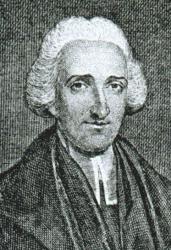
1740 - 1778 Person Name: A. M. Toplady, 1740-1778 Topics: Funerals, Commemoration, Remembrance and All Souls Author of "Rock of ages, cleft for me" in Common Praise Toplady, Augustus Montague, the author of "Rock of Ages," was born at Farnham, Surrey, November 4, 1740. His father was an officer in the British army. His mother was a woman of remarkable piety. He prepared for the university at Westminster School, and subsequently was graduated at Trinity College, Dublin. While on a visit in Ireland in his sixteenth year he was awakened and converted at a service held in a barn in Codymain. The text was Ephesians ii. 13: "But now, in Christ Jesus, ye who sometimes were far off are made nigh by the blood of Christ." The preacher was an illiterate but warm-hearted layman named Morris. Concerning this experience Toplady wrote: "Strange that I, who had so long sat under the means of grace in England, should be brought nigh unto God in an obscure part of Ireland, amidst a handful of God's people met together in a barn, and under the ministry of one who could hardly spell his name. Surely this is the Lord's doing, and it is marvelous." In 1758, through the influence of sermons preached by Dr. Manton on the seventeenth chapter of John, he became an extreme Calvinist in his theology, which brought him later into conflict with Mr. Wesley and the Methodists. He was ordained to the ministry in the Church of England in 1762, and in 1768 he became vicar of Broadhembury, a small living in Devonshire, which he held until his death. The last two or three years of his life he passed in London, where he preached in a chapel on Orange Street. His last sickness was of such a character that he was able to make a repeated and emphatic dying testimony. A short time before his death he asked his physician what he thought. The reply was that his pulse showed that his heart was beating weaker every day. Toplady replied with a smile: "Why, that is a good sign that my death is fast approaching; and, blessed be God, I can add that my heart beats stronger and stronger every day for glory." To another friend he said: "O, my dear sir, I cannot tell you the comforts I feel in my soul; they are past expression. . . . My prayers are all converted into praise." He died of consumption August 11, 1778. His volume of Psalms and Hymns for Public and Private Worship was published in 1776. Of the four hundred and nineteen hymns which it contained, several were his own productions.
If on a quiet sea 446
Rock of ages, cleft for me 279
Hymn Writers of the Church, 1915 by Charles S. Nutter
===============================================
Toplady, Augustus Montague, M.A. The life of Toplady has been repeatedly and fully written, the last, a somewhat discursive and slackly put together book, yet matterful, by W. Winters (1872). Summarily, these data may be here given: he was born at Farnham, in Surrey, on November 4, 1740. His father, Richard Toplady, was a Major in the British array, and was killed at the siege of Carthagena (1741) soon after the birth of his son. His widowed mother placed him at the renowned Westminster school, London. By-and-by circumstances led her to Ireland, and young Augustus was entered at Trinity College, Dublin, where he completed his academical training, ultimately graduating M.A. He also received his "new birth" in Ireland under remarkable conditions, as he himself tells us with oddly mixed humility and lofty self-estimate, as "a favourite of heaven," common to his school:—
"Strange that I who had so long sat under the means of grace in England should be brought right unto God in an obscure part of Ireland, midst a handful of people met together in a barn, and by the ministry of one who could hardly spell his own name. Surely it was the Lord's doing and is marvellous. The excellency of such power must be of God and cannot be of man. The regenerating spirit breathes not only on whom but likewise, when and where and as He listeth."
Toplady received orders in the Church of England on June 6, 1762, and after some time was appointed to Broadhembury. His Psalms and Hymns of 1776 bears that he was then “B.A." and Vicar of Broadhembury. Shortly thereafter be is found in London as minister of the Chapel of the French Calvinists in Leicester Fields. He was a strong and partizan Calvinist, and not well-informed theologically outside of Calvinism. We willingly and with sense of relief leave unstirred the small thick dust of oblivion that has gathered on his controversial writings, especially his scurrilous language to John Wesley because of his Arminianism, as we do John Wesley's deplorable misunderstanding and misrepresentation of Calvinism.
Throughout Toplady lacked the breadth of the divine Master's watchword "Forbid him not, for he that is not against us is for us" (St. Luke ix. 50). He was impulsive, rash-spoken, reckless in misjudgment; but a flame of genuine devoutness burned in the fragile lamp of his overtasked and wasted body. He died on August 11, 1778. The last edition of his works is in 6 vols., 8 vo., 1825. An accurate reproduction of most of his genuine hymns was one of the reprints of Daniel Sedgwick, 1860. His name occurs and recurs in contemporary memoirs and ecclesiastical histories, e.g., in Tyerman's Life of John Wesley. The reader will find in their places annotations on the several hymns of Toplady, and specially on his "Rock of Ages,” a song of grace that has given him a deeper and more inward place in millions of human hearts from generation to generation than almost any other hymnologist of our country, not excepting Charles Wesley. Besides the "Rock of Ages" must be named, for power, intensity, and higher afflatus and nicer workmanship, "Object of my first desire,” and "Deathless principle arise." It is to be regretted that the latter has not been more widely accepted. It is strong, firm, stirring, and masterful. Regarded critically, it must be stated that the affectionateness with which Toplady is named, and the glow and passion of his faith and life, and yearning after holiness, have led to an over-exaltation of him as a hymnwriter. Many of his hymns have been widely used, and especially in America, and in the Evangelical hymnbooks of the Church of England. Year by year, however, the number in use is becoming less. The reason is soon found. He is no poet or inspired singer. He climbs no heights. He sounds no depths. He has mere vanishing gleams of imaginative light. His greatness is the greatness of goodness. He is a fervent preacher, not a bard. [Rev. A. B. Grosart, D.D., LL.D.]
Toplady's hymns and poetical pieces were published in his:—
(1) Poems on Sacred Subjects wherein The Fundamental Doctrines of Christianity, with many other interesting Points, are occasionally introduced. . . Dublin: Printed by S. Powell, in Crane-lane, MDCCLIX.; (2) his Psalms & Hymns for Public and Private Worship, 1776; (3) in The Gospel Magazine, 1771-1776; and (4) in Hymns and Sacred Poems on a variety of Divine Subjects, &c. D. Sedgwick's reprint, 1860. His Works, with a Memoir by W. Row, were published in 6 volumes, in 1794. Walter How was also the editor of the 2nd and some later editions of the Psalms & Hymns. He was a most careless editor, and attributed several hymns by C. Wesley and others to Toplady.
The following additional hymns in common use together with centos indicated in the sub-lines, are from:—
i. His Poems on Sacred Subjects, 1759.
1. Can my heaven-born soul submit? All for Christ.
2. Come from on high, my King and God. Holiness desired.
(1.) 0 might this worthless heart of mine.
3. Earnest of future bliss. The Witness of the Spirit.
4. From Thy supreme tribunal, Lord. Christ's Righteousness a Refuge.
(1.) The spotless Saviour lived for me.
5. Great God, Whom heaven, and earth, and sea. For Peace.
6. I saw, and lo! a countless throng. Saints' Days. Revised form in the Gospel Magazine, 1774, p. 449.
7. Immovable our hope remains. Divine Faithfulness.
8. Jesus, God of love, attend. Divine Worship. Pt. ii. is "Prayer can mercy's door unlock."
9. Jesus, Thy power I fain would feel. Lent.
10. Lord, I feel a carnal mind. Mind of Christ desired.
11. My yielding heart dissolves as wax. On behalf of Arians, &c.
(1.) 0 Jesus, manifest Thy grace.
12. Not to myself I owe. Praise for Conversion,
(1.) Not to ourselves we owe.
(2.) The Father's grace and love.
13. 0 that my heart was right with Thee. Dedication to God desired.
14. 0 Thou that hearest the prayer of faith. Christ the Propitiation.
15. 0 Thou Who didst Thy glory leave. Thanksgiving for Redemption.
16. 0 when wilt Thou my Saviour be. Trust in Jesus.
(1.) Jesus, the sinner's Rest Thou art.
17. Redeemer, whither should I flee? Safety in the Cross.
18. Remember, Lord, that Jesus bled. Pardon.
19. Surely Christ thy griefs hath borne. Redemption. Revised text in Gospel Magazine, 1774, p. 548.
(1.) Weary sinner, keep thine eyes.
(2.) Weeping soul, no longer mourn.
ii. From the Gospel Magazine.
20. Compared with Christ, in all besides. Christ All in All. Feb. 1772.
21. Eternal Hallelujahs Be to the Father given. Holy Trinity, Dec. 1774.
22. From whence this fear and unbelief. Reviving Faith, Feb. 1772.
23. How vast the benefits divine. Redemption. Dec. 1774. From this "Not for the works which we have done" is taken.
24. Whom have I in heaven but Thee? Christ All and in All, Feb. 1772. From this "If my Lord Himself reveal" is taken.
25. Jesus, immutably the same. Jesus, the True Vine. June, 1771.
All these hymns, together with "O precious blood, 0 glorious death" (Death of Christ), are in D. Sedgwick's reprint of Toplady's Hymns, &c, 1860. We have met with several other hymns to which Toplady's name is appended, but for this we can find no authority whatever.
-- Excerpts from John Julian, Dictionary of Hymnology (1907)
Augustus Toplady
Sanford Fillmore Bennett
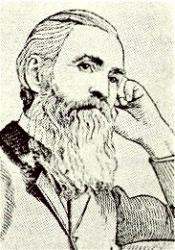
1836 - 1898 Person Name: Sanford F. Bennett, 1836-1889 Topics: All Souls November 2nd Author of "The Sweet By and By" in Lead Me, Guide Me (2nd ed.) Sanford Fillmore Bennett was born in Eden, New York, 21 June 1836. He and his parents moved to Plainfield, Illinois when he was two years old. He worked on the farm and attended district school during the winter. He was a voracious reader. At sixteen he entered Waukegon Academy. Two years later he began teaching at Wauconda. In 1858 he entered the University of Michigan, Afterward he had charge of the schools in Richmond, Illinois. Two years later he resigned and became Associate Editor of the Independent at Elkhorn, Wisconsin. In 1864 he enlisted in the Wisconsin Volunteers and served as Second Lieutenant. After the war he returned to Elkhorn and opened a drug store and began the study of medicine. He graduated from Rush Medical College in 1874.
Dianne Shapiro, from "The Singers and Their Songs: sketches of living gospel hymn writers" by Charles Hutchinson Gabriel (Chicago: The Rodeheaver Company, 1916)
Sanford Fillmore Bennett
Richard Baxter
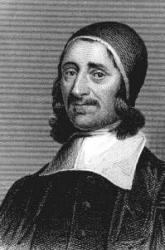
1615 - 1691 Person Name: Richard Baxter, 1615-91 Topics: All Saints and All Souls Author of "You holy angels bright" in Together in Song Baxter, Richard. Only s. of Richard Baxter, yeoman, Eaton Constantine, Shropshire, b. at Rowton, Shropshire, Nov. 12,1615. He was educated at Wroxeter School, and for a time held the Mastership of the Dudley Grammar School. On taking Holy Orders, he became, in 1640, Ourate of Kidderminster. Subsequently he was for some time chaplain to one of Cromwell's regiments. Through weakness he had to take an enforced rest, during which he wrote his Saints’ Everlasting Rest. On regaining his health he returned to Kidderminster, where he remained until 1660, when he removed to London. At the Restoration he became chaplain to Charles II and was offered the bishopric of Hereford, which he refused. On the passing of the Act of Uniformity, he retired from active duty as a Minister of the Church of England. In or about 1673 he took out a licence as a Nonconformist Minister and commenced lecturing in London. He d. Dec. 8, 1691. His prose works are very numerous. His poetical are :—
(1) Poetical Fragments: Heart Imployment with God and Itself; The Concordant Discord of a Broken-healed Heart, tendon, Printed by T. Snowdon for B. Simmons, at the 3 Golden Cocks, &c, 1681 (2nd ed. 1689; 3rd ed. 1699). It consists of accounts of his religious experiences in verse, and is dated "London, at the Door of Eternity; Rich. Baxter, Aug. 1, 1681." (2) Additions to the Poetical Fragments of Rich. Baxter, written for himself, and Communicated to such as are more for serious Verse than smooth, London, Printed for B. Simmons at the Three Golden Cocks at the Westend of St. Pauls, 1683. (3) A Paraphrase on the Psalms, With other Hymns Left fitted for the Press, pub. the year following his death (1692). [Early English Hymnody, x., and English Psalters, 6 xii.] The Poetical Fragments were republished by Pickering, Lond., 1821. From this work his well-known hymn, " Now [Lord] it belongs not to my care," is taken (see "My whole, though broken, heart, O Lord.")
-John Julian, Dictionary of Hymnology (1907)
See also in:
Hymn Writers of the Church
Richard Baxter
Civilla D. Martin
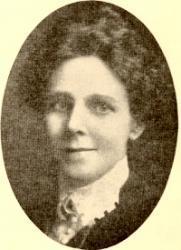
1866 - 1948 Person Name: Civilla D. Martin, 1860-1948 Topics: All Souls November 2nd Author of "His Eye Is on the Sparrow" in Lead Me, Guide Me (2nd ed.) Martin, Civilla Durfee (Jordan Falls, Nova Scotia, August 21, 1866--March 9, 1948, Atlanta, Georgia). Daughter of James N. and Irene (Harding) Holden. She married Rev. John F. Geddes, Congregational minister of Coventryvilee, N.Y. at Jordan Falls Methodist Church, Shelbourne Co., Nova Scotia, on May 19, 1891. There is thus far no information about their marriage and its end. After several years of teaching school, she married Walter Stillman Martin, a Baptist minister, and traveled with him in evangelistic work. However, because of frail health, she was compelled to remain home much of the time. In 1916, they became members of the Christian Church (Disciples of Christ). They had one son, A.G. Martin. In her writing, she used only her initials, "C.D." rather than her full name of that of her composer-husband. She is reputed to have written several hundred hymns and religious songs. Her first one, "God Will Take Care of You," written in 1904 became world-famous. Her husband wrote the music for this and many of her other hymns. "His Eye is on the Sparrow" written in 1906 and set to music by Charles H. Gabriel, has also received wide acclaim. In addition to the above, "Like As A Father," "A Welcome for Me," and "The Blood Will Never Lose Its Power" are among her better-known hymns.
Her husband and collaborator, W.S. Martin (1862-1935) preceded her in death. For the last 29 years of her life, she made her home in Atlanta, Georgia, where she was a member of the First Christian Church. Her funeral was held on March 10, 1948 at Spring Hill and the interment was in the West View Cemetery in Atlanta.
--Carlton C. Buck, DNAH Archives and email from Rev. Lester M. Settle (Glenholme, Nova Scotia) to Mary Louise VanDyke 18 September 2008, DNAH Archives.
Civilla D. Martin
Stuart K. Hine
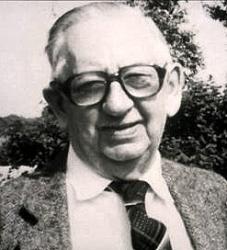
1899 - 1989 Person Name: Stuart K. Hine, 1899-1989 Topics: All Souls November 2nd Author of "How Great Thou Art" in Lead Me, Guide Me (2nd ed.) Stuart K. Hine was born in 1899 in Great Britain. In much of Stuart’s earlier years he and his wife were missionaries in the Western Ukraine of Russia, where they evangelized as Christian workers and singers. In 1931, Stuart K. Hine and his wife returned to Britain and conducted gospel campaigns throughout Great Britain. During those years, Stuart published many song books and wrote many of his beloved gospel songs. Stuart retired from the active ministry but continued to publish his song books and his music and contributed the majority of his income to various missionary endeavors around the world…Stuart K. Hine’s most popular composition is “How Great Thou Art,” which is recognized in many polls as the number one Hymn in America. Among his other compositions are “Can There Be One,” “O Savior Mine?”, “Faith Is The Bridge,” and “What Can Cleanse My heart?” Mr. Hine died in 1989.
--www.gmahalloffame.org/site/stuart-k-hine/
Stuart K. Hine
Louis Bourgeois
1510 - 1561 Person Name: Louis Bourgeois, ca.1510-1561 Topics: The Liturgical Year The Commemoration of All the Faithful Departed (All Souls' Day) (November 2) Composer (attributed to) of "OLD HUNDREDTH" in Glory and Praise (3rd. ed.) Louis Bourgeois (b. Paris, France, c. 1510; d. Paris, 1561). In both his early and later years Bourgeois wrote French songs to entertain the rich, but in the history of church music he is known especially for his contribution to the Genevan Psalter. Apparently moving to Geneva in 1541, the same year John Calvin returned to Geneva from Strasbourg, Bourgeois served as cantor and master of the choristers at both St. Pierre and St. Gervais, which is to say he was music director there under the pastoral leadership of Calvin. Bourgeois used the choristers to teach the new psalm tunes to the congregation.
The extent of Bourgeois's involvement in the Genevan Psalter is a matter of scholarly debate. Calvin had published several partial psalters, including one in Strasbourg in 1539 and another in Geneva in 1542, with melodies by unknown composers. In 1551 another French psalter appeared in Geneva, Eighty-three Psalms of David, with texts by Marot and de Beze, and with most of the melodies by Bourgeois, who supplied thirty four original tunes and thirty-six revisions of older tunes. This edition was republished repeatedly, and later Bourgeois's tunes were incorporated into the complete Genevan Psalter (1562). However, his revision of some older tunes was not uniformly appreciated by those who were familiar with the original versions; he was actually imprisoned overnight for some of his musical arrangements but freed after Calvin's intervention. In addition to his contribution to the 1551 Psalter, Bourgeois produced a four-part harmonization of fifty psalms, published in Lyons (1547, enlarged 1554), and wrote a textbook on singing and sight-reading, La Droit Chemin de Musique (1550). He left Geneva in 1552 and lived in Lyons and Paris for the remainder of his life.
Bert Polman
Louis Bourgeois
William B. Bradbury

1816 - 1868 Person Name: William B. Bradbury, 1816-1868 Topics: All Souls November 2nd Composer of "SOLID ROCK" in Lead Me, Guide Me (2nd ed.) William Batchelder Bradbury USA 1816-1868. Born at York, ME, he was raised on his father's farm, with rainy days spent in a shoe-shop, the custom in those days. He loved music and spent spare hours practicing any music he could find. In 1830 the family moved to Boston, where he first saw and heard an organ and piano, and other instruments. He became an organist at 15. He attended Dr. Lowell Mason's singing classes, and later sang in the Bowdoin Street church choir. Dr. Mason became a good friend. He made $100/yr playing the organ, and was still in Dr. Mason's choir. Dr. Mason gave him a chance to teach singing in Machias, ME, which he accepted. He returned to Boston the following year to marry Adra Esther Fessenden in 1838, then relocated to Saint John, New Brunswick. Where his efforts were not much appreciated, so he returned to Boston. He was offered charge of music and organ at the First Baptist Church of Brooklyn. That led to similar work at the Baptist Tabernacle, New York City, where he also started a singing class. That started singing schools in various parts of the city, and eventually resulted in music festivals, held at the Broadway Tabernacle, a prominent city event. He conducted a 1000 children choir there, which resulted in music being taught as regular study in public schools of the city. He began writing music and publishing it. In 1847 he went with his wife to Europe to study with some of the music masters in London and also Germany. He attended Mendelssohn funeral while there. He went to Switzerland before returning to the states, and upon returning, commenced teaching, conducting conventions, composing, and editing music books. In 1851, with his brother, Edward, he began manufacturring Bradbury pianos, which became popular. Also, he had a small office in one of his warehouses in New York and often went there to spend time in private devotions. As a professor, he edited 59 books of sacred and secular music, much of which he wrote. He attended the Presbyterian church in Bloomfield, NJ, for many years later in life. He contracted tuberculosis the last two years of his life.
John Perry
William B. Bradbury
John Newton
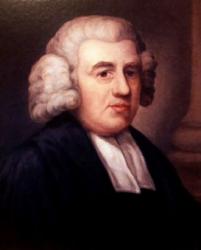
1725 - 1807 Person Name: John Newton, 1725-1807 Topics: All Souls November 2nd Author (st. 1-3) of "Amazing Grace!" in Lead Me, Guide Me (2nd ed.) John Newton (b. London, England, 1725; d. London, 1807) was born into a Christian home, but his godly mother died when he was seven, and he joined his father at sea when he was eleven. His licentious and tumultuous sailing life included a flogging for attempted desertion from the Royal Navy and captivity by a slave trader in West Africa. After his escape he himself became the captain of a slave ship. Several factors contributed to Newton's conversion: a near-drowning in 1748, the piety of his friend Mary Catlett, (whom he married in 1750), and his reading of Thomas à Kempis' Imitation of Christ. In 1754 he gave up the slave trade and, in association with William Wilberforce, eventually became an ardent abolitionist. After becoming a tide-surveyor in Liverpool, England, Newton came under the influence of George Whitefield and John and Charles Wesley and began to study for the ministry. He was ordained in the Church of England and served in Olney (1764-1780) and St. Mary Woolnoth, London (1780-1807). His legacy to the Christian church includes his hymns as well as his collaboration with William Cowper (PHH 434) in publishing Olney Hymns (1779), to which Newton contributed 280 hymns, including “Amazing Grace.”
Bert Polman
==================
Newton, John, who was born in London, July 24, 1725, and died there Dec. 21, 1807, occupied an unique position among the founders of the Evangelical School, due as much to the romance of his young life and the striking history of his conversion, as to his force of character. His mother, a pious Dissenter, stored his childish mind with Scripture, but died when he was seven years old. At the age of eleven, after two years' schooling, during which he learned the rudiments of Latin, he went to sea with his father. His life at sea teems with wonderful escapes, vivid dreams, and sailor recklessness. He grew into an abandoned and godless sailor. The religious fits of his boyhood changed into settled infidelity, through the study of Shaftesbury and the instruction of one of his comrades. Disappointing repeatedly the plans of his father, he was flogged as a deserter from the navy, and for fifteen months lived, half-starved and ill-treated, in abject degradation under a slave-dealer in Africa. The one restraining influence of his life was his faithful love for his future wife, Mary Catlett, formed when he was seventeen, and she only in her fourteenth year. A chance reading of Thomas à Kempis sowed the seed of his conversion; which quickened under the awful contemplations of a night spent in steering a water-logged vessel in the face of apparent death (1748). He was then twenty-three. The six following years, during which he commanded a slave ship, matured his Christian belief. Nine years more, spent chiefly at Liverpool, in intercourse with Whitefield, Wesley, and Nonconformists, in the study of Hebrew and Greek, in exercises of devotion and occasional preaching among the Dissenters, elapsed before his ordination to the curacy of Olney, Bucks (1764).
The Olney period was the most fruitful of his life. His zeal in pastoral visiting, preaching and prayer-meetings was unwearied. He formed his lifelong friendship with Cowper, and became the spiritual father of Scott the commentator. At Olney his best works—-Omicron's Letters (1774); Olney Hymns (1779); Cardiphonia, written from Olney, though published 1781—were composed. As rector of St. Mary Woolnoth, London, in the centre of the Evangelical movement (1780-1807) his zeal was as ardent as before. In 1805, when no longer able to read his text, his reply when pressed to discontinue preaching, was, "What, shall the old African blasphemer stop while he can speak!" The story of his sins and his conversion, published by himself, and the subject of lifelong allusion, was the base of his influence; but it would have been little but for the vigour of his mind (shown even in Africa by his reading Euclid drawing its figures on the sand), his warm heart, candour, tolerance, and piety. These qualities gained him the friendship of Hannah More, Cecil, Wilberforce, and others; and his renown as a guide in experimental religion made him the centre of a host of inquirers, with whom he maintained patient, loving, and generally judicious correspondence, of which a monument remains in the often beautiful letters of Cardiphonia. As a hymnwriter, Montgomery says that he was distanced by Cowper. But Lord Selborne's contrast of the "manliness" of Newton and the "tenderness" of Cowper is far juster. A comparison of the hymns of both in The Book of Praise will show no great inequality between them. Amid much that is bald, tame, and matter-of-fact, his rich acquaintance with Scripture, knowledge of the heart, directness and force, and a certain sailor imagination, tell strongly. The one splendid hymn of praise, "Glorious things of thee are spoken," in the Olney collection, is his. "One there is above all others" has a depth of realizing love, sustained excellence of expression, and ease of development. "How sweet the name of Jesus sounds" is in Scriptural richness superior, and in structure, cadence, and almost tenderness, equal to Cowper's "Oh! for a closer walk with God." The most characteristic hymns are those which depict in the language of intense humiliation his mourning for the abiding sins of his regenerate life, and the sense of the withdrawal of God's face, coincident with the never-failing conviction of acceptance in The Beloved. The feeling may be seen in the speeches, writings, and diaries of his whole life. [Rev. H. Leigh Bennett, M.A.]
A large number of Newton's hymns have some personal history connected with them, or were associated with circumstances of importance. These are annotated under their respective first lines. Of the rest, the known history of which is confined to the fact that they appeared in the Olney Hymns, 1779, the following are in common use:—
1. Be still, my heart, these anxious cares. Conflict.
2. Begone, unbelief, my Saviour is near. Trust.
3. By the poor widow's oil and meal. Providence.
4. Chief Shepherd of Thy chosen sheep. On behalf of Ministers.
5. Darkness overspreads us here. Hope.
6. Does the Gospel-word proclaim. Rest in Christ.
7. Fix my heart and eyes on Thine. True Happiness.
8. From Egypt lately freed. The Pilgrim's Song.
9. He Who on earth as man was Known. Christ the Rock.
10. How blest are they to whom the Lord. Gospel Privileges.
11. How blest the righteous are. Death of the Righteous.
12. How lost was my [our] condition. Christ the Physician.
13. How tedious and tasteless the hours. Fellowship with Christ.
14. How welcome to the saints [soul] when pressed. Sunday.
15. Hungry, and faint, and poor. Before Sermon.
16. In mercy, not in wrath, rebuke. Pleading for Mercy.
17. In themselves, as weak as worms. Power of Prayer.
18. Incarnate God, the soul that knows. The Believer's Safety.
19. Jesus, Who bought us with His blood. The God of Israel. "Teach us, 0 Lord, aright to plead," is from this hymn.
20. Joy is a [the] fruit that will not grow. Joy.
21. Let hearts and tongues unite. Close of the Year. From this "Now, through another year," is taken.
22. Let us adore the grace that seeks. New Year.
23. Mary to her [the] Saviour's tomb. Easter.
24. Mercy, 0 Thou Son of David. Blind Bartimeus.
25. My harp untun'd and laid aside. Hoping for a Revival. From this "While I to grief my soul gave way" is taken.
26. Nay, I cannot let thee go. Prayer. Sometimes, "Lord, I cannot let Thee go."
27. Now may He Who from the dead. After Sermon.
28. 0 happy they who know the Lord, With whom He deigns to dwell. Gospel Privilege.
29. O Lord, how vile am I. Lent.
30. On man in His own Image made. Adam.
31. 0 speak that gracious word again. Peace through Pardon.
32. Our Lord, Who knows full well. The Importunate Widow. Sometimes altered to "Jesus, Who knows full well," and again, "The Lord, Who truly knows."
33. Physician of my sin-sick soul. Lent.
34. Pleasing spring again is here. Spring.
35. Poor, weak, and worthless, though I am. Jesus the Friend.
36. Prepare a thankful song. Praise to Jesus.
37. Refreshed by the bread and wine. Holy Communion. Sometimes given as "Refreshed by sacred bread and wine."
38. Rejoice, believer, in the Lord. Sometimes “Let us rejoice in Christ the Lord." Perseverance.
39. Salvation, what a glorious plan. Salvation.
40. Saviour, shine and cheer my soul. Trust in Jesus. The cento "Once I thought my mountain strong," is from this hymn.
41. Saviour, visit Thy plantation. Prayer for the Church.
42. See another year [week] is gone. Uncertainty of Life.
43. See the corn again in ear. Harvest.
44. Sinner, art thou still secure? Preparation for the Future.
45. Sinners, hear the [thy] Saviour's call. Invitation.
46. Sovereign grace has power alone. The two Malefactors.
47. Stop, poor sinner, stop and think. Caution and Alarm.
48. Sweeter sounds than music knows. Christmas.
49. Sweet was the time when first I felt. Joy in Believing.
50. Ten thousand talents once I owed. Forgiveness and Peace.
51. The grass and flowers, which clothe the field. Hay-time.
52. The peace which God alone reveals. Close of Service.
53. Thy promise, Lord, and Thy command. Before Sermon.
54. Time, by moments, steals away. The New Year.
55. To Thee our wants are known. Close of Divine Service.
56. We seek a rest beyond the skies. Heaven anticipated.
57. When any turn from Zion's way. Jesus only.
58. When Israel, by divine command. God, the Guide and Sustainer of Life.
59. With Israel's God who can compare? After Sermon.
60. Yes, since God Himself has said it. Confidence.
61. Zion, the city of our God. Journeying Zionward.
-- John Julian, Dictionary of Hymnology (1907)
=================
Newton, J., p. 803, i. Another hymn in common use from the Olney Hymns, 1779, is "Let me dwell on Golgotha" (Holy Communion).
--John Julian, Dictionary of Hymnology, Appendix, Part II (1907)
-----
John Newton was born in London, July 24, 1725. His mother died when he was seven years old. In his eleventh year he accompanied his father, a sea captain, on a voyage. For several years his life was one of dissipation and crime. He was disgraced while in the navy. Afterwards he engaged in the slave trade. Returning to England in 1748, the vessel was nearly wrecked in a storm. This peril forced solemn reflection upon him, and from that time he was a changed man. It was six years, however, before he relinquished the slave trade, which was not then regarded as an unlawful occupation. But in 1754, he gave up sea-faring life, and holding some favourable civil position, began also religious work. In 1764, in his thirty-ninth year, he entered upon a regular ministry as the Curate of Olney. In this position he had intimate intercourse with Cowper, and with him produced the "Olney Hymns." In 1779, Newton became Rector of S. Mary Woolnoth, in London, in which position he became more widely known. It was here he died, Dec. 21, 1807, His published works are quite numerous, consisting of sermons, letters, devotional aids, and hymns. He calls his hymns "The fruit and expression of his own experience."
--Annotations of the Hymnal, Charles Hutchins, M.A. 1872
See also in:
Hymn Writers of the Church
=======================
John Newton
Pages




