You help make Hymnary.org possible. More than 10 million people from 200+ countries found hymns, liturgical resources and encouragement on Hymnary.org in 2025, including you. Every visit affirms the global impact of this ministry.

If Hymnary has been meaningful to you this year, would you take a moment today to help sustain it? A gift of any size—paired with a note of encouragement if you wish—directly supports the server costs, research work and curation that keep this resource freely available to the world.

Give securely online today, or mail a check to:
Hymnary.org
Calvin University
3201 Burton Street SE
Grand Rapids, MI 49546

Thank you for your partnership, and may the hope of Advent fill your heart.

Search Results

Topics:ancient+office+hymn

Planning worship? Check out our sister site, ZeteoSearch.org, for 20+ additional resources related to your search.

Texts

text icon
Text authorities

Blessed city, heavenly Salem

Appears in 79 hymnals Topics: Ancient Office Hymn Feast of Dedication

Now, my tongue, the mystery telling

Appears in 57 hymnals Topics: Ancient Office Hymn Holy Communion

To the Name of our salvation

Appears in 123 hymnals Topics: Ancient Office Hymn Name of Jesus

Tunes

tune icon
Tune authorities
Audio

[How vain the cruel Herod's fear]

Appears in 3 hymnals Topics: Ancient Office Hymn Epiphany Tune Sources: Mode III Tune Key: d minor Incipit: 55671 65432 24345 Used With Text: How vain the cruel Herod's fear
Audio

[Before the ending of the day]

Appears in 15 hymnals Topics: Ancient Office Hymn Compline (Late Evening) Tune Sources: Mode VIII Tune Key: b minor Incipit: 61111 21766 66776 Used With Text: Before the ending of the day
Audio

[How blest the Virgin who endued]

Appears in 3 hymnals Topics: Ancient Office Hymn Holy Women Tune Sources: Mode III Tune Key: c minor Incipit: 33325 56117 67166 Used With Text: How blest the virgin who endued

Instances

instance icon
Published text-tune combinations (hymns) from specific hymnals

Christ's loving children, for his hope abiding

Author: Robert Bridges Hymnal: The Book of Common Praise #813 (1939) Topics: Ancient Office Hymn Morning Languages: English Tune Title: [Christ's loving children, for his hope abiding]
Audio

O Splendour of God's glory bright

Author: Robert Bridges; St. Ambrose, 340-397 Hymnal: The Book of Common Praise #814 (1939) Topics: Ancient Office Hymn Morning Languages: English Tune Title: [O Splendour of God's glory bright]
Audio

Now that the day-light fills the sky

Author: Rev. John M. Neale Hymnal: The Book of Common Praise #815 (1939) Topics: Ancient Office Hymn First Hour Languages: English Tune Title: [Now that the day-light fills the sky]

People

person icon
Authors, composers, editors, etc.

Venantius Honorius Clementianus Fortunatus

540 - 600 Person Name: Fortunatus Topics: Ancient Office Hymn Passiontide Author of "The royal banners forward go" in The Book of Common Praise Venantius Honorius Clematianus Fortunatus (b. Cenada, near Treviso, Italy, c. 530; d. Poitiers, France, 609) was educated at Ravenna and Milan and was converted to the Christian faith at an early age. Legend has it that while a student at Ravenna he contracted a disease of the eye and became nearly blind. But he was miraculously healed after anointing his eyes with oil from a lamp burning before the altar of St. Martin of Tours. In gratitude Fortunatus made a pilgrimage to that saint's shrine in Tours and spent the rest of his life in Gaul (France), at first traveling and composing love songs. He developed a platonic affection for Queen Rhadegonda, joined her Abbey of St. Croix in Poitiers, and became its bishop in 599. His Hymns far all the Festivals of the Christian Year is lost, but some of his best hymns on his favorite topic, the cross of Jesus, are still respected today, in part because of their erotic mysticism. Bert Polman ================== Fortunatus, Venantius Honorius Clementianus, was born at Ceneda, near Treviso, about 530. At an early age he was converted to Christianity at Aquileia. Whilst a student at Ravenna he became almost blind, and recovered his sight, as he believed miraculously, by anointing his eyes with some oil taken from a lamp that burned before the altar of St. Martin of Tours, in a church in that town. His recovery induced him to make a pilgrimage to the shrine of St. Martin, at Tours, in 565, and that pilgrimage resulted in his spending the rest of his life in Gaul. At Poitiers he formed a romantic, though purely platonic, attachment for Queen Rhadegunda, the daughter of Bertharius, king of the Thuringians, and the wife, though separated from him, of Lothair I., or Clotaire, king of Neustria. The reader is referred for further particulars of this part of the life of Fortunatus to Smith and Wace's Dictionary of Christian Biography, vol. ii. p. 552. It is sufficient to say here that under the influence of Rhadegunda, who at that time lived at Poitiers, where she had founded the convent of St. Croix, Fortunatus was ordained, and ultimately, after the death of Rhadegunda in 597, became bishop of Poitiers shortly before his own death in 609. The writings, chiefly poetical, of Fortunatus, which are still extant, are very numerous and various in kind; including the liveliest Vers de Societé and the grandest hymns; while much that he is known to have written, including a volume of Hymns for all the Festivals of the Christian Year, is lost. Of what remains may be mentioned, The Life of St. Martin of Tours, his Patron Saint, in four books, containing 2245 hexameter lines. A complete list of his works will be found in the article mentioned above. His contributions to hymnology must have been very considerable, as the name of his lost volume implies, but what remains to us of that character, as being certainly his work, does not comprise at most more than nine or ten compositions, and of some of these even his authorship is more than doubtful. His best known hymn is the famous "Vexilla Regis prodeunt," so familiar to us in our Church Hymnals in some English form or other, especially, perhaps, in Dr. Neale's translation, "The Royal Banners forward go." The next most important composition claimed for him is "Pange, lingua, gloriosi praelium certaminis," but there would seem to be little doubt according to Sirmond (Notis ad Epist. Sidon. Apollin. Lib. iii., Ep. 4), that it was more probably written by Claudianus Mamertus. Besides these, which are on the Passion, there are four hymns by Fortunatus for Christmas, one of which is given by Daniel, "Agnoscat omne saeculum," one for Lent, and one for Easter. Of "Lustra sex qui jam peregit," of which an imitation in English by Bishop. Mant, "See the destined day arise," is well-known, the authorship is by some attributed to Fortunatus, and by some to St. Ambrose. The general character of the poetry of Venantius Fortunatus is by no means high, being distinguished neither for its classical, nor, with very rare exceptions, for its moral correctness. He represents the "last expiring effort of the Latin muse in Gaul," to retain something of the "old classical culture amid the advancing tide of barbarism." Whether we look at his style, or even his grammar and quantities, we find but too much that is open to criticism, whilst he often offends against good taste in the sentiments he enunciates. Occasionally, as we see in the "Vexilla Regis," he rises to a rugged grandeur in which he has few rivals, and some of his poems are by no means devoid of simplicity and pathos. But these are the exceptions and not the rule in his writings, and we know not how far he may have owed even these to the womanly instincts and gentler, purer influence of Rhadegunda. Thierry, in his Récits des Temps Mérovingiens, Récit 5, gives a lively sketch of Fortunatus, as in Archbishop Trench's words (Sacred Latin Poetry, 1874,p. 132), "A clever, frivolous, self-indulgent and vain character," an exaggerated character, probably, because one can hardly identify the author of "Vexilla Regis," in such a mere man of the world, or look at the writer of "Crux benedicta nitet, Dominus qua carne pependit" q.v., as being wholly devoid of the highest aspirations after things divine. A quarto edition of his Works was published in Rome in 1786. [Rev. Digby S. Wrangham, M.A.] - John Julian, Dictionary of Hymnology (1907) ==================== Fortunatus, V. H. C., p. 384, i. The best edition of his poems is F. Leo's edition of his Opera Poetica, Berlin, 1881 (Monumenta Germaniae, vol. iv.). --John Julian, Dictionary of Hymnology, Appendix, Part II (1907)

John Henry Newman

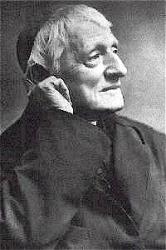
1801 - 1890 Person Name: Rev. J. H. Newman Topics: Ancient Office Hymn Third Hour Translator of "Come, Holy Ghost, who ever one" in The Book of Common Praise Newman, John Henry , D.D. The hymnological side of Cardinal Newman's life and work is so small when compared with the causes which have ruled, and the events which have accompanied his life as a whole, that the barest outline of biographical facts and summary of poetical works comprise all that properly belongs to this work. Cardinal Newman was the eldest son of John Newman, and was born in London, Feb. 21, 1801. He was educated at Ealing under Dr. John Nicholas, and at Trinity College, Oxford, where he graduated in honours in 1820, and became a Fellow of Oriel in 1822. Taking Holy Orders in 1824, he was for a short time Vice-Principal of St. Alban's Hall, and then Tutor of Oriel. His appointment to St. Mary's, Oxford, was in the spring of 1828. In 1827 he was Public Examiner, and in 1830 one of the Select University Preachers. His association with Keble, Pusey, and others, in what is known as "The Oxford Movement," together with the periodical publication of the Tracts for the Times, are matters of history. It is well known how that Tract 90, entitled Bernards on Certain Passages in the Thirty-nine Articles, in 1841, was followed by his retirement to Littlemore; his formal recantation, in February, 1843, of all that he had said against Rome; his resignation in September of the same year of St. Mary's and Littlemore; and of his formal application to be received into the communion of the Church of Rome, Oct. 8, 1845. In 1848 he became Father Superior of the Oratory of St. Philip Neri, at Birmingham; in 1854 Rector of the newly founded Roman Catholic University at Dublin; and in 1858 he removed to the Edgbaston Oratory, Birmingham. In 1879 he was created a Cardinal, and thus received the highest dignity it is in the power of the Pope to bestow. Cardinal Newman's prose works are numerous, and his Parochial Sermons especially being very popular. His Apologia pro Vita Sua, 1864, is a lucid exposition and masterly defence of his life and work. Cardinal Newman's poetical work began with poems and lyrical pieces which he contributed to the British Magazine, in 1832-4 (with other pieces by Keble and others), under the title of Lyra Apostolica. In 1836 these poems were collected and published under the same title, and Greek letters were added to distinguish the authorship of each piece, his being δ. Only a few of his poems from this work have come into use as hymns. The most notable is, "Lead, kindly Light". His Tract for the Times, No. 75, On the Roman Breviary, 1836, contained translations of 14 Latin hymns. Of these 10 were repeated in his Verses on Religious Subjects, 1853, and his Verses on Various Occasions, 1865, and translations of 24 additional Latin hymns were added. Several of these translations are in common use, the most widely known being "Nunc Sancte nobis" ("Come, Holy Ghost, Who ever One"). His collection of Latin hymns from the Roman and Paris Breviaries, and other sources was published as Hymni Ecclesiae, in 1838, and again in 1865. His Dream of Gerontius, a poem from which his fine hymn, "Praise to the Holiest in the height," is taken, appeared in his Verses on Various Occasions, in 1868. Cardinal Newman's influence on hymnology has not been of a marked character. Two brilliant original pieces, and little more than half a dozen translations from the Latin, are all that can claim to rank with his inimitable prose. --John Julian, Dictionary of Hymnology (1907) ================= Newman, John Henry, p. 822, ii. He died at Edgbaston, Birmingham, Aug. 11, 1890. --John Julian, Dictionary of Hymnology, Appendix, Part II (1907) ============== Newman, Card. J. H., pp. 802, ii.; 1581, ii. The following are also in use at the present time, but, except No. 13, almost exclusively in R. C. collections. The dates in brackets are those given in Newman's Verses, 1868; all thus marked were composed in the Birmingham Oratory at these dates:— i. In the Rambler, 1850. 1. In the far North our lot is cast. [S. Philip Neri.] (1850.) March, 1850, p. 250. In the Birmingham Oratory Hymn Book, 1857 and 1906, it begins, " On Northern coasts," and in the Parochial Hymn Book, 1880, with st. ii. " Founder and Sire! to mighty Rome." 2. The Angel-lights of Christmas morn. [Candlemas.] (1849.) March, 1850, p. 251. 3. There sat a Lady all on the ground. [B. V. M.] (1849.) May, 1850, p. 425. ii. Verses, 1853. 4. All is Divine which the Highest has made. [For an inclement May.] (1850.) 1853, p. 128. 5. Green are the leaves, and sweet the flowers. [May.] (1850.) 1853, p. 125. 6. My oldest friend, mine from the hour. [Guardian Angel] (1853.) 1853, p. 12. 7. The holy monks conceal'd from men. [S. Philip Neri.] (1850.) 1853, p. 134. 8. The one true Faith, the ancient Creed. [The Catholic Faith.] 1853, p. 140. 9. This is the saint of sweetness and compassion. [S. Philip Neri.] 1853, p. 136. Rewritten (1857) as "This is the saint of gentleness and kindness" in the Birmingham Oratory Hymn Book, 1857, No. 49. iii. Birmingham Oratory Hymn Book, 1857. 10. Help, Lord, the souls which Thou hast made. [The Faithful Departed.] (1857.) 1857, No. 76. iv. Birmingham Oratory H. Book, 1862. 11. I ask not for fortune, for silken attire. [S. Philip Neri.] (1857.) 1862, No. 54. 12. Thou champion high. [S. Michael.] (1862.) 1862, No. 41. v. Dream of Gerontius, 1866. 13. Firmly I believe and truly. [The Faith of a Christian.] 1866, p. 9; Verses, 1868, p. 318; The English Hymnal 1906. [Rev. James Mearns, M.A.] --John Julian, Dictionary of Hymnology, New Supplement (1907) ----- John Henry Newman was born in London, in 1801. He studied at Trinity College, Oxford, graduating B.A. in 1820, and was subsequently Fellow of Oriel College. In 1825, he became Vice Principal of S. Alban's Hall, and was Tutor of his college for several years. In 1828, he became incumbent of S. Mary's, Oxford, with the chaplaincy of Littlemore. In 1842, he went to preside over a Brotherhood he had established at Littlemore. He was the author of twenty-four of the "Tracts for the Times," amongst them the celebrated Tract No. 90, which brought censure upon its author. In 1845, he left the Church of England and entered the Church of Rome. He was appointed Father Superior of the Oratory of S. Philip Neri, at Birmingham, and in 1854, Rector of the new Roman Catholic University at Dublin, an office he filled till 1858. He has published a large number of works. --Annotations of the Hymnal, Charles Hutchins, M.A. 1872. ====================

John Ellerton

1826 - 1893 Person Name: Rev. John Ellerton Topics: Ancient Office Hymn Translator of "From east to west, from shore to shore" in The Book of Common Praise John Ellerton (b. London, England, 1826; d. Torquay, Devonshire, England, 1893) Educated at King William's College on the Isle of Man and at Trinity College, Cambridge, England, he was ordained in the Church of England in 1851. He served six parishes, spending the longest time in Crewe Green (1860-1872), a church of steelworkers and farmers. Ellerton wrote and translated about eighty hymns, many of which are still sung today. He helped to compile Church Hymns and wrote its handbook, Notes and Illustrations to Church Hymns (1882). Some of his other hymn texts were published in The London Mission Hymn Book (1884). Bert Polman ========================= Ellerton, John, M.A., son of George Ellerton, was born in London, Dec. 16, 1826, and educated at Trinity College, Cambridge (B.A. 1849; M.A. 1854). Taking Holy Orders he was successively Curate of Easebourne, Sussex, 1850; Brighton, and Lecturer of St. Peter's, Brighton, 1852; Vicar of Crewe Green, and Chaplain to Lord Crewe, 1860; Rector of Hinstock, 1872; of Barnes, 1876; and of White Roding, 1886. Mr. Ellerton's prose writings include The Holiest Manhood, 1882; Our Infirmities, 1883, &c. It is, however, as a hymnologist, editor, hymnwriter, and translator, that he is most widely known. As editor he published: Hymns for Schools and Bible Classes, Brighton, 1859. He was also co-editor with Bishop How and others of the Society for Promoting Christian Knowledge Church Hymns, 1871. His Notes and Illustrations of Church Hymns, their authors and translators, were published in the folio edition of 1881. The notes on the hymns which are special to the collection, and many of which were contributed thereto, are full, accurate, and of special value. Those on the older hymns are too general for accuracy. They are written in a popular form, which necessarily precludes extended research, fulness, and exactness of detail. The result is acceptable to the general public, but disappointing to the hymnological expert. Mr. Ellerton's original hymns number about fifty, and his translations from the Latin ten or more. Nearly every one of these are in common use and include:— 1. Before the day draws near its ending. Afternoon. Written April 22, 1880, for a Festival of Choirs at Nantwich, and first published in the Nantwich Festival Book, 1880. In 1883 it passed into the Westminster Abbey Hymn Book. 2. Behold us, Lord, a little space. General for Weekdays. Written in 1870 for a mid-day service in a City Church, and published in Church Hymns in 1871. It has passed into several collections. 3. Come forth, 0 Christian brothers. Processional for Choral Festival. Written for a Festival of Parochial Choirs held at Chester, May, 1870, and 1st printed in the Service-book of the same. In 1871 it passed into Church Hymns. 4. Father, Name of love and fear. Confirmation. Written in 1871 for a Confirmation in the North of England, and published in Church Hymns, 1871, and other collections. 5. God, Creator and Preserver. In Time of Scarcity. Written for and first published in The Hymnary, 1870; and again in the revised edition, 1872, and other hymnbooks. 6. Hail to the Lord Who comes. Presentation of Christ in the Temple. Written Oct. 6, 1880, for Mrs. Brock's Children's Hymn Book, and published therein, 1881. 7. In the Name which earth and heaven. Foundation of a Church. Written for and first published in Church Hymns, 1871, and repeated in several collections. The hymn sung at the re-opening of the Nave of Chester Cathedral, January 25, 1872, was compiled by Mr. Ellerton from this hymn, and his "Lift the strain of high thanksgiving.” 8 King Messiah, long expected. The Circumcision. Written Jan. 14, 1871, and first published in Church Hymns, 1871. It has passed into other collections. 9. King of Saints, to Whom the number. St. Bartholomew. Written for and first published in Church Hymns., 1871. It is very popular, and has been repeated in many hymnals. 10. Mary at the Master's feet. Catechizing. Written for and first published in Church Hymns, 1871. 11. O Father, all-creating. Holy Matrimony. Written Jan. 29, 1876, at the request of the Duke of Westminster, for the marriage of his daughter to the Marquess of Ormonde. It was published in Thring's Collection, 1880 and 1882. 12 O! how fair the morning broke. Septuagesima. Written March 13, 1880, for Mrs. Brock's Children's Hymn Book, and included therein, 1881. 13. O Lord of life and death, welcome. In Time of Pestilence. Written for and first published in Church Hymns, 1871. 14. O shining city of our God. Concerning the Hereafter. First published in the Rev. R. Brown-Borthwick's Sixteen Hymns with Tunes, &c, 1870; and again in Church Hymns, 1871. 15. O Son of God, our Captain of Salvation. St. Barnabas. Written April 5, 1871, and first published in Church Hymns, 1871; and again in Hymns Ancient & Modern, 1875, Thring's Collection, 1882, and others. 16. O Thou in Whom Thy saints repose. Consecration of a Burial Ground. Written for the consecration of an addition to the Parish Churchyard of Tarporley, Cheshire, 1870, and published in Church Hymns, 1871. 17. O Thou Whose bounty fills the earth. Flower Services. Written for a Flower Service at St. Luke's Church, Chelsea, June 6, 1880, and published in Mrs. Brock's Children's Hymn Book, 1881. 18. Praise to our God, Whose bounteous hand. National Thanksgiving. Written in 1870 for Church Hymns, but first published in the Rev. R. Brown-Borthwick's Select Hymns, &c., 1871, and then in Church Hymns later the same year. 19. The day Thou gavest, Lord, is ended. The darkness, &c. Evening. Written in 1870 for A Liturgy for Missionary Meetings (Frome, Hodges), and revised for Church Hymns, 1871. The revised form has passed into other collections. 20. The Lord be with us when we bend. Close of Afternoon Service. Written [in 1870] at the request of a friend for use at the close of Service on Sunday afternoons when (as in summer) strictly Evening hymns would be unsuitable. It was published in Church Hymns, 1871, Thring's Collection, 1882, and others. 21. This day the Lord's disciples met. Whitsuntide. "Originally written in 1855 for a class of children, as a hymn of 8 verses of 5 lines each, beginning, 'The Fiftieth day was come at last.’ It was abridged, revised, and compressed into C.M. for Mrs. Brock's Children's Hymn Book, 1880," and published therein, 1881. 22. Thou in Whose Name the two or three. Wednesday. Appeared in the Parish Magazine, May, 1871, as a hymn for Wednesday. After revision it was included in Church Hymns, 1871, and repeated in other collections. 23. Thou Who sentest Thine Apostles. SS. Simon and Jude. Written in June, 1874, for the revised edition of Hymns Ancient & Modern, and published in the same in 1875. 24. We sing the glorious conquest. Conversion of St. Paul. Written Feb. 28, 1871, for and published later the same year in Church Hymns. It was repeated in Hymns Ancient & Modern, 1875. 25. When the day of toil is done. Eternal Best. Written in Jan., 1870, and first published in the Rev. R. Brown-Borthwick's Sixteen Hymns with Tunes, &c. 1870, Church Hymns, 1871, and subsequently in several Scottish hymn-books. The tune "Preston," in Church Hymns was written for this hymn. To these hymns must be added those which are annotated under their respective first lines, and the translations from the Latin. The grandest of his original compositions is, "Throned upon the awful tree," and the most beautiful and tender, "Saviour, again to Thy dear Name we raise"; and of his translations, "Sing Alleluia forth in duteous praise," and "Welcome, happy morning, age to age shall say," are the most successful and popular. The subjects of Mr. Ellerton's hymns, and the circumstances under which they were written, had much to do with the concentration of thought and terseness of expression by which they are characterized. The words which he uses are usually short and simple; the thought is clear and well stated; the rhythm is good and stately. Ordinary facts in sacred history and in daily life are lifted above the commonplace rhymes with which they are usually associated, thereby rendering the hymns bearable to the cultured, and instructive to the devout. His antitheses are frequent and terse, almost too much so for devotional verse, and are in danger of interrupting the tranquil flow of devotion. His sympathy with nature, especially in her sadder moods, is great; he loves the fading light and the peace of eve, and lingers in the shadows. Unlike many writers who set forth their illustrations in detail, and then tie to them the moral which they are to teach, he weaves his moral into his metaphor, and pleases the imagination and refreshes the spirit together. Now and again he falls into the weakness of ringing changes on words; but taken as a whole his verse is elevated in tone, devotional in spirit, and elegant in diction. -- John Julian, Dictionary of Hymnology (1907) ===================== Ellerton, John, p. 326, i. Other hymns are:— 1. O Father, bless the children. Holy Baptism. Written in 1886, and published in his Hymns, &c, 1888, in 4 stanzas of 8 lines. Also in the 1889 Suppl. Hymns to Hymns Ancient & Modern. 2. O Thou Who givest food to all. Temperance. Written Aug. 30, 1882, and printed in the Church of England Temperance Chronicle, Sept. 1882. Also in his Hymns, &c, 1888. 3. Praise our God for all the wonders. St. Nicholas's Day. Dated in his Hymns, 1888, "December 1882." It was written for the Dedication Festival of St. Nicholas's Church, Brighton, and first printed as a leaflet in 1882. 4. Praise our God, Whose open hand. Bad Harvest. Written as a hymn for the bad harvest of 1881, and printed in the Guardian in August of that year. Also in his Hymns, &c, 1888. 5. Praise to the Heavenly Wisdom. St. Matthias's Day. Dated in his Hymns, &c, 1888, "January, 1888." Also in the 1889 Suppl. Hymns to Hymns Ancient & Modern. 6. Shine Thou upon us, Lord. For a Teachers' Meeting. Contributed to the 1889 Suppl. Hymns to Hymns Ancient & Modern. 7. Thou Who wearied by the well. Temperance. Written for the Opening of a Workmen's Coffee Tavern, and dated in his Hymns, &c, 1888, "September 23, 1882." It was printed in the Church of England Temperance Chronicle the same year. 8. Throned upon the awful Tree. Good Friday. Written in 1875, and published in the 1875 ed. of Hymns Ancient & Modern. It has passed into many collections, and is one of the finest of Mr. Ellerton's productions. Mr. Ellerton's original and translated hymns to the number of 76 were collected, and published by Skeffington & Son in 1888, as Hymns, Original and Translated. By John Ellerton, Rector of White Roding. --John Julian, Dictionary of Hymnology, Appendix, Part II (1907) =================== Ellerton, J., pp. 326, ii.; 1561, ii. He was appointed Hon. Canon of St. Albans in 1892. and died June 15, 1893. His Life and Works, by H. Housman, was published in 1896. --John Julian, Dictionary of Hymnology, New Supplement (1907)
It looks like you are using an ad-blocker. Ad revenue helps keep us running. Please consider white-listing Hymnary.org or getting Hymnary Pro to eliminate ads entirely and help support Hymnary.org.