You help make Hymnary.org possible. More than 10 million people from 200+ countries found hymns, liturgical resources and encouragement on Hymnary.org in 2025, including you. Every visit affirms the global impact of this ministry.

If Hymnary has been meaningful to you this year, would you take a moment today to help sustain it? A gift of any size—paired with a note of encouragement if you wish—directly supports the server costs, research work and curation that keep this resource freely available to the world.

Give securely online today, or mail a check to:
Hymnary.org
Calvin University
3201 Burton Street SE
Grand Rapids, MI 49546

Thank you for your partnership, and may the hope of Advent fill your heart.

Person Results

Topics:being+and+attributes+of+god
In:person

Planning worship? Check out our sister site, ZeteoSearch.org, for 20+ additional resources related to your search.
Showing 1 - 10 of 43Results Per Page: 102050

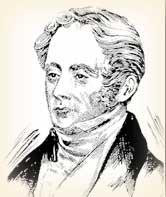
Robert Grant

1779 - 1838 Person Name: Grant Topics: Being and Attributes of God Author of "O worship the King, All glorious above" in The Hymn Book of the African Methodist Episcopal Church Robert Grant (b. Bengal, India, 1779; d. Dalpoorie, India, 1838) was influenced in writing this text by William Kethe’s paraphrase of Psalm 104 in the Anglo-Genevan Psalter (1561). Grant’s text was first published in Edward Bickersteth’s Christian Psalmody (1833) with several unauthorized alterations. In 1835 his original six-stanza text was published in Henry Elliott’s Psalm and Hymns (The original stanza 3 was omitted in Lift Up Your Hearts). Of Scottish ancestry, Grant was born in India, where his father was a director of the East India Company. He attended Magdalen College, Cambridge, and was called to the bar in 1807. He had a distinguished public career a Governor of Bombay and as a member of the British Parliament, where he sponsored a bill to remove civil restrictions on Jews. Grant was knighted in 1834. His hymn texts were published in the Christian Observer (1806-1815), in Elliot’s Psalms and Hymns (1835), and posthumously by his brother as Sacred Poems (1839). Bert Polman ======================== Grant, Sir Robert, second son of Mr. Charles Grant, sometime Member of Parliament for Inverness, and a Director of the East India Company, was born in 1785, and educated at Cambridge, where he graduated in 1806. Called to the English Bar in 1807, he became Member of Parliament for Inverness in 1826; a Privy Councillor in 1831; and Governor of Bombay, 1834. He died at Dapoorie, in Western India, July 9, 1838. As a hymnwriter of great merit he is well and favourably known. His hymns, "O worship the King"; "Saviour, when in dust to Thee"; and "When gathering clouds around I view," are widely used in all English-speaking countries. Some of those which are less known are marked by the same graceful versification and deep and tender feeling. The best of his hymns were contributed to the Christian Observer, 1806-1815, under the signature of "E—y, D. R."; and to Elliott's Psalms & Hymns, Brighton, 1835. In the Psalms & Hymns those which were taken from the Christian Observer were rewritten by the author. The year following his death his brother, Lord Glenelg, gathered 12 of his hymns and poems together, and published them as:— Sacred Poems. By the late Eight Hon. Sir Robert Grant. London, Saunders & Otley, Conduit Street, 1839. It was reprinted in 1844 and in 1868. This volume is accompanied by a short "Notice," dated "London, Juno 18, 1839." ===================== Grant, Sir R., p. 450, i. Other hymns are:— 1. From Olivet's sequester'd scats. Palm Sunday. 2. How deep the joy, Almighty Lord. Ps. lxxxiv. 3. Wherefore do the nations wage. Ps. ii. These are all from his posthumous sacred Poems, 1839. --John Julian, Dictionary of Hymnology, Appendix, Part II (1907)

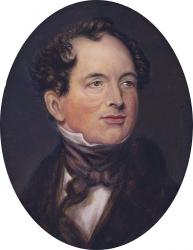
Thomas Moore

1779 - 1852 Person Name: Moore Topics: Being and Attributes of God Author of "All Things are of God" in The Hymn Book of the African Methodist Episcopal Church Thomas Moore United Kingdom 1779-1852. Born at Dublin, Ireland, the son of a grocer, he showed an early interest in music and acting. He was educated at a private school and Trinity College, Dublin. He read at the Middle Temple for the Bar. Moore did not profess religious piety. His translations of ‘Anacreon’ (celebrating wine, women, and song) were published in 1800, with a dedication to the Prince of Wales. He also wrote a comic opera, “the gypsy prince”, staged that year. In 1801 he published a collection of his own verse, “Poetical works of the late Thomas Little Esq”. A Catholic patriot, he defended the Church of Ireland, especially in later politics. In 1803 he held a post under the Government in Bermuda as registrar of the Admiralty Prize Court. He was bored of it within six months and appointed a deputy to take his place while he left for a tour of North America. He secured high society introductions and even met with President, Thomas Jefferson. Returning to England in 1804, he published “Epistles, Odes, & other poems” in 1806. Moore criticized American slavery and was accused of licentious writings, veiled as refinement. Francis Jeffrey denounced Moore’s writings in the ‘Edinburgh Review’, and Moore challenged him to a duel, but it never happened, and they became friends. Between 1808-1810 he was found acting in various plays, favoring comic roles. He met the sister of one of the actresses and, in 1811, they married. Elizabeth ‘Bessy’ Dyke, was an actress. She had no dowry, and Moore kept their marriage secret from his parents for some time, as his wife was Protestant. Bessie shrank from fashionable society, but those who met her held her in high regard. They had five children, but none survived to adulthood. Three girls died young, and both sons lost their lives as young men. One son, Tom, died in some disgrace in the French Foreign Legion in Algeria. Despite these losses, their marriage was said to be a happy one. He also had political trouble. The man he appointed as his replacement in Bermuda was found to have embezzled 6000 pounds sterling, a large sum, for which Moore was liable. He left for France in 1819 to escape debtor’s prison. He also met Lord Byron in Venice and was entrusted with a manuscript of his memoirs, which he promised to have published after Byron’s death. Moore’s wife and children joined him in Paris, where he learned that some of the debt was repaid with help from Lord Lansdowne, whom Moore had given a draft of money from payment by his publisher. The family returned to England a year later. To support his family Moore entered the field of ‘squib writing’ on behalf of his Whig friends. This resulted in years of political debate about Catholics and Protestants in government. Nearly persuaded to forego his Catholic allegiance in favor of Protestantism, he finally concluded that Protestants did not make a sound case for their faith, as they denounced Catholics so vociferously for erroneous teaching. From 1835 -1846 Moore published a four volume “History of Ireland”, which was basically an indictment of English rule over Ireland. He was primarily a writer, poet, entertainer, and composer, considered politically as a writer for the aristocratic Whigs. His “Sacred songs” (32) were published in 1816, and again, in his “collected works” in 1866. His “Memoirs, Journal, and Correspondence” were published by Lord John Russell in 1855. Moore is essentially remembered for his highly-praised lyrics written for Irish melodies, as requested by his publishers, and his memoirs of Lord Byron, his friend. He died at Bromham, Wilshire, England. John Perry ================== Moore, Thomas, son of John Moore, a small tradesman at Dublin, was born in that city, May 28, 1779, educated at a private school and Trinity College, Dublin; read at the Middle Temple for the Bar; held a post under the Government in Bermuda for a short time, and died Feb. 26, 1852. His Memoirs, Journal, and Correspondence were published by Lord John Russell in 1855. In that work every detail concerning himself and his numerous publications, most of them of high poetical merit, will be found. His connection with hymnody is confined to his Sacred Songs, which were published in 1816, and again in his Collected Works, 1866. These Songs were 32 in all, and were written to popular airs of various nations. Of these Songs the following have passed into a few hymnbooks, mainly in America:— 1. As down in the sunless retreats of the ocean. Private Prayer. 2. But who shall see the glorious day. The Final Bliss of Man. 3. Come, ye disconsolate, where'er you languish. Belief in Prayer. In American hymnbooks the text is sometimes as in T. Hastings and Lowell Mason's Spiritual Songs, 1831. This may be distinguished from the original by the third stanza, which reads, "Here see the Bread of life; see waters flowing," &c. 4. Fallen is thy throne, O Israel. Israel in Exile. 5. Like morning when her early breeze. Power of Divine Grace. 6. O Thou Who driest the mourner's tear. Lent. 7. Since first Thy word [grace] awaked my heart. God All and in All. 8. Sound the loud timbrel o'er Egypt's dark sea. Deliverance of Israel. 9. The bird [dove] let loose in eastern skies. Prayer for Constancy. 10. The turf shall be my fragrant shrine. The Temple of Nature. From this "There's nothing bright above, below" is taken. 11. Thou art, O God, the Life and Light. God, the Light and Life of Men. 12. Were not the sinful Mary's tears? Lent. Of these hymns No. 11 has attained the greatest popularity. --John Julian, Dictionary of Hymnology (1907)

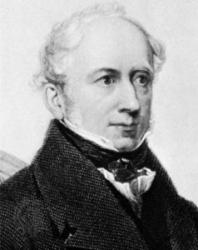
James Montgomery

1771 - 1854 Person Name: Montgomery Topics: Being and Attributes of God Author of ""Fearful in praises"" in The Hymn Book of the African Methodist Episcopal Church James Montgomery (b. Irvine, Ayrshire, Scotland, 1771; d. Sheffield, Yorkshire, England, 1854), the son of Moravian parents who died on a West Indies mission field while he was in boarding school, Montgomery inherited a strong religious bent, a passion for missions, and an independent mind. He was editor of the Sheffield Iris (1796-1827), a newspaper that sometimes espoused radical causes. Montgomery was imprisoned briefly when he printed a song that celebrated the fall of the Bastille and again when he described a riot in Sheffield that reflected unfavorably on a military commander. He also protested against slavery, the lot of boy chimney sweeps, and lotteries. Associated with Christians of various persuasions, Montgomery supported missions and the British Bible Society. He published eleven volumes of poetry, mainly his own, and at least four hundred hymns. Some critics judge his hymn texts to be equal in quality to those of Isaac Watts and Charles Wesley . Many were published in Thomas Cotterill's Selection of Psalms and Hymns (1819 edition) and in Montgomery's own Songs of Zion (1822), Christian Psalmist (1825), and Original Hymns (1853). Bert Polman ======================== Montgomery, James, son of John Montgomery, a Moravian minister, was born at Irvine, Ayrshire, Nov. 4, 1771. In 1776 he removed with his parents to the Moravian Settlement at Gracehill, near Ballymena, county of Antrim. Two years after he was sent to the Fulneck Seminary, Yorkshire. He left Fulneck in 1787, and entered a retail shop at Mirfield, near Wakefield. Soon tiring of that he entered upon a similar situation at Wath, near Rotherham, only to find it quite as unsuitable to his taste as the former. A journey to London, with the hope of finding a publisher for his youthful poems ended in failure; and in 1792 he was glad to leave Wath for Shefield to join Mr. Gales, an auctioneer, bookseller, and printer of the Sheffield Register newspaper, as his assistant. In 1794 Mr. Gales left England to avoid a political prosecution. Montgomery took the Sheffield Register in hand, changed its name to The Sheffield Iris, and continued to edit it for thirty-one years. During the next two years he was imprisoned twice, first for reprinting therein a song in commemoration of "The Fall of the Bastille," and the second for giving an account of a riot in Sheffield. The editing of his paper, the composition and publication of his poems and hynms, the delivery of lectures on poetry in Sheffield and at the Royal Institution, London, and the earnest advocacy of Foreign Missions and the Bible Society in many parts of the country, gave great variety but very little of stirring incident to his life. In 1833 he received a Royal pension of £200 a year. He died in his sleep, at the Mount, Sheffield, April 30, 1854, and was honoured with a public funeral. A statue was erected to his memory in the Sheffield General Cemetery, and a stained glass window in the Parish Church. A Wesleyan chapel and a public hall are also named in his honour. Montgomery's principal poetical works, including those which he edited, were:— (1) Prison Amusements, 1797; (2) The Wanderer of Switzerland, 1806; (3) The West Indies, 1807; (4) The World before the Flood, 1813; (5) Greenland and Other Poems, 1819; (6) Songs of Zion, 1822; (7) The Christian Psalmist, 1825; (8) The Christian Poet, 1825; (9) The Pelican Island, 1828; (10) The Poet’s Portfolio, 1835; (11) Original Hymns for Public, Private, and Social Devotion, 1853. He also published minor pieces at various times, and four editions of his Poetical Works, the first in 1828, the second in 1836, the third in 1841, and the fourth in 1854. Most of these works contained original hymns. He also contributed largely to Collyer's Collection, 1812, and other hymnbooks published during the next 40 years, amongst which the most noticeable was Cotterill's Selections of 1819, in which more than 50 of his compositions appeared. In his Christian Psalmist, 1825, there are 100 of his hymns, and in his Original Hymns, 1853, 355 and 5 doxologies. His Songs of Zion, 1822, number 56. Deducting those which are repeated in the Original Hymns, there remain about 400 original compositions. Of Montgomery's 400 hymns (including his versions of the Psalms) more than 100 are still in common use. With the aid of Montgomery's MSS. we have given a detailed account of a large number. The rest are as follows:— i. Appeared in Collyer's Collection, 1812. 1. Jesus, our best beloved Friend. Personal Dedication to Christ. 2. When on Sinai's top I see. Sinai, Tabor, and Calvary. ii. Appeared in Cotterill's Selection, 1819. 3. Come to Calvary's holy mountain. The Open Fountain. 4. God in the high and holy place. God in Nature. The cento in Com. Praise, 1879, and others, "If God hath made this world so fair," is from this hymn. 5. Hear me, O Lord, in my distress. Ps. cxliii. 6. Heaven is a place of rest from sin. Preparation for Heaven. 7. I cried unto the Lord most just. Ps. cxlii. 8. Lord, let my prayer like incense rise. Ps. cxxxix. 9. O bless the Lord, my soul! His grace to thee proclaim. Ps. ciii. 10. Out of the depths of woe. Ps. cxxx. Sometimes "When from the depths of woe." 11. The world in condemnation lay. Redemption. 12. Where are the dead? In heaven or hell? The Living and the Dead. iii. Appeared in his Songs of Zion, 1822. 13. Give glory to God in the highest. Ps. xxix. 14. Glad was my heart to hear. Ps. cxxii. 15. God be merciful to me. Ps. lxix. 16. God is my strong salvation. Ps. xxvii. 17. Hasten, Lord, to my release. Ps. lxx. 18. Have mercy on me, O my God. Ps. li. 19. Hearken, Lord, to my complaints. Ps. xlii. 20. Heralds of creation cry. Ps. cxlviii. 21. How beautiful the sight. Ps. cxxxiii. 22. How precious are Thy thoughts of peace. Ps. cxxxix. 23. I love the Lord, He lent an ear. Ps. cxvi. 24. In time of tribulation. Ps. lxxvii. 25. Jehovah is great, and great be His praise. Ps. xlviii. Sometimes, "0 great is Jehovah, and great is His Name." 26. Judge me, O Lord, in righteousness. Ps. xliii. 27. Lift up your heads, ye gates, and wide. Ps.xxiv. 28. Lord, let me know mine [my] end. Ps. xxxi. 29. Of old, 0 God, Thine own right hand. Ps. lxxx. 30. O God, Thou art [my] the God alone. Ps. lxiii. 31. 0 Lord, our King, how excellent. Ps. viii. Sometimes, "0 Lord, how excellent is Thy name." 32. O my soul, with all thy powers. Ps. ciii. 33. One thing with all my soul's desire. Ps. xxvii. From this, "Grant me within Thy courts a place." 34. Searcher of hearts, to Thee are known. Ps. cxxxix. 35. Thank and praise Jehovah's name. Ps. cvii. 36. Thee will I praise, O Lord in light. Ps. cxxxviii. 37. The Lord is King; upon His throne. Ps. xciii. 38. The Lord is my Shepherd, no want shall I know. Ps. xxiii. 39. The tempter to my soul hath said. Ps. iii. 40. Thrice happy he who shuns the way. Ps. i. 41. Thy glory, Lord, the heavens declare. Ps. xix. 42. Thy law is perfect, Lord of light. Ps. xix. 43. Who make the Lord of hosts their tower. Ps. cxxv. 44. Yea, I will extol Thee. Ps. xxx. iv. Appeared in his Christian Psalmist. 1825. 45. Fall down, ye nations, and adore. Universal adoration of God desired. 46. Food, raiment, dwelling, health, and friends. The Family Altar. 47. Go where a foot hath never trod. Moses in the desert. Previously in the Leeds Congregational Collection, 1822. 48. Green pastures and clear streams. The Good Shepherd and His Flock. 49. Less than the least of all. Mercies acknowledged. 50. Not to the mount that burned with fire [flame]. Communion of Saints. 51. On the first Christian Sabbath eve. Easter Sunday Evening. 52. One prayer I have: all prayers in one. Resignation. 53. Our heavenly Father hear. The Lord's Prayer. 54. Return, my soul, unto thy rest. Rest in God. 55. Spirit of power and might, behold. The Spirit's renewing desired. 56. The Christian warrior, see him stand. The Christian Soldier. Sometimes, "Behold the Christian warrior stand." 57. The days and years of time are fled. Day of Judgment. 58. The glorious universe around. Unity. 59. The pure and peaceful mind. A Children's Prayer. 60. This is the day the Lord hath made (q. v.). Sunday. 61. Thy word, Almighty Lord. Close of Service. 62. What secret hand at morning light ? Morning. 63. While through this changing world we roam. Heaven. 64. Within these walls be peace. For Sunday Schools. v. Appeared in his Original Hymns, 1853. 65. Behold yon bright array. Opening a Place of Worship. 66. Behold the book whose leaves display. Holy Scriptures. 67. Come ye that fear the Lord. Confirmation. 68. Home, kindred, friends, and country, these. Farewell to a Missionary. 69. Let me go, the day is breaking. Jacob wrestling. 70. Not in Jerusalem alone. Consecration of a Church. 71. Praise the high and holy One. God the Creator. In common with most poets and hymnwriters, Montgomery strongly objected to any correction or rearrangement of his compositions. At the same time he did not hesitate to alter, rearrange, and amend the productions of others. The altered texts which appeared in Cotterill's Selections, 1819, and which in numerous instances are still retained in some of the best hymnbooks, as the "Rock of Ages," in its well-known form of three stanzas, and others of equal importance, were made principally by him for Cotterill's use. We have this confession under his own hand. As a poet, Montgomery stands well to the front; and as a writer of hymns he ranks in popularity with Wesley, Watts, Doddridge, Newton, and Cowper. His best hymns were written in his earlier years. In his old age he wrote much that was unworthy of his reputation. His finest lyrics are "Angels from the realms of glory," "Go to dark Gethsemane," "Hail to the Lord's Anointed," and "Songs of praise the angels sang." His "Prayer is the soul's sincere desire," is an expanded definition of prayer of great beauty; and his "Forever with the Lord" is full of lyric fire and deep feeling. The secrets of his power as a writer of hymns were manifold. His poetic genius was of a high order, higher than most who stand with him in the front rank of Christian poets. His ear for rhythm was exceedingly accurate and refined. His knowledge of Holy Scripture was most extensive. His religious views were broad and charitable. His devotional spirit was of the holiest type. With the faith of a strong man he united the beauty and simplicity of a child. Richly poetic without exuberance, dogmatic without uncharitableness, tender without sentimentality, elaborate without diffusiveness, richly musical without apparent effort, he has bequeathed to the Church of Christ wealth which could onlv have come from a true genius and a sanctified! heart. --John Julian, Dictionary of Hymnology (1907)

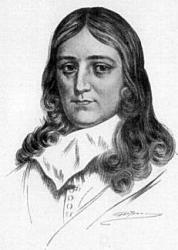
John Milton

1608 - 1674 Person Name: Milton Topics: Being and Attributes of God Author of "Let us, with a gladsome mind" in The Hymn Book of the African Methodist Episcopal Church Milton, John, was born in London, Dec. 9, 1608, and died there Nov. 8, 1674. His poetical excellences and his literary fame are matters apart from hymnology, and are fully dealt with in numerous memoirs. His influence on English hymn-writing has been very slight, his 19 versions of various Psalms having lain for the most part unused by hymnal compilers. The dates of his paraphrases are:— Ps. cxiv. and cxxxvi., 1623, when he was 15 years of ago. These were given in his Poems in English and Latin 1645. Ps. lxxx.-lxxxviii., written in 1648, and published as Nine Psalmes done into Metre, 1645. Ps. i., 1653; ii., “Done August 8, 1653;" iii., Aug. 9, 1653; iv. Aug. 10, 1653; v., Aug. 12, 1653; vi., Aug. 13, 1653; vii.Aug. 14, 1653; viii., Aug. 14, 1653. These 19 versions were all included in the 2nd ed. of his Poems in English and Latin, 1673. From these, mainly in the form of centos, the following have come into common use:— 1. Cause us to see Thy goodness, Lord. Ps. lxxxv. 2. Defend the poor and desolate. Ps. lxxxii. 3. God in the great assembly stands. Ps. lxxxii. 4. How lovely are Thy dwellings fair. Ps. lxxxiv. From this, "They pass refreshed the thirsty vale," is taken. 5. Let us with a gladsome [joyful] mind. Ps. cxxxvi. 6. O let us with a joyful mind. Ps. cxxxvi. 7. The Lord will come and not be slow. Ps. lxxxv. Of these centos Nos. 4 and 5 are in extensive use. The rest are mostly in Unitarian collections. There are also centos from his hymn on the Nativity, "This is the month, and this the happy morn" (q.v.). --John Julian, Dictionary of Hymnology (1907)

William Cowper

1731 - 1800 Person Name: Cowper Topics: Being and Attributes of God Author of ""Wonderful in Counsel"" in The Hymn Book of the African Methodist Episcopal Church William Cowper (pronounced "Cooper"; b. Berkampstead, Hertfordshire, England, 1731; d. East Dereham, Norfolk, England, 1800) is regarded as one of the best early Romantic poets. To biographers he is also known as "mad Cowper." His literary talents produced some of the finest English hymn texts, but his chronic depression accounts for the somber tone of many of those texts. Educated to become an attorney, Cowper was called to the bar in 1754 but never practiced law. In 1763 he had the opportunity to become a clerk for the House of Lords, but the dread of the required public examination triggered his tendency to depression, and he attempted suicide. His subsequent hospitalization and friendship with Morley and Mary Unwin provided emotional stability, but the periods of severe depression returned. His depression was deepened by a religious bent, which often stressed the wrath of God, and at times Cowper felt that God had predestined him to damnation. For the last two decades of his life Cowper lived in Olney, where John Newton became his pastor. There he assisted Newton in his pastoral duties, and the two collaborated on the important hymn collection Olney Hymns (1779), to which Cowper contributed sixty-eight hymn texts. Bert Polman ============ Cowper, William, the poet. The leading events in the life of Cowper are: born in his father's rectory, Berkhampstead, Nov. 26, 1731; educated at Westminster; called to the Bar, 1754; madness, 1763; residence at Huntingdon, 1765; removal to Olney, 1768; to Weston, 1786; to East Dereham, 1795; death there, April 25, 1800. The simple life of Cowper, marked chiefly by its innocent recreations and tender friendships, was in reality a tragedy. His mother, whom he commemorated in the exquisite "Lines on her picture," a vivid delineation of his childhood, written in his 60th year, died when he was six years old. At his first school he was profoundly wretched, but happier at Westminster; excelling at cricket and football, and numbering Warren Hastings, Colman, and the future model of his versification. Churchill, among his contemporaries or friends. Destined for the Bar, he was articled to a solicitor, along with Thurlow. During this period he fell in love with his cousin, Theodora Cowper, sister to Lady Hesketh, and wrote love poems to her. The marriage was forbidden by her father, but she never forgot him, and in after years secretly aided his necessities. Fits of melancholy, from which he had suffered in school days, began to increase, as he entered on life, much straitened in means after his father's death. But on the whole, it is the playful, humorous side of him that is most prominent in the nine years after his call to the Bar; spent in the society of Colman, Bonnell Thornton, and Lloyd, and in writing satires for The Connoisseur and St. James's Chronicle and halfpenny ballads. Then came the awful calamity, which destroyed all hopes of distinction, and made him a sedentary invalid, dependent on his friends. He had been nominated to the Clerkship of the Journals of the House of Lords, but the dread of appearing before them to show his fitness for the appointment overthrew his reason. He attempted his life with "laudanum, knife and cord,"—-in the third attempt nearly succeeding. The dark delusion of his life now first showed itself—a belief in his reprobation by God. But for the present, under the wise and Christian treatment of Dr. Cotton (q. v.) at St. Albans, it passed away; and the eight years that followed, of which the two first were spent at Huntingdon (where he formed his lifelong friendship with Mrs. Unwin), and the remainder at Olney in active piety among the poor, and enthusiastic devotions under the guidance of John Newton (q. v.), were full of the realisation of God's favour, and the happiest, most lucid period of his life. But the tension of long religious exercises, the nervous excitement of leading at prayer meetings, and the extreme despondence (far more than the Calvinism) of Newton, could scarcely have been a healthy atmosphere for a shy, sensitive spirit, that needed most of all the joyous sunlight of Christianity. A year after his brother's death, madness returned. Under the conviction that it was the command of God, he attempted suicide; and he then settled down into a belief in stark contradiction to his Calvinistic creed, "that the Lord, after having renewed him in holiness, had doomed him to everlasting perdition" (Southey). In its darkest form his affliction lasted sixteen months, during which he chiefly resided in J. Newton's house, patiently tended by him and by his devoted nurse, Mrs. Unwin. Gradually he became interested in carpentering, gardening, glazing, and the tendance of some tame hares and other playmates. At the close of 1780, Mrs. Unwin suggested to him some serious poetical work; and the occupation proved so congenial, that his first volume was published in 1782. To a gay episode in 1783 (his fascination by the wit of Lady Austen) his greatest poem, The Task, and also John Gilpin were owing. His other principal work was his Homer, published in 1791. The dark cloud had greatly lifted from his life when Lady Hesketh's care accomplished his removal to Weston (1786): but the loss of his dear friend William Unwin lowered it again for some months. The five years' illness of Mrs. Unwin, during which his nurse of old became his tenderly-watched patient, deepened the darkness more and more. And her death (1796) brought “fixed despair," of which his last poem, The Castaway, is the terrible memorial. Perhaps no more beautiful sentence has been written of him, than the testimony of one, who saw him after death, that with the "composure and calmness" of the face there “mingled, as it were, a holy surprise." Cowper's poetry marks the dawn of the return from the conventionality of Pope to natural expression, and the study of quiet nature. His ambition was higher than this, to be the Bard of Christianity. His great poems show no trace of his monomania, and are full of healthy piety. His fame as a poet is less than as a letter-writer: the charm of his letters is unsurpassed. Though the most considerable poet, who has written hymns, he has contributed little to the development of their structure, adopting the traditional modes of his time and Newton's severe canons. The spiritual ideas of the hymns are identical with Newton's: their highest note is peace and thankful contemplation, rather than joy: more than half of them are full of trustful or reassuring faith: ten of them are either submissive (44), self-reproachful (17, 42, 43), full of sad yearning (1, 34), questioning (9), or dark spiritual conflict (38-40). The specialty of Cowper's handling is a greater plaintiveness, tenderness, and refinement. A study of these hymns as they stood originally under the classified heads of the Olney Hymns, 1779, which in some cases probably indicate the aim of Cowper as well as the ultimate arrangement of the book by Newton, shows that one or two hymns were more the history of his conversion, than transcripts of present feelings; and the study of Newton's hymns in the same volume, full of heavy indictment against the sins of his own regenerate life, brings out the peculiar danger of his friendship to the poet: it tends also to modify considerably the conclusions of Southey as to the signs of incipient madness in Cowper's maddest hymns. Cowper's best hymns are given in The Book of Praise by Lord Selborne. Two may be selected from them; the exquisitely tender "Hark! my soul, it is the Lord" (q. v.), and "Oh, for a closer walk with God" (q. v.). Anyone who knows Mrs. Browning's noble lines on Cowper's grave will find even a deeper beauty in the latter, which is a purely English hymn of perfect structure and streamlike cadence, by connecting its sadness and its aspiration not only with the “discord on the music" and the "darkness on the glory," but the rapture of his heavenly waking beneath the "pathetic eyes” of Christ. Authorities. Lives, by Hayley; Grimshaw; Southey; Professor Goldwin Smith; Mr. Benham (attached to Globe Edition); Life of Newton, by Rev. Josiah Bull; and the Olney Hymns. The numbers of the hymns quoted refer to the Olney Hymns. [Rev. H. Leigh Bennett, M.A.] --John Julian, Dictionary of Hymnology (1907) ================ Cowper, W. , p. 265, i. Other hymns are:— 1. Holy Lord God, I love Thy truth. Hatred of Sin. 2. I was a grovelling creature once. Hope and Confidence. 3. No strength of nature can suffice. Obedience through love. 4. The Lord receives His highest praise. Faith. 5. The saints should never be dismayed. Providence. All these hymns appeared in the Olney Hymns, 1779. --John Julian, Dictionary of Hymnology, Appendix, Part II (1907) ===================== Cowper, W., p. 265, i. Prof. John E. B. Mayor, of Cambridge, contributed some letters by Cowper, hitherto unpublished, together with notes thereon, to Notes and Queries, July 2 to Sept. 24, 1904. These letters are dated from Huntingdon, where he spent two years after leaving St. Alban's (see p. 265, i.), and Olney. The first is dated "Huntingdon, June 24, 1765," and the last "From Olney, July 14, 1772." They together with extracts from other letters by J. Newton (dated respectively Aug. 8, 1772, Nov. 4, 1772), two quotations without date, followed by the last in the N. & Q. series, Aug. 1773, are of intense interest to all students of Cowper, and especially to those who have given attention to the religious side of the poet's life, with its faint lights and deep and awful shadows. From the hymnological standpoint the additional information which we gather is not important, except concerning the hymns "0 for a closer walk with God," "God moves in a mysterious way," "Tis my happiness below," and "Hear what God, the Lord, hath spoken." Concerning the last three, their position in the manuscripts, and the date of the last from J. Newton in the above order, "Aug. 1773," is conclusive proof against the common belief that "God moves in a mysterious way" was written as the outpouring of Cowper's soul in gratitude for the frustration of his attempted suicide in October 1773. --John Julian, Dictionary of Hymnology, New Supplement (1907)

Benjamin Beddome

1717 - 1795 Person Name: Beddome Topics: Being and Attributes of God Author of "Faithfulness of God" in The Hymn Book of the African Methodist Episcopal Church Benjamin Beddome was born at Henley-in Arden, Warwickshire, January 23, 1717. His father was a Baptist minister. He studied at various places, and began preaching in 1740. He was pastor of a Baptist society at Bourton-on-the-Water, Gloucestershire, until his death in 1795. In 1770, he received the degree of M.A. from the Baptist College in Providence, Rhode Island. He published several discourses and hymns. "His hymns, to the number of 830, were published in 1818, with a recommendation from Robert Hall." Montgomery speaks of him as a "writer worthy of honour both for the quantity and the quality of his hymns." --Annotations of the Hymnal, Charles Hutchins, M.A. 1872. ========================= Beddome, Benjamin , M.A. This prolific hymnwriter was born at Henley-in-Arden, Warwickshire, Jan. 23, 1717, where his father, the Rev. John Beddome, was atthat time Baptist Minister. He was apprenticed to a surgeon in Bristol, but removing to London, he joined, in 1739, the Baptist church in Prescott St. At the call of this church he devoted himself to the work of the Christian ministry, and in 1740 began to preach at Bourton-on-the-Water, in Gloucestershire. Declining invitations to remove to London or elsewhere, he continued pastor at Bourton until his death, on Sep. 3, 1795, at the age of 78. Mr. Beddome was for many years one of the most respected Baptist ministers in the West of England. He was a man of some literary culture. In 1770 he received the degree of M.A. from Providence College, Rhode Island. He was the author of an Exposition of the Baptist Catechism, 1752, in great repute at the time, and reprinted by Dr. C. Evans in 1772. It was his practice to prepare a hymn every week to be sung after his Sunday morning sermon. Though not originally intended for publication, he allowed thirteen of these to appear in the Bristol Baptist Collection of Ash & Evans (1769), and thirty-six in Dr. Rippon's Baptist Selection (1787), whence a number of them found their way into the General Baptist Hymn Book of 1793 and other collections. In 1817, a posthumous collection of his hymns was published, containing 830 pieces, with an introduction by the Rev. Robert Hall, and entitled "Hymns adapted to Public Worship or Family Devotion, now first published from the Manuscripts of the late Rev. B. Beddome, M.A." Preface dated "Leicester, Nov. 10, 1817." Some of the early copies bear the same date on the title page. Copies bearing both the 1817 and 1818 dates are in the British Museum. The date usually given is 1818. Some hymns are also appended to his Sermons, seven volumes of which were published l805—1819; and over twenty are given in the Baptist Register of various dates. Beddome's hymns were commended by Montgomery as embodying one central idea, "always important, often striking, and sometimes ingeniously brought out." Robert Hall's opinion is just, when in his "Recommendatory Preface" to the Hymns, &c, he says, p. vii.:— "The man of taste will be gratified with the beauty and original turns of thought which many of them ex¬hibit, while the experimental Christian will often perceive the most secret movements of his soul strikingly delineated, and sentiments pourtrayed which will find their echo in every heart." With the exception of a few composed for Baptisms and other special occasions, their present use in Great Britain is limited, but in America somewhat extensive. One of the best is the Ordination Hymn, "Father of Mercies, bow Thine ear." Another favourite is “ My times of sorrow and of joy," composed, by a singular coincidence, to be sung on Sunday, Jan. 14, 1778, the day on which his son died, most unexpectedly, in Edinburgh. "Let party names no more," is very popular both in Great Brit, and America. "Faith, His a precious gift," "Witness, ye men and angels, now," and the hymn for Holy Baptism, "Buried beneath the yielding wave," are also found in many collections. Beddome's popularity is, however, now mainly in America. [Rev. W. R. Stevenson, M.A.] Beddome is thus seen to be in common use to the extent of about 100 hymns. In this respect he exceeds every other Baptist hymnwriter; Miss Steele ranking second. The authorities for Beddome's hymns are: (1) A Collection of Hymns adapted to Public Worship, Bristol, W. Pine, 1769, the Collection of Ash & Evans; (2) Dr. Rippon's Selections 1787, and later editions; (3) Sermons printed from the Manuscripts of the late Rev. Benjamin Beddome, M.A.,... with brief Memoir of the Author, Dunstable & Lond., 1805-1819; (4) Dr. Rippon's Baptist Register, 1795, &c.; (5) The Beddome Manuscripts, in the Baptist College, Bristol; (6) and Hymns adapted to Public Worship, or Family Devotion now first published, from Manuscripts of the late Rev. B. Beddome, A.M. With a Recommendatory Preface by the Rev. R. Hall, A.M. Lond., 1817. In his Preface, Mr. Hall gives this account of the Beddome Manuscript:— "The present Editor was entrusted several years ago with the MSS, both in prose and verse, with permission from the late Messrs. S. & B. Beddome, sons of the Author, to publish such parts of them as he might deem proper. He is also indebted to a descendant of the Rev. W. Christian, formerly pastor of the Baptist Church at Sheepshead, Leicestershire, for some of the Author's valuable hymns, which had been carefully preserved in the family. From both these sources, as well as others of less consequence, the present interesting volume has been derived." -- Excerpts from John Julian, Dictionary of Hymnology (1907) ======================= Beddome, Benjamin, pp. 121-124. Other hymns in common use:— 1. Great God, before Thy mercy-seat. (1817). Lent. 2. Great God, oppressed with grief and fear. (1787.) Reading H. Scripture. 3. How glorious is Thy word, 0 God. Holy Scripture. From "When Israel, &c," p. 124, i. 4. In God I ever will rejoice. Morning. From his Hymns, &c, 1817. 5. Jesus, my Lord, divinely fair. (1817.) Jesus the King of Saints. Begins with stanza ii. of “Listen, ye mortals, while I sing." 6. Rejoice, for Christ the Saviour reigns. Missions. Altered form of "Shout, for the blessed, &c," p. 123, ii. 7. Satan, the world, and sin. (1817.) In Temptation. 8. Thou, Lord of all above. (1817.) Lent. 9. Unto Thine altar, Lord. (1787.) Lent. 10. Ye saints of every rank, with joy. (1800.) Public Worship. The dates given above are, 1787 and 1800, Rippon's Selection; and 1817 Beddome's Hymns. --John Julian, Dictionary of Hymnology, Appendix, Part II

J. Hart

1712 - 1768 Person Name: Hart Topics: Being and Attributes of God Author of ""This God is our God"" in The Hymn Book of the African Methodist Episcopal Church Hart, Joseph, was born in London in 1712. His early life is involved in obscurity. His education was fairly good; and from the testimony of his brother-in-law, and successor in the ministry in Jewin Street, the Rev. John Hughes, "his civil calling was" for some time "that of a teacher of the learned languages." His early life, according to his own Experience which he prefaced to his Hymns, was a curious mixture of loose conduct, serious conviction of sin, and endeavours after amendment of life, and not until Whitsuntide, 1757, did he realize a permanent change, which was brought about mainly through his attending divine service at the Moravian Chapel, in Fetter Lane, London, and hearing a sermon on Rev. iii. 10. During the next two years many of his most earnest and impassioned hymns were written. These appeared as:— Hymns composed on Various Subjects, with the Author's Experience, London, 1759. During this year he became the Minister of the Independent Chapel, Jewin Street, London. In 1762 he added a Supplement to his Hymns; and in 1765 an Appendix. In modern editions of his Hymns these three are embodied in one volume as:— Hymns composed on Various Subjects: With the Author's Experience, The Supplement and Appendix. By the Rev. Joseph Hart, late Minister of the Gospel in Jewin Street, London. Allott & Co. [no date]. Hart died on May 24, 1768. At one time his hymns were widely used, especially by Calvinistic Nonconformists. Many of them are of merit, and are marked by great earnestness, and passionate love of the Redeemer. The best known are: “Come, Holy Spirit, come"; “Come, ye sinners, poor and wretched"; "This God is the God we adore"; and "Lord, look on all assembled here." Those which are more limited in their use include:— i. From his Hymns, &c, 1759. 1. Descend from heaven, celestial Dove. Whitsuntide. No. 6, in 6 stanzas of 6 lines. In Snepp's Songs of Grace & Glory., 1872, No. 374, st. iv., v. are omitted. It is in extensive use in America. 2. Great High Priest, we view Thee stooping. High Priesthood of Christ. No. 56, pt. ii., in 3 stanzas of 8 lines. In Snepp's Songs of Grace & Glory, 1872, No. 236; Hatfield's Church Hymn Book, N. Y., 1872, No. 435, &c. 8. How wondrous are the works of God. Redeeming Love. No. 21, in 9 stanzas of 4 lines. In the Scottish Evangelical Union Hymnal, 1878, st. i.-iv. are given as No. 11. 4. If ever it could come to pass. Final Perseverance. No. 58, in 3 stanzas of 6 lines. Repeated in Snepp's Songs of Grace & Glory, 1872, No. 729. 6. Jesus is our God and Saviour . Faith and Repentance. No. 54, in 7 stanzas of 8 lines. In Snepp's Songs of Grace & Glory, 1872, No. 146, st. iv. is omitted. In the London Hymn Book (enlarged), 1879, st. iii. and v. are given as "Nothing but Thy blood, 0 Jesus." 6. Jesus, while He dwelt below. Gethsemane. No. 75, in 23 stanzas of 6 lines. In Snepp's Songs of Grace & Glory, 1872, No. 230, sixteen stanzas are broken up into three parts: (i.) "Jesus, while He dwelt below"; (ii.) "Full of love to man's lost race"; (iii.) "There my God bore all my guilt." A cento is also given in Hatfield's Church Hymn Book, N. Y., 1872, No. 441, as "Many woes had Christ [He] endured." It is composed of st. viii., ix., xiii., xx., xxiii., slightly altered. In the Scottish Evangelical Union Hymnal, 1878, No. 34, 8 stanzas are given in two parts: pt. i. as, "Jesus, while He dwelt below"; pt. ii. "Eden from each flowery bed." 7. Lamb of God, we fall before Thee. Christ All in All. No. 17 in 4 stanzas of 8 lines. It is in various collections, and as altered in Kennedy , 1863, No. 1171, is much improved. 8. Let us all with grateful praises. Christmas. No. 14 in 7 stanzas of 8 lines. In Spurgeon's 0ur Own Hymn Book, 1866, it is reduced to 4 stanzas of 4 lines. 9. Lord, look on all assembled here. For a Public Fast. No. 96, in 8 stanzas of 4 lines. It is in several of the older hymnbooks. 10. Lord, we lie before Thy feet. Lent. No. 74, in 6 stanzas of 6 lines, and based on 2 Chron. xx. 20. In Spurgeon's 0ur Own Hymn Book, 1866, stanza i., iii., vi. are given as No. 585. 11. Mercy is welcome news indeed. God's Mercy in pardoning Sin. No. 51, in 6 stanzas of 4 lines, on St. Luke vii. 42. In Spurgeon, 1866, No. 544. 12. Much we talk of Jesu's blood. Passiontide. No. 41, in 4 st. of 8 lines, on Lam. i. 12. In Spurgeon, 1866, it is abridged to 4 stanzas of 4 lines. 13. Bow from the garden to the cross. Good Friday. No. 63, in 9 stanzas of 4 lines, and entitled, "The Crucifixion." In Spurgeon, 1866, No. 274, st. ii.-v., vi.-ix. are given as "See how the patient Jesus stands." 14. The Fountain of Christ Assist me to sing. The Fountain. No. 86, in 8 stanzas of 8 lines on Zech. xiii. 1. In Spurgeon, 1866, st. i., v., vii., viii., are given as No. 375. 15. The moon and stars shall lose their light. Advent. No. 48, in 4 stanzas of 4 lines, on St. Matt. xxiv. 35. In Spurgeon, 1866. 16. The sinner that truly believes. Saving Faith. No. 88, in 5 stanzas of 4 lines, and entitled, "Saving Faith" In Spurgeon, 1866, No. 533, st. ii. is omitted, and the opening line is altered to "The moment a sinner believes." ii. From his Supplement, 1762. 17. Behold what awful pomp. Advent. No. 52, in 8 stanzas of 4 lines. It is usually abridged as in the American Methodist Episcopal Hymns, 1849, No. 1107. 18. Christ is the Eternal Rock. The Offices of Christ. No. 27, in 6 stanzas of 8 lines. In Windle's Metrical Psalter & Hymnal, 1862, stanzas i., ii., v. are given as No. 53. 19. Christians, dismiss your fear. Easter. No. 33, in 4 stanzas of 8 lines into Dr. Alexander's Augustine Hymn Book, 1849, No. 79, in 7 stanzas of 4 lines. 20. Dismiss us with Thy blessing, Lord. Close of Service. No. 78, in 2 stanzas of 4 lines. In a few collections. 21. Gird thy loins up, Christian soldier. The Christian Armour . No. 29, in 5 stanzas of 8 lines, on Eph. vi. 11. Found in several of the older, and a few of the modern collections. 22. Glory to God on high, Our peace, &c. Holy Communion. No. 3, in 6 stanzas of 4 lines. In Hatfield's Church Hymn Book, 1872, No. 704, st. v., vi. are omitted. 23. Holy Ghost, inspire our praises. On behalf of Ministers. No. 77, in 5 stanzas of 8 lines. In the Scottish Evangelical Union Hymnal, 1878, No. 412, st. iii.-v. are given as, "Happy soul that hears and follows." 24. Jesus once for sinners slain. Holy Communion. No. 18, in 6 stanzas of 4 lines. In American use. 25. Lord, help us on Thy word to feed. Close of Service. No. 80, in 2 stanzas of 4 lines. In several modern hymnbooks. 26. O for a glance of heavenly day. Lent. No. 64, in 5 stanzas of 4 lines. In Hatfield's Church Hymn Book, 1872, and other American collections it is usually repeated in full. In Bickersteth's Christian Psalmody, 1833, it was given as, "Lord, shed a beam of heavenly day," and this is repeated in modern hymnbooks. 27. Once more before we part. Close of Service. No. 79, in 2 stanzas of 4 lines. Popular in Great Britain and America. 28. Once more we come before our God. Before a Sermon. No. 21, in 6 stanzas of 4 lines, into Hatfield, 1872, No. 111, and others. 29. Sons of God by bless'd adoption. Burial. No. 45, in 3 stanzas of 8 lines, into Snepp's Songs of Grace & Glory, 1872, No. 981, as "Sons of God by blest adoption." 30. Suffering Saviour, Lamb of God . Holy Communion. No. 14, in 8 stanzas of 4 lines. In W. F. Stevenson's Hymns for Church & Home, 1873, st. iii., vii. are omitted. 31. That doleful night before His death. Holy Communion. No. 17, in 2 stanzas of 8 lines. In the Scottish Evangelical Union Hymnal, 1878, st. i. 11. 4-8, and st. ii., are given as, "To keep Thy Feast, Lord, we are met." iii. From his Appendix, 1765. 32. Christians, in your several stations. Christian Duty. No. 7, in 5 stanzas of 6 lines. It is slightly altered in Snepp's Songs of Grace & Glory, 1872, No. 742, and dated 1759 in error. 33. Prayer was [is] appointed to convey. Prayer. No. 12 in 6 stanzas of 4 lines into Snepp's Songs of Grace & Glory, 1872, No. 542, with alterations and the omission of st. ii., v. In some American collections it begins, "Prayer is to God, the soul's sure way." --John Julian, Dictionary of Hymnology (1907) ======================= Hart, Joseph, p. 492, ii. Other hymns in common use are— 1. The blest memorials of Thy grief (1762). Holy Communion. 2. To comprehend the great Three-One (1759). Holy Trinity. 3. Vain man, thy fond pursuits forbear (1759). Death. 4. When the blest day of Pentecost (1759). Whitsuntide. --John Julian, Dictionary of Hymnology, Appendix, Part II (1907)

Samuel Wesley

1691 - 1739 Person Name: S. Wesley, Jr. Topics: Being and Attributes of God Author of "To God the Father" in The Hymn Book of the African Methodist Episcopal Church Samuel Wesley, M.A., the younger, was the eldest child of Samuel and Susanna Wesley, and was born in or near London in 1691. He received his early education from his mother, who always took a special interest in him as her firstborn. In 1704 he went to Westminster School, where he was elected King's Scholar in 1707. Westminster had, under the mastership of Dr. Busby for 55 years, attained the highest reputation for scholarship, and Samuel Wesley, as a classical scholar, was not unworthy of his school. In 1709, Dr. Spratt, Bishop of Rochester, patronised the young scholar, and frequently invited him to Bromley. In 1711 he went with a Westminster studentship to Christ Church, Oxford, and having taken his degree, returned to Westminster as an Usher. He then received Holy Orders and became an intimate friend of Bishop Atterbury, who was then Dean of Westminster. His intimacy with this prelate was a bar to his advancement, and he was bitterly disappointed at not being appointed undermaster at Westminster when that post was vacant. But he was faithful to his friend in his adversity, and the banished prelate warmly appreciated his attachment. In 1732 he was invited, without solicitation, to accept the headmastership of the Free School at Tiverton, and here he spent the remainder of his life. He strongly disapproved of John and Charles Wesley's proceedings; but though the brothers expressed their opinions to one another with characteristic frankness, the disagreement did not cause any interruption in the friendly relations between them. Samuel Wesley was universally acknowledged to be an honest, conscientious and deeply religious man. He was a most uncompromising High Churchman both in the political and the theological sense of that term; and there is no doubt that he was the mainstay of the Wesley family at Epworth. His kindness to his father and mother was unbounded, and he acted like a father to his younger brothers and sisters. He also took a great interest in works of charity, and was one of the first promoters of the Westminster Infirmary. He died at Tiverton in the 49th year of his age, Nov. 6, 1739. His epitaph in Tiverton Churchyard does not exaggerate his merits, when it describes him as— "a man for his uncommon wit and learning, For the benevolence of his temper, and simplicity of manner, Deservedly loved and esteemed by all: An excellent Preacher; But whose best sermon Was the constant example of an edifying life: So continually and zealously employed In acts of beneficence and charity, That he truly followed His blessed Master's example In going about doing good; Of such scrupulous integrity, That he declined occasions of advancement in the world, Through fear of being involved in dangerous compliances; And avoided the usual ways to preferment As studiously as many others seek them." Samuel Wesley published in 1736 A Collection of Poems on several occasions, some of which are full of a rather coarse humour, but all of a good moral and religious tendency. This work was reprinted in 1743, and again by W. Nichols in 1862. Dr. Adam Clarke specifies eight hymns of S. Wesley's composition which were in use among the Methodists of that time (1823). The Wesleyan Hymn Book of the present day contains five, the best-known of which is "The Lord of Sabbath let us praise." Six of his hymns are in common use, and are annotated as follows:— 1. From whence these dire portents around. 2. Hail, Father, Whose creating call. 3. Hail, God the Son in glory crowned. 4. Hail, Holy Ghost, Jehovah, Third. 5. The Lord of Sabbath, let ns praise. 6. The morning flowers display their sweets. -- Excerpts from John Julian, Dictionary of Hymnology (1907)

Isaac Watts

1674 - 1748 Person Name: Watts Topics: Being and Attributes of God Author of "The Glory of God" in The Hymn Book of the African Methodist Episcopal Church Isaac Watts was the son of a schoolmaster, and was born in Southampton, July 17, 1674. He is said to have shown remarkable precocity in childhood, beginning the study of Latin, in his fourth year, and writing respectable verses at the age of seven. At the age of sixteen, he went to London to study in the Academy of the Rev. Thomas Rowe, an Independent minister. In 1698, he became assistant minister of the Independent Church, Berry St., London. In 1702, he became pastor. In 1712, he accepted an invitation to visit Sir Thomas Abney, at his residence of Abney Park, and at Sir Thomas' pressing request, made it his home for the remainder of his life. It was a residence most favourable for his health, and for the prosecution of his literary labours. He did not retire from ministerial duties, but preached as often as his delicate health would permit. The number of Watts' publications is very large. His collected works, first published in 1720, embrace sermons, treatises, poems and hymns. His "Horae Lyricae" was published in December, 1705. His "Hymns" appeared in July, 1707. The first hymn he is said to have composed for religious worship, is "Behold the glories of the Lamb," written at the age of twenty. It is as a writer of psalms and hymns that he is everywhere known. Some of his hymns were written to be sung after his sermons, giving expression to the meaning of the text upon which he had preached. Montgomery calls Watts "the greatest name among hymn-writers," and the honour can hardly be disputed. His published hymns number more than eight hundred. Watts died November 25, 1748, and was buried at Bunhill Fields. A monumental statue was erected in Southampton, his native place, and there is also a monument to his memory in the South Choir of Westminster Abbey. "Happy," says the great contemporary champion of Anglican orthodoxy, "will be that reader whose mind is disposed, by his verses or his prose, to imitate him in all but his non-conformity, to copy his benevolence to men, and his reverence to God." ("Memorials of Westminster Abbey," p. 325.) --Annotations of the Hymnal, Charles Hutchins, M.A., 1872. ================================= Watts, Isaac, D.D. The father of Dr. Watts was a respected Nonconformist, and at the birth of the child, and during its infancy, twice suffered imprisonment for his religious convictions. In his later years he kept a flourishing boarding school at Southampton. Isaac, the eldest of his nine children, was born in that town July 17, 1674. His taste for verse showed itself in early childhood. He was taught Greek, Latin, and Hebrew by Mr. Pinhorn, rector of All Saints, and headmaster of the Grammar School, in Southampton. The splendid promise of the boy induced a physician of the town and other friends to offer him an education at one of the Universities for eventual ordination in the Church of England: but this he refused; and entered a Nonconformist Academy at Stoke Newington in 1690, under the care of Mr. Thomas Rowe, the pastor of the Independent congregation at Girdlers' Hall. Of this congregation he became a member in 1693. Leaving the Academy at the age of twenty, he spent two years at home; and it was then that the bulk of the Hymns and Spiritual Songs (published 1707-9) were written, and sung from manuscripts in the Southampton Chapel. The hymn "Behold the glories of the Lamb" is said to have been the first he composed, and written as an attempt to raise the standard of praise. In answer to requests, others succeeded. The hymn "There is a land of pure delight" is said to have been suggested by the view across Southampton Water. The next six years of Watts's life were again spent at Stoke Newington, in the post of tutor to the son of an eminent Puritan, Sir John Hartopp; and to the intense study of these years must be traced the accumulation of the theological and philosophical materials which he published subsequently, and also the life-long enfeeblement of his constitution. Watts preached his first sermon when he was twenty-four years old. In the next three years he preached frequently; and in 1702 was ordained pastor of the eminent Independent congregation in Mark Lane, over which Caryl and Dr. John Owen had presided, and which numbered Mrs. Bendish, Cromwell's granddaughter, Charles Fleetwood, Charles Desborough, Sir John Hartopp, Lady Haversham, and other distinguished Independents among its members. In this year he removed to the house of Mr. Hollis in the Minories. His health began to fail in the following year, and Mr. Samuel Price was appointed as his assistant in the ministry. In 1712 a fever shattered his constitution, and Mr. Price was then appointed co-pastor of the congregation which had in the meantime removed to a new chapel in Bury Street. It was at this period that he became the guest of Sir Thomas Abney, under whose roof, and after his death (1722) that of his widow, he remained for the rest of his suffering life; residing for the longer portion of these thirty-six years principally at the beautiful country seat of Theobalds in Herts, and for the last thirteen years at Stoke Newington. His degree of D.D. was bestowed on him in 1728, unsolicited, by the University of Edinburgh. His infirmities increased on him up to the peaceful close of his sufferings, Nov. 25, 1748. He was buried in the Puritan restingplace at Bunhill Fields, but a monument was erected to him in Westminster Abbey. His learning and piety, gentleness and largeness of heart have earned him the title of the Melanchthon of his day. Among his friends, churchmen like Bishop Gibson are ranked with Nonconformists such as Doddridge. His theological as well as philosophical fame was considerable. His Speculations on the Human Nature of the Logos, as a contribution to the great controversy on the Holy Trinity, brought on him a charge of Arian opinions. His work on The Improvement of the Mind, published in 1741, is eulogised by Johnson. His Logic was still a valued textbook at Oxford within living memory. The World to Come, published in 1745, was once a favourite devotional work, parts of it being translated into several languages. His Catechisms, Scripture History (1732), as well as The Divine and Moral Songs (1715), were the most popular text-books for religious education fifty years ago. The Hymns and Spiritual Songs were published in 1707-9, though written earlier. The Horae Lyricae, which contains hymns interspersed among the poems, appeared in 1706-9. Some hymns were also appended at the close of the several Sermons preached in London, published in 1721-24. The Psalms were published in 1719. The earliest life of Watts is that by his friend Dr. Gibbons. Johnson has included him in his Lives of the Poets; and Southey has echoed Johnson's warm eulogy. The most interesting modern life is Isaac Watts: his Life and Writings, by E. Paxton Hood. [Rev. H. Leigh Bennett, M.A.] A large mass of Dr. Watts's hymns and paraphrases of the Psalms have no personal history beyond the date of their publication. These we have grouped together here and shall preface the list with the books from which they are taken. (l) Horae Lyricae. Poems chiefly of the Lyric kind. In Three Books Sacred: i.To Devotion and Piety; ii. To Virtue, Honour, and Friendship; iii. To the Memory of the Dead. By I. Watts, 1706. Second edition, 1709. (2) Hymns and Spiritual Songs. In Three Books: i. Collected from the Scriptures; ii. Composed on Divine Subjects; iii. Prepared for the Lord's Supper. By I. Watts, 1707. This contained in Bk i. 78 hymns; Bk. ii. 110; Bk. iii. 22, and 12 doxologies. In the 2nd edition published in 1709, Bk. i. was increased to 150; Bk. ii. to 170; Bk. iii. to 25 and 15 doxologies. (3) Divine and Moral Songs for the Use of Children. By I. Watts, London, 1715. (4) The Psalms of David Imitated in the Language of the New Testament, And apply'd to the Christian State and Worship. By I. Watts. London: Printed by J. Clark, at the Bible and Crown in the Poultry, &c, 1719. (5) Sermons with hymns appended thereto, vol. i., 1721; ii., 1723; iii. 1727. In the 5th ed. of the Sermons the three volumes, in duodecimo, were reduced to two, in octavo. (6) Reliquiae Juveniles: Miscellaneous Thoughts in Prose and Verse, on Natural, Moral, and Divine Subjects; Written chiefly in Younger Years. By I. Watts, D.D., London, 1734. (7) Remnants of Time. London, 1736. 454 Hymns and Versions of the Psalms, in addition to the centos are all in common use at the present time. --Excerpts from John Julian, Dictionary of Hymnology (1907) ================================== Watts, I. , p. 1241, ii. Nearly 100 hymns, additional to those already annotated, are given in some minor hymn-books. --John Julian, Dictionary of Hymnology, Appendix, Part II (1907) ================= Watts, I. , p. 1236, i. At the time of the publication of this Dictionary in 1892, every copy of the 1707 edition of Watts's Hymns and Spiritual Songs was supposed to have perished, and all notes thereon were based upon references which were found in magazines and old collections of hymns and versions of the Psalms. Recently three copies have been recovered, and by a careful examination of one of these we have been able to give some of the results in the revision of pp. 1-1597, and the rest we now subjoin. i. Hymns in the 1709 ed. of Hymns and Spiritual Songs which previously appeared in the 1707 edition of the same book, but are not so noted in the 1st ed. of this Dictionary:— On pp. 1237, L-1239, ii., Nos. 18, 33, 42, 43, 47, 48, 60, 56, 58, 59, 63, 75, 82, 83, 84, 85, 93, 96, 99, 102, 104, 105, 113, 115, 116, 123, 124, 134, 137, 139, 146, 147, 148, 149, 162, 166, 174, 180, 181, 182, 188, 190, 192, 193, 194, 195, 197, 200, 202. ii. Versions of the Psalms in his Psalms of David, 1719, which previously appeared in his Hymns and Spiritual Songs, 1707:— On pp. 1239, U.-1241, i., Nos. 241, 288, 304, 313, 314, 317, 410, 441. iii. Additional not noted in the revision:— 1. My soul, how lovely is the place; p. 1240, ii. 332. This version of Ps. lxiv. first appeared in the 1707 edition of Hymns & Spiritual Songs, as "Ye saints, how lovely is the place." 2. Shine, mighty God, on Britain shine; p. 1055, ii. In the 1707 edition of Hymns & Spiritual Songs, Bk. i., No. 35, and again in his Psalms of David, 1719. 3. Sing to the Lord with [cheerful] joyful voice, p. 1059, ii. This version of Ps. c. is No. 43 in the Hymns & Spiritual Songs, 1707, Bk. i., from which it passed into the Ps. of David, 1719. A careful collation of the earliest editions of Watts's Horae Lyricae shows that Nos. 1, 7, 9, 10, 11, 12, 14, 16, p. 1237, i., are in the 1706 ed., and that the rest were added in 1709. Of the remaining hymns, Nos. 91 appeared in his Sermons, vol. ii., 1723, and No. 196 in Sermons, vol. i., 1721. No. 199 was added after Watts's death. It must be noted also that the original title of what is usually known as Divine and Moral Songs was Divine Songs only. --John Julian, Dictionary of Hymnology, New Supplement (1907) =========== See also in: Hymn Writers of the Church

John Wesley

1703 - 1791 Person Name: J. Wesley Topics: Being and Attributes of God Translator of "The Glory of God" in The Hymn Book of the African Methodist Episcopal Church John Wesley, the son of Samuel, and brother of Charles Wesley, was born at Epworth, June 17, 1703. He was educated at the Charterhouse, London, and at Christ Church, Oxford. He became a Fellow of Lincoln College, Oxford, and graduated M.A. in 1726. At Oxford, he was one of the small band consisting of George Whitefield, Hames Hervey, Charles Wesley, and a few others, who were even then known for their piety; they were deridingly called "Methodists." After his ordination he went, in 1735, on a mission to Georgia. The mission was not successful, and he returned to England in 1738. From that time, his life was one of great labour, preaching the Gospel, and publishing his commentaries and other theological works. He died in London, in 1791, in his eighty-eighth year. His prose works are very numerous, but he did not write many useful hymns. It is to him, however, and not to his brother Charles, that we are indebted for the translations from the German. --Annotations of the Hymnal, Charles Hutchins, M.A., 1872 ====================== John Wesley, M.A., was born at Epworth Rectory in 1703, and, like the rest of the family, received his early education from his mother. He narrowly escaped perishing in the fire which destroyed the rectory house in 1709, and his deliverance made a life-long impression upon him. In 1714 he was nominated on the foundation of Charterhouse by his father's patron, the Duke of Buckingham, and remained at that school until 1720, when he went up, with a scholarship, from Charterhouse to Christ Church, Oxford. Having taken his degree, he received Holy Orders from the Bishop of Oxford (Dr. Potter) in 1725. In 1726 he was elected Fellow of Lincoln College, and remained at Oxford until 1727, when he returned into Lincolnshire to assist his father as curate at Epworth and Wroot. In 1729 he was summoned back to Oxford by his firm friend, Dr. Morley, Rector of Lincoln, to assist in the College tuition. There he found already established the little band of "Oxford Methodists" who immediately placed themselves under his direction. In 1735 he went, as a Missionary of the Society for the Propagation of the Gospel, to Georgia, where a new colony had been founded under the governorship of General Oglethorpe. On his voyage out he was deeply impressed with the piety and Christian courage of some German fellow travellers, Moravians. During his short ministry in Georgia he met with many discouragements, and returned home saddened and dissatisfied both with himself and his work; but in London he again fell in with the Moravians, especially with Peter Bohler; and one memorable night (May 24, 1738) he went to a meeting in Aldersgate Street, where some one was reading Luther's preface to the Epistle to the Romans. There, "About a quarter before nine, while he was describing the change which God works in the heart through faith in Christ, I felt my heart strangely warmed. I felt I did trust in Christ, Christ alone, for salvation; and an assurance was given me, that He had taken away my sins, even mine, and saved me from the law of sin and death." From that moment his future course was sealed; and for more than half a century he laboured, through evil report and good report, to spread what he believed to be the everlasting Gospel, travelling more miles, preaching more sermons, publishing more books of a practical sort, and making more converts than any man of his day, or perhaps of any day, and dying at last, March 2, 1791, in harness, at the patriarchal age of 88. The popular conception of the division of labour between the two brothers in the Revival, is that John was the preacher, and Charles the hymnwriter. But this is not strictly accurate. On the one hand Charles was also a great preacher, second only to his brother and George Whitefield in the effects which he produced. On the other hand, John by no means relegated to Charles the exclusive task of supplying the people with their hymns. John Wesley was not the sort of man to depute any part of his work entirely to another: and this part was, in his opinion, one of vital importance. With that wonderful instinct for gauging the popular mind, which was one element in his success, he saw at once that hymns might be utilized, not only for raising the devotion, but also for instructing, and establishing the faith of his disciples. He intended the hymns to be not merely a constituent part of public worship, but also a kind of creed in verse. They were to be "a body of experimental and practical divinity." "In what other publication," he asks in his Preface to the Wesleyan Hymn Book, 1780 (Preface, Oct. 20,1779), "have you so distinct and full an account of Scriptural Christianity; such a declaration of the heights and depths of religion, speculative and practical; so strong cautions against the most plausible errors, particularly those now most prevalent; and so clear directions for making your calling and election sure; for perfecting holiness in the fear of God?" The part which he actually took in writing the hymns, it is not easy to ascertain; but it is certain that more than thirty translations from the German, French and Spanish (chiefly from the German) were exclusively his; and there are some original hymns, admittedly his composition, which are not unworthy to stand by the side of his brother's. His translations from the German especially have had a wide circulation. Although somewhat free as translations they embody the fire and energy of the originals. It has been the common practice, however for a hundred years or more to ascribe all translations from the German to John Wesley, as he only of the two brothers knew that language; and to assign to Charles Wesley all the original hymns except such as are traceable to John Wesley through his Journals and other works. The list of 482 original hymns by John and Charles Wesley listed in this Dictionary of Hymnology have formed an important part of Methodist hymnody and show the enormous influence of the Wesleys on the English hymnody of the nineteenth century. -- Excerpts from John Julian, Dictionary of Hymnology (1907) =================== See also in: Hymn Writers of the Church

Pages


Export as CSV
It looks like you are using an ad-blocker. Ad revenue helps keep us running. Please consider white-listing Hymnary.org or getting Hymnary Pro to eliminate ads entirely and help support Hymnary.org.