You help make Hymnary.org possible. More than 10 million people from 200+ countries found hymns, liturgical resources and encouragement on Hymnary.org in 2025, including you. Every visit affirms the global impact of this ministry.

If Hymnary has been meaningful to you this year, would you take a moment today to help sustain it? A gift of any size—paired with a note of encouragement if you wish—directly supports the server costs, research work and curation that keep this resource freely available to the world.

Give securely online today, or mail a check to:
Hymnary.org
Calvin University
3201 Burton Street SE
Grand Rapids, MI 49546

Thank you for your partnership, and may the hope of Advent fill your heart.

Person Results

Topics:christian+work
In:people

Planning worship? Check out our sister site, ZeteoSearch.org, for 20+ additional resources related to your search.
Showing 1 - 10 of 575Results Per Page: 102050

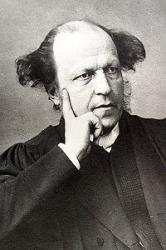
W. G. Tarrant

1853 - 1928 Person Name: William Tarrant Topics: Brotherhood; Common Faith, Hope, Good, and Aim; Kingdom of God on earth; Parents; Prayer For the City ; Social Progress; Work; Christian Service and Brotherhood Author of "The fathers built this city" in Elmhurst Hymnal Tarrant, William George, B.A., b. 1853. Since 1883 Minister of the Wandsworth Unitarian Christian Church. Editor of The Inquirer, 1888-97. One of the editors of the Essex Hall Hymnal. 1890, and of the Revised ed., 1902. 1. Come, let us Join with faithful souls. The Faithful. 2. Draw nigh to God; He will draw nigh to you. The Divine Helper. 3. Long ago the lilies faded. The Constant Presence. 4. The Light along the ages. Easter. 5. With happy voices ringing. Children's Praise. --John Julian, Dictionary of Hymnology, New Supplement (1907)

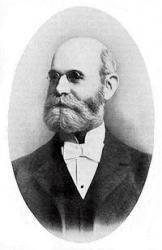
Edwin Hatch

1835 - 1889 Person Name: Edwin Hatch, 1835 - 1889 Topics: God: His Attributes, Works and Word The Holy Spirit; The Christian Life Aspiration and Prayer; Hymns for the Young The Holy Spirit Author of "Breathe on me, Breath of God" in The Book of Praise Hatch, Edwin, D.D., was born at Derby, Sep. 4, 1835, and educated at Pembroke College, Oxford, B.A., in honours, in 1857. After holding important appointments in Canada, he returned to England and became Vice-Principal of St. Mary Hall, Oxford, 1867; and Rector of Purleigh, 1883. (See also Crockford). He died Nov. 10, 1889. His hymn-writing was limited. One, and that a very spirited lyric, is in Allon's Congregational Psalmist Hymnal, 1886 "Breathe on me, Breath of God." (Whitsuntide.) Dr. Hatch's hymns were published in his posthumous Towards Fields of Light, London 1890. --John Julian, Dictionary of Hymnology, Appendix, Part II (1907)

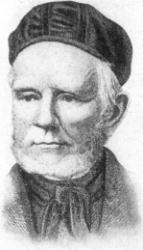
William Caldwell

1801 - 1857 Topics: Christian Work Composer of "[Awake, my soul, in joyful lays]" in The Gospel Hymn Book

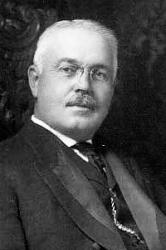
J. B. O. Clemm

1855 - 1927 Topics: Christian Work Composer of "CLEMM" in Psalter Hymnal (Red) James Bowman Overton Clemm

Washington Gladden

1836 - 1918 Topics: Christians Work & Service Author of "O Master, Let Me Walk with Thee" in Praise for the Lord (Expanded Edition) Washington Gladden (1836-1918) was called to the First Congregational Church in Columbus, OH in 1882 and remained there for 32 years. In 1883-84 he was known for his success in fighting the corrupt Tweed Ring, for arbitrating the Telegraphers' Strike and the Hocking Valley Coal Strike. He attacked John D. Rockefeller, Sr. for giving $100,000 of "tainted money" to the Congregational Church's Foreign Missions program. Throughout his ministry he emphasized applying the gospel to life in America. He wrote "O Master, let me walk with thee" in 1879. Mary Louise VanDyke =================== Gladden, Washington, was born at Pottsgrove, Pennsylvania, Feb. 11, 1836; was educated at Williams College: and entered the Congregational Ministry. He was for some time editor of the New York Independent, and of the Sunday Afternoon. In the Sunday Afternoon, his hymn, "O Master, let me walk with Thee" (Walking with God), appeared in 3 stanzas of 8 lines, in March 1879. Of these stanzas i. and iii. are in Laudes Domini, 1884, and others. --John Julian, Dictionary of Hymnology, Appendix, Part II (1907) ================== Gladden, W., p. 1565, ii. Dr. Gladden has been Pastor of the First Congregational Church, Columbus, Ohio, since 1882. His hymn-writing has not been extensive. The most popular of his hymns is "0 Master, let me walk with Thee," noted on p. 1565, ii. It has come into somewhat extensive use during the last ten years. Additional hymns in common use include:— 1. Behold a Sower from afar. [The Kingdom of God.] In the Boston Pilgrim Hymnal, 1904, this is dated 1897. 2. Forgive, 0 Lord, the doubts that break Thy promises to me. [Doubting repented of.] Dated 1879, in The Pilgrim Hymnal, 1904. --John Julian, Dictionary of Hymnology, New Supplement (1907)

William J. Kirkpatrick

1838 - 1921 Topics: Christians Work & Service Arranger of "[O land of rest, for thee I sigh]" in Praise for the Lord (Expanded Edition) William J. Kirkpatrick (b. Duncannon, PA, 1838; d. Philadelphia, PA, 1921) received his musical training from his father and several other private teachers. A carpenter by trade, he engaged in the furniture business from 1862 to 1878. He left that profession to dedicate his life to music, serving as music director at Grace Methodist Church in Philadelphia. Kirkpatrick compiled some one hundred gospel song collections; his first, Devotional Melodies (1859), was published when he was only twenty-one years old. Many of these collections were first published by the John Hood Company and later by Kirkpatrick's own Praise Publishing Company, both in Philadelphia. Bert Polman

Augustus Toplady

1740 - 1778 Person Name: Augustus Montague Toplady, 1740-1778 Topics: The Christian Life Penitence and Faith; God: His Attributes, Works and Word The Lord Jesus Christ - His Sufferings and Death; Hymns for the Young Coming to Jesus; The Church The Gospel Call; The Church The Sacraments - Baptism Author of "Rock of Ages, cleft for me" in The Book of Praise Toplady, Augustus Montague, the author of "Rock of Ages," was born at Farnham, Surrey, November 4, 1740. His father was an officer in the British army. His mother was a woman of remarkable piety. He prepared for the university at Westminster School, and subsequently was graduated at Trinity College, Dublin. While on a visit in Ireland in his sixteenth year he was awakened and converted at a service held in a barn in Codymain. The text was Ephesians ii. 13: "But now, in Christ Jesus, ye who sometimes were far off are made nigh by the blood of Christ." The preacher was an illiterate but warm-hearted layman named Morris. Concerning this experience Toplady wrote: "Strange that I, who had so long sat under the means of grace in England, should be brought nigh unto God in an obscure part of Ireland, amidst a handful of God's people met together in a barn, and under the ministry of one who could hardly spell his name. Surely this is the Lord's doing, and it is marvelous." In 1758, through the influence of sermons preached by Dr. Manton on the seventeenth chapter of John, he became an extreme Calvinist in his theology, which brought him later into conflict with Mr. Wesley and the Methodists. He was ordained to the ministry in the Church of England in 1762, and in 1768 he became vicar of Broadhembury, a small living in Devonshire, which he held until his death. The last two or three years of his life he passed in London, where he preached in a chapel on Orange Street. His last sickness was of such a character that he was able to make a repeated and emphatic dying testimony. A short time before his death he asked his physician what he thought. The reply was that his pulse showed that his heart was beating weaker every day. Toplady replied with a smile: "Why, that is a good sign that my death is fast approaching; and, blessed be God, I can add that my heart beats stronger and stronger every day for glory." To another friend he said: "O, my dear sir, I cannot tell you the comforts I feel in my soul; they are past expression. . . . My prayers are all converted into praise." He died of consumption August 11, 1778. His volume of Psalms and Hymns for Public and Private Worship was published in 1776. Of the four hundred and nineteen hymns which it contained, several were his own productions. If on a quiet sea 446 Rock of ages, cleft for me 279 Hymn Writers of the Church, 1915 by Charles S. Nutter =============================================== Toplady, Augustus Montague, M.A. The life of Toplady has been repeatedly and fully written, the last, a somewhat discursive and slackly put together book, yet matterful, by W. Winters (1872). Summarily, these data may be here given: he was born at Farnham, in Surrey, on November 4, 1740. His father, Richard Toplady, was a Major in the British array, and was killed at the siege of Carthagena (1741) soon after the birth of his son. His widowed mother placed him at the renowned Westminster school, London. By-and-by circumstances led her to Ireland, and young Augustus was entered at Trinity College, Dublin, where he completed his academical training, ultimately graduating M.A. He also received his "new birth" in Ireland under remarkable conditions, as he himself tells us with oddly mixed humility and lofty self-estimate, as "a favourite of heaven," common to his school:— "Strange that I who had so long sat under the means of grace in England should be brought right unto God in an obscure part of Ireland, midst a handful of people met together in a barn, and by the ministry of one who could hardly spell his own name. Surely it was the Lord's doing and is marvellous. The excellency of such power must be of God and cannot be of man. The regenerating spirit breathes not only on whom but likewise, when and where and as He listeth." Toplady received orders in the Church of England on June 6, 1762, and after some time was appointed to Broadhembury. His Psalms and Hymns of 1776 bears that he was then “B.A." and Vicar of Broadhembury. Shortly thereafter be is found in London as minister of the Chapel of the French Calvinists in Leicester Fields. He was a strong and partizan Calvinist, and not well-informed theologically outside of Calvinism. We willingly and with sense of relief leave unstirred the small thick dust of oblivion that has gathered on his controversial writings, especially his scurrilous language to John Wesley because of his Arminianism, as we do John Wesley's deplorable misunderstanding and misrepresentation of Calvinism. Throughout Toplady lacked the breadth of the divine Master's watchword "Forbid him not, for he that is not against us is for us" (St. Luke ix. 50). He was impulsive, rash-spoken, reckless in misjudgment; but a flame of genuine devoutness burned in the fragile lamp of his overtasked and wasted body. He died on August 11, 1778. The last edition of his works is in 6 vols., 8 vo., 1825. An accurate reproduction of most of his genuine hymns was one of the reprints of Daniel Sedgwick, 1860. His name occurs and recurs in contemporary memoirs and ecclesiastical histories, e.g., in Tyerman's Life of John Wesley. The reader will find in their places annotations on the several hymns of Toplady, and specially on his "Rock of Ages,” a song of grace that has given him a deeper and more inward place in millions of human hearts from generation to generation than almost any other hymnologist of our country, not excepting Charles Wesley. Besides the "Rock of Ages" must be named, for power, intensity, and higher afflatus and nicer workmanship, "Object of my first desire,” and "Deathless principle arise." It is to be regretted that the latter has not been more widely accepted. It is strong, firm, stirring, and masterful. Regarded critically, it must be stated that the affectionateness with which Toplady is named, and the glow and passion of his faith and life, and yearning after holiness, have led to an over-exaltation of him as a hymnwriter. Many of his hymns have been widely used, and especially in America, and in the Evangelical hymnbooks of the Church of England. Year by year, however, the number in use is becoming less. The reason is soon found. He is no poet or inspired singer. He climbs no heights. He sounds no depths. He has mere vanishing gleams of imaginative light. His greatness is the greatness of goodness. He is a fervent preacher, not a bard. [Rev. A. B. Grosart, D.D., LL.D.] Toplady's hymns and poetical pieces were published in his:— (1) Poems on Sacred Subjects wherein The Fundamental Doctrines of Christianity, with many other interesting Points, are occasionally introduced. . . Dublin: Printed by S. Powell, in Crane-lane, MDCCLIX.; (2) his Psalms & Hymns for Public and Private Worship, 1776; (3) in The Gospel Magazine, 1771-1776; and (4) in Hymns and Sacred Poems on a variety of Divine Subjects, &c. D. Sedgwick's reprint, 1860. His Works, with a Memoir by W. Row, were published in 6 volumes, in 1794. Walter How was also the editor of the 2nd and some later editions of the Psalms & Hymns. He was a most careless editor, and attributed several hymns by C. Wesley and others to Toplady. The following additional hymns in common use together with centos indicated in the sub-lines, are from:— i. His Poems on Sacred Subjects, 1759. 1. Can my heaven-born soul submit? All for Christ. 2. Come from on high, my King and God. Holiness desired. (1.) 0 might this worthless heart of mine. 3. Earnest of future bliss. The Witness of the Spirit. 4. From Thy supreme tribunal, Lord. Christ's Righteousness a Refuge. (1.) The spotless Saviour lived for me. 5. Great God, Whom heaven, and earth, and sea. For Peace. 6. I saw, and lo! a countless throng. Saints' Days. Revised form in the Gospel Magazine, 1774, p. 449. 7. Immovable our hope remains. Divine Faithfulness. 8. Jesus, God of love, attend. Divine Worship. Pt. ii. is "Prayer can mercy's door unlock." 9. Jesus, Thy power I fain would feel. Lent. 10. Lord, I feel a carnal mind. Mind of Christ desired. 11. My yielding heart dissolves as wax. On behalf of Arians, &c. (1.) 0 Jesus, manifest Thy grace. 12. Not to myself I owe. Praise for Conversion, (1.) Not to ourselves we owe. (2.) The Father's grace and love. 13. 0 that my heart was right with Thee. Dedication to God desired. 14. 0 Thou that hearest the prayer of faith. Christ the Propitiation. 15. 0 Thou Who didst Thy glory leave. Thanksgiving for Redemption. 16. 0 when wilt Thou my Saviour be. Trust in Jesus. (1.) Jesus, the sinner's Rest Thou art. 17. Redeemer, whither should I flee? Safety in the Cross. 18. Remember, Lord, that Jesus bled. Pardon. 19. Surely Christ thy griefs hath borne. Redemption. Revised text in Gospel Magazine, 1774, p. 548. (1.) Weary sinner, keep thine eyes. (2.) Weeping soul, no longer mourn. ii. From the Gospel Magazine. 20. Compared with Christ, in all besides. Christ All in All. Feb. 1772. 21. Eternal Hallelujahs Be to the Father given. Holy Trinity, Dec. 1774. 22. From whence this fear and unbelief. Reviving Faith, Feb. 1772. 23. How vast the benefits divine. Redemption. Dec. 1774. From this "Not for the works which we have done" is taken. 24. Whom have I in heaven but Thee? Christ All and in All, Feb. 1772. From this "If my Lord Himself reveal" is taken. 25. Jesus, immutably the same. Jesus, the True Vine. June, 1771. All these hymns, together with "O precious blood, 0 glorious death" (Death of Christ), are in D. Sedgwick's reprint of Toplady's Hymns, &c, 1860. We have met with several other hymns to which Toplady's name is appended, but for this we can find no authority whatever. -- Excerpts from John Julian, Dictionary of Hymnology (1907)

Francis H. Rowley

1854 - 1952 Person Name: Francis H. Rawley, b. 1854 Topics: Christ Atoning work of; Christ Shepherd; Hymns for Informal Occasions; Preservation of Christians; Salvation by Grace Author of "I will sing the wondrous story" in Trinity Hymnal Rv Francis Harold Rowley DD USA 1854-1952. Born at Hilton, NH, the son of a doctor, he graduated from Rochester University in 1875 and Rochester Theological Seminary of NY in 1878. He married Ida Amelia Babcock in 1878, and they had four children: John, Alice, Charles, and Esmond. He became a Baptist minister, animal welfare campaigner, and hymn writer. He pastored for over 30 years at Titusville, PA, North Adams, MA (1884-1892), Oak Park, IL, Fall River, MA, and the First Baptist Church at Boston, MA, until 1910. He preached at Appleton Chapel, Harvard University. He was also a trustee of the University of Chicago Divinity School (1894-1896). While at North Adams, MA, Peter Bilhorn, a fine musician and his assistant minister, asked him to write a hymn for Bilhorn to set to music. He wrote the hymn text overnight. The hymn was presented to Ira Sankey and he altered the text some before publishing it. Visiting in London, he once heard a Salvation Army band playing his hymn. They had no idea he was nearby. Rowley became aware of dismemberment of animals in slaughter houses across the country and lobbied for the animals to be rendered unconscious before being cut open. From 1892-1900 he was Secretary of the American Humane Association. In 1915, through his influence, a building was made to house the MA Society for the Prevention of Cruelty to Animals. He was president of that organization and of the American Humane Education Society from 1908-1945, and the Angell Memorial Animal Hospital. He was also Chairman of the Animal Protection Committee for the MA Committee on Public Safety and VP of the American Society for the Humane Regulation of Vivisection. In 1947 the Rowley School of Human Understanding was established in his honor. In 1948 the MA Society for the Prevention of Cruelty to Animals named the Rowley Memorial Hospital in Springfield, MA, for him. A humanitarian, he also worked with hospitals: Robert Brigham Hospital (for incurables) and N E Baptist Hospital of Boston. He was a member of the advisory council at Yenching University, China; a member of the alumni committee, University of Rochester, NY; member Alpha Delta Phi, Phi Beta Kappa. Rochester University gave him an honorary Doctor of Divinity degree. He died at Boston, MA. Oglethorpe University, Atlanta, GA, named the Rowley School of Humanities after him. John Perry

Lowell Mason

1792 - 1872 Topics: Junior Songs Christian Work Composer of "[Work, for the night is coming]" in Life Songs Dr. Lowell Mason (the degree was conferred by the University of New York) is justly called the father of American church music; and by his labors were founded the germinating principles of national musical intelligence and knowledge, which afforded a soil upon which all higher musical culture has been founded. To him we owe some of our best ideas in religious church music, elementary musical education, music in the schools, the popularization of classical chorus singing, and the art of teaching music upon the Inductive or Pestalozzian plan. More than that, we owe him no small share of the respect which the profession of music enjoys at the present time as contrasted with the contempt in which it was held a century or more ago. In fact, the entire art of music, as now understood and practiced in America, has derived advantage from the work of this great man. Lowell Mason was born in Medfield, Mass., January 8, 1792. From childhood he had manifested an intense love for music, and had devoted all his spare time and effort to improving himself according to such opportunities as were available to him. At the age of twenty he found himself filling a clerkship in a banking house in Savannah, Ga. Here he lost no opportunity of gratifying his passion for musical advancement, and was fortunate to meet for the first time a thoroughly qualified instructor, in the person of F. L. Abel. Applying his spare hours assiduously to the cultivation of the pursuit to which his passion inclined him, he soon acquired a proficiency that enabled him to enter the field of original composition, and his first work of this kind was embodied in the compilation of a collection of church music, which contained many of his own compositions. The manuscript was offered unavailingly to publishers in Philadelphia and in Boston. Fortunately for our musical advancement it finally secured the attention of the Boston Handel and Haydn Society, and by its committee was submitted to Dr. G. K. Jackson, the severest critic in Boston. Dr. Jackson approved most heartily of the work, and added a few of his own compositions to it. Thus enlarged, it was finally published in 1822 as The Handel and Haydn Society Collection of Church Music. Mason's name was omitted from the publication at his own request, which he thus explains, "I was then a bank officer in Savannah, and did not wish to be known as a musical man, as I had not the least thought of ever making music a profession." President Winchester, of the Handel and Haydn Society, sold the copyright for the young man. Mr. Mason went back to Savannah with probably $500 in his pocket as the preliminary result of his Boston visit. The book soon sprang into universal popularity, being at once adopted by the singing schools of New England, and through this means entering into the church choirs, to whom it opened up a higher field of harmonic beauty. Its career of success ran through some seventeen editions. On realizing this success, Mason determined to accept an invitation to come to Boston and enter upon a musical career. This was in 1826. He was made an honorary member of the Handel and Haydn Society, but declined to accept this, and entered the ranks as an active member. He had been invited to come to Boston by President Winchester and other musical friends and was guaranteed an income of $2,000 a year. He was also appointed, by the influence of these friends, director of music at the Hanover, Green, and Park Street churches, to alternate six months with each congregation. Finally he made a permanent arrangement with the Bowdoin Street Church, and gave up the guarantee, but again friendly influence stepped in and procured for him the position of teller at the American Bank. In 1827 Lowell Mason became president and conductor of the Handel and Haydn Society. It was the beginning of a career that was to win for him as has been already stated the title of "The Father of American Church Music." Although this may seem rather a bold claim it is not too much under the circumstances. Mr. Mason might have been in the average ranks of musicianship had he lived in Europe; in America he was well in advance of his surroundings. It was not too high praise (in spite of Mason's very simple style) when Dr. Jackson wrote of his song collection: "It is much the best book I have seen published in this country, and I do not hesitate to give it my most decided approbation," or that the great contrapuntist, Hauptmann, should say the harmonies of the tunes were dignified and churchlike and that the counterpoint was good, plain, singable and melodious. Charles C. Perkins gives a few of the reasons why Lowell Mason was the very man to lead American music as it then existed. He says, "First and foremost, he was not so very much superior to the members as to be unreasonably impatient at their shortcomings. Second, he was a born teacher, who, by hard work, had fitted himself to give instruction in singing. Third, he was one of themselves, a plain, self-made man, who could understand them and be understood of them." The personality of Dr. Mason was of great use to the art and appreciation of music in this country. He was of strong mind, dignified manners, sensitive, yet sweet and engaging. Prof. Horace Mann, one of the great educators of that day, said he would walk fifty miles to see and hear Mr. Mason teach if he could not otherwise have that advantage. Dr. Mason visited a number of the music schools in Europe, studied their methods, and incorporated the best things in his own work. He founded the Boston Academy of Music. The aim of this institution was to reach the masses and introduce music into the public schools. Dr. Mason resided in Boston from 1826 to 1851, when he removed to New York. Not only Boston benefited directly by this enthusiastic teacher's instruction, but he was constantly traveling to other societies in distant cities and helping their work. He had a notable class at North Reading, Mass., and he went in his later years as far as Rochester, where he trained a chorus of five hundred voices, many of them teachers, and some of them coming long distances to study under him. Before 1810 he had developed his idea of "Teachers' Conventions," and, as in these he had representatives from different states, he made musical missionaries for almost the entire country. He left behind him no less than fifty volumes of musical collections, instruction books, and manuals. As a composer of solid, enduring church music. Dr. Mason was one of the most successful this country has introduced. He was a deeply pious man, and was a communicant of the Presbyterian Church. Dr. Mason in 1817 married Miss Abigail Gregory, of Leesborough, Mass. The family consisted of four sons, Daniel Gregory, Lowell, William and Henry. The two former founded the publishing house of Mason Bros., dissolved by the death of the former in 1869. Lowell and Henry were the founders of the great organ manufacturer of Mason & Hamlin. Dr. William Mason was one of the most eminent musicians that America has yet produced. Dr. Lowell Mason died at "Silverspring," a beautiful residence on the side of Orange Mountain, New Jersey, August 11, 1872, bequeathing his great musical library, much of which had been collected abroad, to Yale College. --Hall, J. H. (c1914). Biography of Gospel Song and Hymn Writers. New York: Fleming H. Revell Company.

Thomas Moore

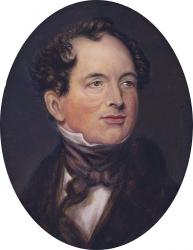
1779 - 1852 Topics: Christian Work Author of "Come, you disconsolate, where'er you languish" in New Christian Hymn and Tune Book Thomas Moore United Kingdom 1779-1852. Born at Dublin, Ireland, the son of a grocer, he showed an early interest in music and acting. He was educated at a private school and Trinity College, Dublin. He read at the Middle Temple for the Bar. Moore did not profess religious piety. His translations of ‘Anacreon’ (celebrating wine, women, and song) were published in 1800, with a dedication to the Prince of Wales. He also wrote a comic opera, “the gypsy prince”, staged that year. In 1801 he published a collection of his own verse, “Poetical works of the late Thomas Little Esq”. A Catholic patriot, he defended the Church of Ireland, especially in later politics. In 1803 he held a post under the Government in Bermuda as registrar of the Admiralty Prize Court. He was bored of it within six months and appointed a deputy to take his place while he left for a tour of North America. He secured high society introductions and even met with President, Thomas Jefferson. Returning to England in 1804, he published “Epistles, Odes, & other poems” in 1806. Moore criticized American slavery and was accused of licentious writings, veiled as refinement. Francis Jeffrey denounced Moore’s writings in the ‘Edinburgh Review’, and Moore challenged him to a duel, but it never happened, and they became friends. Between 1808-1810 he was found acting in various plays, favoring comic roles. He met the sister of one of the actresses and, in 1811, they married. Elizabeth ‘Bessy’ Dyke, was an actress. She had no dowry, and Moore kept their marriage secret from his parents for some time, as his wife was Protestant. Bessie shrank from fashionable society, but those who met her held her in high regard. They had five children, but none survived to adulthood. Three girls died young, and both sons lost their lives as young men. One son, Tom, died in some disgrace in the French Foreign Legion in Algeria. Despite these losses, their marriage was said to be a happy one. He also had political trouble. The man he appointed as his replacement in Bermuda was found to have embezzled 6000 pounds sterling, a large sum, for which Moore was liable. He left for France in 1819 to escape debtor’s prison. He also met Lord Byron in Venice and was entrusted with a manuscript of his memoirs, which he promised to have published after Byron’s death. Moore’s wife and children joined him in Paris, where he learned that some of the debt was repaid with help from Lord Lansdowne, whom Moore had given a draft of money from payment by his publisher. The family returned to England a year later. To support his family Moore entered the field of ‘squib writing’ on behalf of his Whig friends. This resulted in years of political debate about Catholics and Protestants in government. Nearly persuaded to forego his Catholic allegiance in favor of Protestantism, he finally concluded that Protestants did not make a sound case for their faith, as they denounced Catholics so vociferously for erroneous teaching. From 1835 -1846 Moore published a four volume “History of Ireland”, which was basically an indictment of English rule over Ireland. He was primarily a writer, poet, entertainer, and composer, considered politically as a writer for the aristocratic Whigs. His “Sacred songs” (32) were published in 1816, and again, in his “collected works” in 1866. His “Memoirs, Journal, and Correspondence” were published by Lord John Russell in 1855. Moore is essentially remembered for his highly-praised lyrics written for Irish melodies, as requested by his publishers, and his memoirs of Lord Byron, his friend. He died at Bromham, Wilshire, England. John Perry ================== Moore, Thomas, son of John Moore, a small tradesman at Dublin, was born in that city, May 28, 1779, educated at a private school and Trinity College, Dublin; read at the Middle Temple for the Bar; held a post under the Government in Bermuda for a short time, and died Feb. 26, 1852. His Memoirs, Journal, and Correspondence were published by Lord John Russell in 1855. In that work every detail concerning himself and his numerous publications, most of them of high poetical merit, will be found. His connection with hymnody is confined to his Sacred Songs, which were published in 1816, and again in his Collected Works, 1866. These Songs were 32 in all, and were written to popular airs of various nations. Of these Songs the following have passed into a few hymnbooks, mainly in America:— 1. As down in the sunless retreats of the ocean. Private Prayer. 2. But who shall see the glorious day. The Final Bliss of Man. 3. Come, ye disconsolate, where'er you languish. Belief in Prayer. In American hymnbooks the text is sometimes as in T. Hastings and Lowell Mason's Spiritual Songs, 1831. This may be distinguished from the original by the third stanza, which reads, "Here see the Bread of life; see waters flowing," &c. 4. Fallen is thy throne, O Israel. Israel in Exile. 5. Like morning when her early breeze. Power of Divine Grace. 6. O Thou Who driest the mourner's tear. Lent. 7. Since first Thy word [grace] awaked my heart. God All and in All. 8. Sound the loud timbrel o'er Egypt's dark sea. Deliverance of Israel. 9. The bird [dove] let loose in eastern skies. Prayer for Constancy. 10. The turf shall be my fragrant shrine. The Temple of Nature. From this "There's nothing bright above, below" is taken. 11. Thou art, O God, the Life and Light. God, the Light and Life of Men. 12. Were not the sinful Mary's tears? Lent. Of these hymns No. 11 has attained the greatest popularity. --John Julian, Dictionary of Hymnology (1907)

Pages


Export as CSV
It looks like you are using an ad-blocker. Ad revenue helps keep us running. Please consider white-listing Hymnary.org or getting Hymnary Pro to eliminate ads entirely and help support Hymnary.org.