You help make Hymnary.org possible. More than 10 million people from 200+ countries found hymns, liturgical resources and encouragement on Hymnary.org in 2025, including you. Every visit affirms the global impact of this ministry.

If Hymnary has been meaningful to you this year, would you take a moment today to help sustain it? A gift of any size—paired with a note of encouragement if you wish—directly supports the server costs, research work and curation that keep this resource freely available to the world.

Give securely online today, or mail a check to:
Hymnary.org
Calvin University
3201 Burton Street SE
Grand Rapids, MI 49546

Thank you for your partnership, and may the hope of Advent fill your heart.

Search Results

Topics:epiphany+2

Planning worship? Check out our sister site, ZeteoSearch.org, for 20+ additional resources related to your search.

Looking for a lectionary week?

Day
Epiphany 2Year AYear BYear C

Texts

text icon
Text authorities
TextPage scansFlexScoreFlexPresent

Immortal, invisible, God only wise

Author: Walter Chalmers Smith, 1824-1908 Meter: 11.11.11.11 Appears in 227 hymnals Topics: Year C Epiphany 2 Lyrics: 1 Immortal, invisible, God only wise, in light inaccessible hid from our eyes, most blessed, most glorious, the Ancient of Days, almighty, victorious, thy great name we praise. 2 Unresting, unhasting, and silent as light, nor wanting, nor wasting, thou rulest in might: thy justice, like mountains high soaring above, thy clouds which are fountains of goodness and love. 3 To all, life thou givest, to both great and small; in all life thou livest, the true life of all; we blossom and flourish like leaves on the tree, then wither and perish; but naught changeth thee. 4 Great Father of glory, pure Father of light, thine angels adore thee, all veiling their sight; all laud we would render, O help us to see 'tis only the splendou of light hideth thee. Scripture: Daniel 7:9-22 Used With Tune: ST DENIO
Page scansFlexScore

All people that on earth do dwell

Author: W. Kethe (died 1594) Appears in 756 hymnals Topics: Epiphany 2, Revelation The First Disciples Scripture: Psalm 100 Used With Tune: OLD 100th Text Sources: Jubilate Deo
TextPage scansFlexScoreFlexPresent

Just as I am, without one plea

Author: Charlotte Elliott, 1789-1871 Meter: 8.8.8.6 Appears in 2,303 hymnals Topics: Year A Epiphany 2 Lyrics: 1 Just as I am, without one plea, but that thy blood was shed for me, and that thou bidst me come to thee, O Lamb of God, I come. 2 Just as I am, though tossed about with many a conflict, many a doubt, fightings and fears within, without, O Lamb of God, I come. 3 Just as I am, poor, wretched, blind; sight, riches, healing of the mind, yea, all I need, in thee to find, O Lamb of God, I come. 4 Just as I am, thou wilt receive, wilt welcome, pardon, cleanse, relieve: because thy promise I believe, O Lamb of God, I come. 5 Just as I am, thy love unknown has broken ev'ry barrier down, now to be thine, yea, thine alone, O Lamb of God, I come. 6 Just as I am, of that free love the breadth, length, depth and height to prove, here for a season, then above, O Lamb of God, I come. Scripture: Ephesians 3:18 Used With Tune: SAFFRON WALDEN

Tunes

tune icon
Tune authorities
FlexScoreAudio

REGENT SQUARE

Meter: 8.7.8.7.8.7 Appears in 997 hymnals Composer and/or Arranger: Henry Smart, 1813-1879 Topics: Year A Epiphany 2 Tune Key: B Flat Major Incipit: 53153 21566 51432 Used With Text: God of grace and God of glory
Page scansFlexScoreAudio

JUDAS MACCABAEUS

Appears in 161 hymnals Composer and/or Arranger: George Frideric Handel Topics: Choruses and Refrains; Christian Year Easter; Courage; Eternal Life; God Glory; Jesus Christ Exaltation; Jesus Christ Lord of Life; Jesus Christ Resurrection; Joy; Light; Service Music Sending Forth/Commissioning; Victory; Water; Easter 1 Year A; Easter 2 Year A; Ascension Year A; Epiphany 6 Year B; Easter 2 Year B; Easter 3 Year B; Easter 1 Year C; Easter 2 Year C; Easter Evening Year ABC Tune Key: D Major Incipit: 53451 23454 32345 Used With Text: Thine is the Glory (À toi la gloire)
Page scansFlexScoreAudio

BLESSED ASSURANCE

Meter: Irregular Appears in 807 hymnals Composer and/or Arranger: Phoebe Palmer Knapp, 1839-1908 Topics: Hope and Consolation; Joy, Praise and Thanksgiving; Redemption and Salvation; Year A All Saints' Day; Year A Proper 11; Year B Dedication Festival; Year B Easter 2; Year B Proper 23; Year C Easter 4; Year C Proper 2; Years A, B, and C Epiphany Tune Key: D Major Incipit: 32155 45655 35177 Used With Text: Blessed assurance

Instances

instance icon
Published text-tune combinations (hymns) from specific hymnals
Text

All Praise to You, O Lord

Author: Hyde W. Beadon, 1812-1891 Hymnal: Lutheran Book of Worship #78 (1978) Meter: 6.6.8.6 Topics: Epiphany 2 Lyrics: 1 All praise to you, O Lord, Who by your mighty pow'r Did manifest your glory forth In Cana's marriage hour. 2 You speak, and it is done; Obedient to your word, The water redd'ning into wine Proclaims the present Lord. 3 Oh, may this grace be ours, In you fore'er to live, And drink of those refreshing streams Which you alone can give. 4 So, led from strength to strength, Grant us, O Lord, to see The marriage supper of the Lamb, The great epiphany. Languages: English Tune Title: GARELOCHSIDE
TextPage scan

Jesus, Priceless Treasure

Author: Catherine Winkworth, 1827-1878; Johann Franck, 1618-1677 Hymnal: Lutheran Book of Worship #457 (1978) Meter: 6.6.5.6.6.5.7.8.6 Topics: Epiphany 2 Lyrics: 1 Jesus, priceless treasure, Source of purest pleasure, Truest friend to me: Ah, how long I've panted, And my heart has fainted, Thirsting, Lord, for thee! Thine I am, O spotless Lamb; I will suffer nought to hide thee, Nought I ask beside thee. 2 In thine arm I rest me; Foes who would molest me Cannot reach me here. Though the earth be shaking, Ev'ry heart be quaking, Jesus calms my fear. Sin and hell in conflict fell With their bitter storms assail me, Jesus will not fail me. 3 Hence, all fears and sadness, For the Lord of gladness, Jesus, enters in. Those who love the Father, Though the storms may gather, Still have peace within. Yea, whate'er I here must bear, Still in thee lies purest pleasure, Jesus, priceless treasure! Languages: English Tune Title: JESU, MEINE FREUDE
TextPage scan

Jesus, Priceless Treasure

Author: Catherine Winkworth, 1827-1878; Johann Franck, 1618-1677 Hymnal: Lutheran Book of Worship #458 (1978) Meter: 6.6.5.6.6.5.7.8.6 Topics: Epiphany 2 Lyrics: 1 Jesus, priceless treasure, Source of purest pleasure, Truest friend to me: Ah, how long I've panted, And my heart has fainted, Thirsting, Lord, for thee! Thine I am, O spotless Lamb; I will suffer nought to hide thee, Nought I ask beside thee. 2 In thine arm I rest me; Foes who would molest me Cannot reach me here. Though the earth be shaking, Ev'ry heart be quaking, Jesus calms my fear. Sin and hell in conflict fell With their bitter storms assail me, Jesus will not fail me. 3 Hence, all fears and sadness, For the Lord of gladness, Jesus, enters in. Those who love the Father, Though the storms may gather, Still have peace within. Yea, whate'er I here must bear, Still in thee lies purest pleasure, Jesus, priceless treasure! Languages: English Tune Title: GUD SKAL, ALTING MAGE

People

person icon
Authors, composers, editors, etc.

Johann Franck

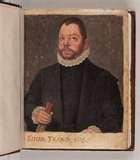
1618 - 1677 Person Name: Johann Franck, 1618-1677 Topics: Epiphany 2 Author of "Jesus, Priceless Treasure" in Lutheran Book of Worship Johann Franck (b. Guben, Brandenburg, Germany, 1618; d. Guben, 1677) was a law student at the University of Köningsberg and practiced law during the Thirty Years' War. He held several positions in civil service, including councillor and mayor of Guben. A significant poet, second only to Paul Gerhardt in his day, Franck wrote some 110 hymns, many of which were published by his friend Johann Crüger in various editions of the Praxis Pietatis melica. All were included in the first part of Franck’s Teutsche Gedichte bestehend im geistliche Sion (1672). Bert Polman ============= Franck, Johann, son of Johann Franck, advocate and councillor at Guben, Brandenburg, was born at Guben, June 1, 1618. After his father's death, in 1620, his uncle by marriage, the Town Judge, Adam Tielckau, adopted him and sent him for his education to the schools at Guben, Cottbus, Stettin and Thorn. On June 28, 1638, he matriculated as a student of law at the University of Königsberg, the only German university left undisturbed by the Thirty Years' War. Here his religious spirit, his love of nature, and his friendship with such men as Simon Dach and Heinrich Held, preserved him from sharing in the excesses of his fellow students. He returned to Guben at Easter, 1640, at the urgent request of his mother, who wished to have him near her in those times of war during which Guben frequently suffered from the presence of both Swedish and Saxon troops. After his return from Prague, May, 1645, he commenced practice as a lawyer. In 1648 he became a burgess and councillor, in 1661 burgomaster, and in 1671 was appointed the deputy from Guben to the Landtag (Diet) of Lower Lusatia. He died at Guben, June 18, 1677; and on the bicentenary of his death, June 18, 1877, a monumental tablet to his memory was affixed to the outer wall of the Stadtkirche at Guben (Koch, iii. 378-385; Allgemeine Deutsche Biographie, vii. 211-212; the two works by Dr. Hugo Jentsch of Guben, Johann Franck, 1877, and Die Abfassungszeit der geistlichen Lieder Johann Franck's, 1876). Of Franck's secular poems those before 1649 are much the best; his later productions becoming more and more affected and artificial, long-winded and full of classical allusions, and much inferior to those of Dach or Opitz. As a hymn writer he holds a high rank and is distinguished for unfeigned and firm faith, deep earnestness, finished form, and noble, pithy, simplicity of expression. In his hymns we miss the objectivity and congregational character of the older German hymns, and notice a more personal, individual tone; especially the longing for the inward and mystical union of Christ with the soul as in his "Jesus, meine Freude." He stands in close relationship with Gerhardt, sometimes more soaring and occasionally more profound, but neither on the whole so natural nor so suited for popular comprehension or Church use. His hymns appeared mostly in the works of his friends Weichmann, Crüger and Peter. They were collected in his Geistliches Sion, Guben, 1674, to the number of 110; and of these the 57 hymns (the other 53 being psalm versions of no great merit) were reprinted with a biographical preface by Dr. J. L. Pasig as Johann Franck's Geistliche Lieder, Grimma, 1846. Two of those translated into English are from the Latin of J. Campanus (q. v.). Four other hymns are annotated under their own first lines:—"Brunquell aller Güter"; "Dreieinigkeit der Gottheit wahrer Spiegel"; "Jesu, meine Freude"; "Schmücke dich, o liebe Secle." The rest are:— i. Hymns in English common use: -- i. Erweitert eure Pforten . [Advent]. Founded on Psalm xxiv. 7-10. First published in C. Peter's Andachts-Zymbeln, Freiberg, 1655, p. 25, in 7 stanzas of 8 lines; repeated 1674, p. 3, and 1846, p. 3, as above. Included in the 1688 and later editions of Crüger's Praxis pietatis, in Bollhagen's Gesang-Buch, 1736, &c. The only translation in common use is:—- Unfold your gates and open, a translation of st. 1, 3, 6, by A. T. Russell, as No. 30 in his Hymns & Psalms, 1851; repeated altered as No. 30 in Kennedy, 1863, and thus as No. 102 in Holy Song, 1869. ii. Herr Gott dich loben wir, Regier. Thanksgiving for Peace. Evidently written as a thanksgiving for the conclusion of the Thirty Years' War, by the Peace of Westphalia, Oct. 24, 1648. First published in the Crüger-Runge Gesang-Buch, Berlin, 1653, No. 306, in 9 st. of 8 l., as the first of the "Hymns of Thanksgiving for Peace attained"; and repeated 1674, p. 182, and 1846, p. 77, as above. Included in Crüger's Praxis, 1653, and many later collections, and, as No. 591, in the Unverfälschter Liedersegen, 1851. The only translation in common use is:— Lord God, we worship Thee, a very good version of st. 2, 3, 6, 8, by Miss Winkworth in her Chorale Book for England, 1863, No. 183. Repeated in full in the Society for Promoting Christian Knowledge Church Hymns, 1871; the Hymnary, 1872; the Psalmist, 1878; and in America in the Pennsylvania Lutheran Church Book, 1868. In the American Protestant Episcopal Collection, 1871; the Hymns & Songs of Praise, N. Y. 1874; and the Ohio Lutheran Hymnal, 1880, the translation of stanza 8 is omitted. iii. Herr ich habe missgehandelt. Lent. Of this fine hymn of penitence stanza i. appeared as No. 19 in Cruger's Geistliche Kirchenmelodien , Leipzig, 1649. The full form in 8 stanzas of 6 lines is No. 41 in the Crüger-Runge Gesang-Buch, Berlin, 1653, entitled "For the forgiveness of sins," repeated 1674, p. 39, and 1846, p. 37, as above. Included in Crüger's Praxis, 1653, and others, and in the Unverfälschter Liedersegen, 1851. The only translation in common use is:— Lord, to Thee I make confession, a very good translation, omitting st. 4, 5, 6, by Miss Winkworth in her Chorale Book for England, 1863, No. 44, repeated in the Appendix to the Hymnal for St. John's, Aberdeen, 1865-1870; and in the Pennsylvania Lutheran Ch. Book, 1868; Evangelical Hymnal, N. Y., 1880; Ohio Lutheran Hymnal, 1880. Another translation is: "Lord, how oft I have offended," by N. L. Frothingham, 1870, p. 177. iv. Herr Jesu, Licht der Heiden. Presentation in the Temple. Founded on the account in St. Luke ii., and probably the finest hymn on the subject. Dr. Jentsch, 1876, p. 9, thinks it was written before Dec. 8, 1669, as C. Peter, who died then, left a melody for it. We have not found the full text earlier than 1674, as above, p. 10, in 6 stanzas of 8 lines, entitled "On the Festival of the Purification of Mary" (1846, p. 10). Included in the 1688 and later editions of Crüger's Praxis, and in the Unverfälschter Liedersegen, 1851, No. 197. The translations in common use are:— 1. Light of the Gentile world , a translation, omitting st. 6, by Miss Winkworth in the first service of her Lyra Germanica, 1855, p. 193 (ed. 1876, p. 195), and thence as No. 147 in the Pennsylvania Lutheran Hymn Book, 1865. This version is in S.M. Double. 2. Light of the Gentile Nations, a good translation, omitting st. 6, by Miss Winkworth in her Chorale Book for England, 1863, No. 80. Repeated in Dr. Thomas's Augustine Hymn Book, 1866, and in America in the Pennsylvania Lutheran Church Book, 1868, and the Ohio Lutheran Hymnal, 1880. ii. Hymns not in English common use: v. Du geballtes Weltgebäude. Christ above all earthly things. Stanza i. in Cruger's Kirchenmelodien, 1649, No. 116. The full text (beginning "Du o schönes) is No. 239 in the Crüger-Runge Gesang-Buch, 1653, in 8 stanzas, entitled "Longing after Eternal Life." Repeated, 1674, p. 194, and 1846, p. 60, as above. The translations are: (1) "Let who will in thee rejoice," by Miss Winkworth, 1855, p. 180 (1876, p. 182). (2) "O beautiful abode of earth," by Miss Warner, 1858 (1861, p. 233). (3) "Thou, O fair Creation-building," by N. L. Frothingham, 1870, p. 232. vi. Unsre müden Augenlieder. Evening. Probably written while a student at Königsberg. First published in J. Weichmann's Sorgen-lägerin, Königsberg, 1648, Pt. iii., No. 4, in 7 st.; repeated 1674, p. 213, and 1846, p. 91, as above. The only translation is by H. J. Buckoll, 1842, p. 79, beginning with st. vi., "Ever, Lord, on Thee relying." [Rev. James Mearns, M.A.] --John Julian, Dictionary of Hymnology (1907)

Edward Perronet

1721 - 1792 Topics: Epiphany 2 Year C Author of "All Hail the Power of Jesus' Name" in Voices United Edward Perronet was the son of the Rev. Vincent Perronet, Vicar of Shoreham, Kent. For some time he was an intimate associate of the Wesleys, at Canterbury and Norwich. He afterwards became pastor of a dissenting congregation. He died in 1792. In 1784, he published a small volume, entitled "Occasional Verses, Moral and Social;" a book now extremely rare. At his death he is said to have left a large sum of money to Shrubsole, who was organist at Spafield's Chapel, London, and who had composed the tune "Miles Lane" for "All hail the power of Jesus' Name!" --Annotations of the Hymnal, Charles Hutchins, M.A. 1872. ------ Perronet, Edward. The Perronets of England, grandfather, father, and son, were French emigres. David Perronet came to England about 1680. He was son of the refugee Pasteur Perronet, who had chosen Switzerland as his adopted country, where he ministered to a Protestant congregation at Chateau D'Oex. His son, Vincent Perronet, M.A., was a graduate of Queen's College, Oxford, though his name is not found in either Anthony Woods's Athenae Oxonienses nor his Fasti, nor in Bliss's apparatus of additional notes. He became, in 1728, Vicar of Shoreham, Kent. He is imperishably associated with the Evangelical Revival under the Wesleys and Whitefield. He cordially cooperated with the movement, and many are the notices of him scattered up and down the biographies and Journals of John Wesley and of Selina, Countess of Huntingdon. He lived to the venerable age of ninety-one; and pathetic and beautiful is the account of John Wesley's later visits to the white-haired saint (b. 1693, d. May 9, 1785).* His son Edward was born in 1726. He was first educated at home under a tutor, but whether he proceeded to the University (Oxford) is uncertain. Born, baptized, and brought up in the Church of England, he had originally no other thought than to be one of her clergy. But, though strongly evangelical, he had a keen and searching eye for defects. A characteristic note to The Mitre, in referring to a book called The Dissenting Gentleman's answer to the Rev. Mr. White, thus runs:—"I was born, and am like to die, in the tottering communion of the Church of England; but I despise her nonsense; and thank God that I have once read a book that no fool can answer, and that no honest man will". The publication of The Mitre is really the first prominent event in his life. A copy is preserved in the British Museum, with title in the author's holograph, and manuscript notes; and on the fly-leaf this:— "Capt. Boisragon, from his oblig'd and most respectful humble servt. The Author. London, March 29th, 1757." The title is as follows:— The Mitre; a Sacred Poem (1 Samuel ii. 30). London: printed in the year 1757. This strangely overlooked satire is priceless as a reflex of contemporary ecclesiastical opinion and sentiment. It is pungent, salted with wit, gleams with humour, hits off vividly the well-known celebrities in Church and State, and is well wrought in picked and packed words. But it is a curious production to have come from a "true son" of the Church of England. It roused John Wesley's hottest anger. He demanded its instant suppression; and it was suppressed (Atmore's Methodist Memorial, p. 300, and Tyerman, ii. 240-44, 264, 265); and yet it was at this period the author threw himself into the Wesleys' great work. But evidences abound in the letters and journals of John Wesley that he was intermittently rebellious and vehement to even his revered leader's authority. Earlier, Edward Perronet dared all obloquy as a Methodist. In 1749 Wesley enters in his diary: "From Rochdale went to Bolton, and soon found that the Rochdale lions were lambs in comparison with those of Bolton. Edward Perronet was thrown down and rolled in mud and mire. Stones were hurled and windows broken" (Tyerman's Life and Times of the Rev. John Wesley, M.A., 3 vols., 1870 ; vol. ii. 57). In 1750 John Wesley writes: ”Charles and you [Edward Perronet] behave as I want you to do; but you cannot, or will not, preach where I desire. Others can and will preach where I desire, but they do not behave as I want them to do. I have a fine time between the one and the other. I think Charles and you have in the general a right sense of what it is to serve as sons in the gospel; and if all our helpers had had the same, the work of God would have prospered better both in England and Ireland. I have not one preacher with me, and not six in England, whose wills are broken to serve me" (ibid. ii. 85, and Whitehead's Life of Wesley, ii. 259). In 1755 arrangements to meet the emergency created by its own success had to be made for Methodism. As one result, both Edward and Charles Perronet broke loose from John Wesley's law that none of his preachers or "helpers" were to dispense the Sacraments, but were still with their flocks to attend the parish churches. Edward Perronet asserted his right to administer the Sacraments as a divinely-called preacher ibid. ii. 200). At that time he was resident at Canterbury, "in a part of the archbishop's old palace" (ibid. ii. 230. In season and out of season he "evangelized." Onward, he became one of the Countess of Huntingdon's "ministers" in a chapel in Watling Street, Canterbury. Throughout he was passionate, impulsive, strong-willed; but always lived near his divine Master. The student-reader of Lives of the Wesleys will be "taken captive" by those passages that ever and anon introduce him. He bursts in full of fire and enthusiasm, yet ebullient and volatile. In the close of his life he is found as an Independent or Congregational pastor of a small church in Canterbury. He must have been in easy worldly circumstances, as his will shows. He died Jan. 2, 1792, and was buried in the cloisters of the great cathedral, Jan. 8. His Hymns were published anonymously in successive small volumes. First of all came Select Passages of the Old and New Testament versified; London: Printed by H. Cock, mdcclvi. … A second similar volume is entitled A Small Collection of Hymns, &c, Canterbury: printed in the year dcclxxxii. His most important volume was the following:— Occasional Verses, moral and sacred. Published for the instruction and amusement of the Candidly Serious and Religious. London, printed for the Editor: And Sold by J. Buckland in Paternoster Row; and T. Scollick, in the City Road, Moorfields, mdcclxxxv. pp. 216 (12°). [The British Museum copy has the two earlier volumes bound up with this.] The third hymn in this scarce book is headed, “On the Resurrection," and is, ”All hail the power of Jesus' name". But there are others of almost equal power and of more thorough workmanship. In my judgment, "The Lord is King" (Psalm xcvi. 16) is a great and noble hymn. It commences:— “Hail, holy, holy, holy Loud! Let Pow'rs immortal sing; Adore the co-eternal Word, And shout, the Lord is King." Very fine also is "The Master's Yoke—the Scholar's Lesson," Matthew xi. 29, which thus opens:— O Grant me, Lord, that sweet content That sweetens every state; Which no internal fears can rent, Nor outward foes abate." A sacred poem is named "The Wayfaring Man: a Parody"; and another, "The Goldfish: a Parody." The latter has one splendid line on the Cross, "I long to share the glorious shame." "The Tempest" is striking, and ought to be introduced into our hymnals; and also "The Conflict or Conquest over the Conqueror, Genesis xxxii. 24". Still finer is "Thoughts on Hebrews xii.," opening:— "Awake my soul—arise! And run the heavenly race; Look up to Him who holds the prize, And offers thee His grace." "A Prayer for Mercy on Psalm cxix. 94," is very striking. On Isaiah lxv. 19, is strong and unmistakable. "The Sinner's Resolution," and "Thoughts on Matthew viii. 2," and on Mark x. 51, more than worthy of being reclaimed for use. Perronet is a poet as well as a pre-eminently successful hymnwriter. He always sings as well as prays. It may be added that the brief paraphrase after Ovid given below, seems to echo the well-known lines in Gray's immortal elegy:— "How many a gem unseen of human eyes, Entomb'd in earth, a sparkling embryo lies; How many a rose, neglected as the gem, Scatters its sweets and rots upon its stem: So many a mind, that might a meteor shone, Had or its genius or its friend been known; Whose want of aid from some maternal hand, Still haunts the shade, or quits its native land." [Rev. A. B. Grosart, D.D., LL.D.] * Agnew's Protestant Exiles from France in the Reign of Louis XIV. confounds Vincent the father with Edward his son. -- John Julian, Dictionary of Hymnology (1907)

Daniel ben Judah

Topics: Adoration and Praise God; Biblical Names; God Law of; Processional Hymns; Year A Lent 2; Year A Proper 5; Year B Epiphany 8; Year B Lent 2 Versifier (attributed to) of "Yigdal Elohim Chai (The God of Abraham Praise)" in The New Century Hymnal Born in Italy, a Jewish liturgical poet who lived in Rome. One of his hymns, “Yigdal Elohim Hai” contains the 13 articles of belief of Maimonides. The poem forms part of the morning prayer of Ashkenazims, sung by the Sephardim on Sabbath eves and holy days, included in the Romaniot fritual for Saturday evenings. John Perry
It looks like you are using an ad-blocker. Ad revenue helps keep us running. Please consider white-listing Hymnary.org or getting Hymnary Pro to eliminate ads entirely and help support Hymnary.org.