

 My Starred Hymns
 My Hymnals
 My Purchased Files
Planning worship?
Check out our sister site, ZeteoSearch.org,
for 20+ additional resources related to your search.
- |
User Links
Search Results


This Is My Father's World
Author: Maltbie D. Babcock Meter: 6.6.8.6 D Appears in 357 hymnals Topics: God the Father in Nature; God the Father Sovereignty Lyrics:
1 This is my Father's world,
And to my listening ears
All nature sings, and round me rings
The music of the spheres.
This is my Father's world:
I rest me in the thought
Of rocks and trees, of skies and seas--
His hand the wonders wrought.
2 This is my Father's world:
The birds their carols raise,
The morning light, the lily white,
Declare their Maker's praise.
This is my Father's world:
He shines in all that's fair;
In the rustling grass I hear Him pass,
He speaks to me everywhere.
3 This is my Father's world:
O let me ne'er forget
That though the wrong seems oft so strong,
God is the Ruler yet.
This is my Father's world:
Why should my heart be sad?
The Lord is King: let the heavens ring!
God reigns; let earth be glad!
Amen. Scripture: Job 38:7 Used With Tune: TERRA BEATA
This Is My Father's World
Great Is Thy Faithfulness
Author: Thomas O. Chisholm Meter: 11.10.11.10 with refrain Appears in 216 hymnals Topics: God the Father His Faithfulness First Line: Great is Thy faithfulness, O God my Father
Great Is Thy Faithfulness
Leaning on the Everlasting Arms
Author: Elisha A. Hoffman Meter: 10.9.10.9 with refrain Appears in 685 hymnals Topics: God the Father, Creator Praise First Line: What a fellowship, what a joy divine Refrain First Line: Leaning, leaning Lyrics: 1 What a fellowship, what a joy divine,
leaning on the everlasting arms;
what a blessedness, what a peace is mine,
leaning on the everlasting arms.
Refrain:
Leaning, leaning,
safe and secure from all alarms;
leaning, leaning,
leaning on the everlasting arms.
2 O how sweet to walk in this pilgrim way,
leaning on the everlasting arms;
O how bright the path grows from day to day,
leaning on the everlasting arms. [Refrain]
3 What have I to dread, what have I to fear,
leaning on the everlasting arms?
I have blessed peace with my Lord so near,
leaning on the everlasting arms. [Refrain] Scripture: Deuteronomy 33:27 Used With Tune: SHOWALTER
Leaning on the Everlasting Arms


EIN FESTE BURG
Meter: 8.7.8.7.6.6.6.6.7 Appears in 732 hymnals Composer and/or Arranger: Martin Luther, 1483-1546; J. S. Bach, 1685-1750 Topics: God the Father/Creator Tune Key: C Major Incipit: 11156 71765 17656 Used With Text: A Mighty Fortress Is Our God
EIN FESTE BURG
LOBE DEN HERREN
Meter: 14.14.4.7.8 Appears in 474 hymnals Composer and/or Arranger: C. S. Lang (1891-1971) Topics: God, Father Gracious and Merciful Tune Sources: Stralsund Gesangbuch 1665 Tune Key: G Major Incipit: 11532 17656 7121 Used With Text: Praise to the Lord, the almighty, the king of creation!
LOBE DEN HERREN


"For God so loved!" Oh, wondrous theme! ("Glory to God the Father")
Author: Daniel W. Whittle ("El Nathan") Hymnal: TTT-Himnaro Cigneta #515 Topics: God the Father; Father's Day First Line: "For God so loved!" Oh, wondrous theme! Lyrics: 1. "For God so loved!" Oh, wondrous theme!
Oh! wondrous key to wondrous scheme!
A Saviour sent to sinful men — Glory to God the Father!
Glory to God the Father! Glory to God the Father!
Glory, Glory, Glory to God the Father!
2. In love God gave, in love Christ came,
That man might know the Father's name,
And in the Son salvation claim — Glory to God the Father!
Glory to God the Father! Glory to God the Father!
Glory, Glory, Glory to God the Father!
3. As man he tarried here below
The pow'r and love of God to show;
To help and heal all human woe — Glory to God the Father!
Glory to God the Father! Glory to God the Father!
Glory, Glory, Glory to God the Father!
4. Upon the cross His life He gave,
His people from their sins to save;
For them descended to the grave — Glory to God the Father!
Glory to God the Father! Glory to God the Father!
Glory, Glory, Glory to God the Father!
5. By God exalted from the dead,
He reigns on high the living head
Of ev'ry soul for whom He bled — Glory to God the Father!
Glory to God the Father! Glory to God the Father!
Glory, Glory, Glory to God the Father! Languages: English Tune Title: GLORY TO GOD
"For God so loved!" Oh, wondrous theme! ("Glory to God the Father")
Come and Go with Me
Hymnal: Total Praise #583 (2011) Meter: 10.10.10.5 Topics: God The Father First Line: Come and go with me to my Father's house Lyrics: 1 Come and go with me to my Father's house,
To my Father's house, to my Father's house.
Come and go with me to my Father's house;
There is joy, joy, joy!
2 Peace and love abide in my Father's house,
In my Father's house, in my Father's house.
Peace and love abide in my Father's house;
There is joy, joy, joy!
3 Peace and happiness in my Father's house,
In my Father's house, in my Father's house.
Peace and happiness in my Father's house;
There is joy, joy, joy!
4 No more dyin' there, in my Father's house,
In my Father's house, in my Father's house.
No more dyin' there, in my Father's house;
There is joy, joy, joy!
5 Sweet communion up there, in my Father's house,
In my Father's house, in my Father's house.
Sweet communion up there, in my Father's house;
There is joy, joy, joy! Scripture: Romans 14:17 Languages: English Tune Title: COME AND GO WITH ME
Come and Go with Me
Come and Go with Me
Hymnal: Lead Me, Guide Me (2nd ed.) #711 (2012) Meter: 10.10.10.5 Topics: God the Father, Creator First Line: Come and go with me to my Father's house Refrain First Line: There is joy, joy, joy! Lyrics: 1 Come and go with me to my Father's house,
To my Father's house, to my Father's house.
Come and go with me to my Father's house;
There is joy, joy, joy!
2 Peace and love abide in my Father's house,
In my Father's house, in my Father's house.
Peace and love abide in my Father's house;
There is joy, joy, joy!
3 Peace and happiness in my Father's house,
In my Father's house, in my Father's house.
Peace and happiness in my Father's house;
There is joy, joy, joy!
4 No more dyin' there, in my Father's house,
In my Father's house, in my Father's house.
No more dyin' there, in my Father's house;
There is joy, joy, joy!
5 Sweet communion up there, in my Father's house,
In my Father's house, in my Father's house.
Sweet communion up there in my Father's house;
There is joy, joy, joy! Scripture: Romans 14:17 Languages: English Tune Title: COME AND GO WITH ME
Come and Go with Me


Thomas Moore
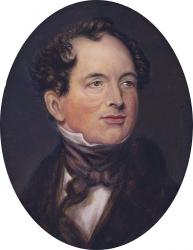
1779 - 1852 Topics: God, the Father The Works of God Author of "Thou art, O God, the life and light" in Hymns for the Living Age Thomas Moore United Kingdom 1779-1852. Born at Dublin, Ireland, the son of a grocer, he showed an early interest in music and acting. He was educated at a private school and Trinity College, Dublin. He read at the Middle Temple for the Bar. Moore did not profess religious piety. His translations of ‘Anacreon’ (celebrating wine, women, and song) were published in 1800, with a dedication to the Prince of Wales. He also wrote a comic opera, “the gypsy prince”, staged that year. In 1801 he published a collection of his own verse, “Poetical works of the late Thomas Little Esq”. A Catholic patriot, he defended the Church of Ireland, especially in later politics. In 1803 he held a post under the Government in Bermuda as registrar of the Admiralty Prize Court. He was bored of it within six months and appointed a deputy to take his place while he left for a tour of North America. He secured high society introductions and even met with President, Thomas Jefferson. Returning to England in 1804, he published “Epistles, Odes, & other poems” in 1806. Moore criticized American slavery and was accused of licentious writings, veiled as refinement. Francis Jeffrey denounced Moore’s writings in the ‘Edinburgh Review’, and Moore challenged him to a duel, but it never happened, and they became friends. Between 1808-1810 he was found acting in various plays, favoring comic roles. He met the sister of one of the actresses and, in 1811, they married. Elizabeth ‘Bessy’ Dyke, was an actress. She had no dowry, and Moore kept their marriage secret from his parents for some time, as his wife was Protestant. Bessie shrank from fashionable society, but those who met her held her in high regard. They had five children, but none survived to adulthood. Three girls died young, and both sons lost their lives as young men. One son, Tom, died in some disgrace in the French Foreign Legion in Algeria. Despite these losses, their marriage was said to be a happy one. He also had political trouble. The man he appointed as his replacement in Bermuda was found to have embezzled 6000 pounds sterling, a large sum, for which Moore was liable. He left for France in 1819 to escape debtor’s prison. He also met Lord Byron in Venice and was entrusted with a manuscript of his memoirs, which he promised to have published after Byron’s death. Moore’s wife and children joined him in Paris, where he learned that some of the debt was repaid with help from Lord Lansdowne, whom Moore had given a draft of money from payment by his publisher. The family returned to England a year later. To support his family Moore entered the field of ‘squib writing’ on behalf of his Whig friends. This resulted in years of political debate about Catholics and Protestants in government. Nearly persuaded to forego his Catholic allegiance in favor of Protestantism, he finally concluded that Protestants did not make a sound case for their faith, as they denounced Catholics so vociferously for erroneous teaching. From 1835 -1846 Moore published a four volume “History of Ireland”, which was basically an indictment of English rule over Ireland. He was primarily a writer, poet, entertainer, and composer, considered politically as a writer for the aristocratic Whigs. His “Sacred songs” (32) were published in 1816, and again, in his “collected works” in 1866. His “Memoirs, Journal, and Correspondence” were published by Lord John Russell in 1855. Moore is essentially remembered for his highly-praised lyrics written for Irish melodies, as requested by his publishers, and his memoirs of Lord Byron, his friend. He died at Bromham, Wilshire, England.
John Perry
==================
Moore, Thomas, son of John Moore, a small tradesman at Dublin, was born in that city, May 28, 1779, educated at a private school and Trinity College, Dublin; read at the Middle Temple for the Bar; held a post under the Government in Bermuda for a short time, and died Feb. 26, 1852. His Memoirs, Journal, and Correspondence were published by Lord John Russell in 1855. In that work every detail concerning himself and his numerous publications, most of them of high poetical merit, will be found. His connection with hymnody is confined to his Sacred Songs, which were published in 1816, and again in his Collected Works, 1866. These Songs were 32 in all, and were written to popular airs of various nations. Of these Songs the following have passed into a few hymnbooks, mainly in America:—
1. As down in the sunless retreats of the ocean. Private Prayer.
2. But who shall see the glorious day. The Final Bliss of Man.
3. Come, ye disconsolate, where'er you languish. Belief in Prayer. In American hymnbooks the text is sometimes as in T. Hastings and Lowell Mason's Spiritual Songs, 1831. This may be distinguished from the original by the third stanza, which reads, "Here see the Bread of life; see waters flowing," &c.
4. Fallen is thy throne, O Israel. Israel in Exile.
5. Like morning when her early breeze. Power of Divine Grace.
6. O Thou Who driest the mourner's tear. Lent.
7. Since first Thy word [grace] awaked my heart. God All and in All.
8. Sound the loud timbrel o'er Egypt's dark sea. Deliverance of Israel.
9. The bird [dove] let loose in eastern skies. Prayer for Constancy.
10. The turf shall be my fragrant shrine. The Temple of Nature. From this "There's nothing bright above, below" is taken.
11. Thou art, O God, the Life and Light. God, the Light and Life of Men.
12. Were not the sinful Mary's tears? Lent.
Of these hymns No. 11 has attained the greatest popularity.
--John Julian, Dictionary of Hymnology (1907)
Thomas Moore
Frederic Henry Hedge
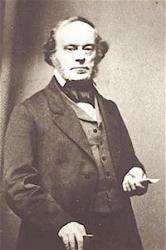
1805 - 1890 Person Name: Frederick H. Hedge Topics: God the Father; God the Father Translator of "A Mighty Fortress Is Our God" in Hymns of Grace Hedge, Frederick Henry, D.D., son of Professor Hedge of Harvard College, was born at Cambridge, Massachusetts, 1805, and educated in Germany and at Harvard. In 1829 he became pastor of the Unitarian Church, West Cambridge. In 1835 he removed to Bangor, Maine; in 1850 to Providence, and in 1856 to Brookline, Mass. He was appointed in 1857, Professor of Ecclesiastical History at Cambridge (U.S.), and in 1872, Professor of German Literature at Harvard. Dr. Hedge is one of the editors of the Christian Examiner, and the author of The Prose Writers of Germany, and other works. In 1853 he edited, with Dr. F. D. Huntington, the Unitarian Hymns for the Church of Christ, Boston Crosby, Nichols & Co. To that collection and the supplement (1853) he contributed the following translations from the German:—
1. A mighty fortress is our God. (Ein feste Burg.)
2. Christ hath arisen! joy to, &c. (Goethe's Faust.)
3. The sun is still for ever sounding. (Goethe's Faust.)
There is also in the Unitarian Hymn [& Tune] Book for The Church & Home, Boston, 1868, a translation from the Latin.
4. Holy Spirit, Fire divine. (“Veni Sancte Spiritus.")
Dr. Hedge's original hymns, given in the Hymns for the Church, 1853, are:—
5. Beneath Thine hammer, Lord, I lie. Resignation.
6. Sovereign and transforming grace. Ordination. Written for the Ordination of H. D. Barlow at Lynn, Mass., Dec. 9, 1829. It is given in several collections.
7. 'Twas in the East, the mystic East. Christmas.
8. 'Twas the day when God's anointed. Good Friday. Written originally for a Confirmation at Bangor, Maine, held on Good Friday, 1843. The hymn "It is finished, Man of Sorrows! From Thy cross, &c," in a few collections, including Martineau's Hymns, &c, 1873, is composed of st. iv.-vi. of this hymn. [Rev. F. M. Bird, M.A.]
--John Julian, Dictionary of Hymnology (1907)
Frederic Henry Hedge
William Owen
1813 - 1893 Person Name: W. Owen Topics: God The Father Composer of "[O listen to our wondrous story]" in Hymns of the Faith Owen, William (‘William Owen of Prysgol,’ 1813-1893), musician; b. 12? Dec. 1813 [in Lônpopty], Bangor, the son of William and Ellen Owen. The father was a quarryman at Cae Braich-y-cafn quarry, Bethesda, and the son began to work in the same quarry when he was ten years old. He learnt music at classes held by Robert Williams (Cae Aseth), at Carneddi, and from William Roberts, Tyn-y-maes, the composer of the hymn-tune ‘Andalusia.’ He wrote his first hymn-tune when he was 18 — it was published in Y Drysorfa for June 1841. After the family had [removed] to [Caesguborwen], Bangor, [sometimes called Cilmelyn] — they had spent some years [at Tŷhen] near the quarry — William Owen formed a temperance choir which sang ‘Cwymp Babilon,’ the work of the conductor, at the Caernarvon temperance festival, 1849. In 1852, with the help of some friends at Bethesda, he published Y Perl Cerddorol yn cynnwys tonau ac anthemau, cysegredig a moesol; of this 3,000 copies were sold, A solfa edition appeared in 1886 of which 4,000 copies were sold. He composed several temperance pieces, some of which were sung in the Eryri temperance festivals held at Caernarvon castle. His anthem, ‘Ffynnon Ddisglair,’ and the hymn-tunes ALMA and DEEMSTER became popular, but it was the hymn-tune called BRYN CALFARIA which made the composer famous; this continues to have a considerable vogue in Wales and in England. He married the daughter of the house called Prysgol and went there to live; he also became precentor at Caeathro C.M. chapel. He died 20 July 1893, and was buried in Caeathro chapel burial ground.
--wbo.llgc.org.uk/en/
William Owen





