

 My Starred Hymns
 My Hymnals
 My Purchased Files
Planning worship?
Check out our sister site, ZeteoSearch.org,
for 20+ additional resources related to your search.
- |
User Links
Search Results


Lord, it belongs not to my care
Author: Richard Baxter Meter: 8.6.8.6 Appears in 268 hymnals Topics: Fifteenth Sunday after Trinity Lyrics: 1 Lord, it belongs not to my care
Whether I die or live;
To love and serve Thee is my share,
And this Thy grace must give.
If life be long, I will be glad
That I may long obey;
If short, yet why should I be sad
To soar to endless day?
2 Christ leads me through no darker rooms
Than He went through before:
He that into God's kingdom comes
Must enter by this door.
Come, Lord, when grace has made me meet
Thy blessed face to see;
For if Thy work on earth be sweet,
What will Thy glory be?
3 Then I shall end my sad complaints,
And weary sinful days,
And join with the triumphant saints,
That sing Jehovah's praise.
My knowledge of that Life is small,
The eye of faith is dim;
But 'tis enough that Christ knows all,
And I shall be with Him. Used With Tune: OLD 137TH PSALM
Lord, it belongs not to my care


If thou suffer God to guide thee
Author: George Neumark; Catherine Winkworth Appears in 194 hymnals Topics: Fifteenth Sunday after Trinity Lyrics: 1 If thou but suffer God to guide thee,
And hope in Him thro' all thy ways,
He'll give thee strength, whate'er betide thee,
And bear thee thro' the evil days;
Who trusts in God's unchanging love,
Builds on the rock that none can move.
2 What can these anxious cares avail thee,
These never-ceasing moans and sighs?
What can it help, if thou bewail thee
O'er each dark moment as it flies?
Our cross and trials do but press
The heavier for our bitterness.
3 Only be still and wait His leisure
In cheerful hope, with heart content
To take whate'er Thy Father's pleasure
And all-deserving love hath sent;
Nor doubt our inmost wants are known
To Him who chose us for His own.
4 He knows the time for joy, and truly
Will send it when He sees it meet,
When He has tried and purged thee duly,
And finds thee free from all deceit,
He comes to thee all unaware,
And makes thee own His loving care.
5 Nor think, amid the heat of trial,
That God hath cast thee off unheard;
That he whose hopes meet no denial
Must surely be of God preferred;
Time passes and much change doth bring
And sets a bound to everything.
6 All are alike before the Highest;
'Tis easy to our God, we know,
To raise thee up, though low thou liest,
To make the rich man poor and low:
True wonders still by Him are wrought
Who setteth up and brings to nought.
7 Sing, pray, and keep His ways unswerving,
So do thine own part faithfully,
And trust His Word, though undeserving,
Thou yet shalt find it true for thee;
God never yet forsook at need
The soul that trusted Him indeed. Used With Tune: NEUMARK (Wer nur den lieben Gott)
If thou suffer God to guide thee
The Lord my Shepherd is
Author: Watts Meter: 6.6.8.6 Appears in 602 hymnals Topics: Fifteenth Sunday after Trinity Lyrics: 1 The Lord my Shepherd is,
I shall be well supplied:
Since He is mine and I am His,
What can I want beside?
2 He leads me to the place
Where heavenly pasture grows,
Where living waters gently pass,
And full salvation flows.
3 If e'er I go astray,
He doth my Soul reclaim;
And guides me in His own right way,
For His most holy Name.
4 While He affords His aid,
I cannot yield to fear;
Though I should walk through death's dark shade,
My Shepherd's with me there.
5 The bounties of Thy love
Shall crown my following days;
Nor from Thy house will I remove,
Nor cease to speak Thy praise. Scripture: Psalm 23 Used With Tune: BETHLEHEM
The Lord my Shepherd is


OLD 137TH PSALM
Meter: 8.6.8.6 Appears in 45 hymnals Topics: Fifteenth Sunday after Trinity Tune Key: G Major Incipit: 17651 32112 34233 Used With Text: Lord, it belongs not to my care
OLD 137TH PSALM
ST. MARTIN
Meter: 8.6.8.6 Appears in 257 hymnals Topics: Fifteenth Sunday after Trinity Tune Key: G Major Incipit: 11215 12334 54312 Used With Text: When all Thy mercies, O my God
ST. MARTIN


O min Sjæl, du gaar og Vanker
Author: Ambr. Stub Hymnal: Salmebog for Lutherske Kristne i Amerika #240 (1919) Topics: Fifteenth Sunday after Trinity Sunday; Fifteenth Sunday after Trinity Sunday; Fifteenth Sunday after Trinity Sunday Lyrics: 1 O min Sjæl, du gaar og vanker
Blandt de mange Verdens Ting,
Samle dine vilde Tanker,
Se dig oventil omkring!
Ak, hvad nytter
Kedars Hytter,
Pilegrim, hvor er dit Hjem?
Lad dit Øie
Agte nøie
Paa det ny Jerusalem!
2 Hele Verden gaar til Grunde
Af den lille Jordens Bold,
Af den store Himlens Runde
Bliver intet i Behold.
Agt i Tide,
Du kan vide,
Naar du selv af Verden gaar,
At du hisset
Er forvisset
Om den Stad, som evig staar!
3 Sig mig dog, hvad er vel dette
tabernakels jordisk' Hus?
Sig mig dog, tør nogen sætte
Lid paa smuldret Ler og Grus?
Dette ældes,
Dette fældes,
O, saa maa man dog herud!
Men en Bolig
Evig rolig
Er beredt for Lammets Brud.
4 Kast med Længsel Troens Øie
Op til hin den fagre Stad,
Agt paa Evighedens Høie!
Trods al Satans Harm og Had,
Er den fundet
Fast og grundet,
Murens Grundvold er saa rar,
Thi af rene
Ædelstene
Er den glimrende og klar.
5 Stadens Porte og dens Gade
er af Perler og af Guld,
Hør der ere alle glade,
Hør den Sang af Sødhed fuld!
Hør dem kvæde
I den Glæde,
Som er fri for Nag og Nød,
Fri for Plage,
Suk og Klage,
Fri for Graad og fri for Død!
6 Der er ingen Sol og Maane
Paa hin evig' Himmel sat,
Der er ingen Sky og Blaane,
Ingen Aften, mindre Nat.
Der maa være Glans og Ære,
Se, den hellig'
Gud er Sol!
Al Ting frydes,
Se, der skydes
Straaler ud fra Lammets Stol!
7 O min Sjæl, du gaar og vanker
Blandt de arme Verdens Ting.
Samle dine vilde Tanker,
Se dig oventil omkring!
Herre, led mig,
Og bered mig
Til din Himmel, til mit Hjem!
Gjør mig værdig,
Gjør mig færdig
Til det ny Jerusalem!
Languages: Norwegian
O min Sjæl, du gaar og Vanker
O min Sjæl, du gaar og vanker
Author: Ambr. Stub Hymnal: M. B. Landstads Kirkesalmebog og "Nokre Salmar" ved Professor Dr. E. Blix, samt følgende tillæg #240 (1897) Topics: Fifteenth Sunday after Trinity Sunday For Evening; Fifteenth Sunday after Trinity Sunday For Evening Lyrics: 1 O min Sjæl, du gaar og vanker
Blandt de mange Verdens Ting,
Samle dine vilde Tanker,
Se dig oventil omkring!
Ak, hvad nytter
Kedars Hytter,
Pillegrim, hvor er dit Hjem?
Lad dit Øie
Agte nøie
Paa det ny Jerusalem!
2 Hele Verden gaar til Grunde
Af den lille Jordens Bold,
Af den store Himlens Runde
Bliver intet i Behold.
Agt i Tide,
Du kan vide,
Naar du selv af Verden gaar,
At du hisset
Er forvisset
Om den Stad, som evig staar!
3 Siig mig dog, hvad er vel dette
Tabernakels jordisk' Hus?
Siig mig dog, tør nogen sette
Lid paa smuldret Leer og Grus?
Dette ældes,
Dette feldes,
O, saa maa man dog herud!
Men en Bolig
Evig rolig
Er beredt for Lammets Brud.
4 Kast med Længsel Troens Øie
Op til hiin den fagre Stad,
Agt paa Evighedens Høie!
Traads al Satans Harm og Had,
Er den fundet
Fast og grundet,
Murens Grundvold er saa rar,
Thi af rene
Ædelstene
Er den glimrende og klar.
5 Stadens Porte og dens Gade
er af Perler og af Guld,
Hør, der ere alle glade,
Hør den Sang af Sødhed fuld!
Hør dem kvæde
I den Glæde,
Som er fri for Nag og Nød,
Fri for Plage,
Suk og Klage,
Fri for Graad og fri for Død!
6 Der er ingen Sol og Maane
Paa hin evig' Himmel sat,
Der er ingen Sky og Blaane,
Ingen Aften, mindre Nat.
Der maa være Glans og Ære,
Se, den hellig'
Gud er Sol!
Al Ting frydes,
Se, der skydes
Straaler ud fra Lammets Stol!
7 O min Sjæl, du gaar og vanker
Blandt de arme Verdens Ting.
Samle dine vilde Tanker,
Se dig oventil omkring!
Herre, led mig,
Og bered mig
Til din Himmel, til mit Hjem!
Gjør mig værdig,
Gjør mig færdig
Til det ny Jerusalem! Languages: Norwegian
O min Sjæl, du gaar og vanker
Hvor deilig skal Guds Kirke staa
Author: Kingo Hymnal: Salmebog for Lutherske Kristne i Amerika #484 (1919) Topics: Fifteenth Sunday after Trinity Sunday Lyrics: 1 Hvor deilig skal Guds Kirke staa,
Og i hans Aasyn Ynde faa,
Naar alle Hjerter knytted' er
Udi eet Sind og een Begjær:
At elske ham og blive ved
At vandre frem i Kjærlighed!
2 Hvad er vort Væsen, om vi ei
Gaa Kjærligheds den rene Vei,
Og broderlig hinanden vil
Al velment Troskab byde til
Med sligt et Hjerte og Attraa,
Som Gud stod hos og saa derpaa?
3 Bort Vrede, Skjeldsord, daarlig Harm!
I bør ei huses i dem Barm,
Hvor Gud til Fred og salig Ro
Vil, sin Velsignelse skal bo:
Bort derfor alt, hvad skade kan
Og hindre Enigheds Forstand!
4 Gid Tunge, Læber, Sind og Mund
De kunde ret af Hjertens Grund
Forsage Trædskhed, List og Svig,
Og gjøre sig et Himmerig
Udaf den søde Venskabs Fred
Med hver Mand i Guds Kjærlighed!
5 Guds Øie ser dog al vor Daad,
Vor Tanke, Paafund, Hjertens Raad;
De Onde gaa ham ei forbi
Paa deres Ondskabs skjulte Sti,
Han ogsaa paa de Fromme ser,
Al Hjælp og Naade han dem ter.
6 Min Sjæl, agt derfor lidet om
Den Trusel, Had og Vrede, som
Dig Verdens Børn kan lægge paa,
Den skal saa snar en Vending faa,
Gaa du kun frem paa Fredens Vei,
Og agt al Verdens Tummel ei!
7 O søde Gud, o gid jeg maa
Mit Hjerte ved dig dannet faa,
At du kan heliges i mig,
Til jeg dig ser i Himmerig,
Hvor hellig, hellig, hellig da
Jeg synger med Halleluja!
Languages: Norwegian
Hvor deilig skal Guds Kirke staa


William Cowper
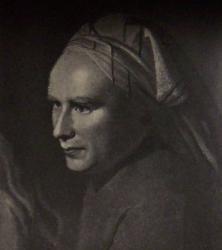
1731 - 1800 Topics: The Church Year Fifteenth Sunday after Trinity; The Church Year Fifteenth Sunday after Trinity Author of "In holy contemplation " in The Lutheran Hymnary William Cowper (pronounced "Cooper"; b. Berkampstead, Hertfordshire, England, 1731; d. East Dereham, Norfolk, England, 1800) is regarded as one of the best early Romantic poets. To biographers he is also known as "mad Cowper." His literary talents produced some of the finest English hymn texts, but his chronic depression accounts for the somber tone of many of those texts. Educated to become an attorney, Cowper was called to the bar in 1754 but never practiced law. In 1763 he had the opportunity to become a clerk for the House of Lords, but the dread of the required public examination triggered his tendency to depression, and he attempted suicide. His subsequent hospitalization and friendship with Morley and Mary Unwin provided emotional stability, but the periods of severe depression returned. His depression was deepened by a religious bent, which often stressed the wrath of God, and at times Cowper felt that God had predestined him to damnation.
For the last two decades of his life Cowper lived in Olney, where John Newton became his pastor. There he assisted Newton in his pastoral duties, and the two collaborated on the important hymn collection Olney Hymns (1779), to which Cowper contributed sixty-eight hymn texts.
Bert Polman
============
Cowper, William, the poet. The leading events in the life of Cowper are: born in his father's rectory, Berkhampstead, Nov. 26, 1731; educated at Westminster; called to the Bar, 1754; madness, 1763; residence at Huntingdon, 1765; removal to Olney, 1768; to Weston, 1786; to East Dereham, 1795; death there, April 25, 1800.
The simple life of Cowper, marked chiefly by its innocent recreations and tender friendships, was in reality a tragedy. His mother, whom he commemorated in the exquisite "Lines on her picture," a vivid delineation of his childhood, written in his 60th year, died when he was six years old. At his first school he was profoundly wretched, but happier at Westminster; excelling at cricket and football, and numbering Warren Hastings, Colman, and the future model of his versification. Churchill, among his contemporaries or friends. Destined for the Bar, he was articled to a solicitor, along with Thurlow. During this period he fell in love with his cousin, Theodora Cowper, sister to Lady Hesketh, and wrote love poems to her. The marriage was forbidden by her father, but she never forgot him, and in after years secretly aided his necessities. Fits of melancholy, from which he had suffered in school days, began to increase, as he entered on life, much straitened in means after his father's death. But on the whole, it is the playful, humorous side of him that is most prominent in the nine years after his call to the Bar; spent in the society of Colman, Bonnell Thornton, and Lloyd, and in writing satires for The Connoisseur and St. James's Chronicle and halfpenny ballads. Then came the awful calamity, which destroyed all hopes of distinction, and made him a sedentary invalid, dependent on his friends. He had been nominated to the Clerkship of the Journals of the House of Lords, but the dread of appearing before them to show his fitness for the appointment overthrew his reason. He attempted his life with "laudanum, knife and cord,"—-in the third attempt nearly succeeding. The dark delusion of his life now first showed itself—a belief in his reprobation by God. But for the present, under the wise and Christian treatment of Dr. Cotton (q. v.) at St. Albans, it passed away; and the eight years that followed, of which the two first were spent at Huntingdon (where he formed his lifelong friendship with Mrs. Unwin), and the remainder at Olney in active piety among the poor, and enthusiastic devotions under the guidance of John Newton (q. v.), were full of the realisation of God's favour, and the happiest, most lucid period of his life. But the tension of long religious exercises, the nervous excitement of leading at prayer meetings, and the extreme despondence (far more than the Calvinism) of Newton, could scarcely have been a healthy atmosphere for a shy, sensitive spirit, that needed most of all the joyous sunlight of Christianity. A year after his brother's death, madness returned. Under the conviction that it was the command of God, he attempted suicide; and he then settled down into a belief in stark contradiction to his Calvinistic creed, "that the Lord, after having renewed him in holiness, had doomed him to everlasting perdition" (Southey). In its darkest form his affliction lasted sixteen months, during which he chiefly resided in J. Newton's house, patiently tended by him and by his devoted nurse, Mrs. Unwin. Gradually he became interested in carpentering, gardening, glazing, and the tendance of some tame hares and other playmates. At the close of 1780, Mrs. Unwin suggested to him some serious poetical work; and the occupation proved so congenial, that his first volume was published in 1782. To a gay episode in 1783 (his fascination by the wit of Lady Austen) his greatest poem, The Task, and also John Gilpin were owing. His other principal work was his Homer, published in 1791. The dark cloud had greatly lifted from his life when Lady Hesketh's care accomplished his removal to Weston (1786): but the loss of his dear friend William Unwin lowered it again for some months. The five years' illness of Mrs. Unwin, during which his nurse of old became his tenderly-watched patient, deepened the darkness more and more. And her death (1796) brought “fixed despair," of which his last poem, The Castaway, is the terrible memorial. Perhaps no more beautiful sentence has been written of him, than the testimony of one, who saw him after death, that with the "composure and calmness" of the face there “mingled, as it were, a holy surprise."
Cowper's poetry marks the dawn of the return from the conventionality of Pope to natural expression, and the study of quiet nature. His ambition was higher than this, to be the Bard of Christianity. His great poems show no trace of his monomania, and are full of healthy piety. His fame as a poet is less than as a letter-writer: the charm of his letters is unsurpassed. Though the most considerable poet, who has written hymns, he has contributed little to the development of their structure, adopting the traditional modes of his time and Newton's severe canons. The spiritual ideas of the hymns are identical with Newton's: their highest note is peace and thankful contemplation, rather than joy: more than half of them are full of trustful or reassuring faith: ten of them are either submissive (44), self-reproachful (17, 42, 43), full of sad yearning (1, 34), questioning (9), or dark spiritual conflict (38-40). The specialty of Cowper's handling is a greater plaintiveness, tenderness, and refinement. A study of these hymns as they stood originally under the classified heads of the Olney Hymns, 1779, which in some cases probably indicate the aim of Cowper as well as the ultimate arrangement of the book by Newton, shows that one or two hymns were more the history of his conversion, than transcripts of present feelings; and the study of Newton's hymns in the same volume, full of heavy indictment against the sins of his own regenerate life, brings out the peculiar danger of his friendship to the poet: it tends also to modify considerably the conclusions of Southey as to the signs of incipient madness in Cowper's maddest hymns. Cowper's best hymns are given in The Book of Praise by Lord Selborne. Two may be selected from them; the exquisitely tender "Hark! my soul, it is the Lord" (q. v.), and "Oh, for a closer walk with God" (q. v.). Anyone who knows Mrs. Browning's noble lines on Cowper's grave will find even a deeper beauty in the latter, which is a purely English hymn of perfect structure and streamlike cadence, by connecting its sadness and its aspiration not only with the “discord on the music" and the "darkness on the glory," but the rapture of his heavenly waking beneath the "pathetic eyes” of Christ.
Authorities. Lives, by Hayley; Grimshaw; Southey; Professor Goldwin Smith; Mr. Benham (attached to Globe Edition); Life of Newton, by Rev. Josiah Bull; and the Olney Hymns. The numbers of the hymns quoted refer to the Olney Hymns. [Rev. H. Leigh Bennett, M.A.]
--John Julian, Dictionary of Hymnology (1907)
================
Cowper, W. , p. 265, i. Other hymns are:—
1. Holy Lord God, I love Thy truth. Hatred of Sin.
2. I was a grovelling creature once. Hope and Confidence.
3. No strength of nature can suffice. Obedience through love.
4. The Lord receives His highest praise. Faith.
5. The saints should never be dismayed. Providence. All these hymns appeared in the Olney Hymns, 1779.
--John Julian, Dictionary of Hymnology, Appendix, Part II (1907)
=====================
Cowper, W., p. 265, i. Prof. John E. B. Mayor, of Cambridge, contributed some letters by Cowper, hitherto unpublished, together with notes thereon, to Notes and Queries, July 2 to Sept. 24, 1904. These letters are dated from Huntingdon, where he spent two years after leaving St. Alban's (see p. 265, i.), and Olney. The first is dated "Huntingdon, June 24, 1765," and the last "From Olney, July 14, 1772." They together with extracts from other letters by J. Newton (dated respectively Aug. 8, 1772, Nov. 4, 1772), two quotations without date, followed by the last in the N. & Q. series, Aug. 1773, are of intense interest to all students of Cowper, and especially to those who have given attention to the religious side of the poet's life, with its faint lights and deep and awful shadows. From the hymnological standpoint the additional information which we gather is not important, except concerning the hymns "0 for a closer walk with God," "God moves in a mysterious way," "Tis my happiness below," and "Hear what God, the Lord, hath spoken." Concerning the last three, their position in the manuscripts, and the date of the last from J. Newton in the above order, "Aug. 1773," is conclusive proof against the common belief that "God moves in a mysterious way" was written as the outpouring of Cowper's soul in gratitude for the frustration of his attempted suicide in October 1773.
--John Julian, Dictionary of Hymnology, New Supplement (1907)
William Cowper
Ray Palmer
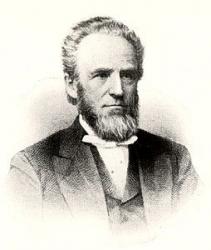
1808 - 1887 Person Name: R. Palmer Topics: The Church Year Fifteenth Sunday after Trinity Author of "My faith looks up to Thee" in The Lutheran Hymnary Ray Palmer (b. Little Compton, RI, 1808; d. Newark, NJ, 1887) is often considered to be one of America's best nineteenth-century hymn writers. After completing grammar school he worked in a Boston dry goods store, but a religious awakening prodded him to study for the ministry. He attended Yale College (supporting himself by teaching) and was ordained in 1835. A pastor in Congregational churches in Bath, Maine (1835-1850), and Albany, New York (1850-1865), he also served as secretary of the American Congregational Union (1865-1878). Palmer was a popular preacher and author, writing original poetry as well as translating hymns. He published several volumes of poetry and hymns, including Sabbath Hymn Book (1858), Hymns and Sacred Pieces (1865), and Hymns of My Holy Hours (1868). His complete poetical works were published in 1876.
Bert Polman
===================
Palmer, Ray, D.D., son of the Hon. Thomas Palmer, a Judge in Rhode Island, was born at Little Compton, Rhode Island, Nov. 12, 1808. His early life was spent at Boston, where he was for some time clerk in a dry-goods store. At Boston he joined the Park Street Congregational Church, then under the pastoral care of Dr. S. E. Dwight. After spending three years at Phillips Academy, Andover, he entered Yale College, New Haven, where he graduated in 1830. In 1835 he became pastor of the Central Congregational Church, Bath, Maine. During his pastorate there he visited Europe in 1847. In 1850 he was appointed to the First Congregational Church, at Albany, New York, and in 1865 Corresponding Secretary to the American Congregational Union, New York. He resigned in 1878, and retired to Newark, New Jersey. He died at Newark, Mar. 29, 1887. Dr. Palmer's published works in prose and verse include:--
(1) Memoirs and Select Remains of Charles Pond, 1829; (2) The Spirit's Life, a Poem, 1837; (3) How to Live, or Memoirs of Mrs. C. L. Watson, 1839; (4) Doctrinal Text Book, 1839; (5) Spiritual Improvement, 1839, republished as Closet Hours in 185; (6) What is Truth? or Hints on the Formation of Religious Opinions, 1860; (7) Remember Me, or The Holy Communion, 1865; (8) Hymns and Sacred Pieces, with Miscellaneous Poems, 1865; (9) Hymns of my Holy Hours, and Other Pieces, 1868; (10) Home, or the Unlost Paradise, 1873; and (11) Voices of Hope and Gladness, 1881.
Most of Dr. Palmer's hymns have passed into congregational use, and have won great acceptance. The best of them by their combination of thought, poetry, and devotion, are superior to almost all others of American origin. The first which he wrote has become the most widely known of all. It is:—
1. My faith looks up to Thee. Faith in Christ. This hymn was written by the author when fresh from College, and during an engagement in teaching in New York. This was in 1830. The author says concerning its composition, "I gave form to what I felt, by writing, with little effort, the stanzas. I recollect I wrote them with very tender emotion, and ended the last line with tears." A short time afterwards the hymn was given to Dr. Lowell Mason for use, if thought good, in a work then being compiled by him and Dr. T. Hastings. In 1831 that work was published as Spiritual Songs for Social Worship: adapted to the use of Families, &c. Words and Music arranged by Thomas Hastings, of New York, and Lowell Mason of Boston. It is No. 141 in 4 stanzas of 8 lines, entitled "Self Consecration," and accompanied with the tune by Dr. L. Mason, there given as "My faith looks up to Thee, "but subsequently known as Olivet. (Orig. text of hymn in Thring's Collection, 1882.) It has passed into most modern collections in all English-speaking countries, and has been rendered into numerous languages. That in Latin, by H. M. Macgill (p. 708, ii.), begins "Fides Te mea spectat."
2. Fount of everlasting love. Praise for renewed Spiritual Life. This also appeared in the Spiritual Songs, &c, 1831, No. 191, in 4 stanzas of 4 lines, and headed "Praise for a Revival."
The hymns which are given below are all in Dr. Palmer's Poetical Works, N. Y., 1876, and the dates appended in brackets are those given by him in that work.
3. Thou who roll'st the year around. (1832.) Close of the Year. In several American collections.
4. Away from earth my spirit turns. (1833.) Holy Communion. Appeared in Lowell Mason's Union Hymns, in 4 stanzas of 4 lines. In the Church Praise Book, N. Y.. 1882, it begins with st. ii., "Thou, Saviour, art the Living Bread."
5. Before Thy throne with tearful eyes. (1834.) Liberty of Faith.
6. Stealing from the world away. (1834.) Evening. Written at New Haven in 1834, and is very popular in America.
7. Thine [Thy] holy day's returning. (1834.) Sunday Morning.
8. Wake thee, 0 Zion. (1862.) Zion Exultant.
9. We stand in deep repentance. (1834.) Lent.
This last, No. 9, in common with Nos. 10, 11, 12, is marked "original," in the Presbyterian Parish Hymns, 1843. Probably they were given to the editors of that book in manuscript, and had not previously appeared.
10. And is there, Lord, a rest? (1843.) Rest in Heaven. Written at Bath, Maine, in 1843.
11. 0 sweetly breathe the lyres above. Consecration to Christ. This was accidentally omitted from Dr. Palmer's Poetical Works, 18?6. S. W. Duffield says:—
"It was written in the winter of 1842-43, at a time of revival. At the previous Communion several had been received under circumstances that made Doddridge's hymn, ‘0 happy day that fixed my choice 'a most appropriate selection. Not caring to repeat it, and needing something similar, Dr. Palmer composed the present hymn." English Hymns, N. Y., 1886, p. 432.
12. When downward to the darksome tomb. (1842.) Death Contemplated. Written at Bath, Maine, 1842.
From 1843 there comes a long break, and Dr. Palmer seems to have done no more hymn-writing until called upon by Professors Park and Phelps, of Andover, for contributions to their Sabbath Hymn-Book, 1858. His hymns written for that important collection rank amongst the best that America has produced. This is specially true of the first four (Nos. 13-16) from the Latin.
13. Jesus, Thou joy of loving hearts. (l858.) Translation of a cento from "Jesu dulcis memoria" (p. 588, ii.).
14. 0 Bread to Pilgrims given. (1858.) Translation of “O esca viatorum" (q.v.).
15. 0 Christ our King, Creator Lord. (1858.) Translation of “Rex Christe, factor omnium "
16. Come Holy Ghost, in love. (1858.) Translation of “Veni Sancte Spiritus" (q.v.)
17. Jesus, these eyes have never seen. (1858.) Christ loved, though unseen. This hymn is accounted by many as next in merit and beauty to "My faith looks up to Thee."
18. Lord, my weak thought in vain would climb. (1858.) God Unsearchable. This hymn deals with the mysteries of Predestination in a reverent and devout manner.
19. Thy Father's house! thine own bright home. (1858.) Heaven.
The next group, Nos. 20-27, appeared in Dr. Robinson's Songs for the Sanctuary, 1865.
20. Lord, Thou wilt bring the joyful day. (1864.) Contemplation of Heaven. Written in New York City.
21. Eternal Father, Thou hast said. (i860.) Missions.
22. Jesus, Lamb of God, for me. (1863.) Jesus, the Way of Salvation. Written in Albany, New York.
23. Take me, 0 my Father, take me. (1864.) Lent.
24. Wouldst thou eternal life obtain. (1864.) Good Friday.
25. Come Jesus, Redeemer, abide Thou with me. (1864.) Holy Communion.
26. Lord, Thou on earth didst love Thine own. (1864.) Fellowship with Christ.
27. Thou, Saviour, from Thy throne on high. (1864.) Prayer.
The next four (Nos. 28-31) present another group. They appeared in D. E. Jones's Songs for the New Life, 1869, and the Reformed Dutch Hymns of the Church, N. Y., 1869. The dates of composition are from Dr. Palmer's Poems, 1876.
28. Lord, Thou hast taught our hearts to glow. (1865.) Ordination, or Meeting of Ministers.
29. When inward turns my searching gaze. (1868.) Evening.
30. 0 Jesus, sweet the tears I shed. (1867.) Good Friday.
31. Jesus, this [my] heart within me burns. (1868.) Love.
The hymns which follow are from various sources.
32. 0 Christ, the Lord of heaven, to Thee. (1867.) Universal Praise to Christ. Appeared in the author's Hymns of my Holy Hours, 1867. It is a hymn of great merit, and is widely used.
33. Behold the shade of night is now receding. (1869.) A translation of "Ecce jam noctis." (p. 320, i., and Various).
34. Hid evening shadows let us all be waking. (1869.) A translation of "Nocte surgentes" (p. 809, i.).
35. I give my heart to Thee. (Aug. 20, 1868.) A translation of "Cor meum Tibi dedo," p. 262, ii.
36. Holy Ghost, that promised came. (1873.) Whitsuntide. From the author's Poems, 1876.
37. 0 Holy Comforter, I hear. The Comforter. Appeared in the Boston Congregationalist, September 7th, 1867.
38. Lord, when my soul her secrets doth reveal. (1865.) Holy Communion.
Most of the foregoing hymns are in common in Great Britain, and all are found in one or more American hymnbooks of importance. [Rev. F. M. Bird, M.A.]
-- John Julian, Dictionary of Hymnology (1907)
===================
Palmer, Ray, D.D., p. 877, i. The following original hymns by Dr. Palmer are also in common use:—
1. O Rock of Ages, since on Thee. Faith. From his Poetical Works, 1876, p. 27, where it is dated 1869. Bp. Bickersteth says "This hymn"... is "worthy of Luther." (Note Hymnal Companion, ed. 1876.)
2. Thy holy will, my God, be mine. Resignation. From his Hymns of my Holy Hours, &c, 1868, p. 47. Also in his P. Works, 1876, dated 1867.
3. We praise Thee, Saviour, for Thy grace. Holy Communion. From his Hymns and Sacred Pieces, &c, 1865. Also in P. Works, 1876, dated 1864.
--John Julian, Dictionary of Hymnology, Appendix, Part II (1907)
==========
Ray Palmer was born at Little Compton, Rhode Island, in 1808. He studied at Phillip's Academy, Andover, Mass., and graduated at Yale College in 1830. In 1835, he was ordained pastor of a Congregational Society in Bath, Maine, from which he removed, in 1850, to the pastorate of a Congregational Society in Albany, N.Y. He has published many hymns, some of his own authorship, and some translations. He has published some sermons and reviews.
--Annotations of the Hymnal, Charles Hutchins, M.A. 1872.
Ray Palmer
Benjamin Schmolck
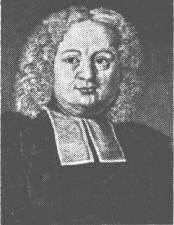
1672 - 1737 Topics: Fifteenth Sunday after Trinity Author of "My Jesus, as Thou wilt!" in Evangelical Lutheran hymnal Schmolck, Benjamin, son of Martin Schmolck, or Schmolcke, Lutheran pastor at Brauchitschdorf (now Chrόstnik) near Liegnitz in Silesia (now Poland) was born at Brauchitschdorf, Dec. 21, 1672. He entered the Gymnasium at Lauban in 1688, and spent five years there. After his return home he preached for his father a sermon which so struck the patron of the living that he made Benjamin an allowance for three years to enable him to study theology. He matriculated, at Michaelmas, 1693, at the University of Leipzig, where he came under the influence of J. Olearius, J. B. Carpzov, and others, and throughout his life retained the character of their teaching, viz. a warm and living practical Christianity, but Churchly in tone and not Pietistic. In the autumn of 1697, after completing his studies at Leipzig (during his last year there he supported himself mainly by the proceeds of occasional poems written for wealthy citizens, for which he was also, crowned as a poet), he returned to Brauchitzchdorf to help his father, and, in 1701, was ordained as his assistant.
On Feb. 12, 1702, he married Anna Rosina, daughter of Christoph Rehwald, merchant in Lauban and in the end of the same year was appointed diaconus of the Friedenskirche at Schweidnitz in Silesia. As the result of the Counter-Reformation in Silesia, the churches in the principality of Schweidnitz had been taken from the Lutherans, and for the whole district the Peace of Westphalia (1648) allowed only one church (and that only of timber and clay, without tower or bells), which the Lutherans had to build at Schweidnitz, outside the walls of the town; and the three clergy attached to this church had to minister to a population scattered over some thirty-six villages, and were moreover hampered by many restrictions, e.g. being unable to communicate a sick person without a permit from the local Roman Catholic priest. Here Schmolck remained till the close of his life, becoming in 1708 archidiaconus, in 1712 senior, and in 1714 pastor primarius and inspector. Probably as the result of his exhausting labours he had a stroke of paralysis on Laetare (Mid-Lent) Sunday, 1730, which for a time laid him aside altogether, and after which he never recovered the use of his right hand. For five years more he was still able to officiate, preaching for the last time on a Fastday in 1735. But two more strokes of paralysis followed, and then cataract came on, relieved for a time by a successful operation, but returning again incurably. For the last months of his life he was confined to bed, till the message of release came to him, on the anniversary of his wedding, Feb. 12, 1737. (Koch, v. 463; Bode, p. 144; Goedeke's Grundriss, vol. iii., 1887, p. 306; sketch prefixed to Ledderhose's edition of Schmolck's Geistliche Lieder, Halle, 1857, &c.)
Schmolck was well known in his own district as a popular and useful preacher, a diligent pastor, and a man of wonderful tact and discretion. It was however his devotional books, and the original hymns therein contained, that brought him into wider popularity, and carried his name and fame all over Germany. Long lists of his works and of the various editions through which many of them passed are given by Koch, Bode and Goedehe. It is rather difficult to trace the hymns, as they are copied from one book of his into another, &c. Schmolck was the most popular hymnwriter of his time, and was hailed as the "Silesian Rist," as the "second Gerhardt," &c. Nor was he altogether unworthy of such praise. It is true that he did not possess the soaring genius of Gerhardt. Nor had he even Gerhardt's concise, simple style, but instead was too fond of high-sounding expressions, of plays upon words, of far-fetched but often recurring contrasts, and in general of straining after effect, especially in the pieces written in his later years. In fact he wrote a great deal too much, and latterly without proper attention to concentration or to proportion. Besides Cantatas, occasional pieces for weddings, funerals, &c, he is the author of some 900 hymns, properly so called. These were written for all sorts of occasions, and range over the whole field of churchly, family, and individual life. Naturally they are not all alike good; and those in his first three collections are decidedly the best. A deep and genuine personal religion, and a fervent love to the Saviour, inspire his best hymns; and as they are not simply thought out but felt, they come from the heart to the heart. The best of them are also written in a clear, flowing, forcible, natural, popular style, and abound in sententious sayings, easily to be remembered. Even of these many are, however, more suited for family use than for public worship. Nevertheless they very soon came into extensive use, not only in Silesia, but all over Germany.
A number of Schmolck's hymns [that] have passed into English are:—
i. Der beste Freund ist in dem Himmel. Love of Jesus. First published in his Heilige Flammen (ed. 1709, p. 100), in 6 stanzas of 6 lines, entitled "The best Friend." The translation in common use is:—
A faithful friend is waiting yonder. This is a good translation, omitting stanza v., as No. 293, in Kennedy, 1863.
ii. Die Woche geht zum Ende. Saturday Evening. In his Andächtige Hertze, 1714, p. 116, in 10 stanzas of 8 lines, entitled "Evening Hymn," and appointed for Evening Prayer on Saturday. In the Berlin Geistliche Lieder, ed. 1863, No. 1158. Translated as:—
The week draws near its ending. This is a good translation of stanzas i., vi., vii., x., marked as by "A. G.," as No. 81 in the Dalston Hospital Hymn Book 1848.
Other trs. are: (1) “Though now the week is ending," by H. J. Buckoll, 1842, p. 107. (2) “The week at length is over," by Miss Manington, 1863, p. 137.
iii. Gott du hist selbst die Liehe. Holy Matrimony. Translated as:—
O God, "Who all providest. This is a good translation, omitting stanza iii., by J. M. Sloan, as No. 312 in J. H. Wilson's Service of Praise, 1865.
iv. Halleluja! Jesus lebt. Easter. In his Bochim und Elim, 1731, p. 67, in 5 stanzas of 6 lines, entitled "Hallelujah! at the grave of Jesus." In the Berlin Geistliche Lieder, ed. 1863, No. 296. Tr. as:—
Hallelujah! Lo, He wakes. By E. Cronenwett, omitting st. iv., as No. 79 in the Ohio Lutheran Hymnal 1880.
Another translation is: "Hallelujah! Jesus lives! Life, immortal life, He gives." This is a full and good translation, by Miss Warner, 1858, p. 486, repeated in the Treasury of Sacred Song, Kirkwall, n.d.
v. Heute mir und Morgen dir. Funeral Hymn. In his Schmuck und Asche, 1717, p. 252, in 6 stanzas of 6 lines, entitled "Daily Dying". The tr. in common use is:—
Today mine, tomorrow thine. This is a good and full translation, by Miss Warner, in her Hymns of the Church Militant, 1858, p. 260.
vi. Je grösser Kreuz, je näher Himmel. Cross and Consolation. In his Andächtige Hertz, 1714, p. 273, in 9 stanzas of 6 lines, entitled "Hymn of Cross and Consolation." By its sententiousness and its manifold illustrations of the power of the Cross it has been a favourite with many. Translated as:—
1. Greater the Cross, the nearer heaven.
2. The more the cross, the nearer heaven. Another translation is: "The heavier the cross, the nearer heaven," by J. D. Burns, in the Family Treasury, 1859, p. 160.
vii. Jesus soil die Losung sein. New Year. The translation in common use is:—
Jesus shall the watchword he. Another translation is: "Jesu's name shall be our watchword," by J. Kelly, in the Family Treasury, 1868, p. 689.
viii. Licht vom Licht, erleuchte mich. Sunday Morning. Translated as:—
Light of Light, enlighten me. This is a very good tr. omitting stanza vii., by Miss Winkworth, in her Lyra Germanica, 2nd Ser., 1858, p. 66, and thence in her Chorale Book for England, 1863, No. 17. Other translations are: (1) "Light of Light! illumine me," by H. J. Buckoll, 1842, p. 6. (2) "O thou blessed Light of Light," by Miss Dunn, 1857, p. 74.
ix. Meinen Jesum lass ich nicht, Ach was wollt ich hessres haben. Love to Christ. Translated as:—
I'll with Jesus never part. This is a translation of st. i., ii., iv., as stanzas iii.-v. of No. 378 in the Moravian Hymn Book, 1789. In the ed. of 1886, No. 452 (see p. 614, i.), the part from Schmolck begins, "He is mine and I am His" (the translation of stanza ii.).
Another tr. is: "I'll not leave Jesus—-never, never," by Miss Warner, 1858, p. 509.
x. Mein Gott, ich weiss wohl dass ich sterbe. For the Dying. Translated as:—
My God! I know that I must die, My mortal. Other trs. are: (1) "That I shall die full well 1 know," by Dr. H. Mills, 1845 (1856, p. 232). (2) "My God! I know full well that I must die," by Miss Warner, 1858, p. 344. (3) "My God, I know that I must die; I know," by G. Moultrie, in his Espousals of S. Dorothea, 1870.
xi. Mein Jesus lebt! was soil ich sterben. Easter. Translated as:—
My Saviour lives; I shall not perish.
xii. 0 wie fröhlich, o wie selig. Eternal Life. Translated as:—
Oh how joyous, oh how blessed. Another tr. is: "Oh, how blest beyond our telling."
xiii. Schmückt das Fest mit Maien. Whitsuntide. Translated as:—
Come, deck our feast today.
xiv. Thut mir auf die schöne Pforte. Sunday. Translated as:—
1. Open now thy gates of beauty. This is a good tr., omitting stanza iii., vii., by Miss Winkworth, in her Chorale Book for England, 1863, No. 15.
2. Open wide the gates of beauty. This is a translation of stanzas i., ii., iv., vi.-vii., by H. L. Hastings, dated 1885, as No. 1076, in his Songs of Pilgrimage, 1886.
Another tr. is: "Throw the glorious gates wide open," by Miss Manington, 1863, p. 146.
xv. Weine nicht, Gott lebet noch. Cross and Consolation. Tr. as:— "Weep not,-—Jesus lives on high. Another tr. is: "Weep not, for God, our God, doth live," by Dr. R. Maguire, 1883, p. 59.
xvi. Willkommen, Held im Streite. Easter. The translation in common use is:—
Welcome Thou victor in the strife. This is a good translation omitting st. ii.—iv., by Miss Winkworth, in her Lyra Germanica, 1st Ser., 1855, p. 91.
Hymns not in English common use:--
xvii. Ach wenn ich dich, mein Gott, nur habe. Love to God. Founded on Ps. lxxiii. 25, 26. Translated as "My God, if I possess but Thee," by G. Moultrie, in his Espousals of S. Dorothea, 1870.
xviii. An Gott will ich gedenken. Remembering God's Love and Care. In his Heilige Flammen (ed. 1707, p. 59; ed. 1709, p. 131), in 6 stanzas of 8 lines, and Burg's Gesang-Buch, Breslau, 1746, No. 112. Translated as "My God will I remember," by J. Kelly, in the Family Treasury, 1868.
xix. Der Sabbath ist vergangen. Sunday Evening. Tr. as "The Sabbath now is over," by Dr. H. Mills, 1856, p. 226.
xx. Du angenehmer Tag. Sunday. In his Lustige Sabbath, 1712, p. 1, in 8 stanzas of 6 lines. Tr. as “Thou ever welcome day," by J. Kelly, in the Family Treasury, 1868, p. 688.
xxi. Endlich, endlich, muss es doch. Cross and Consolation. Translated as "Yes, at last, our God shall make," in the Christian Examiner, Boston, U.S., Sept., 1860, p. 251.
xxii. Gedenke mein, mein Gott, gedenke mein. For the Dying. Translated as "Remember me, my God! remember me," by Miss Borthwick, in Hymns from the Land of Luther 1854, p. 9.
xxiii. Geh, müder Leib, zu deiner Euh. Evening. Translated as "Go, wearied body, to thy rest," by J. Kelly, in the Family Treasury, 1868. In his Lustige Sabbath, 1712, p. 35, in 10 stanzas of 6 lines, and Burg’s Gesang-Buch, Breslau, 1746, No. 403. Translated as "King, to Jews and Gentiles given," by Dr. H. Mills, 1845.
xxiv. Gott der Juden,Gott der Heiden. Epiphany. Translated as “King, to Jews and Gentiles given,” by Dr. H. Mills, 1845.
xxv. Gott lebt, wie kann ich traurig sein. Trust in God. Translated as "God lives! Can I despair," by Miss Warner, 1869, p. 44.
xxvi. Gott mit uns, Immanuel. New Year. Translated as "God with us! Immanuel, Open with the year before us," by Dr. R. P. Dunn, in Sacred Lyrics from the German, Philadelphia, U.S., 1859, p. 166.
xxvii. Hier ist Immanuel! New Year. Translated as "Here is Immanuel!" by Miss Manington, 1864, p. 24.
xxviii. Hilf, Heifer, hilf! ich muss verzagen. Cross and Consolation. Translated as "Help, Saviour, help, I sink, I die,” in the Monthly Packet, vol. xviii., 1859, p. 664.
xix. Ich habe Lust zu scheiden. For the Dying. Tr. as "Weary, waiting to depart," by Mrs. Findlater, in Hymns from the Land of Luther, 1855, p 130.
xxx. Ich sterbe täglich, und mein Leben. For the Dying. Translated as "Both life and death are kept by Thee" (st. iv.), by J. Kelly, in the Family Treasury, 1868, p. 689.
xxxi. Mein Gott, du hast mich eingeladen. Sunday. Translated as "My God, Thou hast the invite given," by Miss Manington, 1863, p. 150.
xxxii. Mein Gott! du wohnst in einem Lichte. Holy Scripture. Translated as "In glory bright, O God, Thou dwellest," by Dr. H. Mills, 1845.
xxxiii. Mein Gott, ich klopf an deine Pforte. Supplication. Tr.Translated as "given as "Mein Gott, mein Erstes und mein Alles." Translated as "My God! the Source of all my blessing," in the British Herald, August, 1866, p. 312; repeated in Reid's Praise Book, 1872.
xxxv. Mein Gott, weil ich in meinem Leben. The ChristiaWho, Lord, has any good whatever," by Dr. H. Mills, 1845, p. 91.
xxxiv. Mein Gott, mein Alles Uber Alles. Trust in God. Sometimes n Life. Translated as "Most High! with reverence to fear Thee," by Dr. H. Mills, 1845, p. 114.).
xxxvi. Nun hab ich überwunden; Zu guter Nacht, o Welt. For the Dying. Translated as "Now soon I shall have conquer'd," by Miss Manington, 1863, p. 87.
xxxvii. Seht welch ein Mensch ist das. Passiontide. The translations are (1) "See, what a man is this! How tearful is His glance," by J. Kelly, in the British Messenger, Feb., 1S68; repeated in the Family Treasury, 1868, p. 691. (2) "See what a man is this, O glances," by Miss Warner, 1869, p. 32.
xxxviii. Sei getreu bis in den Tod. Christian Faithfulness. Translated as "Be thou faithful unto death! Let not troubles nor distresses," by R. Massie, in the Day of Rest, 1878, vol. ix. p. 219.
xxxix. Theures Wort aus Gottes Munde. Holy Scripture. Translated as "Word by God the Father spoken," by Miss Manington, 1863.
xl. Was Gott thut das ist wohlgethan! Er giebt und nimmt auch wieder. On the Death of a Child. The trs. are (1) "What God does is well done, "Who takes what He gave," by W. Graham, in his The Jordan and the Rhine, London, 1854, p. 251. (2) "Whatever God doth is well done, He gives, &c," by J. Kelly, in the Family Treasury, 1868, p. 688.
xli. Wer will mich von der Liebe scheiden. Faith. Translated as "Who can my soul from Jesus sever," by Miss Manington, 1863, p. 39. [Rev. James Mearns, M.A.]
--Excerpts from John Julian, Dictionary of Hymnology (1907)
Benjamin Schmolck





