

 My Starred Hymns
 My Hymnals
 My Purchased Files
Planning worship?
Check out our sister site, ZeteoSearch.org,
for 20+ additional resources related to your search.
- |
User Links
Search Results


The Glory of Christ, and Power of his Gospel
Appears in 131 hymnals Topics: Glorification of Christ; Glorification of Christ First Line: Now be my heart inspir'd to sing Lyrics: 1 Now be my heart inspir'd to sing
The glories of my Saviour King,
Jesus the Lord; how heavenly fair
His form! how bright his beauties are!
2 O'er all the sons of human race
He shines with far superior grace,
Love from his lips divinely flows,
And blessings all his state compose.
3 Dress thee in arms, most mighty Lord.
Gird on the terror of thy sword,
In majesty and glory ride,
With truth and meekness at thy side.
4 Thine anger, like a pointed dart,
Shall pierce the foes of stubborn heart;
Or words of mercy kind and sweet
Shall melt the rebels at thy feet.
5 Thy throne, O God, forever stands,
Grace is the sceptre in thy hands;
Thy laws and works are just and right,
But grace and justice thy delight.
6 God, thine own God has richly shed
His oil of gladness on thy head;
And with his sacred spirit bless'd
His first born Son above the rest. Scripture: Psalm 45
The Glory of Christ, and Power of his Gospel
Christ Dying, Rising, Interceding, and Reigning
Appears in 39 hymnals Topics: Glorification of Christ; Glorification of Christ First Line: Maker and sovereign Lord Lyrics: 1 [Maker and sovereign Lord
Of heaven and earth and seas,
Thy providence confirms thy word,
And answers thy decrees.
2 The things so long foretold
By David are fulfill'd;
When Jews and Gentiles join'd to slay
Jesus, thine holy Child.]
3 Why did the Gentiles rage,
And Jews with one accord
Join all their councils to destroy
Th' Anointed of the Lord?
4 Rulers and Kings agree
To form a vain design;
Against the Lord their powers unite,
Against his Christ they join.
5 The Lord derides their rage,
And will support his throne;
He that hath rais'd him from the dead,
Hath own'd him for his son.
Pause.
6 Now he's ascended high,
To rule the subject earth;
The merit of his blood he pleads,
And pleads his heavenly birth.
7 Beneath his sovereign sway
The Gentile nations bend;
Far as the world's remotest bounds,
His kingdom shall extend.
8 The nations that rebel,
Must feel his iron rod;
He'll vindicate those honours well
Which he receiv'd from God.
9 [Be wise, ye rulers, now,
And worship at his throne;
With trembling joy, ye people bow,
To God's exalted Son.
10 If once his wrath arise,
Ye perish on the place;
Then blessed is the soul that flies
For refuge to his grace.] Scripture: Psalm 2
Christ Dying, Rising, Interceding, and Reigning
Adam and Christ, Lords of the Old and New Creation
Appears in 56 hymnals Topics: Children praising God; Christ the second Adam; Christ his condescension and glorification; Christ exalted to the kingdom; Christ praised by children; God mad Man; God praised by children; God his sovereignty and goodness to man; Goodness of God; Hosanna of the children; Man dominion over creatures; Praise to God from children; The first and second Adam their dominion; Children praising God; Christ the second Adam; Christ his condescension and glorification; Christ exalted to the kingdom; Christ praised by children; God mad Man; God praised by children; God his sovereignty and goodness to man; Goodness of God; Hosanna of the children; Man dominion over creatures; Praise to God from children; The first and second Adam their dominion First Line: Lord, what was man when made at first Lyrics: 1 Lord, what was man, when made at first,
Adam, the offspring of the dust,
That thou should'st set him and his race,
But just below an angel's place?
2 That thou should'st raise his nature so,
And make him lord of all below;
Make every beast and bird submit,
And lay the fishes at his feet?
3 But O! what brighter glories wait
To crown the second Adam's state!
What honours shall thy Son adorn,
Who condescended to be born?
4 See him below his angels made!
Behold him number'd with the dead,
To save a ruin'd world from sin;
But he shall reign with power divine.
5 The world to come, redeem'd from all
The miseries that attend the fall,
New made, and glorious, shall submit
At our exalted Saviour's feet. Scripture: Psalm 8:3-9
Adam and Christ, Lords of the Old and New Creation


ST. ETHELDREDA
Meter: 8.6.8.6 Appears in 81 hymnals Composer and/or Arranger: Thomas Turton, 1780-1864 Topics: Angels; Beauty of Christ or God; Fear of God; God; God Immutability of; God Incomprehensibility; God Infinity and Eternity of; God Love and Grace of; God Majesty of; God Perfections of; Heaven Worship in ; Mercy Seat; Resurrection and Glorification; Reverence Tune Key: F Major or modal Incipit: 11232 17123 54323 Used With Text: My God, How Wonderful Thou Art
ST. ETHELDREDA
SINE NOMINE
Meter: 10.10.10.4.4 Appears in 257 hymnals Composer and/or Arranger: Ralph Vaughan Williams Topics: Assurance; Blessed Hope; Christ Kingdom of; Christ Resurrection of; Christ As Rock; Christian Warfare; Christians Triumph of; Church As Communion of Saints; Crown of Life; Death Conquered; Funerals; Heaven Reunion in ; Resurrection and Glorification Tune Key: G Major or modal Incipit: 53215 61253 32177 Used With Text: For All the Saints
SINE NOMINE
JESUS, MEINE ZUVERSICHT
Meter: 7.8.7.8.7.7 Appears in 200 hymnals Composer and/or Arranger: Johann Crüger Topics: Assurance; Blessed Hope; Christ Kingdom of; Christ Resurrection of; Christian Life; Crown of Life; Death Conquered; Perseverance; Resurrection and Glorification Tune Sources: Harmony after The Chorale Book for England, 1863 Tune Key: B Flat Major Incipit: 54367 11767 15434 Used With Text: Jesus Lives, and So Shall I
JESUS, MEINE ZUVERSICHT


The Glory of Christ, The Success of the Gospel, and the Gentile Church
Hymnal: Doctor Watts's imitation of the Psalms of David, to which is added a collection of hymns; the whole applied to the state of the Christian Church in general (3rd ed.) #78 (1786) Topics: Glorification of Christ; Glorification of Christ First Line: My Saviour and my King Lyrics: 1 My Saviour and my King,
Thy beauties are divine;
Thy lips with blessings overflow,
And every grace is thine.
2 Now make thy glory known,
Gird on thy dreadful sword,
And ride in majesty to spread
The conquests of thy word.
3 Strike through thy stubborn foes,
Or make their hearts obey,
While justice, meekness, grace and truth,
Attend thy glorious way.
4 Thy laws, O God, are right,
Thy throne shall ever stand;
And thy victorious gospel prove
A sceptre in thy hand.
5 [Thy Father and thy God
Hath without measure shed
His spirit like a grateful oil
T' anoint thy sacred head.]
6 [Behold, at thy right hand
The Gentile church is seen,
A beauteous bride in rich attire,
And princes guard the Queen.
7 Fair bride, receive his love,
Forget thy father's house;
Forsake thy gods, thy idol gods,
And pay thy Lord thy vows.
8 Oh let thy God and King
Thy sweetest thoughts employ;
Thy children shall his honour sing
And taste the heavenly joy. Scripture: Psalm 45 Languages: English
The Glory of Christ, The Success of the Gospel, and the Gentile Church
The Glory of Christ, The Success of the Gospel, and the Gentile Church
Hymnal: Doctor Watts's Imitation of the Psalms of David #78 (1790) Topics: Glorification of Christ; Glorification of Christ First Line: My Saviour and my King Lyrics: 1 My Saviour and my King,
Thy beauties are divine;
Thy lips with blessings overflow,
And every grace is thine.
2 Now make thy glory known,
Gird on thy dreadful sword,
And ride in majesty to spread
The conquests of thy word.
3 Strike through thy stubborn foes,
Or make their hearts obey,
While justice, meekness, grace and truth,
Attend thy glorious way.
4 Thy laws, O God, are right,
Thy throne shall ever stand;
And thy victorious gospel prove
A sceptre in thy hand.
5 [Thy Father and thy God
Hath without measure shed
His spirit like a grateful oil
T' anoint thy sacred head.]
6 [Behold, at thy right hand
The Gentile church is seen,
A beauteous bride in rich attire,
And princes guard the Queen.
7 Fair bride, receive his love,
Forget thy father's house;
Forsake thy gods, thy idol gods,
And pay thy Lord thy vows.
8 Oh let thy God and King
Thy sweetest thoughts employ;
Thy children shall his honour sing
And taste the heavenly joy. Scripture: Psalm 45 Languages: English
The Glory of Christ, The Success of the Gospel, and the Gentile Church
The Personal Glories and Governement of Christ
Hymnal: Doctor Watts's imitation of the Psalms of David, to which is added a collection of hymns; the whole applied to the state of the Christian Church in general (3rd ed.) #79a (1786) Topics: Glorification of Christ; Glorification of Christ First Line: I'll speak the honours of my King Lyrics: 1 I'll speak the honours of my King,
His form divinely fair;
None of his sons of mortal race
May with the Lord compare.
2 Sweet is thy speech, and heavenly grace
Upon thy lips is shed;
Thy God with blessings infinite
Hath crown'd thy sacred head.
3 Gird on thy sword, victorious Prince,
Ride with majestic sway;
Thy terrors shall strike through thy foes,
And make the world obey.
4 Thy throne, O Gof, forever stands,
Thy word of grace shall prove
A peaceful sceptre in thy hands
To rule the saints by love.
5 Justice and truth attend thee still,
But mercy is thy choice;
And God, thy God, thy soul shall fill
With most peculiar joys. Scripture: Psalm 45 Languages: English
The Personal Glories and Governement of Christ


Joseph Haydn
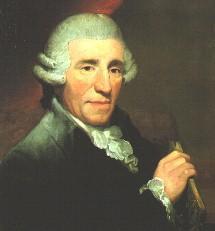
1732 - 1809 Person Name: Franz Joseph Haydn Topics: Christ As Creator; Christ Deity of; Christ Humanity of; Christ Resurrection of; Hell; Resurrection and Glorification; Satan Composer of "ST. ALBAN" in Trinity Psalter Hymnal Franz Joseph Haydn (b. Rohrau, Austria, 1732; d. Vienna, Austria, 1809) Haydn's life was relatively uneventful, but his artistic legacy was truly astounding. He began his musical career as a choirboy in St. Stephen's Cathedral, Vienna, spent some years in that city making a precarious living as a music teacher and composer, and then served as music director for the Esterhazy family from 1761 to 1790. Haydn became a most productive and widely respected composer of symphonies, chamber music, and piano sonatas. In his retirement years he took two extended tours to England, which resulted in his "London" symphonies and (because of G. F. Handel's influence) in oratorios. Haydn's church music includes six great Masses and a few original hymn tunes. Hymnal editors have also arranged hymn tunes from various themes in Haydn's music.
Bert Polman
Joseph Haydn
Frederick William Faber
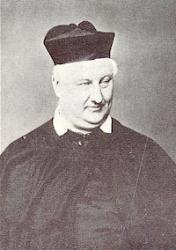
1814 - 1863 Person Name: Frederick W. Faber Topics: Angels; Beauty of Christ or God; Fear of God; God; God Immutability of; God Incomprehensibility; God Infinity and Eternity of; God Love and Grace of; God Majesty of; God Perfections of; Heaven Worship in ; Mercy Seat; Resurrection and Glorification; Reverence Author of "My God, How Wonderful Thou Art" in Trinity Psalter Hymnal Raised in the Church of England, Frederick W. Faber (b. Calverly, Yorkshire, England, 1814; d. Kensington, London, England, 1863) came from a Huguenot and strict Calvinistic family background. He was educated at Balliol College, Oxford, and ordained in the Church of England in 1839. Influenced by the teaching of John Henry Newman, Faber followed Newman into the Roman Catholic Church in 1845 and served under Newman's supervision in the Oratory of St. Philip Neri. Because he believed that Roman Catholics should sing hymns like those written by John Newton, Charles Wesley, and William Cowpe, Faber wrote 150 hymns himself. One of his best known, "Faith of Our Fathers," originally had these words in its third stanza: "Faith of Our Fathers! Mary's prayers/Shall win our country back to thee." He published his hymns in various volumes and finally collected all of them in Hymns (1862).
Bert Polman
=================
Faber, Frederick William, D.D., son of Mr. T. H. Faber, was born at Calverley Vicarage, Yorkshire, June 28, 1814, and educated at Balliol College, Oxford, graduating B.A. in 1836. He was for some time a Fellow of University College, in the same University. Taking Holy Orders in 1837, he became Rector of Elton, Huntingdonshire, in 1843, but in 1846 he seceded to the Church of Rome. After residing for some time at St. Wilfrid's, Staffordshire, he went to London in 1849, and established the London "Oratorians," or, "Priests of the Congregation of St. Philip Neri," in King William Street, Strand. In 1854 the Oratory was removed to Brompton. Dr. Faber died Sept. 26, 1863. Before his secession he published several prose works, some of which were in defence of the Church of England; and afterwards several followed as Spiritual Conferences, All for Jesus, &c. Although he published his Cherwell Waterlily and Other Poems, 1840; The Styrian Lake, and Other Poems, 1842; Sir Lancelot, 1844; and The Rosary and Other Poems, 1845; and his Lives of the Saints, in verse, before he joined the Church of Rome, all his hymns were published after he joined that communion. They were included in his:—
(1) A small book of eleven Hymns1849, for the School at St. Wilfrid's, Staffordshire. (2) Jesus and Mary: or, Catholic Hymns for Singing and Reading, London 1849. In 1852 the 2nd edition was published with an addition of 20 new hymns. (3) Oratory Hymns, 1854; and (4) Hymns, 1862, being a collected edition of what he had written and published from time to time.
Dr. Faber's account of the origin of his hymn-writing is given in his Preface to Jesus & Mary. After dwelling on the influence, respectively, of St. Theresa, of St. Ignatius, and of St. Philip Neri, on Catholicism; and of the last that "sanctity in the world, perfection at home, high attainments in common earthly callings…was the principal end of his apostolate," he says:—
“It was natural then that an English son of St. Philip should feel the want of a collection of English Catholic hymns fitted for singing. The few in the Garden of the Soul were all that were at hand, and of course they were not numerous enough to furnish the requisite variety. As to translations they do not express Saxon thought and feelings, and consequently the poor do not seem to take to them. The domestic wants of the Oratory, too, keep alive the feeling that something of the sort was needed: though at the same time the author's ignorance of music appeared in some measure to disqualify him for the work of supplying the defect. Eleven, however, of the hymns were written, most of them, for particular tunes and on particular occasions, and became very popular with a country congregation. They were afterwards printed for the Schools at St. Wilfrid's, and the very numerous applications to the printer for them seemed to show that, in spite of very glaring literary defects, such as careless grammar and slipshod metre, people were anxious to have Catholic hymns of any sort. The manuscript of the present volume was submitted to a musical friend, who replied that certain verses of all or nearly all of the hymns would do for singing; and this encouragement has led to the publication of the volume."
In the same Preface he clearly points to the Olney Hymns and those of the Wesleys as being the models which for simplicity and intense fervour he would endeavour to emulate. From the small book of eleven hymns printed for the schools at St. Wilfrid's, his hymn-writing resulted in a total of 150 pieces, all of which are in his Hymns, 1862, and many of them in various Roman Catholic collections for missions and schools. Few hymns are more popular than his "My God, how wonderful Thou art," "O come and mourn with me awhile," and "Sweet Saviour, bless us ere we go." They excel in directness, simplicity, and pathos. "Hark, hark, my soul, angelic songs are swelling," and "O Paradise, O Paradise," are also widely known. These possess, however, an element of unreality which is against their permanent popularity. Many of Faber's hymns are annotated under their respective first lines; the rest in common use include:—
i. From his Jesus and Mary, 1849 and 1852.
1. Fountain of love, Thyself true God. The Holy Ghost.
2. How shalt thou bear the Cross, that now. The Eternal Years.
3. I come to Thee, once more, O God. Returning to God.
4. Joy, joy, the Mother comes. The Purification.
5. My soul, what hast thou done for God? Self-Examination
6. O how the thought of God attract. Holiness Desired.
7. O soul of Jesus, sick to death. Passiontide. Sometimes this is divided into two parts, Pt. ii. beginning, “My God, my God, and can it be."
ii. From his Oratory Hymns, 1854.
8. Christians, to the war! Gather from afar. The Christian Warfare.
9. O come to the merciful Saviour that calls you. Divine Invitation. In many collections.
10. O God, Thy power is wonderful. Power and Eternity of God.
11. O it is sweet to think, Of those that are departed. Memory of the Dead.
12. O what are the wages of sin? The Wages of Sin.
13. O what is this splendour that beams on me now? Heaven.
14. Saint of the Sacred Heart. St. John the Evangelist.
iii. From his Hymns, 1862.
15. Father, the sweetest, dearest Name. The Eternal Father.
16. Full of glory, full of wonders, Majesty Divine. Holy Trinity.
17. Hark ! the sound of the fight. Processions.
18. How pleasant are thy paths, 0 death. Death Contemplated.
19. O God, Whose thoughts are brightest light. Thinking no Evil.
20. O why art thou sorrowful, servant of God? Trust in God.
21. Souls of men, why will ye scatter? The Divine Call.
22. The land beyond the sea. Heaven Contemplated.
23. The thought of God, the thought of thee. Thoughts of God.
24. We come to Thee, sweet Saviour. Jesus, our Rest.
In addition to these there are also several hymns in common use in Roman Catholic hymn-books which are confined to those collections. In the Hymns for the Year, by Dr. Rawes, Nos. 77, 110, 112, 117, 120, 121, 122, 125, 127, 128, 131, 140, 152, 154,169, 170, 174, 179, 180, 192, 222, 226, 230, 271, 272, are also by Faber, and relate principally to the Blessed Virgin Mary. Several of these are repeated in other Roman Catholic collections.
--John Julian, Dictionary of Hymnology (1907
==================
Faber, Frederick William, p. 361, i. To this article the following additions have to be made:—
1. Blood is the price of heaven. Good Friday. (1862.)
2. Exceeding sorrowful to death. Gethsemane. This in the Scottish Ibrox Hymnal, 1871, is a cento from "O soul of Jesus, sick to death," p. 362, i., 7.
3. From pain to pain, from woe to woe. Good Friday. (1854.)
4. I wish to have no wishes left. Wishes about death. (1862.)
5. Why is thy face so lit with smiles? Ascension. (1849.)
The dates here given are those of Faber's works in which the hymns appeared. In addition to these hymns there are also the following in common use:—
6. Dear God of orphans, hear our prayer. On behalf of Orphans. This appeared in a miscellaneous collection entitled A May Garland, John Philip, n.d. [1863], No. 1, in 7 stanzas of 4 lines. In the Roman Catholic Parochial Hymn Book, 1880, it begins, "O God of orphans, hear our prayer."
7. Sleep, sleep my beautiful babe. Christmas Carol. This carol we have failed to trace.
8. By the Archangel's word of love. Pt. i. Life of our Lord. This, and Pt. ii., “By the blood that flowed from Thee"; Pt. iii., "By the first bright Easter day"; also, "By the word to Mary given"; "By the name which Thou didst take"; in The Crown Hymn Book and other Roman Catholic collections, we have seen ascribed to Dr. Faber, but in the Rev. H. Formby's Catholic Hymns, 1853, they are all signed "C. M. C," i.e. Cecilia M. Caddell (p. 200, i.).
--John Julian, Dictionary of Hymnology, Appendix, Part II (1907)
======================
Faber, F. W., pp. 361, i.; 1562, ii. We are informed by members of Dr. Faber's family that his father was Mr. Thomas Henry Faber, sometime Lay Secretary of the Bishop of Durham. In addition to his hymns already noted in this Dictionary, the following are found in various Roman Catholic collections, viz.:—
i. From St. Wilfrid's Hymns, 1849:—
1. Dear Father Philip, holy Sire. S. Philip Neri.
2. Hail, holy Joseph, hail. S. Joseph.
3. Mother of Mercy, day by day. Blessed Virgin Mary.
ii. Jesus and Mary, 1849:—
4. Ah ! dearest Lord! I cannot pray. Prayer.
5. Dear Husband of Mary. S. Joseph.
6. Dear Little One, how sweet Thou art. Christmas.
7. Father and God! my endless doom. Predestination.
8. Hail, holy Wilfrid, hail. S. Wilfrid.
9. O Jesus, if in days gone by. Love of the World.
10. O turn to Jesus, Mother, turn. B. V. M.
11. Sing, sing, ye angel bands. Assum. B. V. M.
iii. Jesus and Mary, 1852:—
12. All ye who love the ways of sin. S. Philip Neri.
13. Day set on Rome! its golden morn. S. Philip Neri.
14. Hail, bright Archangel! Prince of heaven. S. Michael.
15. Hail, Gabriel, hail. S. Gabriel.
16. O Flower of Grace, divinest Flower. B. V. M.
17. Saint Philip! 1 have never known. S. Philip Neri.
18. Sweet Saint Philip, thou hast won us. S. Philip Neri. Previously in the Rambler, May, 1850, p. 425.
iv. Oratory Hymns, 1854:—
19. Day breaks on temple roofs and towers. Expect. of B. V. M.
20. How gently flow the silent years. S. Martin and S. Philip.
21. How the light of Heaven is stealing. Grace.
22. Like the dawning of the morning. Expect. of B. V. M.
23. Mother Mary ! at thine altar. For Orphans.
24. My God! Who art nothing but mercy and kindness. Repentance.
25. O blessed Father! sent by God. S. Vincent of Paul.
26. O do you hear that voice from heaven? Forgiveness.
27. The chains that have bound me. Absolution.
28. The day, the happy day, is dawning. B. V. M.
29. The moon is in the heavens above. B. V. M.
30. Why art thou sorrowful, servant of God? Mercy.
v. Hymns, 1862:—
31. At last Thou art come, little Saviour. Christmas.
32. By the spring of God's compassions. S. Raphael.
33. Fair are the portals of the day. B. V. M.
34. Father of many children. S. Benedict.
35. From the highest heights of glory. S. Mary Magdalene.
36. Like the voiceless starlight falling. B. V. M.
37. Mary! dearest mother. B. V. M.
38. Mother of God, we hail thy heart. B. V. M.
39. O Anne! thou hadst lived through those long dreary years. S. Anne. Previously in Holy Family Hymns, 1860.
40. O balmy and bright as moonlit night. B. V. M.
41. O Blessed Trinity! Thy children. Holy Trinity.
42. O dear Saint Martha, busy saint. S. Martha
43. O Mother, will it always be. B. V. M.
44. O vision bright. B. V. M.
45. Summer suns for ever shining. B. V. M.
46. There are many saints above. S. Joseph. Previously in Holy Family Hymns, 1860.
vi. Centos and altered forms:—
47. Confraternity men to the fight. From "Hark the sound of the fight," p. 362, i.
48. Hail, sainted Mungo, hail. From No. 8.
49. I bow to Thee, sweet will of God. From "I worship Thee," p. 559, ii.
50. They whom we loved on earth. From "0 it is sweet to think," p. 362, i.
51. Vincent! like Mother Mary, thou. From No. 25.
When Dr. Faber's hymns which are in common use are enumerated, the total falls little short of one hundred. In this respect he outnumbers most of his contemporaries. [Rev. James Mearns]
--John Julian, Dictionary of Hymnology, New Supplement (1907)
--------------
See also in:
Hymn Writers of the Church
Frederick William Faber
Martin Madan
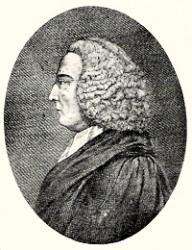
1726 - 1790 Topics: Christ As King; Christ Second Coming and the Last Judgment of; Christians Triumph of; Resurrection and Glorification Alterer of "Lo! He Comes with Clouds Descending" in Trinity Psalter Hymnal Madan, Martin, son of Colonel Martin Madan, and brother of Dr. Spencer Madan, sometime Bishop of Peterborough, was born in 1726. He was to have qualified for the Bar, but through a sermon by J. Wesley on the words "Prepare to meet thy God," the whole current of his life was changed. After some difficulty he received Holy Orders, and subsequently founded and became chaplain of the Lock Hospital, Hyde Park Corner. He was popular as a preacher, and had no inconsiderable reputation as a musical composer. He ceased preaching on the publication of his work Thelyphthora, in which he advocated the practice of polygamy. He died in 1790. He published A Commentary on the Articles of the Church of England; A Treatise on the Christian Faith, &c, and:- A Collection of Psalms and Hymns Extracted from Various Authors, and published by the Reverend Mr. Madan. London, 1760.
This Collection contained 170 hymns thrown together without order or system of any kind. In 1763 he added an Appendix of 24 hymns. This Collection, referred to as Madam’s Psalms & Hymns, had for many years a most powerful influence on the hymnody of the Church of England. Nearly the whole of its contents, together with its extensively altered texts, were reprinted in numerous hymnbooks for nearly one hundred years. At the present time many of the great hymns of the last century are in use as altered by him in 1760 and 1763. Although several hymns have been attributed to him, we have no evidence that he ever wrote one. His hymnological labours were employed in altering, piecing, and expanding the work of others. And in this he was most successful.
-- John Julian, Dictionary of Hymnology (1907)
============================
Martin Madan





