You help make Hymnary.org possible. More than 10 million people from 200+ countries found hymns, liturgical resources and encouragement on Hymnary.org in 2025, including you. Every visit affirms the global impact of this ministry.

If Hymnary has been meaningful to you this year, would you take a moment today to help sustain it? A gift of any size—paired with a note of encouragement if you wish—directly supports the server costs, research work and curation that keep this resource freely available to the world.

Give securely online today, or mail a check to:
Hymnary.org
Calvin University
3201 Burton Street SE
Grand Rapids, MI 49546

Thank you for your partnership, and may the hope of Advent fill your heart.

Search Results

Topics:god+as

Planning worship? Check out our sister site, ZeteoSearch.org, for 20+ additional resources related to your search.

Texts

text icon
Text authorities
TextPage scansFlexScoreFlexPresent

Now with Joyful Exultation

Meter: 8.7.8.7 D Appears in 15 hymnals Topics: God as Refuge; God as Shepherd; God as Creator; God as King Lyrics: 1 Now with joyful exultation let us sing to God our praise; to the Rock of our salvation loud hosannas let us raise. Thankful tribute gladly bringing, let us come before him now, and, with psalms his praises singing, joyful in his presence bow. 2 For how great a God, and glorious, is the LORD of whom we sing; over idol gods victorious, great is he, our God and King. In his hand are earth's deep places, also his are all the hills; his the sea whose bounds he traces, his the land his bounty fills. 3 To the LORD, such might revealing, let us come with reverence meet, and, before our Maker kneeling, let us worship at his feet. He is our own God who leads us, we the people of his care; with a shepherd's hand he feeds us as his flock in pastures fair. 4 While he offers peace and pardon let us hear his voice today, lest, if we our hearts should harden, we should perish in the way-- lest to us, so unbelieving, he in judgment should declare: "You, so long my Spirit grieving, never in my rest will share." Scripture: Psalm 95 Used With Tune: BEECHER Text Sources: Psalter, 1912
TextPage scansFlexScoreFlexPresent

In Sweet Communion, Lord, with You

Meter: 8.6.8.6 Appears in 17 hymnals Topics: God as Portion; God as Salvation; God as Strength Lyrics: 1 In sweet communion, Lord, with you I constantly abide; my hand you hold within your own to keep me near your side. 2 Your counsel through my earthly way shall guide me and control, and then to glory afterward you will receive my soul. 3 Whom have I, Lord, in heav'n but you, to whom my thoughts aspire? And, having you, what more on earth is there I can desire? 4 Though flesh and heart should faint and fail, the Lord will ever be the strength and portion of my heart, my God eternally. Scripture: Psalm 73 Used With Tune: AZMON Text Sources: Psalter, 1912, alt.
TextPage scansFlexScoreFlexPresent

O God, Our Help in Ages Past

Author: Isaac Watts Meter: 8.6.8.6 Appears in 1,287 hymnals Topics: God As Defender; God As Refuge Lyrics: 1 Our God, our help in ages past, our hope for years to come, our shelter from the stormy blast, and our eternal home: 2 Under the shadow of your throne your saints have dwelt secure; sufficient is your arm alone, and our defense is sure. 3 Before the hills in order stood, or earth received her frame, from everlasting you are God, to endless years the same. 4 A thousand ages in your sight are like an evening gone; short as the watch that ends the night before the rising sun. 5 The busy tribes of flesh and blood, with all their lives and cares, are carried downward by your flood, and lost in foll'wing years. 6 Time, like an ever-rolling stream, bears all its sons away; they fly forgotten, as a dream dies at the op'ning day. 7 Our God, our help in ages past, our hope for years to come: O be our guard while troubles last, and our eternal home. Scripture: Psalm 90 Used With Tune: ST. ANNE

Tunes

tune icon
Tune authorities
FlexScoreAudio

SLANE

Meter: 10.10.10.10 Appears in 285 hymnals Composer and/or Arranger: Jack Schrader, b. 1942 Topics: God as Guide; God As Ruler Tune Sources: Irish meldoy Tune Key: E Flat Major Incipit: 11216 56112 32222 Used With Text: Be Thou My Vision
Page scansFlexScoreAudio

SCHUMANN

Meter: 6.6.8.6 Appears in 371 hymnals Topics: King, God/Christ as Tune Sources: Mason and Webb's Cantica Laudis, 1850 Tune Key: A Flat Major Incipit: 51567 11432 11771 Used With Text: We Give You But Your Own
Audio

EARTH AND ALL STARS

Appears in 54 hymnals Composer and/or Arranger: David Johnson, 1922-1987; Dale Grotenhuis, 1931-2012 Topics: God as Creator Tune Key: G Major Incipit: 15613 17665 11132 Used With Text: Earth and All Stars

Instances

instance icon
Published text-tune combinations (hymns) from specific hymnals

Dwell in God Most High as Shelter

Author: Daniel Witte Hymnal: Christian Worship #91E (2021) Meter: 8.7.8.7 D Topics: God as Almighty; God as Dwelling Place; God as Fortress; God as Help; God as Most High; God as Refuge; God as Shelter Scripture: Psalm 91 Languages: English Tune Title: JEFFERSON

My Dwelling Place

Author: Keith Getty; Kristyn Getty; Kelly Minter; Chris Eaton; Stuart Townend Hymnal: Christian Worship #91B (2021) Topics: God as Almighty; God as Dwelling Place; God as Fortress; God as Help; God as Most High; God as Refuge; God as Shelter First Line: My dwelling place is God Most High Refrain First Line: Wonderful, powerful Scripture: Psalm 91 Languages: English Tune Title: [My dwelling place is God Most High]

The Shadow of the Almighty

Hymnal: Christian Worship #91A (2021) Topics: God as Almighty; God as Dwelling Place; God as Fortress; God as Help; God as Most High; God as Refuge; God as Shelter First Line: Surely he will save you from the fowler's snare Refrain First Line: He who dwells in the Most High Scripture: Psalm 91 Languages: English Tune Title: [Surely he will save you from the fowler's snare]

People

person icon
Authors, composers, editors, etc.

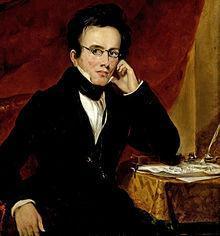
John Goss

1800 - 1880 Topics: God as Compassionate; God as Forgiving; God as Kind; God as King of Kings; God as Merciful; God as Slow to Anger Composer of "LAUDA ANIMA" in Christian Worship John Goss (b. Fareham, Hampshire, England, 1800; d. London, England, 1880). As a boy Goss was a chorister at the Chapel Royal and later sang in the opera chorus of the Covent Garden Theater. He was a professor of music at the Royal Academy of Music (1827-1874) and organist of St. Paul Cathedral, London (1838-1872); in both positions he exerted significant influence on the reform of British cathedral music. Goss published Parochial Psalmody (1826) and Chants, Ancient and Modern (1841); he edited William Mercer's Church Psalter and Hymn Book (1854). With James Turle he published a two-volume collection of anthems and Anglican service music (1854). Bert Polman

Lowell Mason

1792 - 1872 Topics: God as Exalted; God as Faithful; God as King of Kings; God as Loving Arranger of "ST. THOMAS" in Christian Worship Dr. Lowell Mason (the degree was conferred by the University of New York) is justly called the father of American church music; and by his labors were founded the germinating principles of national musical intelligence and knowledge, which afforded a soil upon which all higher musical culture has been founded. To him we owe some of our best ideas in religious church music, elementary musical education, music in the schools, the popularization of classical chorus singing, and the art of teaching music upon the Inductive or Pestalozzian plan. More than that, we owe him no small share of the respect which the profession of music enjoys at the present time as contrasted with the contempt in which it was held a century or more ago. In fact, the entire art of music, as now understood and practiced in America, has derived advantage from the work of this great man. Lowell Mason was born in Medfield, Mass., January 8, 1792. From childhood he had manifested an intense love for music, and had devoted all his spare time and effort to improving himself according to such opportunities as were available to him. At the age of twenty he found himself filling a clerkship in a banking house in Savannah, Ga. Here he lost no opportunity of gratifying his passion for musical advancement, and was fortunate to meet for the first time a thoroughly qualified instructor, in the person of F. L. Abel. Applying his spare hours assiduously to the cultivation of the pursuit to which his passion inclined him, he soon acquired a proficiency that enabled him to enter the field of original composition, and his first work of this kind was embodied in the compilation of a collection of church music, which contained many of his own compositions. The manuscript was offered unavailingly to publishers in Philadelphia and in Boston. Fortunately for our musical advancement it finally secured the attention of the Boston Handel and Haydn Society, and by its committee was submitted to Dr. G. K. Jackson, the severest critic in Boston. Dr. Jackson approved most heartily of the work, and added a few of his own compositions to it. Thus enlarged, it was finally published in 1822 as The Handel and Haydn Society Collection of Church Music. Mason's name was omitted from the publication at his own request, which he thus explains, "I was then a bank officer in Savannah, and did not wish to be known as a musical man, as I had not the least thought of ever making music a profession." President Winchester, of the Handel and Haydn Society, sold the copyright for the young man. Mr. Mason went back to Savannah with probably $500 in his pocket as the preliminary result of his Boston visit. The book soon sprang into universal popularity, being at once adopted by the singing schools of New England, and through this means entering into the church choirs, to whom it opened up a higher field of harmonic beauty. Its career of success ran through some seventeen editions. On realizing this success, Mason determined to accept an invitation to come to Boston and enter upon a musical career. This was in 1826. He was made an honorary member of the Handel and Haydn Society, but declined to accept this, and entered the ranks as an active member. He had been invited to come to Boston by President Winchester and other musical friends and was guaranteed an income of $2,000 a year. He was also appointed, by the influence of these friends, director of music at the Hanover, Green, and Park Street churches, to alternate six months with each congregation. Finally he made a permanent arrangement with the Bowdoin Street Church, and gave up the guarantee, but again friendly influence stepped in and procured for him the position of teller at the American Bank. In 1827 Lowell Mason became president and conductor of the Handel and Haydn Society. It was the beginning of a career that was to win for him as has been already stated the title of "The Father of American Church Music." Although this may seem rather a bold claim it is not too much under the circumstances. Mr. Mason might have been in the average ranks of musicianship had he lived in Europe; in America he was well in advance of his surroundings. It was not too high praise (in spite of Mason's very simple style) when Dr. Jackson wrote of his song collection: "It is much the best book I have seen published in this country, and I do not hesitate to give it my most decided approbation," or that the great contrapuntist, Hauptmann, should say the harmonies of the tunes were dignified and churchlike and that the counterpoint was good, plain, singable and melodious. Charles C. Perkins gives a few of the reasons why Lowell Mason was the very man to lead American music as it then existed. He says, "First and foremost, he was not so very much superior to the members as to be unreasonably impatient at their shortcomings. Second, he was a born teacher, who, by hard work, had fitted himself to give instruction in singing. Third, he was one of themselves, a plain, self-made man, who could understand them and be understood of them." The personality of Dr. Mason was of great use to the art and appreciation of music in this country. He was of strong mind, dignified manners, sensitive, yet sweet and engaging. Prof. Horace Mann, one of the great educators of that day, said he would walk fifty miles to see and hear Mr. Mason teach if he could not otherwise have that advantage. Dr. Mason visited a number of the music schools in Europe, studied their methods, and incorporated the best things in his own work. He founded the Boston Academy of Music. The aim of this institution was to reach the masses and introduce music into the public schools. Dr. Mason resided in Boston from 1826 to 1851, when he removed to New York. Not only Boston benefited directly by this enthusiastic teacher's instruction, but he was constantly traveling to other societies in distant cities and helping their work. He had a notable class at North Reading, Mass., and he went in his later years as far as Rochester, where he trained a chorus of five hundred voices, many of them teachers, and some of them coming long distances to study under him. Before 1810 he had developed his idea of "Teachers' Conventions," and, as in these he had representatives from different states, he made musical missionaries for almost the entire country. He left behind him no less than fifty volumes of musical collections, instruction books, and manuals. As a composer of solid, enduring church music. Dr. Mason was one of the most successful this country has introduced. He was a deeply pious man, and was a communicant of the Presbyterian Church. Dr. Mason in 1817 married Miss Abigail Gregory, of Leesborough, Mass. The family consisted of four sons, Daniel Gregory, Lowell, William and Henry. The two former founded the publishing house of Mason Bros., dissolved by the death of the former in 1869. Lowell and Henry were the founders of the great organ manufacturer of Mason & Hamlin. Dr. William Mason was one of the most eminent musicians that America has yet produced. Dr. Lowell Mason died at "Silverspring," a beautiful residence on the side of Orange Mountain, New Jersey, August 11, 1872, bequeathing his great musical library, much of which had been collected abroad, to Yale College. --Hall, J. H. (c1914). Biography of Gospel Song and Hymn Writers. New York: Fleming H. Revell Company.

Richard Redhead

1820 - 1901 Topics: God as Good; God as Gracious; God as Merciful Composer of "GETHSEMANE" in Christian Worship Richard Redhead (b. Harrow, Middlesex, England, 1820; d. Hellingley, Sussex, England, 1901) was a chorister at Magdalen College, Oxford. At age nineteen he was invited to become organist at Margaret Chapel (later All Saints Church), London. Greatly influencing the musical tradition of the church, he remained in that position for twenty-five years as organist and an excellent trainer of the boys' choirs. Redhead and the church's rector, Frederick Oakeley, were strongly committed to the Oxford Movement, which favored the introduction of Roman elements into Anglican worship. Together they produced the first Anglican plainsong psalter, Laudes Diurnae (1843). Redhead spent the latter part of his career as organist at St. Mary Magdalene Church in Paddington (1864-1894). Bert Polman
It looks like you are using an ad-blocker. Ad revenue helps keep us running. Please consider white-listing Hymnary.org or getting Hymnary Pro to eliminate ads entirely and help support Hymnary.org.