

 My Starred Hymns
 My Hymnals
 My Purchased Files
Planning worship?
Check out our sister site, ZeteoSearch.org,
for 20+ additional resources related to your search.
- |
User Links
Search Results


Spirit of God, Descend upon My Heart
Author: George Croly Meter: 10.10.10.10 Appears in 360 hymnals Topics: liturgical Songs of Illumination Lyrics: 1 Spirit of God, who dwells within my heart,
wean it from sin, through all its pulses move.
Stoop to my weakness, mighty as you are,
and make me love you as I ought to love.
2 I ask no dream, no prophet ecstasies,
no sudden rending of the veil of clay,
no angel visitant, no opening skies;
but take the dimness of my soul away.
3 Did you not bid us love you, God and King,
love you with all our heart and strength and mind?
I see the cross— there teach my heart to cling.
O let me seek you and O let me find!
4 Teach me to feel that you are always nigh;
teach me the struggles of the soul to bear,
to check the rising doubt, the rebel sigh;
teach me the patience of unceasing prayer.
5 Teach me to love you as your angels love,
one holy passion filling all my frame:
the fullness of the heaven-descended Dove;
my heart an altar, and your love the flame.
Psalter Hymnal, 1987
Spirit of God, Descend upon My Heart
More About Jesus
Author: E. E. Hewitt Meter: 8.8.8.8 with refrain Appears in 441 hymnals Topics: liturgical Songs of Illumination First Line: More about Jesus would I know, More of his grace to others show Refrain First Line: More, more about Jesus
More About Jesus

Blessed Jesus, at Your Word
Author: Tobias Clausnitzer; Catherine Winkworth Meter: 7.8.7.8.8.8 Appears in 146 hymnals Topics: liturgical Songs of Illumination; Holy Spirit Illumination; Service Music Prayer for Illumination Lyrics: 1 Blessed Jesus, at your word
we have come again to hear you;
let our hearts and souls be stirred
and in glowing faith be near you.
As the promises here given
draw us wholly up to heaven.
2 All our knowledge, sense, and sight
lie in deepest darkness shrouded
till your Spirit breaks the night,
filling us with light unclouded.
All good thoughts and all good living
come but by your gracious giving.
3 Radiance of God's glory bright,
Light of light from God proceeding,
Jesus, send your blessed light;
help our hearing, speaking, heeding,
that our prayers and songs may please you,
as with grateful hearts we praise you. Used With Tune: LIEBSTER JESU
Blessed Jesus, at Your Word


PUER NOBIS
Meter: 8.8.8.8 Appears in 237 hymnals Composer and/or Arranger: Michael Praetorius Topics: Holy Spirit Illuminator Tune Key: D Major Incipit: 11234 32115 55671 Used With Text: O Splendor of God's Glory Bright
PUER NOBIS
LIVING GOD
Meter: 7.5.7.5.8.7.5 Appears in 117 hymnals Composer and/or Arranger: Daniel Iverson Topics: Service Music Prayer for Illumination Tune Key: F Major Incipit: 33332 34312 33333 Used With Text: Spirit of the Living God
LIVING GOD


Blessed Jesus, at Your Word
Author: Tobias Clausnitzer; Catherine Winkworth Hymnal: Voices United #500 (1996) Meter: 7.8.7.8.8.8 Topics: liturgical Songs of Illumination; Holy Spirit Illumination; Service Music Prayer for Illumination Lyrics: 1 Blessed Jesus, at your word
we have come again to hear you;
let our hearts and souls be stirred
and in glowing faith be near you.
As the promises here given
draw us wholly up to heaven.
2 All our knowledge, sense, and sight
lie in deepest darkness shrouded
till your Spirit breaks the night,
filling us with light unclouded.
All good thoughts and all good living
come but by your gracious giving.
3 Radiance of God's glory bright,
Light of light from God proceeding,
Jesus, send your blessed light;
help our hearing, speaking, heeding,
that our prayers and songs may please you,
as with grateful hearts we praise you. Languages: English Tune Title: LIEBSTER JESU
Blessed Jesus, at Your Word
Break Now the Bread of Life
Author: Mary Artemisia Lathbury Hymnal: Voices United #501 (1996) Meter: 10.10.10.10 Topics: liturgical Songs of Illumination; Holy Spirit Illumination; Service Music Prayer for Illumination First Line: Break now the bread of life, Saviour, to me Lyrics: 1 Break now the bread of life, Saviour, to me,
as once you broke the loaves beside the sea.
Beyond the sacred page I seek you, Lord;
my spirit waits for you, O Living Word.
2 Bless your own truth, dear Christ, to me, to me,
as when you blessed the bread by Galilee;
then shall all bondage cease, all fetters fall,
and I shall find my peace, my all-in-all.
Languages: English Tune Title: BREAD OF LIFE
Break Now the Bread of Life
God, You Have Caused to Be Written
Author: Herbert O'Driscoll (1928-) Hymnal: Common Praise (1998) #476 (1998) Meter: 14.14.4.7.8 Topics: liturgical Songs of Illumination Scripture: Psalm 46 Languages: English Tune Title: CAUSA DIVINA
God, You Have Caused to Be Written


Henry Alford
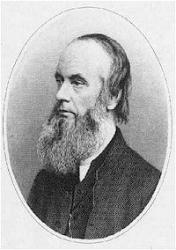
1810 - 1871 Topics: The Christian Life Illumination and Guidance Author of "Forward be our watchword" in Hymns for the Living Age Alford, Henry, D.D., son of the Rev. Henry Alford, Rector of Aston Sandford, b. at 25 Alfred Place, Bedford Row, London, Oct. 7, 1810, and educated at Trinity College, Cambridge, graduating in honours, in 1832. In 1833 he was ordained to the Curacy of Ampton. Subsequently he held the Vicarage of Wymeswold, 1835-1853,--the Incumbency of Quebec Chapel, London, 1853-1857; and the Deanery of Canterbury, 1857 to his death, which took. place at Canterbury, Jan. 12, 1871. In addition he held several important appointments, including that of a Fellow of Trinity, and the Hulsean Lectureship, 1841-2. His literary labours extended to every department of literature, but his noblest undertaking was his edition of the Greek Testament, the result of 20 years' labour. His hymnological and poetical works, given below, were numerous, and included the compiling of collections, the composition of original hymns, and translations from other languages. As a hymn-writer he added little to his literary reputation. The rhythm of his hymns is musical, but the poetry is neither striking, nor the thought original. They are evangelical in their teaching, but somewhat cold and conventional. They vary greatly in merit, the most popular being "Come, ye thankful people, come," "In token that thou shalt not fear," and "Forward be our watchword." His collections, the Psalms and Hymns of 1844, and the Year of Praise, 1867, have not achieved a marked success. His poetical and hymnological works include—
(1) Hymns in the Christian Observer and the Christian Guardian, 1830. (2) Poems and Poetical Fragments (no name), Cambridge, J. J. Deighton, 1833. (3) The School of the Heart, and other Poems, Cambridge, Pitt Press, 1835. (4) Hymns for the Sundays and Festivals throughout the Year, &c.,Lond., Longman ft Co., 1836. (5) Psalms and Hymns, adapted for the Sundays and Holidays throughout the year, &c, Lond., Rivington, 1844. (6) Poetical Works, 2 vols., Lond., Rivington, 1845. (7) Select Poetical Works, London, Rivington, 1851. (8) An American ed. of his Poems, Boston, Ticknor, Reed & Field, 1853(9) Passing away, and Life's Answer, poems in Macmillan's Magazine, 1863. (10) Evening Hexameters, in Good Words, 1864. (11) On Church Hymn Books, in the Contemporary Review, 1866. (12) Year of Praise, London, A. Strahan, 1867. (13) Poetical Works, 1868. (14) The Lord's Prayer, 1869. (15) Prose Hymns, 1844. (16) Abbot of Muchelnaye, 1841. (17) Hymns in British Magazine, 1832. (18) A translation of Cantemus cuncti, q.v.
-- John Julian, Dictionary of Hymnology (1907)
==================
Alford, Henry, p. 39, ii. The following additional hymns by Dean Alford are in common use:—
1. Herald in the wilderness. St. John Baptist. (1867.)
2. Let the Church of God rejoice. SS. Simon and Jude. (1844, but not in his Psalms & Hymns of that year.)
3. Not in anything we do. Sexagesima. (1867.)
4. O Thou at Whose divine command. Sexagesima. (1844.)
5. 0 why on death so bent? Lent. (1867.)
6. Of all the honours man may wear. St. Andrew's Day. (1867.)
7. Our year of grace is wearing to a close. Close of the Year. (1867.)
8. Saviour, Thy Father's promise send. Whit-sunday. (1844.)
9. Since we kept the Saviour's birth. 1st Sunday after Trinity. (1867.)
10. Thou that art the Father's Word. Epiphany. (1844.)
11. Thou who on that wondrous journey. Quinquagesima. (1867.)
12. Through Israel's coasts in times of old. 2nd Sunday after Epiphany. (1867.)
13. Thy blood, O Christ, hath made our peace. Circumcision . (1814.)
14. When in the Lord Jehovah's name. For Sunday Schools. (1844.)
All these hymns are in Dean Alford's Year of Praise, 1867, and the dates are those of their earliest publication, so far as we have been able to trace the same.
--Excerpts from John Julian, Dictionary of Hymnology, Appendix, Part II (1907)
Henry Alford
John Henry Newman
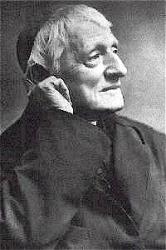
1801 - 1890 Person Name: John H. Newman Topics: The Christian Life Illumination and Guidance Author of "Lead, kindly Light, amid th'encircling gloom" in Hymns for the Living Age Newman, John Henry , D.D. The hymnological side of Cardinal Newman's life and work is so small when compared with the causes which have ruled, and the events which have accompanied his life as a whole, that the barest outline of biographical facts and summary of poetical works comprise all that properly belongs to this work. Cardinal Newman was the eldest son of John Newman, and was born in London, Feb. 21, 1801. He was educated at Ealing under Dr. John Nicholas, and at Trinity College, Oxford, where he graduated in honours in 1820, and became a Fellow of Oriel in 1822. Taking Holy Orders in 1824, he was for a short time Vice-Principal of St. Alban's Hall, and then Tutor of Oriel. His appointment to St. Mary's, Oxford, was in the spring of 1828. In 1827 he was Public Examiner, and in 1830 one of the Select University Preachers. His association with Keble, Pusey, and others, in what is known as "The Oxford Movement," together with the periodical publication of the Tracts for the Times, are matters of history. It is well known how that Tract 90, entitled Bernards on Certain Passages in the Thirty-nine Articles, in 1841, was followed by his retirement to Littlemore; his formal recantation, in February, 1843, of all that he had said against Rome; his resignation in September of the same year of St. Mary's and Littlemore; and of his formal application to be received into the communion of the Church of Rome, Oct. 8, 1845. In 1848 he became Father Superior of the Oratory of St. Philip Neri, at Birmingham; in 1854 Rector of the newly founded Roman Catholic University at Dublin; and in 1858 he removed to the Edgbaston Oratory, Birmingham. In 1879 he was created a Cardinal, and thus received the highest dignity it is in the power of the Pope to bestow. Cardinal Newman's prose works are numerous, and his Parochial Sermons especially being very popular. His Apologia pro Vita Sua, 1864, is a lucid exposition and masterly defence of his life and work.
Cardinal Newman's poetical work began with poems and lyrical pieces which he contributed to the British Magazine, in 1832-4 (with other pieces by Keble and others), under the title of Lyra Apostolica. In 1836 these poems were collected and published under the same title, and Greek letters were added to distinguish the authorship of each piece, his being δ. Only a few of his poems from this work have come into use as hymns. The most notable is, "Lead, kindly Light". His Tract for the Times, No. 75, On the Roman Breviary, 1836, contained translations of 14 Latin hymns. Of these 10 were repeated in his Verses on Religious Subjects, 1853, and his Verses on Various Occasions, 1865, and translations of 24 additional Latin hymns were added. Several of these translations are in common use, the most widely known being "Nunc Sancte nobis" ("Come, Holy Ghost, Who ever One"). His collection of Latin hymns from the Roman and Paris Breviaries, and other sources was published as Hymni Ecclesiae, in 1838, and again in 1865. His Dream of Gerontius, a poem from which his fine hymn, "Praise to the Holiest in the height," is taken, appeared in his Verses on Various Occasions, in 1868. Cardinal Newman's influence on hymnology has not been of a marked character. Two brilliant original pieces, and little more than half a dozen translations from the Latin, are all that can claim to rank with his inimitable prose.
--John Julian, Dictionary of Hymnology (1907)
=================
Newman, John Henry, p. 822, ii. He died at Edgbaston, Birmingham, Aug. 11, 1890.
--John Julian, Dictionary of Hymnology, Appendix, Part II (1907)
==============
Newman, Card. J. H., pp. 802, ii.; 1581, ii. The following are also in use at the present time, but, except No. 13, almost exclusively in R. C. collections. The dates in brackets are those given in Newman's Verses, 1868; all thus marked were composed in the Birmingham Oratory at these dates:—
i. In the Rambler, 1850.
1. In the far North our lot is cast. [S. Philip Neri.] (1850.) March, 1850, p. 250. In the Birmingham Oratory Hymn Book, 1857 and 1906, it begins, " On Northern coasts," and in the Parochial Hymn Book, 1880, with st. ii. " Founder and Sire! to mighty Rome."
2. The Angel-lights of Christmas morn. [Candlemas.] (1849.) March, 1850, p. 251.
3. There sat a Lady all on the ground. [B. V. M.] (1849.) May, 1850, p. 425.
ii. Verses, 1853.
4. All is Divine which the Highest has made. [For an inclement May.] (1850.) 1853, p. 128.
5. Green are the leaves, and sweet the flowers. [May.] (1850.) 1853, p. 125.
6. My oldest friend, mine from the hour. [Guardian Angel] (1853.) 1853, p. 12.
7. The holy monks conceal'd from men. [S. Philip Neri.] (1850.) 1853, p. 134.
8. The one true Faith, the ancient Creed. [The Catholic Faith.] 1853, p. 140.
9. This is the saint of sweetness and compassion. [S. Philip Neri.] 1853, p. 136. Rewritten (1857) as "This is the saint of gentleness and kindness" in the Birmingham Oratory Hymn Book, 1857, No. 49.
iii. Birmingham Oratory Hymn Book, 1857.
10. Help, Lord, the souls which Thou hast made. [The Faithful Departed.] (1857.) 1857, No. 76.
iv. Birmingham Oratory H. Book, 1862.
11. I ask not for fortune, for silken attire. [S. Philip Neri.] (1857.) 1862, No. 54.
12. Thou champion high. [S. Michael.] (1862.) 1862, No. 41.
v. Dream of Gerontius, 1866.
13. Firmly I believe and truly. [The Faith of a Christian.] 1866, p. 9; Verses, 1868, p. 318; The English Hymnal 1906. [Rev. James Mearns, M.A.]
--John Julian, Dictionary of Hymnology, New Supplement (1907)
-----
John Henry Newman was born in London, in 1801. He studied at Trinity College, Oxford, graduating B.A. in 1820, and was subsequently Fellow of Oriel College. In 1825, he became Vice Principal of S. Alban's Hall, and was Tutor of his college for several years. In 1828, he became incumbent of S. Mary's, Oxford, with the chaplaincy of Littlemore. In 1842, he went to preside over a Brotherhood he had established at Littlemore. He was the author of twenty-four of the "Tracts for the Times," amongst them the celebrated Tract No. 90, which brought censure upon its author. In 1845, he left the Church of England and entered the Church of Rome. He was appointed Father Superior of the Oratory of S. Philip Neri, at Birmingham, and in 1854, Rector of the new Roman Catholic University at Dublin, an office he filled till 1858. He has published a large number of works.
--Annotations of the Hymnal, Charles Hutchins, M.A. 1872.
====================
John Henry Newman
Michael Baughen
b. 1930 Topics: Service of the Word Songs of Illumination; The Service of the Word Songs of Illumination Author (st. 2) of "Spirit of the Living God" in Renew! Songs and Hymns for Blended Worship
Michael Baughen





