You help make Hymnary.org possible. More than 10 million people from 200+ countries found hymns, liturgical resources and encouragement on Hymnary.org in 2025, including you. Every visit affirms the global impact of this ministry.

If Hymnary has been meaningful to you this year, would you take a moment today to help sustain it? A gift of any size—paired with a note of encouragement if you wish—directly supports the server costs, research work and curation that keep this resource freely available to the world.

Give securely online today, or mail a check to:
Hymnary.org
Calvin University
3201 Burton Street SE
Grand Rapids, MI 49546

Thank you for your partnership, and may the hope of Advent fill your heart.

Search Results

Topics:longing+for+christ+and+god

Planning worship? Check out our sister site, ZeteoSearch.org, for 20+ additional resources related to your search.

Texts

text icon
Text authorities
Text

As pants the hart for cooling streams

Meter: 8.6.8.6 Appears in 352 hymnals Topics: Longing for Christ and God Lyrics: 1 As pants the hart for cooling streams When heated in the chase, So longs my soul, O God, for thee, And thy refreshing grace. 2 For thee, my God, the living God, My thirsty soul doth pine; O when shall I behold thy face, Thou Majesty Divine! 3 Why restless, why cast down, my soul? Trust God; and he'll employ His aid for thee, and change these sighs To thankful hymns of joy. 4 Why restless, why cast down, my soul? Hope still; and thou shalt sing The praise of him who is thy God, Thy health's eternal spring. Amrn. Scripture: Psalm 42 Used With Tune: SPOHR Text Sources: Tate and Brady's New Verrsion, 1896, 1898
TextPage scansFlexScoreFlexPresent

Jesus, Priceless Treasure

Author: Johann Franck; Catherine Winkworth Meter: 6.6.5.6.6.5.7.8.6 Appears in 140 hymnals Topics: Longing for Christ and God Lyrics: 1 Jesus, priceless treasure, source of purest pleasure, truest Friend to me: ah, how long in anguish shall my spirit languish, yearning, Lord, for thee? Thine I am, O spotless Lamb! I will suffer naught to hide thee, naught I ask beside thee. 2 In thine arms I rest me; foes who would molest me cannot reach me here. Though the earth be shaking, ev'ry heart be quaking, Jesus calms my fear. Lightnings flash and thunders crash; yet, though sin and hell assail me, Jesus will not fail me. 3 Satan, I defy thee; death, I now decry thee; fear, I bid thee cease. World, thou shalt not harm me nor thy threats alarm me while I sing of peace. God's great pow'r guards ev'ry hour; earth and all its depths adore him, silent bow before him. 4 Hence with earthly treasure! Thou art all my pleasure, Jesus, all my choice. Hence, thou empty glory! Naught to me thy story, told with tempting voice. Pain or loss or shame or cross shall not from my Savior move me, since he deigns to love me. 5 Hence, all fear and sadness! For the Lord of gladness, Jesus, enters in. Those who love the Father, Though the storms may gather, Still have peace within. Yea, whate'er I here must bear, thou art still my purest pleasure, Jesus, priceless treasure. Scripture: 1 Peter 2:7 Used With Tune: JESU, MEINE FREUDE
TextPage scansFlexScoreFlexPresent

My faith looks up to thee

Author: Ray Palmer Meter: 6.6.4.6.6.6.4 Appears in 2,322 hymnals Topics: Longing for Christ and God Lyrics: 1 My faith looks up to thee, Thou Lamb of Calvary, Saviour Divine; Now hear me while I pray, Take all my guilt away, O let me from this day Be wholly thine. 2 May thy rich grace impart Strength to my fainting heart, My zeal inspire; As thou hast died for me, O may my love to thee Pure, warm, and changeless be, A living fire. 3 While life's dark maze I tread, And griefs around me spread, Be thou my guide; Bid darkness turn to day, Wipe sorrow's tears away, Nor let me ever stray From thee aside. 4 When ends life's transient dream, When death's cold, sullen stream Shall o'er me roll, Blest Saviour, then, in love, Fear and distrust remove; O bear me safe above, A ransomed soul. Amen. Scripture: Hebrews 12:1-2 Used With Tune: OLIVET

Tunes

tune icon
Tune authorities
Page scansAudio

HERR JESU CHRIST DICH ZU UNS WEND

Meter: 8.8.8.8 Appears in 229 hymnals Composer and/or Arranger: Johann Sebastian Bach, 1685-1750 Topics: Longing for Christ and God Tune Sources: Pensum Sacrum, Görlitz, 1648 Tune Key: F Major or modal Incipit: 13532 34565 32117 Used With Text: O Thou That Hear'st When Sinners Cry
Page scansAudio

HAMBURG

Meter: 8.8.8.8 Appears in 1,006 hymnals Composer and/or Arranger: Lowell Mason Topics: Longing for Christ and God Tune Sources: Gregorian Chant Tune Key: F Major Incipit: 11232 34323 33343 Used With Text: O thou that hear'st when sinners cry
Page scansFlexScoreAudio

SHEPHERD

Meter: 8.7.8.7.4.4.7 D Appears in 591 hymnals Composer and/or Arranger: William B. Bradbury Topics: Longing for Christ and God Tune Key: D Major Incipit: 33323 45153 23465 Used With Text: Savior, Like a Shepherd Lead Us

Instances

instance icon
Published text-tune combinations (hymns) from specific hymnals
TextPage scan

Why should cross and trial grieve me?

Author: Paul Gerhardt; John Kelly Hymnal: Trinity Hymnal #506 (1961) Meter: 8.3.3.6.8.3.3.6 Topics: Longing for Christ and God Lyrics: 1 Why should cross and trial grieve me? Christ is near With his cheer; Never will he leave me. Who can rob me of the heaven That God's Son For my own To my faith hath given? 2 God oft gives me days of gladness; Shall I grieve If he give Seasons, too, of sadness? God is good and tempers ever All my ill, And he will Wholly leave me never. 3 Death cannot destroy for ever; From our fears, Cares, and tears It will us deliver. It will close life's mournful story, Make a way That we may Enter heav'nly glory. 4 Lord, my Shepherd, take me to thee. Thou art mine; I was thine, Even ere I knew thee. I am thine, for thou hast bought me; Lost I stood, But thy blood Free salvation brought me. 5 Thou art mine; I love and own thee. Light of Joy, Ne'er shall I From my heart dethrone thee. Saviour, let me soon behold thee Face to face,— May thy grace Evermore enfold me! Amen. Scripture: Psalm 73:23-24 Languages: English Tune Title: WARUM SOLLT' ICH MICH DENN GRÄMEN

As the Hart Longs for Flowing Streams

Author: Danna Harkins Hymnal: Trinity Hymnal (Rev. ed.) #662 (1990) Meter: 8.8.8.8 Topics: Longing for Christ and God Scripture: Psalm 42 Languages: English Tune Title: AS THE HART LONGS
TextPage scan

More Love to Thee, O Christ

Author: Elizabeth Payson Prentiss Hymnal: Trinity Psalter Hymnal #497 (2018) Meter: 6.4.6.4.6.6.4.4 Topics: Longing for Christ and God Lyrics: 1 More love to thee, O Christ, more love to thee! Hear thou the prayer I make on bended knee; this is my earnest plea: more love, O Christ, to thee, more love to thee, more love to thee! 2 Once earthly joy I craved, sought peace and rest; now thee alone I seek, give what is best; this all my prayer shall be: more love, O Christ, to thee, more love to thee, more love to thee! 3 Let sorrow do its work, send grief and pain; sweet are thy messengers, sweet their refrain, when they can sing with me: more love, O Christ, to thee, more love to thee, more love to thee! 4 Then shall my latest breath whisper thy praise; this be the parting cry my heart shall raise; this still its prayer shall be: more love, O Christ, to thee, more love to thee, more love to thee! Scripture: Psalm 73:25 Languages: English Tune Title: MORE LOVE TO THEE

People

person icon
Authors, composers, editors, etc.

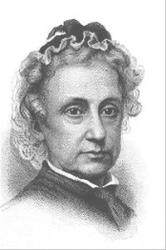
E. Prentiss

1818 - 1878 Person Name: Elizabeth Payson Prentiss Topics: Longing for Christ and God Author of "More Love to Thee, O Christ" in Trinity Psalter Hymnal Elizabeth Payson Prentiss USA 1818-1878. Born at Portland, ME, 5th child of Congregationalist minister, Edward Payson. He died of tuberculosis in 1827, and the family moved to New York City in 1831. That year she professed faith in Christ and joined the Bleeker Street Presbyterian Church. She possessed keen abilities, including sympathy and perceptiveness. She began writing stories and poems, and contributed her works to “The youth’s companion”, a New England religious periodical. In 1838 she opened a small girls’ school in her home and took up a Sabbath-school class as well. Two years later, she moved to Richmond, VA, to be a department head at a girls’ boarding school. In 1845 she married George Lewis Prentiss, a brother of her close friend, Anna Prentiss Stearns. The Prentisses settled in New Bedford, MA, where George became pastor of South Trinitarian Church. In 1851 George became pastor of Mercer St Presbyterian Church in New York City. After a happy period in life, by 1852 she had lost two of her three children, one as a newborn, one at age four. However, she went on to have three more healthy children, despite her poor health. She wrote her first book of stories, published in 1853. In 1856 she penned her famous hymn lyrics (noted below) after she nearly lost her daughter, Minnie, to an illness. After George resigned from his church due to failing health, the family went abroad for a couple of years. In 1860 they returned to NY, where George resumed his pastorate and held a chair at Union Theological Seminary. She published her most popular book, “Stepping heavenward” in 1869, furnishing it in installments to ‘Chicago Advance’. The family evenually settled in Dorset, VT, where she died. After her death, her husband published “The life and letters of Elizabeth Prentiss” in 1882. The family children were: Annie, Eddy, Bessie, Minnie, George, and Henry. John Perry ================ Prentiss, Elizabeth, née Payson, youngest daughter of Dr. Edward Payson, was born at Portland, Maine, Oct. 26, 1818; married to George Lewis Prentiss, D.D., then at Bedford, Massachusetts, April, 1845; and died at Dorset, Vermont, Aug. 13, 1878. Her Life and Letters by her husband appeared some time after. Dr. Prentiss removed from Bedford to New York in 1851, and was appointed Professor of Pastoral Theology at Union Seminary, New York, 1873. Mrs. Prentiss's works include The Flower of the Family; Stepping Heavenward, 1869; and Religious Poems, 1873. Of her hymns the two following are most widely known:— 1. As on a vast eternal shore Thanksgiving. Contributed to Schaff's Christ in Song, 1869. 2. More love to Thee, 0 Christ. More Love to Christ desired. Written in 1869, and first printed on a fly-sheet; then in Hatfield's Church Hymn Book, N. Y., 1872. [Rev. F. M. Bird, M.A.] --John Julian, Dictionary of Hymnology (1907)

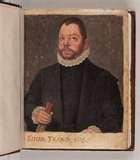
Johann Franck

1618 - 1677 Topics: Longing for Christ and God Author of "Jesus, Priceless Treasure" in Trinity Hymnal (Rev. ed.) Johann Franck (b. Guben, Brandenburg, Germany, 1618; d. Guben, 1677) was a law student at the University of Köningsberg and practiced law during the Thirty Years' War. He held several positions in civil service, including councillor and mayor of Guben. A significant poet, second only to Paul Gerhardt in his day, Franck wrote some 110 hymns, many of which were published by his friend Johann Crüger in various editions of the Praxis Pietatis melica. All were included in the first part of Franck’s Teutsche Gedichte bestehend im geistliche Sion (1672). Bert Polman ============= Franck, Johann, son of Johann Franck, advocate and councillor at Guben, Brandenburg, was born at Guben, June 1, 1618. After his father's death, in 1620, his uncle by marriage, the Town Judge, Adam Tielckau, adopted him and sent him for his education to the schools at Guben, Cottbus, Stettin and Thorn. On June 28, 1638, he matriculated as a student of law at the University of Königsberg, the only German university left undisturbed by the Thirty Years' War. Here his religious spirit, his love of nature, and his friendship with such men as Simon Dach and Heinrich Held, preserved him from sharing in the excesses of his fellow students. He returned to Guben at Easter, 1640, at the urgent request of his mother, who wished to have him near her in those times of war during which Guben frequently suffered from the presence of both Swedish and Saxon troops. After his return from Prague, May, 1645, he commenced practice as a lawyer. In 1648 he became a burgess and councillor, in 1661 burgomaster, and in 1671 was appointed the deputy from Guben to the Landtag (Diet) of Lower Lusatia. He died at Guben, June 18, 1677; and on the bicentenary of his death, June 18, 1877, a monumental tablet to his memory was affixed to the outer wall of the Stadtkirche at Guben (Koch, iii. 378-385; Allgemeine Deutsche Biographie, vii. 211-212; the two works by Dr. Hugo Jentsch of Guben, Johann Franck, 1877, and Die Abfassungszeit der geistlichen Lieder Johann Franck's, 1876). Of Franck's secular poems those before 1649 are much the best; his later productions becoming more and more affected and artificial, long-winded and full of classical allusions, and much inferior to those of Dach or Opitz. As a hymn writer he holds a high rank and is distinguished for unfeigned and firm faith, deep earnestness, finished form, and noble, pithy, simplicity of expression. In his hymns we miss the objectivity and congregational character of the older German hymns, and notice a more personal, individual tone; especially the longing for the inward and mystical union of Christ with the soul as in his "Jesus, meine Freude." He stands in close relationship with Gerhardt, sometimes more soaring and occasionally more profound, but neither on the whole so natural nor so suited for popular comprehension or Church use. His hymns appeared mostly in the works of his friends Weichmann, Crüger and Peter. They were collected in his Geistliches Sion, Guben, 1674, to the number of 110; and of these the 57 hymns (the other 53 being psalm versions of no great merit) were reprinted with a biographical preface by Dr. J. L. Pasig as Johann Franck's Geistliche Lieder, Grimma, 1846. Two of those translated into English are from the Latin of J. Campanus (q. v.). Four other hymns are annotated under their own first lines:—"Brunquell aller Güter"; "Dreieinigkeit der Gottheit wahrer Spiegel"; "Jesu, meine Freude"; "Schmücke dich, o liebe Secle." The rest are:— i. Hymns in English common use: -- i. Erweitert eure Pforten . [Advent]. Founded on Psalm xxiv. 7-10. First published in C. Peter's Andachts-Zymbeln, Freiberg, 1655, p. 25, in 7 stanzas of 8 lines; repeated 1674, p. 3, and 1846, p. 3, as above. Included in the 1688 and later editions of Crüger's Praxis pietatis, in Bollhagen's Gesang-Buch, 1736, &c. The only translation in common use is:—- Unfold your gates and open, a translation of st. 1, 3, 6, by A. T. Russell, as No. 30 in his Hymns & Psalms, 1851; repeated altered as No. 30 in Kennedy, 1863, and thus as No. 102 in Holy Song, 1869. ii. Herr Gott dich loben wir, Regier. Thanksgiving for Peace. Evidently written as a thanksgiving for the conclusion of the Thirty Years' War, by the Peace of Westphalia, Oct. 24, 1648. First published in the Crüger-Runge Gesang-Buch, Berlin, 1653, No. 306, in 9 st. of 8 l., as the first of the "Hymns of Thanksgiving for Peace attained"; and repeated 1674, p. 182, and 1846, p. 77, as above. Included in Crüger's Praxis, 1653, and many later collections, and, as No. 591, in the Unverfälschter Liedersegen, 1851. The only translation in common use is:— Lord God, we worship Thee, a very good version of st. 2, 3, 6, 8, by Miss Winkworth in her Chorale Book for England, 1863, No. 183. Repeated in full in the Society for Promoting Christian Knowledge Church Hymns, 1871; the Hymnary, 1872; the Psalmist, 1878; and in America in the Pennsylvania Lutheran Church Book, 1868. In the American Protestant Episcopal Collection, 1871; the Hymns & Songs of Praise, N. Y. 1874; and the Ohio Lutheran Hymnal, 1880, the translation of stanza 8 is omitted. iii. Herr ich habe missgehandelt. Lent. Of this fine hymn of penitence stanza i. appeared as No. 19 in Cruger's Geistliche Kirchenmelodien , Leipzig, 1649. The full form in 8 stanzas of 6 lines is No. 41 in the Crüger-Runge Gesang-Buch, Berlin, 1653, entitled "For the forgiveness of sins," repeated 1674, p. 39, and 1846, p. 37, as above. Included in Crüger's Praxis, 1653, and others, and in the Unverfälschter Liedersegen, 1851. The only translation in common use is:— Lord, to Thee I make confession, a very good translation, omitting st. 4, 5, 6, by Miss Winkworth in her Chorale Book for England, 1863, No. 44, repeated in the Appendix to the Hymnal for St. John's, Aberdeen, 1865-1870; and in the Pennsylvania Lutheran Ch. Book, 1868; Evangelical Hymnal, N. Y., 1880; Ohio Lutheran Hymnal, 1880. Another translation is: "Lord, how oft I have offended," by N. L. Frothingham, 1870, p. 177. iv. Herr Jesu, Licht der Heiden. Presentation in the Temple. Founded on the account in St. Luke ii., and probably the finest hymn on the subject. Dr. Jentsch, 1876, p. 9, thinks it was written before Dec. 8, 1669, as C. Peter, who died then, left a melody for it. We have not found the full text earlier than 1674, as above, p. 10, in 6 stanzas of 8 lines, entitled "On the Festival of the Purification of Mary" (1846, p. 10). Included in the 1688 and later editions of Crüger's Praxis, and in the Unverfälschter Liedersegen, 1851, No. 197. The translations in common use are:— 1. Light of the Gentile world , a translation, omitting st. 6, by Miss Winkworth in the first service of her Lyra Germanica, 1855, p. 193 (ed. 1876, p. 195), and thence as No. 147 in the Pennsylvania Lutheran Hymn Book, 1865. This version is in S.M. Double. 2. Light of the Gentile Nations, a good translation, omitting st. 6, by Miss Winkworth in her Chorale Book for England, 1863, No. 80. Repeated in Dr. Thomas's Augustine Hymn Book, 1866, and in America in the Pennsylvania Lutheran Church Book, 1868, and the Ohio Lutheran Hymnal, 1880. ii. Hymns not in English common use: v. Du geballtes Weltgebäude. Christ above all earthly things. Stanza i. in Cruger's Kirchenmelodien, 1649, No. 116. The full text (beginning "Du o schönes) is No. 239 in the Crüger-Runge Gesang-Buch, 1653, in 8 stanzas, entitled "Longing after Eternal Life." Repeated, 1674, p. 194, and 1846, p. 60, as above. The translations are: (1) "Let who will in thee rejoice," by Miss Winkworth, 1855, p. 180 (1876, p. 182). (2) "O beautiful abode of earth," by Miss Warner, 1858 (1861, p. 233). (3) "Thou, O fair Creation-building," by N. L. Frothingham, 1870, p. 232. vi. Unsre müden Augenlieder. Evening. Probably written while a student at Königsberg. First published in J. Weichmann's Sorgen-lägerin, Königsberg, 1648, Pt. iii., No. 4, in 7 st.; repeated 1674, p. 213, and 1846, p. 91, as above. The only translation is by H. J. Buckoll, 1842, p. 79, beginning with st. vi., "Ever, Lord, on Thee relying." [Rev. James Mearns, M.A.] --John Julian, Dictionary of Hymnology (1907)

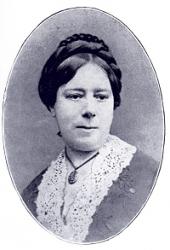
Catherine Winkworth

1827 - 1878 Topics: Longing for Christ and God Translator of "Jesus, Priceless Treasure" in Trinity Hymnal (Rev. ed.) Catherine Winkworth (b. Holborn, London, England, 1827; d. Monnetier, Savoy, France, 1878) is well known for her English translations of German hymns; her translations were polished and yet remained close to the original. Educated initially by her mother, she lived with relatives in Dresden, Germany, in 1845, where she acquired her knowledge of German and interest in German hymnody. After residing near Manchester until 1862, she moved to Clifton, near Bristol. A pioneer in promoting women's rights, Winkworth put much of her energy into the encouragement of higher education for women. She translated a large number of German hymn texts from hymnals owned by a friend, Baron Bunsen. Though often altered, these translations continue to be used in many modern hymnals. Her work was published in two series of Lyra Germanica (1855, 1858) and in The Chorale Book for England (1863), which included the appropriate German tune with each text as provided by Sterndale Bennett and Otto Goldschmidt. Winkworth also translated biographies of German Christians who promoted ministries to the poor and sick and compiled a handbook of biographies of German hymn authors, Christian Singers of Germany (1869). Bert Polman ======================== Winkworth, Catherine, daughter of Henry Winkworth, of Alderley Edge, Cheshire, was born in London, Sep. 13, 1829. Most of her early life was spent in the neighbourhood of Manchester. Subsequently she removed with the family to Clifton, near Bristol. She died suddenly of heart disease, at Monnetier, in Savoy, in July, 1878. Miss Winkworth published:— Translations from the German of the Life of Pastor Fliedner, the Founder of the Sisterhood of Protestant Deaconesses at Kaiserworth, 1861; and of the Life of Amelia Sieveking, 1863. Her sympathy with practical efforts for the benefit of women, and with a pure devotional life, as seen in these translations, received from her the most practical illustration possible in the deep and active interest which she took in educational work in connection with the Clifton Association for the Higher Education of Women, and kindred societies there and elsewhere. Our interest, however, is mainly centred in her hymnological work as embodied in her:— (1) Lyra Germanica, 1st Ser., 1855. (2) Lyra Germanica, 2nd Ser., 1858. (3) The Chorale Book for England (containing translations from the German, together with music), 1863; and (4) her charming biographical work, the Christian Singers of Germany, 1869. In a sympathetic article on Miss Winkworth in the Inquirer of July 20, 1878, Dr. Martineau says:— "The translations contained in these volumes are invariably faithful, and for the most part both terse and delicate; and an admirable art is applied to the management of complex and difficult versification. They have not quite the fire of John Wesley's versions of Moravian hymns, or the wonderful fusion and reproduction of thought which may be found in Coleridge. But if less flowing they are more conscientious than either, and attain a result as poetical as severe exactitude admits, being only a little short of ‘native music'" Dr. Percival, then Principal of Clifton College, also wrote concerning her (in the Bristol Times and Mirror), in July, 1878:— "She was a person of remarkable intellectual and social gifts, and very unusual attainments; but what specially distinguished her was her combination of rare ability and great knowledge with a certain tender and sympathetic refinement which constitutes the special charm of the true womanly character." Dr. Martineau (as above) says her religious life afforded "a happy example of the piety which the Church of England discipline may implant.....The fast hold she retained of her discipleship of Christ was no example of ‘feminine simplicity,' carrying on the childish mind into maturer years, but the clear allegiance of a firm mind, familiar with the pretensions of non-Christian schools, well able to test them, and undiverted by them from her first love." Miss Winkworth, although not the earliest of modern translators from the German into English, is certainly the foremost in rank and popularity. Her translations are the most widely used of any from that language, and have had more to do with the modern revival of the English use of German hymns than the versions of any other writer. -- John Julian, Dictionary of Hymnology (1907) ============================ See also in: Hymn Writers of the Church
It looks like you are using an ad-blocker. Ad revenue helps keep us running. Please consider white-listing Hymnary.org or getting Hymnary Pro to eliminate ads entirely and help support Hymnary.org.