You help make Hymnary.org possible. More than 10 million people from 200+ countries found hymns, liturgical resources and encouragement on Hymnary.org in 2025, including you. Every visit affirms the global impact of this ministry.

If Hymnary has been meaningful to you this year, would you take a moment today to help sustain it? A gift of any size—paired with a note of encouragement if you wish—directly supports the server costs, research work and curation that keep this resource freely available to the world.

Give securely online today, or mail a check to:
Hymnary.org
Calvin University
3201 Burton Street SE
Grand Rapids, MI 49546

Thank you for your partnership, and may the hope of Advent fill your heart.

Search Results

Topics:praise+-+thanksgiving

Planning worship? Check out our sister site, ZeteoSearch.org, for 20+ additional resources related to your search.

Texts

text icon
Text authorities
FlexScore

Thine Is the Glory

Author: Edmond Budry; Richard Birch Hoyle Meter: 5.5.6.5.6.5.6.5 Appears in 123 hymnals Topics: Praise of Christ; Warfare, Spiritual; liturgical Closing Songs First Line: Thine is the glory, Risen, conquering Son Refrain First Line: Thine be the glory, risen conquering Son

O could I speak the matchless worth

Author: Samuel Medley Meter: 8.8.6.8.8.6 Appears in 773 hymnals Topics: Adoration; Cross of Believer; Praise of Christ; Worship; Christ Beauty of
TextPage scansFlexScoreFlexPresent

Rejoice, the Lord Is King

Author: Charles Wesley (1707-1788) Meter: 6.6.6.6.8.8 Appears in 770 hymnals Topics: Kingdom; Praise of God; Reign of Christ First Line: Rejoice, the Lord is King! Lyrics: 1 Rejoice, the Lord is King! Your Lord and King adore! Rejoice, give thanks and sing and triumph evermore. Lift up your heart, lift up your voice: rejoice, again I say, rejoice! 2 Jesus the Saviour reigns, the God of truth and love; when he had purged our stains, he took his seat above. Lift up your heart, lift up your voice: rejoice, again I say, rejoice! 3 His kingdom cannot fail; he rules o'er earth and heaven; the keys of death and hell are to our Jesus given. Lift up your heart, lift up your voice: rejoice, again I say, rejoice! 4 He sits at God's right hand till all his foes submit, and bow to his command, and fall beneath his feet. Lift up your heart, lift up your voice: rejoice, again I say, rejoice! 5 Rejoice in glorious hope; Jesus, the Judge, shall come and take his servants up to their eternal home. We soon shall hear the archangel's voice; the trump of God shall sound, rejoice! Scripture: Psalm 24 Used With Tune: DARWALL

Tunes

tune icon
Tune authorities
FlexScoreAudio

AZMON

Meter: 8.6.8.6 Appears in 1,133 hymnals Composer and/or Arranger: Carl Gotthelf Gläser; Lowell Mason Topics: God Beyond All Name and Form Praise to God; God; God: Glory; Jesus Christ: Name; Music and Singing; Praise; Proclamation Tune Key: G Major Incipit: 51122 32123 34325 Used With Text: O for a Thousand Tongues to Sing
Page scansAudio

OLD 113TH

Meter: 8.8.8.8.8.8 Appears in 136 hymnals Composer and/or Arranger: Matthäus Greiter Topics: The Church at Worship Praise and Adoration; God-Creator; God-Providence; Praise and Adoration-God Tune Key: D Major Incipit: 11231 34554 32134 Used With Text: I'll Praise My Maker
Page scansFlexScoreAudio

JOYFUL SONG

Meter: 12.10.12.10.11.10 with refrain Appears in 300 hymnals Composer and/or Arranger: Chester G. Allen, 1838-1878 Topics: Christ the King; Funeral Sacraments; Angels; Heaven; Holy Name of Jesus; Joy; Love of God for Us; Music; Paschal Mystery; Praise; Redemption; Refuge, Security; Sacrifice; Second Coming; Shepherd; Song; Victory over Sin and Death; Worship and Adoration Tune Key: G Major Incipit: 35132 32176 51351 Used With Text: Praise Him! Praise Him!

Instances

instance icon
Published text-tune combinations (hymns) from specific hymnals
TextPage scan

Praise Him! Praise Him!

Author: Fanny J. Crosby Hymnal: Lutherförbundets Sångbok #E177 (1913) Meter: 12.10.12.10.11.10.12.10 Topics: Prayer and Praise First Line: Praise Him! praise Him! Jesus, our blessed Redeemer! Refrain First Line: Praise Him! praise Him! tell of His excellent greatness Lyrics: 1 Praise Him! praise Him! Jesus, our blessed Redeemer! Sing, O earth--His wonderful love proclaim! Hail Him! hail Him! highest archangels in glory; Strength and honor give to His holy Name! Like a shepherd, Jesus will guard His children, In His arms He carries them all day long; Praise Him! praise Him! tell of His excellent greatness; Praise Him! praise Him ever in joyful song! 2 Praise Him! praise Him! Jesus, our blessed Redeemer! For our sins He suffered, and bled, and died; He our Rock, our hope of eternal salvation, Hail Him! hail Him! Jesus, the Crucified. Sound His praises! Jesus who bore our sorrows, Love unbounded, wonderful, deep and strong; Praise Him! praise Him! tell of His excellent greatness; Praise Him! praise Him ever in joyful song! 3 Praise Him! praise Him! Jesus, our blessed Redeemer! Heav'nly portals loud with hosannas ring! Jesus, Saviour, reigneth forever and ever: Crown Him! crown Him! Prophet, and Priest, and King! Christ is coming, over the world victorious: Pow'r and glory unto the Lord belong: Praise Him! praise him! tell of His excellent greatness; Praise Him! praise Him ever in joyful song! Languages: English Tune Title: PRAISE HIM
TextPage scan

Praise, My Soul, the King of Heaven

Author: Henry F. Lyte, 1793-1847 Hymnal: Hymns for a Pilgrim People #9 (2007) Meter: 8.7.8.7.8.7 Topics: Adoration and Praise; Comfort; Ecumenism / Interfaith; Faithfulness of God; God the Father; Grace; Healing; Heaven; Love; Mercy; Providence; Reconciliation Lyrics: 1 Praise, my soul, the King of heaven, To God's feet your tribute bring; Ransomed, healed, restored, forgiven, Who, like me, God's praise should sing? Praise Him! Praise Him! Praise Him! Praise Him! Praise the Everlasting King! 2 Praise Him for His grace and favor To our fathers in distress; Praise Him, still the same forever, Slow to chide, and swift to bless. Praise Him! Praise Him! Praise Him! Praise Him! Glorious in His faithfulness! 3 Father-like, He tends and spares us; Well our feeble frame He knows; In His hands He gently bears us, Rescues us from all our foes. Praise Him! Praise Him! Praise Him! Praise Him! Widely as His mercy flows! 4 Frail as summer's flow'r we flourish, Blows the wind and it is gone; But while mortals rise and perish, God endures unchanging on; Praise Him! Praise Him! Praise Him! Praise Him! Praise the high eternal One! 5 Angels, help us to adore Him, You behold Him face to face; Sun and moon, bow down before Him; Dwellers in all time and space, Praise Him! Praise Him! Praise Him! Praise Him! Praise with us the God of grace! Amen. Scripture: Psalm 103 Languages: English Tune Title: LAUDA ANIMA

O Praise the Lord

Author: I-to Loh Hymnal: Hymns from the Four Winds #15 (1983) Topics: Praise and Adoration The Trinity; God Love of God; Responses to God Doxologies, Amens, Blessings; Responses to God Praise and Worship; Useful Musical Types Call and Response First Line: O praise the Lord, O praise the Lord Scripture: Revelation 4:8 Languages: English Tune Title: BHAGWAN

People

person icon
Authors, composers, editors, etc.

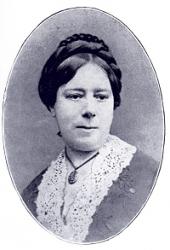
Catherine Winkworth

1827 - 1878 Topics: God His Goodness; Adoration; Christ Friend; God Defender; God Mercy of; God Praise of Translator of "Praise to the Lord, the Almighty" in Trinity Hymnal (Rev. ed.) Catherine Winkworth (b. Holborn, London, England, 1827; d. Monnetier, Savoy, France, 1878) is well known for her English translations of German hymns; her translations were polished and yet remained close to the original. Educated initially by her mother, she lived with relatives in Dresden, Germany, in 1845, where she acquired her knowledge of German and interest in German hymnody. After residing near Manchester until 1862, she moved to Clifton, near Bristol. A pioneer in promoting women's rights, Winkworth put much of her energy into the encouragement of higher education for women. She translated a large number of German hymn texts from hymnals owned by a friend, Baron Bunsen. Though often altered, these translations continue to be used in many modern hymnals. Her work was published in two series of Lyra Germanica (1855, 1858) and in The Chorale Book for England (1863), which included the appropriate German tune with each text as provided by Sterndale Bennett and Otto Goldschmidt. Winkworth also translated biographies of German Christians who promoted ministries to the poor and sick and compiled a handbook of biographies of German hymn authors, Christian Singers of Germany (1869). Bert Polman ======================== Winkworth, Catherine, daughter of Henry Winkworth, of Alderley Edge, Cheshire, was born in London, Sep. 13, 1829. Most of her early life was spent in the neighbourhood of Manchester. Subsequently she removed with the family to Clifton, near Bristol. She died suddenly of heart disease, at Monnetier, in Savoy, in July, 1878. Miss Winkworth published:— Translations from the German of the Life of Pastor Fliedner, the Founder of the Sisterhood of Protestant Deaconesses at Kaiserworth, 1861; and of the Life of Amelia Sieveking, 1863. Her sympathy with practical efforts for the benefit of women, and with a pure devotional life, as seen in these translations, received from her the most practical illustration possible in the deep and active interest which she took in educational work in connection with the Clifton Association for the Higher Education of Women, and kindred societies there and elsewhere. Our interest, however, is mainly centred in her hymnological work as embodied in her:— (1) Lyra Germanica, 1st Ser., 1855. (2) Lyra Germanica, 2nd Ser., 1858. (3) The Chorale Book for England (containing translations from the German, together with music), 1863; and (4) her charming biographical work, the Christian Singers of Germany, 1869. In a sympathetic article on Miss Winkworth in the Inquirer of July 20, 1878, Dr. Martineau says:— "The translations contained in these volumes are invariably faithful, and for the most part both terse and delicate; and an admirable art is applied to the management of complex and difficult versification. They have not quite the fire of John Wesley's versions of Moravian hymns, or the wonderful fusion and reproduction of thought which may be found in Coleridge. But if less flowing they are more conscientious than either, and attain a result as poetical as severe exactitude admits, being only a little short of ‘native music'" Dr. Percival, then Principal of Clifton College, also wrote concerning her (in the Bristol Times and Mirror), in July, 1878:— "She was a person of remarkable intellectual and social gifts, and very unusual attainments; but what specially distinguished her was her combination of rare ability and great knowledge with a certain tender and sympathetic refinement which constitutes the special charm of the true womanly character." Dr. Martineau (as above) says her religious life afforded "a happy example of the piety which the Church of England discipline may implant.....The fast hold she retained of her discipleship of Christ was no example of ‘feminine simplicity,' carrying on the childish mind into maturer years, but the clear allegiance of a firm mind, familiar with the pretensions of non-Christian schools, well able to test them, and undiverted by them from her first love." Miss Winkworth, although not the earliest of modern translators from the German into English, is certainly the foremost in rank and popularity. Her translations are the most widely used of any from that language, and have had more to do with the modern revival of the English use of German hymns than the versions of any other writer. -- John Julian, Dictionary of Hymnology (1907) ============================ See also in: Hymn Writers of the Church

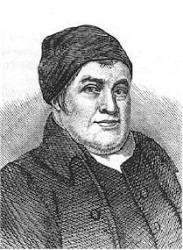
John Fawcett

1740 - 1817 Person Name: Rev. John Fawcett, D. D. Topics: Praise Author of "Praise to Thee, Thou Great Creator!" in Light in the Valley An orphan at the age of twelve, John Fawcett (b. Lidget Green, Yorkshire, England, 1740; d. Hebden Bridge, Yorkshire, 1817) became apprenticed to a tailor and was largely self-educated. He was converted by the preaching of George Whitefield at the age of sixteen and began preaching soon thereafter. In 1765 Fawcett was called to a small, poor, Baptist country church in Wainsgate, Yorkshire. Seven years later he received a call from the large and influential Carter's Lane Church in London, England. Fawcett accepted the call and preached his farewell sermon. The day of departure came, and his family's belongings were loaded on carts, but the distraught congregation begged him to stay. In Singers and Songs of the Church (1869), Josiah Miller tells the story associated with this text: This favorite hymn is said to have been written in 1772, to commemorate the determination of its author to remain with his attached people at Wainsgate. The farewell sermon was preached, the wagons were loaded, when love and tears prevailed, and Dr. Fawcett sacrificed the attraction of a London pulpit to the affection of his poor but devoted flock. Fawcett continued to serve in Wainsgate and in the nearby village of Hebden Bridge for the remainder of his active ministry. Bert Polman =============== Fawcett, John, D.D., was born Jan. 6, 1739 or 1740, at Lidget Green, near Bradford, Yorks. Converted at the age of sixteen under the ministry of G. Whitefield, he at first joined the Methodists, but three years later united with the Baptist Church at Bradford. Having begun to preach he was, in 1765, ordained Baptist minister at Wainsgate, near Hebden Bridge, Yorks. In 1772 he was invited to London, to succeed the celebrated Dr. J. Gill, as pastor of Carter's Lane; the invitation had been formally accepted, the farewell sermon at Wainsgate had been preached and the wagons loaded with his goods for removal, when the love and tears of his attached people prevailed and he decided to remain. In 1777 a new chapel was built for him at Hebden Bridge, and about the same time he opened a school at Brearley Hall, his place of residence. In 1793 he was invited to become President of the Baptist Academy at Bristol, but declined. In 1811 he received from America the degree of D.D., and died in 1817, at the age of 78. Dr. Fawcett was the author of a number of prose works on Practical Religion, several of which attained a large circulation. His poetical publications are:— (1) Poetic Essays, 1767; (2) The Christian's Humble Plea, a Poem, in answer to Dr. Priestley against the Divinity of our Lord Jesus Christ, 1772; (3) Three hymns, in the Gospel Magazine, 1777; (4) The Death of Eumenio, a Divine Poem, 1779; (5) Another poem, suggested by the decease of a friend, The Reign of Death, 1780; and (6) Hymns adapted to the circumstances of Public Worship and Private Devotion, Leeds, G. Wright & Son. 1782. They are 166 in number, and were mostly composed to be sung after sermons by the author. Whilst not attaining a high degree of excellence as poetry, they are "eminently spiritual and practical," and a number of them are found in all the Baptist and Congregational hymn-books that have appeared during the last 100 years. The best known of these are, “Infinite excellence is Thine;" "How precious is the Book divine;" "Thus far my God hath led me on;" "Religion is the chief concern;" "Blest be the tie that binds;" “I my Ebenezer raise;" and "Praise to Thee, Thou great Creator." These hymns, together with others by Fawcett, are annotated under their respective first lines. [Rev. W. R. Stevenson, M.A.] In addition the following hymns, also by Fawcett, but of less importance, are in common use: 1. Behold the sin-atoning Lamb. Passiontide. No. 60 of his Hymns, 1782, in 7 stanzas of 4 lines. In several hymnals in Great Britain and America. 2. I my Ebenezer raise. Birthday. No. 102 of his Hymns, in 10 stanzas of 4 lines. Usually given in an abbreviated form. 3. Infinite excellence is Thine. Jesus the Desire of Nations. No. 42 of his Hymns, in 12 stanzas of 4 lines. In several hymn-books in Great Britain and America in an abridged form. 4. Jesus, the heavenly Lover, gave. Redemption in Christ. No. 10 of his Hymns, &c., 1782, in 7 stanzas of 4 lines, and headed, "The marriage between Christ and the Soul." In Snepp's Songs of Grace & Glory, 1872, it reads, “Jesus, the heavenly Bridegroom, gave," and stanza v. is omitted. 5. Lord, hast Thou made me know Thy ways? Perseverance. No. 122 of his Hymns, &c., 1782, in 8 stanza of 4 lines. In the Baptist Hymnal, 1879, No. 451, stanzas iv.-vii. are omitted. 6. 0 God, my Helper, ever near. New Year. No. 108 of his Hymns, &c., 1782, in 6 stanzas of 4 lines. The New Congregational Hymn Book, 1859-69 omits st. vi. 7. 0, my soul, what means this sadness? Sorrow turned to Joy. No. 111 of his Hymns, &c., 1782, in 5 stanzas of 6 lines, and based upon the words, "Why art Thou cast down, O my soul?" &c. It is in common use in America, and usually with the omission of stanza ii. as in Dr. Hatfield's Church Hymn Book, 1872. 8. Sinners, the voice of God regard. Invitation to Repentance. No. 63 of his Hymns, &c., 1782, in 7 stanzas of 4 lines on Isaiah lv. 7, "Let the wicked forsake his way," &c. It is in common use in America, but usually in an abbreviated form. 9. Thy presence, gracious God, afford. Before Sermon. No 165 in his Hymns, &c., in 4 stanzas of 4 lines, and a chorus of two lines. In Dr. Hatfield's Church Hymnbook, 1872, No. 126, the chorus is omitted. Fawcett has another hymn on the same subject (No. 79) and beginning, "Thy blessing, gracious God, afford," but this is not in common use. 10. Thy way, 0 God, is in the sea. Imperfect Knowledge of God. No. 66 in his Hymns, &c., 1782, in 7 stanzas of 4 lines on 1 Corinthians xiii. 9, "We know in part," &c. It is in several American collections, usually abbreviated, and sometimes as, "Thy way, O Lord, is in the sea." In this form it is in The Sabbath Hymn Book, 1858, &c. 11. With humble heart and tongue. Prayer for Guidance in Youth. No. 86 in his Hymns, &c., 1782, in 7 stanzas of 4 lines on Psalms cxix. 9. "Wherewith shall a young man cleanse his way." It is No. 954 in the Baptist Psalms and Hymns, 1858-80. About 20 of Fawcett's hymns are thus still in common use. Two hymns which have been ascribed to him from time to time, but concerning which there are some doubts, are fully annotated under their respective first lines. These are," Humble souls that seek salvation," and "Lord, dismiss us with Thy blessing." -- John Julian, Dictionary of Hymnology (1907)

Jane Eliza Leeson

1807 - 1882 Person Name: Jane E. Leeson Topics: Christian Life Prayer, Intercession and Praise Author of "Saviour, teach me, day by day" in The Evangelical Hymnal Leeson, Jane E.. The earliest work by Miss Leeson with which we are acquainted is her Infant Hymnings. Then followed Hymns and Scenes of Childhood, or A Sponsor's Gift (London, James Burns; Nottingham, Dearden), 1842, in which the Infant Hymnings were incorporated. Concerning Pt. ii. of the Hymns and Scenes, &c, Miss Leeson says, "For the best of the Poems in the second part, the Writer is indebted to a friend." In the Rev. Henry Formby's Catholic Hymns arranged in order for the principal Festivals, Feasts of Saints, and other occasions of Devotion throughout the Year, London, Burns and Lambert, N.D. [1851], "Imprimatur, N. Cardinalis Wiseman, May 3rd, 1853," her translation of Victimae Paschali (“Christ the Lord is risen to-day"), and her "Loving Shepherd of Thy Sheep" (also in Hymns & Scenes, 1842), were given under the signature "M. L." Her Paraphrases and Hymns for Congregational Singing (most of " which were re-written from the Scottish Translations and Paraphrases (q.v.), 1781) were published by Wertheimer & Co., London, in 1853. In the Irvingite Hymns for the Use of the Churches, 1864, there are five of her original hymns and four of her translations from the Latin under the signature of "J. E. L.; "and most of these were repeated in the 2nd edition, 1871. In addition Miss Leeson is the author of several other works, including The Christian Child's Book, 1848, The Child's Book of Ballads, 1849, Songs of Christian Chivalry, 1848, Margaret, a Poem, 1850, The Seven Spiritual Works of Mercy, and others. Her hymns in common use include:— 1. A little child may know. God's love of little Children. In Hymns & Scenes of Childhood, 1842, No. 20, in 5 stanzas of 4 lines. 2. Dear Saviour, to Thy little lambs. For Purity. In Hymns & Scenes of Childhood, 1842, No. 19, in 4 stanzas of 8 lines. 3. Father, I [we] love Thy house of prayer. Public Worship. In Hymns & Scenes of Childhood, 1842, No. 76, in 3 stanzas of 12 lines. It is usually abbreviated. 4. Have ye counted the cost? Soldiers of the Cross . In Songs of Christian Chivalry, 1848, p. 8, in 10 stanzas of 9 lines. Usually abbreviated as in the Enlarged London Hymn Book, 1873. 5. In the dark and silent night. Confidence. In The Christian Child's Book, 1848, in 3 stanzas of 3 lines, with the refrain, "Hallelujah." It is in the Irish Church Hymnal , 1873, and other collections. 6. Jesus Christ, my Lord and King. Child's Praise of Christ. In Hymns & Scenes of Childhood, 1842, No. 18, in 6 stanzas of 4 lines. 7. King of Saints and King of glory. All Saints . In her Paraphrases & Hymns, 1853, p. 84, in 2 stanzas of 8 lines. 8. Saviour, teach me day by day. Obedience. In Hymns & Scenes of Childhood, 1842, No. 49, in 4 stanzas of 8 lines. In several hymn-books in Great Britain and America. 9. Songs of glory fill the sky. Christmas. In the Irvingite Hymns for the Use of the Churches, 1864, No. 21, in 3 stanzas of 8 lines, with the refrain "Hail! Lord Jesu." 10. Stand we prepared to see and hear. Advent. In the Irvingite Hymns for the Use of the Churches, 1864, No. 173, in 4 stanzas of 8 lines. Written in 1800. 11. Sweet the lesson Jesus taught. Christ blessing little Children. In Hymns & Scenes of Childhood, 1842, No. 1, in 5 stanzas of 4 lines. 12. Wake the song, 0 Zion's daughter. A cento of much excellence, which see. 13. Wake, ye saints, the song of triumph. Ascension . Written in 1861, and published in the Irvingite Hymns for the Use of the Churches, 1864, No. 60, in 4 stanzas of 6 lines, with the refrain "Hallelujah." In stanza ii., lines 3, 4, and 6 are from C. Wesley's "Hail the day that sees Him rise." Miss Leeson's most popular hymn, “Loving Shepherd of Thy Sheep," and her translations from the Latin are noted elsewhere in this work. Of Miss Leeson's personal history we can gather nothing. Born 1807; died 1882. --John Julian, Dictionary of Hymnology (1907)
It looks like you are using an ad-blocker. Ad revenue helps keep us running. Please consider white-listing Hymnary.org or getting Hymnary Pro to eliminate ads entirely and help support Hymnary.org.