

 My Starred Hymns
 My Hymnals
 My Purchased Files
Planning worship?
Check out our sister site, ZeteoSearch.org,
for 20+ additional resources related to your search.
- |
User Links
Search Results


All glory, laud, and honour
Author: St. Theodulph; John Mason Neale Meter: 7.7.7.6 D Appears in 619 hymnals Topics: Processional Lyrics:
All glory, laud, and honor
To thee, Redeemer, King!
To whom the lips of children
Made sweet hosannas ring.
Thou art the King of Israel,
Thou David's royal Son,
Who in the Lord's Name comest,
The King and Blessed One.
The company of angels
Are praising thee on high;
And mortal men, and all things
Created, make reply.
The people of the Hebrews
With palms before thee went:
Our praise and prayers and anthems
Before thee we present.
To thee before thy Passion
They sang their hymns of praise:
To thee, now high exalted,
Our melody we raise.
Thou didst accept their praises;
Accept the prayers we bring,
Who in all good delightest,
Thou good and gracious King.
Amen.
Used With Tune: ST. THEODULPH
All glory, laud, and honour
"Lift Up Your Hearts!"
Author: Henry M. Butler Meter: 10.10.10.10 Appears in 72 hymnals Topics: Processional Hymns First Line: "Lift up your hearts!" We lift them up to you Used With Tune: WOODLANDS
"Lift Up Your Hearts!"
Hosanna, loud hosanna
Author: Jennette Threlfall, 1821-880 Meter: 7.6.7.6 D Appears in 166 hymnals Topics: Processionals Scripture: Matthew 21:14-17 Used With Tune: ELLACOMBE
Hosanna, loud hosanna


Psalm 84
Author: The Grail; Ronald F. Krisman Hymnal: Oramos Cantando = We Pray In Song #50a (2013) Topics: Processional Chants from the Simple Graduan and the Roman Missal Entrance; Processional Chants from the Simple Graduan and the Roman Missal Presentation of Gifts; Processional Chants from the Simple Graduan and the Roman Missal Communion First Line: How lovely is your dwelling place (Qué deseables son tus moradas) Refrain First Line: How lovely is your dwelling place (Qué bella es tu morada) Languages: English; Spanish Tune Title: [How lovely is your dwelling place]
Psalm 84
Psalm 84
Author: Ronald F. Krisman Hymnal: Oramos Cantando = We Pray In Song #50b (2013) Topics: Processional Chants from the Simple Graduan and the Roman Missal Entrance; Processional Chants from the Simple Graduan and the Roman Missal Presentation of Gifts; Processional Chants from the Simple Graduan and the Roman Missal Communion First Line: How lovely is your dwelling place (Qué deseables son tus moradas) Refrain First Line: You have given your people bread from heaven (Tú has dado a tu pueblo pan del cielo) Languages: Spanish Tune Title: [You have given your people bread from heaven]
Psalm 84
Praise, Praise, Praise the Lord!
Hymnal: Sing a New Creation #82 (2022) Topics: Processional First Line: Praise, praise, praise the Lord (Louez le Seigneur!) Scripture: Psalm 30:4 Languages: English; French Tune Title: CAMEROON PRAISE
Praise, Praise, Praise the Lord!


Henri F. Hemy
1818 - 1888 Person Name: H. Hemy Topics: Processionals Ascensiontide Composer of "CONQUEROR" in The Church Hymnal Henri F. Hemy, born in the United Kingdom. Hemy spent time at sea as a young man, emigrating to Australia in 1850 with his family. Unable to make a decent living in Melbourne, he returned to Newcastle England. He was organist at St. Andrews Roman Catholic Church in Newcastle, later teaching professor of music at Tynemouth and at St. Cuthbert's College in Durham. He was pianist to Lord Ravensworth, Music Director of Ushaw College, and his orchestra played at fashionable venues in the region. He sang baritone as well. He composed waltzes, polkas, quadrilles, and galops. 3 music works: Easy Hymn Tunes for Catholic Schools; Royal Modern Tutor for Pianoforte; Crown of Jesus. He was active in local politics and published a manifesto in the daily newspaper. He lost a ward election. He also painted artwork. He set most of Longfellow's works to music.
John Perry
Henri F. Hemy
Martin Luther
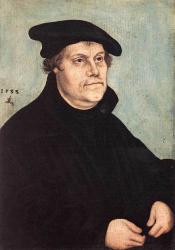
1483 - 1546 Topics: Processional Hymns Author of "A Mighty Fortress Is Our God" in Rejoice in the Lord Luther, Martin, born at Eisleben, Nov. 10, 1483; entered the University of Erfurt, 1501 (B.A. 1502, M.A.. 1503); became an Augustinian monk, 1505; ordained priest, 1507; appointed Professor at the University of Wittenberg, 1508, and in 1512 D.D.; published his 95 Theses, 1517; and burnt the Papal Bull which had condemned them, 1520; attended the Diet of Worms, 1521; translated the Bible into German, 1521-34; and died at Eisleben, Feb. 18, 1546. The details of his life and of his work as a reformer are accessible to English readers in a great variety of forms. Luther had a huge influence on German hymnody.
i. Hymn Books.
1. Ellich cristlich lider Lobgesang un Psalm. Wittenberg, 1524. [Hamburg Library.] This contains 8 German hymns, of which 4 are by Luther.
2. Eyn Enchiridion oder Handbuchlein. Erfurt, 1524 [Goslar Library], with 25 German hymns, of which 18 are by Luther.
3. Geystliche Gesangk Buchleyn. Wittenberg, 1524 [Munich Library], with 32 German hymns, of which 24 are by Luther.
4. Geistliche Lieder auffs new gebessert. Wittenberg. J. Klug, 1529. No copy of this book is now known, but there was one in 1788 in the possession of G. E. Waldau, pastor at Nürnberg, and from his description it is evident that the first part of the Rostock Gesang-Buch, 1531, is a reprint of it. The Rostock Gesang-Buch, 1531, was reprinted by C. M. Wiechmann-Kadow at Schwerin in 1858. The 1529 evidently contained 50 German hymns, of which 29 (including the Litany) were by Luther.
5. Geistliche Lieder auffs new gebessert. Erfurt. A. Rauscher, 1531 [Helmstädt, now Wolfenbüttel Library], a reprint of No. 4.
6. Geistliche Lieder. Wittenberg. J. Klug, 1535 [Munich Library. Titlepage lost], with 52 German hymns, of which 29 are by Luther.
7. Geistliche Lieder auffs new gebessert. Leipzig. V. Schumann, 1539 [Wernigerode Library], with 68 German hymns, of which 29 are by Luther.
8. Geistliche Lieder. Wittenberg. J. Klug, 1543 [Hamburg Library], with 61 German hymns, of which 35 are by Luther.
9. Geystliche Lieder. Leipzig. V. Babst, 1545 [Gottingen Library]. This contains Luther's finally revised text, but adds no new hymns by himself. In pt. i. are 61 German hymns, in pt. ii. 40, of which 35 in all are by Luther.
For these books Luther wrote three prefaces, first published respectively in Nos. 3, 4, 9. A fourth is found in his Christliche Geseng, Lateinisch und Deudsch, zum Begrebnis, Wittenberg, J. Klug, 1542. These four prefaces are reprinted in Wackernagel’s Bibliographie, 1855, pp. 543-583, and in the various editions of Luther's Hymns. Among modern editions of Luther's Geistliche Lieder may be mentioned the following:—
Carl von Winterfeld, 1840; Dr. C. E. P. Wackernagel, 1848; Q. C. H. Stip, 1854; Wilhelm Schircks, 1854; Dr. Danneil, 1883; Dr. Karl Gerok, 1883; Dr. A. F. W. Fischer, 1883; A. Frommel, 1883; Karl Goedeke, 1883, &c. In The Hymns of Martin Luther. Set to their original melodies. With an English version. New York, 1883, ed. by Dr. Leonard Woolsey Bacon and Nathan H. Allen, there are the four prefaces, and English versions of all Luther's hymns, principally taken more or less altered, from the versions by A. T. Russell, R. Massie and Miss Winkworth [repub. in London, 1884]. Complete translations of Luther's hymns have been published by Dr. John Anderson, 1846 (2nd ed. 1847), Dr. John Hunt, 1853, Richard Massie, 1854, and Dr. G. Macdonald in the Sunday Magazine, 1867, and his Exotics, 1876. The other versions are given in detail in the notes on the individual hymns.
ii. Classified List of Luther's Hymns. Of Luther's hymns no classification can be quite perfect, e.g. No. 3 (see below) takes hardly anything from the Latin, and No. 18 hardly anything from the Psalm. No. 29 is partly based on earlier hymns (see p. 225, i.). No. 30 is partly based on St. Mark i. 9-11, and xvi., 15, 16 (see p. 226, ii.). No. 35 is partly based on St. Luke ii. 10-16. The following arrangement, however, will answer all practical purposes.
A. Translations from the Latin.
i. From Latin Hymns:
1. Christum wir sollen loben schon. A solis ortus cardine
2. Der du bist drei in Einigkeit. O Lux beata Trinitas.
3. Jesus Christus unser Heiland, Der von. Jesus Christus nostra salus
4. Komm Gott Schopfer, heiliger Geist. Veni Creator Spiritus, Mentes.
5. Nun komm der Beidenheiland. Veni Redemptor gentium
6. Was flirchst du Feind Herodes sehr. A solis ortus cardine
ii. From Latin Antiphons, &c.:
7. Herr Gott dich loben wir. Te Deum laudamus.
8. Verleih uns Frieden gnädiglich. Dapacem, Domine
9. Wir glauben all an einen Gott.
iii. Partly from the Latin, the translated stanzas being adopted from Pre-Reformation Versions:
10. Komm, heiliger Geist, Herre Gott.
11. Mitten wir im Leben sind. Media vita in morte sumus.
B. Hymns revised and enlarged from Pre-Reformation popular hymns.
12. Gelobet seist du Jesus Christ.
13. Gott der Vater wohn uns bei.
14. Gott sei gelobet und gebenedeiet.
15. Nun bitten wir den heiligen Geist.
C. Psalm versions.
16. Ach Gott vom Himmel, sieh darein.
17. Aus tiefer Noth schrei ich zu dir.
18. Ein' feste Burg ist unser Gott.
19. Es spricht der Unweisen Mund wohl.
20. Es wollt uns Gott genädig sein.
21. War Gott nicht mit uns diese Zeit.
22. Wohl dem, der in Gotten Furcht steht.
D. Paraphrases of other portions of Holy Scripture.
23. Diess sind die heilgen zehn Gebot.
24. Jesaia dem Propheten das geschah.
25. Mensch willt du leben seliglich.
26. Mit Fried und Freud ich fahr dahin.
27. Sie ist mir lieb die werthe Magd.
28. Vater unser im Himmelreich.
E. Hymns mainly Original.
29. Christ lag in Todesbanden.
30. Christ unser Herr zum Jordan kam.
31. Ein neues Lied wir heben an.
32. Erhalt uns Herr bei deinem Wort.
33. Jesus Christus unser Heiland, Der den,
34. Nun freut euch lieben Christengemein.
35. Vom Himmel hoch da komm ich her.
36. Vom Himmel kam der Engel Schaar.
In addition to these —
37. Fur alien Freuden auf Erden.
38. Kyrie eleison.
In the Blätter fur Hymnologie, 1883, Dr. Daniel arranges Luther's hymns according to what he thinks their adaptation to modern German common use as follows:—
i. Hymns which ought to be included in every good Evangelical hymn-book: Nos. 7-18, 20, 22, 28, 29, 30, 32, 34, 35, 36, 38.
ii. Hymns the reception of which into a hymn-book might be contested: Nos. 2, 3, 4, 19, 21, 22, 23, 24, 25, 33.
iii. Hymns not suited for a hymn-book: Nos. 1, 5, 6, 27, 31, 37.
[Rev. James Mearns, M.A.]
--John Julian, Dictionary of Hymnology (1907)
Martin Luther
Ernest Warburton Shurtleff
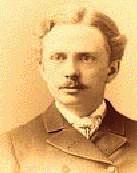
1862 - 1917 Person Name: Ernest W. Shurtleff Topics: Processional; Sunday Schools Processionals Author of "Lead on, O King Eternal" in The Hymnal Before studying at Andover, Ernest W. Shurtleff (Boston, MA, 1862; d. Paris, France, 1917) attended Harvard University. He served Congregational churches in Ventura, California; Old Plymouth, Massachusetts; and Minneapolis, Minnesota, before moving to Europe. In 1905 he established the American Church in Frankfurt, and in 1906 he moved to Paris, where he was involved in student ministry at the Academy Vitti. During World War I he and his wife were active in refugee relief work in Paris. Shurtleff wrote a number of books, including Poems (1883), Easter Gleams (1885), Song of Hope (1886), and Song on the Waters (1913).
Bert Polman
===============
Shurtleff, Ernest Warburton, b. at Boston, Mass., April 4, 1862, and educated at Boston Latin School, Harvard University, and Andover Theo. Seminary (1887). Entering the Congregational Ministry, he was Pastor at Palmer and Plymouth, Mass., and is now (1905) Minister of First Church, Minneapolis, Minn. His works include Poems, 1883, Easter Gleams, 1883, and others. His hymn, "Lead on, O King Eternal" (Christian Warfare), was written as a parting hymn to his class of fellow students at Andover, and was included in Hymns of the Faith, Boston, 1887. It has since appeared in several collections. [M. C. Hazard, Ph.D].
--John Julian, Dictionary of Hymnology, New Supplement (1907)
Ernest Warburton Shurtleff





