

 My Starred Hymns
 My Hymnals
 My Purchased Files
Planning worship?
Check out our sister site, ZeteoSearch.org,
for 20+ additional resources related to your search.
- |
User Links
Search Results


Father, Whate'er of Earthly Bliss
Author: A. Steele Appears in 892 hymnals Topics: Quiet Hour Used With Tune: [Father, whate'er of earthly bliss]
Father, Whate'er of Earthly Bliss


The Quiet Hour
Author: W. J. Eldridge Appears in 2 hymnals Topics: Quiet Hour First Line: Saviour, send Thy spirit now Refrain First Line: Baptize us with Thy Spirit, Lord Lyrics: 1 Saviour, send Thy spirit now,
As before Thy feet we bow;
Fill our souls with heaven’s peace;
Bid our fears and sorrows cease.
Refrain:
Baptize us with Thy Spirit, Lord,
And open unto us Thy Word;
Oh! Saviour with that Heav’nly pow’r,
Baptize us in this “quiet hour.”
2 Take away the pow’r of sin;
Let the law of love come in;
Spirit, bear Thy fruit divine
In this longing soul of mine. [Refrain]
3 Dove-like Spirit, now descend
While our hearts and voices blend;
Enter now each waiting heart;
Grant us each the better part. [Refrain]
4 Father, while on Thee we wait,
On Thy word we meditate;
May we on the manna feed;
Find supply for ev’ry need. [Refrain] Used With Tune: [Saviour, send Thy spirit now]
The Quiet Hour
Sometimes a Light Surprises
Author: William Cowper Appears in 412 hymnals Topics: Quiet Hour Used With Tune: BENTLEY
Sometimes a Light Surprises


[Take time to be holy]
Appears in 264 hymnals Composer and/or Arranger: George C. Stebbins Topics: Quiet Hour Incipit: 33234 31217 13323 Used With Text: Take Time to be Holy
[Take time to be holy]
[Take my life, and let it be]
Appears in 817 hymnals Composer and/or Arranger: A. H. C. Malan Topics: Quiet Hour Incipit: 11151 35433 33242 Used With Text: Take My Life
[Take my life, and let it be]


The Quiet Hour
Author: S. B. Pinney Hymnal: The Endeavor Hymnal #205 (1901) Topics: Quiet Hour First Line: The child of God has come and gone Refrain First Line: I love the quiet hour of trust Languages: English Tune Title: [The child of God has come and gone]
The Quiet Hour
The Quiet Hour
Author: W. J. Eldridge Hymnal: Consecrated Hymns #9 (1902) Topics: Quiet Hour First Line: Saviour, send Thy spirit now Refrain First Line: Baptize us with Thy Spirit, Lord Lyrics: 1 Saviour, send Thy spirit now,
As before Thy feet we bow;
Fill our souls with heaven’s peace;
Bid our fears and sorrows cease.
Refrain:
Baptize us with Thy Spirit, Lord,
And open unto us Thy Word;
Oh! Saviour with that Heav’nly pow’r,
Baptize us in this “quiet hour.”
2 Take away the pow’r of sin;
Let the law of love come in;
Spirit, bear Thy fruit divine
In this longing soul of mine. [Refrain]
3 Dove-like Spirit, now descend
While our hearts and voices blend;
Enter now each waiting heart;
Grant us each the better part. [Refrain]
4 Father, while on Thee we wait,
On Thy word we meditate;
May we on the manna feed;
Find supply for ev’ry need. [Refrain] Languages: English Tune Title: [Saviour, send Thy spirit now]
The Quiet Hour
The Quiet Hour
Author: W. J. Eldridge Hymnal: World-Wide Hosannas #93 (1904) Topics: Quiet Hour First Line: Saviour, send Thy spirit now Refrain First Line: Baptize us with Thy spirit Languages: English Tune Title: [Saviour, send Thy spirit now]
The Quiet Hour


Cecil Frances Alexander
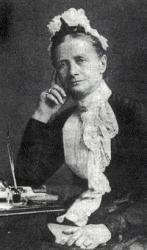
1818 - 1895 Person Name: Mrs. C. F. Alexander Topics: Quiet Hour Author of "Jesus Calls Us" in Pentecostal Hymns Nos. 3 and 4 Combined As a small girl, Cecil Frances Humphries (b. Redcross, County Wicklow, Ireland, 1818; Londonderry, Ireland, 1895) wrote poetry in her school's journal. In 1850 she married Rev. William Alexander, who later became the Anglican primate (chief bishop) of Ireland. She showed her concern for disadvantaged people by traveling many miles each day to visit the sick and the poor, providing food, warm clothes, and medical supplies. She and her sister also founded a school for the deaf. Alexander was strongly influenced by the Oxford Movement and by John Keble's Christian Year. Her first book of poetry, Verses for Seasons, was a "Christian Year" for children. She wrote hymns based on the Apostles' Creed, baptism, the Lord's Supper, the Ten Commandments, and prayer, writing in simple language for children. Her more than four hundred hymn texts were published in Verses from the Holy Scripture (1846), Hymns for Little Children (1848), and Hymns Descriptive and Devotional ( 1858).
Bert Polman
==================
Alexander, Cecil Frances, née Humphreys, second daughter of the late Major John Humphreys, Miltown House, co. Tyrone, Ireland, b. 1823, and married in 1850 to the Rt. Rev. W. Alexander, D.D., Bishop of Derry and Raphoe. Mrs. Alexander's hymns and poems number nearly 400. They are mostly for children, and were published in her Verses for Holy Seasons, with Preface by Dr. Hook, 1846; Poems on Subjects in the Old Testament, pt. i. 1854, pt. ii. 1857; Narrative Hymns for Village Schools, 1853; Hymns for Little Children, 1848; Hymns Descriptive and Devotional, 1858; The Legend of the Golden Prayers 1859; Moral Songs, N.B.; The Lord of the Forest and his Vassals, an Allegory, &c.; or contributed to the Lyra Anglicana, the S.P.C.K. Psalms and Hymns, Hymns Ancient & Modern, and other collections. Some of the narrative hymns are rather heavy, and not a few of the descriptive are dull, but a large number remain which have won their way to the hearts of the young, and found a home there. Such hymns as "In Nazareth in olden time," "All things bright and beautiful," "Once in Royal David's city," "There is a green hill far away," "Jesus calls us o'er the tumult," "The roseate hues of early dawn," and others that might be named, are deservedly popular and are in most extensive use. Mrs. Alexander has also written hymns of a more elaborate character; but it is as a writer for children that she has excelled.
- John Julian, Dictionary of Hymnology (1907)
===============
Alexander, Cecil F., née Humphreys, p. 38, ii. Additional hymns to those already noted in this Dictionary are in common use:—
1. Christ has ascended up again. (1853.) Ascension.
2. His are the thousand sparkling rills. (1875.) Seven Words on the Cross (Fifth Word).
3. How good is the Almighty God. (1S48.) God, the Father.
4. In [a] the rich man's garden. (1853.) Easter Eve.
5. It was early in the morning. (1853.) Easter Day.
6. So be it, Lord; the prayers are prayed. (1848.) Trust in God.
7. Saw you never in the twilight? (1853.) Epiphany.
8. Still bright and blue doth Jordan flow. (1853.) Baptism of Our Lord.
9. The angels stand around Thy throne. (1848.) Submission to the Will of God.
10. The saints of God are holy men. (1848.) Communion of Saints.
11. There is one Way and only one. (1875.) SS. Philip and James.
12. Up in heaven, up in heaven. (1848.) Ascension.
13. We are little Christian children. (1848.) Holy Trinity.
14. We were washed in holy water. (1848.) Holy Baptism.
15. When of old the Jewish mothers. (1853.) Christ's Invitation to Children.
16. Within the Churchyard side by side. (1848.) Burial.
Of the above hymns those dated 1848 are from Mrs. Alexander's Hymns for Little Children; those dated 1853, from Narrative Hymns, and those dated 1875 from the 1875 edition of Hymns Ancient & Modern.
Several new hymns by Mrs. Alexander are included in the 1891 Draft Appendix to the Irish Church Hymnal.
--John Julian, Dictionary of Hymnology, Appendix, Part II (1907)
=============
Alexander, Cecil F. , p. 38, ii. Mrs. Alexander died at Londonderry, Oct. 12, 1895. A number of her later hymns are in her Poems, 1896, which were edited by Archbishop Alexander.
--John Julian, Dictionary of Hymnology, New Supplement (1907)
See also in:Hymn Writers of the Church
Cecil Frances Alexander
John Fawcett
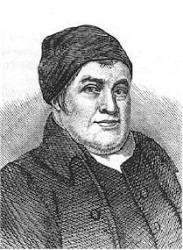
1740 - 1817 Topics: Quiet Hour Author of "Blest Be the Tie That Binds" in Consecrated Hymns An orphan at the age of twelve, John Fawcett (b. Lidget Green, Yorkshire, England, 1740; d. Hebden Bridge, Yorkshire, 1817) became apprenticed to a tailor and was largely self-educated. He was converted by the preaching of George Whitefield at the age of sixteen and began preaching soon thereafter. In 1765 Fawcett was called to a small, poor, Baptist country church in Wainsgate, Yorkshire. Seven years later he received a call from the large and influential Carter's Lane Church in London, England. Fawcett accepted the call and preached his farewell sermon. The day of departure came, and his family's belongings were loaded on carts, but the distraught congregation begged him to stay. In Singers and Songs of the Church (1869), Josiah Miller tells the story associated with this text:
This favorite hymn is said to have been written in 1772, to commemorate the determination of its author to remain with his attached people at Wainsgate. The farewell sermon was preached, the wagons were loaded, when love and tears prevailed, and Dr. Fawcett sacrificed the attraction of a London pulpit to the affection of his poor but devoted flock.
Fawcett continued to serve in Wainsgate and in the nearby village of Hebden Bridge for the remainder of his active ministry.
Bert Polman
===============
Fawcett, John, D.D., was born Jan. 6, 1739 or 1740, at Lidget Green, near Bradford, Yorks. Converted at the age of sixteen under the ministry of G. Whitefield, he at first joined the Methodists, but three years later united with the Baptist Church at Bradford. Having begun to preach he was, in 1765, ordained Baptist minister at Wainsgate, near Hebden Bridge, Yorks. In 1772 he was invited to London, to succeed the celebrated Dr. J. Gill, as pastor of Carter's Lane; the invitation had been formally accepted, the farewell sermon at Wainsgate had been preached and the wagons loaded with his goods for removal, when the love and tears of his attached people prevailed and he decided to remain. In 1777 a new chapel was built for him at Hebden Bridge, and about the same time he opened a school at Brearley Hall, his place of residence. In 1793 he was invited to become President of the Baptist Academy at Bristol, but declined. In 1811 he received from America the degree of D.D., and died in 1817, at the age of 78. Dr. Fawcett was the author of a number of prose works on Practical Religion, several of which attained a large circulation. His poetical publications are:—
(1) Poetic Essays, 1767; (2) The Christian's Humble Plea, a Poem, in answer to Dr. Priestley against the Divinity of our Lord Jesus Christ, 1772; (3) Three hymns, in the Gospel Magazine, 1777; (4) The Death of Eumenio, a Divine Poem, 1779; (5) Another poem, suggested by the decease of a friend, The Reign of Death, 1780; and (6) Hymns adapted to the circumstances of Public Worship and Private Devotion, Leeds, G. Wright & Son. 1782. They are 166 in number, and were mostly composed to be sung after sermons by the author.
Whilst not attaining a high degree of excellence as poetry, they are "eminently spiritual and practical," and a number of them are found in all the Baptist and Congregational hymn-books that have appeared during the last 100 years. The best known of these are, “Infinite excellence is Thine;" "How precious is the Book divine;" "Thus far my God hath led me on;" "Religion is the chief concern;" "Blest be the tie that binds;" “I my Ebenezer raise;" and "Praise to Thee, Thou great Creator." These hymns, together with others by Fawcett, are annotated under their respective first lines. [Rev. W. R. Stevenson, M.A.]
In addition the following hymns, also by Fawcett, but of less importance, are in common use:
1. Behold the sin-atoning Lamb. Passiontide. No. 60 of his Hymns, 1782, in 7 stanzas of 4 lines. In several hymnals in Great Britain and America.
2. I my Ebenezer raise. Birthday. No. 102 of his Hymns, in 10 stanzas of 4 lines. Usually given in an abbreviated form.
3. Infinite excellence is Thine. Jesus the Desire of Nations. No. 42 of his Hymns, in 12 stanzas of 4 lines. In several hymn-books in Great Britain and America in an abridged form.
4. Jesus, the heavenly Lover, gave. Redemption in Christ. No. 10 of his Hymns, &c., 1782, in 7 stanzas of 4 lines, and headed, "The marriage between Christ and the Soul." In Snepp's Songs of Grace & Glory, 1872, it reads, “Jesus, the heavenly Bridegroom, gave," and stanza v. is omitted.
5. Lord, hast Thou made me know Thy ways? Perseverance. No. 122 of his Hymns, &c., 1782, in 8 stanza of 4 lines. In the Baptist Hymnal, 1879, No. 451, stanzas iv.-vii. are omitted.
6. 0 God, my Helper, ever near. New Year. No. 108 of his Hymns, &c., 1782, in 6 stanzas of 4 lines. The New Congregational Hymn Book, 1859-69 omits st. vi.
7. 0, my soul, what means this sadness? Sorrow turned to Joy. No. 111 of his Hymns, &c., 1782, in 5 stanzas of 6 lines, and based upon the words, "Why art Thou cast down, O my soul?" &c. It is in common use in America, and usually with the omission of stanza ii. as in Dr. Hatfield's Church Hymn Book, 1872.
8. Sinners, the voice of God regard. Invitation to Repentance. No. 63 of his Hymns, &c., 1782, in 7 stanzas of 4 lines on Isaiah lv. 7, "Let the wicked forsake his way," &c. It is in common use in America, but usually in an abbreviated form.
9. Thy presence, gracious God, afford. Before Sermon. No 165 in his Hymns, &c., in 4 stanzas of 4 lines, and a chorus of two lines. In Dr. Hatfield's Church Hymnbook, 1872, No. 126, the chorus is omitted. Fawcett has another hymn on the same subject (No. 79) and beginning, "Thy blessing, gracious God, afford," but this is not in common use.
10. Thy way, 0 God, is in the sea. Imperfect Knowledge of God. No. 66 in his Hymns, &c., 1782, in 7 stanzas of 4 lines on 1 Corinthians xiii. 9, "We know in part," &c. It is in several American collections, usually abbreviated, and sometimes as, "Thy way, O Lord, is in the sea." In this form it is in The Sabbath Hymn Book, 1858, &c.
11. With humble heart and tongue. Prayer for Guidance in Youth. No. 86 in his Hymns, &c., 1782, in 7 stanzas of 4 lines on Psalms cxix. 9. "Wherewith shall a young man cleanse his way." It is No. 954 in the Baptist Psalms and Hymns, 1858-80.
About 20 of Fawcett's hymns are thus still in common use. Two hymns which have been ascribed to him from time to time, but concerning which there are some doubts, are fully annotated under their respective first lines. These are," Humble souls that seek salvation," and "Lord, dismiss us with Thy blessing."
-- John Julian, Dictionary of Hymnology (1907)
John Fawcett
Anne Steele
1717 - 1778 Person Name: A. Steele Topics: Quiet Hour Author of "Father, Whate'er of Earthly Bliss" in The Endeavor Hymnal Anne Steele was the daughter of Particular Baptist preacher and timber merchant William Steele. She spent her entire life in Broughton, Hampshire, near the southern coast of England, and devoted much of her time to writing. Some accounts of her life portray her as a lonely, melancholy invalid, but a revival of research in the last decade indicates that she had been more active and social than what was previously thought. She was theologically conversant with Dissenting ministers and "found herself at the centre of a literary circle that included family members from various generations, as well as local literati." She chose a life of singleness to focus on her craft. Before Christmas in 1742, she declined a marriage proposal from contemporary minister-hymnist Benjamin Beddome. All the same, some of Steele's sufferings were very real. She lost her mother at age 3, a potential suitor at age 20, her step mom at 43, and her sister-in-law at 45. She spent many years caring for her father until his death in 1769. For most of her life, she exhibited symptoms of malaria, including persistent pain, fever, headaches, and stomach aches. Caleb Evans, in his preface to Steele's posthumous Miscellaneous Pieces in Verse and Prose (1780), noted that she had been bed ridden for "some years" before her death: When the interesting hour came, she welcomed its arrival, and though her feeble body was excruciated with pain, her mind was perfectly serene. . . . She took the most affectionate leave of her weeping friends around her, and at length, the happy moment of her dismission arising, she closed her eyes, and with these animating words on her dying lips, "I know that my Redeemer liveth," gently fell asleep in Jesus. Historically, her most popular hymn has been "When I survey life's varied scene" (and its shortened form, "Father, whate'er of earthly bliss"), a hymn that turns earthly loss or denial into a spirit of thankfulness, published in over 800 North American hymnals since 1792. Not all of her work deals with personal agony. Her hymns span a wide doctrinal and ecclesiastical range, some crafted and used for her father's congregation. Her metrical psalms are among the finest of the genre. Steele's hymns and psalms were published in two volumes in 1760, Poems on Subjects Chiefly Devotional, under the pseudonym Theodosia, with an additional volume of material published after her death, in Miscellaneous Pieces in Verse and Prose, 1780. Another small collection, Verses for Children, was issued in 1788, with two other editions given in 1803 and 1806. Sixty-two of her hymns, including new material and some revisions by Steele, were published in a hymnal for Baptists in 1769, A Collection of Hymns Adapted to Public Worship, edited by Caleb Evans and John Ash. Forty seven were included in John Rippon's A Selection of Hymns from the Best Authors in 1787; the only author with larger representation was Philip Doddridge, with 101. These collections represent the earliest attempts to anthologize Baptist hymns and were vital for bringing Steele's hymns into wider public worship, where they have been a mainstay for over two hundred years.
Chris Fenner adapted from The Towers (Southern Baptist Theological Seminary, August 2015)
Recommended Bibliography:
Cynthia Y. Aalders, To Express the Ineffable: The Hymns and Spirituality of Anne Steele (Milton Keynes, U.K.: Paternoster, 2008).
Cynthia Y. Aalders, "In melting grief and ardent love: Anne Steele's contribution to eighteenth-century hymnody," The Hymn (summer 2009), 16-25.
J.R. Broome, A Bruised Reed: The Life and Times of Anne Steele (Harpenden, U.K.: Gospel Standard Trust Publications, 2007).
Joseph Carmichael, The Hymns of Anne Steele in John Rippon's Selection of Hymns: A Theological Analysis in the Context of the English Particular Baptist Revival (2012), dissertation, http://digital.library.sbts.edu/handle/10392/4112
Priscilla Wong, Anne Steele and Her Spiritual Vision (Grand Rapids: Reformation Heritage Books, 2012).
Timothy Whelan & Julia B. Griffin, eds., Nonconformist Women Writers, 1720–1840, vols. 1 & 2 (London: Pickering & Chatto, 2011).
========================
Steele, Anne, born in 1716, was the daughter of Mr. Wm. Steele, a timber merchant, and pastor, without salary, of the Baptist Church at Broughton, in Hampshire. At an early age she showed a taste for literature, and would often entertain her friends by her poetical compositions. But it was not until 1760 that she could be prevailed upon to publish. In that year two volumes appeared under the title of Poems on Subjects chiefly Devotional, by Theodosia. After her death, which occurred in November, 1778, a new edition was published with an additional volume and a Preface by the Rev. Dr. Caleb Evans, of Bristol (Bristol, 1780). In the three volumes are 144 hymns, 34 Psalms in verse, and about 30 short poems. They have been reprinted in one vol. by D. Sedgwick, 1863….
Among Baptist hymnwriters Miss Steele stands at the head, if we regard either the number of her hymns which have found a place in the hymnals of the last 120 years, or the frequency with which they have been sung. Although few of them can be placed in the first rank of lyrical compositions, they are almost uniformly simple in language, natural and pleasing in imagery, and full of genuine Christian feeling. Miss Steele may not inappropriately be compared with Miss F. R. Havergal, our "Theodosia" of the 19th century. In both there is the same evangelic fervour, in both the same intense personal devotion to the Lord Jesus. But whilst Miss Steele seems to think of Him more frequently as her "bleeding, dying Lord "—dwelling on His sufferings in their physical aspect—Miss Havergal oftener refers to His living help and sympathy, recognizes with gladness His present claims as "Master" and "King," and anticipates almost with ecstasy His second coming. Looking at the whole of Miss Steele's hymns, we find in them a wider range of thought than in Miss Havergal's compositions. She treats of a greater variety of subjects. On the other hand, Miss Havergal, living in this age of missions and general philanthropy, has much more to say concerning Christian work and personal service for Christ and for humanity. Miss Steele suffered from delicacy of health and from a great sorrow, which befell her in the death of her betrothed under peculiarly painful circumstances. In other respects her life was uneventful, and occupied chiefly in the discharge of such domestic and social duties as usually fall to the lot of the eldest daughter of a village pastor. She was buried in Broughton churchyard. [Rev W. R. Stevenson, M.A.]
A large number of Miss Steele's hymns are in common use, the larger proportion being in American hymnbooks. In addition to "Almighty Maker of my frame," “Far from these narrow scenes of night," "Father of mercies in Thy word," and others annotated under their respective first lines, there are also:—
i. From her Poems on Subjects Chiefly Devotional, 1760, vols. i., ii.
1. Come, let our souls adore the Lord. Pleading for Mercy. One of two hymns "On the Fast, Feb. 11, 1757," the first being "While justice waves her vengeful hand."
2. Come, tune ye saints, your noblest strains. Christ Dying and Rising.
3. Deep are the wounds which sin has made. Christ, the Physician.
4. Enslaved by sin, and bound in chains. Redemption.
5. Eternal power, almighty God. Divine Condescension.
6. Eternal Source of joys divine. Divine Assurance desired.
7. Great God, to Thee my evening song. Evening.
8. Great Source of boundless power and grace. Desiring to Trust in God.
9. Hear, gracious [God] Lord, my humble moan [prayer] . The presence of God desired.
10. Hear, O my God, with pity hear. Ps. cxliii.
11. How long shall earth's alluring toys ? On Longing after unseen pleasures.
12. How lovely, how divinely sweet. Ps. lxxziv.
13. How oft, alas, this wretched heart. Pardoning Love.
14. In vain my roving thoughts would find. Lasting Happiness.
15. Jesus, the spring of joys divine. Christ the Way.
16. Lord, how mysterious are Thy ways. Providence.
17. Lord, Thou hast been Thy Children's God. Ps. xc.
18. Lord, we adore Thy boundless grace. Divine Bounty.
19. Lord, when my [our] raptured thought surveys. Creation and Providence.
20. Lord, when my thoughts delighted rove. Passiontide.
21. My God, 'tis to Thy mercy seat. Divine Mercy.
22. My God, to Thee I call. Lent.
23. O for a sweet, inspiring ray. The Ascended Saviour.
24. O Thou Whose tender mercy hears. Lent.
25. Permit me, Lord, to seek Thy face. Strength and Safety in God alone.
26. Should famine o'er the mourning field. During Scarcity.
27. So fades the lovely, blooming flower. Death of a Child.
28. Stretched on the Cross the Saviour dies. Good Friday.
29. The Lord, my Shepherd and my Guide. Ps.xxiii.
30. The Lord, the God of glory reigns. Ps. xciii.
31. The Saviour calls; let every ear. The Invitation.
32. There is a glorious world on high. True Honour.
33. Thou lovely [only] Source of true delight. Desiring to know Jesus.
34. Thou only Sovereign of my heart. Life in Christ alone.
35. To Jesus, our exalted Lord. Holy Communion.
36. To our Redeemer's glorious Name. Praise to the Redeemer.
37. To your Creator, God. A Rural Hymn.
38. When I survey life's varied scene. Resignation.
39. When sins and fears prevailing rise. Christ the Life of the Soul.
40. Where is my God? does He retire. Rreathing after God.
41. While my Redeemer's near. The Good Shepherd.
42. Why sinks my weak desponding mind? Hope in God.
43. Ye earthly vanities, depart. Love for Christ desired.
44. Ye glittering toys of earih adieu. The Pearl of great Price.
45. Ye humble souls, approach your God. Divine Goodness.
ii. From the Bristol Baptist Collection of Ash & Evans, 1769.
46. Come ye that love the Saviour's Name. Jesus, the King of Saints.
47. How helpless guilty nature lies. Need of Receiving Grace.
48. Praise ye the Lord let praise employ. Praise.
iii. Centos and Altered Texts,
49. How blest are those, how truly wise. True honour. From "There is a glorious world on high."
50. How far beyond our mortal view. Christ the Supreme Beauty. From "Should nature's charms to please the eye," 1760, st. iii.
51. In vain I trace creation o'er. True happiness. From "When fancy spreads her boldest wings," 1760, st. ii.
52. Jesus, and didst thou leave the sky? Praise to Jesus. From “Jesus, in Thy transporting name," 1760, st. iv.
53. Look up, my soul, with cheerful eye. Breathing after God. From No. 40, st. v.
54. Lord, in the temple of Thy grace. Christ His people's Joy. From "The wondering nations have beheld," 1760, st. iii.
55. My God, O could I make the claim. Part of No. 9 above.
56. My soul, to God, its source, aspires. God, the Soul's only Portion. From "In vain the world's alluring smile," st. iii.
57. O could our thoughts and wishes fly. Part of No. 11 above, st. iv.
58. O for the eye of faith divine. Death anticipated. From "When death appears before my sight," 1760, st. iii., vii., viii. altered, with opening stanzas from another source.
59. O Jesus, our exalted Head. Holy Communion. From "To Jesus, our exalted Lord." See No. 35.
60. O world of bliss, could mortal eyes. Heaven. From "Far from these narrow scenes of night."
61. See, Lord, Thy willing subjects bow. Praise to Christ. From "O dearer to my thankful heart," 1780, st. 5.
62. Stern winter throws his icy chains. Winter. From "Now faintly smile day's hasty hours," 1760, st. ii.
63. Sure, the blest Comforter is nigh. Whitsuntide. From "Dear Lord, and shall Thy Spirit rest," 1760, st. iii.
64. The God of my salvation lives. In Affliction. From, "Should famine, &c," No. 26, st. iv.
65. The Gospel, O what endless charms. The Gospel of Redeeming Love. From "Come, Heavenly Love, inspire my song."
66. The mind was formed lo mount sublime. The Fettered Mind. From "Ah! why should this immortal mind?" 1760, st. ii.
67. The once loved form now cold and dead. Death of a Child. From "Life is a span, a fleeting hour," 1760, st. iii.
68. Thy gracious presence, O my God. Consolation in Affliction. From "In vain, while dark affliction spreads," 1780, st. iv.
69. Thy kingdom, Lord, for ever stands. Ps. cxlv. From "My God, my King, to Thee I'll raise," 1760, st. xii.
70. Triumphant, Christ ascends on high. Ascension. From "Come, Heavenly Love, inspire my song," 1760, st. xxxii.
71. When blest with that transporting view. Christ the Redeemer. From "Almighty Father, gracious Lord," 1760, st. xi.
72. When death before my sight. Death Anticipated. From "When death appears before my sight," 1760.
73. When gloomy thoughts and boding fears. Com¬forts of Religion. From "O blest religion, heavenly fair," 1760, st. ii.
74. When weary souls with sin distrest. Invitation to Rest. From "Come, weary souls, with sin distressed," 1760.
75. Whene'er the angry passions rise. Example of Christ. From “And is the gospel peace and love?" 1760, st. ii.
All the foregoing hymns are in D. Sedgwick's reprint of Miss Steele's Hymns, 1863.
--Excerpts from John Julian, Dictionary of Hymnology (1907)
====================
Steele, Anne, p. 1089, i., Additional hymns in common use:
1. Amazing love that stoop'd so low. Thankfulness. From "O dearer to my thankful heart," 1780, iii.
2. Bright scenes of bliss, unclouded skies. Saved by Hope. Poems, 1760, i. p. 228.
3. Jesus demands this heart of mine. Pardon De¬sired. Poems, 1760, i. p. 120.
4. Jesus, Thou Source divine. Christ the Way. Poems, 1760, i. p. 53, altered.
5. Lord, how mysterious are Thy ways. Mysteries of Providence. Poems, 1760, i. p. 131.
6. Lord^in Thy great, Thy glorious Name. Ps. xxxi. Poems, 1760, ii. p. 158.
--John Julian, Dictionary of Hymnology, Appendix, Part II (1907)
Anne Steele





