You help make Hymnary.org possible. More than 10 million people from 200+ countries found hymns, liturgical resources and encouragement on Hymnary.org in 2025, including you. Every visit affirms the global impact of this ministry.

If Hymnary has been meaningful to you this year, would you take a moment today to help sustain it? A gift of any size—paired with a note of encouragement if you wish—directly supports the server costs, research work and curation that keep this resource freely available to the world.

Give securely online today, or mail a check to:
Hymnary.org
Calvin University
3201 Burton Street SE
Grand Rapids, MI 49546

Thank you for your partnership, and may the hope of Advent fill your heart.

Search Results

Topics:redemption+of+humankind

Planning worship? Check out our sister site, ZeteoSearch.org, for 20+ additional resources related to your search.

Texts

text icon
Text authorities
TextPage scansFlexScoreFlexPresent

O Christ, Our Hope, Our Heart's Desire

Author: John Chandler Meter: 8.6.8.6 Appears in 57 hymnals Topics: Redemption of humankind Lyrics: 1 O Christ, our hope, our heart's desire, redemption's only spring; creator of the world are you, its Savior and its King, its Savior and its King. 2 How vast the mercy and the love which led you to the tree, and on this cross you died for us to set your people free, to set your people free. 3 But now the bonds of death are burst, the ransom has been paid; and you are on your Father's throne in majesty arrayed, in majesty arrayed. 4 O may your mighty love prevail our sinful souls to spare, O may we come before your throne and find acceptance there, and find acceptance there. 5 All praise to you, ascended Lord, all glory ever be to Father, Son, and Spirit now and through eternity, and through eternity. Scripture: Matthew 28:16-20 Used With Tune: LOBT GOTT, IHR CHRISTEN Text Sources: Latin, 8th cent.
TextFlexScoreFlexPresent

I Heard the Voice of Jesus Say

Author: Horatius Bonar Meter: 8.6.8.6 D Appears in 1,262 hymnals Topics: Redemption of humankind Lyrics: 1 I heard the voice of Jesus say, “Come unto me and rest; lay down, O weary one, lay down your head upon my breast.” I came to Jesus as I was, so weary, worn and sad; I found him in a resting place, and he has made me glad. 2 I heard the voice of Jesus say, “Behold, I freely give the living water; thirsty one, stoop down and drink and live.” I came to Jesus, and I drank of that life-giving stream; my thirst was quenched, my soul revived, and now I live in him. 3 I heard the voice of Jesus say, “I am this dark world’s Light; look unto me, your morn shall rise, and all your day be bright.” I looked to Jesus, and I found in him my Star, my Sun; and in that Light of life I’ll walk till trav'ling days are done. Scripture: Matthew 11:28-30 Used With Tune: THIRD MODE MELODY
Text

Behold a Broken World

Author: Timothy Dudley-Smith Meter: 8.6.8.6 Appears in 5 hymnals Topics: Redemption of humankind Lyrics: 1 Behold a broken world, we pray, where want and war increase, and grant us, Lord, in this our day, the ancient dream of peace: 2 a dream of swords to sickles bent, of spears to scythe and spade, the weapons of our warfare spent, a world of peace remade; 3 where ev'ry battle flag is furled and ev'ry trumpet stilled, where wars shall cease in all the world, a waking dream fulfilled. 4 No force of arms shall there prevail nor justice cease its sway; nor shall their loftiest visions fail the dreamers of the day. 5 O Prince of peace, who died to save, a lost world to redeem, and rose in triumph from the grave, behold our waking dream. 6 Bring, Lord, your better world to birth, your kingdom, love's domain; where peace with God, and peace on earth, and peace eternal reign. Scripture: Isaiah 2:1-4 Used With Tune: ST. STEPHEN

Tunes

tune icon
Tune authorities
FlexScoreAudio

THIRD MODE MELODY

Meter: 8.6.8.6 D Appears in 51 hymnals Composer and/or Arranger: Thomas Tallis; John Wilson Topics: Redemption of humankind Tune Key: a minor or modal Incipit: 13333 44555 55655 Used With Text: I Heard the Voice of Jesus Say
FlexScoreAudio

PUER NOBIS

Appears in 237 hymnals Composer and/or Arranger: Michael Praetorius (1571-1621), adapt. Topics: Redemption of humankind Tune Key: D Major Incipit: 11234 32115 55671 Used With Text: On Jordan's Banks the Baptist's Cry
Page scansFlexScoreAudio

LOBT GOTT, IHR CHRISTEN

Meter: 8.6.8.6 Appears in 241 hymnals Composer and/or Arranger: Nikolaus Hermann, c. 1480-1561 Topics: Redemption of humankind Tune Key: F Major Incipit: 15555 65432 34566 Used With Text: O Christ, Our Hope, Our Heart's Desire

Instances

instance icon
Published text-tune combinations (hymns) from specific hymnals
TextPage scan

O Christ, Our Hope, Our Heart's Desire

Author: John Chandler Hymnal: Moravian Book of Worship #374 (1995) Meter: 8.6.8.6 Topics: Redemption of humankind Lyrics: 1 O Christ, our hope, our heart's desire, redemption's only spring; creator of the world are you, its Savior and its King, its Savior and its King. 2 How vast the mercy and the love which led you to the tree, and on this cross you died for us to set your people free, to set your people free. 3 But now the bonds of death are burst, the ransom has been paid; and you are on your Father's throne in majesty arrayed, in majesty arrayed. 4 O may your mighty love prevail our sinful souls to spare, O may we come before your throne and find acceptance there, and find acceptance there. 5 All praise to you, ascended Lord, all glory ever be to Father, Son, and Spirit now and through eternity, and through eternity. Scripture: Matthew 28:16-20 Languages: English Tune Title: LOBT GOTT, IHR CHRISTEN
TextPage scan

To God Be the Glory

Author: Fanny J. Crosby Hymnal: Moravian Book of Worship #550 (1995) Meter: 11.11.11.11 with refrain Topics: Redemption of humankind First Line: To God be the glory - great things he has done! Refrain First Line: Praise the Lord Lyrics: 1 To God be the glory - great things he has done! So loved he the world that he gave us his Son, who yielded his life an atonement for sin, and opened the life-gate that all may go in. Refrain: Praise the Lord, praise the Lord; let the earth hear his voice! Praise the Lord, praise the Lord; let the people rejoice! O come to the Father through Jesus the Son, and give him the glory - great things he has done! 2 O perfect redemption, the purchase of blood, to ev'ry believer the promise of God; the vilest offender who truly believes, that moment from Jesus a pardon receives. [Refrain] 3 Great things he has taught us, great things he has done, and great our rejoicing through Jesus the Son; but purer, and higher, and greater will be our wonder, our transport when Jesus we see. [Refrain] Scripture: Psalm 29:2 Languages: English Tune Title: TO GOD BE THE GLORY
TextPage scan

O Christians, Haste

Author: Mary A. Thomson Hymnal: Moravian Book of Worship #618 (1995) Meter: 11.10.11.10 with refrain Topics: Redemption of humankind First Line: O Christians, haste, your mission high fulfilling Lyrics: 1 O Christians, haste, your mission high fulfilling, to tell to all the world that God is light, that he who made all nations is not willing one life should perish, lost in shades of night. Refrain: Publish glad tidings, tidings of peace, tidings of Jesus, redemption, and release. 2 Proclaim to ev'ry people, tongue, and nation that God, in whom we live and move, is love; tell how he stooped to save a lost creation, and died on earth that we might live in love. [Refrain] 3 Give of your own to bear the message glorious; give of your wealth to speed them on their way; pour out your soul for them in prayer victorious, till God shall bring his kingdom's joyful day. [Refrain] Scripture: Matthew 18:14 Languages: English Tune Title: ANGELIC SONGS (TIDINGS)

People

person icon
Authors, composers, editors, etc.

Edward Mote

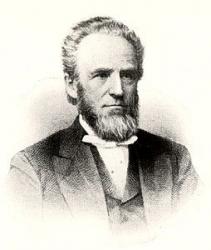
1797 - 1874 Topics: Redemption of humankind Author of "My Hope Is Built on Nothing Less" in Moravian Book of Worship Mote, Edward, was born in Upper Thames Street, London, Jan. 21, 1797. Through the preaching of the Rev. J. Hyatt, of Tottenham Court Road Chapel, he underwent a great spiritual change; and ultimately he became a Baptist minister. For the last 26 years of his life he was pastor at Horsham, Sussex, where he died Nov. 13, 1874. Mr. Mote published several small pamphlets; and also:- Hymns of Praise. A New Selection of Gospel Hymns, combining all the Excellencies of our spiritual Poets, with many Originals. By E. Mote. London. J. Nichols, 1836. The Originals number nearly 100. Concerning the authorship of one of these original hymns much uncertainty has existed. The hymn is:— 1. Nor earth, nor hell my soul can move. [Jesus All in All.] In 6 stanzas of 4 lines, with a refrain. Mr. Mote's explanation, communicated to the Gospel Herald, is:— "One morning it came into my mind as I went to labour, to write an hymn on the ‘Gracious Experience of a Christian.' As I went up Holborn I had the chorus, ‘On Christ the solid Rock I stand, All other ground is sinking sand.’ In the day I had four first verses complete, and wrote them off. On the Sabbath following I met brother King as I came out of Lisle Street Meeting . . . who informed me that his wife was very ill, and asked me to call and see her. I had an early tea, and called afterwards. He said that it was his usual custom to sing a hymn, read a portion, and engage in prayer, before he went to meeting. He looked for his hymnbook but could find it nowhere. I said, ‘I have some verses in my pocket; if he liked, we would sing them.' We did; and his wife enjoyed them so much, that after service he asked me, as a favour, to leave a copy of them for his wife. 1 went home, and by the fireside composed the last two verses, wrote the whole off, and took them to sister King. . . As these verses so met the dying woman's case, my attention to them was the more arrested, and I had a thousand printed for distribution. I sent one to the Spiritual Magazine, without my initials, which appeared some time after this. Brother Rees, of Crown Street, Soho, brought out an edition of hymns [1836], and this hymn was in it. David Denham introduced it [1837] with Rees's name, and others after... . Your inserting this brief outline may in future shield me from the charge of stealth, and be a vindication of truthfulness in my connection with the Church of God." The form in which the hymn is usually found is:— 2. My hope is built on nothing less (st. ii.), sometimes in 4 stanzas, and at others in 5 st., and usually without the refrain. The original in the author's Hymns of Praise, 1836, is No. 465, and entitled, "The immutable Basis of a Sinner's hope." Bishop Bickersteth calls it a "grand hymn of faith." It dates circa 1834, and is in extensive use. [Rev. W. R. Stevenson, M.A.] --John Julian, Dictionary of Hymnology (1907)

Ray Palmer

1808 - 1887 Topics: Redemption of humankind Author of "My Faith Looks Trustingly" in Moravian Book of Worship Ray Palmer (b. Little Compton, RI, 1808; d. Newark, NJ, 1887) is often considered to be one of America's best nineteenth-century hymn writers. After completing grammar school he worked in a Boston dry goods store, but a religious awakening prodded him to study for the ministry. He attended Yale College (supporting himself by teaching) and was ordained in 1835. A pastor in Congregational churches in Bath, Maine (1835-1850), and Albany, New York (1850-1865), he also served as secretary of the American Congregational Union (1865-1878). Palmer was a popular preacher and author, writing original poetry as well as translating hymns. He published several volumes of poetry and hymns, including Sabbath Hymn Book (1858), Hymns and Sacred Pieces (1865), and Hymns of My Holy Hours (1868). His complete poetical works were published in 1876. Bert Polman =================== Palmer, Ray, D.D., son of the Hon. Thomas Palmer, a Judge in Rhode Island, was born at Little Compton, Rhode Island, Nov. 12, 1808. His early life was spent at Boston, where he was for some time clerk in a dry-goods store. At Boston he joined the Park Street Congregational Church, then under the pastoral care of Dr. S. E. Dwight. After spending three years at Phillips Academy, Andover, he entered Yale College, New Haven, where he graduated in 1830. In 1835 he became pastor of the Central Congregational Church, Bath, Maine. During his pastorate there he visited Europe in 1847. In 1850 he was appointed to the First Congregational Church, at Albany, New York, and in 1865 Corresponding Secretary to the American Congregational Union, New York. He resigned in 1878, and retired to Newark, New Jersey. He died at Newark, Mar. 29, 1887. Dr. Palmer's published works in prose and verse include:-- (1) Memoirs and Select Remains of Charles Pond, 1829; (2) The Spirit's Life, a Poem, 1837; (3) How to Live, or Memoirs of Mrs. C. L. Watson, 1839; (4) Doctrinal Text Book, 1839; (5) Spiritual Improvement, 1839, republished as Closet Hours in 185; (6) What is Truth? or Hints on the Formation of Religious Opinions, 1860; (7) Remember Me, or The Holy Communion, 1865; (8) Hymns and Sacred Pieces, with Miscellaneous Poems, 1865; (9) Hymns of my Holy Hours, and Other Pieces, 1868; (10) Home, or the Unlost Paradise, 1873; and (11) Voices of Hope and Gladness, 1881. Most of Dr. Palmer's hymns have passed into congregational use, and have won great acceptance. The best of them by their combination of thought, poetry, and devotion, are superior to almost all others of American origin. The first which he wrote has become the most widely known of all. It is:— 1. My faith looks up to Thee. Faith in Christ. This hymn was written by the author when fresh from College, and during an engagement in teaching in New York. This was in 1830. The author says concerning its composition, "I gave form to what I felt, by writing, with little effort, the stanzas. I recollect I wrote them with very tender emotion, and ended the last line with tears." A short time afterwards the hymn was given to Dr. Lowell Mason for use, if thought good, in a work then being compiled by him and Dr. T. Hastings. In 1831 that work was published as Spiritual Songs for Social Worship: adapted to the use of Families, &c. Words and Music arranged by Thomas Hastings, of New York, and Lowell Mason of Boston. It is No. 141 in 4 stanzas of 8 lines, entitled "Self Consecration," and accompanied with the tune by Dr. L. Mason, there given as "My faith looks up to Thee, "but subsequently known as Olivet. (Orig. text of hymn in Thring's Collection, 1882.) It has passed into most modern collections in all English-speaking countries, and has been rendered into numerous languages. That in Latin, by H. M. Macgill (p. 708, ii.), begins "Fides Te mea spectat." 2. Fount of everlasting love. Praise for renewed Spiritual Life. This also appeared in the Spiritual Songs, &c, 1831, No. 191, in 4 stanzas of 4 lines, and headed "Praise for a Revival." The hymns which are given below are all in Dr. Palmer's Poetical Works, N. Y., 1876, and the dates appended in brackets are those given by him in that work. 3. Thou who roll'st the year around. (1832.) Close of the Year. In several American collections. 4. Away from earth my spirit turns. (1833.) Holy Communion. Appeared in Lowell Mason's Union Hymns, in 4 stanzas of 4 lines. In the Church Praise Book, N. Y.. 1882, it begins with st. ii., "Thou, Saviour, art the Living Bread." 5. Before Thy throne with tearful eyes. (1834.) Liberty of Faith. 6. Stealing from the world away. (1834.) Evening. Written at New Haven in 1834, and is very popular in America. 7. Thine [Thy] holy day's returning. (1834.) Sunday Morning. 8. Wake thee, 0 Zion. (1862.) Zion Exultant. 9. We stand in deep repentance. (1834.) Lent. This last, No. 9, in common with Nos. 10, 11, 12, is marked "original," in the Presbyterian Parish Hymns, 1843. Probably they were given to the editors of that book in manuscript, and had not previously appeared. 10. And is there, Lord, a rest? (1843.) Rest in Heaven. Written at Bath, Maine, in 1843. 11. 0 sweetly breathe the lyres above. Consecration to Christ. This was accidentally omitted from Dr. Palmer's Poetical Works, 18?6. S. W. Duffield says:— "It was written in the winter of 1842-43, at a time of revival. At the previous Communion several had been received under circumstances that made Doddridge's hymn, ‘0 happy day that fixed my choice 'a most appropriate selection. Not caring to repeat it, and needing something similar, Dr. Palmer composed the present hymn." English Hymns, N. Y., 1886, p. 432. 12. When downward to the darksome tomb. (1842.) Death Contemplated. Written at Bath, Maine, 1842. From 1843 there comes a long break, and Dr. Palmer seems to have done no more hymn-writing until called upon by Professors Park and Phelps, of Andover, for contributions to their Sabbath Hymn-Book, 1858. His hymns written for that important collection rank amongst the best that America has produced. This is specially true of the first four (Nos. 13-16) from the Latin. 13. Jesus, Thou joy of loving hearts. (l858.) Translation of a cento from "Jesu dulcis memoria" (p. 588, ii.). 14. 0 Bread to Pilgrims given. (1858.) Translation of “O esca viatorum" (q.v.). 15. 0 Christ our King, Creator Lord. (1858.) Translation of “Rex Christe, factor omnium " 16. Come Holy Ghost, in love. (1858.) Translation of “Veni Sancte Spiritus" (q.v.) 17. Jesus, these eyes have never seen. (1858.) Christ loved, though unseen. This hymn is accounted by many as next in merit and beauty to "My faith looks up to Thee." 18. Lord, my weak thought in vain would climb. (1858.) God Unsearchable. This hymn deals with the mysteries of Predestination in a reverent and devout manner. 19. Thy Father's house! thine own bright home. (1858.) Heaven. The next group, Nos. 20-27, appeared in Dr. Robinson's Songs for the Sanctuary, 1865. 20. Lord, Thou wilt bring the joyful day. (1864.) Contemplation of Heaven. Written in New York City. 21. Eternal Father, Thou hast said. (i860.) Missions. 22. Jesus, Lamb of God, for me. (1863.) Jesus, the Way of Salvation. Written in Albany, New York. 23. Take me, 0 my Father, take me. (1864.) Lent. 24. Wouldst thou eternal life obtain. (1864.) Good Friday. 25. Come Jesus, Redeemer, abide Thou with me. (1864.) Holy Communion. 26. Lord, Thou on earth didst love Thine own. (1864.) Fellowship with Christ. 27. Thou, Saviour, from Thy throne on high. (1864.) Prayer. The next four (Nos. 28-31) present another group. They appeared in D. E. Jones's Songs for the New Life, 1869, and the Reformed Dutch Hymns of the Church, N. Y., 1869. The dates of composition are from Dr. Palmer's Poems, 1876. 28. Lord, Thou hast taught our hearts to glow. (1865.) Ordination, or Meeting of Ministers. 29. When inward turns my searching gaze. (1868.) Evening. 30. 0 Jesus, sweet the tears I shed. (1867.) Good Friday. 31. Jesus, this [my] heart within me burns. (1868.) Love. The hymns which follow are from various sources. 32. 0 Christ, the Lord of heaven, to Thee. (1867.) Universal Praise to Christ. Appeared in the author's Hymns of my Holy Hours, 1867. It is a hymn of great merit, and is widely used. 33. Behold the shade of night is now receding. (1869.) A translation of "Ecce jam noctis." (p. 320, i., and Various). 34. Hid evening shadows let us all be waking. (1869.) A translation of "Nocte surgentes" (p. 809, i.). 35. I give my heart to Thee. (Aug. 20, 1868.) A translation of "Cor meum Tibi dedo," p. 262, ii. 36. Holy Ghost, that promised came. (1873.) Whitsuntide. From the author's Poems, 1876. 37. 0 Holy Comforter, I hear. The Comforter. Appeared in the Boston Congregationalist, September 7th, 1867. 38. Lord, when my soul her secrets doth reveal. (1865.) Holy Communion. Most of the foregoing hymns are in common in Great Britain, and all are found in one or more American hymnbooks of importance. [Rev. F. M. Bird, M.A.] -- John Julian, Dictionary of Hymnology (1907) =================== Palmer, Ray, D.D., p. 877, i. The following original hymns by Dr. Palmer are also in common use:— 1. O Rock of Ages, since on Thee. Faith. From his Poetical Works, 1876, p. 27, where it is dated 1869. Bp. Bickersteth says "This hymn"... is "worthy of Luther." (Note Hymnal Companion, ed. 1876.) 2. Thy holy will, my God, be mine. Resignation. From his Hymns of my Holy Hours, &c, 1868, p. 47. Also in his P. Works, 1876, dated 1867. 3. We praise Thee, Saviour, for Thy grace. Holy Communion. From his Hymns and Sacred Pieces, &c, 1865. Also in P. Works, 1876, dated 1864. --John Julian, Dictionary of Hymnology, Appendix, Part II (1907) ========== Ray Palmer was born at Little Compton, Rhode Island, in 1808. He studied at Phillip's Academy, Andover, Mass., and graduated at Yale College in 1830. In 1835, he was ordained pastor of a Congregational Society in Bath, Maine, from which he removed, in 1850, to the pastorate of a Congregational Society in Albany, N.Y. He has published many hymns, some of his own authorship, and some translations. He has published some sermons and reviews. --Annotations of the Hymnal, Charles Hutchins, M.A. 1872.

W. Howard Doane

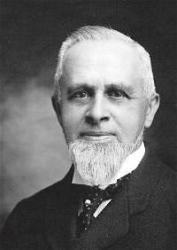
1832 - 1915 Person Name: William Howard Doane Topics: Redemption of humankind Composer of "TO GOD BE THE GLORY" in Moravian Book of Worship An industrialist and philanthropist, William H. Doane (b. Preston, CT, 1832; d. South Orange, NJ, 1915), was also a staunch supporter of evangelistic campaigns and a prolific writer of hymn tunes. He was head of a large woodworking machinery plant in Cincinnati and a civic leader in that city. He showed his devotion to the church by supporting the work of the evangelistic team of Dwight L. Moody and Ira D. Sankey and by endowing Moody Bible Institute in Chicago and Denison University in Granville, Ohio. An amateur composer, Doane wrote over twenty-two hundred hymn and gospel song tunes, and he edited over forty songbooks. Bert Polman ============ Doane, William Howard, p. 304, he was born Feb. 3, 1832. His first Sunday School hymn-book was Sabbath Gems published in 1861. He has composed about 1000 tunes, songs, anthems, &c. He has written but few hymns. Of these "No one knows but Jesus," "Precious Saviour, dearest Friend," and "Saviour, like a bird to Thee," are noted in Burrage's Baptist Hymn Writers. 1888, p. 557. --John Julian, Dictionary of Hymnology, Appendix, Part II (1907) =================== Doane, W. H. (William Howard), born in Preston, Connecticut, 1831, and educated for the musical profession by eminent American and German masters. He has had for years the superintendence of a large Baptist Sunday School in Cincinnati, Ohio, where he resides. Although not a hymnwriter, the wonderful success which has attended his musical setting of numerous American hymns, and the number of his musical editions of hymnbooks for Sunday Schools and evangelistic purposes, bring him within the sphere of hymnological literature. Amongst his collections we have:— (1) Silver Spray, 1868; (2) Pure Gold, 1877; (3) Royal Diadem, 1873; (4) Welcome Tidings, 1877; (5) Brightest and Best, 1875; (6) Fountain of Song; (7) Songs of Devotion, 1870; (8) Temple Anthems, &c. His most popular melodies include "Near the Cross," "Safe in the Arms of Jesus," "Pass me Not," "More Love to Thee," "Rescue the Perishing," "Tell me the Old, Old Story," &c. - John Julian, Dictionary of Hymnology (1907)
It looks like you are using an ad-blocker. Ad revenue helps keep us running. Please consider white-listing Hymnary.org or getting Hymnary Pro to eliminate ads entirely and help support Hymnary.org.