

 My Starred Hymns
 My FlexScores
 My Hymnals
 My Purchased Files
Planning worship?
Check out our sister site, ZeteoSearch.org,
for 20+ additional resources related to your search.
- |
User Links
Person Results
Christian H. Bateman
1813 - 1889 Person Name: Christian H. Bateman, 1813-18889 Topics: Rejoicing Author of "Come, Christians, Join to Sing" in One Lord, One Faith, One Baptism Bateman, Christian Henry, son of John Bateman, was born Aug. 9, 1813, at Wyke, near Halifax. After studying in the Moravian Church and exercising his ministry there for a time, he became, in 1843, minister of Richmond Place Congregational Church, Edinburgh. After 1846 he was successively Congregational minister at Hopton, in Yorkshire, and Beading, in Berkshire. On taking Holy Orders in the Church of England he became, 1869-71, curate of St. Luke's, Jersey, and Chaplain to the Forces; 1871-75, Vicar of All Saints, Childshill, Middlesex; 1877-84, curate of St. John's, Penymynydd, Hawarden. His hymns appeared mainly in:—
The Sacred Song Book (Edin., Gall & Inglis, subsequently published as Sacred Melodies for Children; and as 200 Sacred Melodies for Sunday Schools and Families, was edited by himself, with the Rev. James Gall, and latterly with Mr. Robert Inglis, the publisher. First pub. 1843 as 25; enlarged by a second part, 1846, to 60; revised and enlarged, 1854, to 80; 1862, to 130; and 1872, to 200; it reached a circulation of a million and a half before 1862, four millions before 1872, and above six millions before 1881. It was for many years the hymnbook for Sabbath School use in Scotland. (2) The Children's Hymnal and Christian Year (London., J. Hodges, 1872), including 11 original hymns, with others from many sources. His best known hymn is: “Come, children, join to sing" (q. v.). [Rev. James Mearns, M.A.]
-- John Julian, Dictionary of Hymnology (1907)
=======================
Bateman, C. H., p. 116, i. He finally resided at Carlisle without a charge, and died there in July, 1889.
--John Julian, Dictionary of Hymnology, Appendix, Part II (1907)
Christian H. Bateman
Chas. H. Gabriel
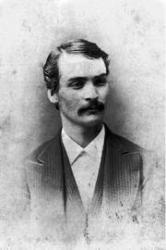
1856 - 1932 Person Name: Charles H. Gabriel, 1856-1932 Topics: Rejoicing Author of "My Savior's Love" in Hymnal of the Church of God Pseudonyms: C. D. Emerson, Charlotte G. Homer, S. B. Jackson, A. W. Lawrence, Jennie Ree
=============
For the first seventeen years of his life Charles Hutchinson Gabriel (b. Wilton, IA, 1856; d. Los Angeles, CA, 1932) lived on an Iowa farm, where friends and neighbors often gathered to sing. Gabriel accompanied them on the family reed organ he had taught himself to play. At the age of sixteen he began teaching singing in schools (following in his father's footsteps) and soon was acclaimed as a fine teacher and composer. He moved to California in 1887 and served as Sunday school music director at the Grace Methodist Church in San Francisco. After moving to Chicago in 1892, Gabriel edited numerous collections of anthems, cantatas, and a large number of songbooks for the Homer Rodeheaver, Hope, and E. O. Excell publishing companies. He composed hundreds of tunes and texts, at times using pseudonyms such as Charlotte G. Homer. The total number of his compositions is estimated at about seven thousand. Gabriel's gospel songs became widely circulated through the Billy Sunday-Homer Rodeheaver urban crusades.
Bert Polman
Chas. H. Gabriel
George P. Simmonds
1890 - 1991 Person Name: George P. Simmonds, 1890-1881 Topics: Rejoicing Translator (Spanish) of "Come, Thou Fount of Every Blessing" in Community of Christ Sings Used pseudonyms G Paul S., J. Paul Simon, and J. Pablo Símon
George P. Simmonds
Edward Perronet
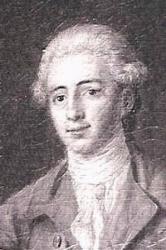
1721 - 1792 Person Name: Edward Perronet, 1726-1792 Topics: Rejoicing Author of "All Hail the Power of Jesus' Name!" in Community of Christ Sings Edward Perronet was the son of the Rev. Vincent Perronet, Vicar of Shoreham, Kent. For some time he was an intimate associate of the Wesleys, at Canterbury and Norwich. He afterwards became pastor of a dissenting congregation. He died in 1792. In 1784, he published a small volume, entitled "Occasional Verses, Moral and Social;" a book now extremely rare. At his death he is said to have left a large sum of money to Shrubsole, who was organist at Spafield's Chapel, London, and who had composed the tune "Miles Lane" for "All hail the power of Jesus' Name!"
--Annotations of the Hymnal, Charles Hutchins, M.A. 1872.
------
Perronet, Edward. The Perronets of England, grandfather, father, and son, were French emigres. David Perronet came to England about 1680. He was son of the refugee Pasteur Perronet, who had chosen Switzerland as his adopted country, where he ministered to a Protestant congregation at Chateau D'Oex. His son, Vincent Perronet, M.A., was a graduate of Queen's College, Oxford, though his name is not found in either Anthony Woods's Athenae Oxonienses nor his Fasti, nor in Bliss's apparatus of additional notes. He became, in 1728, Vicar of Shoreham, Kent. He is imperishably associated with the Evangelical Revival under the Wesleys and Whitefield. He cordially cooperated with the movement, and many are the notices of him scattered up and down the biographies and Journals of John Wesley and of Selina, Countess of Huntingdon. He lived to the venerable age of ninety-one; and pathetic and beautiful is the account of John Wesley's later visits to the white-haired saint (b. 1693, d. May 9, 1785).* His son Edward was born in 1726. He was first educated at home under a tutor, but whether he proceeded to the University (Oxford) is uncertain. Born, baptized, and brought up in the Church of England, he had originally no other thought than to be one of her clergy. But, though strongly evangelical, he had a keen and searching eye for defects. A characteristic note to The Mitre, in referring to a book called The Dissenting Gentleman's answer to the Rev. Mr. White, thus runs:—"I was born, and am like to die, in the tottering communion of the Church of England; but I despise her nonsense; and thank God that I have once read a book that no fool can answer, and that no honest man will". The publication of The Mitre is really the first prominent event in his life. A copy is preserved in the British Museum, with title in the author's holograph, and manuscript notes; and on the fly-leaf this:— "Capt. Boisragon, from his oblig'd and most respectful humble servt. The Author. London, March 29th, 1757." The title is as follows:— The Mitre; a Sacred Poem (1 Samuel ii. 30). London: printed in the year 1757. This strangely overlooked satire is priceless as a reflex of contemporary ecclesiastical opinion and sentiment. It is pungent, salted with wit, gleams with humour, hits off vividly the well-known celebrities in Church and State, and is well wrought in picked and packed words. But it is a curious production to have come from a "true son" of the Church of England. It roused John Wesley's hottest anger. He demanded its instant suppression; and it was suppressed (Atmore's Methodist Memorial, p. 300, and Tyerman, ii. 240-44, 264, 265); and yet it was at this period the author threw himself into the Wesleys' great work. But evidences abound in the letters and journals of John Wesley that he was intermittently rebellious and vehement to even his revered leader's authority. Earlier, Edward Perronet dared all obloquy as a Methodist. In 1749 Wesley enters in his diary:
"From Rochdale went to Bolton, and soon found that the Rochdale lions were lambs in comparison with those of Bolton. Edward Perronet was thrown down and rolled in mud and mire. Stones were hurled and windows broken" (Tyerman's Life and Times of the Rev. John Wesley, M.A., 3 vols., 1870 ; vol. ii. 57).
In 1750 John Wesley writes:
”Charles and you [Edward Perronet] behave as I want you to do; but you cannot, or will not, preach where I desire. Others can and will preach where I desire, but they do not behave as I want them to do. I have a fine time between the one and the other. I think Charles and you have in the general a right sense of what it is to serve as sons in the gospel; and if all our helpers had had the same, the work of God would have prospered better both in England and Ireland. I have not one preacher with me, and not six in England, whose wills are broken to serve me" (ibid. ii. 85, and Whitehead's Life of Wesley, ii. 259).
In 1755 arrangements to meet the emergency created by its own success had to be made for Methodism. As one result, both Edward and Charles Perronet broke loose from John Wesley's law that none of his preachers or "helpers" were to dispense the Sacraments, but were still with their flocks to attend the parish churches. Edward Perronet asserted his right to administer the Sacraments as a divinely-called preacher ibid. ii. 200). At that time he was resident at Canterbury, "in a part of the archbishop's old palace" (ibid. ii. 230. In season and out of season he "evangelized." Onward, he became one of the Countess of Huntingdon's "ministers" in a chapel in Watling Street, Canterbury. Throughout he was passionate, impulsive, strong-willed; but always lived near his divine Master. The student-reader of Lives of the Wesleys will be "taken captive" by those passages that ever and anon introduce him. He bursts in full of fire and enthusiasm, yet ebullient and volatile. In the close of his life he is found as an Independent or Congregational pastor of a small church in Canterbury. He must have been in easy worldly circumstances, as his will shows. He died Jan. 2, 1792, and was buried in the cloisters of the great cathedral, Jan. 8. His Hymns were published anonymously in successive small volumes. First of all came Select Passages of the Old and New Testament versified; London: Printed by H. Cock, mdcclvi. … A second similar volume is entitled A Small Collection of Hymns, &c, Canterbury: printed in the year dcclxxxii. His most important volume was the following:— Occasional Verses, moral and sacred. Published for the instruction and amusement of the Candidly Serious and Religious. London, printed for the Editor: And Sold by J. Buckland in Paternoster Row; and T. Scollick, in the City Road, Moorfields, mdcclxxxv. pp. 216 (12°). [The British Museum copy has the two earlier volumes bound up with this.] The third hymn in this scarce book is headed, “On the Resurrection," and is, ”All hail the power of Jesus' name". But there are others of almost equal power and of more thorough workmanship. In my judgment, "The Lord is King" (Psalm xcvi. 16) is a great and noble hymn. It commences:—
“Hail, holy, holy, holy Loud!
Let Pow'rs immortal sing;
Adore the co-eternal Word,
And shout, the Lord is King."
Very fine also is "The Master's Yoke—the Scholar's Lesson," Matthew xi. 29, which thus opens:—
O Grant me, Lord, that sweet content
That sweetens every state;
Which no internal fears can rent,
Nor outward foes abate."
A sacred poem is named "The Wayfaring Man: a Parody"; and another, "The Goldfish: a Parody." The latter has one splendid line on the Cross, "I long to share the glorious shame." "The Tempest" is striking, and ought to be introduced into our hymnals; and also "The Conflict or Conquest over the Conqueror, Genesis xxxii. 24". Still finer is "Thoughts on Hebrews xii.," opening:—
"Awake my soul—arise!
And run the heavenly race;
Look up to Him who holds the prize,
And offers thee His grace."
"A Prayer for Mercy on Psalm cxix. 94," is very striking. On Isaiah lxv. 19, is strong and unmistakable. "The Sinner's Resolution," and "Thoughts on Matthew viii. 2," and on Mark x. 51, more than worthy of being reclaimed for use. Perronet is a poet as well as a pre-eminently successful hymnwriter. He always sings as well as prays. It may be added that the brief paraphrase after Ovid given below, seems to echo the well-known lines in Gray's immortal elegy:—
"How many a gem unseen of human eyes,
Entomb'd in earth, a sparkling embryo lies;
How many a rose, neglected as the gem,
Scatters its sweets and rots upon its stem:
So many a mind, that might a meteor shone,
Had or its genius or its friend been known;
Whose want of aid from some maternal hand,
Still haunts the shade, or quits its native land." [Rev. A. B. Grosart, D.D., LL.D.]
* Agnew's Protestant Exiles from France in the Reign of Louis XIV. confounds Vincent the father with Edward his son.
-- John Julian, Dictionary of Hymnology (1907)
Edward Perronet
P. P. Bliss
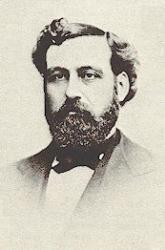
1838 - 1876 Person Name: Philip P. Bliss Topics: Christian Life Rejoicing in Christ Author of "Sing, O, sing of my Redeemer" in The Evangelical Hymnal Philip P. Bliss (b. Clearfield County, PA, 1838; d. Ashtabula, OH, 1876) left home as a young boy to make a living by working on farms and in lumber camps, all while trying to continue his schooling. He was converted at a revival meeting at age twelve. Bliss became an itinerant music teacher, making house calls on horseback during the winter, and during the summer attending the Normal Academy of Music in Genesco, New York. His first song was published in 1864, and in 1868 Dwight L. Moody advised him to become a singing evangelist. For the last two years of his life Bliss traveled with Major D. W. Whittle and led the music at revival meetings in the Midwest and Southern United States. Bliss and Ira D. Sankey published a popular series of hymn collections entitled Gospel Hymns. The first book of the series, Gospel Songs, was published in 1874. Bliss's tragic death at the age of thirty-eight happened near the end of 1876. Philip P. Bliss and his wife were traveling to Chicago to sing for the evangelistic services led by Daniel W. Whittle at Dwight L. Moody's Tabernacle. But a train wreck and fire en route claimed their lives.
Bert Polman
=================
Bliss, Philip, b. at Clearfield County, Pennsylvania, July 9, 1838. In 1864 he went to Chicago in the employ of Dr. George F. Root, the musician, where he was engaged in conducting musical Institutes, and in composing Sunday School melodies. Originally a Methodist, he became, about 1871, a choirman of the First Congregational Church, Chicago, and the Superintendent of its Sunday Schools. In 1874 he joined D. W. Whittle in evangelical work. To this cause he gave (although a poor man) the royalty of his Gospel Songs, which was worth some thirty thousand dollars. His death was sudden. It occurred in the railway disaster at Ashtabula, Ohio, Dec. 30, 1876. ... Some of his verses have obtained wide popularity in most English-speaking countries. The more widely known, and specially those which are found in collections in use in G. Britain, are in the following American works:—
i. The Prize, 1870.
1. I should like to die. Death anticipated. This is one of his earliest compositions, and is unworthy of the position it holds.
2. Through the valley of the shadow I must go. Death anticipated.
3. Whosoever heareth, shout, shout the sound. Jesus the Way. Written during the winter of 1869-70 after hearing Mr. H. Moorhouse (from England) preach on St. John iii. 16.
ii. The Charm, 1871.
4. Almost persuaded now to believe. Procrastination. This was suggested by the following passage in a sermon by the Rev. Mr. Brundnge, Bliss being present at its delivery:—" He who is almost persuaded is almost saved, but to be almost saved is to be entirely lost."
5. Ho! my comrades! see the signal. Faithfulness.
6. O! Jerusalem, the golden city, bright, &c. Heaven.
7. On what Foundation do [did] you build? Christ the Foundation.
iii. The Song Tree, 1872.
8. Light in the darkness, sailor, day is at hand. Safety. This hymn, “The Life-Boat," has attained to great popularity. The incident upon which it is based, that of the rescue of a ship's crew by a life-boat, is given in detail by Mr. Sankey in his Sacred Songs, &c, No. 99 (large ed.). It is sometimes known by its refrain, "Pull for the shore," &c.
iv. The Joy, 1873.
9. In me ye may have peace. Peace.
10. To die is gain. Death anticipated.
v. Sunshine, 1873.
11. Down life's dark vale we wander. Death anticipated.
12. More holiness give me. For Holiness.
13. Only an armour-bearer. Soldiers of the Cross.
14. Standing by a purpose true. Faithfulness.
15. This loving Saviour stands patiently. Invitation.
vi. Gospel Songs, 1874.
16. A long time I wandered. Peace and Joy.
17. Brightly beams our Father's mercy. Mercy.
18. Come, brethren, as we march along. Praise.
19. Free from the law, O happy condition. Redemption.
20. Have you on the Lord believed? Fullness of Grace. This hymn arose out of the following circumstances :—" A vast fortune was left in the hands of a minister for one of his poor parishioners. Fearing that it might be sqmandered if suddenly bestowed upon him, the wise minister sent him a little at a time, with a note saying, “This is thine; use it wisely; there is more to follow.” Hence also the refrain ‘More to follow,’ by which the hymn is known."
21. How much owest thou? Divine Claims.
22. I know not the hour when my Lord will come. Death anticipated. Suggested by reading the book, The Gates Ajar.
23. See the gentle Shepherd standing. The Good Shepherd.
24. Though the way be sometimes dreary. Divine Leading.
25. Will you meet me at the fountain? Fountain of Living Water. The incident out of which this hymn arose is thus stated in The Christian, No. 365, "At the Industrial Exposition at Chicago it was an everyday appointment to meet at the Central Fountain. Mr. P. P. Bliss, whose mind seemed always set on things above, caught up the words, and wrote this hymn, 'Meet me at the Fountain.'"
vii. Gospel Hymns, No. 1, 1875.
26. One offer of salvation. The Name of Jesus.
27. Wandering afar from the dwellings of men. The Lepers.
viii. The International Lesson Monthly, 1875.
28. Weary gleaner, whence comest thou? Duty.
29. The whole world was lost in the darkness of Sin. Light of the world.
30. Man of sorrows! what a name. Redemption.
31. The Spirit, O sinner, in mercy doth move. Holy Spirit.
ix. Gospel Hymns, No. 2, 1876.
32. At the feet of Jesus. The good choice.
33. Come, sing the Gospel's joyful sound. Salvation.
34. Cut it down, cut it down. Justice and Mercy.
35. Do you see the Hebrew captive? Prayer.
36. Hallelujah, He is risen. Easier. Written in the spring of 1876 and first sung by Bliss on Easter afternoon, 1876, in the Court House Square, Augusta, Georgia, to 5900 people.
37. In Zion's rock abiding. Safety.
38. Repeat the story o'er and o'er. Grace and Peace.
39. Tenderly the Shepherd. The Good Shepherd.
x. Gospel Hymns, No. 3, 1878.
40. Hear ye the glad good news from heaven. Faith and Salvation.
41. I will sing of my Redeemer. Praise.
xi. Gospel Hymns, No. 4, 1881.
42. 'Tis known on earth and heaven too. More about Jesus.
xii. Various.
43. Sing over again to me. Words of Life. This appeared in a paper entitled Words of Life, 1874, The following are undated:—
44. March to the battle-field. Duty and Victory.
45. There is sin in the camp. Hinderances.
46. 'Tis the promise of God. Praise.
47. While the silvery moon-beams, fall, New Birth.
48. God is always near me. Omnipresence.
Two hymns," I am so glad that our Father in heaven," and " Sowing the seed by the daylight [dawnlight] fair," (sometimes given as " Sowing our seed in the morning fair ") are usually attributed to Mr. Bliss. In his Gospel Songs, Cincinnati, 1874, however, he lays claim to the music only. Mr. Sankey attributes this last to "E. A. Oakey." With the exception of No. 48, these hymns are given in Mr. Sankey's Sacred Songs & Solos, Pts. i. and ii. Their popularity is far beyond their literary merits, and is mainly due to the simple melodies to which they are wedded. As a writer of hymns of this class Mr. Bliss is second only to Mrs. Van Alstyne. Many anecdotes concerning hymns of this class are given in American Evangelists; an Account of their work in England and America, by the Rev. Elias Nason, Boston, U.S., Lathrop & Co., 1877.
Mr. Bliss is usually known as "P. P. Bliss." This is found on the title-pages of his collections. On his own authority, however, we are enabled to say that his name originally stood thus : “Philipp Bliss.” Early in life he separated the final p from his Christian name, constituted it a capital P, and thus produced "P. P. Bliss." (For this article we are mainly indebted to Professor F. M. Bird, and Mr. H. P. Main.)
-John Julian, Dictionary of Hymnology (1907)
========================
Bliss, Philip , p. 151, i. "Sowing the seed by the daylight fair" is in the Family Treasury , Edinburgh, 1861, pt. i., p. 84. It is said to be by Miss Emily Sullivan Oakey; born at Albany, N. York, Oct. 8, 1829, died May 11, 1883. Note also that Bliss's hymn, No. 43. on p. 150, ii., should read, "Sing them over again to me."
--John Julian, Dictionary of Hymnology, Appendix, Part II (1907)
=====================
Bliss, P., p. 150, i. Two works have been brought to our notice, since the issue of our first edition of this Dictionary, which concern this author, viz.:—
1. Memoirs of Philip P. Bliss. Edited by D. W. Whittle. Contributions by Rev. E. P. Goodwin, Ira D. Sankey, and Geo. F. Root. Introduction by D. L. Moody. New York, &c.: A. S. Barnes & Co., 1877.
2. My Life and Sacred Songs. By Ira D. Sankey. With an Introduction by Theodore L. Cuyler, D.D). London: Hodder & Stoughton, and Morgan & Scott, 1906.
These works have a special interest for those who use I. D. Sankey's Sacred Songs & Solos, and all of P. Bliss's publications. To Mr. Sankey's My Life, &c, we direct special attention for P. Bliss's hymns:—
“Do you see the Hebrew captive kneeling?" p. 294.
"Down life's dark vale we wander." p. 285.
"Ho! my comrades, see the signal." p. 105.
"'Tis the promise of God full salvation to give." p. 99.
--John Julian, Dictionary of Hymnology, New Supplement (1907)
P. P. Bliss
John Cennick

1718 - 1755 Topics: Christian Life Rejoicing in Christ Author of "Jesus, my all, to heav'n is gone" in The Evangelical Hymnal John Cennick was born at Reading, Berkshire, in the year 1717. He became acquainted with Wesley and Whitefield, and preached in the Methodist connection. On the separation of Wesley and Whitefield he joined the latter. In 1745, he attached himself to the Moravians, and made a tour in Germany to fully acquaint himself with the Moravian doctrines. He afterwards ministered in Dublin, and in the north of Ireland. He died in London, in 1755, and was buried in the Moravian Cemetery, Chelsea. He was the author of many hymns, some of which are to be found in every collection.
--Annotations of the Hymnal, Charles Hutchins, M.A. 1872.
=======================
Cennick, John, a prolific and successful hymnwriter, was descended from a family of Quakers, but brought up in the Church of England. He assisted J. Wesley and then G. Whitefield in their labours for a time, and then passed over to, and died as a minister of, the Moravian Church. Born at Reading, Dec. 12, 1718, he was for some time a land surveyor at Reading, but becoming acquainted with the Wesleys in 1739, he was appointed by J. Wesley as a teacher of a school for colliers' children at Kingswood in the following year. This was followed by his becoming a lay preacher, but in 1740 he parted from the Wesleys on doctrinal grounds. He assisted Whitefield until 1745, when he joined the Mora¬vians, and was ordained deacon, in London, in 1749. His duties led him twice to Germany and also to the North of Ireland. He died in London, July 4, 1755. In addition to a few prose works, and some sermons, he published:— (1) Sacred Hymns, for the Children of God in the Days of their Pilgrimage, Lond., J. Lewis, n.d. (2nd ed. Lond., B. Milles, 1741), Pts. ii., iii., 1742; (2) Sacred Hymns for the Use of Religious Societies, &c, Bristol, F. Farley, 1743; (3) A Collection of Sacred Hymns, &c, Dublin, S. Powell, 3rd ed., 1749; (4) Hymns to the honour of Jesus Christ, composed for such Little Children as desire to be saved. Dublin, S. Powell, 1754. Additional hymns from his manuscripts were published by his son-in-law, the Rev. J. Swertner, in the Moravian Hymn Book, 1789, of which he was the editor. There are also 16 of his hymns in his Sermons, 2 vols., 1753-4, some being old hymns rewritten, and others new.
Many of Cennick's hymns are widely known, as, "Lo, He cometh, countless trumpets;" “Brethren, let us join to bless;" "Jesus, my all, to heaven is gone;" "Children of the heavenly King;" "Ere I sleep, for every favour;" "We sing to Thee, Thou Son of God;" and the Graces: " Be present at our table, Lord;" and "We thank Thee, Lord;" &c. Some of the stanzas of his hymns are very fine, but the hymns taken as a whole are most unequal. Some excellent centos might be compiled from his various works. His religious experiences were given as a preface to his Sacred Hymns, 1741. In addition to the hymns named, and others annotated under their first lines, the following are in common use:—
1. Be with me [us] Lord, where'er I [we] go. Divine Protection. [1741.]
2. Cast thy burden on the Lord. Submission. [1743.]
3. Not unto us, but Thee alone. Praise to Jesus. [1743.]
4. Thou dear Redeemer, dying Lamb. Priesthood of Christ. [1743.]
5. We sing to Thee, Thou Son of God. Praise to Jesus. [1743.]
6. When, 0 dear Jesus, when shall I? Sunday Evening. [1743.]
--John Julian, Dictionary of Hymnology (1907)
John Cennick
Knowles Shaw
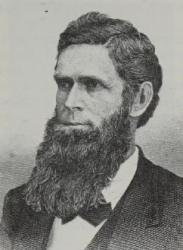
1834 - 1878 Topics: Rejoicing Author of "Bringing in the Sheaves" in Triumphant Service Songs Knowles Shaw (1834-1878), a name familiar in many western households--was born near New London, in Morgan Township, Ohio, on the 13th of October, 1834. His mother's maiden name was Huldah Griffin, and by both of his parents he was of Scottish extraction. His early life was spent in Rush County, Indiana, where he first began to play the violin, furnishing the music for many a dance. While the ball was going on he was converted, ceasing to play in the middle of the piece he was performing. Very soon thereafter he entered the ministry of the Christian Church. On the 11th of January, 1855, he married Miss Martha Finley. Most of his time after entering the ministry was spent in the West and South, and on account of his wonderful vocal powers he was called the "singing evangelist."
As a singer he was considered, in some respects, equal to Sankey and Bliss. reporters of the press al spoke of his singing as something wonderful. Soon after beginning to preach, he began to compose and to write music. His first song was "The Shining Ones," still popular. He published at different times five singing-books: "Shining Pearls," "Golden Gate," "Sparkling Jewels," "The Gospel Trumpet," and the "Morning Star." "Bringing in the Sheaves" was one of the last songs from his hand.
His last meeting was held in Dallas, Texas, in May 1878. He was killed by a railroad accident, going from Dallas to McKinney, on the 7th of June, 1878. During his ministry he baptized over eleven thousand persons.
--A History and Biographical Cyclopedia of Butler County, Ohio. Cincinnati, 1882. DNAH Archives
Knowles Shaw
W. O. Cushing
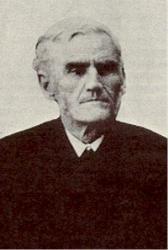
1823 - 1902 Person Name: Rev. W. O. Cushing Topics: Rejoicing Author of "Ring the Bells of Heaven" in Triumphant Service Songs Rv William Orcutt Cushing USA 1823-1902. Born at Hingham, MA, he read the Bible as a teenager and became a follower of the Orthodox Christian school of thought. At age 18 he decided to become a minister, following in his parents theology. His first pastorate was at the Christian Church, Searsburg, NY. He married Hena Proper in 1854. She was a great help to him throughout his ministry. He ministered at several NY locations over the years, including Searsburg, Auburn, Brookley, Buffalo, and Sparta. Hena died in 1870, and he returned to Searsburg, again serving as pastor there. Working diligently with the Sunday school, he was dearly beloved by young and old. Soon after, he developed a creeping paralysis that caused him to lose his voice. He retired from ministry after 27 years. He once gave all his savings ($1000) to help a blind girl receive an education. He was instrumental in the erection of the Seminary at Starkey, NY. He gave material aid to the school for the blind at Batavia. He was mindful of the suffering of others, but oblivious to his own. After retiring, he asked God to give him something to do. He discovered he had a talent for writing and kept busy doing that. He authored about 300 hymn lyrics. The last 13 years of his life he lived with Rev. and Mrs. E. E Curtis at Lisbon Center, NY, and joined with the Wesleyan Methodist Church there. He died at Searsburg, NY.
John Perry
==================
Cushing, William Orcutt , born at Hingham, Massachusetts, Dec. 31, 1823, is the author of the following hymns which appear in I. D. Sankey's Sacred Songs and Solos:—
1. Beautiful valley of Eden. Heaven.
2. Down in the valley with my Saviour I would go. Trusting to Jesus.
3. Fair is the morning land. Heaven.
4. I am resting so sweetly in Jesus now. Rest and Peace in Jesus.
5. I have heard of a land far away. Heaven.
6. O safe to the Rock that is higher than I. The Rock of Ages.
1. Ring the bells of heaven, there is joy today. Heavenly Joy over repenting Sinners.
8. We are watching, we are waiting. Second Advent anticipated.
Mr. Cushing has also several additional hymns in some American Sunday School collections, and collections of Sacred Songs.
-- John Julian, Dictionary of Hymnology
=================
Cushing, W. 0., p. 274, i. Other hymns are:—
1. O I love to think of Jesus . Thinking of Jesus.
2. There is joy in heaven! there is joy to-day. Angels joy over returning Sinners.
3. When He cometh, when He cometh. Advent.
--John Julian, Dictionary of Hymnology, Appendix, Part II (1907)
W. O. Cushing
Christopher Walker
b. 1947 Person Name: Christopher Walker, 1947- Topics: Rejoicing Composer of "[Alleluia, alleluia]" in Community of Christ Sings
Christopher Walker
César Malan
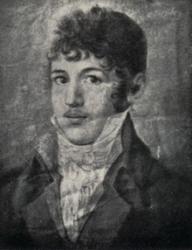
1787 - 1864 Person Name: Caesar Henri Abraham Malan (1787-1864) Topics: Sinners Rejoicing in Hope Composer of "HENDON" in Many Voices; or, Carmina Sanctorum, Evangelistic Edition with Tunes Rv Henri Abraham Cesar Malan, 1787-1864. Born in Geneva, Switzerland, into a bourgeois family that moved to Switzerland to escape religious persecution during the French Revolution, he attended the university in Marseilles, France, intending to become a businessman. Although having some grounding in religious faith by his mother, he decided to attend the Academy at Geneva (founded by Calvin) in preparation for ministry. He was ordained in 1810, after being appointed a college master (teaching Latin) in 1809. Malan was in accord with the National Church of Geneva as a Unitarian, but the Reveil Movement caused him to become a dissident (evangelical) instead of a proponent of the Reformed Church (believing works, not faith, was what mattered). In 1811 he married (wife’s name not found). They had at least two children (one son was Solomon, referenced below). From 1813 on Malan slowly became an evangelical, after being given an understanding of true salvation through grace (not works) in 1816 by two German Lutherans from Geneva. He became saved upon this realization and was so changed that he burned his prized collection of classical authors and manuscripts. In 1817 he preached around Geneva, and one sermon in particular, “Man only justified by faith alone” created a firestorm and brought him into conflict with religious authorities of the region. From then on he wished to help reform the national church from within, but the forces of the Venerable Company were too strong for him and excluded him from the pulpits and caused his dismissal from his regentsship at the college in 1818. Others in agreement with Malan were Charles Spurgeon, Robert Wilcox, Robert Haldane, and Henry Drummond. In 1820 he built a chapel in his garden and obtained the license of the State for it as a separatist place of worship. He preached in that chapel 43 years. In 1823 he was formally deprived of his status as a minister of the national Church. Various events caused his congregation to diminish over the next few years, and he began long tours of evangelization subsidized by religious friends in his land, Belgium, France, England and Scotland. He often preached to large congregations. Malan also authorized a hymn book, “Chants de Sion” (1841). A strong Calvinist, Malan lost no opportunity to evangelize. On one occasion an old man he visited pulled Malan’s hymnal out and told him he had prayed to see the author of it before he died. On a visit to England Malan also inspired author, Charlotte Elliott, to write the hymn lyrics for “Just as I am”, when seeking an answer to her conversion she asked and he advised her to come to Christ ‘just as she was’. Malan published a score of books and also produced many religious tracts and pamphlets largely on questions in dispute between the National and evangelical churches of Rome. He also wrote articles in the “Record” and in American reviews. His hymns were set to his own melodies. He was an artist, a mechanic, a carpenter, a metal forger, and a printer. He had his own workshop, forge and printing press. One of his greatest joys was the meeting of the evangelical alliance at Geneva in 1861 which helped change church views. He retired to his home, Vandoeuvres, in the countryside near Geneva in 1857, dying there seven years later.. He was honored by a visit from the Queen of Holland two years before his death. He is mainly remembered as a hymn writer, having written 1000+ hymn lyrics and tunes. One son, Solomon, a gifted linguist and theologian, became Vicar of Broadwindsor. About a dozen of his hymns appeared translated in the publication “Friendly visitor” (1826). He was an author, creator, composer, editor, correspondent, contributor, translator, owner, and performer.
John Perry
=================
Malan, Henri Abraham César. The family of Malan traces its origin to the valleys of Piedmont. A branch of it settled at Mérindol, in Dauphiné, but was driven from France by the persecutions that followed the Revocation of the Edict of Nantes. Pierre Malan [Cesar's father], after seeing his sister fall a victim to persecution, left Mérindol (1714), and arrived at Geneva (1722). Henri Abraham César Malan was born at Geneva in 1787. After an education at the College, he went to Marseilles, with the intention of learning business: but, soon after, entered the Academy at Geneva, as a preparation for the ministry, to which he was ordained in 1810. He had been appointed one of the masters at the College in the previous year. The National Church of Geneva was at that time almost Unitarian, and Malan's convictions were in accord with it. But the great movement known as the Réveil, of which the first products were the dissident church of Bourg de Four and at a later date that founded by Malan himself, and which finally imbued the whole Swiss Church with its spirit, was silently preparing itself. The germ of the movement may be traced in the Société des Amis (1810), of which Empeytaz and A. Bost were leaders; and in Malan's independent attainment to the doctrines of the Divinity of the Saviour and the free gifts of salvation through Him (1816). But the human agency, which gave it force, and determined its Calvinistic direction, was the visit of Robert Haldane (in the autumn of 1816), to whom not only these pioneers of the movement, but F. Monod, E. Rieu, Guers, Gonthier, Merle d'Aubigné, and others, always pointed as their spiritual father. Empeytaz and others sought to attain enfranchisement by the establishment of the "petite Eglise of Bourg de Four." Malan wished to reform the national Church from within: and a sermon at Geneva, which brought on him the obloquy of the professors and theologians that composed his audience, and which Haldane characterized as a republication of the Gospel, was his first overt act (Jan. 19, 1817). But the opposing forces were far too strong for him. The Venerable Company excluded him from the pulpits, and achieved his dismissal from his regentship at the College (1818). In 1820 he built a chapel (Chapelle du Temoignage) in his garden, and obtained the licence of the State for it, as a separatist place of worship. In 1823 he was formally deprived of his status as a minister of the national Church. The seven years that succeeded were the palmy days of the little chapel. Strangers, especially from England, mingled with the overflowing Swiss congregation. But (in 1830) a secession to Bourg de Four, and then the foundation of the Oratoire and the Société Evangelique, which in 1849 absorbed the congregation of Bourg de Four under the title of the Église Evangélique, thinned more and more the number of his adherents. His burning zeal for the conversion of souls found a larger outlet in long tours of evangelization, subsidized by religious friends, in his own land and Belgium and France, and also in Scotland and England, where he had friends among many religious bodies, and where he preached to large congregations. The distinguishing characteristic of these tours was his dealing with individuals. On the steamboat or the diligence, in the mountain walk, at the hotel, no opportunity was lost. On one occasion an old,man whom he visited drew from under his pillow a copy of his great hymnbook, Chants de Sion, 1841, and told him how he had prayed to see the author of it before he died.
It is as the originator of the modern hymn movement in the French Reformed Church that Malan's fame cannot perish. The spirit of his hymns is perpetuated in the analysis of Christian experience, the never-wearied delineation of the hopes and fears, the joys and sorrows of the believer's soul, which are still the staple of French Protestant hymns. To this was added, in Malan himself, a marked didactic tone, necessitated by the great struggle of the Réveil for Evangelical doctrine; and an emphatic Calvinism, expressing itself with all the despondency of Newton and Cowper, but, in contrast with them, in bright assurance, peace and gladness. French criticism has pronounced his hymns unequal, and full of literary defects; but their unaffected freshness and fervent sincerity are universally allowed. In the Chants de Sion, hymns 20, ”Hosanna! Béni soit"; 165, “Mon coeur joyeux, plein d'espérance"; 199, "Du Rocher de Jacob"; 200, "Agneau de Dieu"; 239, "Trois fois Jehovah," are in every Protestant French hymnbook; and several others are very widely used.
Besides his hymns Malan produced numberless tracts and pamphlets on the questions in dispute between the National and Evangelical Churches and the Church of Rome, as well as articles in the Record and in American reviews. He was a man of varied acquirements. His hymns were set to his own melodies. He was an artist, a mechanic: his little workshop had its forge, its carpenter's bench, its printing press. To the end of his life his strong Calvinism, and his dread of mere external union in church government, kept him distinct from all movements of church comprehension, though freely joining in communion with all the sections of Evangelical thought in Geneva and Scotland. At one time there seemed a prospect of his even rejoining the national Church, which had driven him from her. One of his greatest joys was the meeting of the Evangelical Alliance at Geneva (1861). He left no sect; one of his latest orders was the demolition of his decayed chapel, in which he had preached for 43 years. He died at Vandoeuvres, near Geneva, in 1864, leaving a numerous family, one of whom, the Rev. S. C. Malan, D.D., sometime Vicar of Broadwindsor, is well known as a linguist and a theologian of the English Church. To English readers Malan is chiefly known as a hymn-writer through translations of his "Non, ce n'est pas mourir" (q.v.): "It is not death to die", &c. About a dozen of his hymns appear in a translated form in the Friendly Visitor for 1826. [Rev. H. Leigh Bennett, M.A.]
-- John Julian, Dictionary of Hymnology (1907)
=================
http://en.wikipedia.org/wiki/César_Malan
César Malan
Pages




