You help make Hymnary.org possible. More than 10 million people from 200+ countries found hymns, liturgical resources and encouragement on Hymnary.org in 2025, including you. Every visit affirms the global impact of this ministry.

If Hymnary has been meaningful to you this year, would you take a moment today to help sustain it? A gift of any size—paired with a note of encouragement if you wish—directly supports the server costs, research work and curation that keep this resource freely available to the world.

Give securely online today, or mail a check to:
Hymnary.org
Calvin University
3201 Burton Street SE
Grand Rapids, MI 49546

Thank you for your partnership, and may the hope of Advent fill your heart.

Search Results

Topics:second+sunday+after+trinity+sunday

Planning worship? Check out our sister site, ZeteoSearch.org, for 20+ additional resources related to your search.

Texts

text icon
Text authorities
TextPage scans

Feeble, helpless, how shall I

Author: William H. Furness Appears in 87 hymnals Topics: Twenty Second Sunday after Trinity Lyrics: 1 Feeble, helpless, how shall I Learn to live and learn to die? Who, O God, my guide shall be? Who shall lead Thy child to Thee? 2 Blessed Father, gracious One, Thou hast sent Thy holy Son; He will give the light I need, He my trembling steps will lead. 3 Through this world, uncertain, dim, Let me ever learn on Him; From His precepts wisdom draw, Make His life my solemn law. 4 Thus in deed, and thought, and word, Led by Jesus Christ the Lord, In my weakness, thus shall I Learn to live and learn to die. Used With Tune: REDHEAD, 47
TextPage scans

The Spirit, in our hearts

Author: Henry Ustic Onderdonk Meter: 6.6.8.6 Appears in 430 hymnals Topics: Second Sunday after Trinity Lyrics: 1 The Spirit, in our hearts Is whispering, "Sinner, come:" The bride, the Church of Christ, proclaims To all His children, "Come!" 2 Let him that heareth, say To all about him, "Come!" Let him that thirsts for righteousness To Christ, the Fountain, come! 3 Yes, whosoever will, O let him freely come, And freely drink the stream of life; 'Tis Jesus bids him come. 4 Lo, Jesus, who invites, Declares, "I quickly come;" Lord, even so! I wait Thine hour; Jesus, my Saviour, come! Scripture: Revelation 22:17 Used With Tune: ST. HELENA
Text

Jeg slipper Jesum ei

Author: Ukj.; Ukj. Appears in 5 hymnals Topics: Second Sunday after Trinity Sunday High Mass; Twenty-second Sunday after Trinity Sunday For Evening Lyrics: 1 Jeg slipper Jesum ei, I Jesu vil jeg blive; Han i Begyndelsen Mig Livet vilde give; Det Liv, som han mig gav, Af ham sit Ophold faar, Naar Verden falder om Og ganske undergaar. 2 Jeg slipper Jesum ei, Med Jesu vil jeg lide, Han lindrer mig mit Kors Med Trøst i rette Tide, Det mig til Gode sker; Naar Jesus er hos mig, Han Korsets Bitterhed Skal gjøre taalelig. 3 Jeg slipper Jesum ei, Med Jesu vil jeg kjæmpe Mod Verden, Djævelen, Ja Døden vil jeg dæmpe; Naar de bestorme mig, Min Jesus hjælper godt, For mig han kjæmper selv, Og gjør dem kun til Spot. 4 Jeg slipper Jesum ei, Med Jesu er jeg rede At dø; er han hos mig, Da vil han ei tilstede, Mig Døden døde skal, Nei, den en Himmel-Vei Da bliver mig, hvorfor Jeg slipper Jesum ei. 5 Jeg slipper Jesum ei; Thi kan jeg ham kun have, Saa har jeg her og hist Den allerbedste Gave. I al den Ting, jeg gjør, Er Jesus ikke med, Saa faar jeg ingen Frugt Og nyder aldrig Fred. 6 Jeg slipper Jesum ei, Fra ham vil jeg ei træde, Vi sammenbundne er Med Kjærlighedens Kjæde Saa fast, som noget kan Tilsammenføie sig, Og han skal drage mig Med sig til Himmerig. 7 Jeg slipper Jesum ei, Hans Kjærlighed mig driver, Jeg sover eller jeg Opvaagner, Jesus bliver Mit ene faste Maal, Og ingen anden Vei Jeg har til Salighed,– Jeg slipper Jesum ei. Text Sources: Tysk efter Ord af H. Müller

Tunes

tune icon
Tune authorities
Page scansAudio

LABAN

Appears in 776 hymnals Composer and/or Arranger: Lowell Mason, Mus. Doc. Topics: Second Sunday after Trinity Tune Key: C Major Incipit: 34555 15321 76534 Used With Text: The Spirit in our hearts
Page scansAudio

MELITA

Meter: 8.8.8.8 Appears in 514 hymnals Topics: Second Sunday after Trinity Tune Key: C Major Incipit: 13355 66551 27554 Used With Text: Forth from the dark and stormy sky
Page scansFlexScoreAudio

BATTY

Meter: 8.7 Appears in 112 hymnals Topics: Second Sunday after Trinity Tune Key: E Flat Major Incipit: 12323 45365 43223 Used With Text: Come, Thou Fount of every blessing

Instances

instance icon
Published text-tune combinations (hymns) from specific hymnals
TextPage scan

Hellig' Jesus, Renheds Kilde

Author: Bath. Crasselius; Jodokus von Lodenstein; Brorson Hymnal: Salmebog for Lutherske Kristne i Amerika #661 (1919) Topics: Second Sunday after Trinity Sunday; Second Sunday after Trinity Sunday Lyrics: 1 Hellig' Jesus, Renheds Kilde, Du Salighedens Giver milde, Du mer end Solen ren og skjær! Al den Glans hos Kerubimer Og Herlighed i Serafimer Mod din som Mørkheds Taage er! Et Mønster er du mig, Ak, dan mig efter dig, Min Jehovah, o Jesus kjær! Gjør mig dog her Og hellig, som du hellig er! 2 Stille Jesus, som din Vilje For Faders Vilje bøied stille Og indtil Døden adlød ham! Lad mig vorde ogsaa dydig, Som et umyndigt Barn dig lydig Og sindet efter dig, Guds Lam! Tag Hjertet ganske ind, Gjør Attraa, Sjæl og Sind Taus og stille, o, Jesus kjær! Hjælp, at jeg her I sønlig Aand dig lyder er! 3 Ømme Jesus, uden Slummer, Med megen Uro, Strid og Kummer Dit Øie for os Omhu bar, Hver Dag bar du Livets Møie, Hver Nat saa dig dit Knæ at bøie, Den Bøn til Gud din Hvile var! Meg og, aarvaagen gjør, Og at jeg, som jeg bør Flittig bede, o Jesus kjær! Giv, at jeg her Dit Villed stedse hos mig bær! 4 Milde Jesus, ak hvor herlig Er dog din Naade, og hvor kjærlig Er du mod Uven og mod Ven! Klare Lys for Hjerters Mørke Og frugtbar Regn for Sjæles Tørke, Hvor liden Tak du saar igjen! Min Jesus, lær du mig, At jeg i Godhed dig Maa paaslægte, o Jesus kjær! Giv, at jeg her Som du mod alle kjærlig er! 5 Fromme Jesus, du forhaanet Og ei for Had og Spot blev skaanet, Lod dog ei Hevn, ei Vrede se! Stille Mod, hvo saa dets Lige, Som ikkun for din Faders Rige Og Hus sig nidkjær vilde te! Min Jesus, prent mig ind Et saget, nidkjært Sind For din Ære, o Jesus kjær! Gid, at jeg her From og sagtmodig stedse er! 6 Sæle Jesus, hvad for Smerte, Stod du ei ud med roligt Hjerte Udi din dybe Ydmyghed! Pint du blev og plaget ilde, Men, dyre Lam, du taug dog stille, Holdt dig i Faders Lydighed! Bind, Jesus, ved din Aand Mig og med sige Baand, Naar jeg lider, o Jesus kjær! Hjælp, at jeg her Altid som du taalmdoig er! 7 Ærens Konge, du hernede Ei selv dig Ære vil berede, Nei, du fornedred dig i Alt! Hovmods Aand ei dig ophøied, Men dybt i Ydmyghed nedbøied, Du tog en ringe Træls Gestalt! O, slaa min Hovmod ned Og giv mig Ydmyghed Ved din Naade, o Jesus kjær! Giv, at jeg her, Som du, af Hjertet ydmyg er! 8 Rene Jesus, Kydskheds Kilde, Som os et Mønster give vilde End fremfor Adams Renhdes Stand! Lemmer, Sjæl og Sind og Sæder, Ja Øiesyn og Gang og Klæder Regjerte Hellighedens Aand! O, min Immanuel! Gjør og mit Liv, min Sjæl Kydsk og hellig! o Jesus kjær, Mig stedse lær At ligne dig i Kydskhed her! 9 Rige Jesus, du med Ringe Din Tørst og Hunger kunde tvinge, Men af din Haand blev Andre mæt! Lysten, som dig kunde røre, Var Faders Vilje at fuldføre; Det var din Mod, din bedste Ret! Vend, søde Sjæleven, Min Hunger til dig hen! Sjælens Manna, o Jesus kjær! Lær mig især, Naar jeg dig har, at nøies her! 10 Dyre Jesus, kom, velsigne Mit Hjerte, lad i Alt mig ligne Din Hellighed, dit Billede! Aandens Kraft mig saa regjere, At Troens Frugt dig maatte hædre, Og jeg dit rige værd mig te! O, Jesus, drag du mig Alt mer og mer til dig! Sjælens Konge, kom i mig bo, Og lad min Tro I dig kun finde evig Ro! Languages: Norwegian
TextPage scan

Hvor blev Guds Jord et deiligt Sted

Author: Casper Boye Hymnal: Salmebog for Lutherske Kristne i Amerika #670 (1919) Topics: Twenty second Sunday after Trinity Sunday Lyrics: 1 Hvor blev Guds Jord et deiligt Sted At bygge paa, naar Broderfred Var overalt at finde; Naar Tvedragt maatte mødig gaa Fra Hus til Hus, og danke paa, Og fik ei Ly derinde! 2 Der klages vel med Suk og Sorg, At Lykken ei sin gyldne Borg Paa Jorden ret vil bygge; Men hor der Fred i Hyttens Vraa, Da slumrer Armod sødt paa Straa, Guds Engle den betrygge. 3 Se, alle Nattens Stjerner smaa Sandrægtelig paa Himlen staa Og til hverandre smile; O, vandred' Alle saa i Fred, Naar Sorgens Skygger falde ned, Da fandt vel Hjertet Hvile! 4 Bøi selv mit Hjerte, du min Gud, At Fristeren jeg viser ud, Naar Vredens Tanker stige; Paamind mig om din Kjærlighed, Paamind mig, kristens, om din Fred, At jeg maa se Guds Rige! Languages: Norwegian
TextPage scan

I Kristne, I, som træde

Author: Kingo Hymnal: Salmebog for Lutherske Kristne i Amerika #234 (1919) Topics: Twenty second Sunday after Trinity Sunday; Twenty second Sunday after Trinity Sunday Lyrics: 1 I Kristne, I som træde Hver Dag med Hjertens Glæde Til Jesus Kjærlighed, Ifører dog de Dyder, Som sande Kristne pryder, Og Gud kan tækkes ved. 2 I drage dog til Minde, At ingen er at finde, I Verden uden Brøst, Dog vilde Gud os kalde Som Hellige, Udvalgte Til al sin Glædes Høst. 3 Barmhjertighed I øve Og gjøre Venskabs Prøve I Ydmyghed og Tro, Med stille Taal I søge Al Kjærlighed at øge Til Sjælens Fred og Ro. 4 Kan En med Rette klage, Saa skal han dog fordrage Og se til Jesus hen; For eders Skyld han døde, Forlod al eders Brøde, Saa gjører I igjen! 5 Med Kjærligheden klæder Ord, Gjerninger og Sæder, Saa skal Guds gode Aand Fast eder sammenbinde Med Kjærlighedens Tvinde, Fuldkommenhedens Baand. 6 Guds Fred og Fryd regjere Og daglig sig formere I eders Hjertested, At som I kaldte ere, Eet Legeme at være, I prise Gud dermed! 7 Guds Ord sin Bolig have Hos eder og begave Med Visdom og Forstand, At I med Aand og Tunge Ham Takkesalmer sjunge, Som Himlen røre kan! 8 Alt det, som I vil gjøre Og agter at udføre Til eders Sjælegavn, Det skal I tage fore Med Hjertens Bøn saa saare I Jesu Kristi Navn. Languages: Norwegian

People

person icon
Authors, composers, editors, etc.

Reginald Heber

1783 - 1826 Topics: Second Sunday after Trinity Author of "Forth from the dark and stormy sky" in Church Book Reginald Heber was born in 1783 into a wealthy, educated family. He was a bright youth, translating a Latin classic into English verse by the time he was seven, entering Oxford at 17, and winning two awards for his poetry during his time there. After his graduation he became rector of his father's church in the village of Hodnet near Shrewsbury in the west of England where he remained for 16 years. He was appointed Bishop of Calcutta in 1823 and worked tirelessly for three years until the weather and travel took its toll on his health and he died of a stroke. Most of his 57 hymns, which include "Holy, Holy, Holy," are still in use today. -- Greg Scheer, 1995 ==================== Heber, Reginald, D.D. Born at Malpas, April 21, 1783, educated at Brasenose College, Oxford; Vicar of Hodnet, 1807; Bishop of Calcutta, 1823; died at Trichinopoly, India, April 3, 1826. The gift of versification shewed itself in Heber's childhood; and his Newdigate prize poem Palestine, which was read to Scott at breakfast in his rooms at Brazenose, Oxford, and owed one of its most striking passages to Scott's suggestion, is almost the only prize poem that has won a permanent place in poetical literature. His sixteen years at Hodnet, where he held a halfway position between a parson and a squire, were marked not only by his devoted care of his people, as a parish priest, but by literary work. He was the friend of Milman, Gifford, Southey, and others, in the world of letters, endeared to them by his candour, gentleness, "salient playfulness," as well as learning and culture. He was on the original staff of The Quarterly Review; Bampton Lecturer (1815); and Preacher at Lincoln's Inn (1822). His edition of Jeremy Taylor is still the classic edition. During this portion of his life he had often had a lurking fondness for India, had traced on the map Indian journeys, and had been tempted to wish himself Bishop of Calcutta. When he was forty years old the literary life was closed by his call to the Episcopate. No memory of Indian annals is holier than that of the three years of ceaseless travel, splendid administration, and saintly enthusiasm, of his tenure of the see of Calcutta. He ordained the first Christian native—Christian David. His first visitation ranged through Bengal, Bombay, and Ceylon; and at Delhi and Lucknow he was prostrated with fever. His second visitation took him through the scenes of Schwartz's labours in Madras Presidency to Trichinopoly, where on April 3,1826, he confirmed forty-two persons, and he was deeply moved by the impression of the struggling mission, so much so that “he showed no appearance of bodily exhaus¬tion." On his return from the service ”He retired into his own room, and according to his invariable custom, wrote on the back of the address on Confirmation 'Trichinopoly, April 3, 1826.' This was his last act, for immediately on taking off his clothes, he went into a large cold bath, where he had bathed the two preceding mornings, but which was now the destined agent of his removal to Paradise. Half an hour after, his servant, alarmed at his long absence, entered the room and found him a lifeless corpse." Life, &c, 1830, vol. ii. p. 437. Heber's hymns were all written during the Hodnet period. Even the great missionary hymn, "From Greenland's icy mountains," notwithstanding the Indian allusions ("India's coral strand," "Ceylon's isle"), was written before he received the offer of Calcutta. The touching funeral hymn, "Thou art gone to the grave," was written on the loss of his first babe, which was a deep grief to him. Some of the hymns were published (1811-16) in the Christian Observer, the rest were not published till after his death. They formed part of a ms. collection made for Hodnet (but not published), which contained, besides a few hymns from older and special sources, contributions by Milman. The first idea of the collection appears in a letter in 1809 asking for a copy of the Olney Hymns, which he "admired very much." The plan was to compose hymns connected with the Epistles and Gospels, to be sung after the Nicene Creed. He was the first to publish sermons on the Sunday services (1822), and a writer in The Guardian has pointed out that these efforts of Heber were the germs of the now familiar practice, developed through the Christian Year (perhaps following Ken's Hymns on the Festivals), and by Augustus Hare, of welding together sermon, hymnal, and liturgy. Heber tried to obtain from Archbishop Manners Sutton and the Bishop of London (1820) authorization of his ms. collection of hymns by the Church, enlarging on the "powerful engine" which hymns were among Dissenters, and the irregular use of them in the church, which it was impossible to suppress, and better to regulate. The authorization was not granted. The lyric spirit of Scott and Byron passed into our hymns in Heber's verse; imparting a fuller rhythm to the older measures, as illustrated by "Oh, Saviour, is Thy promise fled," or the martial hymn, "The Son of God goes forth to war;" pressing into sacred service the freer rhythms of contemporary poetry (e.g. "Brightest and best of the sons of the morning"; "God that madest earth and heaven"); and aiming at consistent grace of literary expression.. Their beauties and faults spring from this modern spirit. They have not the scriptural strength of our best early hymns, nor the dogmatic force of the best Latin ones. They are too flowing and florid, and the conditions of hymn composition are not sufficiently understood. But as pure and graceful devotional poetry, always true and reverent, they are an unfailing pleasure. The finest of them is that majestic anthem, founded on the rhythm of the English Bible, "Holy, Holy, Holy, Lord God Almighty." The greatest evidence of Heber's popularity as a hymnwriter, and his refined taste as a compiler, is found in the fact that the total contents of his ms. collection which were given in his posthumous Hymns written and adapted to the Weekly Church Service of the Year. London, J. Murray, 1827; which included 57 hymns by Heber, 12 by Milman, and 29 by other writers, are in common in Great Britain and America at the present time. [Rev. H. Leigh Bennett, M.A.] Of Bishop Heber's hymns, about one half are annotated under their respective first lines. Those given below were published in Heber's posthumous Hymns, &c, 1827. Some of them are in extensive use in Great Britain and America; but as they possess no special histories they are grouped together as from the Hymns, &c, 1827:— 1. Beneath our feet, and o'er our head. Burial. 2. Creator of the rolling flood. St. Peter's Day, or, Gospel for 6th Sunday after Trinity. 3. Lo, the lilies of the field. Teachings of Nature: or, Gospel for 15th Sunday after Trinity. 4. 0 God, by Whom the seed is given. Sexagesima. 6. 0 God, my sins are manifold. Forgiveness, or, Gospel for 22nd S. after Trinity. 6. 0 hand of bounty, largely spread. Water into Wine, or, Gospel for 2nd S. after Epiphany. 7. 0 King of earth, and air, and sea. Feeding the Multitude; or, Gospel for 4th S. in Lent. 8. 0 more than merciful, Whose bounty gave. Good Friday. 9. 0 most merciful! 0 most bountiful. Introit Holy Communion. 10. 0 Thou, Whom neither time nor space. God unsearchable, or, Gospel for 5th Sunday in Lent. 11. 0 weep not o'er thy children's tomb. Innocents Day. 12. Room for the proud! Ye sons of clay. Dives and Lazarus, or, Gospel for 1st Sunday after Trinity. 13. Sit thou on my right hand, my Son, saith the Lord. Ascension. 14. Spirit of truth, on this thy day. Whit-Sunday. 15. The feeble pulse, the gasping breath. Burial, or, Gospel for 1st S. after Trinity. 16. The God of glory walks His round. Septuagesima, or, the Labourers in the Marketplace. 17. The sound of war in earth and air. Wrestling against Principalities and Powers, or, Epistle for 2lst Sunday after Trinity. 18. The world is grown old, her pleasures are past. Advent; or, Epistle for 4th Sunday in Advent. 19. There was joy in heaven. The Lost Sheep; or, Gospel for 3rd S. after Trinity. 20. Though sorrows rise and dangers roll. St. James's Day. 21. To conquer and to save, the Son of God. Christ the Conqueror. 22. Virgin-born, we bow before Thee. The Virgin Mary. Blessed amongst women, or, Gospel for 3rd S. in Lent. 23. Wake not, 0 mother, sounds of lamentation. Raising the Widow's Son, or, Gospel for 16th S. after Trinity. 24. When on her Maker's bosom. Holy Matrimony, or, Gospel for 2nd S. after Epiphany. 25. When through the torn sail the wild tempest is streaming. Stilling the Sea, or, Gospel for 4th Sunday after Epiphany. 26. Who yonder on the desert heath. The Good Samaritan, or, Gospel for 13th Sunday after Trinity. This list is a good index of the subjects treated of in those of Heber's hymns which are given under their first lines, and shows that he used the Gospels far more than the Epistles in his work. --John Julian, Dictionary of Hymnology (1907)

Isaac Watts

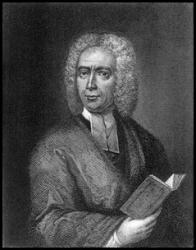
1674 - 1748 Topics: Twenty Second Sunday after Trinity Author of "The saints on earth and those above" in Evangelical Lutheran hymnal Isaac Watts was the son of a schoolmaster, and was born in Southampton, July 17, 1674. He is said to have shown remarkable precocity in childhood, beginning the study of Latin, in his fourth year, and writing respectable verses at the age of seven. At the age of sixteen, he went to London to study in the Academy of the Rev. Thomas Rowe, an Independent minister. In 1698, he became assistant minister of the Independent Church, Berry St., London. In 1702, he became pastor. In 1712, he accepted an invitation to visit Sir Thomas Abney, at his residence of Abney Park, and at Sir Thomas' pressing request, made it his home for the remainder of his life. It was a residence most favourable for his health, and for the prosecution of his literary labours. He did not retire from ministerial duties, but preached as often as his delicate health would permit. The number of Watts' publications is very large. His collected works, first published in 1720, embrace sermons, treatises, poems and hymns. His "Horae Lyricae" was published in December, 1705. His "Hymns" appeared in July, 1707. The first hymn he is said to have composed for religious worship, is "Behold the glories of the Lamb," written at the age of twenty. It is as a writer of psalms and hymns that he is everywhere known. Some of his hymns were written to be sung after his sermons, giving expression to the meaning of the text upon which he had preached. Montgomery calls Watts "the greatest name among hymn-writers," and the honour can hardly be disputed. His published hymns number more than eight hundred. Watts died November 25, 1748, and was buried at Bunhill Fields. A monumental statue was erected in Southampton, his native place, and there is also a monument to his memory in the South Choir of Westminster Abbey. "Happy," says the great contemporary champion of Anglican orthodoxy, "will be that reader whose mind is disposed, by his verses or his prose, to imitate him in all but his non-conformity, to copy his benevolence to men, and his reverence to God." ("Memorials of Westminster Abbey," p. 325.) --Annotations of the Hymnal, Charles Hutchins, M.A., 1872. ================================= Watts, Isaac, D.D. The father of Dr. Watts was a respected Nonconformist, and at the birth of the child, and during its infancy, twice suffered imprisonment for his religious convictions. In his later years he kept a flourishing boarding school at Southampton. Isaac, the eldest of his nine children, was born in that town July 17, 1674. His taste for verse showed itself in early childhood. He was taught Greek, Latin, and Hebrew by Mr. Pinhorn, rector of All Saints, and headmaster of the Grammar School, in Southampton. The splendid promise of the boy induced a physician of the town and other friends to offer him an education at one of the Universities for eventual ordination in the Church of England: but this he refused; and entered a Nonconformist Academy at Stoke Newington in 1690, under the care of Mr. Thomas Rowe, the pastor of the Independent congregation at Girdlers' Hall. Of this congregation he became a member in 1693. Leaving the Academy at the age of twenty, he spent two years at home; and it was then that the bulk of the Hymns and Spiritual Songs (published 1707-9) were written, and sung from manuscripts in the Southampton Chapel. The hymn "Behold the glories of the Lamb" is said to have been the first he composed, and written as an attempt to raise the standard of praise. In answer to requests, others succeeded. The hymn "There is a land of pure delight" is said to have been suggested by the view across Southampton Water. The next six years of Watts's life were again spent at Stoke Newington, in the post of tutor to the son of an eminent Puritan, Sir John Hartopp; and to the intense study of these years must be traced the accumulation of the theological and philosophical materials which he published subsequently, and also the life-long enfeeblement of his constitution. Watts preached his first sermon when he was twenty-four years old. In the next three years he preached frequently; and in 1702 was ordained pastor of the eminent Independent congregation in Mark Lane, over which Caryl and Dr. John Owen had presided, and which numbered Mrs. Bendish, Cromwell's granddaughter, Charles Fleetwood, Charles Desborough, Sir John Hartopp, Lady Haversham, and other distinguished Independents among its members. In this year he removed to the house of Mr. Hollis in the Minories. His health began to fail in the following year, and Mr. Samuel Price was appointed as his assistant in the ministry. In 1712 a fever shattered his constitution, and Mr. Price was then appointed co-pastor of the congregation which had in the meantime removed to a new chapel in Bury Street. It was at this period that he became the guest of Sir Thomas Abney, under whose roof, and after his death (1722) that of his widow, he remained for the rest of his suffering life; residing for the longer portion of these thirty-six years principally at the beautiful country seat of Theobalds in Herts, and for the last thirteen years at Stoke Newington. His degree of D.D. was bestowed on him in 1728, unsolicited, by the University of Edinburgh. His infirmities increased on him up to the peaceful close of his sufferings, Nov. 25, 1748. He was buried in the Puritan restingplace at Bunhill Fields, but a monument was erected to him in Westminster Abbey. His learning and piety, gentleness and largeness of heart have earned him the title of the Melanchthon of his day. Among his friends, churchmen like Bishop Gibson are ranked with Nonconformists such as Doddridge. His theological as well as philosophical fame was considerable. His Speculations on the Human Nature of the Logos, as a contribution to the great controversy on the Holy Trinity, brought on him a charge of Arian opinions. His work on The Improvement of the Mind, published in 1741, is eulogised by Johnson. His Logic was still a valued textbook at Oxford within living memory. The World to Come, published in 1745, was once a favourite devotional work, parts of it being translated into several languages. His Catechisms, Scripture History (1732), as well as The Divine and Moral Songs (1715), were the most popular text-books for religious education fifty years ago. The Hymns and Spiritual Songs were published in 1707-9, though written earlier. The Horae Lyricae, which contains hymns interspersed among the poems, appeared in 1706-9. Some hymns were also appended at the close of the several Sermons preached in London, published in 1721-24. The Psalms were published in 1719. The earliest life of Watts is that by his friend Dr. Gibbons. Johnson has included him in his Lives of the Poets; and Southey has echoed Johnson's warm eulogy. The most interesting modern life is Isaac Watts: his Life and Writings, by E. Paxton Hood. [Rev. H. Leigh Bennett, M.A.] A large mass of Dr. Watts's hymns and paraphrases of the Psalms have no personal history beyond the date of their publication. These we have grouped together here and shall preface the list with the books from which they are taken. (l) Horae Lyricae. Poems chiefly of the Lyric kind. In Three Books Sacred: i.To Devotion and Piety; ii. To Virtue, Honour, and Friendship; iii. To the Memory of the Dead. By I. Watts, 1706. Second edition, 1709. (2) Hymns and Spiritual Songs. In Three Books: i. Collected from the Scriptures; ii. Composed on Divine Subjects; iii. Prepared for the Lord's Supper. By I. Watts, 1707. This contained in Bk i. 78 hymns; Bk. ii. 110; Bk. iii. 22, and 12 doxologies. In the 2nd edition published in 1709, Bk. i. was increased to 150; Bk. ii. to 170; Bk. iii. to 25 and 15 doxologies. (3) Divine and Moral Songs for the Use of Children. By I. Watts, London, 1715. (4) The Psalms of David Imitated in the Language of the New Testament, And apply'd to the Christian State and Worship. By I. Watts. London: Printed by J. Clark, at the Bible and Crown in the Poultry, &c, 1719. (5) Sermons with hymns appended thereto, vol. i., 1721; ii., 1723; iii. 1727. In the 5th ed. of the Sermons the three volumes, in duodecimo, were reduced to two, in octavo. (6) Reliquiae Juveniles: Miscellaneous Thoughts in Prose and Verse, on Natural, Moral, and Divine Subjects; Written chiefly in Younger Years. By I. Watts, D.D., London, 1734. (7) Remnants of Time. London, 1736. 454 Hymns and Versions of the Psalms, in addition to the centos are all in common use at the present time. --Excerpts from John Julian, Dictionary of Hymnology (1907) ================================== Watts, I. , p. 1241, ii. Nearly 100 hymns, additional to those already annotated, are given in some minor hymn-books. --John Julian, Dictionary of Hymnology, Appendix, Part II (1907) ================= Watts, I. , p. 1236, i. At the time of the publication of this Dictionary in 1892, every copy of the 1707 edition of Watts's Hymns and Spiritual Songs was supposed to have perished, and all notes thereon were based upon references which were found in magazines and old collections of hymns and versions of the Psalms. Recently three copies have been recovered, and by a careful examination of one of these we have been able to give some of the results in the revision of pp. 1-1597, and the rest we now subjoin. i. Hymns in the 1709 ed. of Hymns and Spiritual Songs which previously appeared in the 1707 edition of the same book, but are not so noted in the 1st ed. of this Dictionary:— On pp. 1237, L-1239, ii., Nos. 18, 33, 42, 43, 47, 48, 60, 56, 58, 59, 63, 75, 82, 83, 84, 85, 93, 96, 99, 102, 104, 105, 113, 115, 116, 123, 124, 134, 137, 139, 146, 147, 148, 149, 162, 166, 174, 180, 181, 182, 188, 190, 192, 193, 194, 195, 197, 200, 202. ii. Versions of the Psalms in his Psalms of David, 1719, which previously appeared in his Hymns and Spiritual Songs, 1707:— On pp. 1239, U.-1241, i., Nos. 241, 288, 304, 313, 314, 317, 410, 441. iii. Additional not noted in the revision:— 1. My soul, how lovely is the place; p. 1240, ii. 332. This version of Ps. lxiv. first appeared in the 1707 edition of Hymns & Spiritual Songs, as "Ye saints, how lovely is the place." 2. Shine, mighty God, on Britain shine; p. 1055, ii. In the 1707 edition of Hymns & Spiritual Songs, Bk. i., No. 35, and again in his Psalms of David, 1719. 3. Sing to the Lord with [cheerful] joyful voice, p. 1059, ii. This version of Ps. c. is No. 43 in the Hymns & Spiritual Songs, 1707, Bk. i., from which it passed into the Ps. of David, 1719. A careful collation of the earliest editions of Watts's Horae Lyricae shows that Nos. 1, 7, 9, 10, 11, 12, 14, 16, p. 1237, i., are in the 1706 ed., and that the rest were added in 1709. Of the remaining hymns, Nos. 91 appeared in his Sermons, vol. ii., 1723, and No. 196 in Sermons, vol. i., 1721. No. 199 was added after Watts's death. It must be noted also that the original title of what is usually known as Divine and Moral Songs was Divine Songs only. --John Julian, Dictionary of Hymnology, New Supplement (1907) =========== See also in: Hymn Writers of the Church

Charles Wesley

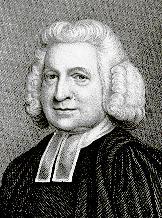
1707 - 1788 Topics: Twenty Second Sunday after Trinity Author of "The saints on earth and those above" in Evangelical Lutheran hymnal Charles Wesley, M.A. was the great hymn-writer of the Wesley family, perhaps, taking quantity and quality into consideration, the great hymn-writer of all ages. Charles Wesley was the youngest son and 18th child of Samuel and Susanna Wesley, and was born at Epworth Rectory, Dec. 18, 1707. In 1716 he went to Westminster School, being provided with a home and board by his elder brother Samuel, then usher at the school, until 1721, when he was elected King's Scholar, and as such received his board and education free. In 1726 Charles Wesley was elected to a Westminster studentship at Christ Church, Oxford, where he took his degree in 1729, and became a college tutor. In the early part of the same year his religious impressions were much deepened, and he became one of the first band of "Oxford Methodists." In 1735 he went with his brother John to Georgia, as secretary to General Oglethorpe, having before he set out received Deacon's and Priest's Orders on two successive Sundays. His stay in Georgia was very short; he returned to England in 1736, and in 1737 came under the influence of Count Zinzendorf and the Moravians, especially of that remarkable man who had so large a share in moulding John Wesley's career, Peter Bonier, and also of a Mr. Bray, a brazier in Little Britain. On Whitsunday, 1737, [sic. 1738] he "found rest to his soul," and in 1738 he became curate to his friend, Mr. Stonehouse, Vicar of Islington, but the opposition of the churchwardens was so great that the Vicar consented that he "should preach in his church no more." Henceforth his work was identified with that of his brother John, and he became an indefatigable itinerant and field preacher. On April 8, 1749, he married Miss Sarah Gwynne. His marriage, unlike that of his brother John, was a most happy one; his wife was accustomed to accompany him on his evangelistic journeys, which were as frequent as ever until the year 1756," when he ceased to itinerate, and mainly devoted himself to the care of the Societies in London and Bristol. Bristol was his headquarters until 1771, when he removed with his family to London, and, besides attending to the Societies, devoted himself much, as he had done in his youth, to the spiritual care of prisoners in Newgate. He had long been troubled about the relations of Methodism to the Church of England, and strongly disapproved of his brother John's "ordinations." Wesley-like, he expressed his disapproval in the most outspoken fashion, but, as in the case of Samuel at an earlier period, the differences between the brothers never led to a breach of friendship. He died in London, March 29, 1788, and was buried in Marylebone churchyard. His brother John was deeply grieved because he would not consent to be interred in the burial-ground of the City Road Chapel, where he had prepared a grave for himself, but Charles said, "I have lived, and I die, in the Communion of the Church of England, and I will be buried in the yard of my parish church." Eight clergymen of the Church of England bore his pall. He had a large family, four of whom survived him; three sons, who all became distinguished in the musical world, and one daughter, who inherited some of her father's poetical genius. The widow and orphans were treated with the greatest kindness and generosity by John Wesley. As a hymn-writer Charles Wesley was unique. He is said to have written no less than 6500 hymns, and though, of course, in so vast a number some are of unequal merit, it is perfectly marvellous how many there are which rise to the highest degree of excellence. His feelings on every occasion of importance, whether private or public, found their best expression in a hymn. His own conversion, his own marriage, the earthquake panic, the rumours of an invasion from France, the defeat of Prince Charles Edward at Culloden, the Gordon riots, every Festival of the Christian Church, every doctrine of the Christian Faith, striking scenes in Scripture history, striking scenes which came within his own view, the deaths of friends as they passed away, one by one, before him, all furnished occasions for the exercise of his divine gift. Nor must we forget his hymns for little children, a branch of sacred poetry in which the mantle of Dr. Watts seems to have fallen upon him. It would be simply impossible within our space to enumerate even those of the hymns which have become really classical. The saying that a really good hymn is as rare an appearance as that of a comet is falsified by the work of Charles Wesley; for hymns, which are really good in every respect, flowed from his pen in quick succession, and death alone stopped the course of the perennial stream. It has been the common practice, however for a hundred years or more to ascribe all translations from the German to John Wesley, as he only of the two brothers knew that language; and to assign to Charles Wesley all the original hymns except such as are traceable to John Wesley through his Journals and other works. The list of 482 original hymns by John and Charles Wesley listed in this Dictionary of Hymnology have formed an important part of Methodist hymnody and show the enormous influence of the Wesleys on the English hymnody of the nineteenth century. -- Excerpts from John Julian, Dictionary of Hymnology (1907) ================== Charles Wesley, the son of Samuel Wesley, was born at Epworth, Dec. 18, 1707. He was educated at Westminster School and afterwards at Christ Church, Oxford, where he graduated M.A. In 1735, he took Orders and immediately proceeded with his brother John to Georgia, both being employed as missionaries of the S.P.G. He returned to England in 1736. For many years he engaged with his brother in preaching the Gospel. He died March 29, 1788. To Charles Wesley has been justly assigned the appellation of the "Bard of Methodism." His prominence in hymn writing may be judged from the fact that in the "Wesleyan Hymn Book," 623 of the 770 hymns were written by him; and he published more than thirty poetical works, written either by himself alone, or in conjunction with his brother. The number of his separate hymns is at least five thousand. --Annotations of the Hymnal, Charles Hutchins, M.A., 1872.
It looks like you are using an ad-blocker. Ad revenue helps keep us running. Please consider white-listing Hymnary.org or getting Hymnary Pro to eliminate ads entirely and help support Hymnary.org.