You help make Hymnary.org possible. More than 10 million people from 200+ countries found hymns, liturgical resources and encouragement on Hymnary.org in 2025, including you. Every visit affirms the global impact of this ministry.

If Hymnary has been meaningful to you this year, would you take a moment today to help sustain it? A gift of any size—paired with a note of encouragement if you wish—directly supports the server costs, research work and curation that keep this resource freely available to the world.

Give securely online today, or mail a check to:
Hymnary.org
Calvin University
3201 Burton Street SE
Grand Rapids, MI 49546

Thank you for your partnership, and may the hope of Advent fill your heart.

Search Results

Topics:tenth+sunday+after+trinity

Planning worship? Check out our sister site, ZeteoSearch.org, for 20+ additional resources related to your search.

Texts

text icon
Text authorities
TextPage scansFlexScoreFlexPresent

Spirit Divine, attend our Pray'r

Author: Andrew Reed Appears in 402 hymnals Topics: Tenth Sunday after Trinity Lyrics: 1 Spirit divine, attend our prayer, And make our hearts Thy home; Descend with all Thy gracious pow'r; O come, great Spirit, come. 2 Come as the light--to us reveal Our sinfulness and woe, And lead us in those paths of life, Where all the righteous go. 3 Come as the fire, and purge our hearts Like sacrificial flame; Let ev'ry soul an off'ring be To our Redeemer's name. 4 Come as the dove, and spread Thy wings, The wings of peaceful love, And let the Church on earth become Blest as the Church above. Used With Tune: EAGLEY
TextPage scans

God calling yet!--shall I not hear?

Author: G. Tersteegen Meter: 8.8.8.8 Appears in 436 hymnals Topics: The Church Year Tenth Sunday after Trinity ; The Church Year Tenth Sunday after Trinity Lyrics: 1 God calling yet!--shall I not hear? Earth's pleasures shall I still hold dear? Shall life's swift passing years all fly, And still my soul in slumbers lie? 2 God calling yet!--shall I not rise? Can I His loving voice despise, And basely His kind care repay? He calls me still; can I delay? 3 God calling yet! and shall He knock And I my heart the closer lock? He still is waiting to receive, And shall I dare His Spirit grieve? 4 God calling yet!--and shall I give No heed, but still in bondage live? I wait, but He does not forsake; He calls me still: My heart, awake! 5 Ah, yield Him all: in Him confide: Where but with Him doth peace abide? Break loose, let earthly bonds be riven, And let the spirit rise to heaven! 6 God calling yet!--I cannot stay; My heart I yield without delay; Vain world, farewell! from thee I part; The voice of God hath reached my heart! Used With Tune: [God calling yet! shall I not hear?]
TextPage scans

Den Idræt Gud er tækkelig

Author: Godfred Sacer; Søren Jonassøn Appears in 7 hymnals Topics: Tenth Sunday after Trinity Sunday Lyrics: 1 Den Idræt Gud er tækkelig, Som Grund i Ordet haver; Har du da, Jesus, lovet mig Din Aand med rige Gaver, Saa kommer jeg til dig: Giv det, du loved mig! Du, som med Sandheds Mund Har talt af Hjertens Grund, Og ei i Løgn er funden. 2 Her er jeg, foreholder dig Dit Ord med Suk og Raaben, Og i dit Løfte glæder mig: Gjør Hjerte-Døren aaben! Og send den Trøstermand, Som billig kaldes kan En Ild, en Dug, et Baand, Et Pant, en Brønd, en Aand, En Salve og Guds Finger! 3 Kom Trøster, trøst min Banghed vel! Kom Ild med salig Varme! Kom Dug og læsk min Tørre Sjæl! Kom Baand, forbind mig Arme! Kom Aand og ytre dig! Kom Pant, forvisse mig, Kom Brønd og Sjælen kvæg! Kom Salve, Hjertet læg! Guds Finger kom med Styrke! 4 Kom store Gud, o Helligaand, Fra høie Himmelbolig! Giv, at i Liv og Død jeg kan Ved Jesus hænge trolig! Nyt Hjerte mig bered, Og giv Bodfærdighed! Vær nu min Sjæle-Ro, Gjør mig bedrøvet, fro, Gjør mine Veie rene! 5 I mig min Jesu Miskundhed Med gylden Bogstav skrive, Fast Tro, ret Haab, sand Kjærlighed, Godt Taal, glad Hjerte give! Naar Tungen priser dig, Mit Hjerte rør i mig, Ja lad min Sjæl og Aand Til Livsens søde Land Med stadig Længsel tragte! 6 Oplys, du Kjærlighedens Lys, Mit Hjertes mørke Hytte! Bo selv i dette ringe Hus, Og ikke deraf flytte! O Gud, jeg beder dig, Styrk du mig kraftelig, Min Glæde, Ro og Rast, Min Trøst, om Hjertet brast, Vær du i Død o Live! 7 Uddriv mit egenraadig' Sind, Lær mig mit Kjød at dræbe, Tag min modvillig' Vilje ind, Og lad mig altid stræve, At holde stadig ved I Jesu Kjærlighed, Og altid færdig staa Fra Verdens Ørk af gaa, Og Himlen eftertragte.

Tunes

tune icon
Tune authorities
Page scansAudio

SCHMÜCKE DICH, O LIEBE SEELE

Meter: 8.7 Appears in 160 hymnals Topics: Tenth Sunday after Trinity Tune Key: E Flat Major Incipit: 32123 54353 43213 Used With Text: Holy Ghost, dispel our sadness
Page scansAudio

BACA

Appears in 68 hymnals Composer and/or Arranger: William Batchelder Bradbury Topics: Tenth Sunday after Trinity Tune Key: E Major Incipit: 33331 11222 34432 Used With Text: Behold a stranger at the door!
Page scansFlexScoreAudio

ST. MARY'S

Meter: 8.6.8.6 Appears in 68 hymnals Topics: Tenth Sunday after Trinity Tune Key: d minor Incipit: 13211 76557 35435 Used With Text: Come, Holy Spirit, heavenly Dove

Instances

instance icon
Published text-tune combinations (hymns) from specific hymnals
TextPage scan

Her udi Synd at dvæle

Author: Berthe Aarflot Hymnal: Salmebog for Lutherske Kristne i Amerika #640 (1919) Topics: Tenth Sunday after Trinity Sunday Lyrics: 1 Her udi Synd at dvæle, Det inte hjælpe kan. Ak, dyrekjøbte Sjæle, Ak griber Sagen an! Kort Tid her er tilbage, Hvo, som vil Maalet naa, Han maa i Naadens Dage Ei længer ledig staa. 2 Hvor Meget er at gjøre, Som angaar Sjælens Sag, Det Gamle at afføre Og døde Dag for Dag; Skal Sjælen smykket blive Til Lammets Bryllupsfest, Da maa den her i Live Berede sig som bedst. 3 Hvad Løn kan den vel vente, Naar Dagen er forbi, Som Mørkets Fyrste tjente Og gik den brede Sti? Hvo Naadens tid misbrugte Og spildte Jesu Blod Han høster bitre Frugter Af Syndens onde Rod. 4 Hvor godt det er at være En Jesu kristi Brud, Og daglig Længsel bære At komme til sin Gud, Og skjønt man maa omvanke En Stund i Graadens Dal, Dog have Sind og Tanke henvendt til Himlens Sal. 5 O Jesu, Frelser kjære Ak gjør mig snart bered! Hos dig er godt at være, O, und mig der et Sted! her finder jeg ei Hvile For mit bekjemte Sind; thi vil jeg til dig ile; O, tag din Due ind! 6 I søde Himmerige Er Kronen alt bestemt For dem, som lovlig stride Og har sin lampe trændt Som agte det for Ære At blive Jesus tro' De skulle hos ham være I evig Fryd og Ro. 7 Hvad er al Verdens Glæde Og jordisk Herlighed Imod det Æresæde, I Himlen er bered! O, gid jeg maatte vinde Og faa den Glæde fat, Da fik jeg se og finde Min søde Sjæleskat! 8 Nu er det Tid at vaage, Snart kommer Dødens nær; Bort Sikkerhedens Taage! hvo, som sin Sjæl har kjær, Han maa ei længer dvæle I saadan vigtig Sag; Ak, redder eders Sjæle, Mens det er naadens Dag1 Languages: Norwegian
Text

Jeg slipper Jesum ei

Author: Ukj.; Ukj. Hymnal: M. B. Landstads Kirkesalmebog og "Nokre Salmar" ved Professor Dr. E. Blix, samt følgende tillæg #370 (1897) Topics: Tenth Sunday after Trinity Sunday High Mass Lyrics: 1 Jeg slipper Jesum ei, I Jesu vil jeg blive; Han i Begyndelsen Mig Livet vilde give; Det Liv, som han mig gav, Af ham sit Ophold faar, Naar Verden falder om Og ganske undergaar. 2 Jeg slipper Jesum ei, Med Jesu vil jeg lide, Han lindrer mig mit Kors Med Trøst i rette Tide, Det mig til Gode sker; Naar Jesus er hos mig, Han Korsets Bitterhed Skal gjøre taalelig. 3 Jeg slipper Jesum ei, Med Jesu vil jeg kjæmpe Mod Verden, Djævelen, Ja Døden vil jeg dæmpe; Naar de bestorme mig, Min Jesus hjælper godt, For mig han kjæmper selv, Og gjør dem kun til Spot. 4 Jeg slipper Jesum ei, Med Jesu er jeg rede At dø; er han hos mig, Da vil han ei tilstede, Mig Døden døde skal, Nei, den en Himmel-Vei Da bliver mig, hvorfor Jeg slipper Jesum ei. 5 Jeg slipper Jesum ei; Thi kan jeg ham kun have, Saa har jeg her og hist Den allerbedste Gave. I al den Ting, jeg gjør, Er Jesus ikke med, Saa faar jeg ingen Frugt Og nyder aldrig Fred. 6 Jeg slipper Jesum ei, Fra ham vil jeg ei træde, Vi sammenbundne er Med Kjærlighedens Kjæde Saa fast, som noget kan Tilsammenføie sig, Og han skal drage mig Med sig til Himmerig. 7 Jeg slipper Jesum ei, Hans Kjærlighed mig driver, Jeg sover eller jeg Opvaagner, Jesus bliver Mit ene faste Maal, Og ingen anden Vei Jeg har til Salighed,– Jeg slipper Jesum ei. Languages: Norwegian
TextPage scan

Vor Brudgom ei længe nu borte vil blive

Author: Brorson Hymnal: Salmebog for Lutherske Kristne i Amerika #419 (1919) Topics: Tenth Sunday after Trinity Sunday Lyrics: 1 Vor Brudgom ei længe nu borte vil blive. O, kjøber dog Olje, og træder paa Vagt, Ei mere vor Kristendom lunken at drive, Men altid at vaage, som Jesus har sagt! Staar bundne om Lænder, Med Stave i Hænder, Som de, der fa Verden hver Time vil træde, Og haste at finde den evige Glæde! 2 I Trætte og Svage af Trængselens Tørke, Ak, trænker paa Himmelmens Liggendefæ, Og beder alvorlig, at jesus vil styrke De rystende Hænder og bævende Knæ! At ingen skal slippe Den evige Klippe, At ingen tilbage til Sodoma vender, Og Løbet med Skamme paa Halvveien ender. 3 Hvo Haanden begyndte at lægge paaPloven, Og, ser sig tilbage, gaa frem dog igjen! Frimodig, ei bange, ei heller forvoven, Thi begge er ikke Bestandigheds Ven. Hver stride saa længe, At Sjælen kan trænge Sig ind i den evige, himmelske Bolig, Som Jesus de Stridende lov saa trolig! 4 Op, op dog, I Salved! Kommer tillige, Thi Kongen gaar eder med Kronen imod1 med ham skal I prange i Himmelens Rige, Og Glæden skal være en Evigheds Flod. Hvo her kun faar vundet, Hans Krans er alt bundet, En Krone, der funkler med klarere Strimer, End solen om Middags og Midsommers timer! 5 Hid! lader mig Taarerne eder afviske! Saa kommer den mildeste Jesus til Ords: Her skal I nu sidde og eder forfriske Med Abraham, Isak og Jakob til Bords!– O, giv mig da Kræfter, Min Jesus, herefter Mig altid kun til dig at holde og vende, Og finde en salig og glædelig Ende! Languages: Norwegian

People

person icon
Authors, composers, editors, etc.

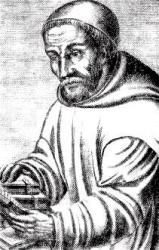
Rabanus Maurus

776 - 856 Topics: Tenth Sunday after Trinity Author of "Come, O Creator, Sprit blest!" in Evangelical Lutheran hymnal Rabanus Maurus (c. 776-856) or Hrabanus Magnentius Maurus, was born of noble parents at Mainz, and educated at Fulda and Tours under Alcuin, who is reputed to have given him the surname, Maurus, after the saint of that name. In 803, he became director of the school at the Benedictine Abbey at Fulda. He was ordained priest in 814, spending the following years in a pilgrimage to Palestine. In 822, he became Abbott at Fulda, retiring in 842. In 847, he became archbishop of Mainz. He died at Winkel on the Rhine, February 4, 856. This distinguished Carolingian poet-theologian wrote extensive biblical commentaries, the Encyclopaedic De Universo, De Institutione Clericorum, and other works which circulated widely during the Middle Ages. Some of his poems, with English translations, are in Helen Waddell's Mediaeval Latin Lyrics. He is the author of: O Come, Creator Spirit, come Christ, the fair glory of the holy angels Come, Holy Ghost, our souls inspire Come, Holy Ghost, Creator blest Creator Spirit, by whose aid --The Hymnal 1940 Companion, New York: The Church Pension Fund (1949) =========================== Hrabanus (Rabanus) Maurus, son of one Ruthard, was born probably at Mainz, about 776. At an early age he was sent to the Monastery of Fulda to receive a religious education. In 801 he was ordained Deacon, and the following year he went to the monastic school of St. Martin at Tours to study under Alcuin, a celebrated teacher of that time, who gave to Hrabanus the name of Maurus to which Hrabanus added Magnentius. On his return to Fulda in 804 he became the head of the school connected with the Monastery. Towards him Ratgar the abbot showed great unkindness, which arose mainly from the fact that Ratgar demanded the students to build additions to the monastery, whilst Hrabanus required them at the same time for study. Hrabanus had to retire for a season, but Ratgar's deposition by Ludwig the Pious, in 817, opened up the way for his return, and the reopening of the school In the meantime, in 814, he had been raised to the Priesthood. Egil, who succeeded Ratgar as abbot, died in 822, and Hrabanus was appointed in his stead. This post he held for some time, until driven forth by some of the community. In 847, on the death of Archbishop Otgar, Ludwig the younger, with whom Hrabanus had sided in his demand for German independence as against the imperialism of his elder brother Lothar, rewarded him with the Archbishopric of Mainz, then the metropolitan see of Germany. He held this appointment to his death on Feb. 4, 856. He was buried first in St. Alban's, Mainz, and then, during the early days of the Reformation, in St. Maurice, Halle, possibly because of the opposition he is known to have made to the doctrine of Transubstantiation. With German historians Hrabanus is regarded as the father of the modern system of education in that country. His prose works were somewhat numerous, but the hymns with which his name is associated are few. We have the "Christe sanctorum decus Angelorum”; “Tibi Christe, splendor Patris”; and the "Veni Creator Spiritus”; but recent research convinces us that the ascription in each case is very doubtful; and none are received as by Hrabanus in Professor Dümmler's edition of the Carmina of Hrabanus in the Poetae Latini aevi Carolini, vol. ii. 1884. Dümmler omits them even from the "hymns of uncertain origin." --John Julian, Dictionary of Hymnology, Appendix I (1907) ======================= http://en.wikipedia.org/wiki/Rabanus_Maurus

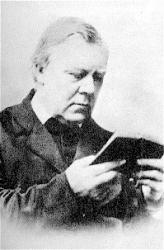
Edward Caswall

1814 - 1878 Topics: Tenth Sunday after Trinity Translator of "Come, O Creator, Sprit blest!" in Evangelical Lutheran hymnal Edward Caswall was born in 1814, at Yately, in Hampshire, where his father was a clergyman. In 1832, he went to Brasenose College, Oxford, and in 1836, took a second-class in classics. His humorous work, "The Art of Pluck," was published in 1835; it is still selling at Oxford, having passed through many editions. In 1838, he was ordained Deacon, and in 1839, Priest. He became perpetural Curate of Stratford-sub-Castle in 1840. In 1841, he resigned his incumbency and visited Ireland. In 1847, he joined the Church of Rome. In 1850, he was admitted into the Congregation of the Oratory at Birmingham, where he has since remained. He has published several works in prose and poetry. --Annotations of the Hymnal, Charles Hutchins, M.A. 1872 ===================== Caswall, Edward, M.A., son of the Rev. R. C. Caswall, sometime Vicar of Yately, Hampshire, born at Yately, July 15, 1814, and educated at Brasenose College, Oxford, graduating in honours in 1836. Taking Holy Orders in 1838, he became in 1840 Incumbent of Stratford-sub-Castle, near Salisbury, and resigned the same in 1847. In 1850 (Mrs. Caswall having died in 1849) he was received into the Roman Catholic communion, and joined Dr. Newman at the Oratory, Edgbaston. His life thenceforth, although void of stirring incidents, was marked by earnest devotion to his clerical duties and a loving interest in the poor, the sick, and in little children. His original poems and hymns were mostly written at the Oratory. He died at Edgbaston, Jan. 2, 1878, and was buried on Jan. 7 at Redwall, near Bromsgrove, by his leader and friend Cardinal Newman. Caswall's translations of Latin hymns from the Roman Breviary and other sources have a wider circulation in modern hymnals than those of any other translator, Dr. Neale alone excepted. This is owing to his general faithfulness to the originals, and the purity of his rhythm, the latter feature specially adapting his hymns to music, and for congregational purposes. His original compositions, although marked by considerable poetical ability, are not extensive in their use, their doctrinal teaching being against their general adoption outside the Roman communion. His hymns appeared in:— (1) Lyra Catholica, which contained 197 translations from the Roman Breviary, Missal, and other sources. First ed. London, James Burns, 1849. This was reprinted in New York in 1851, with several hymns from other sources added thereto. This edition is quoted in the indices to some American hymn-books as Lyra Cath., as in Beecher's Plymouth Collection, 1855, and others. (2) Masque of Mary, and Other Poems, having in addition to the opening poem and a few miscellaneous pieces, 53 translations, and 51 hymns. 1st ed. Lon., Burns and Lambert, 1858. (3) A May Pageant and Other Poems, including 10 original hymns. Lon., Burns and Lambert, 1865. (4) Hymns and Poems, being the three preceding volumes embodied in one, with many of the hymns rewritten or revised, together with elaborate indices. 1st ed. Lon., Burns, Oates & Co., 1873. Of his original hymns about 20 are given in the Roman Catholic Crown of Jesus Hymn Book, N.D; there are also several in the Hymns for the Year, N.D., and other Roman Catholic collections. --John Julian, Dictionary of Hymnology (1907) ====================== Caswall, E. , p. 214, ii. Additional original hymns by Caswall are in the Arundel Hymns, 1902, and other collections. The following are from the Masque of Mary, &c, 1858:— 1. Christian soul, dost thou desire. After Holy Communion. 2. Come, let me for a moment cast. Holy Communion. 3. O Jesu Christ [Lord], remember. Holy Communion. 4. Oft, my soul, thyself remind. Man's Chief End. 5. Sleep, Holy Babe. Christmas. Appeared in the Rambler, June 1850, p. 528. Sometimes given as "Sleep, Jesus, sleep." 6. The glory of summer. Autumn. 7. This is the image of the queen. B. V. M. His "See! amid the winter's snow,” p. 1037, i., was published in Easy Hymn Tunes, 1851, p. 36. In addition the following, mainly altered texts or centos of his translations are also in common use:— 1. A regal throne, for Christ's dear sake. From "Riches and regal throne," p. 870, ii. 2. Come, Holy Ghost, Thy grace inspire. From "Spirit of grace and union," p. 945, i. 3. Hail! ocean star, p. 99, ii,, as 1873. In the Birmingham Oratory Hymn Book, 1850, p. 158. 4. Lovely flow'rs of martyrs, hail. This is the 1849 text. His 1873 text is "Flowers of martyrdom," p. 947, i. 5. None of all the noble cities. From "Bethlehem! of noblest cities," p. 946, ii. 6. O Jesu, Saviour of the World. From “Jesu, Redeemer of the world," p. 228, ii. 7. 0 Lady, high in glory raised. From "O Lady, high in glory, Whose," p. 945, i. The Parochial Hymn Book, 1880, has also the following original hymns by Caswall. As their use is confined to this collection, we give the numbers only:— IS os. 1, 2, 3, 159 (Poems, 1873, p. 453), 209 (1873, p. 288), 299, 324 (1873, p. 323), 357, 402, 554, 555, 558, 569 (1873, p. 334). These are from his Masque of Mary 1858. Nos. 156, 207 (1873, p. 296), 208 (1873, p. 297), 518. These are from his May Pageant, 1865. As several of these hymns do not begin with the original first lines, the original texts are indicated as found in his Poems, 1873. [Rev. James Mearns, M.A.] --John Julian, Dictionary of Hymnology, New Supplement (1907)

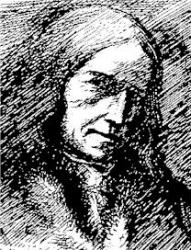
Gerhardt Tersteegen

1697 - 1769 Person Name: G. Tersteegen Topics: The Church Year Tenth Sunday after Trinity ; The Church Year Tenth Sunday after Trinity Author of "God calling yet!--shall I not hear?" in The Lutheran Hymnary Tersteegen, Gerhard, a pious and useful mystic of the eighteenth century, was born at Mörs, Germany, November 25, 1697. He was carefully educated in his childhood, and then apprenticed (1715) to his older brother, a shopkeeper. He was religiously inclined from his youth, and upon coming of age he secured a humble cottage near Mühlheim, where he led a life of seclusion and self-denial for many years. At about thirty years of age he began to exhort and preach in private and public gatherings. His influence became very great, such was his reputation for piety and his success in talking, preaching, and writing concerning spiritual religion. He wrote one hundred and eleven hymns, most of which appeared in his Spiritual Flower Garden (1731). He died April 3, 1769. Hymn Writers of the Church by Charles S. Nutter and Wilbur F. Tillett, 1911 ==================================================== Gerhardt Tersteegen or ter Stegen, was born at Moers, Netherlands [sic. Germany] , November 25, 1697. He was destined for the Reformed ministry, but after his father's death when the boy was only six, his mother was unable to send him to the university. He studied at the Gymnasium in Moers, and then earned a meager living as a silk weaver, sharing his frugal daily fare with the poor. Malnutrition and privation undermined his health to such an extent that he suffered a serious depression for some five years, following which he wrote a new covenant with God, signing it in his own blood. A strong mystic, he did not attend the services of the Reformed Church after 1719. Although forming no sect of his own, he became well known as a religious teacher and leader. His house was known as "The Pilgrim's Cottage" -- a retreat for men seeking a way of life, while he himself was known as "the physician of the poor and forsaken." Barred from preaching in his own country until 1750, he visited Holland annually from 1732 to 1755, holding meetings. In addition to his other labors he carried on a tremendous correspondence. Overwork resulted in physical breakdown, so that during the latter years of his life he could speak only to small gatherings. He died at Muhlheim on April 3, 1769. One of the three most important of Reformed hymn writers, he is also regarded as the chief representative of the mystics. He wrote 111 hymns. His important Geisliches Blumengartlein was published in 1729. H.E. Govan published The Life of Gerhard Tersteegen, with selctions from his writings, in 1902. --The Hymnal 1940 Companion =========================== Tersteegen, Gerhard, son of Heinrich Tersteegen (otherwise ter Stegen or zur Stiege), merchant at Mörs (Meurs), in Rhenish Prussia, was born at Mors, Nov. 25, 1697. His parents intended that he should become a minister of the Reformed Church in Germany. His father however died in 1703, and his mother found that after giving him a thorough classical training in the Latin school at Mörs she was unable to afford the cost of his University course. He was accordingly apprenticed, in 1713, to his brother-in-law, a merchant at Mühlheim on the Ruhr, and in 1717 started in business on his own account, at Mühlheim. As he found his time much broken up, and his opportunities of meditation few, he gave up his business in 1719; and, after a short trial of linen weaving, took up the easier and much more lucrative occupation of weaving silk ribbons. During the years 1719-24 he passed through a period of spiritual depression, at the end of which his faith in the reconciling grace of Christ became assured (see No. xxxiv. below), and on Maundy Thursday, 1724, he wrote out a solemn covenant with God which he signed with his own blood. Previous to this, even before 1719, he had ceased to attend the ordinary services of the Reformed Church; and also absented himself from Holy Communion on the ground that he could not in conscience communicate along with open sinners. About the beginning of 1725 he began to speak at the prayer meetings which had been held at Mühlheim, since 1710, by Wilhelm Hoffmann, who was a candidate of theology (licensed preacher) of the Reformed Church. Tersteegen soon became known as a religious teacher among the "Stillen im Lande," as the attenders on these meetings were called, and in 1728 gave up his handicraft in order to devote himself entirely to the translation of works by medieval and recent Mystics and Quietists, including Madame Guyon and others, and the composition of devotional books, to correspondence on religious subjects, and to the work of a spiritual director of the "awakened souls." From this date to his death he was supported by a small regular income which was subscribed by his admirers and friends. About 1727 a house at Otterbeck, between Mühlheim and Elberfeld, was set apart as a "Pilgerhütte," where the "awakened souls" could go into a spiritual retreat, under the direction of Tersteegen. This house, with accommodation for eight persons, was retained until about 1800. Tersteegen, however, did not confine himself to Mühlheim, but travelled over the district, addressing gatherings of like-minded Christians, giving special attention to Elberfeld, Barmen, Solingen, and Crefeld. From 1732 to 1755 he also went regularly every year to Holland, to visit his spiritual kinsfolk at Amsterdam and elsewhere. From 1730 to 1750 a law against conventicles was strictly enforced, and Tersteegen could not hold meetings except on his visits to Holland. During this period he removed to a house which had been Wilhelm Hoffmann's, where he preached, and provided food and simple medicines for the poor. After 1750 he resumed his public speaking until 1756, when he overstrained himself, and had to confine himself to the smallest gatherings absolutely. In 1769, dropsy set in, and after patient endurance for a season he died on April 3, 1769, at Mühlheim (Koch, vi. 46). Up to the end of his life Tersteegen remained outside the Reformed Church, but never set up a sect of his own. After his death his followers as a rule reunited themselves with it, especially when a less formal type of religion began to prevail therein. Tersteegen's most important hymnological work was his Geistliches Blümen-Gärtlein, of which many editions were published. Tersteegen ranks as one of the three most important hymnwriters associated with the Reformed Church in Germany, the other two being F. A. Lampe and Joachim Neander. He is however more closely allied, both as a Mystic and as a Poet, with Johann Scheffler than with either of his co-religionists. He almost equals Scheffler in power of expression and beauty of form, and if Scheffler has more pictorial grace, and a more vivid imagination, Tersteegen has more definiteness of teaching, a firmer grasp of the Christian verities, and a greater clearness in exposition. Inner union of the soul with God and Christ, the childlike simplicity and trust which this brings, renunciation of the world and of self, and daily endeavour to live as in the presence of God and in preparation for the vision of God, are the keynotes of his hymns. To his intense power of realising the unseen, his clear and simple diction, and the evident sincerity with which he sets forth his own Christian experience, his hymns owe much of their attractiveness and influence. During his lifetime they did not come much into use except through the Harfenspiel, as above, and they did not meet the taste of compilers during the Rationalistic period. But since Bunsen in his Yersuch, 1833, and Knapp in his Evangelischer Lieder-Schatz, 1837, brought his hymns once more into notice they have been received in greater or less measure into almost all the German hymnbooks, among the Lutherans as well as among the Reformed, the most popular of all being his “Gott ist gegenwärtig". A number of Tersteegen's hymns are noted under their own first lines. They appeared, almost all for the first time, in the successive editions of his Geistliches Blümen-Gärtlein, viz., in the 1st ed., 1729; 2nd ed., 1735; 3rd ed., 1738; 4th ed., 1745; 5th ed., 1751; 6th ed., 1757; 7th ed., 1768; and in each case (after 1729) in the Third Book of that work. Those which have passed into English are as follows:— i. Freue dich, du Kinder-Orden. Christmas. Translated as:— Little children, God above, 1858, p. 78. Another tr. is: "Children rejoice, for God is come to earth." By Miss Dunn, 1857, p. 30. ii. Jedes Herz will etwas lieben. Love to Christ. In the 4th ed., 1745, as above, Bk. iii., No. 70, in 8 stanzas of 4 lines, entitled "The Soul wishes to take Jesus as her best Beloved." Translated as:— 1. The heart of man must something love. A cento beginning with st. ii. “Though all the world my choice deride," is in Spurgeon's Our Own Hymn Book, 1866, and also in the Plymouth Collection, 1855, and other American hymnals. 2. Something every heart is loving. A full and good translation by Mrs. Bevan, in her Songs of Eternal Life, 1858, p. 58. iii. Jesu, der du bist alleine. Communion of Saints. In the 2nd ed., 1735, in 11 stanzas of 6 lines, entitled "Prayer on behalf of the brethren." Translated as:— Jesus, whom Thy Church doth own. By Miss Winkworth, omitting st. iii., in her Lyra Germanica, 2nd Ser., 1858, p. 99. iv. Jesu, mein Erbarmer! höre. Lent or Penitence. In the 2nd ed., 1735, in 12 stanzas of 6 lines, entitled "In outward and inward sufferings and Temptations." Translated as:— Jesus, pitying Saviour, hear me. In full, by Miss Winkworth, in her Lyra Germanica, 2nd Ser., 1858, p. 133. In her Christian Singer, 1869, p. 298, she gave st. ii., v., vi., beginning "Lost in darkness, girt with dangers." v. Nun so will ich denn mein Leben. Self-Surrender. Translated (omitting st. ii., iii., vi., x.) as:— 1. Lo! my choice is now decided. By Miss Cox, in her Sacred Hymns from the German, 1841, p. 125. Her translations of st. viii., ix., vii., altered and beginning, "One thing first and only knowing," are repeated in Hedge & Huntington's Hymns for the Church of Christ, Boston, U.S., 1853. 2. Now at last I end the strife. By Miss Winkworth, in herLyra Germanica, 2nd Ser., 1858. vi. 0 liebe Seele! könntst du werden. The Childlike Spirit. Translated as:— Soul! couldst thou, while on earth remaining. In Miss Cox'sHymns from German, 1864, p. 197, it begins "Soul, while on earth thou still remainest." Other trs. are: (1) "Wouldst thou, my soul, the secret find." By Lady E. Fortescue, 1843, p. 47. (2) “Dear soul, couldst thou become a child." By Miss Winkworth, 1855, p. 22. vii. Siegesfürste, Ehrenkönig. Ascension. Translated as:— Conquering Prince and Lord of Glory, By Miss Winkworth, omitting st. ii., in her Lyra Germanica, 2nd Ser., 1858, p. 48. viii. Wie gut ists, wenn man abgespehnt. Lent or Self-Renunciation. In the first edition, entitled "Of the sweetness of the hidden life of Christians." Translated as:— How sweet it is, when, wean'd from all. This is a good and full translation by S. Jackson, in his Life of Tersteegen, 1832 (1837, p. 417). Other hymns by Tersteegen which have been rendered into English are:— ix. Ach Gott, es taugt doch draussen nicht. On the Vanity of Earthly Things. Tr. as, "Ah God! the world has nought to please." By Miss Winkworth, 1869, p. 304. x. Ach, könnt ich stille sein. Peace in God. Translated as (1) "Oh! could I but be still." By Mrs. Bevan, 1859, p. 134. (2) "Ah, could I but be still." By Lady Durand, 1873, p. 77. xi. Allgenugsam Wesen. God's All-sufficiency . The trs. are (1) "Thou All-sufficient One! Who art." By Miss Warner, 1858, p. 601, repeated in Hymns of the Ages, Boston, U.S., 1865, p. 163. (2) "Thou, whose love unshaken." xii. Bald endet sich mein Pilgerweg. Eternal Life. Translated as “Weary heart, be not desponding." By Lady Durand, 1873, p. 84. xiii. Berufne Seelen! schlafet nicht. Lent. The translations are (1) "Ye sleeping souls, awake From dreams of carnal ease." By S. Jackson, in his Life of Tersteegen, 1832 (1837, p, 413). (2) "Sleep not, 0 Soul by God awakened." By Lady Durand, 1873, p. 98. xiv. Das äussre Sonnenlicht ist da. Morning. Tr. as (1) "The World's bright Sun is risen on high." By H. J. Buckoll, 1842, p. 51. (2) "The outer sunlight now is there." By Lady Durand, 1873, p. 75. xv. Das Kreuz ist dennoch gut. Cross and Consolation. Translated as "The Cross is ever good." By Mrs. Findlater in Hymns from the Land of Luther, 1862, p. 72 (1884, p. 234). xvi. Die Blümlein klein und gross in meines Herren Garten. On the Graces of the New Testament. The trs. are (l) "Flowers that in Jesu's garden have a place." By Miss Dunn in her translation of Tholuck's Stunden, 1853, p. 114. (2) "Full many flowers, in my Lord's garden blooming." By Dr. R. Menzies in his translation of Tholuck's Stunden, 1870, p. 182. xvii. Die Liebe will was gauzes haben.Entire Consecration. Tr. as "Love doth the whole—not part—desire." By Miss Warner, 1869, p. 12. xviii. Für dich sei ganz mein Herz und Leben. Consecration to Christ. The trs. are (1) "Constrain'd by love so warm and tender." By R. Massie in the British Herald, April, 1865, p. 55. (2) "My soul adores the might of loving." By Mrs. Edmund Ashley in the British Herald, Sept., 1867, p. 136, repeated in Reid's Praise Book, 1872, No. 582. xix. Grosser Gott, in dem ich schwebe. God's Presence. Translated as "God, in Whom I have my being." By Lady Durand, 1873, p. 81. xx. Jauchzet ihr Himmel! frohlocket ihr englische Chören. Christmas. Tr. as "Triumph, ye heavens! rejoice ye with high adoration." xxi. Jesu, den ich meine. Life in Christ. Tr. as ”Jesus, whom I long for." By Lady Durand, 1873, p. 92. xxii. Jesus-Nam, du höchster Name. The Name of Jesus. Translated as "Jesu's name, thou highest name." By S. Jackson in his Life of Tersteegen, 1832 (1837, p. 415). xxiii. Liebwerther, süsser Gottes-Wille. Resignation to the Will of God. The translations are (1) "Thou sweet beloved Will of God." By Mrs. Bevan, 1858, p. 14. (2) “Will of God, all sweet and perfect." By Lady Durand, 1873, p. 96. xxiv. Mein ganzer Sin. Lent. Turning to God. Tr. as "My whole desire Doth deeply turn away." By Miss Warner, 1869, p. 30. xxv. Mein Gott, mein Gott, mein wahres Leben. Self-Dedication. Tr. as "My God, my God, my life divine!" By S. Jackson in his Life of Tersteegen, 1832 (1837, p. 414). xxvi. Mein Herz, ein Eisen grob und alt. Cross and Consolation. Tr. as "A rough and shapeless block of iron is my heart." By Lady Durand, 1873, p. 79. xxvii. Mein'n ersten Augenblick. Morning. Tr. as "Each moment I turn me." xxviii. Nun lobet alle Gottes Sohn. Praise to Christ. Tr. as "Give glory to the Son of God." By Mrs. Bevan, 1858, p. 75. xxix. 0 Jesu, König, hoch zu ehren. Self-surrender. Tr. as “0 Jesus, Lord of majesty." By Miss Winkworth, 1858, p. 136. xxx. So gehts von Schritt zu Schritt. For the Dying. Tr. as "Thus, step by step, my journey to the Infinite." By Lady Durand, 1873, p. 105. xxxi. So ist denn doch nun abermal ein Jahr. New Year. Tr. as "Thus, then another year of pilgrim-life." By Lady Durand, 1873, p. 73. xxxii. Sollt ich nicht gelassen sein. Cross and Consolation. Tr. as “Should I not be meek and still." By Mrs. Bevan, 1858, p. 45. xxxiii. Von allen Singen ab. Turning to God. Tr. as "From all created things." By Lady Durand, 1873, p. 100. xxxiv. Wie bist du mir so innig gut. The Grace of Christ. Written in 1724 at the close of his time of spiritual despondency. “This state of spiritual darkness continued five years; until at length whilst on a journey to a neighbouring town, the day-spring from on high again visited him; and the atoning mercy of Jesus Christ was made so deeply and convincingly apparent to him, that his heart was set entirely at rest. On this occasion he composed that beautiful hymn, &c." Translated as “How gracious, kind, and good, My great High Priest art Thou" (st. i.-v.), No. 74 in Dr. Leifchild's Original Hymns, 1842. xxxv. Wiederun ein Augenblick. The Flight of Time. Tr. as: (1) “Of my Time one Minute more." (2) "One more flying moment." By Lady Durand, 1873, p. 26. xxxvi. Willkomm'n, verklarter Gottes Sohn. Easter. This is translated as "O Glorious Head, Thou livest now." By Miss Winkworth, 1855, p. 89. Repeated in Schaff’s Christ in Song, 1870. The first Book of the Blumen-Gärtlein contains short poems, more of the nature of aphorisms than of hymns. In the ed. of I76S there are in all 568 pieces in Book i., and of these Miss Winkworth has translated Nos. 429, 474, 565, 573, 575, 577 in her Christian Singers, 1869. Others are tr. by Lady Durand, in her Imitations from the German of Spitta and Terstsegen, 1873, as above, and by S. Jackson, in his Life of Tersteegen, 1832. [Rev. James Mearns, M.A.] -- Excerpts from John Julian, Dictionary of Hymnology (1907) ================== See also in: Hymn Writers of the Church
It looks like you are using an ad-blocker. Ad revenue helps keep us running. Please consider white-listing Hymnary.org or getting Hymnary Pro to eliminate ads entirely and help support Hymnary.org.