

 My Starred Hymns
 My FlexScores
 My Hymnals
 My Purchased Files
Planning worship?
Check out our sister site, ZeteoSearch.org,
for 20+ additional resources related to your search.
- |
User Links
Person Results
A. J. Showalter
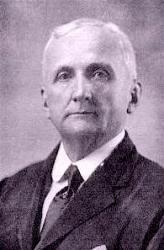
1858 - 1924 Topics: Confesión y Testimonio Composer of "[Dulce comunión la que gozo ya]" in Himnario Cristiano Anthony Johnson Showalter USA 1858-1924/ Born in Cherry Grove, VA, he became an organist, gospel music composer, author, teacher, editor, and publisher. He was taught by his father and in 1876 received training at the Ruebush-Kieffer School of Music, Dayton, VA. He also attended George Root’s National Normal school at Erie, PA, and Dr Palmer’s International Normal at Meadville, PA. He was teaching music in shape note singing schools by age 14. He taught literary school at age 19, and normal music schools at age 22, when he also published his first book. In 1881 he married Lucy Carolyn (Callie) Walser of TX, and they had seven children: Tennie, Karl, Essie, Jennie, Lena, Margaret, and Nellie. At age 23 he published his “Harmony & composition” book, and years later his “Theory of music”. In 1884 he moved to Dalton, GA, and in 1890 formed the Showalter Music Company of Dalton. His company printed and published hymnals, songbooks, schoolbooks, magazines, and newspapers, and had offices in Texarkana, AR, and Chattanooga, TN. In 1888 he became a member of the M T N A (Music Teachers National Association) and was vice-president for his state for several years. In 1895 he went abroad to study methods of teachers and conductors in Europe. He held sessions of his Southern Normal Music Institute in a dozen or more states. He edited “The music teacher & home magazine” for 20 years. In 1895 he issued his “New harmony & composition” book. He authored 60+ books on music theory, harmony, and song. He published 130+ music books that sold over a million copies. Not only was he president of the A J Showalter Music Company of Dalton, GA, but also of the Showalter-Patton Company of Dallas, TX, two of the largest music publishing houses in the American south. He was a choir leader and an elder in the First Presbyterian Church in Dalton (and his daughter, Essie, played the organ there). He managed his fruit farm, looking after nearly 20,000 trees , of which 15,000 are the famous Georgia Elberta peaches, the rest being apples, plums, pecans, and a dozen other varieties of peaches. He was also a stockholder and director of the Cherokee Lumber Company of Dalton, GA, furnishing building materials to a large trade in many southern, central and eastern states. He died in Chattanooga, TN, and is buried in Dalton, GA. He loved hymns, and kept up with many of his students over the years, writing them letters of counsel and encouragement. In 2000 Showalter was inducted into the Southern Gospel Music Hall of Fame.
Note: Showalter received two letters one evening from former music students, both of who were grieving over the death of their wives. He had heard a sermon about the arms of Moses being held up during battle, and managed to form a tune and refrain for a hymn, but struggled to find words for the verses that fit. He wrote to his friend in OH, Rev Elisha Hoffman, who had already composed many hymns and asked if he could write some lyrics, which he gladly did.
John Perry
A. J. Showalter
William R. Featherston
1846 - 1873 Person Name: William R. Featherstone Topics: Confesión y Testimonio Author of "Oh Cristo, Yo Te Amo" in Himnario Cristiano William Ralph Featherston(e) Canada 1846-1873. Born at Montreal, Quebec, Canada, he joined the Wesleyan Methodist Church there. He became a Christian at age 16 while in Toronto, and is thought to have written his famous hymn about the same time. He sent the poem to his aunt, Ms. E. Featherston Wilson and she gave it to a publisher. Adoniram. J Gordon, an evangelist, founder of Gordon College & Gordon-Conwell Theological Seminary, found the hymn in a 1870 London hymnal and was impressed with the words, but did not like the tune, so he composed the melody that has been used with the hymn ever since. Featherstone is thought to have married Julie R MacAlister in 1869 and that they had a son, John, in 1870. Featherstone died in Montreal at age 26.
John Perry
William R. Featherston
Adoniram J. Gordon
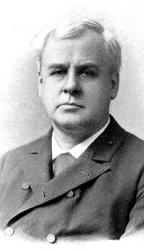
1836 - 1895 Topics: Confesión y Testimonio Composer of "[Oh Cristo, yo Te amo]" in Himnario Cristiano Gordon, Adoniram Judson, D.D., born at New Hampton, N.H., Apr. 19, 1836. Graduated at Brown University, 1860; entered the Baptist ministry; Pastor of Clarendon Street Baptist Church, Boston, 1869; and died in 1895. He published The Vestry Hymn and Tune Book, 1872; and was one of the editors of the Service of Song for Baptist Churches, 1871. His hymns in common use include:—
1. O blessed Paraclete. [Holy Spirit .] Given in Sursum Corda, 1898, as having been written in 1890.
2. O Spirit's anointing, for service appointing . [Foreign Missions.] This hymn was "written in the summer of 1886, at Northfield School for Bible Study, organised by Mr. Moody. More than one hundred college students connected with this school gave themselves to the work of foreign missions during their stay at Northfield. Four of their number were chosen to visit the colleges in different parts of the country, and endeavour to awaken a deeper interest in missions during the succeeding academic year. At their request Dr. Gordon” wrote this hymn. Baptist Hymns and Hymn Writers.
3. Where art thou, soul! I hear God say. [Divine Chiding.] Published in social meeting edition of The Service of Song, 1881.
--John Julian, Dictionary of Hymnology, New Supplement (1907)
Adoniram J. Gordon
William Hunter
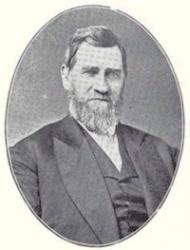
1811 - 1877 Person Name: Wm. Hunter Topics: Confesión y Testimonio Author of "Del Mundo Ya Me Separé" in Himnario Cristiano Hunter, William, D.D, son of John Hunter, was born near Ballymoney, County Antrim, Ireland, May 26, 1811. He removed to America in 1817, and entered Madison College in 1830. For some time he edited the Conference Journal, and the Christian Advocate. In 1855 he was appointed Professor of Hebrew in Alleghany College: and subsequently Minister of the Methodist Episcopal Church, at Alliance, Stark Country, Ohio. He died in 1877. He edited Minstrel of Zion, 1845; Select Melodies, 1851; and Songs of Devotion, 1859. His hymns, over 125 in all, appeared in these works. Some of these have been translated into various Indian languages. The best known are :—
1. A home in heaven; what a joyful thought. Heaven a Home. From his Minstrel of Zion, 1845, into the Methodist Scholar's Hymn Book, London, 1870, &c.
2. Joyfully, joyfully onward I [we] move. Pressing towards Heaven. This hymn is usually dated 1843. It was given in his Minstrel of Zion, 1845, and Select Melodies, 1851, and his Songs of Devotion, 1859. It has attained to great popularity. Two forms of the hymn are current, the original, where the second stanza begins "Friends fondly cherished, have passed on before"; and the altered form, where it reads: “Teachers and Scholars have passed on before." Both texts are given in W. F. Stevenson's Hymns for Church & Home, 1873, Nos. 79, 80, c.
3. The [My] heavenly home is bright and fair. Pressing towards Heaven. From his Minstrel of Zion, 1845, into the Cottage Melodies, New York, 1859, and later collections.
4. The Great Physician now is near. Christ the Physician. From his Songs of Devotion, 1859
5. Who shall forbid our grateful[chastened]woe? This hymn, written in 1843, was published in his Minstrel of Zion, 1845, and in his Songs of Devotion, 1859. [ Rev. F. M. Bird, M.A.]
--John Julian, Dictionary of Hymnology (1907)
William Hunter
Barney Elliott Warren
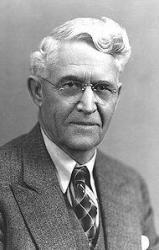
1867 - 1951 Person Name: B. Elliott Warren Topics: Confesión y Testimonio Composer of "[A mi Señor yo encontré]" in Himnario Cristiano Barney Elliott Warren was an American Christian hymnwriter and minister.
See more in Wikipedia
Barney Elliott Warren
Daniel Otis Teasley

1876 - 1942 Person Name: D. O. T. Topics: Confesión y Testimonio Author of "Entiendo en Mi Corazón" in Himnario Cristiano Daniel Otis Teasley, 1876-1942
Died: November 15, 1942, Santa Ana, California.
Teasley entered the ministry of the Church of God denomination in 1896, and pastored in New York. Sometime after 1910, he became General Manager of the Gospel Trumpet Company, where he worked until 1917. He then worked as general manager of Warner Press (1917-18). His works include:
Historical Geography of the Bible, 1898, 1917
The Holy Spirit and Other Spirits, 1904
How to Conduct a Sunday School, 1911
The Gospel Guide-book, 1918
The Bible and How to Interpret It, 1918
Lyrics--
At the Cross of Jesus Bowing
Back to the Blessèd Old Bible
Be Ready When He Comes
I Am the Lord’s
I Know in My Heart What It Means
I Will Praise Him, Hallelujah!
In Holy Reverence, Lord
Song of Joy, A
We’ll Crown Him Lord of All
We’ll Praise the Lord
Music--
No Friend Like Jesus
Reverena
--hymntime.com/tch/
Daniel Otis Teasley
Lizzie De Armond
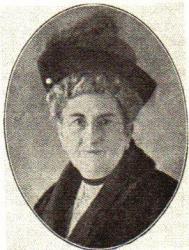
1847 - 1936 Person Name: Lizzie DeArmond Topics: Confesión y Testimonio Author of "Di Lo Que Dios en Ti Obró" in Himnario Cristiano Lizzie De Armond was a prolific writer of children's hymns, recitations and exercises. When she was twelve years old her first poem was published in the Germantown, Pa. Telegraph, however, it was not until she was a widow with eight children to support that she started writing in earnest. She wrote articles, librettos, nature stories and other works, as well as hymns.
Dianne Shapiro, from "The Singers and Their Songs: sketches of living gospel hymn writers" by Charles Hutchinson Gabriel (Chicago: The Rodeheaver Company, 1916)
Lizzie De Armond
Charles Wesley
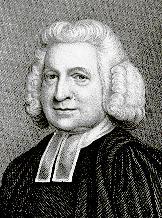
1707 - 1788 Topics: Testimonio Author of "Mil voces para celebrar" in Mil Voces para Celebrar Charles Wesley, M.A. was the great hymn-writer of the Wesley family, perhaps, taking quantity and quality into consideration, the great hymn-writer of all ages. Charles Wesley was the youngest son and 18th child of Samuel and Susanna Wesley, and was born at Epworth Rectory, Dec. 18, 1707. In 1716 he went to Westminster School, being provided with a home and board by his elder brother Samuel, then usher at the school, until 1721, when he was elected King's Scholar, and as such received his board and education free. In 1726 Charles Wesley was elected to a Westminster studentship at Christ Church, Oxford, where he took his degree in 1729, and became a college tutor. In the early part of the same year his religious impressions were much deepened, and he became one of the first band of "Oxford Methodists."
In 1735 he went with his brother John to Georgia, as secretary to General Oglethorpe, having before he set out received Deacon's and Priest's Orders on two successive Sundays. His stay in Georgia was very short; he returned to England in 1736, and in 1737 came under the influence of Count Zinzendorf and the Moravians, especially of that remarkable man who had so large a share in moulding John Wesley's career, Peter Bonier, and also of a Mr. Bray, a brazier in Little Britain. On Whitsunday, 1737, [sic. 1738] he "found rest to his soul," and in 1738 he became curate to his friend, Mr. Stonehouse, Vicar of Islington, but the opposition of the churchwardens was so great that the Vicar consented that he "should preach in his church no more." Henceforth his work was identified with that of his brother John, and he became an indefatigable itinerant and field preacher. On April 8, 1749, he married Miss Sarah Gwynne. His marriage, unlike that of his brother John, was a most happy one; his wife was accustomed to accompany him on his evangelistic journeys, which were as frequent as ever until the year 1756," when he ceased to itinerate, and mainly devoted himself to the care of the Societies in London and Bristol. Bristol was his headquarters until 1771, when he removed with his family to London, and, besides attending to the Societies, devoted himself much, as he had done in his youth, to the spiritual care of prisoners in Newgate. He had long been troubled about the relations of Methodism to the Church of England, and strongly disapproved of his brother John's "ordinations." Wesley-like, he expressed his disapproval in the most outspoken fashion, but, as in the case of Samuel at an earlier period, the differences between the brothers never led to a breach of friendship. He died in London, March 29, 1788, and was buried in Marylebone churchyard. His brother John was deeply grieved because he would not consent to be interred in the burial-ground of the City Road Chapel, where he had prepared a grave for himself, but Charles said, "I have lived, and I die, in the Communion of the Church of England, and I will be buried in the yard of my parish church." Eight clergymen of the Church of England bore his pall. He had a large family, four of whom survived him; three sons, who all became distinguished in the musical world, and one daughter, who inherited some of her father's poetical genius. The widow and orphans were treated with the greatest kindness and generosity by John Wesley.
As a hymn-writer Charles Wesley was unique. He is said to have written no less than 6500 hymns, and though, of course, in so vast a number some are of unequal merit, it is perfectly marvellous how many there are which rise to the highest degree of excellence. His feelings on every occasion of importance, whether private or public, found their best expression in a hymn. His own conversion, his own marriage, the earthquake panic, the rumours of an invasion from France, the defeat of Prince Charles Edward at Culloden, the Gordon riots, every Festival of the Christian Church, every doctrine of the Christian Faith, striking scenes in Scripture history, striking scenes which came within his own view, the deaths of friends as they passed away, one by one, before him, all furnished occasions for the exercise of his divine gift. Nor must we forget his hymns for little children, a branch of sacred poetry in which the mantle of Dr. Watts seems to have fallen upon him. It would be simply impossible within our space to enumerate even those of the hymns which have become really classical. The saying that a really good hymn is as rare an appearance as that of a comet is falsified by the work of Charles Wesley; for hymns, which are really good in every respect, flowed from his pen in quick succession, and death alone stopped the course of the perennial stream.
It has been the common practice, however for a hundred years or more to ascribe all translations from the German to John Wesley, as he only of the two brothers knew that language; and to assign to Charles Wesley all the original hymns except such as are traceable to John Wesley through his Journals and other works.
The list of 482 original hymns by John and Charles Wesley listed in this Dictionary of Hymnology have formed an important part of Methodist hymnody and show the enormous influence of the Wesleys on the English hymnody of the nineteenth century.
-- Excerpts from John Julian, Dictionary of Hymnology (1907)
==================
Charles Wesley, the son of Samuel Wesley, was born at Epworth, Dec. 18, 1707. He was educated at Westminster School and afterwards at Christ Church, Oxford, where he graduated M.A. In 1735, he took Orders and immediately proceeded with his brother John to Georgia, both being employed as missionaries of the S.P.G. He returned to England in 1736. For many years he engaged with his brother in preaching the Gospel. He died March 29, 1788. To Charles Wesley has been justly assigned the appellation of the "Bard of Methodism." His prominence in hymn writing may be judged from the fact that in the "Wesleyan Hymn Book," 623 of the 770 hymns were written by him; and he published more than thirty poetical works, written either by himself alone, or in conjunction with his brother. The number of his separate hymns is at least five thousand.
--Annotations of the Hymnal, Charles Hutchins, M.A., 1872.
Charles Wesley
Rowland Hugh Prichard

1811 - 1887 Person Name: Rowland H. Prichard, 1811-1887 Topics: Testimonio Composer of "HYFRYDOL" in Santo, Santo, Santo Rowland H. Prichard (sometimes spelled Pritchard) (b. Graienyn, near Bala, Merionetshire, Wales, 1811; d. Holywell, Flintshire, Wales, 1887) was a textile worker and an amateur musician. He had a good singing voice and was appointed precentor in Graienyn. Many of his tunes were published in Welsh periodicals. In 1880 Prichard became a loom tender's assistant at the Welsh Flannel Manufacturing Company in Holywell.
Bert Polman
Rowland Hugh Prichard
E. A. Hoffman
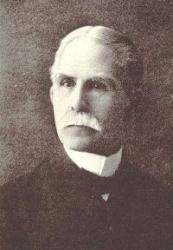
1839 - 1929 Person Name: Elisha A. Hoffman Topics: Testimonio del Cristiano Author of "A su nombre gloria" in Celebremos Su Gloria Elisha Hoffman (1839-1929) after graduating from Union Seminary in Pennsylvania was ordained in 1868. As a minister he was appointed to the circuit in Napoleon, Ohio in 1872. He worked with the Evangelical Association's publishing arm in Cleveland for eleven years. He served in many chapels and churches in Cleveland and in Grafton in the 1880s, among them Bethel Home for Sailors and Seamen, Chestnut Ridge Union Chapel, Grace Congregational Church and Rockport Congregational Church. In his lifetime he wrote more than 2,000 gospel songs including"Leaning on the everlasting arms" (1894). The fifty song books he edited include Pentecostal Hymns No. 1 and The Evergreen, 1873.
Mary Louise VanDyke
============
Hoffman, Elisha Albright, author of "Have you been to Jesus for the cleansing power?" (Holiness desired), in I. D. Sankey's Sacred Songs and Solos, 1881, was born in Pennsylvania, May 7, 1839.
--John Julian, Dictionary of Hymnology, Appendix, Part II (1907)
==============
E. A. Hoffman
Pages




