

 My Starred Hymns
 My FlexScores
 My Hymnals
 My Purchased Files
Planning worship?
Check out our sister site, ZeteoSearch.org,
for 20+ additional resources related to your search.
- |
User Links
Search Results


Father, we praise you, now the night is over
Author: Percy Dearmer Meter: 11.11.11.5 Appears in 89 hymnals Topics: The Being of God Holy and One Lyrics: 1 Father, we praise you, now the night is over;
active and watchful, stand we all before you;
singing, we offer prayer and meditation:
thus we adore you.
2 Monarch of all things, fit us for your mansions;
banish our weakness, health and wholeness sending;
bring us to heaven, where your saints united
joy without ending.
3 All holy Father, Son, and equal Spirit,
Trinity blessed, send us your salvation;
yours is the glory, gleaming and resounding
through all creation. Scripture: 1 Thessalonians 5:23 Used With Tune: CHRISTE SANCTORUM Text Sources: 10th century or earlier
Father, we praise you, now the night is over
As when the Hebrew prophet raised
Author: Isaac Watts, 1674-1748 Meter: 8.6.8.6 Appears in 19 hymnals Topics: Christ, the Lord Jesus Saviour; Christ, the Lord Jesus Substitute; Faith In Christ; Forgiveness of Sins; God Love and Grace of; God: His Being, Word and Works God the Son: His Suffering and Death; Prophet Used With Tune: ABRIDGE Text Sources: Scottish Paraphrase
As when the Hebrew prophet raised

Divine Providence in Air, Earth and Sea; or, The God of Nature and Grace
Appears in 23 hymnals Topics: Gentiles church; God his Being, Attributes and Providence; God of nature and grace; Harvest; Praise and prayer public; Praise for rain; Prayer heard; Prayer Praise public; Prayer and Praise; Providence in air, earth, and sea; Psalm for husbandmen; Rain from heaven; Seasons of the year; Spring of the Year; Summer; Weather; Gentiles church; God his Being, Attributes and Providence; God of nature and grace; Harvest; Praise and prayer public; Praise for rain; Prayer heard; Prayer Praise public; Prayer and Praise; Providence in air, earth, and sea; Psalm for husbandmen; Rain from heaven; Seasons of the year; Spring of the Year; Summer; Weather First Line: The God of our Salvation hears Lyrics: 1 The God of our Salvation hears
The groans of Sion mix'd with tears;
Yet when he comes with kind designs,
Through all the way his terror shines.
2 On him the race of man depends,
Far as the earth's remotest ends,
Where the Creator's name is known,
By nature's feeble light alone.
3 Sailors that travel o'er the flood,
Address their frighted souls to God,
When tempests rage and Billows roar
At dreadful distance from the shore.
4 He bids the noisy tempest cease;
He calms the raging crowd to peace,
When a tumultuous nation raves,
Wild as the winds, and loud as waves.
5 Whole kingdoms shaken by the storm,
He settles in a peaceful form;
Mountains establish'd by his hand
Firm on their old foundation stand.
6 Behold his ensigns sweep the sky,
New comets blaze, and lightnings fly;
The Heathen lands, with swift surprise,
From the bright horrors turn their eyes.
7 At his command the morning ray
Smiles in the East, and leads the day,
He guides the sun's declining wheels
Over the tops of western hills.
8 Seasons and times obey his voice;
The evening and the morn rejoice
To see the earth made soft with showers,
Laden with fruit, and drest in flowers.
9 'Tis from his watery stores on high,
He gives the thirsty ground supply;
He walks upon the clouds, and thence
Doth his enriching drops dispense.
10 The desert grows a fruitful field,
Abundant food the vallies yield;
The vallies shout with cheerful voice,
And neighboring hills repeat their joys.
11 The pastures smile in green array,
There lambs and larger cattle play;
The larger cattle and the lamb,
Each in his language speaks thy name.
12 Thy works pronounce thy power divine;
O'er every field thy glories shine;
Through every month thy gifts appear;
Great God, thy goodness crowns the year. Scripture: Psalm 65:5-13
Divine Providence in Air, Earth and Sea; or, The God of Nature and Grace


ITALIAN HYMN
Meter: 6.6.4.6.6.6.4 Appears in 1,478 hymnals Composer and/or Arranger: Felice de Giardini (1716-1796); David Evans (1874-1948) Topics: The Being of God Holy and One Tune Sources: Harmony adapted Church Hymnary, Fourth Edition, 2005 Tune Key: G Major Incipit: 53121 71123 45432 Used With Text: God, whose almighty word
ITALIAN HYMN
CHURCH TRIUMPHANT
Meter: 8.8.8.8 Appears in 138 hymnals Composer and/or Arranger: James William Elliott (1833-1915) Topics: The Being of God Holy and One Tune Key: B Flat Major Incipit: 51532 16534 56713 Used With Text: The Lord is King! Lift up thy voice!
CHURCH TRIUMPHANT


God, whose almighty word
Author: John Marriott (1780-1825); Thomas Raffles (1788-1863) Hymnal: Church Hymnary (4th ed.) #112 (2005) Meter: 6.6.4.6.6.6.4 Topics: The Being of God Holy and One Lyrics: 1 God, whose almighty word
chaos and darkness heard,
and took their flight;
hear us, we humbly pray,
and where the gospel-day
sheds not its glorious ray,
let there be light.
2 Saviour, who came to bring,
on your redeeming wing,
healing and sight,
health to the sick in mind,
sight to the inly blind,
now to all humankind
let there be light.
3 Spirit of truth and love,
life-giving, holy dove,
speed forth your flight;
move o'er the water's face,
bearing the lamp of grace,
and in earth's darkest place
let there be light.
4 Blessèd and holy Three,
glorious Trinity,
Wisdom, Love, Might,
boundless as ocean's tide
rolling in fullest pride,
through the world far and wide
let there be light. Scripture: 2 Corinthians 4:6 Languages: English Tune Title: ITALIAN HYMN
God, whose almighty word
God, whose almighty word
Author: Thomas Raffles (1788-1863); John Marriott (1780-1825) Hymnal: Hymns of Glory, Songs of Praise #112 (2008) Meter: 6.6.4.6.6.6.4 Topics: The Being of God Holy and One Lyrics: 1 God, whose almighty word,
chaos and darkness heard,
and took their flight:
hear us, we humbly pray,
and where the gospel-day
sheds not its glorious ray,
let there be light.
2 Saviour, who came to bring
on your redeeming wing
healing and sight,
health to the sick in mind,
sight to the inly blind:
now to all humankind
let there be light.
3 Spirit of truth and love,
life-giving, holy dove,
speed forth your flight;
move o'er the water's face,
bearing the lamp of grace
and in earth's darkest place
let there be light.
4 Blessèd and holy Three,
glorious Trinity,
Wisdom, Love, Might,
boundless as ocean's tide
rolling in fullest pride
through the world far and wide,
let there be light. Scripture: 2 Corinthians 4:6 Languages: English Tune Title: ITALIAN HYMN
God, whose almighty word
Womb of life, and source of being
Author: Ruth C. Duck (b. 1947) Hymnal: Church Hymnary (4th ed.) #118 (2005) Meter: 8.7.8.7 D Topics: The Being of God Holy and One Scripture: 2 Timothy 1:10 Languages: English Tune Title: LADUE CHAPEL
Womb of life, and source of being


Percy Dearmer
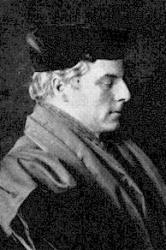
1867 - 1936 Topics: The Being of God Holy and One Translator of "Father, we praise you, now the night is over" in Church Hymnary (4th ed.) Dearmer, Percy, M.A., son of Thomas Dearmer, was born in London, Feb. 27, 1867, and educated at Westminster School and at Christ Church, Oxford (B.A. 1890, M.A. 1896). He was ordained D. 1891, P. 1892, and has been since 1901 Vicar of S. Mary the Virgin, Primrose Hill, London. He has been Secretary of the London Branch of the Christian Social Union since 1891, and is the author of The Parson's Handbook, 1st edition, 1899, and other works. He was one of the compilers of the English Hymnal, 1906, acting as Secretary and Editor, and contributed to it ten translations (38, 95, 150, 160, 165, 180, 215, 237, 352, 628) and portions of two others (242, 329), with the following originals:—
1. A brighter dawn is breaking. Easter. Suggested by the Aurora lucis, p. 95, but practically original.
2. Father, Who on man dost shower. Temperance.
3. God, we thank Thee, not in vain. Burial.
4. Holy God, we offer here. Holy Communion.
5. Jesu, good above all other. For Children.
6. Lord, the wind and sea obey Thee. For those at Sea.
7. The winter's sleep was long and deep. St. Philip and St. James. [Rev. James Mearns, M.A.]
--John Julian, Dictionary of Hymnology, New Supplement (1907)
Percy Dearmer
John Bacchus Dykes
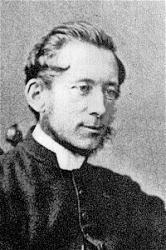
1823 - 1876 Person Name: John Bacchus Dykes (1823-1876) Topics: The Being of God Holy and One Composer of "RIVAULX" in Church Hymnary (4th ed.) As a young child John Bacchus Dykes (b. Kingston-upon-Hull' England, 1823; d. Ticehurst, Sussex, England, 1876) took violin and piano lessons. At the age of ten he became the organist of St. John's in Hull, where his grandfather was vicar. After receiving a classics degree from St. Catherine College, Cambridge, England, he was ordained in the Church of England in 1847. In 1849 he became the precentor and choir director at Durham Cathedral, where he introduced reforms in the choir by insisting on consistent attendance, increasing rehearsals, and initiating music festivals. He served the parish of St. Oswald in Durham from 1862 until the year of his death. To the chagrin of his bishop, Dykes favored the high church practices associated with the Oxford Movement (choir robes, incense, and the like). A number of his three hundred hymn tunes are still respected as durable examples of Victorian hymnody. Most of his tunes were first published in Chope's Congregational Hymn and Tune Book (1857) and in early editions of the famous British hymnal, Hymns Ancient and Modern.
Bert Polman
John Bacchus Dykes
Josiah Conder
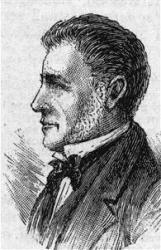
1789 - 1855 Person Name: Josiah Conder (1789-1855) Topics: The Being of God Holy and One Author of "The Lord is King! Lift up thy voice!" in Church Hymnary (4th ed.) Josiah Conder was born in London, in 1789. He became a publisher, and in 1814 became proprietor of "The Eclectic Review." Subsequently to 1824, he composed a series of descriptive works, called the "Modern Traveller," which appeared in thirty volumes. He also published several volumes of poems and hymns. He was the author of the first "Congregational Hymn Book" (1836). He died in 1855.
--Annotations of the Hymnal, Charles Hutchins, M.A. 1872.
==========================
Conder, Josiah, fourth son of Thomas Conder, engraver and bookseller, and grandson of the Rev. John Conder, D.D., first Theological Tutor of Homerton College, was born in Falcon Street (City); London, Sept. 17, 1789, and died Dec. 27, 1855. As author, editor and publisher he was widely known. For some years he was the proprietor and editor of the Eclectic Review, and also editor of the Patriot newspaper. His prose works were numerous, and include:—
The Modern Traveller, 1830; Italy, 1831; Dictionary of Ancient and Modern Geography, 1834; Life of Bunyan, 1835; Protestant Nonconformity, 1818-19; The Law of the Sabbath, 1830; Epistle to the Hebrews (a translation), 1834; Literary History of the New Testament, 1845, Harmony of History with Prophecy, 1849, and others.
His poetical works are:—
(1) The Withered Oak,1805; this appeared in the Athenceum. (2) The Reverie, 1811. (3) Star in the East, 1824. (4) Sacred Poems, Domestic Poems, and Miscellaneous Poems, 1824. (5) The Choir and the Oratory; or, Praise and Prayer, 1837. Preface dated Nov. 8, 1836. (6) Hymns of Praise, Prayer, and Devout Meditation, 1856. This last work was in the press at the time of his death, and was revised and published by his son, the Rev. E. R. Conder, M.A. He also contributed many pieces to the magazines and to the Associated Minstrels, 1810, under the signature of " C." In 1838, selections from The Choir and Oratory were published with music by Edgar Sanderson, as Harmonia Sacra. A second volume was added in 1839. To Dr. Collyer’s (q.v.) Hymns, &c, he contributed 3 pieces signed "C"; and to Dr. Leifchild's Original Hymns, 1843, 8 hymns.
As a hymn-book editor he was also well known. In 1836 he edited The Congregational Hymn Book: a Supplement to Dr. Watts’s Psalms and Hymns (2nd ed. 1844). To this collection he contributed fifty-six of his own hymns, some of which had previously appeared in The Star in the East, &c. He also published in 1851 a revised edition of Dr. Watts's Psalms and Hymns, and in the game year a special paper on Dr. Watte as The Poet of the Sanctuary, which was read before the Congregational Union at Southampton. The value of his work as Editor of the Congregational Hymn Book is seen in the fact that eight out of every ten of the hymns in that collection are still in use either in Great Britain or America.
As a hymn writer Conder ranks with some of the best of the first half of the present century. His finest hymns are marked by much elevation of thought expressed in language combining both force and beauty. They generally excel in unity, and in some the gradual unfolding of the leading idea is masterly. The outcome of a deeply spiritual mind, they deal chiefly with the enduring elements of religion. Their variety in metre, in style, and in treatment saves them from the monotonous mannerism which mars the work of many hymn writers. Their theology, though decidedly Evangelical, is yet of a broad and liberal kind. Doubtless Conder's intercourse with many phases of theological thought as Editor of the Eclectic Review did much to produce this catholicity, which was strikingly shewn by his embodying many of the collects of the Book of Common Prayer, rendered into verse, in his Choir and Oratory. Of his versions of the Psalms the most popular are "How honoured, how dear" (84th), and "O be joyful in the Lord" (100th). His hymns in most extensive use are," Bread of heaven, on Thee I feed; " “Beyond, beyond that boundless sea;" "The Lord is King, lift up thy voice" (this last is one of his best); "Day by day the manna fell;" "How shall I follow him I serve;" "Heavenly Father, to whose eye" (all good specimens of his subdued and pathetic style); and "O shew me not my Saviour dying." This last is full of lyric feeling, and expresses the too often forgotten fact that the Church has a living though once crucified Lord. The popularity of Conder's hymns may be gathered from the fact that at the present time more of them are in common use in Great Britain and America than those of any other writer of the Congregational body, Watts and Doddridge alone excepted. [Rev. W. Garrett Horder]
In addition to the hymns named above and others which are annotated under their respective first lines, the following, including two already named (4,16), are also in common use:—
i. From Dr. Collyer's Hymns, &c, 1812.
1. When in the hours of lonely woe. Lent.
ii. From The Star in the East, &c, 1824.
2. Be merciful, O God of grace. Ps. lxvii.
3. For ever will I bless the Lord. Ps. xxxiv.
4. How honoured, how dear. Ps. lxxxiv.
5. Now with angels round the throne. Doxology.
6. O Thou God, Who hearest prayer. Lent. Dated Sept. 1820. Usually abbreviated.
iii. From The Congregational Hymn Book, 1836.
7. Blessed be God, He is not strict. Longsuffering of God.
8. Followers of Christ of every name. Communion of Saints.
9. Grant me, heavenly Lord, to feel. Zeal in Missions desired.
10. Grant, 0 Saviour, to our prayers. Collect 5th S. after Trinity.
11. Head of the Church, our risen Lord. Church Meetings.
12. Holy, holy, holy Lord, in the highest heaven, &c. Praise to the Father.
13. Jehovah's praise sublime. Praise.
14. Leave us not comfortless. Holy Communion.
15. Lord, for Thv Name's sake! such the plea. In National Danger.
16. O be joyful in the Lord. Ps. c.
17. 0 breathe upon this languid frame. Baptism of Holy Spirit desired.
18. 0 give thanks to Him Who made. Thanksgiving for Daily Mercies.
19. 0 God, Protector of the lowly. New Year.
20. 0 God, to whom the happy dead. Burial.
21. 0 God, Who didst an equal mate. Holy Matrimony.
22. 0 God, Who didst Thy will unfold. Holy Scriptures.
23. 0 God, Who dost Thy sovereign might. Prayer Meetings.
24. 0 how shall feeble flesh and blood. Salvation through Christ.
25. 0 how should those be clean who bear. Purity desired for God's Ministers.
26. 0 say not, think not in thy heart. Pressing Onward.
27. 0 Thou divine High Priest. Holy Communion.
28. 0 Thou Who givest all their food. Harvest.
29. 0 Thou Whose covenant is sure. Holy Baptism.
30. Praise on Thee, in Zion-gates. Sunday.
31. Praise the God of all creation. Doxology
32. See the ransomed millions stand. Praise to Christ.
33. The heavens declare His glory. Ps. xix.
34. Thou art the Everlasting Word. Praise to Christ.
35. Thy hands have made and fashioned me. Thanks for Daily Mercies.
36. To all Thy faithful people, Lord. For Pardon.
37. To His own world He came. Ascension.
38. To our God loud praises give. Ps. cxxxvi.
39. Upon a world of guilt and night. Purification of B.V.M.
40. Welcome, welcome, sinner, hear. Invitation to Christ.
41. Wheresoever two or three. Continued Presence of Christ desired.
iv. From The Choir and the Oratory, 1837.
42. Baptised into our Saviour's death. Holy Baptism.
43. In the day of my [thy] distress. Ps. xx.
44. 0 comfort to the dreary. Christ the Comforter.
v. From Leifchild's Original Hymns, 1843.
45. I am Thy workmanship, 0 Lord. God the Maker and Guardian.
46. 0 Lord, hadst Thou been here! But when. The Resurrection of Lazarus.
47. 'Tis not that I did choose Thee. Chosen of God. This is altered in the Church Praise Book, N. Y., 1882, to “Lord, 'tis not that I did choose Thee," thereby changing the metre from 7.6 to 8.5.
vi. From Hymns of Praise, Prayer, &c, 1856.
48. Comrades of the heavenly calling. The Christian race.
When to these 48 hymns those annotated under their respective first lines are added, Conder’s hymns in common use number about 60 in all.
--John Julian, Dictionary of Hymnology (1907)
===================
Conder, Josiah, p. 256, i. Other hymns are:—
1. O love beyond the reach of thought. The love of God.
2. O Thou, our Head, enthroned on high. Missions.
3. Son of David, throned in light. Divine Enlightenment desired.
4. Thou Lamb of God for sinners slain. Christ the Head of the Church. From "Substantial Truth, 0 Christ, Thou art."
These hymns are all from his Hymns of Praise, &c, 1856.
--John Julian, Dictionary of Hymnology, Appendix, Part II (1907)
Josiah Conder





