You help make Hymnary.org possible. More than 10 million people from 200+ countries found hymns, liturgical resources and encouragement on Hymnary.org in 2025, including you. Every visit affirms the global impact of this ministry.

If Hymnary has been meaningful to you this year, would you take a moment today to help sustain it? A gift of any size—paired with a note of encouragement if you wish—directly supports the server costs, research work and curation that keep this resource freely available to the world.

Give securely online today, or mail a check to:
Hymnary.org
Calvin University
3201 Burton Street SE
Grand Rapids, MI 49546

Thank you for your partnership, and may the hope of Advent fill your heart.

Person Results

Topics:the+presentation+of+christ+in+the+temple
In:people

Planning worship? Check out our sister site, ZeteoSearch.org, for 20+ additional resources related to your search.
Showing 1 - 10 of 67Results Per Page: 102050

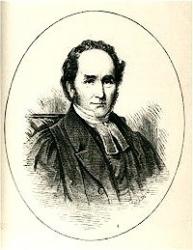
James Montgomery

1771 - 1854 Person Name: James Montgomery (1771-1854) Topics: Church year Presentation of Christ in the temple (Candlemas) Author of "Come and worship" in Ancient and Modern James Montgomery (b. Irvine, Ayrshire, Scotland, 1771; d. Sheffield, Yorkshire, England, 1854), the son of Moravian parents who died on a West Indies mission field while he was in boarding school, Montgomery inherited a strong religious bent, a passion for missions, and an independent mind. He was editor of the Sheffield Iris (1796-1827), a newspaper that sometimes espoused radical causes. Montgomery was imprisoned briefly when he printed a song that celebrated the fall of the Bastille and again when he described a riot in Sheffield that reflected unfavorably on a military commander. He also protested against slavery, the lot of boy chimney sweeps, and lotteries. Associated with Christians of various persuasions, Montgomery supported missions and the British Bible Society. He published eleven volumes of poetry, mainly his own, and at least four hundred hymns. Some critics judge his hymn texts to be equal in quality to those of Isaac Watts and Charles Wesley . Many were published in Thomas Cotterill's Selection of Psalms and Hymns (1819 edition) and in Montgomery's own Songs of Zion (1822), Christian Psalmist (1825), and Original Hymns (1853). Bert Polman ======================== Montgomery, James, son of John Montgomery, a Moravian minister, was born at Irvine, Ayrshire, Nov. 4, 1771. In 1776 he removed with his parents to the Moravian Settlement at Gracehill, near Ballymena, county of Antrim. Two years after he was sent to the Fulneck Seminary, Yorkshire. He left Fulneck in 1787, and entered a retail shop at Mirfield, near Wakefield. Soon tiring of that he entered upon a similar situation at Wath, near Rotherham, only to find it quite as unsuitable to his taste as the former. A journey to London, with the hope of finding a publisher for his youthful poems ended in failure; and in 1792 he was glad to leave Wath for Shefield to join Mr. Gales, an auctioneer, bookseller, and printer of the Sheffield Register newspaper, as his assistant. In 1794 Mr. Gales left England to avoid a political prosecution. Montgomery took the Sheffield Register in hand, changed its name to The Sheffield Iris, and continued to edit it for thirty-one years. During the next two years he was imprisoned twice, first for reprinting therein a song in commemoration of "The Fall of the Bastille," and the second for giving an account of a riot in Sheffield. The editing of his paper, the composition and publication of his poems and hynms, the delivery of lectures on poetry in Sheffield and at the Royal Institution, London, and the earnest advocacy of Foreign Missions and the Bible Society in many parts of the country, gave great variety but very little of stirring incident to his life. In 1833 he received a Royal pension of £200 a year. He died in his sleep, at the Mount, Sheffield, April 30, 1854, and was honoured with a public funeral. A statue was erected to his memory in the Sheffield General Cemetery, and a stained glass window in the Parish Church. A Wesleyan chapel and a public hall are also named in his honour. Montgomery's principal poetical works, including those which he edited, were:— (1) Prison Amusements, 1797; (2) The Wanderer of Switzerland, 1806; (3) The West Indies, 1807; (4) The World before the Flood, 1813; (5) Greenland and Other Poems, 1819; (6) Songs of Zion, 1822; (7) The Christian Psalmist, 1825; (8) The Christian Poet, 1825; (9) The Pelican Island, 1828; (10) The Poet’s Portfolio, 1835; (11) Original Hymns for Public, Private, and Social Devotion, 1853. He also published minor pieces at various times, and four editions of his Poetical Works, the first in 1828, the second in 1836, the third in 1841, and the fourth in 1854. Most of these works contained original hymns. He also contributed largely to Collyer's Collection, 1812, and other hymnbooks published during the next 40 years, amongst which the most noticeable was Cotterill's Selections of 1819, in which more than 50 of his compositions appeared. In his Christian Psalmist, 1825, there are 100 of his hymns, and in his Original Hymns, 1853, 355 and 5 doxologies. His Songs of Zion, 1822, number 56. Deducting those which are repeated in the Original Hymns, there remain about 400 original compositions. Of Montgomery's 400 hymns (including his versions of the Psalms) more than 100 are still in common use. With the aid of Montgomery's MSS. we have given a detailed account of a large number. The rest are as follows:— i. Appeared in Collyer's Collection, 1812. 1. Jesus, our best beloved Friend. Personal Dedication to Christ. 2. When on Sinai's top I see. Sinai, Tabor, and Calvary. ii. Appeared in Cotterill's Selection, 1819. 3. Come to Calvary's holy mountain. The Open Fountain. 4. God in the high and holy place. God in Nature. The cento in Com. Praise, 1879, and others, "If God hath made this world so fair," is from this hymn. 5. Hear me, O Lord, in my distress. Ps. cxliii. 6. Heaven is a place of rest from sin. Preparation for Heaven. 7. I cried unto the Lord most just. Ps. cxlii. 8. Lord, let my prayer like incense rise. Ps. cxxxix. 9. O bless the Lord, my soul! His grace to thee proclaim. Ps. ciii. 10. Out of the depths of woe. Ps. cxxx. Sometimes "When from the depths of woe." 11. The world in condemnation lay. Redemption. 12. Where are the dead? In heaven or hell? The Living and the Dead. iii. Appeared in his Songs of Zion, 1822. 13. Give glory to God in the highest. Ps. xxix. 14. Glad was my heart to hear. Ps. cxxii. 15. God be merciful to me. Ps. lxix. 16. God is my strong salvation. Ps. xxvii. 17. Hasten, Lord, to my release. Ps. lxx. 18. Have mercy on me, O my God. Ps. li. 19. Hearken, Lord, to my complaints. Ps. xlii. 20. Heralds of creation cry. Ps. cxlviii. 21. How beautiful the sight. Ps. cxxxiii. 22. How precious are Thy thoughts of peace. Ps. cxxxix. 23. I love the Lord, He lent an ear. Ps. cxvi. 24. In time of tribulation. Ps. lxxvii. 25. Jehovah is great, and great be His praise. Ps. xlviii. Sometimes, "0 great is Jehovah, and great is His Name." 26. Judge me, O Lord, in righteousness. Ps. xliii. 27. Lift up your heads, ye gates, and wide. Ps.xxiv. 28. Lord, let me know mine [my] end. Ps. xxxi. 29. Of old, 0 God, Thine own right hand. Ps. lxxx. 30. O God, Thou art [my] the God alone. Ps. lxiii. 31. 0 Lord, our King, how excellent. Ps. viii. Sometimes, "0 Lord, how excellent is Thy name." 32. O my soul, with all thy powers. Ps. ciii. 33. One thing with all my soul's desire. Ps. xxvii. From this, "Grant me within Thy courts a place." 34. Searcher of hearts, to Thee are known. Ps. cxxxix. 35. Thank and praise Jehovah's name. Ps. cvii. 36. Thee will I praise, O Lord in light. Ps. cxxxviii. 37. The Lord is King; upon His throne. Ps. xciii. 38. The Lord is my Shepherd, no want shall I know. Ps. xxiii. 39. The tempter to my soul hath said. Ps. iii. 40. Thrice happy he who shuns the way. Ps. i. 41. Thy glory, Lord, the heavens declare. Ps. xix. 42. Thy law is perfect, Lord of light. Ps. xix. 43. Who make the Lord of hosts their tower. Ps. cxxv. 44. Yea, I will extol Thee. Ps. xxx. iv. Appeared in his Christian Psalmist. 1825. 45. Fall down, ye nations, and adore. Universal adoration of God desired. 46. Food, raiment, dwelling, health, and friends. The Family Altar. 47. Go where a foot hath never trod. Moses in the desert. Previously in the Leeds Congregational Collection, 1822. 48. Green pastures and clear streams. The Good Shepherd and His Flock. 49. Less than the least of all. Mercies acknowledged. 50. Not to the mount that burned with fire [flame]. Communion of Saints. 51. On the first Christian Sabbath eve. Easter Sunday Evening. 52. One prayer I have: all prayers in one. Resignation. 53. Our heavenly Father hear. The Lord's Prayer. 54. Return, my soul, unto thy rest. Rest in God. 55. Spirit of power and might, behold. The Spirit's renewing desired. 56. The Christian warrior, see him stand. The Christian Soldier. Sometimes, "Behold the Christian warrior stand." 57. The days and years of time are fled. Day of Judgment. 58. The glorious universe around. Unity. 59. The pure and peaceful mind. A Children's Prayer. 60. This is the day the Lord hath made (q. v.). Sunday. 61. Thy word, Almighty Lord. Close of Service. 62. What secret hand at morning light ? Morning. 63. While through this changing world we roam. Heaven. 64. Within these walls be peace. For Sunday Schools. v. Appeared in his Original Hymns, 1853. 65. Behold yon bright array. Opening a Place of Worship. 66. Behold the book whose leaves display. Holy Scriptures. 67. Come ye that fear the Lord. Confirmation. 68. Home, kindred, friends, and country, these. Farewell to a Missionary. 69. Let me go, the day is breaking. Jacob wrestling. 70. Not in Jerusalem alone. Consecration of a Church. 71. Praise the high and holy One. God the Creator. In common with most poets and hymnwriters, Montgomery strongly objected to any correction or rearrangement of his compositions. At the same time he did not hesitate to alter, rearrange, and amend the productions of others. The altered texts which appeared in Cotterill's Selections, 1819, and which in numerous instances are still retained in some of the best hymnbooks, as the "Rock of Ages," in its well-known form of three stanzas, and others of equal importance, were made principally by him for Cotterill's use. We have this confession under his own hand. As a poet, Montgomery stands well to the front; and as a writer of hymns he ranks in popularity with Wesley, Watts, Doddridge, Newton, and Cowper. His best hymns were written in his earlier years. In his old age he wrote much that was unworthy of his reputation. His finest lyrics are "Angels from the realms of glory," "Go to dark Gethsemane," "Hail to the Lord's Anointed," and "Songs of praise the angels sang." His "Prayer is the soul's sincere desire," is an expanded definition of prayer of great beauty; and his "Forever with the Lord" is full of lyric fire and deep feeling. The secrets of his power as a writer of hymns were manifold. His poetic genius was of a high order, higher than most who stand with him in the front rank of Christian poets. His ear for rhythm was exceedingly accurate and refined. His knowledge of Holy Scripture was most extensive. His religious views were broad and charitable. His devotional spirit was of the holiest type. With the faith of a strong man he united the beauty and simplicity of a child. Richly poetic without exuberance, dogmatic without uncharitableness, tender without sentimentality, elaborate without diffusiveness, richly musical without apparent effort, he has bequeathed to the Church of Christ wealth which could onlv have come from a true genius and a sanctified! heart. --John Julian, Dictionary of Hymnology (1907)

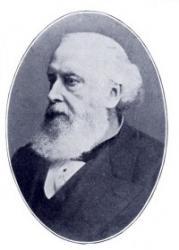
W. H. Havergal

1793 - 1870 Person Name: W. H. Havergal, 1793-1870 Topics: The Presentation of Christ in the Temple February 2nd Harmonizer of "RATISBON" in The New English Hymnal Havergal, William Henry, M.A, son of William Havergal, was born at High Wycombe, Buckinghamshire, 1793, and was educated at St. Edmund's Hall, Oxford (B.A. 1815, M.A. 1819). On taking Holy Orders he became in 1829 Rector of Astley, Worcestershire; in 1842, Rector of St. Nicholas, Worcester; and in 1860, Rector of Shareshill, near Wolverhampton. He was also Hon. Canon in Worcester Cathedral from 1845. He died April 18, 1870. His hymns, about 100 in all, were in many instances written for special services in his own church, and printed as leaflets. Several were included in W. Carus Wilson's Book of General Psalmody, 1840 (2nd ed., 1842); and in Metrical Psalms & Hymns for Singing in Churches, Worcester, Deighton, 1849, commonly known as the Worcester Diocesan Hymn Book, and of which he was the Editor. In Life Echoes, 1883, his hymns are given with those of Miss Havergal. Of those in common use the greater part are in Mercer, and Snepp's Songs of Grace & Glory. Although his hymns are all good, and two or three are excellent, it is not as a hymnwriter but as a musician that Canon Havergal is best known. His musical works and compositions included, in addition to numerous individual hymn tunes and chants, the Gresham Prize Service, 1836; the Gresham Prize Anthem, 1845; Old Church Psalmody, 1849; History of the Old 100th Psalm tune, 1854, &c. He also reprinted Ravenscroft’s Psalter of 1611. His hymns in common use include:— 1. Blessed Jesus, lord and Brother. School Festivals, 1833. Published in Life Echoes, 1883. 2. Brighter than meridian splendour. Christ the glory of His Church. 1830. Published in W. C. Wilson's Book of General Psalms, 1840; the Worcester Psalms & Hymns, 1849, &c. 3. Christians, awake to joy and praise. Christmas Carol, c. 1860. Printed on broadsheet, with music by the author, and sold on behalf of the Lancashire Cotton Distress Fund. 4. Come, Shepherds, come, 'tis just a year. Christmas Carol. 1860. Published in Snepp's Songs of Grace & Glory, 5. For ever and for ever, Lord. Missions, 1866, for the Church Mission Society. Published in Snepp's Songs of Grace & Glory, 1872, and the Life Echoes, 1883. 6. Hallelujah, Lord, our voices. Sunday. 1828. Published in W. C. Wilson's Book of General Psalms, 1840; the Worcester Psalms & Hymns, 1849; Life Echoes, 1883, &c. 7. Heralds of the Lord of glory. Missions. First sung in Astley Church, Sep. 23, 1827. Published in Miss Havergal's Starlight through the Shadows, 1880; Snepp's Songs of Grace & Glory, 1872, &c. 8. Hosanna, raise the pealing hymn. Praise to Christ, 1833, and first sung in Astley Church, June 9, 1833. Published in W. C. Wilson's Book of General Psalmody, 1840; the Worcester Psalms & Hymns, 1849; Life Echoes 1883, &c. 9. How vast the field of souls. Missions. 1858. Printed for Shareshill Church Miss. Anniversary, 1863, and published in Snepp's Songs of Grace & Glory, 1872, and the Life Echoes, 1883. 10. In doubt and dread dismay. Missions. Written in 1837, and published in W. C. Wilson's Book of General Psalmody, 1840; the Worcester Psalms & Hymns, 1849, &c. 11. Jerusalem the golden, The home of saints shall be. Heaven. Published in Life Echoes, 1883. 12. My times are in Thy hand, Their best, &c. 1860. Published in Snepp's Songs of Grace & Glory, 1872, the Records of the author's life and work, and Life Echoes, 1883. The editor of the Records says (p. 159) "this hymn has been much appreciated, and well illustrates the devotional and cheerful spirit of the writer." 13. No dawn of holy light. Sunday. 1825. Printed in 1831 on a leaflet, and published in W. C. Wilson's Book of General Psalmody, 1840; the Worcester Psalms & Hymns, 1849; Life Echoes, 1883, &c. 14. Our faithful God hath sent us. Harvest. Written at Shareshill in 1863, for a Harvest Festival. Published in Snepp's Songs of Grace & Glory 1872, and Life Echoes, 1883. 15. Shout, 0 earth! from silence waking. Praise to Jesus for Redemption. 1841. Published in the Worcester Psalms & Hymns, 1849; Snepp's Songs of Grace & Glory, 1872, &c. 16. So happy all the day. Christmas Carol, c. 1834. Published in Snepp's Songs of Grace & Glory, 1872. 17. Soon the trumpet of salvation. Missions. 1826. Published in Snepp's Songs of Grace & Glory, 1872. 18. To praise our Shepherd's [Saviour's] care. The Good Shepherd. Written after witnessing the death of Elizabeth Edwards, aged 12, of St. Nicholas, Worcester, and printed as a leaflet. Published in W. C. Wilson's Book of General Psalmody, 1840; the Worcester Psalms & Hymns, 1849; Life Echoes, &c, 1883. The author also published a Memoir of the child. 19. Widely 'midst the slumbering nations. Missions. 1828. Published in the Worcester Psalms & Hymns, 1849; Snepp's Songs of Grace & Glory, 1872, &c. In addition to these hymns, his carols, "How grand, and how bright," "Our festal morn is come," and others are annotated under their respective first lines. Most of these carols and hymns were reprinted in Christmas Carols & Sacred Songs, Chiefly by the Rev. W. H. Havergal, London, Nisbet, 1869. --John Julian, Dictionary of Hymnology (1907) ===================== Havergal, W. H., p. 498, i. Other hymns are: — 1. Lord, if judgments now are waking. Second Advent. Published in W. Carus Wilson's Book of General Psalmody, 1840; in Kennedy, 1863, &c. 2. Remember, Lord, Thy word of old displayed. Missions. "Composed for a special prayer-meeting for missionary labourers, held in the author's schoolroom, in the parish of St. Nicholas's, Worcester." (W. F. Stevenson's Hymns for Church and Home, 1873, where the original text is also given.) It must be noted that No. 17, at p. 498, ii., "Soon the trumpet of salvation," was first published in A Collection of Original Airs adapted to Hymns, &c, 1826. --John Julian, Dictionary of Hymnology, Appendix, Part II (1907)

Caroline M. Noel

1817 - 1877 Person Name: Caroline Noel, 1817-77 Topics: The Presentation of Christ in the Temple February 2nd Author of "At the name of Jesus" in The New English Hymnal Caroline Marie Noel (b. Teston, Kent, England, 1817; d. St. Marylebone, London, England, 1877) The daughter of an Anglican clergyman and hymn writer, she began to write poetry in her late teens but then abandoned it until she was in her forties. During those years she suffered frequent bouts of illness and eventually became an invalid. To encourage both herself and others who were ill or incapacitated, Noel began to write devotional verse again. Her poems were collected in The Name of Jesus and Other Verses for the Sick and Lonely (1861, enlarged in 1870). Bert Polman ================ Noel, Caroline Maria, daughter of the Hon. Gerard T. Noel (p. 809, ii.), and niece of the Hon. Baptist W. Noel, was born in London, April 10, 1817, and died at 39 Great Cumberland Place, Hyde Park, Dec. 7, 1877. Her first hymn, "Draw nigh unto my soul" (Indwelling), was written when she was 17. During the next three years she wrote about a dozen pieces: from 20 years of age to 40 she wrote nothing; and during the next 20 years the rest of her pieces were written. The first edition of her compositions was published as The Name of Jesus and Other Verses for the Sick and Lonely, in 1861. This was enlarged from time to time, and its title subsequently changed by the publishers to The Name of Jesus and Other Poems. The 1878 ed. contains 78 pieces. Miss Noel, in common with Miss Charlotte Elliott, was a great sufferer, and many of these verses were the outcome of her days of pain. They are specially adapted "for the Sick and Lonely" and were written rather for private meditation than for public use, although several are suited to the latter purpose. Her best known hymn is the Processional for Ascension Day, "At the Name of Jesus." It is in the enlarged edition of The Name of Jesus, &c, 1870, p. 59, and is dated 1870 by her family. --John Julian, Dictionary of Hymnology, Appendix, Part II (1907)

William Henry Monk

1823 - 1889 Person Name: W. H. Monk, 1823-89 Topics: The Presentation of Christ in the Temple February 2nd Composer of "EVELYNS" in The New English Hymnal William H. Monk (b. Brompton, London, England, 1823; d. London, 1889) is best known for his music editing of Hymns Ancient and Modern (1861, 1868; 1875, and 1889 editions). He also adapted music from plainsong and added accompaniments for Introits for Use Throughout the Year, a book issued with that famous hymnal. Beginning in his teenage years, Monk held a number of musical positions. He became choirmaster at King's College in London in 1847 and was organist and choirmaster at St. Matthias, Stoke Newington, from 1852 to 1889, where he was influenced by the Oxford Movement. At St. Matthias, Monk also began daily choral services with the choir leading the congregation in music chosen according to the church year, including psalms chanted to plainsong. He composed over fifty hymn tunes and edited The Scottish Hymnal (1872 edition) and Wordsworth's Hymns for the Holy Year (1862) as well as the periodical Parish Choir (1840-1851). Bert Polman

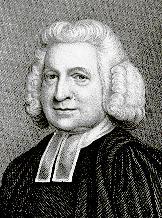
Charles Wesley

1707 - 1788 Person Name: Charles Wesley, 1707-88 Topics: The Presentation of Christ in the Temple February 2nd Author of "Christ, whose glory fills the skies" in The New English Hymnal Charles Wesley, M.A. was the great hymn-writer of the Wesley family, perhaps, taking quantity and quality into consideration, the great hymn-writer of all ages. Charles Wesley was the youngest son and 18th child of Samuel and Susanna Wesley, and was born at Epworth Rectory, Dec. 18, 1707. In 1716 he went to Westminster School, being provided with a home and board by his elder brother Samuel, then usher at the school, until 1721, when he was elected King's Scholar, and as such received his board and education free. In 1726 Charles Wesley was elected to a Westminster studentship at Christ Church, Oxford, where he took his degree in 1729, and became a college tutor. In the early part of the same year his religious impressions were much deepened, and he became one of the first band of "Oxford Methodists." In 1735 he went with his brother John to Georgia, as secretary to General Oglethorpe, having before he set out received Deacon's and Priest's Orders on two successive Sundays. His stay in Georgia was very short; he returned to England in 1736, and in 1737 came under the influence of Count Zinzendorf and the Moravians, especially of that remarkable man who had so large a share in moulding John Wesley's career, Peter Bonier, and also of a Mr. Bray, a brazier in Little Britain. On Whitsunday, 1737, [sic. 1738] he "found rest to his soul," and in 1738 he became curate to his friend, Mr. Stonehouse, Vicar of Islington, but the opposition of the churchwardens was so great that the Vicar consented that he "should preach in his church no more." Henceforth his work was identified with that of his brother John, and he became an indefatigable itinerant and field preacher. On April 8, 1749, he married Miss Sarah Gwynne. His marriage, unlike that of his brother John, was a most happy one; his wife was accustomed to accompany him on his evangelistic journeys, which were as frequent as ever until the year 1756," when he ceased to itinerate, and mainly devoted himself to the care of the Societies in London and Bristol. Bristol was his headquarters until 1771, when he removed with his family to London, and, besides attending to the Societies, devoted himself much, as he had done in his youth, to the spiritual care of prisoners in Newgate. He had long been troubled about the relations of Methodism to the Church of England, and strongly disapproved of his brother John's "ordinations." Wesley-like, he expressed his disapproval in the most outspoken fashion, but, as in the case of Samuel at an earlier period, the differences between the brothers never led to a breach of friendship. He died in London, March 29, 1788, and was buried in Marylebone churchyard. His brother John was deeply grieved because he would not consent to be interred in the burial-ground of the City Road Chapel, where he had prepared a grave for himself, but Charles said, "I have lived, and I die, in the Communion of the Church of England, and I will be buried in the yard of my parish church." Eight clergymen of the Church of England bore his pall. He had a large family, four of whom survived him; three sons, who all became distinguished in the musical world, and one daughter, who inherited some of her father's poetical genius. The widow and orphans were treated with the greatest kindness and generosity by John Wesley. As a hymn-writer Charles Wesley was unique. He is said to have written no less than 6500 hymns, and though, of course, in so vast a number some are of unequal merit, it is perfectly marvellous how many there are which rise to the highest degree of excellence. His feelings on every occasion of importance, whether private or public, found their best expression in a hymn. His own conversion, his own marriage, the earthquake panic, the rumours of an invasion from France, the defeat of Prince Charles Edward at Culloden, the Gordon riots, every Festival of the Christian Church, every doctrine of the Christian Faith, striking scenes in Scripture history, striking scenes which came within his own view, the deaths of friends as they passed away, one by one, before him, all furnished occasions for the exercise of his divine gift. Nor must we forget his hymns for little children, a branch of sacred poetry in which the mantle of Dr. Watts seems to have fallen upon him. It would be simply impossible within our space to enumerate even those of the hymns which have become really classical. The saying that a really good hymn is as rare an appearance as that of a comet is falsified by the work of Charles Wesley; for hymns, which are really good in every respect, flowed from his pen in quick succession, and death alone stopped the course of the perennial stream. It has been the common practice, however for a hundred years or more to ascribe all translations from the German to John Wesley, as he only of the two brothers knew that language; and to assign to Charles Wesley all the original hymns except such as are traceable to John Wesley through his Journals and other works. The list of 482 original hymns by John and Charles Wesley listed in this Dictionary of Hymnology have formed an important part of Methodist hymnody and show the enormous influence of the Wesleys on the English hymnody of the nineteenth century. -- Excerpts from John Julian, Dictionary of Hymnology (1907) ================== Charles Wesley, the son of Samuel Wesley, was born at Epworth, Dec. 18, 1707. He was educated at Westminster School and afterwards at Christ Church, Oxford, where he graduated M.A. In 1735, he took Orders and immediately proceeded with his brother John to Georgia, both being employed as missionaries of the S.P.G. He returned to England in 1736. For many years he engaged with his brother in preaching the Gospel. He died March 29, 1788. To Charles Wesley has been justly assigned the appellation of the "Bard of Methodism." His prominence in hymn writing may be judged from the fact that in the "Wesleyan Hymn Book," 623 of the 770 hymns were written by him; and he published more than thirty poetical works, written either by himself alone, or in conjunction with his brother. The number of his separate hymns is at least five thousand. --Annotations of the Hymnal, Charles Hutchins, M.A., 1872.

James Quinn

1919 - 2010 Person Name: James Quinn, 1919- Topics: Saints Days and Holy Days Presentation of Christ in the Temple Author of "Lord, bid your servant go in peace" in Together in Song James Quinn (b. Glasgow, Scotland, April 21, 1919; d. Edinburgh, Scotland, April 8, 2010) was a Roman Catholic Jesuit priest who was ordained in 1950. As a consultant for the International Commission on English in the Liturgy, sparked by Vatican II, he has exerted influence far beyond his native Scotland. A collection of his hymn texts is available from Selah Publishing company. Sing a New Creation

Cyril Taylor

1907 - 1991 Person Name: Cyril Vincent Taylor, 1907-1991 Topics: Years A, B, and C Presentation of Christ in the Temple Composer of "ABBOT'S LEIGH" in Complete Anglican Hymns Old and New Cyril V. Taylor (b. Wigan, Lancashire, England, 1907; d. Petersfield, England, 1991) was a chorister at Magdalen College School, Oxford, and studied at Christ Church, Oxford, and Westcott House, Cambridge. Ordained a priest in the Church of England in 1932, he served the church as both pastor and musician. His positions included being a producer in the religious broadcasting department of the BBC (1939­-1953), chaplain of the Royal School of Church Music (1953-1958), vicar of Cerne Abbas in Dorsetshire (1958-1969), and precentor of Salisbury Cathedral (1969-1975). He contributed twenty hymn tunes to the BBC Hymn Book (1951), which he edited, and other tunes to the Methodist Hymns and Psalms (1983). He also edited 100 Hymns for Today (1969) and More Hymns for Today (1980). Writer of the booklet Hymns for Today Discussed (1984), Taylor was chairman of the Hymn Society of Great Britain and Ireland from 1975 to 1980. Bert Polman

Reginald Heber

1783 - 1826 Person Name: Bishop R. Heber, 1783-1826 Topics: The Presentation of Christ in the Temple February 2nd Author of "Virgin born, we bow before thee" in The New English Hymnal Reginald Heber was born in 1783 into a wealthy, educated family. He was a bright youth, translating a Latin classic into English verse by the time he was seven, entering Oxford at 17, and winning two awards for his poetry during his time there. After his graduation he became rector of his father's church in the village of Hodnet near Shrewsbury in the west of England where he remained for 16 years. He was appointed Bishop of Calcutta in 1823 and worked tirelessly for three years until the weather and travel took its toll on his health and he died of a stroke. Most of his 57 hymns, which include "Holy, Holy, Holy," are still in use today. -- Greg Scheer, 1995 ==================== Heber, Reginald, D.D. Born at Malpas, April 21, 1783, educated at Brasenose College, Oxford; Vicar of Hodnet, 1807; Bishop of Calcutta, 1823; died at Trichinopoly, India, April 3, 1826. The gift of versification shewed itself in Heber's childhood; and his Newdigate prize poem Palestine, which was read to Scott at breakfast in his rooms at Brazenose, Oxford, and owed one of its most striking passages to Scott's suggestion, is almost the only prize poem that has won a permanent place in poetical literature. His sixteen years at Hodnet, where he held a halfway position between a parson and a squire, were marked not only by his devoted care of his people, as a parish priest, but by literary work. He was the friend of Milman, Gifford, Southey, and others, in the world of letters, endeared to them by his candour, gentleness, "salient playfulness," as well as learning and culture. He was on the original staff of The Quarterly Review; Bampton Lecturer (1815); and Preacher at Lincoln's Inn (1822). His edition of Jeremy Taylor is still the classic edition. During this portion of his life he had often had a lurking fondness for India, had traced on the map Indian journeys, and had been tempted to wish himself Bishop of Calcutta. When he was forty years old the literary life was closed by his call to the Episcopate. No memory of Indian annals is holier than that of the three years of ceaseless travel, splendid administration, and saintly enthusiasm, of his tenure of the see of Calcutta. He ordained the first Christian native—Christian David. His first visitation ranged through Bengal, Bombay, and Ceylon; and at Delhi and Lucknow he was prostrated with fever. His second visitation took him through the scenes of Schwartz's labours in Madras Presidency to Trichinopoly, where on April 3,1826, he confirmed forty-two persons, and he was deeply moved by the impression of the struggling mission, so much so that “he showed no appearance of bodily exhaus¬tion." On his return from the service ”He retired into his own room, and according to his invariable custom, wrote on the back of the address on Confirmation 'Trichinopoly, April 3, 1826.' This was his last act, for immediately on taking off his clothes, he went into a large cold bath, where he had bathed the two preceding mornings, but which was now the destined agent of his removal to Paradise. Half an hour after, his servant, alarmed at his long absence, entered the room and found him a lifeless corpse." Life, &c, 1830, vol. ii. p. 437. Heber's hymns were all written during the Hodnet period. Even the great missionary hymn, "From Greenland's icy mountains," notwithstanding the Indian allusions ("India's coral strand," "Ceylon's isle"), was written before he received the offer of Calcutta. The touching funeral hymn, "Thou art gone to the grave," was written on the loss of his first babe, which was a deep grief to him. Some of the hymns were published (1811-16) in the Christian Observer, the rest were not published till after his death. They formed part of a ms. collection made for Hodnet (but not published), which contained, besides a few hymns from older and special sources, contributions by Milman. The first idea of the collection appears in a letter in 1809 asking for a copy of the Olney Hymns, which he "admired very much." The plan was to compose hymns connected with the Epistles and Gospels, to be sung after the Nicene Creed. He was the first to publish sermons on the Sunday services (1822), and a writer in The Guardian has pointed out that these efforts of Heber were the germs of the now familiar practice, developed through the Christian Year (perhaps following Ken's Hymns on the Festivals), and by Augustus Hare, of welding together sermon, hymnal, and liturgy. Heber tried to obtain from Archbishop Manners Sutton and the Bishop of London (1820) authorization of his ms. collection of hymns by the Church, enlarging on the "powerful engine" which hymns were among Dissenters, and the irregular use of them in the church, which it was impossible to suppress, and better to regulate. The authorization was not granted. The lyric spirit of Scott and Byron passed into our hymns in Heber's verse; imparting a fuller rhythm to the older measures, as illustrated by "Oh, Saviour, is Thy promise fled," or the martial hymn, "The Son of God goes forth to war;" pressing into sacred service the freer rhythms of contemporary poetry (e.g. "Brightest and best of the sons of the morning"; "God that madest earth and heaven"); and aiming at consistent grace of literary expression.. Their beauties and faults spring from this modern spirit. They have not the scriptural strength of our best early hymns, nor the dogmatic force of the best Latin ones. They are too flowing and florid, and the conditions of hymn composition are not sufficiently understood. But as pure and graceful devotional poetry, always true and reverent, they are an unfailing pleasure. The finest of them is that majestic anthem, founded on the rhythm of the English Bible, "Holy, Holy, Holy, Lord God Almighty." The greatest evidence of Heber's popularity as a hymnwriter, and his refined taste as a compiler, is found in the fact that the total contents of his ms. collection which were given in his posthumous Hymns written and adapted to the Weekly Church Service of the Year. London, J. Murray, 1827; which included 57 hymns by Heber, 12 by Milman, and 29 by other writers, are in common in Great Britain and America at the present time. [Rev. H. Leigh Bennett, M.A.] Of Bishop Heber's hymns, about one half are annotated under their respective first lines. Those given below were published in Heber's posthumous Hymns, &c, 1827. Some of them are in extensive use in Great Britain and America; but as they possess no special histories they are grouped together as from the Hymns, &c, 1827:— 1. Beneath our feet, and o'er our head. Burial. 2. Creator of the rolling flood. St. Peter's Day, or, Gospel for 6th Sunday after Trinity. 3. Lo, the lilies of the field. Teachings of Nature: or, Gospel for 15th Sunday after Trinity. 4. 0 God, by Whom the seed is given. Sexagesima. 6. 0 God, my sins are manifold. Forgiveness, or, Gospel for 22nd S. after Trinity. 6. 0 hand of bounty, largely spread. Water into Wine, or, Gospel for 2nd S. after Epiphany. 7. 0 King of earth, and air, and sea. Feeding the Multitude; or, Gospel for 4th S. in Lent. 8. 0 more than merciful, Whose bounty gave. Good Friday. 9. 0 most merciful! 0 most bountiful. Introit Holy Communion. 10. 0 Thou, Whom neither time nor space. God unsearchable, or, Gospel for 5th Sunday in Lent. 11. 0 weep not o'er thy children's tomb. Innocents Day. 12. Room for the proud! Ye sons of clay. Dives and Lazarus, or, Gospel for 1st Sunday after Trinity. 13. Sit thou on my right hand, my Son, saith the Lord. Ascension. 14. Spirit of truth, on this thy day. Whit-Sunday. 15. The feeble pulse, the gasping breath. Burial, or, Gospel for 1st S. after Trinity. 16. The God of glory walks His round. Septuagesima, or, the Labourers in the Marketplace. 17. The sound of war in earth and air. Wrestling against Principalities and Powers, or, Epistle for 2lst Sunday after Trinity. 18. The world is grown old, her pleasures are past. Advent; or, Epistle for 4th Sunday in Advent. 19. There was joy in heaven. The Lost Sheep; or, Gospel for 3rd S. after Trinity. 20. Though sorrows rise and dangers roll. St. James's Day. 21. To conquer and to save, the Son of God. Christ the Conqueror. 22. Virgin-born, we bow before Thee. The Virgin Mary. Blessed amongst women, or, Gospel for 3rd S. in Lent. 23. Wake not, 0 mother, sounds of lamentation. Raising the Widow's Son, or, Gospel for 16th S. after Trinity. 24. When on her Maker's bosom. Holy Matrimony, or, Gospel for 2nd S. after Epiphany. 25. When through the torn sail the wild tempest is streaming. Stilling the Sea, or, Gospel for 4th Sunday after Epiphany. 26. Who yonder on the desert heath. The Good Samaritan, or, Gospel for 13th Sunday after Trinity. This list is a good index of the subjects treated of in those of Heber's hymns which are given under their first lines, and shows that he used the Gospels far more than the Epistles in his work. --John Julian, Dictionary of Hymnology (1907)

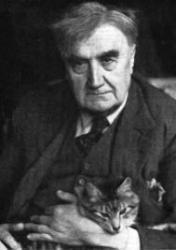
Ralph Vaughan Williams

1872 - 1958 Person Name: R. V. W. Topics: The Presentation of Christ in the Temple February 2nd Harmonizer of "MON DIEU, PRÊTE MOI L'OREILLE" in The New English Hymnal Through his composing, conducting, collecting, editing, and teaching, Ralph Vaughan Williams (b. Down Ampney, Gloucestershire, England, October 12, 1872; d. Westminster, London, England, August 26, 1958) became the chief figure in the realm of English music and church music in the first half of the twentieth century. His education included instruction at the Royal College of Music in London and Trinity College, Cambridge, as well as additional studies in Berlin and Paris. During World War I he served in the army medical corps in France. Vaughan Williams taught music at the Royal College of Music (1920-1940), conducted the Bach Choir in London (1920-1927), and directed the Leith Hill Music Festival in Dorking (1905-1953). A major influence in his life was the English folk song. A knowledgeable collector of folk songs, he was also a member of the Folksong Society and a supporter of the English Folk Dance Society. Vaughan Williams wrote various articles and books, including National Music (1935), and composed numerous arrange­ments of folk songs; many of his compositions show the impact of folk rhythms and melodic modes. His original compositions cover nearly all musical genres, from orchestral symphonies and concertos to choral works, from songs to operas, and from chamber music to music for films. Vaughan Williams's church music includes anthems; choral-orchestral works, such as Magnificat (1932), Dona Nobis Pacem (1936), and Hodie (1953); and hymn tune settings for organ. But most important to the history of hymnody, he was music editor of the most influential British hymnal at the beginning of the twentieth century, The English Hymnal (1906), and coeditor (with Martin Shaw) of Songs of Praise (1925, 1931) and the Oxford Book of Carols (1928). Bert Polman

Aurelius Clemens Prudentius

348 - 410 Person Name: Prudentius, 348-413 Topics: The Presentation of Christ in the Temple February 2nd Author of "Of the Father's heart begotten" in The New English Hymnal Marcus Aurelius Clemens Prudentius, "The Christian Pindar" was born in northern Spain, a magistrate whose religious convictions came late in life. His subsequent sacred poems were literary and personal, not, like those of St. Ambrose, designed for singing. Selections from them soon entered the Mozarabic rite, however, and have since remained exquisite treasures of the Western churches. His Cathemerinon liber, Peristephanon, and Psychomachia were among the most widely read books of the Middle Ages. A concordance to his works was published by the Medieval Academy of America in 1932. There is a considerable literature on his works. --The Hymnal 1940 Companion ============= Prudentius, Aurelius Clemens , with the occasional prefix of Marcus (cf. Migne, vol. lix. p. 593, and Dressel, p. ii. n), is the name of the most prominent and most prolific author of sacred Latin poetry in its earliest days. Of the writer himself we know nothing, or next to nothing, beyond what he has himself told us in a short introduction in verse to his works. From that source we learn that he was a Spaniard, of good family evidently, and that he was born A.D. 348 somewhere in the north of Spain, either at Saragossa, Tarragona, or Calahorra, but at which is left uncertain, by his applying the same expression to all, which if applied only to one would have fixed his place of birth. After receiving a good education befitting his social status he applied himself for some years to practising as a pleader in the local courts of law, until he received promotion to a judgeship in two cities successively:— "Bis legum moderanrine Frenos nobilium reximus urbium Jus civile bonis reddidimus, terruimus reos;" and afterwards to a post of still higher authority: "Tandem militiae gradu Evectum pietas principis extulit." Archbishop Trench considers this last to have been "a high military appointment at court," and such the poet's own words would seem to describe; but it may well be doubted whether a civilian and a lawyer would be eligible for such employment; in which case we may adopt the solution of the difficulty offered in the Prolegomena to our author's works (Migne, vol. lix. p. 601):— "Evectus indeest ad superiorem rnilitia? gradum, nimirum militia? civil is, palatinae, aut praesidialis, non bellicae, castrensis, aut cohortalis; nam ii qui officiis jure consultorum praesidum, rectorum et similium funguntur, vulgo in cod. Theod. militare et ad superiores militias ascendere dicuntur." It was after this lengthened experience at a comparatively early age of positions of trust and power that Prudentius, conscience-smitten on account of the follies and worldliness that had marked his youth and earlier manhood, determined to throw up all his secular employments, and devote the remainder of his life to advancing the interests of Christ's Church by the power of his pen rather than that of his purse and personal position. Accordingly we find that he retired in his 57th year into poverty and private life, and began that remarkable succession of sacred poems upon which his fame now entirely rests. We have no reason however to regard him as another St. Augustine, rescued from the "wretchedness of most unclean living" by this flight from the temptations and engrossing cares of official life into the calm seclusion of a wholly devotional leisure. He had probably rather learnt from sad experience the emptiness and vanity for an immortal soul of the surroundings of even the high places of this world. As he himself expresses it:— "Numquid talia proderunt Carnis post obitum vel bona, vel mala, Cum jam, quicquid id est, quod fueram, mors aboleverit?" and sought, at the cost of all that the world holds dear, those good things which God hath prepared for them that love Him. Beyond the fact of his retirement from the world in this way, and the fruits which it produced in the shape of his voluminous contributions to sacred poetry, we have no further information about our author. To judge from the amount he wrote, his life must have been extended many years after he began his new career, but how long his life was or where he died we are not told. Probably he died circa 413. His works are:— (1) Liber Cathemerinon. "Christian Day, as we may call it" W. S. Lilly, "Chapters in European History," vol. i. p. 208). (2) Liber Peristephanon. "Martyrs' Garlands" (id.). (3) Apotheosis. A work on the Divine Nature, or the Deification of Human Nature in Christ. (4) Hamartigenia. A treatise on the Origin of Sin, directed against the Marcionites. (5) Psychomachia or "The Spiritual Combat"-—an allegorical work. (6) Libri contra Symmachum. A controversial work against the restoration in the Senate House at Rome of the altar of Victory which Gratian had removed. Symmachus had petitioned Valentinian II. for its restoration in 384, but the influence of St. Ambrose had prevailed against him at that time. In 392 the altar was restored, but removed again by Theodosius in 394. After the death of the latter the attempt to restore it was renewed by Arcadius and Honorius, and it was at that time that Prudentius wrote his first book. The second (for there are two) was written in 405. Fague considers that the first may date in 395. (7) The Dittochseon = the double food or double Testament, is a wordy collection of 49 sets of four verses each, on Old and New Testament scenes. Of these different works the most important are the first two, and it is from them that the Liturgical hymns enumerated below have been chiefly compiled. The general character of Prudentius's writings it is not easy fairly to estimate, and to judge by the wholesale laudation he obtains from some of his critics, and the equally unsparing censure of others, his judges have so found it. In venturing upon any opinion upon such a subject, the reader must bear in mind the peculiar position in which the period at which he was writing found the poet. The poetry of classical Rome in all its exact beauty of form had long passed its meridian, and was being replaced by a style which was yet in its infancy, but which burst forth into new life and beauty in the hands of the Mediaeval hymnologists. Prudentius wrote before rhyming Latin verse was thought of, but after attention had ceased to be given to quantities. Under such circumstances it were vain to look for very finished work from him, and such certainly we do not find. But amidst a good deal of what one must confess is tasteless verbiage or clumsy rhetorical ornament-—however varied the metres he employs, numbering some 17—-there are also passages to be found, not unfrequently, of dramatic vigour and noble expression, which may well hold their own with the more musical utterances of a later date. He writes as a man intensely in earnest, and we may gather much from his writings concerning the points of conduct which were deemed the most important in Christian living at a time when a great portion of mankind were still the victims or slaves of a morality which, heathen at the best, was lowered and corrupted the more as the universality of its influence was more and more successfully challenged by the spread of the Gospel of Christ. If, there¬fore, we can scarcely go as far in our author's praise as Barth—-much given to lavish commendation—-who describes him as "Poeta eximius eruditissimus et sanctissimus scriptor; nemo divinius de rebus Christianis unquam scripsit"; or as Bentley—-not given to praise--who calls him the "Horace and Virgil of the Christians," we shall be as loath, considering under what circumstances he wrote, to carp at his style as not being formed on the best ancient models but as confessedly impure; feeling with Archbishop Trench that it is his merit that "whether consciously or unconsciously, he acted on the principle that the new life claimed new forms in which to manifest itself; that he did not shrink from helping forward that great transformation of the Latin language, which it needed to undergo, now that it should be the vehicle of truths which, were all together novel to it." (Sacred Latin Poetry, 1874, p. 121.) The reader will find so exhaustive an account of the various writings of Prudentius in the account given of him and them in Smith and Wace's Dictionary of Christian Biography, and Smith's Dictionary of Greek and Roman Biography, that it is only necessary in this work to refer very briefly to them as above. The poems have been constantly reprinted and re-edited, till the editor who produced the best edition we have of them, Albert Dressel (Leipsic, 1860), is able to say that his is the sixty-third. The use made of Prudentius's poems in the ancient Breviaries and Hymnaries was very extensive. In the form of centos stanzas and lines wore compiled and used as hymns; and it is mainly from these centos, and not from the original poems, that the translations into English were made. Daniel, i., Nos. 103-115, gives 13 genuine hymns as having been in use for "Morning," "Christmas," "Epiphany," "Lent," "Easter," "Transfiguration," "Burial," &c, in the older Breviaries. ….Many more which were used in like manner have been translated into English. When to these are added the hymns and those which have not been translated into English, we realise the position and power of Prudentius in the hymnody of the Church. [Rev. Digby S. Wrangham, M.A.] --John Julian, Dictionary of Hymnology (1907) ============== Prudentius, A. C, p. 915, ii. Two somewhat full versions of Prudentius are: (1) The Cathemerinon and other Poems of Aurelius Prudentius Clemens in English Verse, Lond., Rivington, 1845; and (2) Translations from Prudentius. By Francis St. John Thackeray, M.A.. F.S.A. Lond., Bell & Sons, 1890. --John Julian, Dictionary of Hymnology, Appendix, Part II (1907)

Pages


Export as CSV
It looks like you are using an ad-blocker. Ad revenue helps keep us running. Please consider white-listing Hymnary.org or getting Hymnary Pro to eliminate ads entirely and help support Hymnary.org.