You help make Hymnary.org possible. More than 10 million people from 200+ countries found hymns, liturgical resources and encouragement on Hymnary.org in 2025, including you. Every visit affirms the global impact of this ministry.

If Hymnary has been meaningful to you this year, would you take a moment today to help sustain it? A gift of any size—paired with a note of encouragement if you wish—directly supports the server costs, research work and curation that keep this resource freely available to the world.

Give securely online today, or mail a check to:
Hymnary.org
Calvin University
3201 Burton Street SE
Grand Rapids, MI 49546

Thank you for your partnership, and may the hope of Advent fill your heart.

Person Results

Topics:trinity+19
In:people

Planning worship? Check out our sister site, ZeteoSearch.org, for 20+ additional resources related to your search.
Showing 1 - 10 of 141Results Per Page: 102050

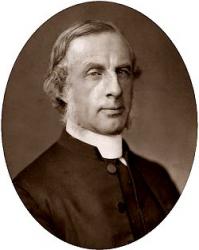
E. H. Plumptre

1821 - 1891 Person Name: Edward Hayes Plumptre Topics: Trinity 19 Gospel Author of "Thine arm, O Lord, in days of old" in Magnify the Lord Edward H. Plumptre (b. London, England, August 6, 1821; d. Wells, England, February 1, 1891) was an eminent classical and biblical scholar who gained prominence in both church and university. Educated at King's College, London, and University College, Oxford, he was ordained in the Church of England in 1846. Plumptre served as a preacher at Oxford and a professor of pastoral theology at King's College, and held a number of other prestigious positions. His writings include A Life of Bishop Ken (1888), translations from Greek and Latin classics, and poetry and hymns. Plumptre was also a member of the committee that produced the Revised Version of the Bible. Bert Polman ==================== Plumptre, Edward Hayes, D.D., son of Mr. E. H. Plumptre, was born in London, Aug. 6, 1821, and educated at King's College, London, and University College, Oxford, graduating as a double first in 1844. He was for some time Fellow of Brasenose. On taking Holy Orders in 1846 he rapidly attained to a foremost position as a Theologian and Preacher. His appointments have been important and influential, and include that of Assistant Preacher at Lincoln's Inn; Select Preacher at Oxford; Professor of Pastoral Theology at King's College, London; Dean of Queen's, Oxford; Prebendary in St. Paul's Cathedral, London; Professor of Exegesis of the New Testament in King's College, London; Boyle Lecturer; Grinfield Lecturer on the Septuagint, Oxford; Examiner in the Theological schools at Oxford; Member of the Old Testament Company for the Revision of the A.V. of the Holy Scriptures; Rector of Pluckley, 1869; Vicar of Bickley, Kent, 1873; and Dean of Wells, 1881. Dean Plumptre's literary productions have been very numerous and important, and embrace the classics, history, divinity, biblical criticism, biography, and poetry. The list as set forth in Crockford's Clerical Directory is very extensive. His poetical works include Lazarus, and Other Poems, 1864; Master and Scholar, 1866; Things New and Old, 1884; and translations of Sophocles, Æschylus, and Dante. As a writer of sacred poetry he ranks very high. His hymns are elegant in style, fervent in spirit, and broad in treatment. The subjects chosen are mainly those associated with the revived Church life of the present day, from the Processional at a Choral Festival to hospital work and the spiritual life in schools and colleges. The rhythm of his verse has a special attraction for musicians, its poetry for the cultured, and its stately simplicity for the devout and earnest-minded. The two which have attained to the most extensive use in Great Britain and America are: Rejoice, ye pure in heart," and "Thine arm, O Lord, in days of old." His translations from the Latin, many of which were made for the Hymnary, 1871 and 1872, are very good and musical, but they have not been used in any way in proportion to their merits. His original hymns in common use include:— 1. Behold they gain the lonely height. The Transfiguration. Written for and first published in the Society for Promoting Christian Knowledge Church Hymns, 1871. 2. For all Thy countless bounties. National Hymns. Written for the Jubilee of Queen Victoria, 1887, and set to music by C. W. Lavington. It was printed, together with the National Anthem adapted for the Jubilee, in Good Words, 1887. 3. Lo, summer comes again! Harvest. Written in 1871 for use at the Harvest Festival in Pluckley Church, Kent, of which the author was then rector, and published in the same year in the Hymnary, No. 466. 4. March, march, onward soldiers true. Processional at Choral Festivals. Written in 1867 for the tune of Costa's March of the Israelites in the Oratorio of Eli, at the request of the Rev. Henry White, Chaplain of the Savoy, and first used in that Chapel. It was subsequently published in the Savoy Hymnary, N.D. [1870], in 4 stanzas of 4 lines; in a Choral Festival book at Peterborough, and in the S. P. C. K. Church Hymns, 1871. 5. 0 Light, Whose beams illumine all. The Way, the Truth, and the Life. Written in May 1864, and published in his Lazarus, and Other Poems, 1864, as one of five Hymns for School and College. It passed into the 1868 Appendix to Hymns Ancient & Modern, and again into other collections. 6. 0 Lord of hosts, all heaven possessing. For School or College. Written in May, 1864, and published in his Lazarus and other Poems, 1864, in 5 stanzas of 6 lines. 7. 0 praise the Lord our God. Processional Thanksgiving Hymn. Written May 1864, and published in his Lazarus, and other Poems, 1864, in 4 stanzas of 8 lines. It is a most suitable hymn for Sunday school gatherings. 8. Rejoice, ye pure in heart. Processional at Choral Festival. Written in May 1865, for the Peterborough Choral Festival of that year, and first used in Peterborough Cathedral. In the same year it was published with special music by Novello & Co; and again (without music) in the 2nd edition of Lazarus, and Other Poems, 1865. It was included in the 1868 Appendix to Hymns Ancient & Modern with the change in stanza i., line 3, of "Your orient banner wave on high," to "Your festal banner wave on high." It is more widely used than any other of the author's hymns. Authorized text in Hymns Ancient & Modern. 9. Thine arm, 0 Lord, in days of old. Hospitals. Written in 1864 for use in King's College Hospital, London, and first printed on a fly-sheet as "A Hymn used in the Chapel of King's College Hospital." It was included in the 2nd edition of Lazarus, and Other Poems, 1865; in the 1868 Appendix to Hymns Ancient & Modern; the S. P. C. K. Church Hymns, 1871; Thring's Collection, 1882; and many others. 10. Thy hand, 0 God, has guided. Church Defence. Included in the 1889 Supplemental Hymns to Hymns Ancient & Modern The closing line of each stanza, "One Church, one Faith, one Lord," comes in with fine effect. Dean Plumptre's Life of Bishop Ken, 1888, is an exhaustive and excellent work. -- John Julian, Dictionary of Hymnology (1907) =============== Plumptre, E. H., p. 897, i. Died at the Deanery, Wells, Feb. 1, 1891. --John Julian, Dictionary of Hymnology, Appendix, Part II (1907)

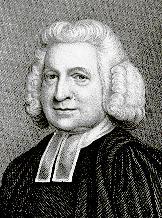
Charles Wesley

1707 - 1788 Topics: Trinity 19 Gospel Author of "O for a thousand tongues to sing My dear Redeemer's praise" in Magnify the Lord Charles Wesley, M.A. was the great hymn-writer of the Wesley family, perhaps, taking quantity and quality into consideration, the great hymn-writer of all ages. Charles Wesley was the youngest son and 18th child of Samuel and Susanna Wesley, and was born at Epworth Rectory, Dec. 18, 1707. In 1716 he went to Westminster School, being provided with a home and board by his elder brother Samuel, then usher at the school, until 1721, when he was elected King's Scholar, and as such received his board and education free. In 1726 Charles Wesley was elected to a Westminster studentship at Christ Church, Oxford, where he took his degree in 1729, and became a college tutor. In the early part of the same year his religious impressions were much deepened, and he became one of the first band of "Oxford Methodists." In 1735 he went with his brother John to Georgia, as secretary to General Oglethorpe, having before he set out received Deacon's and Priest's Orders on two successive Sundays. His stay in Georgia was very short; he returned to England in 1736, and in 1737 came under the influence of Count Zinzendorf and the Moravians, especially of that remarkable man who had so large a share in moulding John Wesley's career, Peter Bonier, and also of a Mr. Bray, a brazier in Little Britain. On Whitsunday, 1737, [sic. 1738] he "found rest to his soul," and in 1738 he became curate to his friend, Mr. Stonehouse, Vicar of Islington, but the opposition of the churchwardens was so great that the Vicar consented that he "should preach in his church no more." Henceforth his work was identified with that of his brother John, and he became an indefatigable itinerant and field preacher. On April 8, 1749, he married Miss Sarah Gwynne. His marriage, unlike that of his brother John, was a most happy one; his wife was accustomed to accompany him on his evangelistic journeys, which were as frequent as ever until the year 1756," when he ceased to itinerate, and mainly devoted himself to the care of the Societies in London and Bristol. Bristol was his headquarters until 1771, when he removed with his family to London, and, besides attending to the Societies, devoted himself much, as he had done in his youth, to the spiritual care of prisoners in Newgate. He had long been troubled about the relations of Methodism to the Church of England, and strongly disapproved of his brother John's "ordinations." Wesley-like, he expressed his disapproval in the most outspoken fashion, but, as in the case of Samuel at an earlier period, the differences between the brothers never led to a breach of friendship. He died in London, March 29, 1788, and was buried in Marylebone churchyard. His brother John was deeply grieved because he would not consent to be interred in the burial-ground of the City Road Chapel, where he had prepared a grave for himself, but Charles said, "I have lived, and I die, in the Communion of the Church of England, and I will be buried in the yard of my parish church." Eight clergymen of the Church of England bore his pall. He had a large family, four of whom survived him; three sons, who all became distinguished in the musical world, and one daughter, who inherited some of her father's poetical genius. The widow and orphans were treated with the greatest kindness and generosity by John Wesley. As a hymn-writer Charles Wesley was unique. He is said to have written no less than 6500 hymns, and though, of course, in so vast a number some are of unequal merit, it is perfectly marvellous how many there are which rise to the highest degree of excellence. His feelings on every occasion of importance, whether private or public, found their best expression in a hymn. His own conversion, his own marriage, the earthquake panic, the rumours of an invasion from France, the defeat of Prince Charles Edward at Culloden, the Gordon riots, every Festival of the Christian Church, every doctrine of the Christian Faith, striking scenes in Scripture history, striking scenes which came within his own view, the deaths of friends as they passed away, one by one, before him, all furnished occasions for the exercise of his divine gift. Nor must we forget his hymns for little children, a branch of sacred poetry in which the mantle of Dr. Watts seems to have fallen upon him. It would be simply impossible within our space to enumerate even those of the hymns which have become really classical. The saying that a really good hymn is as rare an appearance as that of a comet is falsified by the work of Charles Wesley; for hymns, which are really good in every respect, flowed from his pen in quick succession, and death alone stopped the course of the perennial stream. It has been the common practice, however for a hundred years or more to ascribe all translations from the German to John Wesley, as he only of the two brothers knew that language; and to assign to Charles Wesley all the original hymns except such as are traceable to John Wesley through his Journals and other works. The list of 482 original hymns by John and Charles Wesley listed in this Dictionary of Hymnology have formed an important part of Methodist hymnody and show the enormous influence of the Wesleys on the English hymnody of the nineteenth century. -- Excerpts from John Julian, Dictionary of Hymnology (1907) ================== Charles Wesley, the son of Samuel Wesley, was born at Epworth, Dec. 18, 1707. He was educated at Westminster School and afterwards at Christ Church, Oxford, where he graduated M.A. In 1735, he took Orders and immediately proceeded with his brother John to Georgia, both being employed as missionaries of the S.P.G. He returned to England in 1736. For many years he engaged with his brother in preaching the Gospel. He died March 29, 1788. To Charles Wesley has been justly assigned the appellation of the "Bard of Methodism." His prominence in hymn writing may be judged from the fact that in the "Wesleyan Hymn Book," 623 of the 770 hymns were written by him; and he published more than thirty poetical works, written either by himself alone, or in conjunction with his brother. The number of his separate hymns is at least five thousand. --Annotations of the Hymnal, Charles Hutchins, M.A., 1872.

C. G. Gläser

1784 - 1829 Person Name: Carl G. Gläser Topics: Trinity 19 Gospel Composer of "AZMON" in Magnify the Lord Carl Gotthelf Gläser Germany 1781-1829. Born at Weissenfels, Burgenlandkreis, Sachsen-Anhalt, Germany, he received musical training from his father, after which he attended St. Thomas school in Leipzig. He became an author and composer. At Barmen he taught voice, piano, and violin. He also wrote and conducted chorale music. He died at Barmen. John Perry

Lowell Mason

1792 - 1872 Topics: Trinity 19 Gospel Arranger of "AZMON" in Magnify the Lord Dr. Lowell Mason (the degree was conferred by the University of New York) is justly called the father of American church music; and by his labors were founded the germinating principles of national musical intelligence and knowledge, which afforded a soil upon which all higher musical culture has been founded. To him we owe some of our best ideas in religious church music, elementary musical education, music in the schools, the popularization of classical chorus singing, and the art of teaching music upon the Inductive or Pestalozzian plan. More than that, we owe him no small share of the respect which the profession of music enjoys at the present time as contrasted with the contempt in which it was held a century or more ago. In fact, the entire art of music, as now understood and practiced in America, has derived advantage from the work of this great man. Lowell Mason was born in Medfield, Mass., January 8, 1792. From childhood he had manifested an intense love for music, and had devoted all his spare time and effort to improving himself according to such opportunities as were available to him. At the age of twenty he found himself filling a clerkship in a banking house in Savannah, Ga. Here he lost no opportunity of gratifying his passion for musical advancement, and was fortunate to meet for the first time a thoroughly qualified instructor, in the person of F. L. Abel. Applying his spare hours assiduously to the cultivation of the pursuit to which his passion inclined him, he soon acquired a proficiency that enabled him to enter the field of original composition, and his first work of this kind was embodied in the compilation of a collection of church music, which contained many of his own compositions. The manuscript was offered unavailingly to publishers in Philadelphia and in Boston. Fortunately for our musical advancement it finally secured the attention of the Boston Handel and Haydn Society, and by its committee was submitted to Dr. G. K. Jackson, the severest critic in Boston. Dr. Jackson approved most heartily of the work, and added a few of his own compositions to it. Thus enlarged, it was finally published in 1822 as The Handel and Haydn Society Collection of Church Music. Mason's name was omitted from the publication at his own request, which he thus explains, "I was then a bank officer in Savannah, and did not wish to be known as a musical man, as I had not the least thought of ever making music a profession." President Winchester, of the Handel and Haydn Society, sold the copyright for the young man. Mr. Mason went back to Savannah with probably $500 in his pocket as the preliminary result of his Boston visit. The book soon sprang into universal popularity, being at once adopted by the singing schools of New England, and through this means entering into the church choirs, to whom it opened up a higher field of harmonic beauty. Its career of success ran through some seventeen editions. On realizing this success, Mason determined to accept an invitation to come to Boston and enter upon a musical career. This was in 1826. He was made an honorary member of the Handel and Haydn Society, but declined to accept this, and entered the ranks as an active member. He had been invited to come to Boston by President Winchester and other musical friends and was guaranteed an income of $2,000 a year. He was also appointed, by the influence of these friends, director of music at the Hanover, Green, and Park Street churches, to alternate six months with each congregation. Finally he made a permanent arrangement with the Bowdoin Street Church, and gave up the guarantee, but again friendly influence stepped in and procured for him the position of teller at the American Bank. In 1827 Lowell Mason became president and conductor of the Handel and Haydn Society. It was the beginning of a career that was to win for him as has been already stated the title of "The Father of American Church Music." Although this may seem rather a bold claim it is not too much under the circumstances. Mr. Mason might have been in the average ranks of musicianship had he lived in Europe; in America he was well in advance of his surroundings. It was not too high praise (in spite of Mason's very simple style) when Dr. Jackson wrote of his song collection: "It is much the best book I have seen published in this country, and I do not hesitate to give it my most decided approbation," or that the great contrapuntist, Hauptmann, should say the harmonies of the tunes were dignified and churchlike and that the counterpoint was good, plain, singable and melodious. Charles C. Perkins gives a few of the reasons why Lowell Mason was the very man to lead American music as it then existed. He says, "First and foremost, he was not so very much superior to the members as to be unreasonably impatient at their shortcomings. Second, he was a born teacher, who, by hard work, had fitted himself to give instruction in singing. Third, he was one of themselves, a plain, self-made man, who could understand them and be understood of them." The personality of Dr. Mason was of great use to the art and appreciation of music in this country. He was of strong mind, dignified manners, sensitive, yet sweet and engaging. Prof. Horace Mann, one of the great educators of that day, said he would walk fifty miles to see and hear Mr. Mason teach if he could not otherwise have that advantage. Dr. Mason visited a number of the music schools in Europe, studied their methods, and incorporated the best things in his own work. He founded the Boston Academy of Music. The aim of this institution was to reach the masses and introduce music into the public schools. Dr. Mason resided in Boston from 1826 to 1851, when he removed to New York. Not only Boston benefited directly by this enthusiastic teacher's instruction, but he was constantly traveling to other societies in distant cities and helping their work. He had a notable class at North Reading, Mass., and he went in his later years as far as Rochester, where he trained a chorus of five hundred voices, many of them teachers, and some of them coming long distances to study under him. Before 1810 he had developed his idea of "Teachers' Conventions," and, as in these he had representatives from different states, he made musical missionaries for almost the entire country. He left behind him no less than fifty volumes of musical collections, instruction books, and manuals. As a composer of solid, enduring church music. Dr. Mason was one of the most successful this country has introduced. He was a deeply pious man, and was a communicant of the Presbyterian Church. Dr. Mason in 1817 married Miss Abigail Gregory, of Leesborough, Mass. The family consisted of four sons, Daniel Gregory, Lowell, William and Henry. The two former founded the publishing house of Mason Bros., dissolved by the death of the former in 1869. Lowell and Henry were the founders of the great organ manufacturer of Mason & Hamlin. Dr. William Mason was one of the most eminent musicians that America has yet produced. Dr. Lowell Mason died at "Silverspring," a beautiful residence on the side of Orange Mountain, New Jersey, August 11, 1872, bequeathing his great musical library, much of which had been collected abroad, to Yale College. --Hall, J. H. (c1914). Biography of Gospel Song and Hymn Writers. New York: Fleming H. Revell Company.

Bianco da Siena

1350 - 1434 Topics: Trinity 19 Collect Author of "Come down, O love divine, Seek thou this soul of mine" in Magnify the Lord Bianco da Siena (b. Anciolina, circa 1350; d. Venice, Italy, circa 1434), an Italian poet and wool worker who was born at Anciolina, in the Val d'Arno. In 1367 he entered the Order of Jesuates, consisting of unordained men who followed the rule of St. Augustine. This order was instituted in that year by one John Colombinus of Siena, and suppressed by Pope Clement IX, possibly because of fear of not being able to control their mystical fervor. Little is known of Bianco beyond the fact that he is said to have lived in Venice for some years, and died there in 1434. His hymns were published at Lucca, in 1851, and edited by T. Bini, under the title, Laudi spirituali del Bianco da Siena. Emily Brink ============== Bianco da Siena, born at Anciolina, in the Val d'Arno, date unknown. In 1367 he entered the Order of Jesuates, consisting of unordained men who followed the rule of St. Augustine. This order was instituted in that year by one John Colombinus of Siena, and suppressed by Pope Clement IX. in 1668. Little is known of Bianco beyond the fact that he is said to have lived in Venice for some years, and died there in 1434. His hymns were published at Lucca, in 1851, and edited by T. Bini, under the title, Laudi spirituali del Bianco da Siena. This work contains 92 pieces. Of these the following have been translated into English, and have come into common use:— 1. Discendi, Amor santo. The Holy Spirit desired. This is No. 35 in the above work and is in 8 stanzas. Of these, Dr. Littledale gave 4 in the People's Hymnal, 1867, No. 473, as, "Come down, 0 Love Divine." 2. Gesil Christo amoroso. Missions. This is No. 79 of the above wdrk. It has been rendered into English by Dr. Littledale, and was published in the People's Hymnal, 1867, No. 400, as, "0 Jesu Christ, the loving.” 3. Vergine santa, sposa dell’ Agnello. St. Lucy. V. M . This is also from the foregoing work, No. 74, in 15 stanzas of 3 lines. Dr. Littledale's translation in the People's Hymnal, 1867, No. 226, is in 7 stanzas of 4 lines, and begins, "0 Virgin Spouse of Christ the Lamb." 4. Ama Jesu el tuo sposo diletto. Love for Jesus . This is No. 45 in the above work, in 33 stanzas. In 1866 Dr. Littledale contributed a cento therefrom to R. Brett's Office of the Moat Holy Name. This was transferred to Brooke's Churchman's Manual of Private & Family Devotion, 1882. It begins, "Love Jesus, Who hath sought thee so." Although the translations Nos. 1-3 have not gone any further than the People's Hymnal, Nos. 1 and 2 are worthy of more extended use. [Rev. John Julian, D.D.] -- John Julian, Dictionary of Hymnology (1907)

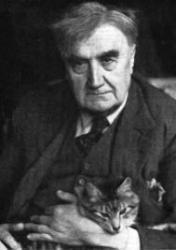
Ralph Vaughan Williams

1872 - 1958 Topics: Trinity 19 Collect Composer of "DOWN AMPNEY" in Magnify the Lord Through his composing, conducting, collecting, editing, and teaching, Ralph Vaughan Williams (b. Down Ampney, Gloucestershire, England, October 12, 1872; d. Westminster, London, England, August 26, 1958) became the chief figure in the realm of English music and church music in the first half of the twentieth century. His education included instruction at the Royal College of Music in London and Trinity College, Cambridge, as well as additional studies in Berlin and Paris. During World War I he served in the army medical corps in France. Vaughan Williams taught music at the Royal College of Music (1920-1940), conducted the Bach Choir in London (1920-1927), and directed the Leith Hill Music Festival in Dorking (1905-1953). A major influence in his life was the English folk song. A knowledgeable collector of folk songs, he was also a member of the Folksong Society and a supporter of the English Folk Dance Society. Vaughan Williams wrote various articles and books, including National Music (1935), and composed numerous arrange­ments of folk songs; many of his compositions show the impact of folk rhythms and melodic modes. His original compositions cover nearly all musical genres, from orchestral symphonies and concertos to choral works, from songs to operas, and from chamber music to music for films. Vaughan Williams's church music includes anthems; choral-orchestral works, such as Magnificat (1932), Dona Nobis Pacem (1936), and Hodie (1953); and hymn tune settings for organ. But most important to the history of hymnody, he was music editor of the most influential British hymnal at the beginning of the twentieth century, The English Hymnal (1906), and coeditor (with Martin Shaw) of Songs of Praise (1925, 1931) and the Oxford Book of Carols (1928). Bert Polman

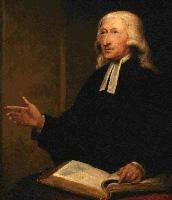
John Wesley

1703 - 1791 Person Name: J. Wesley, 1703-91 Topics: Trinity 19 Translator of "Now I Have Found the Ground Wherein" in Evangelical Lutheran Hymnary John Wesley, the son of Samuel, and brother of Charles Wesley, was born at Epworth, June 17, 1703. He was educated at the Charterhouse, London, and at Christ Church, Oxford. He became a Fellow of Lincoln College, Oxford, and graduated M.A. in 1726. At Oxford, he was one of the small band consisting of George Whitefield, Hames Hervey, Charles Wesley, and a few others, who were even then known for their piety; they were deridingly called "Methodists." After his ordination he went, in 1735, on a mission to Georgia. The mission was not successful, and he returned to England in 1738. From that time, his life was one of great labour, preaching the Gospel, and publishing his commentaries and other theological works. He died in London, in 1791, in his eighty-eighth year. His prose works are very numerous, but he did not write many useful hymns. It is to him, however, and not to his brother Charles, that we are indebted for the translations from the German. --Annotations of the Hymnal, Charles Hutchins, M.A., 1872 ====================== John Wesley, M.A., was born at Epworth Rectory in 1703, and, like the rest of the family, received his early education from his mother. He narrowly escaped perishing in the fire which destroyed the rectory house in 1709, and his deliverance made a life-long impression upon him. In 1714 he was nominated on the foundation of Charterhouse by his father's patron, the Duke of Buckingham, and remained at that school until 1720, when he went up, with a scholarship, from Charterhouse to Christ Church, Oxford. Having taken his degree, he received Holy Orders from the Bishop of Oxford (Dr. Potter) in 1725. In 1726 he was elected Fellow of Lincoln College, and remained at Oxford until 1727, when he returned into Lincolnshire to assist his father as curate at Epworth and Wroot. In 1729 he was summoned back to Oxford by his firm friend, Dr. Morley, Rector of Lincoln, to assist in the College tuition. There he found already established the little band of "Oxford Methodists" who immediately placed themselves under his direction. In 1735 he went, as a Missionary of the Society for the Propagation of the Gospel, to Georgia, where a new colony had been founded under the governorship of General Oglethorpe. On his voyage out he was deeply impressed with the piety and Christian courage of some German fellow travellers, Moravians. During his short ministry in Georgia he met with many discouragements, and returned home saddened and dissatisfied both with himself and his work; but in London he again fell in with the Moravians, especially with Peter Bohler; and one memorable night (May 24, 1738) he went to a meeting in Aldersgate Street, where some one was reading Luther's preface to the Epistle to the Romans. There, "About a quarter before nine, while he was describing the change which God works in the heart through faith in Christ, I felt my heart strangely warmed. I felt I did trust in Christ, Christ alone, for salvation; and an assurance was given me, that He had taken away my sins, even mine, and saved me from the law of sin and death." From that moment his future course was sealed; and for more than half a century he laboured, through evil report and good report, to spread what he believed to be the everlasting Gospel, travelling more miles, preaching more sermons, publishing more books of a practical sort, and making more converts than any man of his day, or perhaps of any day, and dying at last, March 2, 1791, in harness, at the patriarchal age of 88. The popular conception of the division of labour between the two brothers in the Revival, is that John was the preacher, and Charles the hymnwriter. But this is not strictly accurate. On the one hand Charles was also a great preacher, second only to his brother and George Whitefield in the effects which he produced. On the other hand, John by no means relegated to Charles the exclusive task of supplying the people with their hymns. John Wesley was not the sort of man to depute any part of his work entirely to another: and this part was, in his opinion, one of vital importance. With that wonderful instinct for gauging the popular mind, which was one element in his success, he saw at once that hymns might be utilized, not only for raising the devotion, but also for instructing, and establishing the faith of his disciples. He intended the hymns to be not merely a constituent part of public worship, but also a kind of creed in verse. They were to be "a body of experimental and practical divinity." "In what other publication," he asks in his Preface to the Wesleyan Hymn Book, 1780 (Preface, Oct. 20,1779), "have you so distinct and full an account of Scriptural Christianity; such a declaration of the heights and depths of religion, speculative and practical; so strong cautions against the most plausible errors, particularly those now most prevalent; and so clear directions for making your calling and election sure; for perfecting holiness in the fear of God?" The part which he actually took in writing the hymns, it is not easy to ascertain; but it is certain that more than thirty translations from the German, French and Spanish (chiefly from the German) were exclusively his; and there are some original hymns, admittedly his composition, which are not unworthy to stand by the side of his brother's. His translations from the German especially have had a wide circulation. Although somewhat free as translations they embody the fire and energy of the originals. It has been the common practice, however for a hundred years or more to ascribe all translations from the German to John Wesley, as he only of the two brothers knew that language; and to assign to Charles Wesley all the original hymns except such as are traceable to John Wesley through his Journals and other works. The list of 482 original hymns by John and Charles Wesley listed in this Dictionary of Hymnology have formed an important part of Methodist hymnody and show the enormous influence of the Wesleys on the English hymnody of the nineteenth century. -- Excerpts from John Julian, Dictionary of Hymnology (1907) =================== See also in: Hymn Writers of the Church

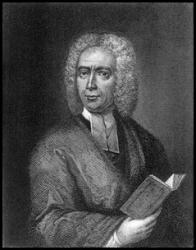
Isaac Watts

1674 - 1748 Topics: Trinity 19 Collect Author of "Come, Holy Spirit, heav'nly Dove" in Magnify the Lord Isaac Watts was the son of a schoolmaster, and was born in Southampton, July 17, 1674. He is said to have shown remarkable precocity in childhood, beginning the study of Latin, in his fourth year, and writing respectable verses at the age of seven. At the age of sixteen, he went to London to study in the Academy of the Rev. Thomas Rowe, an Independent minister. In 1698, he became assistant minister of the Independent Church, Berry St., London. In 1702, he became pastor. In 1712, he accepted an invitation to visit Sir Thomas Abney, at his residence of Abney Park, and at Sir Thomas' pressing request, made it his home for the remainder of his life. It was a residence most favourable for his health, and for the prosecution of his literary labours. He did not retire from ministerial duties, but preached as often as his delicate health would permit. The number of Watts' publications is very large. His collected works, first published in 1720, embrace sermons, treatises, poems and hymns. His "Horae Lyricae" was published in December, 1705. His "Hymns" appeared in July, 1707. The first hymn he is said to have composed for religious worship, is "Behold the glories of the Lamb," written at the age of twenty. It is as a writer of psalms and hymns that he is everywhere known. Some of his hymns were written to be sung after his sermons, giving expression to the meaning of the text upon which he had preached. Montgomery calls Watts "the greatest name among hymn-writers," and the honour can hardly be disputed. His published hymns number more than eight hundred. Watts died November 25, 1748, and was buried at Bunhill Fields. A monumental statue was erected in Southampton, his native place, and there is also a monument to his memory in the South Choir of Westminster Abbey. "Happy," says the great contemporary champion of Anglican orthodoxy, "will be that reader whose mind is disposed, by his verses or his prose, to imitate him in all but his non-conformity, to copy his benevolence to men, and his reverence to God." ("Memorials of Westminster Abbey," p. 325.) --Annotations of the Hymnal, Charles Hutchins, M.A., 1872. ================================= Watts, Isaac, D.D. The father of Dr. Watts was a respected Nonconformist, and at the birth of the child, and during its infancy, twice suffered imprisonment for his religious convictions. In his later years he kept a flourishing boarding school at Southampton. Isaac, the eldest of his nine children, was born in that town July 17, 1674. His taste for verse showed itself in early childhood. He was taught Greek, Latin, and Hebrew by Mr. Pinhorn, rector of All Saints, and headmaster of the Grammar School, in Southampton. The splendid promise of the boy induced a physician of the town and other friends to offer him an education at one of the Universities for eventual ordination in the Church of England: but this he refused; and entered a Nonconformist Academy at Stoke Newington in 1690, under the care of Mr. Thomas Rowe, the pastor of the Independent congregation at Girdlers' Hall. Of this congregation he became a member in 1693. Leaving the Academy at the age of twenty, he spent two years at home; and it was then that the bulk of the Hymns and Spiritual Songs (published 1707-9) were written, and sung from manuscripts in the Southampton Chapel. The hymn "Behold the glories of the Lamb" is said to have been the first he composed, and written as an attempt to raise the standard of praise. In answer to requests, others succeeded. The hymn "There is a land of pure delight" is said to have been suggested by the view across Southampton Water. The next six years of Watts's life were again spent at Stoke Newington, in the post of tutor to the son of an eminent Puritan, Sir John Hartopp; and to the intense study of these years must be traced the accumulation of the theological and philosophical materials which he published subsequently, and also the life-long enfeeblement of his constitution. Watts preached his first sermon when he was twenty-four years old. In the next three years he preached frequently; and in 1702 was ordained pastor of the eminent Independent congregation in Mark Lane, over which Caryl and Dr. John Owen had presided, and which numbered Mrs. Bendish, Cromwell's granddaughter, Charles Fleetwood, Charles Desborough, Sir John Hartopp, Lady Haversham, and other distinguished Independents among its members. In this year he removed to the house of Mr. Hollis in the Minories. His health began to fail in the following year, and Mr. Samuel Price was appointed as his assistant in the ministry. In 1712 a fever shattered his constitution, and Mr. Price was then appointed co-pastor of the congregation which had in the meantime removed to a new chapel in Bury Street. It was at this period that he became the guest of Sir Thomas Abney, under whose roof, and after his death (1722) that of his widow, he remained for the rest of his suffering life; residing for the longer portion of these thirty-six years principally at the beautiful country seat of Theobalds in Herts, and for the last thirteen years at Stoke Newington. His degree of D.D. was bestowed on him in 1728, unsolicited, by the University of Edinburgh. His infirmities increased on him up to the peaceful close of his sufferings, Nov. 25, 1748. He was buried in the Puritan restingplace at Bunhill Fields, but a monument was erected to him in Westminster Abbey. His learning and piety, gentleness and largeness of heart have earned him the title of the Melanchthon of his day. Among his friends, churchmen like Bishop Gibson are ranked with Nonconformists such as Doddridge. His theological as well as philosophical fame was considerable. His Speculations on the Human Nature of the Logos, as a contribution to the great controversy on the Holy Trinity, brought on him a charge of Arian opinions. His work on The Improvement of the Mind, published in 1741, is eulogised by Johnson. His Logic was still a valued textbook at Oxford within living memory. The World to Come, published in 1745, was once a favourite devotional work, parts of it being translated into several languages. His Catechisms, Scripture History (1732), as well as The Divine and Moral Songs (1715), were the most popular text-books for religious education fifty years ago. The Hymns and Spiritual Songs were published in 1707-9, though written earlier. The Horae Lyricae, which contains hymns interspersed among the poems, appeared in 1706-9. Some hymns were also appended at the close of the several Sermons preached in London, published in 1721-24. The Psalms were published in 1719. The earliest life of Watts is that by his friend Dr. Gibbons. Johnson has included him in his Lives of the Poets; and Southey has echoed Johnson's warm eulogy. The most interesting modern life is Isaac Watts: his Life and Writings, by E. Paxton Hood. [Rev. H. Leigh Bennett, M.A.] A large mass of Dr. Watts's hymns and paraphrases of the Psalms have no personal history beyond the date of their publication. These we have grouped together here and shall preface the list with the books from which they are taken. (l) Horae Lyricae. Poems chiefly of the Lyric kind. In Three Books Sacred: i.To Devotion and Piety; ii. To Virtue, Honour, and Friendship; iii. To the Memory of the Dead. By I. Watts, 1706. Second edition, 1709. (2) Hymns and Spiritual Songs. In Three Books: i. Collected from the Scriptures; ii. Composed on Divine Subjects; iii. Prepared for the Lord's Supper. By I. Watts, 1707. This contained in Bk i. 78 hymns; Bk. ii. 110; Bk. iii. 22, and 12 doxologies. In the 2nd edition published in 1709, Bk. i. was increased to 150; Bk. ii. to 170; Bk. iii. to 25 and 15 doxologies. (3) Divine and Moral Songs for the Use of Children. By I. Watts, London, 1715. (4) The Psalms of David Imitated in the Language of the New Testament, And apply'd to the Christian State and Worship. By I. Watts. London: Printed by J. Clark, at the Bible and Crown in the Poultry, &c, 1719. (5) Sermons with hymns appended thereto, vol. i., 1721; ii., 1723; iii. 1727. In the 5th ed. of the Sermons the three volumes, in duodecimo, were reduced to two, in octavo. (6) Reliquiae Juveniles: Miscellaneous Thoughts in Prose and Verse, on Natural, Moral, and Divine Subjects; Written chiefly in Younger Years. By I. Watts, D.D., London, 1734. (7) Remnants of Time. London, 1736. 454 Hymns and Versions of the Psalms, in addition to the centos are all in common use at the present time. --Excerpts from John Julian, Dictionary of Hymnology (1907) ================================== Watts, I. , p. 1241, ii. Nearly 100 hymns, additional to those already annotated, are given in some minor hymn-books. --John Julian, Dictionary of Hymnology, Appendix, Part II (1907) ================= Watts, I. , p. 1236, i. At the time of the publication of this Dictionary in 1892, every copy of the 1707 edition of Watts's Hymns and Spiritual Songs was supposed to have perished, and all notes thereon were based upon references which were found in magazines and old collections of hymns and versions of the Psalms. Recently three copies have been recovered, and by a careful examination of one of these we have been able to give some of the results in the revision of pp. 1-1597, and the rest we now subjoin. i. Hymns in the 1709 ed. of Hymns and Spiritual Songs which previously appeared in the 1707 edition of the same book, but are not so noted in the 1st ed. of this Dictionary:— On pp. 1237, L-1239, ii., Nos. 18, 33, 42, 43, 47, 48, 60, 56, 58, 59, 63, 75, 82, 83, 84, 85, 93, 96, 99, 102, 104, 105, 113, 115, 116, 123, 124, 134, 137, 139, 146, 147, 148, 149, 162, 166, 174, 180, 181, 182, 188, 190, 192, 193, 194, 195, 197, 200, 202. ii. Versions of the Psalms in his Psalms of David, 1719, which previously appeared in his Hymns and Spiritual Songs, 1707:— On pp. 1239, U.-1241, i., Nos. 241, 288, 304, 313, 314, 317, 410, 441. iii. Additional not noted in the revision:— 1. My soul, how lovely is the place; p. 1240, ii. 332. This version of Ps. lxiv. first appeared in the 1707 edition of Hymns & Spiritual Songs, as "Ye saints, how lovely is the place." 2. Shine, mighty God, on Britain shine; p. 1055, ii. In the 1707 edition of Hymns & Spiritual Songs, Bk. i., No. 35, and again in his Psalms of David, 1719. 3. Sing to the Lord with [cheerful] joyful voice, p. 1059, ii. This version of Ps. c. is No. 43 in the Hymns & Spiritual Songs, 1707, Bk. i., from which it passed into the Ps. of David, 1719. A careful collation of the earliest editions of Watts's Horae Lyricae shows that Nos. 1, 7, 9, 10, 11, 12, 14, 16, p. 1237, i., are in the 1706 ed., and that the rest were added in 1709. Of the remaining hymns, Nos. 91 appeared in his Sermons, vol. ii., 1723, and No. 196 in Sermons, vol. i., 1721. No. 199 was added after Watts's death. It must be noted also that the original title of what is usually known as Divine and Moral Songs was Divine Songs only. --John Julian, Dictionary of Hymnology, New Supplement (1907) =========== See also in: Hymn Writers of the Church

Andrew Reed

1787 - 1862 Topics: Trinity 19 Collect Author of "Spirit divine, attend our pray'rs, And make this house thy home" in Magnify the Lord Reed, Andrew, D.D., son of Andrew Reed, was born in London on Nov. 27, 1787, and educated for the Congregational Ministry at Hackney College, London. He was first the pastor of the New Road Chapel, St. George's-in-the-East, and then of the Wycliffe Chapel, which was built through his exertions in 1830. His degree was conferred by Yule College, America. He died Feb. 25, 1862. As the founder of "The London Orphan Asylum," "The Asylum for Fatherless Children," “The Asylum for Idiots” "The Infant Orphan Asylum," and "The Hospital for Incurables," Dr. Reed is more fully known, and will be longer remembered than by his literary publications. His Hymn Book was the growth of years. The preparation began in 1817, when he published a Supplement to Watts, in which were a few originals. This was enlarged in 1825; and entirely superseded by his collection The Hymn Book, prepared from Dr. Watts's Psalms & Hymns and Other Authors, with some Originals, in 1842 (Preface). His hymns, mostly of a plain and practical character, numbering 21, were contributed to these various editions, and were republished with those of his wife in the Wycliffe Supplement, 1872. The best known are "Ah Jesus, let me hear Thy voice” and ”Spirit Divine, attend our prayer." All Dr. and Mrs. Reed's hymns are anonymous in The Hymn Book, 1842, but are given with their names in the Wyclife Supplement, 1872. His hymns now in common use include, in addition to those annotated under their respective first lines :— 1. Come, let us strike our harps afresh. Praise. 2. Come, my Redeemer, come. Desiring Christ's Presence. 3. Gentle Saviour, look on me. Christ's protection Desired. 4. Gracious Lord, as Thou hast taught us. Public Worship. 5. Hark, hark, the notes of joy. Missions. 6. Holy Ghost, with light divine (1817). Prayer to the Holy Spirit. Sometimes given as "Holy Ghost, Thou light divine;" and again as "Holy Spirit, Light divine." 7. Listen, sinner, mercy hails you. Invitation. Generally given as "Hear, O Sinner, mercy hails you." 8. Rich are the joys of solitude. Retirement. Some-times given as "How deep and tranquil is the joy." 9. There [comes] is an hour when I must part. Death anticipated. 10. Ye saints your music bring. Praise of the Cross. --John Julian, Dictionary of Hymnology (1907)

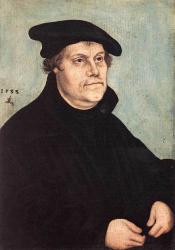
Martin Luther

1483 - 1546 Person Name: M. Luther, 1483-1546 Topics: Trinity 19 Composer of "VATER UNSER" in Evangelical Lutheran Hymnary Luther, Martin, born at Eisleben, Nov. 10, 1483; entered the University of Erfurt, 1501 (B.A. 1502, M.A.. 1503); became an Augustinian monk, 1505; ordained priest, 1507; appointed Professor at the University of Wittenberg, 1508, and in 1512 D.D.; published his 95 Theses, 1517; and burnt the Papal Bull which had condemned them, 1520; attended the Diet of Worms, 1521; translated the Bible into German, 1521-34; and died at Eisleben, Feb. 18, 1546. The details of his life and of his work as a reformer are accessible to English readers in a great variety of forms. Luther had a huge influence on German hymnody. i. Hymn Books. 1. Ellich cristlich lider Lobgesang un Psalm. Wittenberg, 1524. [Hamburg Library.] This contains 8 German hymns, of which 4 are by Luther. 2. Eyn Enchiridion oder Handbuchlein. Erfurt, 1524 [Goslar Library], with 25 German hymns, of which 18 are by Luther. 3. Geystliche Gesangk Buchleyn. Wittenberg, 1524 [Munich Library], with 32 German hymns, of which 24 are by Luther. 4. Geistliche Lieder auffs new gebessert. Wittenberg. J. Klug, 1529. No copy of this book is now known, but there was one in 1788 in the possession of G. E. Waldau, pastor at Nürnberg, and from his description it is evident that the first part of the Rostock Gesang-Buch, 1531, is a reprint of it. The Rostock Gesang-Buch, 1531, was reprinted by C. M. Wiechmann-Kadow at Schwerin in 1858. The 1529 evidently contained 50 German hymns, of which 29 (including the Litany) were by Luther. 5. Geistliche Lieder auffs new gebessert. Erfurt. A. Rauscher, 1531 [Helmstädt, now Wolfenbüttel Library], a reprint of No. 4. 6. Geistliche Lieder. Wittenberg. J. Klug, 1535 [Munich Library. Titlepage lost], with 52 German hymns, of which 29 are by Luther. 7. Geistliche Lieder auffs new gebessert. Leipzig. V. Schumann, 1539 [Wernigerode Library], with 68 German hymns, of which 29 are by Luther. 8. Geistliche Lieder. Wittenberg. J. Klug, 1543 [Hamburg Library], with 61 German hymns, of which 35 are by Luther. 9. Geystliche Lieder. Leipzig. V. Babst, 1545 [Gottingen Library]. This contains Luther's finally revised text, but adds no new hymns by himself. In pt. i. are 61 German hymns, in pt. ii. 40, of which 35 in all are by Luther. For these books Luther wrote three prefaces, first published respectively in Nos. 3, 4, 9. A fourth is found in his Christliche Geseng, Lateinisch und Deudsch, zum Begrebnis, Wittenberg, J. Klug, 1542. These four prefaces are reprinted in Wackernagel’s Bibliographie, 1855, pp. 543-583, and in the various editions of Luther's Hymns. Among modern editions of Luther's Geistliche Lieder may be mentioned the following:— Carl von Winterfeld, 1840; Dr. C. E. P. Wackernagel, 1848; Q. C. H. Stip, 1854; Wilhelm Schircks, 1854; Dr. Danneil, 1883; Dr. Karl Gerok, 1883; Dr. A. F. W. Fischer, 1883; A. Frommel, 1883; Karl Goedeke, 1883, &c. In The Hymns of Martin Luther. Set to their original melodies. With an English version. New York, 1883, ed. by Dr. Leonard Woolsey Bacon and Nathan H. Allen, there are the four prefaces, and English versions of all Luther's hymns, principally taken more or less altered, from the versions by A. T. Russell, R. Massie and Miss Winkworth [repub. in London, 1884]. Complete translations of Luther's hymns have been published by Dr. John Anderson, 1846 (2nd ed. 1847), Dr. John Hunt, 1853, Richard Massie, 1854, and Dr. G. Macdonald in the Sunday Magazine, 1867, and his Exotics, 1876. The other versions are given in detail in the notes on the individual hymns. ii. Classified List of Luther's Hymns. Of Luther's hymns no classification can be quite perfect, e.g. No. 3 (see below) takes hardly anything from the Latin, and No. 18 hardly anything from the Psalm. No. 29 is partly based on earlier hymns (see p. 225, i.). No. 30 is partly based on St. Mark i. 9-11, and xvi., 15, 16 (see p. 226, ii.). No. 35 is partly based on St. Luke ii. 10-16. The following arrangement, however, will answer all practical purposes. A. Translations from the Latin. i. From Latin Hymns: 1. Christum wir sollen loben schon. A solis ortus cardine 2. Der du bist drei in Einigkeit. O Lux beata Trinitas. 3. Jesus Christus unser Heiland, Der von. Jesus Christus nostra salus 4. Komm Gott Schopfer, heiliger Geist. Veni Creator Spiritus, Mentes. 5. Nun komm der Beidenheiland. Veni Redemptor gentium 6. Was flirchst du Feind Herodes sehr. A solis ortus cardine ii. From Latin Antiphons, &c.: 7. Herr Gott dich loben wir. Te Deum laudamus. 8. Verleih uns Frieden gnädiglich. Dapacem, Domine 9. Wir glauben all an einen Gott. iii. Partly from the Latin, the translated stanzas being adopted from Pre-Reformation Versions: 10. Komm, heiliger Geist, Herre Gott. 11. Mitten wir im Leben sind. Media vita in morte sumus. B. Hymns revised and enlarged from Pre-Reformation popular hymns. 12. Gelobet seist du Jesus Christ. 13. Gott der Vater wohn uns bei. 14. Gott sei gelobet und gebenedeiet. 15. Nun bitten wir den heiligen Geist. C. Psalm versions. 16. Ach Gott vom Himmel, sieh darein. 17. Aus tiefer Noth schrei ich zu dir. 18. Ein' feste Burg ist unser Gott. 19. Es spricht der Unweisen Mund wohl. 20. Es wollt uns Gott genädig sein. 21. War Gott nicht mit uns diese Zeit. 22. Wohl dem, der in Gotten Furcht steht. D. Paraphrases of other portions of Holy Scripture. 23. Diess sind die heilgen zehn Gebot. 24. Jesaia dem Propheten das geschah. 25. Mensch willt du leben seliglich. 26. Mit Fried und Freud ich fahr dahin. 27. Sie ist mir lieb die werthe Magd. 28. Vater unser im Himmelreich. E. Hymns mainly Original. 29. Christ lag in Todesbanden. 30. Christ unser Herr zum Jordan kam. 31. Ein neues Lied wir heben an. 32. Erhalt uns Herr bei deinem Wort. 33. Jesus Christus unser Heiland, Der den, 34. Nun freut euch lieben Christengemein. 35. Vom Himmel hoch da komm ich her. 36. Vom Himmel kam der Engel Schaar. In addition to these — 37. Fur alien Freuden auf Erden. 38. Kyrie eleison. In the Blätter fur Hymnologie, 1883, Dr. Daniel arranges Luther's hymns according to what he thinks their adaptation to modern German common use as follows:— i. Hymns which ought to be included in every good Evangelical hymn-book: Nos. 7-18, 20, 22, 28, 29, 30, 32, 34, 35, 36, 38. ii. Hymns the reception of which into a hymn-book might be contested: Nos. 2, 3, 4, 19, 21, 22, 23, 24, 25, 33. iii. Hymns not suited for a hymn-book: Nos. 1, 5, 6, 27, 31, 37. [Rev. James Mearns, M.A.] --John Julian, Dictionary of Hymnology (1907)

Pages


Export as CSV
It looks like you are using an ad-blocker. Ad revenue helps keep us running. Please consider white-listing Hymnary.org or getting Hymnary Pro to eliminate ads entirely and help support Hymnary.org.