You help make Hymnary.org possible. More than 10 million people from 200+ countries found hymns, liturgical resources and encouragement on Hymnary.org in 2025, including you. Every visit affirms the global impact of this ministry.

If Hymnary has been meaningful to you this year, would you take a moment today to help sustain it? A gift of any size—paired with a note of encouragement if you wish—directly supports the server costs, research work and curation that keep this resource freely available to the world.

Give securely online today, or mail a check to:
Hymnary.org
Calvin University
3201 Burton Street SE
Grand Rapids, MI 49546

Thank you for your partnership, and may the hope of Advent fill your heart.

Person Results

Topics:trinity
In:people

Planning worship? Check out our sister site, ZeteoSearch.org, for 20+ additional resources related to your search.
Showing 1 - 10 of 1,864Results Per Page: 102050

Michael Baughen

b. 1930 Topics: Trinity Sunday Year C Author (v. 2) of "Spirit of the Living God" in Voices United

George William Warren

1828 - 1902 Topics: Trinity XIII Evening Prayer Opening Composer of "NATIONAL HYMN" in The Hymnal of the Protestant Episcopal Church in the United States of America 1940 George W. Warren (b. Albany, NY, 1828; d. New York, 1902) received his general education at Racine College in Wisconsin, but as a musician he was largely self-trained. An organist in a number of Episcopal churches, he played the organ for thirty years (1870-1900) at St. Thomas Church in New York City. Warren composed anthems and liturgical service music; his hymn tunes were collected in Warren's Hymns and Tunes as Sung in St. Thomas Church (1888). Bert Polman

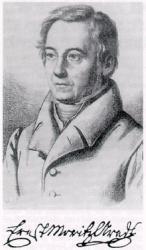
Ernst Moritz Arndt

1769 - 1860 Topics: Eleventh Sunday after Trinity Author of "I know whom I believe in" in Evangelical Lutheran hymnal Arndt, Ernst Moritz, son of Ludwig Nicolaus Arndt, estate manager for Count Putbus, in the island of Rugen, was b. at Schoritz in Rugen, Dec. 26, 1769. After studying at the Universities of Greifswald and Jena, where he completed his theological course under Paulus, he preached for two years as a candidate, but in 1798 abandoned theology. After a pedestrian tour through South Germany, Hungary, Northern Italy, France, and Belgium, he became, at Easter 1800, lecturer at the University of Greifswald, and in 1805 professor of history there. But in 1806, lamenting over the tyranny of France, he wrote his fiery Gent der Zeit (pt. ii. 1809, iii. 1813, iv. 1818) which awakened the patriotism of his countrymen, but drew on him the hatred of Napoleon, so that he had to flee to Sweden, and was not able to return to Greifswald till 1810. He again left Greifswald in 1812, and found a home with Baron v. Stein at St. Petersburg. After various wanderings, daring which he wrote many pamphlets inciting his countrymen, as none else could, to deeds of valour, and composed his well-known songs (all of date 1813), " Der Gott, der Eisen wachsen Hess. O du Deutschland, ich muss marscbieren. Was blasen die Trompeten? Was ist des Deutschen Vaterland ?" which were said to have done more to inspire the troops than a victory wou, he settled for some time at Cologne as editor of a patriotic newspaper. In 1818 he was appointed professor of history in the newly-founded University of Bonn, Being accused by the Conservative leaders then in power of teaching Republicanism, he was, in 1820, unjustly deposed (though his salary was continued to him), and was not restored till the accession of Friedrich Wilhelm IV. to the throne of Prussia in 1840. In token of respect he was elected Rector of the University 1840-1841, and lectured as professor till 1854. He continued his tranquil life at Bonn, varied by delusive hopes of better things from the Revolutionary periods of 1848 and 1859, till after having passed his ninety-first birthday (when he received some three hundred messages of congratulation which he personally answered) he departed (o the Heavenly Fatherland, Jan. 29,1860.A man of learning, a true patriot, a distinguished poet, and a man greatly revered and beloved of the people, he was a worthy modern representative of the "old Arndt," author of the True Christianity; a man of deep religious feeling, and a true-hearted and earnest witness for the Evangelical Faith. By his well-known Von dem Wort und von dem Kirchenliede, Bonn, 1819, he was one of the prime movers in the reaction which has now rescued most of the German lands from the incubus of xviii. cent. Rationalistic hymn-books. To this pamphlet he annexed 33 hymns, his best known. Of the remaining 50 some 37 appeared in his Geistliche Lieder, Berlin, 1855, and the rest in the Frankfurt, 1818, and later editions of his Gedichte—the so-called complete edition of which, pub. at Berlin 1860, contains 427 secular and sacred pieces, ranging from 1787 to 1859, with a preface dated in Christmas week 1859. (Koch, vii. 140-148; Allg. Deutsche Biog., i. 540-548.)The following 14 hymns by him have been tr. into English :— i. Der heil'ge Christ ist kommen. [Christmas] 1st pub. in 1818, vol. i. p. 319, and tr. as "The blessed Christ is coming," by C. T Astley, 1860, p. 24, in 4 st. of 8 1. ii. Dich Geiat der Wahrheit, Oeist der Kraft. [Whitsuntide.] A Prayer to the Holy Spirit. 1st pub. 1819 (No. 32), "as above, in 8 st. of 4 1. Tr. by J. Kelly, 1885, p. 67, "O Spirit, Thou of love and might." iii, Die Welt thut ihre Augen zu. [Child's Evening Hymn.] 1st pub. 1818 (vol. i. p. 265), as above, in 4 st. of 8 1. Tr. by J. Kelly, 1885, p. 109, " The busy world its eyes doth close." iv. Es lebt ein Geist, durch welchen alles lebt. [The Spirit of God.] 1st pub. 1818 (vol. i. p. 281) as above in 5 st. of 4 1., and tr. as:— " There is a Spirit—universal Source," by C. T. Astley, 1860, p. 14. v. Gegangen ist dat Sonnenlicht. [Evening.] Written in 1813, and 1st pub. 1818 (vol. ii. p. 230) as above, in 5 st. of 8 1., entitled: " The traveller's evening hymn." Tr. as (1) " The sunlight has departed," by Dr. Maguire, 1883, p. 49; (2) "The fields and woods all silence keep," by J. Kelly, 1885, p. 112. vi. Geht nun hin und grabt mein Grab. [Burial of the Dead.] Written in 1818, and 1st pub. 1819 (No. 19) as above in 9 st. of 6 1., and included in Bunsen's Versuch, 1833, and since in many other collections, e.g. Unv. L. S. 1851, No. 815. It is the most popular of his hymns and was sung at his own funeral at Bonn, Feb. 1, 1860 (Koch, vii. 147).   The trs. in C. U. are :— (1)  Go and dig my grave today!    A good and full tr. in the 1st Series, 1855, of Miss Winkworth's Lyra Ger., p. 241 (ed. 1856, p. 243), and repeated as No. 188 in her C. B.for England, 1863. In Schaffs Christ in Song, ed. 1879, p. 536. (2)  Weary now of wandering here.    A tr. of st. i., iv., vi., ix., signed "F. C. C.," as No. 280, in Dr. Pagenstecher's Coll.. 1864. Other trs. are: (1) “Go! and let my grave be made," by Miss Cox, 1841, p. 83 (1861, p. 83); (2) “Prepare me now my narrow bed," by Lady Eleanor Fortescue, 1843 (1847, p. 26); (3)  "Go now, my friends, and dig my grave," by Dr. G. Walker, 1860, p. 109; (4) " Now go forth and dig my grave," by A. M. Jeaffreson, in Golden Hours, 1873, p. 52. vii. Oott, deine Kindlein treten. [Children.] 1st pub. 1818 (vol. i. p. 275) as above, in 5 st. of 4 1. It is tr. as " Oh, gracious God ! Thy children come before Thee," by C. T. Astley, 1860, p. 38. viii. Ich weiss, woran ich glaube. [The Rock of Salvation.] Written in 1818, and 1st pub. 1819 (No. 28) as above in 6 st. of 8 1. In Knapp's Ev. L. S., 1837, No. 1396 (ed. 1865, No. 1348), it begins "Ich weiss, an wen ich glaube” The trs. in C. U. are:— (1) I know in Whom I put my trust.  A good tr. of st. i., iv.-vi. of Knapp's text in the 2nd Series, 1858, of Miss Winkworth's Lyra Ger., p. 162. Included as  No.  1170 in Kennedy,  1863, and recently in Schaff’s Christ in Song, ed. 1879, p. 426, and Lib. of Rel. Poetry, ed. 1883, p. 670. (2)  I know Whom I believe in,  a  tr. from Knapp, omitting st. ii., iii-, as No. 288 in the Ohio Luth. Hymnal, 1880. ix. Xann ich beten, 1st in Nothen. [The Power of Prayer.] Written in 1818, and 1st pub. 1819 (No. 29) ns above in 8 st. of 7 1., and tr. " When I can pray, Without delay," by C. T. Astley, 1860, p. 10. x. Und klingst du immer Liebe wieder. [The Love of Christ.] 1st pub. 1855, as above, p. 57, in 5 st. of 6 1. Tr. by J. Kelly, 1885, p. 34, “ And dost thou always love proclaim." xi. Und willst du gar verzagen. [Trust in God.] Written in 1854, and 1st pub. as above, 1855, p. 81, in 6 st. of 81. It is tr. as " And art thou nigh despairing," in the Family Treasury, 1877, p. 110. xii. Was ist die Macht, was ist die Kraft. [Holy Scripture.] Written in 1818, and 1st pub. 1819 (No. 30) as above in 6 st. of 6 1., and included in Hofer's Pilgerharfe, Basel, 1863, No. 31. Tr. (1) "What is the Christian's power and might ?" by R. Massie, in the British Herald, April, 1865, p. 61. (2) " What is the Christian soldier's might, What is," by R. Massie in the Day of Rest, 1878, vol. viii. p. 335. xiii. Wenn aus dem Dunkeln ich mich sehne. [Hope in God.] Written in 1818, and 1st pub. 1819 (No. 18) as above, in 7 st. of 6 1. Included, omitting st. ii., as No. 2401 in Knapp's Ev. L. S. 1837 (ed. 1865, No. 2128). Tr. as " When in the depths of night I'm sighing," in the British Herald, Aug. 1866, p. 312, repeated as No. 410, in Reid's Praise Bk., 1872. xiv. Wer hat den Sand gezahlt, welcher ixn Wasser haust. [The Almighty God.] 1st pub. 1818 (i. p. 297) and included in 1819 (No. 6) as above, in 4 st. of 8 1. Tr. as " Who can on the seashore," in Dr. Dwlcken's Golden Harp, 1864, p. 32. There is also a free tr. in the Unitarian Hys. for Children, Glasgow, 1855, No. 28, beginning :—" Who has counted the leaves that fall?” - John Julian, Dictionary of Hymnology (1907) ===================== Arndt, E. M., p. 80, No. 10. "Und klingst du" was written in 1836, and first published in his Gedichte, 1840, p. 570. --John Julian, Dictionary of Hymnology, Appendix, Part II (1907)

Aemilie Juliane, Gräfin von Schwarzburg Rudolstadt

1637 - 1706 Person Name: Emilia Juliana, Countess of Schwarzburg-Rudolstadt Topics: Sixteenth Sunday after Trinity Author of "Who knows how near my end may be?" in Church Book Emilie Juliane was daughter of Count Albert Friedrich of Barby and Mühlingen (on the Elbe, near its junction with the Saale). During the Thirty Years' war her father and family had to seek refuge in the Heidecksburg, the castle of his uncle, Count Ludwig Günther of Schwarzburg Rudolstadt, and Emilie was born at the Heidecksburg, Aug. 16, 1637. After the death of her father (1641) and mother (1642), she was adopted by her mother's sister (who was her godmother, and had become the wife of Count Ludwig Günther), and was educated at Rudolstadt with her cousins, under the care of Dr. Ahasuerus Fritsch, and other tutors. She became the wife of her cousin, Albert Anton, July 7, 1665, and died at Rudolstadt, Dec. 3, 1706 (Koch, iv. 56-63; Allg. Deutsche Biog, i. 127; Pasig's Introduction; Bode, pp. 63-64, &c). She was the most productive of German female hymn-writers, some 600 being attributed to her. Her early education in music and in poetry, and the influence of the kindred spirits of her cousin Ludamilia Elizabeth and of Dr. Ahasuerus Fritsch, no doubt fostered and developed her gifts. Her hymns, which are full of deep and child-like love to the Lamb of God, the Bridegroom of the Soul, partake too largely of the character of revelations of her inner life, and of reflections in verse, “improving" the events of her daily life, to be suited for Church use. A considerable number did, however, pass into the hymn-books, and the first here noted is a hymn of the first rank. Of those published in her lifetime the most appeared in her devotional works. (1) Geistliche Lieder und Gebete vor und nach Erlangung gottl Ehesegens, Rudolstadt, 1683. (2) Kühlwasser in grosser Hitze des Creutzes, Rudolstadt, 1685. (3) Tägliches Morgen- Mittags- und Abend-Opffer, Rudolstadt, 1685 (2nd ed., enlarged, 1699). Others appeared in the editions of the Rudolstadt Gesang-Buch, 1682-1704. After her death they appeared, collected, under the title of Der Freundin des Lammes Geistlicher Brautschmuck, pt. i., 1714, and enlarged 1742; pt. ii. 1742; pt. iii. 1770; a number of hymns by other authors, which the editors had found transcribed in the Countess's handwriting, being included by mistake. A selection of 108 of her Geistliche Lieder, ed. with an introduction, biographical and critical, by Dr. Pasig, appeared at Halle, 1855. Three have passed into English, viz.:— i. Wer weiss wie nahe mir mein Ende. For the Dying. This beautiful hymn was in last century the subject of an unpleasant controversy. It 1st appeared in the Appendix of 1688 to the Rudolstadt Gesang-Buch, 1682; and, like all the other hymns in that collection, it was given without an author's name. It at once passed into other collections, generally as anonymous, but sometimes under the name of the Countess. In the Schwartzburgische Denhmahl einer Christ-Gräflichen Lammes-Freundin, 1707, she was expressly named as author. On this G. M. Pfefferkorn (q.v.) claimed it as his own. The resulting controversy is given in detail in Wetzel, i. 4-26, ii. 294-307; iii. 156-191, and his A. Hymns i. 9-10, ii. 115-117; in Fischer, ii. 365-369; in Pasig's Introduction, xxiii.-xxxi.; and in Koch, viii. 637-639. The translations in common use are:— 1. Who knows how near my life's expended, omitting stanzas ix., x., in Dr. H. Mill's Horae Germanica, 1845 (1856, p. 245). His translations of stanzas i., vi.-viii. are included as No. 982 in the American Lutheran General Synod's Hymn Book, 1850-52, and as No. 430 in the Ohio Lutheran Hymnal, 1880. 2. Who knows how near my end may be! Time speeds away, a good and full translation by Miss Winkworth, in the 2nd Series of her Lyra Germanica, 1858, p. 204, and then as No. 187 in her Chorale Book for England, 1863. In the Pennsylvania Lutheran Church Book, 1868, stanzas i., vi., xi., xii., were included as No. 546. Other translations are: (1) "Who knows how soon my end may be," by Dr. G. Walker, I860, p. 97; (2) "Who knows how near my end may be? Time," &c, by E. Massie, 1867, p. 155. In addition the following have been translation, but are not in English common use:— ii. "Herr! mein Gott! lehre mich!" Evening, in No. iii., 1685, p. 30. iii. "Jesu Güte hat kein Ende." Morning, in No. ii., 1685, p. 228. Both translations are by H. J. Buckoll, 1842, p. 104. [Rev. James Mearns, M.A.] -- Excerpts from John Julian, Dictionary of Hymnology (1907) ===================== Emilie Juliane , p. 330, i. The title of her 1683 book begins Geistliches Weiber-Aqua-Vit [ VVolfenbüttel Library]. --John Julian, Dictionary of Hymnology, Appendix, Part II (1907)

Wilhelm Erasmus Arends

1677 - 1721 Person Name: W. E. Arends, 1677-1721 Topics: Trinity 21 Author of "Rise! To Arms! With Prayer Employ You" in Evangelical Lutheran Hymnary Arends, Wilhelm Erasmus, son of E. F. Arnds, pastor at Langenstein, near Halberstadt, was born at Langenstein, Feb. 5,1677. He became, in 1707, pastor at Crottorf, near Halberstadt, and in 1718, pastor of the church of St. Peter and St. Paul in Halberstadt. He died at the latter place, May 16,1721 (Koch, iv. 389; Allg. Deutsche Biog., i. 516; manuscript from Pastor Spierling, Halberstadt, and Pastor Schafft, Langenstein). He is said to have contributed three hymns to pt. ii., 1714, of Freylinghausen's Gesang-Buch Of these Nos. 118, 303 are ascribed to him at p. 3 of the Grischow-Kirchner Nachricht, 1771, to Freylinghausen's Gesang-Buch, while the other is left anonymous. It is:— Rüstet euch ihr Christenleute. [Christian Warfare.] First published as No. 360 in 1714 as above, in 4 stanzas of 11 lines. Dr. Jacobs of Wernigerode informs me that Count Christian Ernst of Wernigerode (d. 1771), a well-known German hymnologist, ascribed it to Arends in a marked copy of the 1741 ed. of Freylinghausen's Gesang-Buch. Koch styles it "a call to arms for spiritual conflict and victory." Included in many later hymnbooks, and recently as No. 675 in the Berlin Geistliche Liedersegan, ed. 1863. Translation in common use:— Christians, prayer may well employ you. A full and good translation contributed by J. M. Sloan as No. 289 to Wilson's Service of Praise, 1865. [Rev. James Mearns, M.A.] - John Julian, Dictionary of Hymnology (1907)

Frank S. Spinney

1850 - 1888 Person Name: Frank Spinney, 1850-1888 Topics: Sundays after Trinity The Divine Love Composer of "ST. DENYS" in The Hymnal

Samuel Francis Smith

1808 - 1895 Person Name: Samuel Francis Smith (1808-1895) Topics: Trinity 10 Epistle Author of "Grafted in Christ, the living Vine" in Magnify the Lord Smith, Samuel Francis, D.D., was born in Boston, U.S.A., Oct. 21, 1808, and graduated in arts at Harvard, and in theology at Andover. He entered the Baptist ministry in 1832, and became the same year editor of the Baptist Missionary Magazine. He also contributed to the Encyclopaedia Americana. From 1834 to 1842 he was pastor at Waterville, Maine, and Professor of Modern Languages in Waterville College. In 1842 he removed to Newton, Massachusetts, where he remained until 1854, when he became the editor of the publications of the Baptist Missionary Union. With Baron Stow he prepared the Baptist collection known as The Psalmist, published in 1843, to which he contributed several hymns. The Psalmist is the most creditable and influential of the American Baptist collections to the present day. Dr. Smith also published Lyric Gems, 1854, Rock of Ages, 1870, &c. A large number of his hymns are in use in America, and several have passed into some of the English collections. Taking his hymns in common use in alphabetical order, we have the following:— 1. And now the solemn deed is done. Ordination. Given in The Psalmist, 1843, No. 954. In Dr. Hatfield's Church Hymn Book, N. Y., 1872, it is altered to "The solemn service now is done." 2. As flows the rapid river. Life Passing Away. In Christian Psalmody, 1833, No. 33; the Hymns for the Vestry and Fireside, Boston, 1841; and The Psalmist, 1843, No. 1059. Found in a few English hymn-books, and in Lyra Sacra Americana, 1868. 3. Auspicious morning, hail. American National Anniversary. Written for July 4th, 1841, and published in The Psalmist, 1843, No. 1007. 4. Beyond where Cedron's waters flow. Gethsemane. In L. Bacon's Appendix, 1833; the Psalmist, 1843, No. 220, and later collections. 5. Blest is the hour when cares depart. Divine Worship. In The Psalmist, 1843, No. 947, and others. 6. Constrained by love we follow where. Holy Baptism. Appeared in the Baptist edition of the Plymouth Hymn Book, 1857. 7. Down to the sacred wave. Holy Baptism. Contributed to Winchell's Additional Hymns added to his Collection of 1817, in 1832, No. 510; repeated in The Psalmist, 1843, No. 818, and in several collections. Also in Lyra Sacra Americana, 1868. 8. Hail! ye days of solemn meeting. Public Worship. An altered form of No. 26 below, in Spurgeon's Our Own Hymn Book, 1866, as an "American Hymn, 1840." 9. How blest the hour when first we gave. Holy Baptism. Appeared in the Baptist edition of thePlymouth Hymn Book, 1857, No. 1468. 10. How calmly wakes the hallowed morn. Holy Baptism. Given in The Psalmist, 1843, No. 810, in later collections, and in Lyra Sacra Americana, 1868. 11. Jesus, Thou hast freely saved us. Salvation. In Winchell's Additional Hymns, 1832, No. 503, and others. 12. Meekly in Jordan's Holy Stream. Holy Baptism. Contributed to The Psalmist, 1843, No. 808. 13. My country, 'tis of thee. National Hymn. "Written in 1832, and first sung at a children's Fourth of July celebration in Park Street church, Boston." Included in The Psalmist, 1843, No. 1000, and found in a large number of American hymn-books, but not in use in Great Britain. It is one of the most popular of Dr. Smith's compositions. Text, with note in Lyra Sacra Americana, 1868. 14. 0 not my own these verdant hills. Bought with a Price. Appeared in Nason's Congregational Hymn Book, 1857, and given inLaudes Domini, 1884. 15. Onward speed thy conquering flight. Missions. Appeared in The Psalmist, 1843, No. 892, and is found in several modern collections in Great Britain and America. Also in Lyra Sac. Americana, 1868. 16. Planted in Christ, the living Vine. Christian Fellowship; or, For Unity. Given in The Psalmist, 1843, No. 929, inLyra Sacra Americana, 1868, and several hymn-books. Of the hymns contributed by Dr. Smith to The Psalmist this is the best, and one of the most popular. 17. Remember thy Creator. Youthful Piety Enforced. In Christian Psalmody, 1832, No. 32; the Hymns for the Vestry and Fireside, 1841; The Psalmist, 1843, No. 778; Lyra Sac. Americana, 1868, and other collections. 18. Sister, thou wast mild and lovely. Death and Burial. Written on the death of Miss J. M. C. of Mount Vernon School, Boston, July 13,1833, and published in The Psalmist, 1843, No. 1096. 19. Softly fades the twilight ray. Sunday Evening. Written in 1832, and included in The Psalmist, 1843, No. 56. Also in Lyra Sacra Americana, and several hymn-books. 20. Spirit of holiness, descend. Whitsuntide. Appeared in the Hymns for the Vestry and Fireside, 1841, No. 295, and again in The Psalmist, 1843, No. 384. In the Unitarian Hymns for the Church of Christ, Boston, 1853. St. ii., iii., iv. were given as "Spirit of God, Thy churches wait." This form of the text and the original are both in modern hymn-books. 21. Spirit of peace and holiness. Institution of a Minister. Appeared in The Psalmist, 1843, No. 953, and Hatfield's Church Hymn Book, 1872. 22. The morning light is breaking. Missions. Written in 1832, and included in Hastings's Spiritual Songs, 1832-33, No. 253; and The Psalmist, 1843, No. 912. This hymn is very popular and has been translated into several languages. Dr. Smith says of it that “it has been a great favourite at missionary gatherings, and I have myself heard it sung in five or six different languages in Europe and Asia. It is a favourite with the Burmans, Karens, and Telegus in Asia, from whose lips I have heard it repeatedly.” 23. The Prince of Salvation in triumph is riding. Missions. Given in Hastings and Mason's Spiritual Songs, 1832-33, No. 274; The Psalmist, 1843, and later collections. 24. Tis done, the [important] solemn act is done. Ordination. Appeared in The Psalmist 1843, No. 951, and later hymn-books. 25. Today the Saviour calls. Invitation. First sketch by Dr. Smith, the revised text, as in Hastings and Mason's Spiritual Songs, No. 176, and The Psalmist, No. 453, by Dr. T. Hastings (p. 495, i. 19). 26. Welcome, days of solemn meeting. Special Devotional Services. Written in 1834, and given in Dr. Hatfield's Church Hymn Book, 1872. See No. 8. 27. When shall we meet again ? Parting. This is a cento. The first stanza is from Alaric A. Watts's Poetical Sketches, &c, 1822, p. 158 ; and st. ii.-iv. are by Dr. Smith. In this form it was published in L. Bacon's Supplement to Dwight, 1833, No. 489. It is in several American hymn-books; and also the English Baptist Psalms & Hymns, 1858, &c. 28. When the harvest is past and the summer is gone. Close of Worship. Contributed to Hastings and Mason's Spiritual Songs, 1831, No. 244; and repeated in the Fuller and Jeter Supplement to The Psalmist, 1847, No. 22, and later collections. 29. When thy mortal life is fled. The Judgment. Contributed to Winchell's Additional Hymns, 1832, No. 379, and repeated in The Psalmist, 1843, No. 455, and later hymn-books. Also in Lyra Sacra Americana, 1868. 30. While in this sacred rite of Thine. Holy Baptism. Appeared in The Psalmist, 1843, No. 803: Lyra Sacra Americana, 1868, &c. 31. With willing hearts we tread. Holy Baptism. In The Psalmist, 1843, No. 798; and again in the Baptist Praise Book, 1871. 32. Yes, my native land, I love thee. A Missionary's Farewell. Contributed to Winchell's Additional Hymns, 1832, No. 445, and found in later collections. Also in Lyra Sacra Americana, 1868. [Rev. F. M. Bird, M.A.] --John Julian, Dictionary of Hymnology (1907)

Ruth Watson Henderson

b. 1932 Topics: Trinity Arranger of "PRAISE HIM" in Voices United Henderson, Ruth Watson; b. Nov. 23, 1932, Toronto; Canadian organist, pianist, accompanist

William Gardiner

1770 - 1853 Topics: Trinity Sunday Year A Composer of "LYONS" in Voices United William Gardiner (b. Leicester, England, 1770; d. Leicester, 1853) The son of an English hosiery manufacturer, Gardiner took up his father's trade in addition to writing about music, composing, and editing. Having met Joseph Haydn and Ludwig van Beethoven on his business travels, Gardiner then proceeded to help popularize their compositions, especially Beethoven's, in England. He recorded his memories of various musicians in Music and Friends (3 volumes, 1838-1853). In the first two volumes of Sacred Melodies (1812, 1815), Gardiner turned melodies from composers such as Haydn, Mozart, and Beethoven into hymn tunes in an attempt to rejuvenate the singing of psalms. His work became an important model for American editors like Lowell Mason (see Mason's Boston Handel and Haydn Collection, 1822), and later hymnbook editors often turned to Gardiner as a source of tunes derived from classical music. Bert Polman

Hubert P. Main

1839 - 1925 Person Name: H. P. Main Topics: The Holy Trinity Arranger of "[Holy Father, hear my cry]" in Augsburg Songs for Sunday Schools and other services Hubert Platt Main DD USA 1839-1925. Born at Ridgefield, CT, he attended singing school as a teenager. In 1854 he went to New York City and worked as an errand boy in a wallpaper house. The next year he became an errand boy in the Bristow & Morse Piano Company. He was an organist, choir leader, and compiled books of music. He also helped his father edit the “Lute Songbook” by Isaac Woodbury. In 1866 he married Olphelia Louise Degraff, and they had two sons: Lucius, and Hubert. In 1867 he filled a position at William B Bradbury’s publishing house. After Bradbury’s death in 1868 the Bigelow & Main Publishers were formed as its successor. He also worked with his father until his father’s death in 1873. Contributors to their efforts were Fanny Crosby, Ira Sankey, Wilbur Crafts, and others. In addition to publishing, Main wrote 1000+ pieces of music, including part song, singing school songs, Sunday school music, hymns, anthems, etc. He also arranged music and collected music books. He 1891 he sold his collection of over 3500 volumes to the Newberry Library in Chicago, IL, where they were known as the Main Library. Some of his major publications include: “Book of Praise for the Sunday school” (1875), “Little pilgrim songs” (1884), “Hymns of Praise” (`1884), “Gems of song for the Sunday school” (1901), “Quartettes for men’s voices: Sacred & social selections” (1913). In 1922 Hope Publishing Company acquired Bigelow & Main. He was an editor, author, compiler, and composer, as well as publisher. He died in Newark, NJ. John Perry

Pages


Export as CSV
It looks like you are using an ad-blocker. Ad revenue helps keep us running. Please consider white-listing Hymnary.org or getting Hymnary Pro to eliminate ads entirely and help support Hymnary.org.