You help make Hymnary.org possible. More than 10 million people from 200+ countries found hymns, liturgical resources and encouragement on Hymnary.org in 2025, including you. Every visit affirms the global impact of this ministry.

If Hymnary has been meaningful to you this year, would you take a moment today to help sustain it? A gift of any size—paired with a note of encouragement if you wish—directly supports the server costs, research work and curation that keep this resource freely available to the world.

Give securely online today, or mail a check to:
Hymnary.org
Calvin University
3201 Burton Street SE
Grand Rapids, MI 49546

Thank you for your partnership, and may the hope of Advent fill your heart.

Search Results

Topics:twenty second+sunday+after+trinity+sunday

Planning worship? Check out our sister site, ZeteoSearch.org, for 20+ additional resources related to your search.

Texts

text icon
Text authorities
TextPage scans

Den Idræt Gud er tækkelig

Author: Godfred Sacer; Søren Jonassøn Appears in 7 hymnals Topics: Twenty second Sunday after Trinity Sunday Lyrics: 1 Den Idræt Gud er tækkelig, Som Grund i Ordet haver; Har du da, Jesus, lovet mig Din Aand med rige Gaver, Saa kommer jeg til dig: Giv det, du loved mig! Du, som med Sandheds Mund Har talt af Hjertens Grund, Og ei i Løgn er funden. 2 Her er jeg, foreholder dig Dit Ord med Suk og Raaben, Og i dit Løfte glæder mig: Gjør Hjerte-Døren aaben! Og send den Trøstermand, Som billig kaldes kan En Ild, en Dug, et Baand, Et Pant, en Brønd, en Aand, En Salve og Guds Finger! 3 Kom Trøster, trøst min Banghed vel! Kom Ild med salig Varme! Kom Dug og læsk min Tørre Sjæl! Kom Baand, forbind mig Arme! Kom Aand og ytre dig! Kom Pant, forvisse mig, Kom Brønd og Sjælen kvæg! Kom Salve, Hjertet læg! Guds Finger kom med Styrke! 4 Kom store Gud, o Helligaand, Fra høie Himmelbolig! Giv, at i Liv og Død jeg kan Ved Jesus hænge trolig! Nyt Hjerte mig bered, Og giv Bodfærdighed! Vær nu min Sjæle-Ro, Gjør mig bedrøvet, fro, Gjør mine Veie rene! 5 I mig min Jesu Miskundhed Med gylden Bogstav skrive, Fast Tro, ret Haab, sand Kjærlighed, Godt Taal, glad Hjerte give! Naar Tungen priser dig, Mit Hjerte rør i mig, Ja lad min Sjæl og Aand Til Livsens søde Land Med stadig Længsel tragte! 6 Oplys, du Kjærlighedens Lys, Mit Hjertes mørke Hytte! Bo selv i dette ringe Hus, Og ikke deraf flytte! O Gud, jeg beder dig, Styrk du mig kraftelig, Min Glæde, Ro og Rast, Min Trøst, om Hjertet brast, Vær du i Død o Live! 7 Uddriv mit egenraadig' Sind, Lær mig mit Kjød at dræbe, Tag min modvillig' Vilje ind, Og lad mig altid stræve, At holde stadig ved I Jesu Kjærlighed, Og altid færdig staa Fra Verdens Ørk af gaa, Og Himlen eftertragte.
TextPage scans

Trofaste Herre Jesus Krist

Author: Kristof. Søll; Kristof. Eriksøn Appears in 6 hymnals Topics: Twenty second Sunday after Trinity Sunday Lyrics: 1 Trofaste Herre Jesus Krist, Du, som min Gud og Frelser est, Din er jeg, om jeg lever, dør, Derfor mig, Herre, Bistand gjør! Liv, Ære, Gods, hvad jeg formar, Altsammen det i din Haand staar. 2 Og frels mig ud af al min Nød, Bevar mig fra den evig' Død! Min Skyld forlad mig naadelig, Og hav Taalmodighed med mig! Du bedre og min Nød forstaar, End jeg at sige selv formaar. 3 Du er den Helt af Davids Æt, En Frelser er dig Navn med Ret, Du er mit Hjertes Krone skjøn, Og skjænker mig en evig Løn, Forhvervet ved dit Kors og Blod, Udøst for mig, o Herre god! 4 Hvad dit er, du mig give vil; Kan større Rigdom være til? Derfor jeg dig af Hjertens Grund Nu lover, takker allen Stund, Og beder, du til evig Tid Mig naadig være vil og blid! 5 Dit hellig' Ord tag ei fra mig, Saa vil jeg altid takke dig! Dermed jeg skilles vil og gaa Herfra, naar det dig synes saa, Og synger udi Navnet dit Og siger nu mit Amen frit.
TextPage scans

I Kristne, I, som træde

Author: Kingo Appears in 4 hymnals Topics: Twenty second Sunday after Trinity Sunday; Twenty second Sunday after Trinity Sunday Lyrics: 1 I Kristne, I som træde Hver Dag med Hjertens Glæde Til Jesus Kjærlighed, Ifører dog de Dyder, Som sande Kristne pryder, Og Gud kan tækkes ved. 2 I drage dog til Minde, At ingen er at finde, I Verden uden Brøst, Dog vilde Gud os kalde Som Hellige, Udvalgte Til al sin Glædes Høst. 3 Barmhjertighed I øve Og gjøre Venskabs Prøve I Ydmyghed og Tro, Med stille Taal I søge Al Kjærlighed at øge Til Sjælens Fred og Ro. 4 Kan En med Rette klage, Saa skal han dog fordrage Og se til Jesus hen; For eders Skyld han døde, Forlod al eders Brøde, Saa gjører I igjen! 5 Med Kjærligheden klæder Ord, Gjerninger og Sæder, Saa skal Guds gode Aand Fast eder sammenbinde Med Kjærlighedens Tvinde, Fuldkommenhedens Baand. 6 Guds Fred og Fryd regjere Og daglig sig formere I eders Hjertested, At som I kaldte ere, Eet Legeme at være, I prise Gud dermed! 7 Guds Ord sin Bolig have Hos eder og begave Med Visdom og Forstand, At I med Aand og Tunge Ham Takkesalmer sjunge, Som Himlen røre kan! 8 Alt det, som I vil gjøre Og agter at udføre Til eders Sjælegavn, Det skal I tage fore Med Hjertens Bøn saa saare I Jesu Kristi Navn.

Tunes

tune icon
Tune authorities
Page scansAudio

[Gracious Spirit, Holy Ghost]

Meter: 7.7.7.5 Appears in 139 hymnals Composer and/or Arranger: F. Filitz, 1804—1876 Topics: The Church Year Twenty-second Sunday after Trinity; The Church Year Twenty-second Sunday after Trinity Tune Key: D Major Incipit: 53654 43171 54325 Used With Text: Gracious Spirit, Holy Ghost
Page scansAudio

HANDEL

Meter: 6.6.8.6 Appears in 189 hymnals Topics: Twenty Second Sunday after Trinity Tune Key: G Major Incipit: 13215 43251 23671 Used With Text: My soul, repeat His praise
Page scansAudio

REDHEAD, 47

Appears in 125 hymnals Topics: Twenty Second Sunday after Trinity Tune Key: C Major Incipit: 33234 43551 6445 Used With Text: Feeble, helpless, how shall I

Instances

instance icon
Published text-tune combinations (hymns) from specific hymnals
TextPage scan

I Kristne, I, som træde

Author: Kingo Hymnal: Salmebog for Lutherske Kristne i Amerika #234 (1919) Topics: Twenty second Sunday after Trinity Sunday; Twenty second Sunday after Trinity Sunday Lyrics: 1 I Kristne, I som træde Hver Dag med Hjertens Glæde Til Jesus Kjærlighed, Ifører dog de Dyder, Som sande Kristne pryder, Og Gud kan tækkes ved. 2 I drage dog til Minde, At ingen er at finde, I Verden uden Brøst, Dog vilde Gud os kalde Som Hellige, Udvalgte Til al sin Glædes Høst. 3 Barmhjertighed I øve Og gjøre Venskabs Prøve I Ydmyghed og Tro, Med stille Taal I søge Al Kjærlighed at øge Til Sjælens Fred og Ro. 4 Kan En med Rette klage, Saa skal han dog fordrage Og se til Jesus hen; For eders Skyld han døde, Forlod al eders Brøde, Saa gjører I igjen! 5 Med Kjærligheden klæder Ord, Gjerninger og Sæder, Saa skal Guds gode Aand Fast eder sammenbinde Med Kjærlighedens Tvinde, Fuldkommenhedens Baand. 6 Guds Fred og Fryd regjere Og daglig sig formere I eders Hjertested, At som I kaldte ere, Eet Legeme at være, I prise Gud dermed! 7 Guds Ord sin Bolig have Hos eder og begave Med Visdom og Forstand, At I med Aand og Tunge Ham Takkesalmer sjunge, Som Himlen røre kan! 8 Alt det, som I vil gjøre Og agter at udføre Til eders Sjælegavn, Det skal I tage fore Med Hjertens Bøn saa saare I Jesu Kristi Navn. Languages: Norwegian
TextPage scan

O kjære Sjæl, luk op din Mund

Author: Kingo Hymnal: Salmebog for Lutherske Kristne i Amerika #578 (1919) Topics: Twenty second Sunday after Trinity Sunday Lyrics: 1 O kjære Sjæl, luk up din Mund, Den Tunge bør sig røre Med Tak udaf dit Hjertes Grund, At Himlens Gud kan høre, Hvor du ved Guds Aand takke vil For Ordet, han dig sendte til: O se, hvad du kan gjøre! 2 Hvor kan jeg noksom skjønne paa, Og værdelig begrunde, At Verden, som i Synden laa, Gud vilde dog forunde Sit saliggjørend' Livsens Ord, Ja Daaben og sin Nadvers Bord, Hvorved den hjælpes kunde! 3 Og, at vi kan hans Naade se, Han Lærere os sender, Hans Ord og Sakramenterne De har i Mund og Hænder, Og med Formaning til enhver, Forstandere i Herren er; Gid vi den Naade kjender! 4 Det Embede saa værdigt er, Gid vi det aldrig savne, Men dem, som deri tjene her, Med Kjærlighed omfavne, Og leve samtlig' udi Fred Med god og frelst Samvittighed! Det vil os meget gavne. 5 Gid Jesu Glæde i os bo, Og Bønnens Aand os røre, At vi vor Gud med Fryd og Ro Taksigelse kan gjøre, Og aldrig staa Guds Aand imod, Men tro hans Ord af Hjerterod, Det elske, ære, høre! 6 Giv os, o Gud, din Helligaand, Hvorved vi ret kan prøve Hver Lærdom, og med sund Forstand Os i den sande øve, Og fly al Ondskabs Skam og Skin, At ei i usund Lærdoms Trin Guds Aand vi skal bedrøve! 7 Men Fredens Gud i Kjærlighed Os saa tilsammen binde, At i hans Kraft vi blive ved Et helligt Navn at vinde, Saa Sjæl og Aand og Legem maa Paa Kristi Dag fuldkomne staa, Guds Salighed at finde! Languages: Norwegian
TextPage scan

Kom, Brødre, lad os haste

Author: Gerh. Terstegen; Schwarzkopf Hymnal: Salmebog for Lutherske Kristne i Amerika #252 (1919) Topics: Twenty second Sunday after Trinity Sunday Lyrics: 1 Kom Brødre! lad os haste, Vor Aften kommer nær, Vi Verden fra os kaste, Og alt, som hefter her; Kom, lad os fatte Mod I Aandens Kraft at vandre Til Himlen med hverandre, Saa blir vor Ende god! 2 Det skal os ei fortryde, Den trange Vei at gaa, Gud vil sig selv tilbyde, Og trofast med os staa; Hann giver Liv og Lyst, Han lokker, vederkvæger, Han styrker, føder, læger Vor Sjal med Ordets Trøst. 3 Kom, lad os kjærlig vandre Og lægge Haand i Haand, Og holde af hverandre I dette Trængsels Land! Som Børn vi være maa, Paa Veien ikke stride, Guds Engle ved vor Side Som vore Brødre gaa. 4 De Stærkere de Svage Skal hjælpe frem, vi saa Hverandre bære, drage I kjærligt Samlag maa. Fremad da fort, enhver Sig selv for intet agte, Men kun derefter tragte, At Gud ham alting er! 5 Nu frisk dertil, I Fromme! Vor Vei den knapper af, Den Dag saa snart kan komme, Man bær os til vor Grav; Endnu lidt mere tro, Endnu lidt mere vakker, Det ud ad Aften lakker, Saa faar, saa faar vi Ro! 6 Det kan ei længe vare, Hold kun et Lidet ud, Saa skal vi hjemad fare Til Himlen, til vor Gud. Vær glad og vel bered! Naar vi med alle Fromme Hjem til vor Fader komme, Tænk, hvilken Salighed! 7 O Ven, o du Udkaarne, Vor Sjæles Himmerig, Du evige Enbaarne! Vi længes efter dig, Vi rose os i dig, Vor Lyst, vor sol, vor Ære, Vi ønske kun at være Hos dig evindelig! Languages: Norwegian

People

person icon
Authors, composers, editors, etc.

Christopher Wordsworth

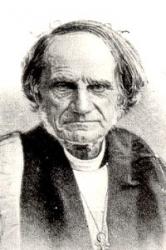
1807 - 1885 Person Name: C. Wordsworth Topics: The Church Year Twenty-second Sunday after Trinity; The Church Year Twenty-second Sunday after Trinity Author of "Gracious Spirit, Holy Ghost" in The Lutheran Hymnary Christopher Wordsworth--nephew of the great lake-poet, William Wordsworth--was born in 1807. He was educated at Winchester, and at Trinity College, Cambridge, where he graduated B.A., with high honours, in 1830; M.A. in 1833; D.D. in 1839. He was elected Fellow of his College in 1830, and public orator of the University in 1836; received Priest's Orders in 1835; head master of Harrow School in 1836; Canon of Westminster Abbey in 1844; Hulsean Lecturer at Cambridge in 1847-48; Vicar of Stanford-in-the-Vale, Berks, in 1850; Archdeacon of Westminster, in 1865; Bishop of Lincoln, in 1868. His writings are numerous, and some of them very valuable. Most of his works are in prose. His "Holy Year; or, Hymns for Sundays, Holidays, and other occasions throughout the Year," was published in [1862], and contains 127 hymns. --Annotations of the Hymnal, Charles Hutchins, M.A., 1872. =================== Wordsworth, Christopher, D.D., was born at Lambeth (of which parish his father was then the rector), Oct. 30, 1807, and was the youngest son of Christopher Wordsworth, afterwards Master of Trinity College, Cambridge, and Priscilla (née Lloyd) his wife. He was educated at Winchester, where he distinguished himself both as a scholar and as an athlete. In 1826 he matriculated at Trinity College, Cambridge, where his career was an extraordinarily brilliant one. He swept off an unprecedented number of College and University prizes, and in 1830 graduated as Senior Classic in the Classical Tripos, and 14th Senior Optime in the Mathematical, won the First Chancellor's Medal for classical studies, and was elected Fellow of Trinity. He was engaged as classical lecturer in college for some time, and in 1836 was chosen Public Orator for the University. In the same year he was elected Head Master of Harrow School, and in 1838 he married Susan Hatley Freere. During his head-mastership the numbers at Harrow fell off, but he began a great moral reform in the school, and many of his pupils regarded him with enthusiastic admiration. In 1844 he was appointed by Sir Robert Peel to a Canonry at Westminster; and in 1848-49 he was Hulsean lecturer at Cambridge. In 1850 he took the small chapter living of Stanford-in-the-Vale cum Goosey, in Berkshire, and for the next nineteen years he passed his time as an exemplary parish priest in this retired spot, with the exception of his four months' statutable residence each year at Westminster. In 1869 he was elevated to the bishopric of Lincoln, which he held for more than fifteen years, resigning it a few months before his death, which took place on March 20th, 1885. As bearing upon his poetical character, it may be noted that he was the nephew of the poet-laureate, William Wordsworth, whom he constantly visited at Rydal up to the time of the poet's death in 1850, and with whom he kept up a regular and lengthy correspondence. Christopher Wordsworth was a very voluminous writer, his principal works being:— (1) Athens and Attica, 1836; (2) Pompeian Inscriptions, 1837; (3) Greece Pictorial and Descriptive, 1839; (4) King Edward VIth's Latin Grammar, 1841; (5) Bentley's Correspondence, 1842; (6) Theophilus Anglicanus, 1843; (7) Memoirs of William Wordsworth, 1851; (8) Hippolytus, 1853; (9) Notes at Paris, 1854; (10) A Commentary on the whole Bible, 1856-1870; (11) The Holy Year, 1862; (12) Church History, 1881-1883; many volumes of Sermons, and an enormous amount of Pamphlets, Addresses, Letters, Speeches, on almost every subject in which the interests of the church were concerned, and also on subjects connected with classical literature. Of his many works, however, the only one which claims notice from the hynmologist's point of view is The Holy Year, which contains hymns, not only for every season of the Church's year, but also for every phase of that season, as indicated in the Book of Common Prayer. Dr. Wordsworth, like the Wesleys, looked upon hymns as a valuable means of stamping permanently upon the memory the great doctrines of the Christian Church. He held it to be "the first duty of a hymn-writer to teach sound doctrine, and thus to save souls." He thought that the materials for English Church hymns should be sought (1) in the Holy Scriptures, (2) in the writings of Christian Antiquity, and (3) in the Poetry of the Ancient Church. Hence he imposed upon himself the strictest limitations in his own compositions. He did not select a subject which seemed to him most adapted for poetical treatment, but felt himself bound to treat impartially every subject, and branch of a subject, that is brought before us in the Church's services, whether of a poetical nature or not. The natural result is that his hymns are of very unequal merit; whether his subject inspired him with poetical thoughts or not, he was bound to deal with it; hence while some of his hymns (such as "Hark! the sound of holy voices," &c, “See the Conqueror mounts in triumph," &c, "O, day of rest and gladness") are of a high order of excellence, others are prosaic. He was particularly anxious to avoid obscurity, and thus many of his hymns are simple to the verge of baldness. But this extreme simplicity was always intentional, and to those who can read between the lines there are many traces of the "ars celans artem." It is somewhat remarkable that though in citing examples of early hymnwriters he almost always refers to those of the Western Church, his own hymns more nearly resemble those of the Eastern, as may be seen by comparing The Holy Year with Dr. Mason Neale's Hymns of the Eastern Church translated, with Notes, &c. The reason of this perhaps half-unconscious resemblance is not far to seek. Christopher Wordsworth, like the Greek hymnwriters, drew his inspiration from Holy Scripture, and he loved, as they did, to interpret Holy Scripture mystically. He thought that ”the dangers to which the Faith of England (especially in regard to the Old Testament) was exposed, arose from the abandonment of the ancient Christian, Apostolic and Patristic system of interpretation of the Old Testament for the frigid and servile modern exegesis of the literalists, who see nothing in the Old Testament but a common history, and who read it (as St. Paul says the Jews do) ‘with a veil on their heart, which veil' (he adds) 'is done away in Christ.'" In the same spirit, he sought and found Christ everywhere in the New Testament. The Gospel History was only the history of what "Jesus began to do and to teach" on earth; the Acts of the Apostles and all the Epistles were the history of what he continued to do and to teach from Heaven; and the Apocalypse (perhaps his favourite book) was "the seal and colophon of all." Naturally he presents this theory, a theory most susceptible of poetical treatment, in his hymns even more prominently than in his other writings. The Greek writers took, more or less, the same view; hence the resemblance between his hymns and those of the Eastern Church. [Rev. J. H. Overton, D.D.] During the time that Bishop Wordsworth was Canon of Westminster, and Vicar of Stanford-in-the-Vale cum Goosey, he published his collection of hymns as:— The Holy Year; or Hymns for Sundays and Holy-days, And other Occasions. London, Rivingtons, 1862. This work contained an extended Preface; a Calendar of Hymns; 117 Original Compositions; and a Supplement of 82 hymns from other sources. In the 3rd edition, 1863, the Supplement was omitted, and the Original hymns were increased to 127. Several of these hymns are annotated under their respective first lines, the rest in common use are:— From The Holy Year, first edition, 1862:— 1. Five pebbles from the brook. Temptation. Stanza ix. added in 1863. 2. Giver of law is God's [Thy] dear Son. Circumcision. Doxology added in 1863. 3. Gracious Spirit, Holy Ghost. Quinquagesima. 4. Holy, holy, holy, Lord, God of Hosts, Eternal King. Holy Trinity. 5. Holy of Holies! awful name. Epistle 5th Sunday in Lent. 6. How blest are hearts which Christ the Lord. Holy Matrimony. In 1863 in two parts, Pt. ii. being "Bless these Thy servants, gracious Lord." 7. How blessed is the force of prayer. St. Peter. In 1863, in two parts, Pt. i. being "Behold! at hand is Herod's doom." 8. How wondrous and mysterious are. Holy Baptism. In the 1863 ed. it is divided into four parts:— Pt. ii. "In Jordan Thou didst sanctify"; Pt. iii. "Thee, risen in triumph from the grave"; Pt. iv." Baptized in Christ we put on Christ." The cento, "By Water and the Holy Ghost," is also from this hymn. 9. In sorrow and distress. Ash Wednesday. 10. In Thy glorious Resurrection . Easter. In the 1863 ed. it begins, "Lord, Thy glorious Resurrection," and the doxology was added. 11. Lord, may we never, save to One. Against False Worship. Stanza viii. was added in 1863. 12. Lord not with [by] poor and paltry gifts. Offertory. 13. Lord, Who didst the Prophets teach. 2nd Sunday in Advent, or, Holy Scripture. The doxology was added in 1863. 14. Man fell from grace by carnal appetite. Gospel 1st S. in Lent. 15. Mankind in Adam fell. Good Friday. In the 1863 ed. it is divided into three parts: Pt. ii. being "We fell by Adam's sin;" and Pt. iii. "Thy Cross a Trophy is." 16. Not bound by chains, nor pent in cells. The Gifts of the Holy Ghost. This hymn is preceded by a special note on the Holy Spirit and His gifts. 17. Not gifts of prophecy can save. Self Discipline, or, 8th Sunday after Trinity. 18. 0 Jerusalem beloved, joyful morn has dawned on Thee. Purification of Blessed Virgin Mary, or, The Presentation. In the 1863 edition it is divided into two parts, Pt. ii. Being “Light the Gentile world to lighten, and thy glory Israel." 19. 0 Saviour, Who at Nain's gate. The Raising of the Widow's Son. 20. 0 Son of God, the Eternal Word. The Queen's Accession. 21. Once all the nations were as one. Babel and Sion a Contrast. 22. Sing, 0 sing this blessed morn. Christmas. In the 1863 edition a doxology was added, and the hymn was divided into two parts, Pt. ii. being, "God comes down that man may rise." 23. The banner of the Cross. Missions. In the 1863 ed. it is in three parts, Pt. ii., "Now for the Lord our God"; Pt. iii. "The earth from East to West." 24. The Galilean Fishers toil. Collect 4th Sunday in Advent. From this "0 Lord, when storms around us howl" is taken. 25. Thou bidd'st us visit in distress. The Promise of the Comforter, or, Sunday before Ascension. In the 1863 edition it is in two parts, Pt. ii. being “At Thy first birth, Thou, Lord, didst wait." 26. Thou hast a Temple founded. The Christian Temple; or, Epistle 11th Sunday after Trinity. 27. To-day, 0 Lord, the Holy James. St. James. In the 1863 ed. in two parts, Pt. ii. being "God in His word does not display." 28. Today with bright effulgence shine. Conversion of St. Paul. In the 1863 ed. it begins "Today in Thine Apostle shine," and is in two parts, Pt. ii being "From East to West, from North to South." 29. Upon the sixth day of the week. Easter Eve. Stanzas x., xi. of the 1863 text were added then, and the hymn was given in two parts, Pt. ii. being "By tasting the forbidden fruit." 30. We hear the tolling bell. Burial. The doxology was added in 1863, and the hymn was divided, Pt. ii. being "0 gracious Lord, to Thee." The cento "We see the open grave" is from this hymn. 31. When from the City of our God. The Good Samaritan. From this is taken “What beams of grace and mercy, Lord." 32. When Thou, 0 Lord, didst send the Twelve. SS. Simon and Jude. In the 1863 ed. stanza x. is new, and Pt. ii. begins, "Zeal, swollen with passion's cloudy smoke." ii. From the Holy Year, 3rd ed., 1863. 33. Heavenly Father, send Thy blessing. For Schools. In extensive use. 34. Holy, holy, holy Lord, Maker of this worldly frame. Septuagesima. Based on the Epistle and Gospel of the week. 35. Lo He comes! Whom every nation. Advent. This is headed "The First Advent of Christ, coming to save." 36. 0 fear not though before thee lies. Communion of the Sick. Pt. ii. begins, "The Resurrection and the Life." 37. On every new-born babe of earth. Churching of Women. Pt. ii. begins, "Bright angels of the King of kings." 38. Peace to this house! O Thou Whose way. Visitation of the Sick. Pt. ii. "0 Conqueror by suffering; Pt. iii. "Restore us to Thine house of prayer." 39. The day is gently sinking to a close. Evening. A beautiful hymn. 40. We all, 0 God, unrighteous are. The Lord our Righteousness. Sometimes "We all, O Lord, unrighteous are." Based upon the Epistle of the Sunday next before Advent. Pt. ii. begins "Behold the day, the glorious day." In addition to many of the hymns in the 1863 edition of The Holy Year being divided into parts, the texts of most of them were revised by the author, and are authorized. -- John Julian, Dictionary of Hymnology (1907) ================ Wordsworth, Bp. C. (Lincoln) , p. 1294, i. Of his hymns, noted on p. 1294, i., ii., we find that No. 39 appeared in his Holy Year in 1864; and Nos. 34, 35, and 40 in 1862. The first edition in which the longer hymns were divided into parts was that of 1868. With regard to the date of Bp. Wordsworth's death, we find this reference thereto in his Biography: "He expired soon after midnight on Friday, March 20, or perhaps, it might be said, early on the Saturday morning." This gives the date of his death as March 21, 1885. --John Julian, Dictionary of Hymnology, New Supplement (1907) =========================== See also in: Hymn Writers of the Church

Charles Wesley

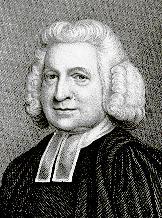
1707 - 1788 Topics: Twenty Second Sunday after Trinity Author of "The saints on earth and those above" in Evangelical Lutheran hymnal Charles Wesley, M.A. was the great hymn-writer of the Wesley family, perhaps, taking quantity and quality into consideration, the great hymn-writer of all ages. Charles Wesley was the youngest son and 18th child of Samuel and Susanna Wesley, and was born at Epworth Rectory, Dec. 18, 1707. In 1716 he went to Westminster School, being provided with a home and board by his elder brother Samuel, then usher at the school, until 1721, when he was elected King's Scholar, and as such received his board and education free. In 1726 Charles Wesley was elected to a Westminster studentship at Christ Church, Oxford, where he took his degree in 1729, and became a college tutor. In the early part of the same year his religious impressions were much deepened, and he became one of the first band of "Oxford Methodists." In 1735 he went with his brother John to Georgia, as secretary to General Oglethorpe, having before he set out received Deacon's and Priest's Orders on two successive Sundays. His stay in Georgia was very short; he returned to England in 1736, and in 1737 came under the influence of Count Zinzendorf and the Moravians, especially of that remarkable man who had so large a share in moulding John Wesley's career, Peter Bonier, and also of a Mr. Bray, a brazier in Little Britain. On Whitsunday, 1737, [sic. 1738] he "found rest to his soul," and in 1738 he became curate to his friend, Mr. Stonehouse, Vicar of Islington, but the opposition of the churchwardens was so great that the Vicar consented that he "should preach in his church no more." Henceforth his work was identified with that of his brother John, and he became an indefatigable itinerant and field preacher. On April 8, 1749, he married Miss Sarah Gwynne. His marriage, unlike that of his brother John, was a most happy one; his wife was accustomed to accompany him on his evangelistic journeys, which were as frequent as ever until the year 1756," when he ceased to itinerate, and mainly devoted himself to the care of the Societies in London and Bristol. Bristol was his headquarters until 1771, when he removed with his family to London, and, besides attending to the Societies, devoted himself much, as he had done in his youth, to the spiritual care of prisoners in Newgate. He had long been troubled about the relations of Methodism to the Church of England, and strongly disapproved of his brother John's "ordinations." Wesley-like, he expressed his disapproval in the most outspoken fashion, but, as in the case of Samuel at an earlier period, the differences between the brothers never led to a breach of friendship. He died in London, March 29, 1788, and was buried in Marylebone churchyard. His brother John was deeply grieved because he would not consent to be interred in the burial-ground of the City Road Chapel, where he had prepared a grave for himself, but Charles said, "I have lived, and I die, in the Communion of the Church of England, and I will be buried in the yard of my parish church." Eight clergymen of the Church of England bore his pall. He had a large family, four of whom survived him; three sons, who all became distinguished in the musical world, and one daughter, who inherited some of her father's poetical genius. The widow and orphans were treated with the greatest kindness and generosity by John Wesley. As a hymn-writer Charles Wesley was unique. He is said to have written no less than 6500 hymns, and though, of course, in so vast a number some are of unequal merit, it is perfectly marvellous how many there are which rise to the highest degree of excellence. His feelings on every occasion of importance, whether private or public, found their best expression in a hymn. His own conversion, his own marriage, the earthquake panic, the rumours of an invasion from France, the defeat of Prince Charles Edward at Culloden, the Gordon riots, every Festival of the Christian Church, every doctrine of the Christian Faith, striking scenes in Scripture history, striking scenes which came within his own view, the deaths of friends as they passed away, one by one, before him, all furnished occasions for the exercise of his divine gift. Nor must we forget his hymns for little children, a branch of sacred poetry in which the mantle of Dr. Watts seems to have fallen upon him. It would be simply impossible within our space to enumerate even those of the hymns which have become really classical. The saying that a really good hymn is as rare an appearance as that of a comet is falsified by the work of Charles Wesley; for hymns, which are really good in every respect, flowed from his pen in quick succession, and death alone stopped the course of the perennial stream. It has been the common practice, however for a hundred years or more to ascribe all translations from the German to John Wesley, as he only of the two brothers knew that language; and to assign to Charles Wesley all the original hymns except such as are traceable to John Wesley through his Journals and other works. The list of 482 original hymns by John and Charles Wesley listed in this Dictionary of Hymnology have formed an important part of Methodist hymnody and show the enormous influence of the Wesleys on the English hymnody of the nineteenth century. -- Excerpts from John Julian, Dictionary of Hymnology (1907) ================== Charles Wesley, the son of Samuel Wesley, was born at Epworth, Dec. 18, 1707. He was educated at Westminster School and afterwards at Christ Church, Oxford, where he graduated M.A. In 1735, he took Orders and immediately proceeded with his brother John to Georgia, both being employed as missionaries of the S.P.G. He returned to England in 1736. For many years he engaged with his brother in preaching the Gospel. He died March 29, 1788. To Charles Wesley has been justly assigned the appellation of the "Bard of Methodism." His prominence in hymn writing may be judged from the fact that in the "Wesleyan Hymn Book," 623 of the 770 hymns were written by him; and he published more than thirty poetical works, written either by himself alone, or in conjunction with his brother. The number of his separate hymns is at least five thousand. --Annotations of the Hymnal, Charles Hutchins, M.A., 1872.

St. Ambrose

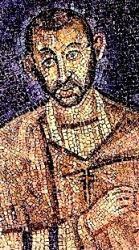
340 - 397 Person Name: Ambrosius Topics: Twenty second Sunday after Trinity Sunday Author (attributed to) of "O store Gud, vi love dig" in Salmebog for Lutherske Kristne i Amerika Ambrose (b. Treves, Germany, 340; d. Milan, Italy, 397), one of the great Latin church fathers, is remembered best for his preaching, his struggle against the Arian heresy, and his introduction of metrical and antiphonal singing into the Western church. Ambrose was trained in legal studies and distinguished himself in a civic career, becoming a consul in Northern Italy. When the bishop of Milan, an Arian, died in 374, the people demanded that Ambrose, who was not ordained or even baptized, become the bishop. He was promptly baptized and ordained, and he remained bishop of Milan until his death. Ambrose successfully resisted the Arian heresy and the attempts of the Roman emperors to dominate the church. His most famous convert and disciple was Augustine. Of the many hymns sometimes attributed to Ambrose, only a handful are thought to be authentic. Bert Polman ===================== Ambrosius (St. Ambrose), second son and third child of Ambrosius, Prefect of the Gauls, was born at Lyons, Aries, or Treves--probably the last--in 340 A.D. On the death of his father in 353 his mother removed to Rome with her three children. Ambrose went through the usual course of education, attaining considerable proficiency in Greek; and then entered the profession which his elder brother Satyrus had chosen, that of the law. In this he so distinguished himself that, after practising in the court of Probus, the Praetorian Prefect of Italy, he was, in 374, appointed Consular of Liguria and Aemilia. This office necessitated his residence in Milan. Not many months after, Auxentius, bishop of Milan, who had joined the Arian party, died; and much was felt to depend upon the person appointed as his successor. The church in which the election was held was so filled with excited people that the Consular found it necessary to take steps fur preserving the peace, and himself exhorted them to peace and order: when a voice suddenly exclaimed, "Ambrose is Bishop," and the cry was taken up on all sides. He was compelled to accept the post, though still only a catechumen; was forthwith baptized, and in a week more consecrated Bishop, Dec. 7, 374. The death of the Emperor Valentinian I., in 375, brought him into collision with Justina, Valentinian's second wife, an adherent of the Arian party: Ambrose was supported by Gratian, the elder son of Valentinian, and by Theodosius, whom Gratian in 379 associated with himself in the empire. Gratian was assassinated in 383 by a partisau of Maximus, and Ambrose was sent to treat with the usurper, a piece of diplomacy in which he was fairly successful. He found himself, however, left to carry on the contest with the Arians and the Empress almost alone. He and the faithful gallantly defended the churches which the heretics attempted to seize. Justina was foiled: and the advance of Maximus on Milan led to her flight, and eventually to her death in 388. It was in this year, or more probably the year before (387), that Ambrose received into the Church by baptism his great scholar Augustine, once a Manichaean heretic. Theodosius was now virtually head of the Roman empire, his colleague Valentinian II., Justina's son, being a youth of only 17. In the early part of 390 the news of a riot at Thessalonica, brought to him at Milan, caused him to give a hasty order for a general massacre at that city, and his command was but too faithfully obeyed. On his presenting himself a few days after at the door of the principal church in Milan, he was met by Ambrose, who refused him entrance till he should have done penance for his crime. It was not till Christmas, eight months after, that the Emperor declared his penitence, and was received into communion again by the Bishop. Valentinian was murdered by Arbogastes, a Frank general, in 392; and the murderer and his puppet emperor Eugenius were defeated by Theodosius in 394. But the fatigues of the campaign told on the Emperor, and he died the following year. Ambrose preached his funeral sermon, as he had done that of Valentinian. The loss of these two friends and supporters was a severe blow to Ambrose; two unquiet years passed, and then, worn with labours and anxieties, he himself rested from his labours on Easter Eve, 397. It was the 4th of April, and on that day the great Bishop of Milan is remembered by the Western Church, but Rome commemorates his consecration only, Dec. 7th. Great he was indeed, as a scholar, an organiser, a statesman; still greater as a theologian, the earnest and brilliant defender of the Catholic faith against the Arians of the West, just as Athanasius (whose name, one cannot but remark, is the same as his in meaning) was its champion against those of the East. We are now mainly concerned with him as musician and poet, "the father of Church song" as he is called by Grimm. He introduced from the East the practice of antiphonal chanting, and began the task, which St. Gregory completed, of systematizing the music of the Church. As a writer of sacred poetry he is remarkable for depth and severity. He does not warm with his subject, like Adam of St. Victor, or St. Bernard. "We feel," says Abp. Trench, "as though there were a certain coldness in his hymns, an aloofness of the author from his subject. "A large number of hymns has been attributed to his pen; Daniel gives no fewer than 92 called Ambrosian. Of these the great majority (including one on himself) cannot possibly be his; there is more or less doubt about the rest. The authorities on the subject are the Benedictine ed. of his works, the Psalterium, or Hymnary, of Cardinal Thomasius, and the Thesaurus Hymnologicus of Daniel. The Benedictine editors give 12 hymns as assignable to him, as follows:—1. Aeterna Christi munera. 2. Aeterne rerum Conditor. 3. Consors Paterni luminii. 4. Deus Creator omnium. 5. Fit porta Christi pervia, 6. Illuminans Altissimus. 7. Jam surgit hora tertia. 8. 0 Lux Beata Trinitas. 9. Orabo mente Dominum. 10. Somno refectis artubus. 11. Splendor Paternae gloriae. 12. Veni Redemptor gentium. Histories of these hymns, together with details of translations into English, are given in this work, and may be found under their respective first lines. The Bollandists and Daniel are inclined to attribute to St. Ambrose a hymn, Grates tibi Jesu novas, on the finding of the relics of SS. Gervasius and Protasius. These, we know, were discovered by him in 386, and it is by no means unlikely that the bishop should have commemorated in verse an event which he announces by letter to his sister Marcellina with so much satisfaction, not to say exultation.A beautiful tradition makes the Te Deum laudamus to have been composed under inspiration, and recited alternately, by SS. Ambrose and Augustine immediately after the baptism of the latter in 387. But the story rests upon a passage which there is every reason to consider spurious, in the Chronicon of Dacius, Bishop of Milan in 550. There is no hint of such an occurrence in the Confessions of St. Augustine, nor in Paulinue's life of St. Ambrose, nor in any authentic writing of St. Ambrose himself. The hymn is essentially a compilation, and there is much reason to believe, with Merati, that it originated in the 5th century, in the monastery of St. Honoratus at Lerins. [Te Deum.] -- John Julian, Dictionary of Hymnology (1907) Also known as: Ambrotio, Ambrosio de Milán Ambrosius Mediolanensis Ambrosius Saint, Bp. of Milan Ambrosius von Mailand Aurelio Ambrogio, Saint, Bishop of Milan Aurelius Ambrosius, Saint, Bishop of Milan Milan, d. 397
It looks like you are using an ad-blocker. Ad revenue helps keep us running. Please consider white-listing Hymnary.org or getting Hymnary Pro to eliminate ads entirely and help support Hymnary.org.