You help make Hymnary.org possible. More than 10 million people from 200+ countries found hymns, liturgical resources and encouragement on Hymnary.org in 2025, including you. Every visit affirms the global impact of this ministry.

If Hymnary has been meaningful to you this year, would you take a moment today to help sustain it? A gift of any size—paired with a note of encouragement if you wish—directly supports the server costs, research work and curation that keep this resource freely available to the world.

Give securely online today, or mail a check to:
Hymnary.org
Calvin University
3201 Burton Street SE
Grand Rapids, MI 49546

Thank you for your partnership, and may the hope of Advent fill your heart.

Person Results

Tune Identifier:"^alma_mater_redhead$"
In:person

Planning worship? Check out our sister site, ZeteoSearch.org, for 20+ additional resources related to your search.
Showing 1 - 3 of 3Results Per Page: 102050

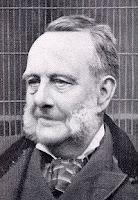
Richard Redhead

1820 - 1901 Person Name: R. Redhead, 1820-1901 Composer of "ALMA MATER" in Church Hymns Richard Redhead (b. Harrow, Middlesex, England, 1820; d. Hellingley, Sussex, England, 1901) was a chorister at Magdalen College, Oxford. At age nineteen he was invited to become organist at Margaret Chapel (later All Saints Church), London. Greatly influencing the musical tradition of the church, he remained in that position for twenty-five years as organist and an excellent trainer of the boys' choirs. Redhead and the church's rector, Frederick Oakeley, were strongly committed to the Oxford Movement, which favored the introduction of Roman elements into Anglican worship. Together they produced the first Anglican plainsong psalter, Laudes Diurnae (1843). Redhead spent the latter part of his career as organist at St. Mary Magdalene Church in Paddington (1864-1894). Bert Polman

John Needham

? - 1786 Author of "Behold The Prince Of Peace" in The Cyber Hymnal Needham, John, was the son of John Needham, Baptist Minister, of Hitchin, Herts, but the date of his birth is unknown. He would doubtless be educated by his father, who was a tutor and in repute as a learned man. In 1750 Needham became co-pastor with John Beddome at the Baptist meetinghouse in the Pithay, Bristol; but, two years later, Beddome having retired through age, a violent controversy arose in the Church with regard to a continuance of the plan of co-pastorship. As the result, Needham and a number of his friends removed to a Baptist meetinghouse in Callowhill Street, where a Mr. Foot was pastor. For a time the two societies used the same builing at different hours, but in 1755 they were united, with Mr. Needham and Mr. Foot as co-pastors. It is known that up to 1774 this arrangement continued, and it is also known that in 1787, both Mr. Needham and Mr. Foot having died, the Callowhill Street Church became extinct, but which of the two pastors was the survivor is not known. The date of Needham's death is unknown. It was probably circa 1786. In 1768 he published Hymns Devotional and Moral on various Subjects, collected chiefly from the Holy Scriptures, &c, Bristol, S. Farley, 1768. These hymns are 263 in all, and whilst none of them possess great excellence, yet several are of a pleasing and useful character. During the past 120 years several have appeared in Nonconformist hymnbooks, and specially in those of the Baptists. Of these the following are still in common use:— 1. Ashamed of Christ! my soul disdains. Not ashamed of Christ. 2. Awake, my tongue, thy tribute bring. The Divine Perfections. 3. Glory to God, Who reigns above. Jesus, the Messiah. 4. Great author of the immortal mind. Imitation of God's Moral Perfections. From "flow matchless, Lord, Thy glories are." 5. Happy the man whose cautious steps. Christian Moderation. 6. Holy and reverend is the Name. Reverence in Worship. 7. Kind are the words that Jesus speaks. Christ the Strengthener. 8. Lord,ere [Now Lord] the heavenly seed is sown. Parable of the Sower. 9. Methinks the last great day is come. The Judgment. 10. Rise, O my soul, pursue the path. The Example of the Saints. 11. See how the little toiling ant. Youth for Christ. 12. Thou art, O God, a Spirit pure. God a Spirit. 13. To praise the ever bounteous Lord. Harvest. 14. When some kind shepherd from his fold. The Lost Sheep. From this “O how divine, how sweet the joy," in Hatfield's Church Hymn Book, New York, 1872, is taken. [Rev. W. R. Stevenson, M.A.] --John Julian, Dictionary of Hymnology (1907)

Hyde Wyndham Beadon

1812 - 1891 Person Name: H. W. Beadon Author of "Fierce was the storm of wind" in The Church Hymnal Beadon, Hyde Wyndham, M.A., born in 1812, and educated at Eton and at St. John's College, Cambridge, B.A., 1835, M.A., 1839. Taking Holy Orders in 1836, he became, in 1837, Vicar of Haselbury Plucknett, near Crewkerne, and, in 1838, Vicar of Latton, Wilts. He is also Hon. Canon of Bristol, and Rural Dean. His hymns were published in The Parish Hymn Book , 1863 and 1875, of which he was co-editor with the Rev. G. Phillimore, and Bp. Woodford. To that collection, in 1863, he contributed the following hymns:— 1. Fierce was the storm of wind. Epiphany. 2. Glory to thee, 0 Lord, Who by, &c. Epiphany. This is usually given as, "All praise to Thee, 0 Lord, Who by," &c, and is found in several hymnals. 3. 0 God, Thy soldiers' crown. A translation of "Deus tuorum militum" (q.v.). This is sometimes given as, "0 Christ," &c. 4. The Son of Man shall come. Epiphany. The peculiarity of these hymns is that they are all in S.M. Their use is somewhat limited, with the exception of Nos. 1 and 2. -- John Julian, Dictionary of Hymnology (1907)

Export as CSV
It looks like you are using an ad-blocker. Ad revenue helps keep us running. Please consider white-listing Hymnary.org or getting Hymnary Pro to eliminate ads entirely and help support Hymnary.org.