

 My Starred Hymns
 My FlexScores
 My Hymnals
 My Purchased Files
Planning worship?
Check out our sister site, ZeteoSearch.org,
for 20+ additional resources related to your search.
- |
User Links
Person Results
John Bacchus Dykes
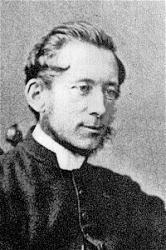
1823 - 1876 Person Name: John B. Dykes Composer of "FERRIER" in The New Canadian Hymnal As a young child John Bacchus Dykes (b. Kingston-upon-Hull' England, 1823; d. Ticehurst, Sussex, England, 1876) took violin and piano lessons. At the age of ten he became the organist of St. John's in Hull, where his grandfather was vicar. After receiving a classics degree from St. Catherine College, Cambridge, England, he was ordained in the Church of England in 1847. In 1849 he became the precentor and choir director at Durham Cathedral, where he introduced reforms in the choir by insisting on consistent attendance, increasing rehearsals, and initiating music festivals. He served the parish of St. Oswald in Durham from 1862 until the year of his death. To the chagrin of his bishop, Dykes favored the high church practices associated with the Oxford Movement (choir robes, incense, and the like). A number of his three hundred hymn tunes are still respected as durable examples of Victorian hymnody. Most of his tunes were first published in Chope's Congregational Hymn and Tune Book (1857) and in early editions of the famous British hymnal, Hymns Ancient and Modern.
Bert Polman
John Bacchus Dykes
Charles Wesley
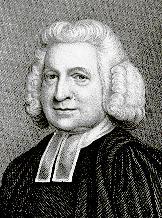
1707 - 1788 Author of "Hail the day that sees him rise" in The Praise Hymnary Charles Wesley, M.A. was the great hymn-writer of the Wesley family, perhaps, taking quantity and quality into consideration, the great hymn-writer of all ages. Charles Wesley was the youngest son and 18th child of Samuel and Susanna Wesley, and was born at Epworth Rectory, Dec. 18, 1707. In 1716 he went to Westminster School, being provided with a home and board by his elder brother Samuel, then usher at the school, until 1721, when he was elected King's Scholar, and as such received his board and education free. In 1726 Charles Wesley was elected to a Westminster studentship at Christ Church, Oxford, where he took his degree in 1729, and became a college tutor. In the early part of the same year his religious impressions were much deepened, and he became one of the first band of "Oxford Methodists."
In 1735 he went with his brother John to Georgia, as secretary to General Oglethorpe, having before he set out received Deacon's and Priest's Orders on two successive Sundays. His stay in Georgia was very short; he returned to England in 1736, and in 1737 came under the influence of Count Zinzendorf and the Moravians, especially of that remarkable man who had so large a share in moulding John Wesley's career, Peter Bonier, and also of a Mr. Bray, a brazier in Little Britain. On Whitsunday, 1737, [sic. 1738] he "found rest to his soul," and in 1738 he became curate to his friend, Mr. Stonehouse, Vicar of Islington, but the opposition of the churchwardens was so great that the Vicar consented that he "should preach in his church no more." Henceforth his work was identified with that of his brother John, and he became an indefatigable itinerant and field preacher. On April 8, 1749, he married Miss Sarah Gwynne. His marriage, unlike that of his brother John, was a most happy one; his wife was accustomed to accompany him on his evangelistic journeys, which were as frequent as ever until the year 1756," when he ceased to itinerate, and mainly devoted himself to the care of the Societies in London and Bristol. Bristol was his headquarters until 1771, when he removed with his family to London, and, besides attending to the Societies, devoted himself much, as he had done in his youth, to the spiritual care of prisoners in Newgate. He had long been troubled about the relations of Methodism to the Church of England, and strongly disapproved of his brother John's "ordinations." Wesley-like, he expressed his disapproval in the most outspoken fashion, but, as in the case of Samuel at an earlier period, the differences between the brothers never led to a breach of friendship. He died in London, March 29, 1788, and was buried in Marylebone churchyard. His brother John was deeply grieved because he would not consent to be interred in the burial-ground of the City Road Chapel, where he had prepared a grave for himself, but Charles said, "I have lived, and I die, in the Communion of the Church of England, and I will be buried in the yard of my parish church." Eight clergymen of the Church of England bore his pall. He had a large family, four of whom survived him; three sons, who all became distinguished in the musical world, and one daughter, who inherited some of her father's poetical genius. The widow and orphans were treated with the greatest kindness and generosity by John Wesley.
As a hymn-writer Charles Wesley was unique. He is said to have written no less than 6500 hymns, and though, of course, in so vast a number some are of unequal merit, it is perfectly marvellous how many there are which rise to the highest degree of excellence. His feelings on every occasion of importance, whether private or public, found their best expression in a hymn. His own conversion, his own marriage, the earthquake panic, the rumours of an invasion from France, the defeat of Prince Charles Edward at Culloden, the Gordon riots, every Festival of the Christian Church, every doctrine of the Christian Faith, striking scenes in Scripture history, striking scenes which came within his own view, the deaths of friends as they passed away, one by one, before him, all furnished occasions for the exercise of his divine gift. Nor must we forget his hymns for little children, a branch of sacred poetry in which the mantle of Dr. Watts seems to have fallen upon him. It would be simply impossible within our space to enumerate even those of the hymns which have become really classical. The saying that a really good hymn is as rare an appearance as that of a comet is falsified by the work of Charles Wesley; for hymns, which are really good in every respect, flowed from his pen in quick succession, and death alone stopped the course of the perennial stream.
It has been the common practice, however for a hundred years or more to ascribe all translations from the German to John Wesley, as he only of the two brothers knew that language; and to assign to Charles Wesley all the original hymns except such as are traceable to John Wesley through his Journals and other works.
The list of 482 original hymns by John and Charles Wesley listed in this Dictionary of Hymnology have formed an important part of Methodist hymnody and show the enormous influence of the Wesleys on the English hymnody of the nineteenth century.
-- Excerpts from John Julian, Dictionary of Hymnology (1907)
==================
Charles Wesley, the son of Samuel Wesley, was born at Epworth, Dec. 18, 1707. He was educated at Westminster School and afterwards at Christ Church, Oxford, where he graduated M.A. In 1735, he took Orders and immediately proceeded with his brother John to Georgia, both being employed as missionaries of the S.P.G. He returned to England in 1736. For many years he engaged with his brother in preaching the Gospel. He died March 29, 1788. To Charles Wesley has been justly assigned the appellation of the "Bard of Methodism." His prominence in hymn writing may be judged from the fact that in the "Wesleyan Hymn Book," 623 of the 770 hymns were written by him; and he published more than thirty poetical works, written either by himself alone, or in conjunction with his brother. The number of his separate hymns is at least five thousand.
--Annotations of the Hymnal, Charles Hutchins, M.A., 1872.
Charles Wesley
Mrs. Barbauld
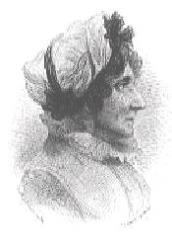
1743 - 1825 Author of "Praise to God, immortal praise" in New Manual of Praise Barbauld, Anna Laetitia, née Aikin, daughter of the Rev. John Ailrin, D.D., a dissenting minister, was b. at Kibworth-Harcourt, Leicestershire, June 20, 1743. In 1753 Dr. Aikin became classical tutor at a dissenting academy at Warrington. During her residence there she contributed five hymns to Dr. W. Enfield's Hymns for Public Worship, &c, Warrington, 1772. In the following year these were included in her Poems, Lond., J. Johnson, 1773. In May, 1774, Miss Aikin was married to the Rev. Rochemont Barbauld, a descendant of a French Protestant family, and a dissenting minister. For some years Mr. Barbauld conducted, in addition to his pastoral work, a boarding school at Palgrave, Suffolk. From this he retired in 1785. In 1786 he undertook the charge of a small congregation at Hampstead, and from thence he passed to the dissenting chapel (formerly Dr. Price's) at Newington Green, in 1802. He d. Nov. 11, 1808. Mrs. Barbauld continued to reside in the neighbourhood until her death, March 9, 1825. In the latter part of the same year her niece published The Works of Anna Laetitia Barbauld, with Memoir, by Lucy Aikin, 2 vols., Lond., Longman, 1825. As a writer of hymns Mrs. Barbauld was eminently successful. Their use, however, with the exception of five contributed to Dr. W. Enfield's collection, is almost exclusively confined to the Unitarian hymnals of Great Britain and America. Including these hymnals, the whole of her hymns are still in common use. These hymns appeared thus:—
i. In Dr. W. Enfield's Hymns, &c., 1772.
1. Again the Lord of life and light. Easter.
2. Awake, my soul, lift up thine eyes. Conflict.
3. Behold, where breathing love divine. Christian Charity.
4. Jehovah reigns, let every nation hear. God's Dominion. A part of this was given in Collyer's Sel., 1812, No. 586, as:—
5. This earthly globe, the creature of a day.
6. Praise to God, Immortal praise. Harvest.
ii. Poems, 1773 (Preface dated Dec. 1, 1772). The whole of the above, and also:—
7. God of my life and author of my days. To God the Father. This is an “Address to the Deity," in 80 1. It is given in Martineau's Collection, 1840 and 1873. From it the following centos were given in Collyer's Selection> 1812:—
8. God, our kind Master, merciful as just.
9. If friendless in the vale of tears I stray.
iii. Poems revised 1792.
10. Come, said [says] Jesus' sacred voice. Invitation.
11. How blest the sacred tie that binds. Christian Fellowship.
12. Lo where a crowd of pilgrims toil. Pilgrimage of Life. From this is taken:—
13. Our country is Immanuel's ground [land].
iv. Leisure Hour Improved (Ironbridge), 1809.
14. Sweet is the scene when virtue dies. Death.
v. Supplement to the Unitarian Coll. of Kippis, Bees, and others, 1807.
15. When as returns the solemn day. Sunday.
16. Sleep, sleep to day, tormenting cares. Sunday.
17. How may earth and heaven unite. Worship.
vi. Works, with Memoir, 1825.
In vol. i. most of the above are reprinted, and the following are added :—
18. Joy to the followers of the Lord. Joy. (c. 1820.)
19. Pure spirit, O where art thou now. Bereavement. This is dated 1808.
20. Salt of the earth, ye virtuous few. Salt of the Earth.
21. When life as opening buds is sweet. Death. This is dated " November, 1814."
The more important of these hymns are annotated in this Dictionary under their first lines. Mrs. Barbauld's Hymns in Prose for Children, originally published in 1781, were long popular and have been translated into French, Italian, Spanish, and other languages.
-- John Julian, Dictionary of Hymnology (1907)
===================
Barbauld, Anna L., p. 113, ii. No. 18 on p. 114, i.,should be dated circa 1820. Another hymn in common use from Mrs. Barbauld's Works, &c, 1825, is, "O Father! though the anxious fear" (E. Taylor, p. 1117, in error).
--John Julian, Dictionary of Hymnology, Appendix, Part II (1907)
See also in:
Hymn Writers of the Church
Mrs. Barbauld
H. W. Baker
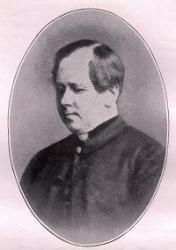
1821 - 1877 Author of "Praise, oh, praise our God and King" in New Manual of Praise Baker, Sir Henry Williams, Bart., eldest son of Admiral Sir Henry Loraine Baker, born in London, May 27, 1821, and educated at Trinity College, Cambridge, where he graduated, B.A. 1844, M.A. 1847. Taking Holy Orders in 1844, he became, in 1851, Vicar of Monkland, Herefordshire. This benefice he held to his death, on Monday, Feb. 12, 1877. He succeeded to the Baronetcy in 1851. Sir Henry's name is intimately associated with hymnody. One of his earliest compositions was the very beautiful hymn, "Oh! what if we are Christ's," which he contributed to Murray's Hymnal for the Use of the English Church, 1852. His hymns, including metrical litanies and translations, number in the revised edition of Hymns Ancient & Modern, 33 in all. These were contributed at various times to Murray's Hymnal, Hymns Ancient & Modern and the London Mission Hymn Book, 1876-7. The last contains his three latest hymns. These are not included in Hymns Ancient & Modern. Of his hymns four only are in the highest strains of jubilation, another four are bright and cheerful, and the remainder are very tender, but exceedingly plaintive, sometimes even to sadness. Even those which at first seem bright and cheerful have an undertone of plaintiveness, and leave a dreamy sadness upon the spirit of the singer. Poetical figures, far-fetched illustrations, and difficult compound words, he entirely eschewed. In his simplicity of language, smoothness of rhythm, and earnestness of utterance, he reminds one forcibly of the saintly Lyte. In common with Lyte also, if a subject presented itself to his mind with striking contrasts of lights and shadows, he almost invariably sought shelter in the shadows. The last audible words which lingered on his dying lips were the third stanza of his exquisite rendering of the 23rd Psalm, "The King of Love, my Shepherd is:"—
Perverse and foolish, oft I strayed,
But yet in love He sought me,
And on His Shoulder gently laid,
And home, rejoicing, brought me."
This tender sadness, brightened by a soft calm peace, was an epitome of his poetical life.
Sir Henry's labours as the Editor of Hymns Ancient & Modern were very arduous. The trial copy was distributed amongst a few friends in 1859; first ed. published 1861, and the Appendix, in 1868; the trial copy of the revised ed. was issued in 1874, and the publication followed in 1875. In addition he edited Hymns for the London Mission, 1874, and Hymns for Mission Services, n.d., c. 1876-7. He also published Daily Prayers for those who work hard; a Daily Text Book, &c. In Hymns Ancient & Modern there are also four tunes (33, 211, 254, 472) the melodies of which are by Sir Henry, and the harmonies by Dr. Monk. He died Feb. 12, 1877.
--John Julian, Dictionary of Hymnology (1907)
H. W. Baker
Andrew Reed
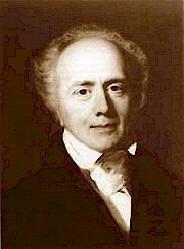
1787 - 1862 Person Name: Rev. Andrew Reed Author of "Holy Ghost, with light divine" in Church Hymns and Tunes Reed, Andrew, D.D., son of Andrew Reed, was born in London on Nov. 27, 1787, and educated for the Congregational Ministry at Hackney College, London. He was first the pastor of the New Road Chapel, St. George's-in-the-East, and then of the Wycliffe Chapel, which was built through his exertions in 1830. His degree was conferred by Yule College, America. He died Feb. 25, 1862. As the founder of "The London Orphan Asylum," "The Asylum for Fatherless Children," “The Asylum for Idiots” "The Infant Orphan Asylum," and "The Hospital for Incurables," Dr. Reed is more fully known, and will be longer remembered than by his literary publications. His Hymn Book was the growth of years. The preparation began in 1817, when he published a Supplement to Watts, in which were a few originals. This was enlarged in 1825; and entirely superseded by his collection The Hymn Book, prepared from Dr. Watts's Psalms & Hymns and Other Authors, with some Originals, in 1842 (Preface). His hymns, mostly of a plain and practical character, numbering 21, were contributed to these various editions, and were republished with those of his wife in the Wycliffe Supplement, 1872. The best known are "Ah Jesus, let me hear Thy voice” and ”Spirit Divine, attend our prayer." All Dr. and Mrs. Reed's hymns are anonymous in The Hymn Book, 1842, but are given with their names in the Wyclife Supplement, 1872. His hymns now in common use include, in addition to those annotated under their respective first lines :—
1. Come, let us strike our harps afresh. Praise.
2. Come, my Redeemer, come. Desiring Christ's Presence.
3. Gentle Saviour, look on me. Christ's protection Desired.
4. Gracious Lord, as Thou hast taught us. Public Worship.
5. Hark, hark, the notes of joy. Missions.
6. Holy Ghost, with light divine (1817). Prayer to the Holy Spirit. Sometimes given as "Holy Ghost, Thou light divine;" and again as "Holy Spirit, Light divine."
7. Listen, sinner, mercy hails you. Invitation. Generally given as "Hear, O Sinner, mercy hails you."
8. Rich are the joys of solitude. Retirement. Some-times given as "How deep and tranquil is the joy."
9. There [comes] is an hour when I must part. Death anticipated.
10. Ye saints your music bring. Praise of the Cross.
--John Julian, Dictionary of Hymnology (1907)
Andrew Reed
Samuel Longfellow
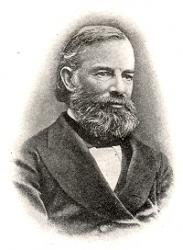
1819 - 1892 Author of "The Holy Spirit" in Heart and Voice Longfellow, Samuel, B. A., brother of the Poet, was born at Portland, Maine, June 18, 1819, and educated at Harvard, where he graduated in Arts in 1839, and in Theology in 1846. On receiving ordination as an Unitarian Minister, he became Pastor at Fall River, Massachusetts, 1848; at Brooklyn, 1853; and at Germantown, Pennsylvania, 1860. In 1846 he edited, with the Rev. S. Johnson (q. v.), A Book of Hymns for Public and Private Devotion. This collection was enlarged and revised in 1848. In 1859 his Vespers was published, and in 1864 the Unitarian Hymns of the Spirit , under the joint editorship of the Rev. S. Johnson and himself. His Life of his brother, the Poet Longfellow, was published in 1886. To the works named he contributed the following hymns:—
i. To A Book of Hymns , revised ed., 1848.
1. Beneath the shadow of the Cross. Love.
2. 0 God, thy children gathered here. Ordination.
ii. To the Vespers 1859.
3. Again as evening's shadow falls. Evening.
4. Now on land and sea descending. Evening.
iii. To the Hymns of the Spirit, 1864.
5. A voice by Jordan's shore. Advent.
6. Father, give Thy benediction. Ordination.
7. Go forth to life, 0 child of earth. Life's Mission.
8. God of ages and of nations. Holy Scriptures.
9. Holy Spirit, Truth divine. The Holy Spirit desired.
10. I look to Thee in every need. Trust in God.
11. In the beginning was the Word. The Word.
12. Love for all, and can it be? Lent. The Prodigal Son.
13. 0 God, in Whom we live and move. God's Law and Love.
14. 0 God, Thou Giver of all good. Prayer for Food.
15. O still in accents sweet and strong. Missions.
16. 0 Thou, Whose liberal sun and rain. Anniversary of Church dedication.
17. One holy Church of God appears. The Church Universal.
18. Out of the dark, the circling sphere. The Outlook.
19. Peace, peace on earth! the heart of man for ever. Peace on Earth.
20. The loving Friend to all who bowed. Jesus of Nazareth.
21. ’Tis winter now, the fallen snow. Winter.
Of these, hymn No. 2 was written for the Ordination of E. E. Hale (q. v.), at Worcester, 1846. Several are included in Martineau's Hymns, 1873.
Died Oct. 3, 1892. [Rev. F. M. Bird, M.A.]
--John Julian, Dictionary of Hymnology (1907), p. 685
===============
Longfellow, S., p. 685, i. Since Mr. Longfellow's death on Oct. 3, 1892, his hymns have been collected by his niece, Miss Alice Longfellow, as Hymns and Verses(Houghton, Mifflin & Co., 1904.) From this work we find many of the hymns signed Anon, in the Index to Longfellow and Johnson's Hymns of the Spirit, 1864, were his; several of these, including E. Osier's "O God unseen, yet ever near," were popular English hymns which he rewrote from his own theological standpoint. These re¬written hymns are very widely used by Unitarians and others. During the last ten years the following additional hymns by S. Long¬fellow have come into common use:—
1. Eternal One, Thou living God. Faith in God.
2. God of the earth, the sky, the sea. God in Nature.
3. God's trumpet wakes the slumbering world. Call to duty.
4. Light of ages and of nations. God in and through all time.
5. Lo, the earth is risen again. Spring. (1876.)
6. Now while we sing our closing psalm. Close of Worship.
7. O Life that maketh all things new. Unity. (1874.)
8. O Thou in Whom we live and move. The Divine Law.
9. The summer days are come again. Summer. From his hymn,"The sweet[bright] June days are come again."
10. Thou Lord of lite, our saving health. In Sickness. (1886.)
Of these hymns Nos. 2, 3 appeared in the Hymns of the Spirit, 1864, and all with the dates appended in Hymns and Verses, 1904.
--John Julian, Dictionary of Hymnology, New Supplement (1907)
==================
http://en.wikipedia.org/wiki/Samuel_Longfellow
Samuel Longfellow
John Newton
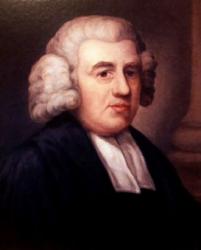
1725 - 1807 Person Name: Rev. John Newton (1725-1807) Author of "Parting Hymn" in Songs of Praise with Tunes John Newton (b. London, England, 1725; d. London, 1807) was born into a Christian home, but his godly mother died when he was seven, and he joined his father at sea when he was eleven. His licentious and tumultuous sailing life included a flogging for attempted desertion from the Royal Navy and captivity by a slave trader in West Africa. After his escape he himself became the captain of a slave ship. Several factors contributed to Newton's conversion: a near-drowning in 1748, the piety of his friend Mary Catlett, (whom he married in 1750), and his reading of Thomas à Kempis' Imitation of Christ. In 1754 he gave up the slave trade and, in association with William Wilberforce, eventually became an ardent abolitionist. After becoming a tide-surveyor in Liverpool, England, Newton came under the influence of George Whitefield and John and Charles Wesley and began to study for the ministry. He was ordained in the Church of England and served in Olney (1764-1780) and St. Mary Woolnoth, London (1780-1807). His legacy to the Christian church includes his hymns as well as his collaboration with William Cowper (PHH 434) in publishing Olney Hymns (1779), to which Newton contributed 280 hymns, including “Amazing Grace.”
Bert Polman
==================
Newton, John, who was born in London, July 24, 1725, and died there Dec. 21, 1807, occupied an unique position among the founders of the Evangelical School, due as much to the romance of his young life and the striking history of his conversion, as to his force of character. His mother, a pious Dissenter, stored his childish mind with Scripture, but died when he was seven years old. At the age of eleven, after two years' schooling, during which he learned the rudiments of Latin, he went to sea with his father. His life at sea teems with wonderful escapes, vivid dreams, and sailor recklessness. He grew into an abandoned and godless sailor. The religious fits of his boyhood changed into settled infidelity, through the study of Shaftesbury and the instruction of one of his comrades. Disappointing repeatedly the plans of his father, he was flogged as a deserter from the navy, and for fifteen months lived, half-starved and ill-treated, in abject degradation under a slave-dealer in Africa. The one restraining influence of his life was his faithful love for his future wife, Mary Catlett, formed when he was seventeen, and she only in her fourteenth year. A chance reading of Thomas à Kempis sowed the seed of his conversion; which quickened under the awful contemplations of a night spent in steering a water-logged vessel in the face of apparent death (1748). He was then twenty-three. The six following years, during which he commanded a slave ship, matured his Christian belief. Nine years more, spent chiefly at Liverpool, in intercourse with Whitefield, Wesley, and Nonconformists, in the study of Hebrew and Greek, in exercises of devotion and occasional preaching among the Dissenters, elapsed before his ordination to the curacy of Olney, Bucks (1764).
The Olney period was the most fruitful of his life. His zeal in pastoral visiting, preaching and prayer-meetings was unwearied. He formed his lifelong friendship with Cowper, and became the spiritual father of Scott the commentator. At Olney his best works—-Omicron's Letters (1774); Olney Hymns (1779); Cardiphonia, written from Olney, though published 1781—were composed. As rector of St. Mary Woolnoth, London, in the centre of the Evangelical movement (1780-1807) his zeal was as ardent as before. In 1805, when no longer able to read his text, his reply when pressed to discontinue preaching, was, "What, shall the old African blasphemer stop while he can speak!" The story of his sins and his conversion, published by himself, and the subject of lifelong allusion, was the base of his influence; but it would have been little but for the vigour of his mind (shown even in Africa by his reading Euclid drawing its figures on the sand), his warm heart, candour, tolerance, and piety. These qualities gained him the friendship of Hannah More, Cecil, Wilberforce, and others; and his renown as a guide in experimental religion made him the centre of a host of inquirers, with whom he maintained patient, loving, and generally judicious correspondence, of which a monument remains in the often beautiful letters of Cardiphonia. As a hymnwriter, Montgomery says that he was distanced by Cowper. But Lord Selborne's contrast of the "manliness" of Newton and the "tenderness" of Cowper is far juster. A comparison of the hymns of both in The Book of Praise will show no great inequality between them. Amid much that is bald, tame, and matter-of-fact, his rich acquaintance with Scripture, knowledge of the heart, directness and force, and a certain sailor imagination, tell strongly. The one splendid hymn of praise, "Glorious things of thee are spoken," in the Olney collection, is his. "One there is above all others" has a depth of realizing love, sustained excellence of expression, and ease of development. "How sweet the name of Jesus sounds" is in Scriptural richness superior, and in structure, cadence, and almost tenderness, equal to Cowper's "Oh! for a closer walk with God." The most characteristic hymns are those which depict in the language of intense humiliation his mourning for the abiding sins of his regenerate life, and the sense of the withdrawal of God's face, coincident with the never-failing conviction of acceptance in The Beloved. The feeling may be seen in the speeches, writings, and diaries of his whole life. [Rev. H. Leigh Bennett, M.A.]
A large number of Newton's hymns have some personal history connected with them, or were associated with circumstances of importance. These are annotated under their respective first lines. Of the rest, the known history of which is confined to the fact that they appeared in the Olney Hymns, 1779, the following are in common use:—
1. Be still, my heart, these anxious cares. Conflict.
2. Begone, unbelief, my Saviour is near. Trust.
3. By the poor widow's oil and meal. Providence.
4. Chief Shepherd of Thy chosen sheep. On behalf of Ministers.
5. Darkness overspreads us here. Hope.
6. Does the Gospel-word proclaim. Rest in Christ.
7. Fix my heart and eyes on Thine. True Happiness.
8. From Egypt lately freed. The Pilgrim's Song.
9. He Who on earth as man was Known. Christ the Rock.
10. How blest are they to whom the Lord. Gospel Privileges.
11. How blest the righteous are. Death of the Righteous.
12. How lost was my [our] condition. Christ the Physician.
13. How tedious and tasteless the hours. Fellowship with Christ.
14. How welcome to the saints [soul] when pressed. Sunday.
15. Hungry, and faint, and poor. Before Sermon.
16. In mercy, not in wrath, rebuke. Pleading for Mercy.
17. In themselves, as weak as worms. Power of Prayer.
18. Incarnate God, the soul that knows. The Believer's Safety.
19. Jesus, Who bought us with His blood. The God of Israel. "Teach us, 0 Lord, aright to plead," is from this hymn.
20. Joy is a [the] fruit that will not grow. Joy.
21. Let hearts and tongues unite. Close of the Year. From this "Now, through another year," is taken.
22. Let us adore the grace that seeks. New Year.
23. Mary to her [the] Saviour's tomb. Easter.
24. Mercy, 0 Thou Son of David. Blind Bartimeus.
25. My harp untun'd and laid aside. Hoping for a Revival. From this "While I to grief my soul gave way" is taken.
26. Nay, I cannot let thee go. Prayer. Sometimes, "Lord, I cannot let Thee go."
27. Now may He Who from the dead. After Sermon.
28. 0 happy they who know the Lord, With whom He deigns to dwell. Gospel Privilege.
29. O Lord, how vile am I. Lent.
30. On man in His own Image made. Adam.
31. 0 speak that gracious word again. Peace through Pardon.
32. Our Lord, Who knows full well. The Importunate Widow. Sometimes altered to "Jesus, Who knows full well," and again, "The Lord, Who truly knows."
33. Physician of my sin-sick soul. Lent.
34. Pleasing spring again is here. Spring.
35. Poor, weak, and worthless, though I am. Jesus the Friend.
36. Prepare a thankful song. Praise to Jesus.
37. Refreshed by the bread and wine. Holy Communion. Sometimes given as "Refreshed by sacred bread and wine."
38. Rejoice, believer, in the Lord. Sometimes “Let us rejoice in Christ the Lord." Perseverance.
39. Salvation, what a glorious plan. Salvation.
40. Saviour, shine and cheer my soul. Trust in Jesus. The cento "Once I thought my mountain strong," is from this hymn.
41. Saviour, visit Thy plantation. Prayer for the Church.
42. See another year [week] is gone. Uncertainty of Life.
43. See the corn again in ear. Harvest.
44. Sinner, art thou still secure? Preparation for the Future.
45. Sinners, hear the [thy] Saviour's call. Invitation.
46. Sovereign grace has power alone. The two Malefactors.
47. Stop, poor sinner, stop and think. Caution and Alarm.
48. Sweeter sounds than music knows. Christmas.
49. Sweet was the time when first I felt. Joy in Believing.
50. Ten thousand talents once I owed. Forgiveness and Peace.
51. The grass and flowers, which clothe the field. Hay-time.
52. The peace which God alone reveals. Close of Service.
53. Thy promise, Lord, and Thy command. Before Sermon.
54. Time, by moments, steals away. The New Year.
55. To Thee our wants are known. Close of Divine Service.
56. We seek a rest beyond the skies. Heaven anticipated.
57. When any turn from Zion's way. Jesus only.
58. When Israel, by divine command. God, the Guide and Sustainer of Life.
59. With Israel's God who can compare? After Sermon.
60. Yes, since God Himself has said it. Confidence.
61. Zion, the city of our God. Journeying Zionward.
-- John Julian, Dictionary of Hymnology (1907)
=================
Newton, J., p. 803, i. Another hymn in common use from the Olney Hymns, 1779, is "Let me dwell on Golgotha" (Holy Communion).
--John Julian, Dictionary of Hymnology, Appendix, Part II (1907)
-----
John Newton was born in London, July 24, 1725. His mother died when he was seven years old. In his eleventh year he accompanied his father, a sea captain, on a voyage. For several years his life was one of dissipation and crime. He was disgraced while in the navy. Afterwards he engaged in the slave trade. Returning to England in 1748, the vessel was nearly wrecked in a storm. This peril forced solemn reflection upon him, and from that time he was a changed man. It was six years, however, before he relinquished the slave trade, which was not then regarded as an unlawful occupation. But in 1754, he gave up sea-faring life, and holding some favourable civil position, began also religious work. In 1764, in his thirty-ninth year, he entered upon a regular ministry as the Curate of Olney. In this position he had intimate intercourse with Cowper, and with him produced the "Olney Hymns." In 1779, Newton became Rector of S. Mary Woolnoth, in London, in which position he became more widely known. It was here he died, Dec. 21, 1807, His published works are quite numerous, consisting of sermons, letters, devotional aids, and hymns. He calls his hymns "The fruit and expression of his own experience."
--Annotations of the Hymnal, Charles Hutchins, M.A. 1872
See also in:
Hymn Writers of the Church
=======================
John Newton
Jane Eliza Leeson
1807 - 1882 Person Name: Jane E. Leeson Author of "Savior, Teach Me Day By Day" in American Lutheran Hymnal Leeson, Jane E.. The earliest work by Miss Leeson with which we are acquainted is her Infant Hymnings. Then followed Hymns and Scenes of Childhood, or A Sponsor's Gift (London, James Burns; Nottingham, Dearden), 1842, in which the Infant Hymnings were incorporated. Concerning Pt. ii. of the Hymns and Scenes, &c, Miss Leeson says, "For the best of the Poems in the second part, the Writer is indebted to a friend." In the Rev. Henry Formby's Catholic Hymns arranged in order for the principal Festivals, Feasts of Saints, and other occasions of Devotion throughout the Year, London, Burns and Lambert, N.D. [1851], "Imprimatur, N. Cardinalis Wiseman, May 3rd, 1853," her translation of Victimae Paschali (“Christ the Lord is risen to-day"), and her "Loving Shepherd of Thy Sheep" (also in Hymns & Scenes, 1842), were given under the signature "M. L." Her Paraphrases and Hymns for Congregational Singing (most of " which were re-written from the Scottish Translations and Paraphrases (q.v.), 1781) were published by Wertheimer & Co., London, in 1853. In the Irvingite Hymns for the Use of the Churches, 1864, there are five of her original hymns and four of her translations from the Latin under the signature of "J. E. L.; "and most of these were repeated in the 2nd edition, 1871. In addition Miss Leeson is the author of several other works, including The Christian Child's Book, 1848, The Child's Book of Ballads, 1849, Songs of Christian Chivalry, 1848, Margaret, a Poem, 1850, The Seven Spiritual Works of Mercy, and others. Her hymns in common use include:—
1. A little child may know. God's love of little Children. In Hymns & Scenes of Childhood, 1842, No. 20, in 5 stanzas of 4 lines.
2. Dear Saviour, to Thy little lambs. For Purity. In Hymns & Scenes of Childhood, 1842, No. 19, in 4 stanzas of 8 lines.
3. Father, I [we] love Thy house of prayer. Public Worship. In Hymns & Scenes of Childhood, 1842, No. 76, in 3 stanzas of 12 lines. It is usually abbreviated.
4. Have ye counted the cost? Soldiers of the Cross . In Songs of Christian Chivalry, 1848, p. 8, in 10 stanzas of 9 lines. Usually abbreviated as in the Enlarged London Hymn Book, 1873.
5. In the dark and silent night. Confidence. In The Christian Child's Book, 1848, in 3 stanzas of 3 lines, with the refrain, "Hallelujah." It is in the Irish Church Hymnal , 1873, and other collections.
6. Jesus Christ, my Lord and King. Child's Praise of Christ. In Hymns & Scenes of Childhood, 1842, No. 18, in 6 stanzas of 4 lines.
7. King of Saints and King of glory. All Saints . In her Paraphrases & Hymns, 1853, p. 84, in 2 stanzas of 8 lines.
8. Saviour, teach me day by day. Obedience. In Hymns & Scenes of Childhood, 1842, No. 49, in 4 stanzas of 8 lines. In several hymn-books in Great Britain and America.
9. Songs of glory fill the sky. Christmas. In the Irvingite Hymns for the Use of the Churches, 1864, No. 21, in 3 stanzas of 8 lines, with the refrain "Hail! Lord Jesu."
10. Stand we prepared to see and hear. Advent. In the Irvingite Hymns for the Use of the Churches, 1864, No. 173, in 4 stanzas of 8 lines. Written in 1800.
11. Sweet the lesson Jesus taught. Christ blessing little Children. In Hymns & Scenes of Childhood, 1842, No. 1, in 5 stanzas of 4 lines.
12. Wake the song, 0 Zion's daughter. A cento of much excellence, which see.
13. Wake, ye saints, the song of triumph. Ascension . Written in 1861, and published in the Irvingite Hymns for the Use of the Churches, 1864, No. 60, in 4 stanzas of 6 lines, with the refrain "Hallelujah." In stanza ii., lines 3, 4, and 6 are from C. Wesley's "Hail the day that sees Him rise."
Miss Leeson's most popular hymn, “Loving Shepherd of Thy Sheep," and her translations from the Latin are noted elsewhere in this work. Of Miss Leeson's personal history we can gather nothing. Born 1807; died 1882.
--John Julian, Dictionary of Hymnology (1907)
Jane Eliza Leeson
William Walsham How
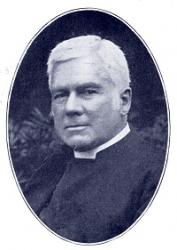
1823 - 1897 Person Name: W. W. How Author of "Lord, this day thy children meet" in The School Hymnary William W. How (b. Shrewsbury, Shropshire, England, 1823; d. Leenane, County Mayo, Ireland, 1897) studied at Wadham College, Oxford, and Durham University and was ordained in the Church of England in 1847. He served various congregations and became Suffragan Bishop in east London in 1879 and Bishop of Wakefield in 1888. Called both the "poor man's bishop" and "the children's bishop," How was known for his work among the destitute in the London slums and among the factory workers in west Yorkshire. He wrote a number of theological works about controversies surrounding the Oxford Movement and attempted to reconcile biblical creation with the theory of evolution. He was joint editor of Psalms and Hymns (1854) and Church Hymns (1871). While rector in Whittington, How wrote some sixty hymns, including many for children. His collected Poems and Hymns were published in 1886.
Bert Polman
===============
How, William Walsham, D.D., son of William Wybergh How, Solicitor, Shrewsbury, was born Dec. 13, 1823, at Shrewsbury, and educated at Shrewsbury School and Wadham College, Oxford (B.A. 1845). Taking Holy Orders in 1846, he became successively Curate of St. George's, Kidderminster, 1846; and of Holy Cross, Shrewsbury, 1848. In 1851 he was preferred to the Rectory of Whittington, Diocese of St. Asaph, becoming Rural Dean in 1853, and Hon. Canon of the Cathedral in 1860. In 1879 he was appointed Rector of St. Andrew's Undershaft, London, and was consecrated Suffragan Bishop for East London, under the title of the Bishop of Bedford, and in 1888 Bishop of Wakefield. Bishop How is the author of the Society for Promoting Christian Knowledge Commentary on the Four Gospels; Plain Words , Four Series; Plain Words for Children; Pastor in Parochia; Lectures on Pastoral Work; Three All Saints Summers, and Other Poems , and numerous Sermons , &c. In 1854 was published Psalms and Hymns, Compiled by the Rev. Thomas Baker Morrell, M.A., . . . and the Rev. William Walsham How, M.A. This was republished in an enlarged form in 1864, and to it was added a Supplement in 1867. To this collection Bishop How contributed several hymns, and also to the S. P. C. K. Church Hymns , of which he was joint editor, in 1871. The Bishop's hymns in common use amount in all to nearly sixty.
Combining pure rhythm with great directness and simplicity, Bishop How's compositions arrest attention more through a comprehensive grasp of the subject and the unexpected light thrown upon and warmth infused into facia and details usually shunned by the poet, than through glowing imagery and impassioned rhetoric. He has painted lovely images woven with tender thoughts, but these are few, and found in his least appreciated work. Those compositions which have laid the firmest hold upon the Church, are simple, unadorned, but enthusiastically practical hymns, the most popular of which, "O Jesu, Thou art standing"; "For all the Saints who from their labours rest," and "We give Thee but Thine own," have attained to a foremost rank. His adaptations from other writers as in the case from Bishop Ken, "Behold, the Master passeth by," are good, and his Children's hymns are useful and popular. Without any claims to rank as a poet, in the sense in which Cowper and Montgomery were poets, he has sung us songs which will probably outlive all his other literary works.
The more important of Bishop How's hymns, including those already named, and "Lord, Thy children guide and keep"; "O Word of God Incarnate"; "This day at Thy creating word"; "Who is this so weak and helpless"; and others which have some special history or feature of interest, are annotated under their respective first lines. The following are also in common use:—
i. From Psalms & Hymns, 1854.
1. Before Thine awful presence, Lord. Confirmation.
2. Jesus, Name of wondrous love [priceless worth]. Circumcision. The Name Jesus .
3. Lord Jesus, when we stand afar. Passiontide.
4. O blessing rich, for sons of men. Members of Christ.
5. 0 Lord of Hosts, the earth is Thine. In time of War.
6. O Lord, Who in Thy wondrous love. Advent.
ii. From Psalms & Hymns, enlarged, 1864.
7. Lord, this day Thy children meet. Sunday School Anniversary.
iii. From Supplement to the Psalms & Hymns, 1867.
8. Hope of hopes and joy of joys. Resurrection.
9. 0 daughters blest of Galilee. For Associations of Women.
10. O happy feet that tread. Public Worship.
11. With trembling awe the chosen three. Transfiguration.
iv. From Parish Magazine, 1871, and Church Hymns, 1871.
12. O Jesu, crucified for man. Friday.
13. Yesterday, with worship blest. Monday.
v. From the S. P. C. K. Church Hymns. 1871.
14. Bowed low in supplication. For the Parish.
15. Great Gabriel sped on wings of light. Annunciation, of the Blessed Virgin Mary.
16. O blest was he, whose earlier skill. St. Luke.
17. O God, enshrined in dazzling light. Omnipresence. Divine Worship .
18. O heavenly Fount of Light and Love. Witsuntide.
19. O Lord, it is a blessed thing. Weekdays.
20. 0 One with God the Father. Epiphany.
21. O Thou through suffering perfect made. Hospitals.
22. Rejoice, ye sons of men. Purification of the B. V. M.
23. Summer suns are glowing. Summer.
24. The year is swiftly waning. Autumn.
25. Thou art the Christ, O Lord. St. Peter.
26. To Thee our God we fly. National Hymn.
27. Upon the holy Mount they stood. Transfiguration and Church Guilds.
28. We praise Thy grace, 0 Saviour. St. Mark.
vi. From the S. P. C. K. Children's Hymns, 1872.
29. Behold a little child. Jesus the Child's Example.
30. Come, praise your Lord and Saviour. Children's Praises.
31. It is a thing most wonderful. Sunday School Anniversary.
32. On wings of living light. Easter.
Bishop How's hymns and sacred and secular pieces were collected and published as Poems and Hymns, 1886. The Hymns, 54 in all, are also published separately. He d. Aug. 10, 1897.
--John Julian, Dictionary of Hymnology (1907)
===================
How, W. W., p. 540, i. He died Aug. 10, 1897. His Memoir, by F. D. How, was published in 1898.
--John Julian, Dictionary of Hymnology, New Supplement (1907)
William Walsham How
Cecil Frances Alexander
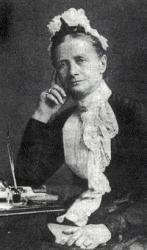
1818 - 1895 Person Name: Cecil F. Alexander Author of "Jesu, holy, undefiled" in The New Children's Hymnal As a small girl, Cecil Frances Humphries (b. Redcross, County Wicklow, Ireland, 1818; Londonderry, Ireland, 1895) wrote poetry in her school's journal. In 1850 she married Rev. William Alexander, who later became the Anglican primate (chief bishop) of Ireland. She showed her concern for disadvantaged people by traveling many miles each day to visit the sick and the poor, providing food, warm clothes, and medical supplies. She and her sister also founded a school for the deaf. Alexander was strongly influenced by the Oxford Movement and by John Keble's Christian Year. Her first book of poetry, Verses for Seasons, was a "Christian Year" for children. She wrote hymns based on the Apostles' Creed, baptism, the Lord's Supper, the Ten Commandments, and prayer, writing in simple language for children. Her more than four hundred hymn texts were published in Verses from the Holy Scripture (1846), Hymns for Little Children (1848), and Hymns Descriptive and Devotional ( 1858).
Bert Polman
==================
Alexander, Cecil Frances, née Humphreys, second daughter of the late Major John Humphreys, Miltown House, co. Tyrone, Ireland, b. 1823, and married in 1850 to the Rt. Rev. W. Alexander, D.D., Bishop of Derry and Raphoe. Mrs. Alexander's hymns and poems number nearly 400. They are mostly for children, and were published in her Verses for Holy Seasons, with Preface by Dr. Hook, 1846; Poems on Subjects in the Old Testament, pt. i. 1854, pt. ii. 1857; Narrative Hymns for Village Schools, 1853; Hymns for Little Children, 1848; Hymns Descriptive and Devotional, 1858; The Legend of the Golden Prayers 1859; Moral Songs, N.B.; The Lord of the Forest and his Vassals, an Allegory, &c.; or contributed to the Lyra Anglicana, the S.P.C.K. Psalms and Hymns, Hymns Ancient & Modern, and other collections. Some of the narrative hymns are rather heavy, and not a few of the descriptive are dull, but a large number remain which have won their way to the hearts of the young, and found a home there. Such hymns as "In Nazareth in olden time," "All things bright and beautiful," "Once in Royal David's city," "There is a green hill far away," "Jesus calls us o'er the tumult," "The roseate hues of early dawn," and others that might be named, are deservedly popular and are in most extensive use. Mrs. Alexander has also written hymns of a more elaborate character; but it is as a writer for children that she has excelled.
- John Julian, Dictionary of Hymnology (1907)
===============
Alexander, Cecil F., née Humphreys, p. 38, ii. Additional hymns to those already noted in this Dictionary are in common use:—
1. Christ has ascended up again. (1853.) Ascension.
2. His are the thousand sparkling rills. (1875.) Seven Words on the Cross (Fifth Word).
3. How good is the Almighty God. (1S48.) God, the Father.
4. In [a] the rich man's garden. (1853.) Easter Eve.
5. It was early in the morning. (1853.) Easter Day.
6. So be it, Lord; the prayers are prayed. (1848.) Trust in God.
7. Saw you never in the twilight? (1853.) Epiphany.
8. Still bright and blue doth Jordan flow. (1853.) Baptism of Our Lord.
9. The angels stand around Thy throne. (1848.) Submission to the Will of God.
10. The saints of God are holy men. (1848.) Communion of Saints.
11. There is one Way and only one. (1875.) SS. Philip and James.
12. Up in heaven, up in heaven. (1848.) Ascension.
13. We are little Christian children. (1848.) Holy Trinity.
14. We were washed in holy water. (1848.) Holy Baptism.
15. When of old the Jewish mothers. (1853.) Christ's Invitation to Children.
16. Within the Churchyard side by side. (1848.) Burial.
Of the above hymns those dated 1848 are from Mrs. Alexander's Hymns for Little Children; those dated 1853, from Narrative Hymns, and those dated 1875 from the 1875 edition of Hymns Ancient & Modern.
Several new hymns by Mrs. Alexander are included in the 1891 Draft Appendix to the Irish Church Hymnal.
--John Julian, Dictionary of Hymnology, Appendix, Part II (1907)
=============
Alexander, Cecil F. , p. 38, ii. Mrs. Alexander died at Londonderry, Oct. 12, 1895. A number of her later hymns are in her Poems, 1896, which were edited by Archbishop Alexander.
--John Julian, Dictionary of Hymnology, New Supplement (1907)
See also in:Hymn Writers of the Church
Cecil Frances Alexander
Pages




