

 My Starred Hymns
 My FlexScores
 My Hymnals
 My Purchased Files
Planning worship?
Check out our sister site, ZeteoSearch.org,
for 20+ additional resources related to your search.
- |
User Links
Person Results
César Malan
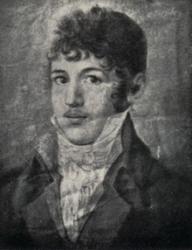
1787 - 1864 Person Name: Malan Composer of "HENDON" in The Little Seraph Rv Henri Abraham Cesar Malan, 1787-1864. Born in Geneva, Switzerland, into a bourgeois family that moved to Switzerland to escape religious persecution during the French Revolution, he attended the university in Marseilles, France, intending to become a businessman. Although having some grounding in religious faith by his mother, he decided to attend the Academy at Geneva (founded by Calvin) in preparation for ministry. He was ordained in 1810, after being appointed a college master (teaching Latin) in 1809. Malan was in accord with the National Church of Geneva as a Unitarian, but the Reveil Movement caused him to become a dissident (evangelical) instead of a proponent of the Reformed Church (believing works, not faith, was what mattered). In 1811 he married (wife’s name not found). They had at least two children (one son was Solomon, referenced below). From 1813 on Malan slowly became an evangelical, after being given an understanding of true salvation through grace (not works) in 1816 by two German Lutherans from Geneva. He became saved upon this realization and was so changed that he burned his prized collection of classical authors and manuscripts. In 1817 he preached around Geneva, and one sermon in particular, “Man only justified by faith alone” created a firestorm and brought him into conflict with religious authorities of the region. From then on he wished to help reform the national church from within, but the forces of the Venerable Company were too strong for him and excluded him from the pulpits and caused his dismissal from his regentsship at the college in 1818. Others in agreement with Malan were Charles Spurgeon, Robert Wilcox, Robert Haldane, and Henry Drummond. In 1820 he built a chapel in his garden and obtained the license of the State for it as a separatist place of worship. He preached in that chapel 43 years. In 1823 he was formally deprived of his status as a minister of the national Church. Various events caused his congregation to diminish over the next few years, and he began long tours of evangelization subsidized by religious friends in his land, Belgium, France, England and Scotland. He often preached to large congregations. Malan also authorized a hymn book, “Chants de Sion” (1841). A strong Calvinist, Malan lost no opportunity to evangelize. On one occasion an old man he visited pulled Malan’s hymnal out and told him he had prayed to see the author of it before he died. On a visit to England Malan also inspired author, Charlotte Elliott, to write the hymn lyrics for “Just as I am”, when seeking an answer to her conversion she asked and he advised her to come to Christ ‘just as she was’. Malan published a score of books and also produced many religious tracts and pamphlets largely on questions in dispute between the National and evangelical churches of Rome. He also wrote articles in the “Record” and in American reviews. His hymns were set to his own melodies. He was an artist, a mechanic, a carpenter, a metal forger, and a printer. He had his own workshop, forge and printing press. One of his greatest joys was the meeting of the evangelical alliance at Geneva in 1861 which helped change church views. He retired to his home, Vandoeuvres, in the countryside near Geneva in 1857, dying there seven years later.. He was honored by a visit from the Queen of Holland two years before his death. He is mainly remembered as a hymn writer, having written 1000+ hymn lyrics and tunes. One son, Solomon, a gifted linguist and theologian, became Vicar of Broadwindsor. About a dozen of his hymns appeared translated in the publication “Friendly visitor” (1826). He was an author, creator, composer, editor, correspondent, contributor, translator, owner, and performer.
John Perry
=================
Malan, Henri Abraham César. The family of Malan traces its origin to the valleys of Piedmont. A branch of it settled at Mérindol, in Dauphiné, but was driven from France by the persecutions that followed the Revocation of the Edict of Nantes. Pierre Malan [Cesar's father], after seeing his sister fall a victim to persecution, left Mérindol (1714), and arrived at Geneva (1722). Henri Abraham César Malan was born at Geneva in 1787. After an education at the College, he went to Marseilles, with the intention of learning business: but, soon after, entered the Academy at Geneva, as a preparation for the ministry, to which he was ordained in 1810. He had been appointed one of the masters at the College in the previous year. The National Church of Geneva was at that time almost Unitarian, and Malan's convictions were in accord with it. But the great movement known as the Réveil, of which the first products were the dissident church of Bourg de Four and at a later date that founded by Malan himself, and which finally imbued the whole Swiss Church with its spirit, was silently preparing itself. The germ of the movement may be traced in the Société des Amis (1810), of which Empeytaz and A. Bost were leaders; and in Malan's independent attainment to the doctrines of the Divinity of the Saviour and the free gifts of salvation through Him (1816). But the human agency, which gave it force, and determined its Calvinistic direction, was the visit of Robert Haldane (in the autumn of 1816), to whom not only these pioneers of the movement, but F. Monod, E. Rieu, Guers, Gonthier, Merle d'Aubigné, and others, always pointed as their spiritual father. Empeytaz and others sought to attain enfranchisement by the establishment of the "petite Eglise of Bourg de Four." Malan wished to reform the national Church from within: and a sermon at Geneva, which brought on him the obloquy of the professors and theologians that composed his audience, and which Haldane characterized as a republication of the Gospel, was his first overt act (Jan. 19, 1817). But the opposing forces were far too strong for him. The Venerable Company excluded him from the pulpits, and achieved his dismissal from his regentship at the College (1818). In 1820 he built a chapel (Chapelle du Temoignage) in his garden, and obtained the licence of the State for it, as a separatist place of worship. In 1823 he was formally deprived of his status as a minister of the national Church. The seven years that succeeded were the palmy days of the little chapel. Strangers, especially from England, mingled with the overflowing Swiss congregation. But (in 1830) a secession to Bourg de Four, and then the foundation of the Oratoire and the Société Evangelique, which in 1849 absorbed the congregation of Bourg de Four under the title of the Église Evangélique, thinned more and more the number of his adherents. His burning zeal for the conversion of souls found a larger outlet in long tours of evangelization, subsidized by religious friends, in his own land and Belgium and France, and also in Scotland and England, where he had friends among many religious bodies, and where he preached to large congregations. The distinguishing characteristic of these tours was his dealing with individuals. On the steamboat or the diligence, in the mountain walk, at the hotel, no opportunity was lost. On one occasion an old,man whom he visited drew from under his pillow a copy of his great hymnbook, Chants de Sion, 1841, and told him how he had prayed to see the author of it before he died.
It is as the originator of the modern hymn movement in the French Reformed Church that Malan's fame cannot perish. The spirit of his hymns is perpetuated in the analysis of Christian experience, the never-wearied delineation of the hopes and fears, the joys and sorrows of the believer's soul, which are still the staple of French Protestant hymns. To this was added, in Malan himself, a marked didactic tone, necessitated by the great struggle of the Réveil for Evangelical doctrine; and an emphatic Calvinism, expressing itself with all the despondency of Newton and Cowper, but, in contrast with them, in bright assurance, peace and gladness. French criticism has pronounced his hymns unequal, and full of literary defects; but their unaffected freshness and fervent sincerity are universally allowed. In the Chants de Sion, hymns 20, ”Hosanna! Béni soit"; 165, “Mon coeur joyeux, plein d'espérance"; 199, "Du Rocher de Jacob"; 200, "Agneau de Dieu"; 239, "Trois fois Jehovah," are in every Protestant French hymnbook; and several others are very widely used.
Besides his hymns Malan produced numberless tracts and pamphlets on the questions in dispute between the National and Evangelical Churches and the Church of Rome, as well as articles in the Record and in American reviews. He was a man of varied acquirements. His hymns were set to his own melodies. He was an artist, a mechanic: his little workshop had its forge, its carpenter's bench, its printing press. To the end of his life his strong Calvinism, and his dread of mere external union in church government, kept him distinct from all movements of church comprehension, though freely joining in communion with all the sections of Evangelical thought in Geneva and Scotland. At one time there seemed a prospect of his even rejoining the national Church, which had driven him from her. One of his greatest joys was the meeting of the Evangelical Alliance at Geneva (1861). He left no sect; one of his latest orders was the demolition of his decayed chapel, in which he had preached for 43 years. He died at Vandoeuvres, near Geneva, in 1864, leaving a numerous family, one of whom, the Rev. S. C. Malan, D.D., sometime Vicar of Broadwindsor, is well known as a linguist and a theologian of the English Church. To English readers Malan is chiefly known as a hymn-writer through translations of his "Non, ce n'est pas mourir" (q.v.): "It is not death to die", &c. About a dozen of his hymns appear in a translated form in the Friendly Visitor for 1826. [Rev. H. Leigh Bennett, M.A.]
-- John Julian, Dictionary of Hymnology (1907)
=================
http://en.wikipedia.org/wiki/César_Malan
César Malan
Frances Ridley Havergal
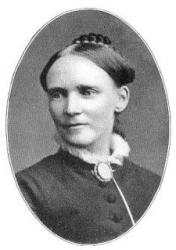
1836 - 1879 Person Name: Frances R. Havergal, 1836-1879 Author of "Take My Life, and Let It Be" in The Chapbook Havergal, Frances Ridley, daughter of the Rev. W. H. Havergal, was born at Astley, Worcestershire, Dec. 14, 1836. Five years later her father removed to the Rectory of St. Nicholas, Worcester. In August, 1850, she entered Mrs. Teed's school, whose influence over her was most beneficial. In the following year she says, "I committed my soul to the Saviour, and earth and heaven seemed brighter from that moment." A short sojourn in Germany followed, and on her return she was confirmed in Worcester Cathedral, July 17, 1853. In 1860 she left Worcester on her father resigning the Rectory of St. Nicholas, and resided at different periods in Leamington, and at Caswall Bay, Swansea, broken by visits to Switzerland, Scotland, and North Wales. She died at Caswell Bay, Swansea, June 3, 1879.
Miss Havergal's scholastic acquirements were extensive, embracing several modern languages, together with Greek and Hebrew. She does not occupy, and did not claim for herself, a prominent place as a poet, but by her distinct individuality she carved out a niche which she alone could fill. Simply and sweetly she sang the love of God, and His way of salvation. To this end, and for this object, her whole life and all her powers were consecrated. She lives and speaks in every line of her poetry. Her poems are permeated with the fragrance of her passionate love of Jesus.
Her religious views and theological bias are distinctly set forth in her poems, and may be described as mildly Calvinistic, without the severe dogmatic tenet of reprobation. The burden of her writings is a free and full salvation, through the Redeemer's merits, for every sinner who will receive it, and her life was devoted to the proclamation of this truth by personal labours, literary efforts, and earnest interest in Foreign Missions.
[Rev. James Davidson, B.A.]
Miss Havergal's hymns were frequently printed by J. & R. Parlane as leaflets, and by Caswell & Co. as ornamental cards. They were gathered together from time to time and published in her works as follows:—
(1) Ministry of Song, 1869; (2) Twelve Sacred Songs for Little Singers, 1870; (3) Under the Surface, 1874; (4) Loyal Responses, 1878; (5) Life Mosaic, 1879; (6) Life Chords, 1880; (7) Life Echoes, 1883.
About 15 of the more important of Miss Havergal's hymns, including "Golden harps are sounding," "I gave my life for thee," "Jesus, Master, Whose I am," "Lord, speak to me," "O Master, at Thy feet," "Take my life and let it be," "Tell it out among the heathen," &c, are annotated under their respective first lines. The rest, which are in common use, number nearly 50. These we give, together with dates and places of composition, from the Havergal mss. [manuscript], and the works in which they were published. Those, and they are many, which were printed in Parlane's Series of Leaflets are distinguished as (P., 1872, &c), and those in Caswell’s series (C., 1873, &c).
1. A happy New Year! Even such may it be. New Year. From Under the Surface, 1874.
2. Certainly I will be with thee. Birthday. Sept. 1871, at Perry Barr. (P. 1871.) Published in Under the Surface, 1874, and Life Mosaic, 1879.
3. Church of God, beloved and chosen. Sanctified in Christ Jesus, 1873. (P. 1873.) Published in Under the Surface, 1874, and Life Mosaic, 1879.
4. God Almighty, King of nations. Sovereignty of God. 1872. Published in Under the Surface, 1874, and Life Mosaic, 1879.
5. God doth not bid thee wait. God faithful to His promises. Oct. 22, 1868, at Oakhampton. (P. 1869.) Published in Ministry of Song, 1869, and Life Mosaic, 1879.
6. God of heaven, hear our singing. A Child's hymn for Missions. Oct. 22, 1869, at Leamington. Published in her Twelve Sacred Songs for Little Singers, 1870, and her Life Chords, 1880.
7. God will take care of you, All through the day. The Good Shepherd. In Mrs. Brock's Children's Hymn Book, 1881.
8. God's reiterated all. New Year. 1873, at Winterdyne. (C. 1873.) Published in Loyal Responses, 1878, and Life Mosaic, 1879.
9. Have you not a word for Jesus? Boldness for the Truth. Nov. 1871, at Perry Barr. (P. 1872.) Published in Under the Surface, 1874, and Life Mosaic, 1879.
10. He hath spoken in the darkness. Voice of God in sorrow. June 10,1869, at Neuhausen. (P. 1870.) Published in Under the Surface, 1874, and in Life Mosaic, 1879.
11. Hear the Father's ancient promise. Promise of the Holy Spirit. Aug. 1870. Published in Under the Surface, 1874, and Life Mosaic, 1879.
12. Holy and Infinite! Viewless, Eternal. Infinity of God. 1872. Published in Under the Surf ace, 1874, and L. Mosaic, 1879.
13. Holy brethren, called and chosen. Election a motive for Earnestness. 1872. Published in Snepp's Songs of Grace & Glory, 1876.
14. I am trusting Thee, Lord Jesus. Faith. Sept. 1874, at Ormont Dessona. (P. 1874.) Published in Loyal Responses, 1878, and Life Chords, 1880. Miss Havergal’s tune, Urbane (Snepp's Songs of Grace & Glory, 1048), was composed for this hymn. The hymn was the author's "own favourite," and was found in her pocket Bible after her death.
15. I bring my sins to Thee. Besting all on Jesus. June, 1870. (P. 1870.) Printed in the Sunday Magazine, 1870, and Home Words, 1872. Published in Under the Surface, 1874, and Life Chords, 1880.
16. I could not do without Thee. Jesus All in All. May 7, 1873. (P. 1873.) Printed in Home Words, 1873, and published in Under the Surface, 1874, and Life Mosaic, 1879.
17. In full and glad surrender. Confirmation. Miss Havergal's sister says this hymn was “The epitome of her [Miss F. R. H.'s] life and the focus of its sunshine." It is a beautiful hymn of personal consecration to God at all times.
18. In the evening there is weeping. Sorrow followed by Joy. June 19, 1869, at the Hotel Jungfraublick, Interlaken. "It rained all day, except a very bright interval before dinner. Curious long soft white clouds went slowly creeping along the Scheinige Platte; I wrote “Evening Tears and Morning Songs” (Marg. reading of Ps. xxx. 5.)" (P. 1870.) Published in Under the Surface, 1874.
19. Increase our faith, beloved Lord. Increase of Faith desired. In Loyal Responses, 1878, in 11 stanzas of 4 lines, on St. Luke xvii. 5. It is usually given in an abridged form.
20. Is it for me, dear Saviour? Heaven anticipated. Nov. 1871, at Perry Barr. (P. 1872.) Published in Under the Surface, 1874, and Life Mosaic, 1879.
21. Israel of God, awaken. Christ our Righteousness. May, 1871, at Perry Barr. (P. 1872.) Published in Under the Surface, 1874, and Life Mosaic, 1879.
22. Jehovah's covenant shall endure. The Divine Covenant, 1872. Published in Snepp's Songs of Grace & Glory, 1876.
23 Jesus, blessed Saviour. New Year, Nov. 25, 1872, at Leamington. (P. 1873.) Printed in the Dayspring Magazine, Jan. 1873, and published in Life Chords, 1880.
24. Jesus only! In the shadow. Jesus All in All. Dec. 4, 1870, at Pyrmont Villa. (P. & C. 1871.) Published in Under the Surface, 1874, and in Life Mosaic, 1879.
25. Joined to Christ by [in] mystic union. The Church the Body of Christ. May, 1871, at Perry Barr. (P. 1872.) Published in Under the Surface, 1874, Life Mosaic, 1879.
26. Just when Thou wilt, 0 Master, call. Resignation. In Loyal Responses, 1878, in 5 stanzas of 4 lines, and Whiting's Hymns for the Church Catholic, 1882.
27. King Eternal and Immortal. God Eternal. Written at Perry Villa, Perry Barr, Feb. 11, 1871, and Published in Snepp's Songs of Grace & Glory, 1876; Under the Surface, 1874 ; and Life Mosaic, 1879.
28. Light after darkness, Gain after loss. Peace in Jesus, and the Divine Reward. In Sankey's Sacred Songs and Solos, from her Life Mosaic, 1879.
29. Like a river glorious, Is God's perfect Peace. Peace. In her Loyal Responses, 1878, in 3 st. of 8 1., with the chorus, "Stayed upon Jehovah." In several collections.
30. Master, speak! Thy servant heareth. Fellowship with and Assistance from Christ desired. Sunday evening, May 19, 1867, at Weston-super-Mare. Published in Ministry of Song, 1869, and L. Mosaic, 1879. It is very popular.
31. New mercies, new blessings, new light on thy way. New Life in Christ. 1874, at Winterdyne. (C. 1874.) Published in Under His Shadow, 1879, Life Chords, 1880.
32. Not your own, but His ye are. Missions. Jan. 21, 1867. (C. 1867.) Published in Ministry of Song, 1869; Life Mosaic, 1879; and the Hymnal for Church Missions, 1884.
33. Now let us sing the angels' song. Christmas. In her Life Mosaic, 1879; and W. B. Stevenson's School Hymnal, 1880.
34. Now the daylight goes away. Evening. Oct. 17, 1869, at Leamington. Published in Songs for Little Singers, 1870, and Life Chords, 1880. It originally read, " Now the light has gone away."
35. Now the sowing and the weeping. Sorrow followed by Joy. Jan. 4, 1870, at Leamington. Printed in Sunday at Home, 1870 ; and published in Under the Surface, 1874, and L. Mosaic, 1879.
36. 0 Glorious God and King. Praise to the Father, Feb. 1872. Published in Under the Surface, 1874, and Life Mosaic, 1879.
37. 0 Saviour, precious [holy] Saviour. Christ worshipped by the Church. Nov. 1870, at Leamington. (P. 1870.) Published in Under the Surface, 1874, and Life Mosaic, 1879.
38. O thou chosen Church of Jesus. Election. April 6, 1871. Published in Under the Surface, 1874, and L. Mosaic, 1879.
39. O what everlasting blessings God outpoureth on His own. Salvation everlasting. Aug. 12, 1871, at Perry Barr. (P. 1871.) Published in Under the Surface, 1874, and L. Mosaic, 1879.
40. Our Father, our Father, Who dwellest in light. The blessing of the Father desired. May 14, 1872. Published in Under the Surface, 1874, and Life Mosaic, 1879. Miss Havergal's tune, Tertius, was composed for this hymn.
41. Our Saviour and our King. Presentation of the Church to the Father. (Heb. ii. 13.) May, 1871, at Perry Barr. (P. 1871.) Published in Under the Surface, 1874, and L. Mosaic, 1879.
42. Precious, precious blood of Jesus. The precious Blood. Sept. 1874, at Ormont Dessons. (C.) Published in Loyal Responses, 1878, and Life Chords, 1880.
43. Sing, O heavens, the Lord hath done it. Redemption. In her Life Mosaic, 1879, and the Universal Hymn Book, 1885.
44. Sit down beneath His shadow. Holy Communion. Nov. 27, 1870, at Leamington. (P. 1870.) Published in Under the Surface, 1874, and Life Mosaic, 1879.
45. Sovereign Lord and gracious Master. Grace consummated in Glory. Oct. 22, 1871. (P. 1872.) Published in Under the Surface, 1874, and Life Mosaic, 1879.
46. Standing at the portal of the opening year. New Year. Jan. 4, 1873. Published in Under the Surface, 1874, and Life Chords, 1880.
47. To Thee, 0 Comforter divine. Praise to the Holy Spirit. Aug. 11, 1872, at Perry Barr. Published in Under the Surface 1874, and Life Mosaic, 1879. Miss Havergal's tune, Tryphosa, was written for this hymn.
48. True-hearted, whole-hearted, faithful and loyal. Faithfulness to the Saviour. In her Loyal Responses, 1878, and the Universal Hymn Book, 1885.
49. What know we, Holy God, of Thee? God's Spirituality, 1872. Published in Under the Surface, 1874, and Life Mosaic, 1879.
50. Who is on the Lord's side? Home Missions. Oct. 13, 1877. Published in Loyal Responses, 1878, andLife Chords, 1880.
51. With quivering heart and trembling will. Resignation. July, 10, 1866, at Luccombe Rectory. (P. 1866.) Published in Ministry of Song, 1869, and Life Mosaic, 1879.
52. Will ye not come to Him for life? The Gospel Invitation. 1873. Published in Snepp's Songs of Grace and Glory, 1876.
53. Worthy of all adoration. Praise to Jesus as the Lamb upon the throne. Feb. 26 1867, at Oakhampton. Published in Ministry of Song, 1869, and Life Mosaic, 1874. It is pt. iii. of the "Threefold Praise," and was suggested by the "Worthy is the Lamb," the "Hallelujah" and "Amen" choruses in Handel's Messiah.
54. Ye who hear the blessed call. The Invitation of the Spirit and the Bride. March, 1869, at Leamington. (P. 1869.) Published in Ministry of Song, 1869, and Life Mosaic, 1879. Suggested by, and written for, the Young Men's Christian Association.
55. Yes, He knows the way is dreary. Encouragement. 1867. Published in Ministry of Song, 1869.
Most of these hymns are given in Snepp's Songs of Grace and Glory, 1872]and 1876, his Appendix, 1874, and the Musical edition, 1880, and many of them are also in several other hymnbooks, including Hymns Ancient & Modern, Thring, Church Hymns, Hymnal Companion, &c, and some of the leading American collections.
--John Julian, Dictionary of Hymnology (1907)
==============================
Havergal, Frances Ridley, p. 496, i. Miss Havergal's Poetical Works were published in 2 vols. in 1884 (Lond., J. Nisbet); and the hymns therein are accompanied by notes. From these volumes, and the Havergal manuscript, we gather the following facts concerning additional hymns in common use:
1. In God's great field of labour. Work for Christ.
Written Feb. 27, 1867, and published in her Ministry of Song, I860, and later works. In Snepp's Songs of Grace and Glory, 1872, it begins with stanza ii., "Sing to the little children." “The poem expresses her own life-ministry of song, and relates true incidents" in that life. [Hav. mss.]
2. Only a mortal's power. Consecration of Self to Christ. Published in her Loyal Responses, 1878, in 7 stanzas of 4 lines, and headed "Only.” In Common Praise, 1879, stanzas ii.-vi., are given for Confirmation as, "Only one heart to give."
3. Through the yesterday of ages. Jesus always the same. Written at Leamington, Nov. 1876, and published in her Loyal Responses, 1878.
4. What hast Thou done for me, 0 Thou my mighty Friend. Good Friday. Written at Leamington, Jan. 1877, and pub. in Loyal Responses, 1878.
5. Yes, He knows the way is dreary, p. 498, i. 55. This hymn was written at Shareshill Parsonage, Nov. 17, 1865, and first printed as one of Parlane's leaflets; then in Lyra Britannica, 1867; and later, in several of her books. It was "suggested by a letter from her niece, A. M. S., at school, and written to console her when weary, lonely, and the only absentee at the rejoicings for her brother J. H. S.'s coming of age." [Hav. mss.]
--John Julian, Dictionary of Hymnology, Appendix, Part II (1907)
===================
Havergal, Frances R., pp. 426, ii., 1569, ii. During the past fifteen years Miss Havergal's hymns have been in great request by compilers of hymnals for Missions and Conventions. In addition to the large number already annotated in this Dictionary, the following are also in common use:—
1. Begin at once! in the pleasant days. [Temperance.] From her Poetical Works, vol. i., p. 303, into The Sunday School Hymnary, 1905. In her Poetical Works. It is given as a "Band of Hope Song," and dated "May, 1876."
2. God in heaven, hear our singing. An altered form of her "God of heaven, hear our singing," p. 497, i. 6.
3. Holy Father, Thou hast spoken. [Holy Spirit desired.] Written May 5, 1876. P. Works, 1874, ii., p. 261.
4. I love. I love my Master. [Jesus the object of love.] Written at Fins, Hants., July 16, 1876. In her Loyal Responses, 1878, and her Poetical Works, 18S4, ii., p. 274.
5. I love to feel that I am taught. [Love of Divine Teaching.] Written at Morecambe Bay, Aug., 1867, for her Ministry of Song, 1869. Included in her Poetical Works, 1884, i., p. 36.
6. Jesus, Thy life is mine. [Union with Christ.] Written June 2, 1876. Poetical Works, 1884, ii., p. 268.
7. Looking unto Jesus, Never need we yield. [Jesus, All in All.] Dated 1876. P. Works, 1884, ii., p. 253.
8. Master, how shall I bless Thy Name! [Holy Service.] Written at Whitby, Sept. 27, 1875. A long hymn of 17 stanzas of 6 lines. P. Works, 1884, ii., p. 280.
9. Resting on the faithfulness. [Union with Christ.] A metrical epitome of a dozen or more of the attributes of Our Lord and His manifestation of loving kindness towards men, in which the word "Resting" is used eighteen times. Written June 11, 1876. Poetical Works, 1884, ii., p. 260.
10. Singing for Jesus, our Saviour and King. [Praise of Jesus.] Written at Winterdyne, June 12. 1872; published in her Under the Surface, 1874, p. 94, and her P. Works, 1884, ii., p. 70.
11. Unfurl the Christian Standard with firm and fearless hand. [Courage for the Christian Warfare. This begins with st. iv. of her hymn, "Unfurl the Christian Standard, lift it manfully on high," written at Perry Barr, Sep. 23, 1872 ; published in her Under the Surface, 1874; and her Poetical Works, 1884, ii.
12. Unto him that hath Thou givest. [Growth in Grace.] Written at Leasowes, April 12, 1876. P. Works, 1884, ii. 259.
Of these hymns Nos. 3, 4, 6, 7, 8, 9, and 12 were published in the first instance in J. Mountain's Hymns of Consecration and Faith, 1876. At the present time (1907) the number of Miss Havergal's hymns in common use reaches nearly one hundred.
--John Julian, Dictionary of Hymnology, New Supplement (1907)
Frances Ridley Havergal
Lowell Mason
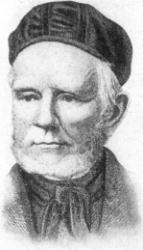
1792 - 1872 Arranger of "HENDON (Malan)" in Redeeming Love Dr. Lowell Mason (the degree was conferred by the University of New York) is justly called the father of American church music; and by his labors were founded the germinating principles of national musical intelligence and knowledge, which afforded a soil upon which all higher musical culture has been founded. To him we owe some of our best ideas in religious church music, elementary musical education, music in the schools, the popularization of classical chorus singing, and the art of teaching music upon the Inductive or Pestalozzian plan. More than that, we owe him no small share of the respect which the profession of music enjoys at the present time as contrasted with the contempt in which it was held a century or more ago. In fact, the entire art of music, as now understood and practiced in America, has derived advantage from the work of this great man.
Lowell Mason was born in Medfield, Mass., January 8, 1792. From childhood he had manifested an intense love for music, and had devoted all his spare time and effort to improving himself according to such opportunities as were available to him. At the age of twenty he found himself filling a clerkship in a banking house in Savannah, Ga. Here he lost no opportunity of gratifying his passion for musical advancement, and was fortunate to meet for the first time a thoroughly qualified instructor, in the person of F. L. Abel. Applying his spare hours assiduously to the cultivation of the pursuit to which his passion inclined him, he soon acquired a proficiency that enabled him to enter the field of original composition, and his first work of this kind was embodied in the compilation of a collection of church music, which contained many of his own compositions. The manuscript was offered unavailingly to publishers in Philadelphia and in Boston. Fortunately for our musical advancement it finally secured the attention of the Boston Handel and Haydn Society, and by its committee was submitted to Dr. G. K. Jackson, the severest critic in Boston. Dr. Jackson approved most heartily of the work, and added a few of his own compositions to it. Thus enlarged, it was finally published in 1822 as The Handel and Haydn Society Collection of Church Music. Mason's name was omitted from the publication at his own request, which he thus explains, "I was then a bank officer in Savannah, and did not wish to be known as a musical man, as I had not the least thought of ever making music a profession." President Winchester, of the Handel and Haydn Society, sold the copyright for the young man. Mr. Mason went back to Savannah with probably $500 in his pocket as the preliminary result of his Boston visit.
The book soon sprang into universal popularity, being at once adopted by the singing schools of New England, and through this means entering into the church choirs, to whom it opened up a higher field of harmonic beauty. Its career of success ran through some seventeen editions. On realizing this success, Mason determined to accept an invitation to come to Boston and enter upon a musical career. This was in 1826. He was made an honorary member of the Handel and Haydn Society, but declined to accept this, and entered the ranks as an active member. He had been invited to come to Boston by President Winchester and other musical friends and was guaranteed an income of $2,000 a year. He was also appointed, by the influence of these friends, director of music at the Hanover, Green, and Park Street churches, to alternate six months with each congregation. Finally he made a permanent arrangement with the Bowdoin Street Church, and gave up the guarantee, but again friendly influence stepped in and procured for him the position of teller at the American Bank.
In 1827 Lowell Mason became president and conductor of the Handel and Haydn Society. It was the beginning of a career that was to win for him as has been already stated the title of "The Father of American Church Music." Although this may seem rather a bold claim it is not too much under the circumstances. Mr. Mason might have been in the average ranks of musicianship had he lived in Europe; in America he was well in advance of his surroundings. It was not too high praise (in spite of Mason's very simple style) when Dr. Jackson wrote of his song collection: "It is much the best book I have seen published in this country, and I do not hesitate to give it my most decided approbation," or that the great contrapuntist, Hauptmann, should say the harmonies of the tunes were dignified and churchlike and that the counterpoint was good, plain, singable and melodious.
Charles C. Perkins gives a few of the reasons why Lowell Mason was the very man to lead American music as it then existed. He says, "First and foremost, he was not so very much superior to the members as to be unreasonably impatient at their shortcomings. Second, he was a born teacher, who, by hard work, had fitted himself to give instruction in singing. Third, he was one of themselves, a plain, self-made man, who could understand them and be understood of them."
The personality of Dr. Mason was of great use to the art and appreciation of music in this country. He was of strong mind, dignified manners, sensitive, yet sweet and engaging.
Prof. Horace Mann, one of the great educators of that day, said he would walk fifty miles to see and hear Mr. Mason teach if he could not otherwise have that advantage.
Dr. Mason visited a number of the music schools in Europe, studied their methods, and incorporated the best things in his own work. He founded the Boston Academy of Music. The aim of this institution was to reach the masses and introduce music into the public schools. Dr. Mason resided in Boston from 1826 to 1851, when he removed to New York. Not only Boston benefited directly by this enthusiastic teacher's instruction, but he was constantly traveling to other societies in distant cities and helping their work. He had a notable class at North Reading, Mass., and he went in his later years as far as Rochester, where he trained a chorus of five hundred voices, many of them teachers, and some of them coming long distances to study under him. Before 1810 he had developed his idea of "Teachers' Conventions," and, as in these he had representatives from different states, he made musical missionaries for almost the entire country. He left behind him no less than fifty volumes of musical collections, instruction books, and manuals.
As a composer of solid, enduring church music. Dr. Mason was one of the most successful this country has introduced. He was a deeply pious man, and was a communicant of the Presbyterian Church. Dr. Mason in 1817 married Miss Abigail Gregory, of Leesborough, Mass. The family consisted of four sons, Daniel Gregory, Lowell, William and Henry. The two former founded the publishing house of Mason Bros., dissolved by the death of the former in 1869. Lowell and Henry were the founders of the great organ manufacturer of Mason & Hamlin. Dr. William Mason was one of the most eminent musicians that America has yet produced.
Dr. Lowell Mason died at "Silverspring," a beautiful residence on the side of Orange Mountain, New Jersey, August 11, 1872, bequeathing his great musical library, much of which had been collected abroad, to Yale College.
--Hall, J. H. (c1914). Biography of Gospel Song and Hymn Writers. New York: Fleming H. Revell Company.
Lowell Mason
John Newton
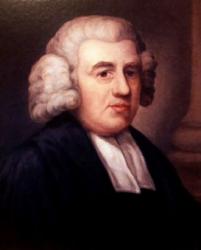
1725 - 1807 Author of "Come, My Soul, Thy Suit Prepare" in Trinity Hymnal (Rev. ed.) John Newton (b. London, England, 1725; d. London, 1807) was born into a Christian home, but his godly mother died when he was seven, and he joined his father at sea when he was eleven. His licentious and tumultuous sailing life included a flogging for attempted desertion from the Royal Navy and captivity by a slave trader in West Africa. After his escape he himself became the captain of a slave ship. Several factors contributed to Newton's conversion: a near-drowning in 1748, the piety of his friend Mary Catlett, (whom he married in 1750), and his reading of Thomas à Kempis' Imitation of Christ. In 1754 he gave up the slave trade and, in association with William Wilberforce, eventually became an ardent abolitionist. After becoming a tide-surveyor in Liverpool, England, Newton came under the influence of George Whitefield and John and Charles Wesley and began to study for the ministry. He was ordained in the Church of England and served in Olney (1764-1780) and St. Mary Woolnoth, London (1780-1807). His legacy to the Christian church includes his hymns as well as his collaboration with William Cowper (PHH 434) in publishing Olney Hymns (1779), to which Newton contributed 280 hymns, including “Amazing Grace.”
Bert Polman
==================
Newton, John, who was born in London, July 24, 1725, and died there Dec. 21, 1807, occupied an unique position among the founders of the Evangelical School, due as much to the romance of his young life and the striking history of his conversion, as to his force of character. His mother, a pious Dissenter, stored his childish mind with Scripture, but died when he was seven years old. At the age of eleven, after two years' schooling, during which he learned the rudiments of Latin, he went to sea with his father. His life at sea teems with wonderful escapes, vivid dreams, and sailor recklessness. He grew into an abandoned and godless sailor. The religious fits of his boyhood changed into settled infidelity, through the study of Shaftesbury and the instruction of one of his comrades. Disappointing repeatedly the plans of his father, he was flogged as a deserter from the navy, and for fifteen months lived, half-starved and ill-treated, in abject degradation under a slave-dealer in Africa. The one restraining influence of his life was his faithful love for his future wife, Mary Catlett, formed when he was seventeen, and she only in her fourteenth year. A chance reading of Thomas à Kempis sowed the seed of his conversion; which quickened under the awful contemplations of a night spent in steering a water-logged vessel in the face of apparent death (1748). He was then twenty-three. The six following years, during which he commanded a slave ship, matured his Christian belief. Nine years more, spent chiefly at Liverpool, in intercourse with Whitefield, Wesley, and Nonconformists, in the study of Hebrew and Greek, in exercises of devotion and occasional preaching among the Dissenters, elapsed before his ordination to the curacy of Olney, Bucks (1764).
The Olney period was the most fruitful of his life. His zeal in pastoral visiting, preaching and prayer-meetings was unwearied. He formed his lifelong friendship with Cowper, and became the spiritual father of Scott the commentator. At Olney his best works—-Omicron's Letters (1774); Olney Hymns (1779); Cardiphonia, written from Olney, though published 1781—were composed. As rector of St. Mary Woolnoth, London, in the centre of the Evangelical movement (1780-1807) his zeal was as ardent as before. In 1805, when no longer able to read his text, his reply when pressed to discontinue preaching, was, "What, shall the old African blasphemer stop while he can speak!" The story of his sins and his conversion, published by himself, and the subject of lifelong allusion, was the base of his influence; but it would have been little but for the vigour of his mind (shown even in Africa by his reading Euclid drawing its figures on the sand), his warm heart, candour, tolerance, and piety. These qualities gained him the friendship of Hannah More, Cecil, Wilberforce, and others; and his renown as a guide in experimental religion made him the centre of a host of inquirers, with whom he maintained patient, loving, and generally judicious correspondence, of which a monument remains in the often beautiful letters of Cardiphonia. As a hymnwriter, Montgomery says that he was distanced by Cowper. But Lord Selborne's contrast of the "manliness" of Newton and the "tenderness" of Cowper is far juster. A comparison of the hymns of both in The Book of Praise will show no great inequality between them. Amid much that is bald, tame, and matter-of-fact, his rich acquaintance with Scripture, knowledge of the heart, directness and force, and a certain sailor imagination, tell strongly. The one splendid hymn of praise, "Glorious things of thee are spoken," in the Olney collection, is his. "One there is above all others" has a depth of realizing love, sustained excellence of expression, and ease of development. "How sweet the name of Jesus sounds" is in Scriptural richness superior, and in structure, cadence, and almost tenderness, equal to Cowper's "Oh! for a closer walk with God." The most characteristic hymns are those which depict in the language of intense humiliation his mourning for the abiding sins of his regenerate life, and the sense of the withdrawal of God's face, coincident with the never-failing conviction of acceptance in The Beloved. The feeling may be seen in the speeches, writings, and diaries of his whole life. [Rev. H. Leigh Bennett, M.A.]
A large number of Newton's hymns have some personal history connected with them, or were associated with circumstances of importance. These are annotated under their respective first lines. Of the rest, the known history of which is confined to the fact that they appeared in the Olney Hymns, 1779, the following are in common use:—
1. Be still, my heart, these anxious cares. Conflict.
2. Begone, unbelief, my Saviour is near. Trust.
3. By the poor widow's oil and meal. Providence.
4. Chief Shepherd of Thy chosen sheep. On behalf of Ministers.
5. Darkness overspreads us here. Hope.
6. Does the Gospel-word proclaim. Rest in Christ.
7. Fix my heart and eyes on Thine. True Happiness.
8. From Egypt lately freed. The Pilgrim's Song.
9. He Who on earth as man was Known. Christ the Rock.
10. How blest are they to whom the Lord. Gospel Privileges.
11. How blest the righteous are. Death of the Righteous.
12. How lost was my [our] condition. Christ the Physician.
13. How tedious and tasteless the hours. Fellowship with Christ.
14. How welcome to the saints [soul] when pressed. Sunday.
15. Hungry, and faint, and poor. Before Sermon.
16. In mercy, not in wrath, rebuke. Pleading for Mercy.
17. In themselves, as weak as worms. Power of Prayer.
18. Incarnate God, the soul that knows. The Believer's Safety.
19. Jesus, Who bought us with His blood. The God of Israel. "Teach us, 0 Lord, aright to plead," is from this hymn.
20. Joy is a [the] fruit that will not grow. Joy.
21. Let hearts and tongues unite. Close of the Year. From this "Now, through another year," is taken.
22. Let us adore the grace that seeks. New Year.
23. Mary to her [the] Saviour's tomb. Easter.
24. Mercy, 0 Thou Son of David. Blind Bartimeus.
25. My harp untun'd and laid aside. Hoping for a Revival. From this "While I to grief my soul gave way" is taken.
26. Nay, I cannot let thee go. Prayer. Sometimes, "Lord, I cannot let Thee go."
27. Now may He Who from the dead. After Sermon.
28. 0 happy they who know the Lord, With whom He deigns to dwell. Gospel Privilege.
29. O Lord, how vile am I. Lent.
30. On man in His own Image made. Adam.
31. 0 speak that gracious word again. Peace through Pardon.
32. Our Lord, Who knows full well. The Importunate Widow. Sometimes altered to "Jesus, Who knows full well," and again, "The Lord, Who truly knows."
33. Physician of my sin-sick soul. Lent.
34. Pleasing spring again is here. Spring.
35. Poor, weak, and worthless, though I am. Jesus the Friend.
36. Prepare a thankful song. Praise to Jesus.
37. Refreshed by the bread and wine. Holy Communion. Sometimes given as "Refreshed by sacred bread and wine."
38. Rejoice, believer, in the Lord. Sometimes “Let us rejoice in Christ the Lord." Perseverance.
39. Salvation, what a glorious plan. Salvation.
40. Saviour, shine and cheer my soul. Trust in Jesus. The cento "Once I thought my mountain strong," is from this hymn.
41. Saviour, visit Thy plantation. Prayer for the Church.
42. See another year [week] is gone. Uncertainty of Life.
43. See the corn again in ear. Harvest.
44. Sinner, art thou still secure? Preparation for the Future.
45. Sinners, hear the [thy] Saviour's call. Invitation.
46. Sovereign grace has power alone. The two Malefactors.
47. Stop, poor sinner, stop and think. Caution and Alarm.
48. Sweeter sounds than music knows. Christmas.
49. Sweet was the time when first I felt. Joy in Believing.
50. Ten thousand talents once I owed. Forgiveness and Peace.
51. The grass and flowers, which clothe the field. Hay-time.
52. The peace which God alone reveals. Close of Service.
53. Thy promise, Lord, and Thy command. Before Sermon.
54. Time, by moments, steals away. The New Year.
55. To Thee our wants are known. Close of Divine Service.
56. We seek a rest beyond the skies. Heaven anticipated.
57. When any turn from Zion's way. Jesus only.
58. When Israel, by divine command. God, the Guide and Sustainer of Life.
59. With Israel's God who can compare? After Sermon.
60. Yes, since God Himself has said it. Confidence.
61. Zion, the city of our God. Journeying Zionward.
-- John Julian, Dictionary of Hymnology (1907)
=================
Newton, J., p. 803, i. Another hymn in common use from the Olney Hymns, 1779, is "Let me dwell on Golgotha" (Holy Communion).
--John Julian, Dictionary of Hymnology, Appendix, Part II (1907)
-----
John Newton was born in London, July 24, 1725. His mother died when he was seven years old. In his eleventh year he accompanied his father, a sea captain, on a voyage. For several years his life was one of dissipation and crime. He was disgraced while in the navy. Afterwards he engaged in the slave trade. Returning to England in 1748, the vessel was nearly wrecked in a storm. This peril forced solemn reflection upon him, and from that time he was a changed man. It was six years, however, before he relinquished the slave trade, which was not then regarded as an unlawful occupation. But in 1754, he gave up sea-faring life, and holding some favourable civil position, began also religious work. In 1764, in his thirty-ninth year, he entered upon a regular ministry as the Curate of Olney. In this position he had intimate intercourse with Cowper, and with him produced the "Olney Hymns." In 1779, Newton became Rector of S. Mary Woolnoth, in London, in which position he became more widely known. It was here he died, Dec. 21, 1807, His published works are quite numerous, consisting of sermons, letters, devotional aids, and hymns. He calls his hymns "The fruit and expression of his own experience."
--Annotations of the Hymnal, Charles Hutchins, M.A. 1872
See also in:
Hymn Writers of the Church
=======================
John Newton
Mrs. Barbauld
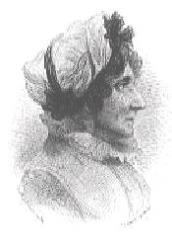
1743 - 1825 Person Name: Anna Lætitia Barbauld Author of "Come, said Jesus' sacred voice" in Hymns and Tunes Barbauld, Anna Laetitia, née Aikin, daughter of the Rev. John Ailrin, D.D., a dissenting minister, was b. at Kibworth-Harcourt, Leicestershire, June 20, 1743. In 1753 Dr. Aikin became classical tutor at a dissenting academy at Warrington. During her residence there she contributed five hymns to Dr. W. Enfield's Hymns for Public Worship, &c, Warrington, 1772. In the following year these were included in her Poems, Lond., J. Johnson, 1773. In May, 1774, Miss Aikin was married to the Rev. Rochemont Barbauld, a descendant of a French Protestant family, and a dissenting minister. For some years Mr. Barbauld conducted, in addition to his pastoral work, a boarding school at Palgrave, Suffolk. From this he retired in 1785. In 1786 he undertook the charge of a small congregation at Hampstead, and from thence he passed to the dissenting chapel (formerly Dr. Price's) at Newington Green, in 1802. He d. Nov. 11, 1808. Mrs. Barbauld continued to reside in the neighbourhood until her death, March 9, 1825. In the latter part of the same year her niece published The Works of Anna Laetitia Barbauld, with Memoir, by Lucy Aikin, 2 vols., Lond., Longman, 1825. As a writer of hymns Mrs. Barbauld was eminently successful. Their use, however, with the exception of five contributed to Dr. W. Enfield's collection, is almost exclusively confined to the Unitarian hymnals of Great Britain and America. Including these hymnals, the whole of her hymns are still in common use. These hymns appeared thus:—
i. In Dr. W. Enfield's Hymns, &c., 1772.
1. Again the Lord of life and light. Easter.
2. Awake, my soul, lift up thine eyes. Conflict.
3. Behold, where breathing love divine. Christian Charity.
4. Jehovah reigns, let every nation hear. God's Dominion. A part of this was given in Collyer's Sel., 1812, No. 586, as:—
5. This earthly globe, the creature of a day.
6. Praise to God, Immortal praise. Harvest.
ii. Poems, 1773 (Preface dated Dec. 1, 1772). The whole of the above, and also:—
7. God of my life and author of my days. To God the Father. This is an “Address to the Deity," in 80 1. It is given in Martineau's Collection, 1840 and 1873. From it the following centos were given in Collyer's Selection> 1812:—
8. God, our kind Master, merciful as just.
9. If friendless in the vale of tears I stray.
iii. Poems revised 1792.
10. Come, said [says] Jesus' sacred voice. Invitation.
11. How blest the sacred tie that binds. Christian Fellowship.
12. Lo where a crowd of pilgrims toil. Pilgrimage of Life. From this is taken:—
13. Our country is Immanuel's ground [land].
iv. Leisure Hour Improved (Ironbridge), 1809.
14. Sweet is the scene when virtue dies. Death.
v. Supplement to the Unitarian Coll. of Kippis, Bees, and others, 1807.
15. When as returns the solemn day. Sunday.
16. Sleep, sleep to day, tormenting cares. Sunday.
17. How may earth and heaven unite. Worship.
vi. Works, with Memoir, 1825.
In vol. i. most of the above are reprinted, and the following are added :—
18. Joy to the followers of the Lord. Joy. (c. 1820.)
19. Pure spirit, O where art thou now. Bereavement. This is dated 1808.
20. Salt of the earth, ye virtuous few. Salt of the Earth.
21. When life as opening buds is sweet. Death. This is dated " November, 1814."
The more important of these hymns are annotated in this Dictionary under their first lines. Mrs. Barbauld's Hymns in Prose for Children, originally published in 1781, were long popular and have been translated into French, Italian, Spanish, and other languages.
-- John Julian, Dictionary of Hymnology (1907)
===================
Barbauld, Anna L., p. 113, ii. No. 18 on p. 114, i.,should be dated circa 1820. Another hymn in common use from Mrs. Barbauld's Works, &c, 1825, is, "O Father! though the anxious fear" (E. Taylor, p. 1117, in error).
--John Julian, Dictionary of Hymnology, Appendix, Part II (1907)
See also in:
Hymn Writers of the Church
Mrs. Barbauld
Thomas Kelly
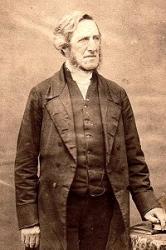
1769 - 1855 Author of "Hark! that shout of rapture high" in The Seventh-Day Adventist Hymn and Tune Book Kelly, Thomas, B.A., son of Thomas Kelly, a Judge of the Irish Court of Common Pleas, was born in Dublin, July 13, 1769, and educated at Trinity College, Dublin. He was designed for the Bar, and entered the Temple, London, with that intention; but having undergone a very marked spiritual change he took Holy Orders in 1792. His earnest evangelical preaching in Dublin led Archbishop Fowler to inhibit him and his companion preacher, Rowland Hill, from preaching in the city. For some time he preached in two unconsecrated buildings in Dublin, Plunket Street, and the Bethesda, and then, having seceded from the Established Church, he erected places of worship at Athy, Portarlington, Wexford, &c, in which he conducted divine worship and preached. He died May 14, 1854. Miller, in his Singers & Songs of the Church, 1869, p. 338 (from which some of the foregoing details are taken), says:—
"Mr. Kelly was a man of great and varied learning, skilled in the Oriental tongues, and an excellent Bible critic. He was possessed also of musical talent, and composed and published a work that was received witli favour, consisting of music adapted to every form of metre in his hymn-book. Naturally of an amiable disposition and thorough in his Christian piety, Mr. Kelly became the friend of good men, and the advocate of every worthy, benevolent, and religious cause. He was admired alike for his zeal and his humility; and his liberality found ample scope in Ireland, especially during the year of famine."
Kelly's hymns, 765 in all, were composed and published over a period of 51 years, as follows:—
(1) A Collection of Psalms and Hymns extracted from Various Authors, by Thomas Kelly, A.B., Dublin, 1802. This work contains 247 hymns by various authors, and an Appendix of 33 original hymns by Kelly.
(2) Hymns on Various Passages of Scripture, Dublin, 1804. Of this work several editions were published: 1st, 1804; 2nd, 1806; 3rd, 1809; 4th, 1812. This last edition was published in two divisions, one as Hymns on Various Passages of Scripture, and the second as Hymns adapted for Social Worship. In 1815 Kelly issued Hymns by Thomas Kelly, not before Published. The 5th edition, 1820, included the two divisions of 1812, and the new hymns of 1815, as one work. To the later editions of 1820, 1826, 1836, 1840, 1846, and 1853, new hymns were added, until the last published by M. Moses, of Dublin, 1853, contained the total of 765.
As a hymn-writer Kelly was most successful. As a rule his strength appears in hymns of Praise and in metres not generally adopted by the older hymn writers. His "Come, see the place where Jesus lay" (from "He's gone, see where His body lay"),"From Egypt lately come"; “Look, ye saints, the sight is glorious"; "On the mountain's top appearing"; "The Head that once was crowned with thorns"; "Through the day Thy love has spared us"; and “We sing the praise of Him Who died," rank with the first hymns in the English language. Several of his hymns of great merit still remain unknown through so many modern editors being apparently adverse to original investigation. In addition to the hymns named and others, which are annotated under their respective first lines, the following are also in common use:—
i. From the Psalms and Hymns, 1802:—
1. Grant us, Lord, Thy gracious presence. Commencement of Divine Worship.
2. Jesus, Immortal King, go on [display]. Missions.
3. Saviour, through the desert lead us. Divine Guidance Desired.
4. The day of rest once more [again] comes round. Sunday.
5. We've no abiding city here. Seeking Heaven.
ii. From the Hymns on Varous Passages of Scripture, first edition, 1804 :—
6. Boundless glory, Lord, be thine. Praise for the Gospel.
7. By whom shall Jacob now arise? Epiphany.
8. Glory, glory to our King. Praise to Christ as King.
9. How pleasant is the sound of praise. Praise for Redemption.
10. How sweet to leave the world awhile. In Retirement, or For a Retreat.
11. Inform I long had bowed the knee. Jesus, the Saviour, or Praise for Salvation.
12. It is finished! sinners, hear it. Good Friday.
13. Jesus, the Shepherd of the sheep. The Good Shepherd.
14. Let reason vainly boast her power. Death.
15. Poor and afflicted, Lord, are Thine. Affliction.
16. Praise we Him to Whose kind favour. Close of Service.
11. Spared a little longer. Safety in God.
18. Stricken, smitten, and afflicted. Passiontide.
ii. From the Hymns, &c, second edition, 1806:—
19. Far from us be grief and sadness. Joy of Believers.
20. Give us room that we may dwell. Missions.
21. Glory, glory everlasting. Praise of Jesus.
22. God has.turned my grief to gladness. Joy after Sorrow.
23. Happy they who trust in Jesus. Peace in Jesus.
24. Hark, the notes of angels singing. Angels praising Jesus.
25. Hark! 'tis a martial sound. Christian Life a Warfare.
26. I hear a sound [voice] that comes from far. The Gospel Message.
27. Jesus is gone up on high. Divine Worship.
28. Now [O] may the Gospel's conquering power. Home Missions. In the 1853 edition of the Hymns it begins “O may the Gospel's conqu'ring force."
29. O Zion, when I think on thee. Desiring Heaven.
30. Praise the Saviour, ye who know Him. Praise of Jesus.
31. See from Zion's sacred mountain. The Fountain of Life.
32. The atoning work is done. Jesus the High Priest.
33. Zion is Jehovah's dwelling. The Church of God.
34. Zion stands by hills surrounded. The Safety of the Church.
35. Zion's King shall reign victorious. Missions.
iv. From the Hymns, &c, 3rd edition, 1809:—
36. Behold the Temple of the Lord. The Church a Spiritual Temple.
37. Blessed Fountain, full of grace. Fountain for Sin.
38. Brethren, come, our Saviour bids us. Holy Communion.
39. Fly, ye seasons, fly still faster. Second Advent Desired.
40. God of Israel, we adore Thee. Evening.
41. Gracious Lord, my heart is fixed. Trust and Peace.
42. Hark, a voice! it comes from heaven. Death.
43. Hark, that shout of rapt'rous joy. Second Advent.
44. If our warfare be laborious. Labour and Rest .
45. Lo, He comes, let all adore Him. Missions.
46. Nothing know we of the season. Time of Second Advent uncertain.
47. O had I the wings of a dove. Holiness and Heaven desired.
48. O where is now that glowing love. Despondency.
49. Our Father sits on yonder throne. God the Father.
50. Ours is a rich and royal Feast. Holy Communion.
51. Shepherd of the chosen number. Safety in the
Good Shepherd.
52. We're bound for yonder land. Life, a Voyage.
53. Welcome sight! the Lord descending. The Advent.
54. What is life? 'tis but a vapour. Death anticipated.
55. Who is this that comes from Edom? Ascension.
56. Why those fears ? Behold 'tis Jesus. Stilling the Sea.
57. Without blood is no remission. Passiontide.
58. Yes, we trust the day is breaking. Missions.
v. FromHymns: Not before Published, 1815:—
59. Behold the Lamb with glory crowned. Exaltation of Christ.
60. God is love, His word has said it. God is Love.
61. God of our salvation, hear us. Opening or Close of Divine Worship.
62. In Thy Name, O Lord, assembling. Commencement of Divine Worship.
63. Keep us, Lord, O [and] keep us ever. Divine Worship.
64. Let sinners saved give thanks, and sing. Praise for Salvation.
65. Praise the Lord Who died to save us. Passiontide.
66. Salvation is of God alone. God the Author of Salvation.
67. Saviour, come, Thy [saints] friends await Thee [are waiting] . Second Advent desired.
68. Sweet were the sounds that reached our ears. Divine Mercy.
69. We'll sing of the Shepherd that died. The Lost Sheep.
70. When we cannot see our way. Trust and Peace.
71. Who is this that calms the ocean? Stilling the Sea.
vi. From the Hymns on F. Passages of Scripture, &c, eds. 1820 and 1826 :-—
72. Grace is the sweetest sound. Divine Grace.
73. Now let a great effectual door. Missions.
74. Now may the mighty arm awake. Missions.
75. Now may the Spirit from above. Home Missions.
76. Sing, sing His lofty praise. Praise of Jesus.
77. Sound, 6ound the truth abroad. Missions.
78. Speed Thy servants, Saviour, speed them. Departure of Missionaries.
vii. From the Hymns on Various Passages, &c, 1836:—
79. Come, O Lord, the heavens rending. Prayer for Blessings.
80. The night is far spent, the day is at hand. The Second Advent.
viii. From the Hymns on Various Passages, &c, circa 1845:—
81. Joyful be the hours today. Sunday.
82. Lord, behold us few and weak. Opening of Divine Service.
83. Meet Thy people, Saviour, meet us. Meetings for Prayer.
84. Saviour, send a blessing to us. Prayer for Blessings.
85. Sing of Jesus, sing for ever. Praise of Jesus.
ix. From the Hymns on Various Passages, &c, 1853:—
86. Precious volume, what thou doest. Holy Scripture.
87. Unfold to us, O Lord, unfold. Divine aid to reading Holy Scripture.
All these hymns, together with those annotated under their respective first lines are in the 1853 edition of Kelly's Hymns published in Dublin by M. Moses, and in London by Simpkin, Marshall & Co. Kelly's musical editions are issued by the same publishers.
-- John Julian, Dictionary of Hymnology (1907)
==================
Kelly, Thomas, p. 615, i. Other hymns in common use are:
1. Behold the Man! How glorious He. (1809.) Good Friday.
2. Jesus the [Thou] Shepherd of the Sheep. (1804.) Good Shepherd.
3. Saved ourselves by Jesu's blood. (1802.) For a Revival.
4. Saviour, 'tis to [unto] Thee. (1853*.) Lent.
5. See the vineyard lately planted. (1806.) Missions. Sometimes given as "See, O Lord, the vineyard planted."
6. Sing aloud to God our strength. (1809.) Praise to the Father.
7. Sing, sing His lofty praise. (1820.) Praise to Jesus. Sometimes as "Hail our eternal King" (p. 615, No. 76).
8. Sing of Him Who bore our guilt. (1853*.) Praise to Jesus.
9. Sing we praise to God above, God our Saviour, &c. (1815.) Praise for Divine Mercy.
10. Sing we praise to God above, Sing we praise, &c. (1853*.) Praise.
11. Sons of Zion, raise your songs. (1820-26) The Exalted Saviour.
12. The Lord Himself will keep. (1809.) From “We're bound for yonder land" (sec p. 615, No. 52.)
13. The God [Lord] of glory dwells on high. (1809.) Humility and Love of Christ.
14. The people of the Lord Are on their way, &c. (1820.) Life a Pilgrimage.
15. Thus saith God of His Anointed. (1809.) Missions.
16. 'Tis to us no cause of sorrow. (1815.) Resignation.
17. To the Ark away, or perish. (1815.) Safety in Jesus only.
18. To our Lord a throne is given. (1838.) Christ the King.
19. Trust ye in the Lord for ever. (1853*.) Trust in God.
20. We'll sing in spite of scorn. (1806.) Christmas. From this "The long-expected morn" is taken.
21. What tongue can tell, what fancy paint. (1806.) Saints in Glory
22. What were Sinai's awful wonders. (1809.) Advent.
23. Whence those sounds symphonious? (1815.) Christmas.
24. While in the [this] world we still [yet] remain. (1806.) Communion of Saints.
25. Yes, 'tis a rough and thorny road. (1809.) Resignation. Sometimes given as "Though rough and thorny be the way."
The dates given above are those of the various editions of Kelly's Hymns. The date 1853* indicates that the hymn is in the 1853 ed. of the Hymns, but had also appeared in a previous edition which we have not seen.
--John Julian, Dictionary of Hymnology, Appendix, Part II (1907)
Thomas Kelly
H. W. Baker
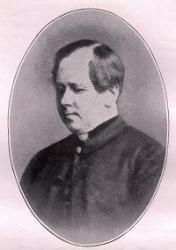
1821 - 1877 Person Name: Sir Henry Williams Baker Author of "Praise, O praise our God and King! " in Evangelical Lutheran hymnal Baker, Sir Henry Williams, Bart., eldest son of Admiral Sir Henry Loraine Baker, born in London, May 27, 1821, and educated at Trinity College, Cambridge, where he graduated, B.A. 1844, M.A. 1847. Taking Holy Orders in 1844, he became, in 1851, Vicar of Monkland, Herefordshire. This benefice he held to his death, on Monday, Feb. 12, 1877. He succeeded to the Baronetcy in 1851. Sir Henry's name is intimately associated with hymnody. One of his earliest compositions was the very beautiful hymn, "Oh! what if we are Christ's," which he contributed to Murray's Hymnal for the Use of the English Church, 1852. His hymns, including metrical litanies and translations, number in the revised edition of Hymns Ancient & Modern, 33 in all. These were contributed at various times to Murray's Hymnal, Hymns Ancient & Modern and the London Mission Hymn Book, 1876-7. The last contains his three latest hymns. These are not included in Hymns Ancient & Modern. Of his hymns four only are in the highest strains of jubilation, another four are bright and cheerful, and the remainder are very tender, but exceedingly plaintive, sometimes even to sadness. Even those which at first seem bright and cheerful have an undertone of plaintiveness, and leave a dreamy sadness upon the spirit of the singer. Poetical figures, far-fetched illustrations, and difficult compound words, he entirely eschewed. In his simplicity of language, smoothness of rhythm, and earnestness of utterance, he reminds one forcibly of the saintly Lyte. In common with Lyte also, if a subject presented itself to his mind with striking contrasts of lights and shadows, he almost invariably sought shelter in the shadows. The last audible words which lingered on his dying lips were the third stanza of his exquisite rendering of the 23rd Psalm, "The King of Love, my Shepherd is:"—
Perverse and foolish, oft I strayed,
But yet in love He sought me,
And on His Shoulder gently laid,
And home, rejoicing, brought me."
This tender sadness, brightened by a soft calm peace, was an epitome of his poetical life.
Sir Henry's labours as the Editor of Hymns Ancient & Modern were very arduous. The trial copy was distributed amongst a few friends in 1859; first ed. published 1861, and the Appendix, in 1868; the trial copy of the revised ed. was issued in 1874, and the publication followed in 1875. In addition he edited Hymns for the London Mission, 1874, and Hymns for Mission Services, n.d., c. 1876-7. He also published Daily Prayers for those who work hard; a Daily Text Book, &c. In Hymns Ancient & Modern there are also four tunes (33, 211, 254, 472) the melodies of which are by Sir Henry, and the harmonies by Dr. Monk. He died Feb. 12, 1877.
--John Julian, Dictionary of Hymnology (1907)
H. W. Baker
St. Ambrose
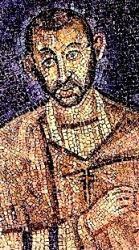
340 - 397 Person Name: Ambrose of Milan Author of "Come, Thou Savior of Our Race" in The Cyber Hymnal Ambrose (b. Treves, Germany, 340; d. Milan, Italy, 397), one of the great Latin church fathers, is remembered best for his preaching, his struggle against the Arian heresy, and his introduction of metrical and antiphonal singing into the Western church. Ambrose was trained in legal studies and distinguished himself in a civic career, becoming a consul in Northern Italy. When the bishop of Milan, an Arian, died in 374, the people demanded that Ambrose, who was not ordained or even baptized, become the bishop. He was promptly baptized and ordained, and he remained bishop of Milan until his death. Ambrose successfully resisted the Arian heresy and the attempts of the Roman emperors to dominate the church. His most famous convert and disciple was Augustine. Of the many hymns sometimes attributed to Ambrose, only a handful are thought to be authentic. Bert Polman =====================
Ambrosius (St. Ambrose), second son and third child of Ambrosius, Prefect of the Gauls, was born at Lyons, Aries, or Treves--probably the last--in 340 A.D. On the death of his father in 353 his mother removed to Rome with her three children. Ambrose went through the usual course of education, attaining considerable proficiency in Greek; and then entered the profession which his elder brother Satyrus had chosen, that of the law. In this he so distinguished himself that, after practising in the court of Probus, the Praetorian Prefect of Italy, he was, in 374, appointed Consular of Liguria and Aemilia. This office necessitated his residence in Milan. Not many months after, Auxentius, bishop of Milan, who had joined the Arian party, died; and much was felt to depend upon the person appointed as his successor. The church in which the election was held was so filled with excited people that the Consular found it necessary to take steps fur preserving the peace, and himself exhorted them to peace and order: when a voice suddenly exclaimed, "Ambrose is Bishop," and the cry was taken up on all sides. He was compelled to accept the post, though still only a catechumen; was forthwith baptized, and in a week more consecrated Bishop, Dec. 7, 374. The death of the Emperor Valentinian I., in 375, brought him into collision with Justina, Valentinian's second wife, an adherent of the Arian party: Ambrose was supported by Gratian, the elder son of Valentinian, and by Theodosius, whom Gratian in 379 associated with himself in the empire. Gratian was assassinated in 383 by a partisau of Maximus, and Ambrose was sent to treat with the usurper, a piece of diplomacy in which he was fairly successful. He found himself, however, left to carry on the contest with the Arians and the Empress almost alone. He and the faithful gallantly defended the churches which the heretics attempted to seize. Justina was foiled: and the advance of Maximus on Milan led to her flight, and eventually to her death in 388. It was in this year, or more probably the year before (387), that Ambrose received into the Church by baptism his great scholar Augustine, once a Manichaean heretic. Theodosius was now virtually head of the Roman empire, his colleague Valentinian II., Justina's son, being a youth of only 17. In the early part of 390 the news of a riot at Thessalonica, brought to him at Milan, caused him to give a hasty order for a general massacre at that city, and his command was but too faithfully obeyed. On his presenting himself a few days after at the door of the principal church in Milan, he was met by Ambrose, who refused him entrance till he should have done penance for his crime. It was not till Christmas, eight months after, that the Emperor declared his penitence, and was received into communion again by the Bishop. Valentinian was murdered by Arbogastes, a Frank general, in 392; and the murderer and his puppet emperor Eugenius were defeated by Theodosius in 394. But the fatigues of the campaign told on the Emperor, and he died the following year. Ambrose preached his funeral sermon, as he had done that of Valentinian. The loss of these two friends and supporters was a severe blow to Ambrose; two unquiet years passed, and then, worn with labours and anxieties, he himself rested from his labours on Easter Eve, 397. It was the 4th of April, and on that day the great Bishop of Milan is remembered by the Western Church, but Rome commemorates his consecration only, Dec. 7th. Great he was indeed, as a scholar, an organiser, a statesman; still greater as a theologian, the earnest and brilliant defender of the Catholic faith against the Arians of the West, just as Athanasius (whose name, one cannot but remark, is the same as his in meaning) was its champion against those of the East. We are now mainly concerned with him as musician and poet, "the father of Church song" as he is called by Grimm. He introduced from the East the practice of antiphonal chanting, and began the task, which St. Gregory completed, of systematizing the music of the Church. As a writer of sacred poetry he is remarkable for depth and severity. He does not warm with his subject, like Adam of St. Victor, or St. Bernard. "We feel," says Abp. Trench, "as though there were a certain coldness in his hymns, an aloofness of the author from his subject. "A large number of hymns has been attributed to his pen; Daniel gives no fewer than 92 called Ambrosian. Of these the great majority (including one on himself) cannot possibly be his; there is more or less doubt about the rest. The authorities on the subject are the Benedictine ed. of his works, the Psalterium, or Hymnary, of Cardinal Thomasius, and the Thesaurus Hymnologicus of Daniel. The Benedictine editors give 12 hymns as assignable to him, as follows:—1. Aeterna Christi munera. 2. Aeterne rerum Conditor. 3. Consors Paterni luminii. 4. Deus Creator omnium. 5. Fit porta Christi pervia, 6. Illuminans Altissimus. 7. Jam surgit hora tertia. 8. 0 Lux Beata Trinitas. 9. Orabo mente Dominum. 10. Somno refectis artubus. 11. Splendor Paternae gloriae. 12. Veni Redemptor gentium. Histories of these hymns, together with details of translations into English, are given in this work, and may be found under their respective first lines. The Bollandists and Daniel are inclined to attribute to St. Ambrose a hymn, Grates tibi Jesu novas, on the finding of the relics of SS. Gervasius and Protasius. These, we know, were discovered by him in 386, and it is by no means unlikely that the bishop should have commemorated in verse an event which he announces by letter to his sister Marcellina with so much satisfaction, not to say exultation.A beautiful tradition makes the Te Deum laudamus to have been composed under inspiration, and recited alternately, by SS. Ambrose and Augustine immediately after the baptism of the latter in 387. But the story rests upon a passage which there is every reason to consider spurious, in the Chronicon of Dacius, Bishop of Milan in 550. There is no hint of such an occurrence in the Confessions of St. Augustine, nor in Paulinue's life of St. Ambrose, nor in any authentic writing of St. Ambrose himself. The hymn is essentially a compilation, and there is much reason to believe, with Merati, that it originated in the 5th century, in the monastery of St. Honoratus at Lerins. [Te Deum.] -- John Julian, Dictionary of Hymnology (1907)
Also known as: Ambrotio, Ambrosio de Milán Ambrosius Mediolanensis Ambrosius Saint, Bp. of Milan Ambrosius von Mailand Aurelio Ambrogio, Saint, Bishop of Milan Aurelius Ambrosius, Saint, Bishop of Milan Milan, d. 397
St. Ambrose
Martin Luther
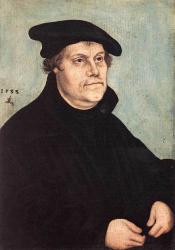
1483 - 1546 Translator (from Latin to German) of "Come, Thou Savior of Our Race" in The Cyber Hymnal Luther, Martin, born at Eisleben, Nov. 10, 1483; entered the University of Erfurt, 1501 (B.A. 1502, M.A.. 1503); became an Augustinian monk, 1505; ordained priest, 1507; appointed Professor at the University of Wittenberg, 1508, and in 1512 D.D.; published his 95 Theses, 1517; and burnt the Papal Bull which had condemned them, 1520; attended the Diet of Worms, 1521; translated the Bible into German, 1521-34; and died at Eisleben, Feb. 18, 1546. The details of his life and of his work as a reformer are accessible to English readers in a great variety of forms. Luther had a huge influence on German hymnody.
i. Hymn Books.
1. Ellich cristlich lider Lobgesang un Psalm. Wittenberg, 1524. [Hamburg Library.] This contains 8 German hymns, of which 4 are by Luther.
2. Eyn Enchiridion oder Handbuchlein. Erfurt, 1524 [Goslar Library], with 25 German hymns, of which 18 are by Luther.
3. Geystliche Gesangk Buchleyn. Wittenberg, 1524 [Munich Library], with 32 German hymns, of which 24 are by Luther.
4. Geistliche Lieder auffs new gebessert. Wittenberg. J. Klug, 1529. No copy of this book is now known, but there was one in 1788 in the possession of G. E. Waldau, pastor at Nürnberg, and from his description it is evident that the first part of the Rostock Gesang-Buch, 1531, is a reprint of it. The Rostock Gesang-Buch, 1531, was reprinted by C. M. Wiechmann-Kadow at Schwerin in 1858. The 1529 evidently contained 50 German hymns, of which 29 (including the Litany) were by Luther.
5. Geistliche Lieder auffs new gebessert. Erfurt. A. Rauscher, 1531 [Helmstädt, now Wolfenbüttel Library], a reprint of No. 4.
6. Geistliche Lieder. Wittenberg. J. Klug, 1535 [Munich Library. Titlepage lost], with 52 German hymns, of which 29 are by Luther.
7. Geistliche Lieder auffs new gebessert. Leipzig. V. Schumann, 1539 [Wernigerode Library], with 68 German hymns, of which 29 are by Luther.
8. Geistliche Lieder. Wittenberg. J. Klug, 1543 [Hamburg Library], with 61 German hymns, of which 35 are by Luther.
9. Geystliche Lieder. Leipzig. V. Babst, 1545 [Gottingen Library]. This contains Luther's finally revised text, but adds no new hymns by himself. In pt. i. are 61 German hymns, in pt. ii. 40, of which 35 in all are by Luther.
For these books Luther wrote three prefaces, first published respectively in Nos. 3, 4, 9. A fourth is found in his Christliche Geseng, Lateinisch und Deudsch, zum Begrebnis, Wittenberg, J. Klug, 1542. These four prefaces are reprinted in Wackernagel’s Bibliographie, 1855, pp. 543-583, and in the various editions of Luther's Hymns. Among modern editions of Luther's Geistliche Lieder may be mentioned the following:—
Carl von Winterfeld, 1840; Dr. C. E. P. Wackernagel, 1848; Q. C. H. Stip, 1854; Wilhelm Schircks, 1854; Dr. Danneil, 1883; Dr. Karl Gerok, 1883; Dr. A. F. W. Fischer, 1883; A. Frommel, 1883; Karl Goedeke, 1883, &c. In The Hymns of Martin Luther. Set to their original melodies. With an English version. New York, 1883, ed. by Dr. Leonard Woolsey Bacon and Nathan H. Allen, there are the four prefaces, and English versions of all Luther's hymns, principally taken more or less altered, from the versions by A. T. Russell, R. Massie and Miss Winkworth [repub. in London, 1884]. Complete translations of Luther's hymns have been published by Dr. John Anderson, 1846 (2nd ed. 1847), Dr. John Hunt, 1853, Richard Massie, 1854, and Dr. G. Macdonald in the Sunday Magazine, 1867, and his Exotics, 1876. The other versions are given in detail in the notes on the individual hymns.
ii. Classified List of Luther's Hymns. Of Luther's hymns no classification can be quite perfect, e.g. No. 3 (see below) takes hardly anything from the Latin, and No. 18 hardly anything from the Psalm. No. 29 is partly based on earlier hymns (see p. 225, i.). No. 30 is partly based on St. Mark i. 9-11, and xvi., 15, 16 (see p. 226, ii.). No. 35 is partly based on St. Luke ii. 10-16. The following arrangement, however, will answer all practical purposes.
A. Translations from the Latin.
i. From Latin Hymns:
1. Christum wir sollen loben schon. A solis ortus cardine
2. Der du bist drei in Einigkeit. O Lux beata Trinitas.
3. Jesus Christus unser Heiland, Der von. Jesus Christus nostra salus
4. Komm Gott Schopfer, heiliger Geist. Veni Creator Spiritus, Mentes.
5. Nun komm der Beidenheiland. Veni Redemptor gentium
6. Was flirchst du Feind Herodes sehr. A solis ortus cardine
ii. From Latin Antiphons, &c.:
7. Herr Gott dich loben wir. Te Deum laudamus.
8. Verleih uns Frieden gnädiglich. Dapacem, Domine
9. Wir glauben all an einen Gott.
iii. Partly from the Latin, the translated stanzas being adopted from Pre-Reformation Versions:
10. Komm, heiliger Geist, Herre Gott.
11. Mitten wir im Leben sind. Media vita in morte sumus.
B. Hymns revised and enlarged from Pre-Reformation popular hymns.
12. Gelobet seist du Jesus Christ.
13. Gott der Vater wohn uns bei.
14. Gott sei gelobet und gebenedeiet.
15. Nun bitten wir den heiligen Geist.
C. Psalm versions.
16. Ach Gott vom Himmel, sieh darein.
17. Aus tiefer Noth schrei ich zu dir.
18. Ein' feste Burg ist unser Gott.
19. Es spricht der Unweisen Mund wohl.
20. Es wollt uns Gott genädig sein.
21. War Gott nicht mit uns diese Zeit.
22. Wohl dem, der in Gotten Furcht steht.
D. Paraphrases of other portions of Holy Scripture.
23. Diess sind die heilgen zehn Gebot.
24. Jesaia dem Propheten das geschah.
25. Mensch willt du leben seliglich.
26. Mit Fried und Freud ich fahr dahin.
27. Sie ist mir lieb die werthe Magd.
28. Vater unser im Himmelreich.
E. Hymns mainly Original.
29. Christ lag in Todesbanden.
30. Christ unser Herr zum Jordan kam.
31. Ein neues Lied wir heben an.
32. Erhalt uns Herr bei deinem Wort.
33. Jesus Christus unser Heiland, Der den,
34. Nun freut euch lieben Christengemein.
35. Vom Himmel hoch da komm ich her.
36. Vom Himmel kam der Engel Schaar.
In addition to these —
37. Fur alien Freuden auf Erden.
38. Kyrie eleison.
In the Blätter fur Hymnologie, 1883, Dr. Daniel arranges Luther's hymns according to what he thinks their adaptation to modern German common use as follows:—
i. Hymns which ought to be included in every good Evangelical hymn-book: Nos. 7-18, 20, 22, 28, 29, 30, 32, 34, 35, 36, 38.
ii. Hymns the reception of which into a hymn-book might be contested: Nos. 2, 3, 4, 19, 21, 22, 23, 24, 25, 33.
iii. Hymns not suited for a hymn-book: Nos. 1, 5, 6, 27, 31, 37.
[Rev. James Mearns, M.A.]
--John Julian, Dictionary of Hymnology (1907)
Martin Luther
William Walsham How
1823 - 1897 Person Name: W. W. How Author of "Jesus, name of wondrous love" in The Academic Hymnal William W. How (b. Shrewsbury, Shropshire, England, 1823; d. Leenane, County Mayo, Ireland, 1897) studied at Wadham College, Oxford, and Durham University and was ordained in the Church of England in 1847. He served various congregations and became Suffragan Bishop in east London in 1879 and Bishop of Wakefield in 1888. Called both the "poor man's bishop" and "the children's bishop," How was known for his work among the destitute in the London slums and among the factory workers in west Yorkshire. He wrote a number of theological works about controversies surrounding the Oxford Movement and attempted to reconcile biblical creation with the theory of evolution. He was joint editor of Psalms and Hymns (1854) and Church Hymns (1871). While rector in Whittington, How wrote some sixty hymns, including many for children. His collected Poems and Hymns were published in 1886.
Bert Polman
===============
How, William Walsham, D.D., son of William Wybergh How, Solicitor, Shrewsbury, was born Dec. 13, 1823, at Shrewsbury, and educated at Shrewsbury School and Wadham College, Oxford (B.A. 1845). Taking Holy Orders in 1846, he became successively Curate of St. George's, Kidderminster, 1846; and of Holy Cross, Shrewsbury, 1848. In 1851 he was preferred to the Rectory of Whittington, Diocese of St. Asaph, becoming Rural Dean in 1853, and Hon. Canon of the Cathedral in 1860. In 1879 he was appointed Rector of St. Andrew's Undershaft, London, and was consecrated Suffragan Bishop for East London, under the title of the Bishop of Bedford, and in 1888 Bishop of Wakefield. Bishop How is the author of the Society for Promoting Christian Knowledge Commentary on the Four Gospels; Plain Words , Four Series; Plain Words for Children; Pastor in Parochia; Lectures on Pastoral Work; Three All Saints Summers, and Other Poems , and numerous Sermons , &c. In 1854 was published Psalms and Hymns, Compiled by the Rev. Thomas Baker Morrell, M.A., . . . and the Rev. William Walsham How, M.A. This was republished in an enlarged form in 1864, and to it was added a Supplement in 1867. To this collection Bishop How contributed several hymns, and also to the S. P. C. K. Church Hymns , of which he was joint editor, in 1871. The Bishop's hymns in common use amount in all to nearly sixty.
Combining pure rhythm with great directness and simplicity, Bishop How's compositions arrest attention more through a comprehensive grasp of the subject and the unexpected light thrown upon and warmth infused into facia and details usually shunned by the poet, than through glowing imagery and impassioned rhetoric. He has painted lovely images woven with tender thoughts, but these are few, and found in his least appreciated work. Those compositions which have laid the firmest hold upon the Church, are simple, unadorned, but enthusiastically practical hymns, the most popular of which, "O Jesu, Thou art standing"; "For all the Saints who from their labours rest," and "We give Thee but Thine own," have attained to a foremost rank. His adaptations from other writers as in the case from Bishop Ken, "Behold, the Master passeth by," are good, and his Children's hymns are useful and popular. Without any claims to rank as a poet, in the sense in which Cowper and Montgomery were poets, he has sung us songs which will probably outlive all his other literary works.
The more important of Bishop How's hymns, including those already named, and "Lord, Thy children guide and keep"; "O Word of God Incarnate"; "This day at Thy creating word"; "Who is this so weak and helpless"; and others which have some special history or feature of interest, are annotated under their respective first lines. The following are also in common use:—
i. From Psalms & Hymns, 1854.
1. Before Thine awful presence, Lord. Confirmation.
2. Jesus, Name of wondrous love [priceless worth]. Circumcision. The Name Jesus .
3. Lord Jesus, when we stand afar. Passiontide.
4. O blessing rich, for sons of men. Members of Christ.
5. 0 Lord of Hosts, the earth is Thine. In time of War.
6. O Lord, Who in Thy wondrous love. Advent.
ii. From Psalms & Hymns, enlarged, 1864.
7. Lord, this day Thy children meet. Sunday School Anniversary.
iii. From Supplement to the Psalms & Hymns, 1867.
8. Hope of hopes and joy of joys. Resurrection.
9. 0 daughters blest of Galilee. For Associations of Women.
10. O happy feet that tread. Public Worship.
11. With trembling awe the chosen three. Transfiguration.
iv. From Parish Magazine, 1871, and Church Hymns, 1871.
12. O Jesu, crucified for man. Friday.
13. Yesterday, with worship blest. Monday.
v. From the S. P. C. K. Church Hymns. 1871.
14. Bowed low in supplication. For the Parish.
15. Great Gabriel sped on wings of light. Annunciation, of the Blessed Virgin Mary.
16. O blest was he, whose earlier skill. St. Luke.
17. O God, enshrined in dazzling light. Omnipresence. Divine Worship .
18. O heavenly Fount of Light and Love. Witsuntide.
19. O Lord, it is a blessed thing. Weekdays.
20. 0 One with God the Father. Epiphany.
21. O Thou through suffering perfect made. Hospitals.
22. Rejoice, ye sons of men. Purification of the B. V. M.
23. Summer suns are glowing. Summer.
24. The year is swiftly waning. Autumn.
25. Thou art the Christ, O Lord. St. Peter.
26. To Thee our God we fly. National Hymn.
27. Upon the holy Mount they stood. Transfiguration and Church Guilds.
28. We praise Thy grace, 0 Saviour. St. Mark.
vi. From the S. P. C. K. Children's Hymns, 1872.
29. Behold a little child. Jesus the Child's Example.
30. Come, praise your Lord and Saviour. Children's Praises.
31. It is a thing most wonderful. Sunday School Anniversary.
32. On wings of living light. Easter.
Bishop How's hymns and sacred and secular pieces were collected and published as Poems and Hymns, 1886. The Hymns, 54 in all, are also published separately. He d. Aug. 10, 1897.
--John Julian, Dictionary of Hymnology (1907)
===================
How, W. W., p. 540, i. He died Aug. 10, 1897. His Memoir, by F. D. How, was published in 1898.
--John Julian, Dictionary of Hymnology, New Supplement (1907)
William Walsham How
Pages




