

 My Starred Hymns
 My FlexScores
 My Hymnals
 My Purchased Files
Planning worship?
Check out our sister site, ZeteoSearch.org,
for 20+ additional resources related to your search.
- |
User Links
Person Results
R. H. Cornelius
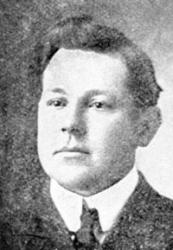
1872 - 1933 Arranger of "[Brethren, we have met to worship]" in Songs of the Cross R.H. Cornelius, known as Rufus Cornelius by his friends, was born in Blount Co., AL., January 24, 1872. He was educated in the public schools of Oneonta, the county seat. He began teaching in the public schools at an early age and at one time was associate Principle of the Oneonta High School. It was while teaching in the high school that he became interested in church music and began to study with some of the best teachers of the time. His first major teacher was the late A J showalter in one of his normals at Eden, AL. He continued his study with this wellknown teacher until he had finished the courses a second time. He soon felt that the study of harmony was his first love in his study and soon became one of the best harmon teachers of his time.
Near the close of the century, he moved to Texas and settled in Midlothian, Ellis Co., where he established a publishing house and published many fine gospel song books that sold by the thousands. However, before coming to Texas, he was associated with The Showalter-Patton Co. who published his first compositions. Soon after coming to Texas, he devoted much time to teaching singing schools (Cornelius Normal Musical Institute) and soon became one of the best known teachers of that great state, often having many more calls for schools than he could have time for. In many cases his schools were dated years ahead. he had possessed a beautiful tenor voice and was of a very pleasant personality. This caused his to be loved by all who knew him. About 1914 he was called to Southwestern Baptist Seminary as head of the music department. After several years here in the Baptist School in Ft Worth, Texas, he felt he was more needed back in the field of teaching and songbook publishing. Soon after coming to Texas, he married Maycon Temperance Burleson, who was a fine singer and musician and wrote many songs.During the first 32 years of the 20th Century, this couple of musicians blessed the State of Texas with their singing and teaching. Of all the fine song written by Mr. Cornelius, "Oh, I want to See Him" will carry his memory for years to come. The Cornelius' were members of the Baptist Church and were devoted Christians.
Mr. Cornelius passed away in 1932. Mrs. Cornelius lived only about two years, passing away in 1934. In the passing of these fine gospel singer and teachers, church music suffered a great loss. By C C Stafford
--www.findagrave.com/cgi-bin/ (excerpts)
R. H. Cornelius
A. J. Showalter
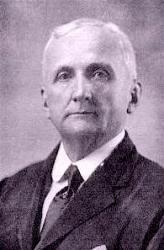
1858 - 1924 Person Name: A. J. S. Arranger of "[Brethren, we have met to worship]" in Sweetest Melodies Anthony Johnson Showalter USA 1858-1924/ Born in Cherry Grove, VA, he became an organist, gospel music composer, author, teacher, editor, and publisher. He was taught by his father and in 1876 received training at the Ruebush-Kieffer School of Music, Dayton, VA. He also attended George Root’s National Normal school at Erie, PA, and Dr Palmer’s International Normal at Meadville, PA. He was teaching music in shape note singing schools by age 14. He taught literary school at age 19, and normal music schools at age 22, when he also published his first book. In 1881 he married Lucy Carolyn (Callie) Walser of TX, and they had seven children: Tennie, Karl, Essie, Jennie, Lena, Margaret, and Nellie. At age 23 he published his “Harmony & composition” book, and years later his “Theory of music”. In 1884 he moved to Dalton, GA, and in 1890 formed the Showalter Music Company of Dalton. His company printed and published hymnals, songbooks, schoolbooks, magazines, and newspapers, and had offices in Texarkana, AR, and Chattanooga, TN. In 1888 he became a member of the M T N A (Music Teachers National Association) and was vice-president for his state for several years. In 1895 he went abroad to study methods of teachers and conductors in Europe. He held sessions of his Southern Normal Music Institute in a dozen or more states. He edited “The music teacher & home magazine” for 20 years. In 1895 he issued his “New harmony & composition” book. He authored 60+ books on music theory, harmony, and song. He published 130+ music books that sold over a million copies. Not only was he president of the A J Showalter Music Company of Dalton, GA, but also of the Showalter-Patton Company of Dallas, TX, two of the largest music publishing houses in the American south. He was a choir leader and an elder in the First Presbyterian Church in Dalton (and his daughter, Essie, played the organ there). He managed his fruit farm, looking after nearly 20,000 trees , of which 15,000 are the famous Georgia Elberta peaches, the rest being apples, plums, pecans, and a dozen other varieties of peaches. He was also a stockholder and director of the Cherokee Lumber Company of Dalton, GA, furnishing building materials to a large trade in many southern, central and eastern states. He died in Chattanooga, TN, and is buried in Dalton, GA. He loved hymns, and kept up with many of his students over the years, writing them letters of counsel and encouragement. In 2000 Showalter was inducted into the Southern Gospel Music Hall of Fame.
Note: Showalter received two letters one evening from former music students, both of who were grieving over the death of their wives. He had heard a sermon about the arms of Moses being held up during battle, and managed to form a tune and refrain for a hymn, but struggled to find words for the verses that fit. He wrote to his friend in OH, Rev Elisha Hoffman, who had already composed many hymns and asked if he could write some lyrics, which he gladly did.
John Perry
A. J. Showalter
J. Wilbur Chapman
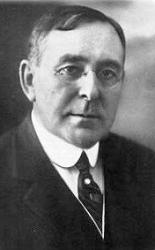
1859 - 1918 Person Name: J. Wilbur Chapman (1859-191 Chapman_WM18) Author of "Jesus, What a Friend for Sinners" in Seventh-day Adventist Hymnal Rv John Wilbur Chapman DD LLD USA 1859-1918. Born in Richmond, IN, he attended Quaker Day School and Methodist Sunday school. At age 17 he made a public declaration of his Christian faith and joined the Richmond Presbyterian Church. He received his seminary degree from Lane Theoloical Seminary, Cincinnati, OH. He was later awarded a Doctorate in Divinity from the College of Wooster, and an LL.D. from Heidelberg University. In 1882 he married Irene Steddon. They had a daughter. His wife died in 1886. In 1888 he married Agnes Pruyn Strain, and they had four children. His second wife died in 1907. In 1910 he married Mabel Cornelia Moulton. He held six pastorates in OH, IN, NY, PA, NY, NY before becoming an evangelist, generally traveling with gospel singer, Charles Alexander. In 1893 he preached with D. L. Moody. Billy Sunday was one of his disciples on the circuit. In 1895 he was appointed Corresponding Secretary of the Presbyterian General Assembly's Committeee on Evangelism, overseeing activities of 51 evangelists in 470 cities. He developed campaign tactics to maximize evangelical successes, trying them first in Pittsburgh, then Syracuse. With funding from philanthropist, John H. Converse, a wealthy Presbyterian, Chapman joined with Alexander to launch evangelical campaigns in 1907. He assembled 21 evangelistic teams after that to cover 42 sections of Philadelphia, preaching for several weeks. 8000 conversions resulted. They repeated this in NC. In 1909 they started a worldwide campaign in Vancouver, BC, and took in cities in Australia, the Phillipines, China, Korea, and Japan. Chapman also held religious summer conferences at Winona Lake, IN, Montreat, NC, and Long Island, NY. Mass evangelism was losing favor in 1910, so he was back holding large revivals with Alexander in 1912. He was also elected moderator of the Presbyterian Church General Assembly, and under so much stress, he developed gall stones. The surgery was too much, and he died two days later. He was also a prolific writer of religious works and hymn lyrics. 19 works.
John Perry
J. Wilbur Chapman
Cecil Frances Alexander
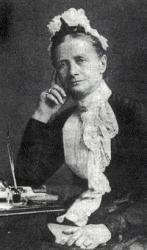
1818 - 1895 Person Name: Cecil Frances Alexander, 1818-1895 Author of "Jesus Calls Us o'er the Tumult" in The Covenant Hymnal As a small girl, Cecil Frances Humphries (b. Redcross, County Wicklow, Ireland, 1818; Londonderry, Ireland, 1895) wrote poetry in her school's journal. In 1850 she married Rev. William Alexander, who later became the Anglican primate (chief bishop) of Ireland. She showed her concern for disadvantaged people by traveling many miles each day to visit the sick and the poor, providing food, warm clothes, and medical supplies. She and her sister also founded a school for the deaf. Alexander was strongly influenced by the Oxford Movement and by John Keble's Christian Year. Her first book of poetry, Verses for Seasons, was a "Christian Year" for children. She wrote hymns based on the Apostles' Creed, baptism, the Lord's Supper, the Ten Commandments, and prayer, writing in simple language for children. Her more than four hundred hymn texts were published in Verses from the Holy Scripture (1846), Hymns for Little Children (1848), and Hymns Descriptive and Devotional ( 1858).
Bert Polman
==================
Alexander, Cecil Frances, née Humphreys, second daughter of the late Major John Humphreys, Miltown House, co. Tyrone, Ireland, b. 1823, and married in 1850 to the Rt. Rev. W. Alexander, D.D., Bishop of Derry and Raphoe. Mrs. Alexander's hymns and poems number nearly 400. They are mostly for children, and were published in her Verses for Holy Seasons, with Preface by Dr. Hook, 1846; Poems on Subjects in the Old Testament, pt. i. 1854, pt. ii. 1857; Narrative Hymns for Village Schools, 1853; Hymns for Little Children, 1848; Hymns Descriptive and Devotional, 1858; The Legend of the Golden Prayers 1859; Moral Songs, N.B.; The Lord of the Forest and his Vassals, an Allegory, &c.; or contributed to the Lyra Anglicana, the S.P.C.K. Psalms and Hymns, Hymns Ancient & Modern, and other collections. Some of the narrative hymns are rather heavy, and not a few of the descriptive are dull, but a large number remain which have won their way to the hearts of the young, and found a home there. Such hymns as "In Nazareth in olden time," "All things bright and beautiful," "Once in Royal David's city," "There is a green hill far away," "Jesus calls us o'er the tumult," "The roseate hues of early dawn," and others that might be named, are deservedly popular and are in most extensive use. Mrs. Alexander has also written hymns of a more elaborate character; but it is as a writer for children that she has excelled.
- John Julian, Dictionary of Hymnology (1907)
===============
Alexander, Cecil F., née Humphreys, p. 38, ii. Additional hymns to those already noted in this Dictionary are in common use:—
1. Christ has ascended up again. (1853.) Ascension.
2. His are the thousand sparkling rills. (1875.) Seven Words on the Cross (Fifth Word).
3. How good is the Almighty God. (1S48.) God, the Father.
4. In [a] the rich man's garden. (1853.) Easter Eve.
5. It was early in the morning. (1853.) Easter Day.
6. So be it, Lord; the prayers are prayed. (1848.) Trust in God.
7. Saw you never in the twilight? (1853.) Epiphany.
8. Still bright and blue doth Jordan flow. (1853.) Baptism of Our Lord.
9. The angels stand around Thy throne. (1848.) Submission to the Will of God.
10. The saints of God are holy men. (1848.) Communion of Saints.
11. There is one Way and only one. (1875.) SS. Philip and James.
12. Up in heaven, up in heaven. (1848.) Ascension.
13. We are little Christian children. (1848.) Holy Trinity.
14. We were washed in holy water. (1848.) Holy Baptism.
15. When of old the Jewish mothers. (1853.) Christ's Invitation to Children.
16. Within the Churchyard side by side. (1848.) Burial.
Of the above hymns those dated 1848 are from Mrs. Alexander's Hymns for Little Children; those dated 1853, from Narrative Hymns, and those dated 1875 from the 1875 edition of Hymns Ancient & Modern.
Several new hymns by Mrs. Alexander are included in the 1891 Draft Appendix to the Irish Church Hymnal.
--John Julian, Dictionary of Hymnology, Appendix, Part II (1907)
=============
Alexander, Cecil F. , p. 38, ii. Mrs. Alexander died at Londonderry, Oct. 12, 1895. A number of her later hymns are in her Poems, 1896, which were edited by Archbishop Alexander.
--John Julian, Dictionary of Hymnology, New Supplement (1907)
See also in:Hymn Writers of the Church
Cecil Frances Alexander
Albert F. Bayly
1901 - 1984 Person Name: Albert F. Bayly, 1901-1984 Author of "Lord, Whose Love in Humble Service" in Breaking Bread (Vol. 39) Albert F. Bayly was born on September 6, 1901, Bexhill on Sea, Sussex, England. He received his education at London University (BA) and Mansfield College, Oxford. Bayly was a Congregationalist (later United Reformed Church) minister from the late 1920s until his death in 1984. His life and ministry spanned the Depression of the 1930s, the Second World War, and the years of reconstruction which followed. After retiring in 1971, he moved to Springfield, Chelmsford, and was active in the local United Reformed Church. He wrote several pageants on mission themes, and librettos for cantatas by W. L. Lloyd Webber. He died on July 26, 1984 in Chichester, Sussex, England.
NN, Hymnary editor. Sources: www.hymntime.com/tch and Church Times, an Anglican newspaper, Tuesday 20 October 2015
Albert F. Bayly
Robert Robinson
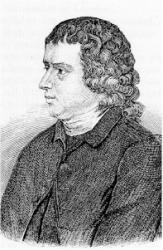
1735 - 1790 Person Name: Rev. Robt. Robinson Author of "Come, Thou Fount" in Grace and Glory Robert Robinson was born at Swaffham, Norfolk, in 1735. In 1749, he was apprenticed to a hairdresser, in Crutched Friars, London. Hearing a discourse preached by Whitefield on "The Wrath to Come," in 1752, he was deeply impressed, and after a period of much disquietude, he gave himself to a religious life. His own peculiar account of this change of life is as follows:--"Robertus Michaelis Marineque Robinson filius. Natus Swaffhami, comitatu Norfolciae, Saturni die Sept. 27, 1735. Renatus Sabbati die, Maii 24, 1752, per predicationem potentem Georgii Whitefield. Et gustatis doloribus renovationis duos annos mensesque septem, absolutionem plenam gratuitamque, per sanguinem pretiosum i secula seculorum. Amen." He soon after began to preach, and ministered for some time in connection with the Calvinistic Methodists. He subsequently joined the Independents, but after a short period preferred the Baptist connection. In 1761, he became pastor of a Baptist congregation at Cambridge. About the year 1780, he began to incline towards Unitarianism, and at length his people deemed it essential to procure his resignation. While arrangements for this purpose were in progress he died suddenly at Bingham, in June 1790. He wrote and published a good many works of ability.
--Annotations of the Hymnal, Charles Hutchins, M.A. 1872.
=============================
Robinson, Robert, the author of "Come, Thou fount of every blessing," and "Mighty God, while angels bless Thee," was born at Swaffham, in Norfolk, on Sept. 27, 1735 (usually misgiven, spite of his own authority, as Jan. 8), of lowly parentage. Whilst in his eighth year the family migrated to Scarning, in the same county. He lost his father a few years after this removal. His widowed mother was left in sore straits. The universal testimony is that she was a godly woman, and far above her circumstances. Her ambition was to see her son a clergyman of the Church of England, but poverty forbade, and the boy (in his 15th year) was indentured in 1749 to a barber and hairdresser in London. It was an uncongenial position for a bookish and thoughtful lad. His master found him more given to reading than to his profession. Still he appears to have nearly completed his apprenticeship when he was released from his indentures. In 1752 came an epoch-marking event. Out on a frolic one Sunday with like-minded companions, he joined with them in sportively rendering a fortune-telling old woman drunk and incapable, that they might hear and laugh at her predictions concerning them. The poor creature told Robinson that he would live to see his children and grandchildren. This set him a-thinking, and he resolved more than ever to "give himself to reading”. Coincidently he went to hear George Whitefield. The text was St. Matthew iii. 7, and the great evangelist's searching sermon on "the wrath to come" haunted him blessedly. He wrote to the preacher six years later penitently and pathetically. For well nigh three years he walked in darkness and fear, but in his 20th year found "peace by believing." Hidden away on a blank leaf of one of his books is the following record of his spiritual experience, the Latin doubtless having been used to hold it modestly private:—
"Robertus, Michaelis Mariseque Robinson filius. Natus Swaffhami, comitatu Norfolciae, Saturni die Sept. 27, 1735. Renatus Sabbati die, Maii 24,1752, per predicationem potentem Georgii Whitefield. Et gustatis doloribus renovationis duos annosque septem absolutionem plenam gratuitamque, per sanguinem pretiosum Jesu Christi, inveni (Tuesday, December 10, 1755) cui sit honor et gloria in secula seculorum. Amen."
Robinson remained in London until 1758, attending assiduously on the ministry of Gill, Wesley, and other evangelical preachers. Early in this year he was invited as a Calvinistic Methodist to the oversight of a chapel at Mildenhall, Norfolk. Thence he removed within the year to Norwich, where he was settled over an Independent congregation. In 1759, having been invited by a Baptist Church at Cambridge (afterwards made historically famous by Robert Hall, John Foster, and others) he accepted the call, and preached his first sermon there on Jan. 8, 1759, having been previously baptized by immersion. The "call" was simply "to supply the pulpit," but he soon won such regard and popularity that the congregation again and again requested him to accept the full pastoral charge. This he acceded to in 1761, alter persuading the people to "open communion." In 1770 he commenced his abundant authorship by publishing a translation from Saurin's sermons, afterwards completed. In 1774 appeared his masculine and unanswerable Arcana, or the Principles of the Late Petitioners to Parliament for Relief in the matter of Subscription. In 1776 was published A Plea for the Divinity of our Lord Jesus Christ in a Pastoral Letter to a Congregation of Protestant Dissenters at Cambridge. Dignitaries and divines of the Church of England united with Nonconformists in lauding this exceptionally able, scholarly, and pungently written book. In 1777 followed his History and Mystery of Good Friday. The former work brought him urgent invitations to enter the ministry of the Church of England, but he never faltered in his Nonconformity. In 1781 he was asked by the Baptists of London to prepare a history of their branch of the Christian Church. This resulted, in 1790, in his History of Baptism and Baptists, and in 1792, in his Ecclesiastical Researches. Other theological works are included in the several collective editions of his writings. He was prematurely worn out. He retired in 1790 to Birmingham, where he was somehow brought into contact with Dr. Priestley, and Unitarians have made much of this, on exceedingly slender grounds. He died June 9, 1790.
His Life has been fully written by Dyer and by William Robinson respectively, both with a bias against orthodoxy. His three changes of ecclesiastical relationship show that he was somewhat unstable and impulsive. His hymns are terse yet melodious, evangelical but not sentimental, and on the whole well wrought. His prose has all…that vehement and enthusiastic glow of passion that belongs to the orator. (Cf. Dyer and Robinson as above, and Gadsby's Memoirs of Hymn-Writers(3rd ed., 1861); Belcher's Historical Sketches of Hymns; Millers Singers and Songs of the Church; Flower's Robinson's Miscellaneous Works; Annual Review, 1805, p. 464; Eclectic Review, Sept. 1861. [Rev. A. B. Grosart, D.D., LL.D.]
--John Julian, Dictionary of Hymnology (1907)
Robert Robinson
Joseph Medlicott Scriven
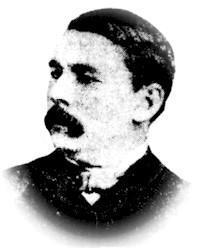
1819 - 1886 Person Name: Joseph Scriven Author of "What A Friend We Have In Jesus" in Special Sacred Selections Joseph M. Scriven (b. Seapatrick, County Down, Ireland, 1819; d. Bewdley, Rice Lake, ON, Canada, 1886), an Irish immigrant to Canada, wrote this text near Port Hope, Ontario, in 1855. Because his life was filled with grief and trials, Scriven often needed the solace of the Lord as described in his famous hymn.
Educated at Trinity College, Dublin, Ireland, he enrolled in a military college to prepare for an army career. However, poor health forced him to give up that ambition. Soon after came a second blow—his fiancée died in a drowning accident on the eve of their wedding in 1844. Later that year he moved to Ontario, where he taught school in Woodstock and Brantford. His plans for marriage were dashed again when his new bride-to-be died after a short illness in 1855. Following this calamity Scriven seldom had a regular income, and he was forced to live in the homes of others. He also experienced mistrust from neighbors who did not appreciate his eccentricities or his work with the underprivileged. A member of the Plymouth Brethren, he tried to live according to the Sermon on the Mount as literally as possible, giving and sharing all he had and often doing menial tasks for the poor and physically disabled. Because Scriven suffered from depression, no one knew if his death by drowning in Rice Lake was suicide or an accident.
Bert Polman
================
Scriven, Joseph. Mr. Sankey, in his My Life and Sacred Songs, 1906, p. 279, says that Scriven was b. in Dublin in 1820, was a graduate of Trinity College, Dublin, and went to Canada when he was 25, and died there at Port Hope, on Lake Ontario, in 1886. His hymn:—
What a Friend we have in Jesus. [Jesus our Friend] was, according to Mr. Sankey, discovered to be his in the following manner: "A neighbour, sitting up with him in his illness, happened upon a manuscript of 'What a Friend we have in Jesus.' Reading it with great delight, and questioning Mr. Scriven about it, he said he had composed it for his mother, to comfort her in a time of special sorrow, not intending any one else should see it." We find the hymn in H. 1... Hastings's Social Hymns, Original and Selected, 1865, No. 242; and his Song of Pilgrimage, 1886, No. 1291, where it is attributed to "Joseph Scriven, cir. 1855." It is found in many modern collections.
--John Julian, Dictionary of Hymnology, New Supplement (1907)
Joseph Medlicott Scriven
R. E. Winsett
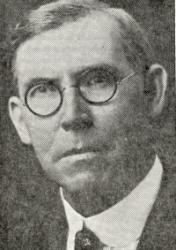
1876 - 1952 Person Name: R. E. W. Arranger of "[Brethren, we have met to worship]" in Songs of the Kingdom Robert Emmett Winsett (January 15, 1876 — June 26, 1952 (aged 76) was an American composer and publisher of Gospel music.
Winsett was born in Bledsoe County, Tennessee, and graduated from the Bowman Normal School of Music in 1899.
He founded his own publishing company in 1903, and his first publication, Winsett's Favorite Songs, quickly became popular among the Baptist and Pentecostal churches of the American South. Pentecostal Power followed in 1907; that year Winsett completed postgraduate work at a conservatory.
He married Birdie Harris in 1908, and had three sons and two daughters with her. He settled in Fort Smith, Arkansas, continuing to compose gospel songs, of which he would write over 1,000 in total. He became a minister in 1923, and was affiliated with the Church of God (Seventh Day).
Birdie Harris died late in the 1920s, and shortly thereafter Winsett moved back to Tennessee. He founded a new company in Chattanooga, and published more shape note music books. He remarried, to Mary Ruth Edmonton, in 1930, and had three further children.
Winsett's final publication, Best of All (1951), sold over 1 million copies, and in total his books sold over ten million copies. His song "Jesus Is Coming Soon" won a Dove Award for Gospel Song of the Year at the 1969 awards. He has been inducted into the Southern Gospel Museum and Hall of Fame.
--www.wikipedia.org
R. E. Winsett
Carlton R. Young
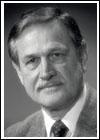
b. 1926 Harmonizer of "HOLY MANNA" in The United Methodist Hymnal Music Supplement
Carlton R. Young
Anonymous
Person Name: Anon. Author of "Holy Manna" in Song Praise In some hymnals, the editors noted that a hymn's author is unknown to them, and so this artificial "person" entry is used to reflect that fact. Obviously, the hymns attributed to "Author Unknown" "Unknown" or "Anonymous" could have been written by many people over a span of many centuries.
Anonymous
Pages




