You help make Hymnary.org possible. More than 10 million people from 200+ countries found hymns, liturgical resources and encouragement on Hymnary.org in 2025, including you. Every visit affirms the global impact of this ministry.

If Hymnary has been meaningful to you this year, would you take a moment today to help sustain it? A gift of any size—paired with a note of encouragement if you wish—directly supports the server costs, research work and curation that keep this resource freely available to the world.

Give securely online today, or mail a check to:
Hymnary.org
Calvin University
3201 Burton Street SE
Grand Rapids, MI 49546

Thank you for your partnership, and may the hope of Advent fill your heart.

Person Results

Tune Identifier:"^hursley_ritter$"
In:people

Planning worship? Check out our sister site, ZeteoSearch.org, for 20+ additional resources related to your search.
Showing 1 - 10 of 147Results Per Page: 102050

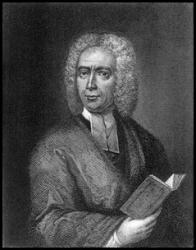
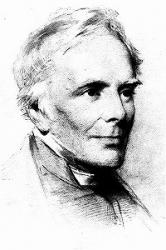
John Keble

1792 - 1866 Person Name: Rev. John Keble Author of "Hursley" in Joyful Lays Keble, John, M.A., was born at Fairford, in Gloucestershire, on St. Mark's Day, 1792. His father was Vicar of Coln St. Aldwin's, about three miles distant, but lived at Fairford in a house of his own, where he educated entirely his two sons, John and Thomas, up to the time of their entrance at Oxford. In 1806 John Keble won a Scholarship at Corpus Christi College, and in 1810 a Double First Class, a distinction which up to that time had been gained by no one except Sir Robert Peel. In 1811 he was elected a Fellow of Oriel, a very great honour, especially for a boy under 19 years of age; and in 1811 he won the University Prizes both for the English and Latin Essays. It is somewhat remarkable that amid this brilliantly successful career, one competition in which the future poet was unsuccessful was that for English verse, in which he was defeated by Mr. Rolleston. After his election at Oriel, he resided in College, and engaged in private tuition. At the close of 1813 he was appointed Examining Master in the Schools, and was an exceedingly popular and efficient examiner. On Trinity Sunday, 1815, he was ordained Deacon, and in 1816 Priest, by the Bishop of Oxford, and became Curate of East Leach and Burthorpe, though he still continued to reside at Oxford. In 1818 he was appointed College Tutor at Oriel, which office he retained until 1823. On the death of his mother in the same year, he left Oxford, and returned to live with his father and two surviving sisters at Fairford. In addition to East Leach and Burthorpe, he also accepted the Curacy of Southrop, and the two brothers, John and Thomas, undertook the duties between them, at the same time helping their father at Coln. It should be added, as an apology for Keble thus becoming a sort of pluralist among "the inferior clergy," that the population of all his little cures did not exceed 1000, nor the income £100 a year. In 1824 came the only offer of a dignity in the Church, and that a very humble one, which he ever received. The newly-appointed Bishop of Barbadoes (Coleridge) wished Keble to go out with him as Archdeacon, and but for his father's delicate state of health, he would probably have accepted the offer. In 1825 he became Curate of Hursley, on the recommendation of his old pupil, Sir William Heathcote; but in 1826, on the death of his sister, Mary Ann, he returned to Fairford, feeling that he ought not to separate himself from his father and only surviving sister. He supplied his father's place at Coln entirely. 1827 was memorable for the publication of The Christian Year, and 1828 for the election to the Provostship of Oriel, which his friends, rather than himself, seem to have been anxious to secure for him. In 1829 the living of Hursley was offered to him by Sir William Heathcote, but declined on the ground that he could not leave his father. In 1830 he published his admirable edition of Hooker's Works. In 1831 the Bishop of Exeter (Dr. Philpotts) offered him the valuable living of Paignton, but it was declined for the same reason that Hursley had been declined. In the same year he was also elected to the Poetry Professorship at Oxford. His Praelectiones in that capacity were much admired. In 1833 he preached his famous Assize Sermon at Oxford, which is said by Dr. Newman to have given the first start to the Oxford Movement. Very soon after the publication of this sermon the Tracts for the Times began to be issued. Of these Tracts Keble wrote Nos. 4, 13, 40, and 89. In 1835 his father died, and Keble and his sister retired from Fairford to Coln. In the same year he married Miss Clarke and the Vicarage of Hursley, again becoming vacant, was again offered to him by Sir W. Heathcote, and as the reason for his previous refusal of it no longer existed, he accepted the offer, and in 1836 settled at Hursley for the remainder of his life. That life was simply the life of a devoted and indefatigable parish priest, varied by intellectual pursuits. In 1864 his health began to give way, and on March 29, 1866, he passed away, his dearly loved wife only surviving him six weeks. Both are buried, side by side, in Hursley churchyard. In his country vicarage he was not idle with his pen. In 1839 he published his Metrical Version of the Psalms. The year before, he began to edit, in conjunction with Drs. Pusey and Newman, the Library of the Fathers. In 1846 he published the Lyra Innocentium, and in 1847 a volume of Academical and Occasional Sermons. His pen then seems to have rested for nearly ten years, when the agitation about the Divorce Bill called forth from him in 1851 an essay entitled, An Argument for not proceeding immediately to repeal the Laws which treat the Nuptial Bond as Indissoluble; and in the same year the decision of Archbishop Sumner in the Denison case elicited another essay, the full title of which is The Worship of Our Lord and Saviour in the Sacrament of the Holy Communion, but which is shortly entitled, Eucharistical Adoration. In 1863 he published his last work, The Life of Bishop Wilson (of Sodor and Man). This cost him more pains than anything he wrote, but it was essentially a labour of love. In the popular sense of the word "hymn," Keble can scarcely be called a hymnwriter at all. Very many of his verses have found their way into popular collections of Hymns for Public Worship, but these are mostly centos. Often they are violently detached from their context in a way which seriously damages their significance. Two glaring instances of this occur in the Morning and Evening hymns. In the former the verse "Only, O Lord, in Thy dear love, Fit us for perfect rest above," loses half its meaning when the preceding verse, ending "The secret this of rest below," is excised, as it generally is in collections for public worship, and the same may be said of that most familiar of all Keble's lines, "Sun of my soul, thou Saviour dear," which has of course especial reference to the preceding verse, "'Tis gone, that bright and orbed blaze," &c. The Lyra Innocentium has furnished but few verses which have been adopted into hymn collections; the Psalter has been more fortunate, but the translations from the Latin are almost unknown. Taking, however, the word "hymn" in the wider sense in which Dr. Johnson defines it, as "a song of adoration to some superior being," Keble stands in the very first rank of hymnwriters. His uneventful life was the very ideal life for such a poet as Keble was, but not the sort of life which would be best adapted to train a popular hymnwriter. The Christian Year and the Lyra Innocentium reflect in a remarkable degree the surroundings of the writer. They are essentially the works of a refined and cultured mind, and require a refined and cultured mind to enter into their spirit. Keble, all his life long, and never more than in the earlier portion of it, before he wrote, and when he was writing The Christian Year, breathed an atmosphere of culture and refinement. He had imbibed neither the good nor the evil which the training of a public or even of a private, school brings. It was not even the ordinary home education which he had received. He had been trained, up to the very time of his going to college, by his father, who was clearly a man of culture and refinement, and had been himself successively Scholar and Fellow of Corpus. When he went to Oxford, he can scarcely be said to have entered into the whirl of university life. The Corpus of those days has been admirably described by Keble's own biographer, Sir John Coleridge, and by Dean Stanley in his Life of Dr. Arnold; and the impression which the two vivid pictures leave upon the mind is that of a home circle, on rather a large scale, composed of about twenty youths, all more or less scholarly and refined, and some of them clearly destined to become men of mark. When he removed across the road to Oriel, he found himself in the midst of a still more distinguished band. Whether at home or at college he had never come into contact with anything rude or coarse. And his poetry is just what one would expect from such a career. Exquisitely delicate and refined thoughts, expressed in the most delicate and refined language, are characteristic of it all. Even the occasional roughnesses of versification may not be altogether unconnected with the absence of a public school education, when public schools laid excessive stress upon the form of composition, especially in verse. The Christian Year again bears traces of the life which the writer led, in a clerical atmosphere, just at the eve of a great Church Revival, "cujus pars magna fuit." “You know," he writes to a friend, “the C. Y. (as far as I remember it) everywhere supposes the Church to be in a state of decay." Still more obviously is this the case in regard to the Lyra Innocentium. It was being composed during the time when the writer was stricken by what he always seems to have regarded as the great sorrow of his life. Not the death of his nearest relations—-and he had several trials of this kind—-not the greatest of his own personal troubles dealt to him so severe a blow as the secession of J. H. Newman to the Church of Rome. The whole circumstances of the fierce controversy connected with the Tract movement troubled and unsettled him; and one can well understand with what a sense of relief he turned to write, not for, but about, little children, a most important distinction, which has too often been unnoticed. If the Lyra had been written for children it would have been an almost ludicrous failure, for the obscurity which has been frequently complained of in The Christian Year, is still more conspicuous in the latter work. The title is somewhat misleading, and has caused it to be regarded as a suitable gift-book for the young, who are quite incapable of appreciating it. For the Lyra is written in a deeper tone, and expresses the more matured convictions of the author; and though it is a far less successful achievement as a whole, it rises in places to a higher strain of poetry than The Christian Year does. Another marked feature of Keble's poetry is to a great extent traceable to his early life, viz. the wonderful accuracy and vividness of his descriptions of natural scenery. The ordinary schoolboy or undergraduate cares little for natural scenery. The country is to him a mere playing field. But Keble's training led him to love the country for its own sake. Hence, as Dean Stanley remarks, “Oxford, Bagley Wood, and the neighbourhood of Hursley might be traced through hundreds of lines, both in The Christian Year and the Lyra Innocentium.” The same writer testifies, with an authority which no other Englishman could claim, to "the exactness of the descriptions of Palestine, which he [Keble] had never visited.” And may not this remarkable fact be also traced to some extent to his early training? Brought up under the immediate supervision of a pious father, whom he venerated and loved dearly, he had been encouraged to study intelligently his Bible in a way in which a boy differently educated was not likely to do. Hence, as Sir John Coleridge remarks, "The Christian Year is so wonderfully scriptural. Keble's mind was, by long, patient and affectionate study of Scripture, so imbued with it that its language, its train of thought, its mode of reasoning, seems to flow out into his poetry, almost, one should think, unconsciously to himself." To this may we not add that the same intimate knowledge of the Bible had rendered the memory of the Holy Land so familiar to him that he was able to describe it as accurately as if he had seen it? One other early influence of Keble's life upon his poetry must be noticed. Circumstances brought him into contact with the "Lake poets." The near relation of one of the greatest of them had been his college friend, and John Coleridge introduced him to the writings not only of his uncle, S. T. Coleridge, but also of Wordsworth, to whom he dedicated his Praelectiones, and whose poetry and personal character he admired enthusiastically. To the same college friend he was indebted for an introduction to Southey, whom he found to be "a noble and delightful character," and there is no doubt that the writings of these three great men, but especially Wordsworth, had very much to do with the formation of Keble's own mind as a poet. It has been remarked that in Keble's later life his poetical genius seemed to have, to a great extent, forsaken him; and that the Miscellaneous Poems do not show many traces of the spirit which animated The Christian Year and the Lyra Innocentium. Perhaps one reason for this change may be found in the increased interest "which Keble took in public questions which were not conducive to the calm, introspective state of mind so necessary to the production of good poetry. The poet should live in a world of his own, not in a world perpetually wrangling about University Reform, about Courts of Final Appeal, about Marriage with Deceased Wife's Sister, and other like matters into which Keble, in his later years, threw himself—heart and soul. It is not needful to say much about Keble's other poetical works, The Psalter was not a success, and Keble did not expect it to be. It was undertaken," he tells us, "in the first instance with a serious apprehension, which has since grown into a full conviction, that the thing attempted is, strictly speaking, impossible." At the same time, if Keble did not achieve what he owned to be impossible, he produced a version which has the rare merit of never offending against good taste; one which in every line reflects the mind of the cultured and elegant scholar, who had been used to the work of translating from other languages into English. Hymnal compilers have hitherto strangely neglected this volume; but it is a volume worth the attention of the hymn compiler of the future. There is scarcely a verse in it which would do discredit to any hymnbook; while there are parts which would be an acquisition to any collection. His translations from the Latin have not commended themselves to hymnal compilers. Some of his detached hymns have been more popular. But it is after all as writer of The Christian Year that Keble has established his claim to be reckoned among the immortals. It would be hardly too much to say that what the Prayer Book is in prose, The Christian Year is in poetry. They never pall upon one; they realise Keble's own exquisite simile:— "As for some dear familiar strain Untired we ask, and ask again; Ever in its melodious store Finding a spell unheard before." And it would hardly be too bold to prophesy that The Christian Year will live as long as the Prayer Book, whose spirit Keble had so thoroughly imbibed, and whose "soothing influence" it was his especial object to illustrate and commend. [Rev. John H. 0verton, D.D.] Keble's hymns, poetical pieces, and translations appeared in the following works :— (1.) The Christian Year: Thoughts in Verse for the Sundays and Holy days Throughout the Year. Oxford: John Henry Parker, 1827. Preface dated "May 30th, 1827." The last poem, that on the “Commination," is dated March 9, 1827. The poems on the "Forms of Prayer to be used at Sea," "Gunpowder Treason," "King Charles the Martyr," "The Restoration of the Royal Family," "The Accession," and "Ordination," were added to the 4th edition, 1828. The Messrs. Parker have pub. a large number of editions to date, including a facsimile reprint of the first edition, and an edition with the addition of the dates of composition of each poem. A facsimile of Keble's manuscript as it existed in 1822 was also lithographed in 1882, by Eliot Stock, but its publication was suppressed by a legal injunction, and only a few copies came into the hands of the public. Since the expiration of the first copyright other publishers have issued the work in various forms. (2.) Contributions to the British Magazine, which were included in Lyra Apostolica, 1836, with the signature of "γ." (3.) The Psalter or Psalms of David; In English Verse; By a Member of the University of Oxford. Adapted for the most part, to Tunes in Common Use; and dedicated by permission to the Lord Bishop of Oxford. . . . Oxford, John Henry Parker: J. G. & F. Rivington, London, MDCCCXXXIX. Preface dated “Oxford, May 29, 1839." (4.) The Child's Christian Year: Hymns for every Sunday and Holy-Day. Compiled for the use of Parochial Schools. Oxford: John Henry Parker, 1841. This was compiled by Mrs. Yonge. Keble wrote the Preface, dated “Hursley, Nov. 6, 1841," and signed it “J. K." To it he contributed the four poems noted below. (5.) Lyra Innocentium: Thoughts in Verse on Christian Children, their Ways and their Privileges . . . Oxford: John Henry Parker : F. & J. Rivington, London, 1846. The Metrical Address (in place of Preface) “To all Friendly Readers," is dated "Feb. 8, 1846." (6.) Lays of the Sanctuary, and otter Poems. Compiled and Edited by G. Stevenson de M. Rutherford... London: Hamilton, Adams & Co., 1859. This was a volume of poems published on behalf of Mrs. Elizabeth Good. To it Keble contributed the three pieces noted below. (7.) The Salisbury Hymn-Book 1857. Edited by Earl Nelson. To this be contributed a few hymns, some translations from the Latin, and some rewritten forms of well-known hymns, as "Guide me, 0 Thou great Jehovah," &c. (8.) Miscellaneous Poems by the. Rev. J. Keble, M.A., Vicar of Hursley. Oxford and London: Parker & Co., 1869. The excellent Preface to this posthumous work is dated "Chester, Feb. 22, 1869," and is signed "G.M," i.e. by George Moberly, late Bishop of Salisbury. This volume contains Keble's Ode written for the Installation of the Duke of Wellington as Chancellor of the University of Oxford, in 1834, his poems from the Lyra Apostolica, his hymns named above, his translations from the Latin, and other pieces not published in his works. The most important centos from The Christian Year, which are in common use as hymns, and also the hymns contributed to the Salisbury Hymn Book, 1857, are annotated in full under the first lines of the original poems. The translations from the Latin and Greek are given under the first lines of the originals. There are also several of his more important pieces noted in the body of this work. Those that …have no special history, are the following (the dates given being those of the composition of each piece):— i. From The Christian Year, 1827 and 1828. 1. Creator, Saviour, strengthening Guide. Trinity Sunday. (March 3, 1826.) 2. Father, what treasures of sweet thought. Churching of Women. (March 13, 1827.) 3. God is not in the earthquake: but behold. 9th Sunday after Trinity. The still mall voice. (Aug. 13,1822.) 4. In troublous days of anguish and rebuke. 9th S. after Trinity. The still small voice. (Aug. 13, 1822.) 5. Lessons sweet of spring returning. 1st Sunday after Epiphany. Spring. (May 17,1824.) 6. My Saviour, can it ever be? 4th Sunday after Easter. The promised Comforter. 7. 0 Father of long suffering grace. 18th Sunday after Trinity. God's longsuffering. (Oct. 6, 1823.) 8. 0 God of mercy, God of might, How should, &c. Holy Communion. (Jan. 31, 1827.) 9. 0 Lord my God, do Thou Thy holy will. Wednesday before Easter. Resignation. (Aug. 13, 1821.) 10. 0 say not, dream [think] not, heavenly notes. Catechism. (Feb. 16, 1827.) 11. 0 shame upon thee, listless heart. SS. Philip & James. (Aug. 3, 1825.) 12. 0 who shall dare in this frail scene? St. Mark's Day. (1820.) 13. Red o'er the forest peers the setting sun. 23rd Sunday after Trinity. The Resurrection of the body. (Nov. 12, 1825.) 14. Spirit of Christ, Thine earnest give. Ordination. (March 28, 1828.) 15. Spirit of light and truth, to Thee. Ordination. (March 28, 1828.) 16. Spirit of might and sweetness too. Confirmation. (Feb. 21, 1827.) 17. Sweet nurslings of the vernal skies. 15th S. after Trinity. Consider the lilies. Live for today. (Feb. 3, 1826) 18. The days of hope and prayer are past. 4th Sunday after Easter. The promised Comforter. 19. The live-long night we've toiled in vain. 5th Sunday after Trinity. Miracle of the Fishes. (1821.) 20. The midday sun with fiercest glare. Conversion of St. Paul. (Mar. 2,1822.) 21. The shadow of the Almighty's cloud. Confirmation. (Feb. 22, 1827.) 22. The silent joy that sinks so deep. 2nd Sunday after Epiphany. Turning Water into Wine. 23. Then, fainting soul, arise and sing. 4th Sunday after Easter. The promised Comforter. 24. When brothers part for manhood's race. St. Andrew's Day. (Jan. 27, 1822.) 25. Who is God’s chosen priest ? St. Matthias's Day. 26. Why doth my Saviour weep? 10th Sunday after Trinity. Christ weeping over Jerusalem. (1819.) 27. Why should we faint and fear to live alone? 24th Sunday after Trinity. God's goodness in veiling the future. (June 7, 1825.) 28. Wish not, dear friends, my pain away. 16th Sunday after Trinity. Resignation. (1824.) ii. From The Psalter, 1839. 29. From deeps so wild and drear. Ps. cxxx. 30. God our Hope and Strength abiding. Ps. xlvi. 31. How pleasant, Lord of hosts, how dear. Ps. lxxxiv. 32. Lord, be my Judge, for I have trod. Ps. xxvi. 33. Lord, Thy heart in love hath yearned. Ps. lxxxv. 34. Lord, Thou hast search'd me out and known. Ps. cxxxix 35. My God, my God, why hast Thou me? Ps. xxii. 36. My Shepherd is the living God. Ps. xxiii. 37. My Shepherd is the Lord; J know. Ps. xxiii. 38. Praise the Lord, for He is love. Ps. cxxxvi. 39. Praise ye the Lord from heaven. Ps.cxlviii. 40. Sing the song unheard before. Ps. xcvi. 41. Sound high Jehovah's Name. Ps. cxxxv. 42. The earth is all the Lord's, with all. Ps. xxiv. 43. The mercies of the Lord my God. Ps. lxxxix. 44. The seed of Jacob, one and all. Ps. xxii. iii. From The Child's Christian Year, 1841, and later editions. 45. Bethlehem, above all cities blest. Innocents’ Day. 46. Lo, from the Eastern hills the Lord. l0th Sunday after Trinity. The Gospel. (Late editions.) 47. Our God in glory sits on high. 1st Sunday after Easter. The Epistle. 48. When Christ to village comes or town. 16th Sunday after Trinity. The Gospel. (Late editions.) iv. From Lyra Innocentium, 1846. 49. Christ before thy door is waiting. Presence of Christ in His poor; or, Offertory. 50. How [When] the new-born saints, assembling. Offertory. 51. Once in His Name Who made thee. Holy Baptism. 52. Who for the like of me will care? Naamans' Servant-maid v. From Lays of the Sanctuary, 1859. 53. Lord, lift my heart to Thee at morn. Emigrant's Midnight Hymn. 54. O Love unseen, we know Thee nigh. Cento from No. 53. 55. Slowly the gleaming stars retire. Morning Hymn for Emigrants at Sea. 56. The twilight hour is sweet at home. Evening hymn for Emigrants at Sea. The editor of Keble's Miscellaneous Poems says concerning Nos. 53, 55, and 56:— "The three hymns for Emigrants, for use at Midnight, Morning, and Evening, were written at the request of his friend Sir Frederic Rogers, at that time Emigration Commissioner. They were printed in the first edition of the ‘Prayers for Emigrants, which he had compiled, but were subsequently omitted, perhaps as being thought not sufficiently simple for the class of people for whose use the Book of Prayers was chiefly intended." Preface, p. vi. It is found that nearly 100 hymns (counting centos as such) by Keble are in common use at the present time, and of these some rank with the finest and most popular in the English language. -- John Julian, Dictionary of Hymnology (1907)

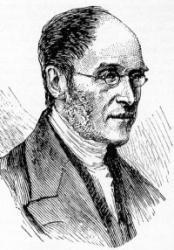
Isaac Watts

1674 - 1748 Person Name: Isaac Watts, 1674-1748 Author of "Before Jehovah's awful throne" in The National Baptist Hymnal Isaac Watts was the son of a schoolmaster, and was born in Southampton, July 17, 1674. He is said to have shown remarkable precocity in childhood, beginning the study of Latin, in his fourth year, and writing respectable verses at the age of seven. At the age of sixteen, he went to London to study in the Academy of the Rev. Thomas Rowe, an Independent minister. In 1698, he became assistant minister of the Independent Church, Berry St., London. In 1702, he became pastor. In 1712, he accepted an invitation to visit Sir Thomas Abney, at his residence of Abney Park, and at Sir Thomas' pressing request, made it his home for the remainder of his life. It was a residence most favourable for his health, and for the prosecution of his literary labours. He did not retire from ministerial duties, but preached as often as his delicate health would permit. The number of Watts' publications is very large. His collected works, first published in 1720, embrace sermons, treatises, poems and hymns. His "Horae Lyricae" was published in December, 1705. His "Hymns" appeared in July, 1707. The first hymn he is said to have composed for religious worship, is "Behold the glories of the Lamb," written at the age of twenty. It is as a writer of psalms and hymns that he is everywhere known. Some of his hymns were written to be sung after his sermons, giving expression to the meaning of the text upon which he had preached. Montgomery calls Watts "the greatest name among hymn-writers," and the honour can hardly be disputed. His published hymns number more than eight hundred. Watts died November 25, 1748, and was buried at Bunhill Fields. A monumental statue was erected in Southampton, his native place, and there is also a monument to his memory in the South Choir of Westminster Abbey. "Happy," says the great contemporary champion of Anglican orthodoxy, "will be that reader whose mind is disposed, by his verses or his prose, to imitate him in all but his non-conformity, to copy his benevolence to men, and his reverence to God." ("Memorials of Westminster Abbey," p. 325.) --Annotations of the Hymnal, Charles Hutchins, M.A., 1872. ================================= Watts, Isaac, D.D. The father of Dr. Watts was a respected Nonconformist, and at the birth of the child, and during its infancy, twice suffered imprisonment for his religious convictions. In his later years he kept a flourishing boarding school at Southampton. Isaac, the eldest of his nine children, was born in that town July 17, 1674. His taste for verse showed itself in early childhood. He was taught Greek, Latin, and Hebrew by Mr. Pinhorn, rector of All Saints, and headmaster of the Grammar School, in Southampton. The splendid promise of the boy induced a physician of the town and other friends to offer him an education at one of the Universities for eventual ordination in the Church of England: but this he refused; and entered a Nonconformist Academy at Stoke Newington in 1690, under the care of Mr. Thomas Rowe, the pastor of the Independent congregation at Girdlers' Hall. Of this congregation he became a member in 1693. Leaving the Academy at the age of twenty, he spent two years at home; and it was then that the bulk of the Hymns and Spiritual Songs (published 1707-9) were written, and sung from manuscripts in the Southampton Chapel. The hymn "Behold the glories of the Lamb" is said to have been the first he composed, and written as an attempt to raise the standard of praise. In answer to requests, others succeeded. The hymn "There is a land of pure delight" is said to have been suggested by the view across Southampton Water. The next six years of Watts's life were again spent at Stoke Newington, in the post of tutor to the son of an eminent Puritan, Sir John Hartopp; and to the intense study of these years must be traced the accumulation of the theological and philosophical materials which he published subsequently, and also the life-long enfeeblement of his constitution. Watts preached his first sermon when he was twenty-four years old. In the next three years he preached frequently; and in 1702 was ordained pastor of the eminent Independent congregation in Mark Lane, over which Caryl and Dr. John Owen had presided, and which numbered Mrs. Bendish, Cromwell's granddaughter, Charles Fleetwood, Charles Desborough, Sir John Hartopp, Lady Haversham, and other distinguished Independents among its members. In this year he removed to the house of Mr. Hollis in the Minories. His health began to fail in the following year, and Mr. Samuel Price was appointed as his assistant in the ministry. In 1712 a fever shattered his constitution, and Mr. Price was then appointed co-pastor of the congregation which had in the meantime removed to a new chapel in Bury Street. It was at this period that he became the guest of Sir Thomas Abney, under whose roof, and after his death (1722) that of his widow, he remained for the rest of his suffering life; residing for the longer portion of these thirty-six years principally at the beautiful country seat of Theobalds in Herts, and for the last thirteen years at Stoke Newington. His degree of D.D. was bestowed on him in 1728, unsolicited, by the University of Edinburgh. His infirmities increased on him up to the peaceful close of his sufferings, Nov. 25, 1748. He was buried in the Puritan restingplace at Bunhill Fields, but a monument was erected to him in Westminster Abbey. His learning and piety, gentleness and largeness of heart have earned him the title of the Melanchthon of his day. Among his friends, churchmen like Bishop Gibson are ranked with Nonconformists such as Doddridge. His theological as well as philosophical fame was considerable. His Speculations on the Human Nature of the Logos, as a contribution to the great controversy on the Holy Trinity, brought on him a charge of Arian opinions. His work on The Improvement of the Mind, published in 1741, is eulogised by Johnson. His Logic was still a valued textbook at Oxford within living memory. The World to Come, published in 1745, was once a favourite devotional work, parts of it being translated into several languages. His Catechisms, Scripture History (1732), as well as The Divine and Moral Songs (1715), were the most popular text-books for religious education fifty years ago. The Hymns and Spiritual Songs were published in 1707-9, though written earlier. The Horae Lyricae, which contains hymns interspersed among the poems, appeared in 1706-9. Some hymns were also appended at the close of the several Sermons preached in London, published in 1721-24. The Psalms were published in 1719. The earliest life of Watts is that by his friend Dr. Gibbons. Johnson has included him in his Lives of the Poets; and Southey has echoed Johnson's warm eulogy. The most interesting modern life is Isaac Watts: his Life and Writings, by E. Paxton Hood. [Rev. H. Leigh Bennett, M.A.] A large mass of Dr. Watts's hymns and paraphrases of the Psalms have no personal history beyond the date of their publication. These we have grouped together here and shall preface the list with the books from which they are taken. (l) Horae Lyricae. Poems chiefly of the Lyric kind. In Three Books Sacred: i.To Devotion and Piety; ii. To Virtue, Honour, and Friendship; iii. To the Memory of the Dead. By I. Watts, 1706. Second edition, 1709. (2) Hymns and Spiritual Songs. In Three Books: i. Collected from the Scriptures; ii. Composed on Divine Subjects; iii. Prepared for the Lord's Supper. By I. Watts, 1707. This contained in Bk i. 78 hymns; Bk. ii. 110; Bk. iii. 22, and 12 doxologies. In the 2nd edition published in 1709, Bk. i. was increased to 150; Bk. ii. to 170; Bk. iii. to 25 and 15 doxologies. (3) Divine and Moral Songs for the Use of Children. By I. Watts, London, 1715. (4) The Psalms of David Imitated in the Language of the New Testament, And apply'd to the Christian State and Worship. By I. Watts. London: Printed by J. Clark, at the Bible and Crown in the Poultry, &c, 1719. (5) Sermons with hymns appended thereto, vol. i., 1721; ii., 1723; iii. 1727. In the 5th ed. of the Sermons the three volumes, in duodecimo, were reduced to two, in octavo. (6) Reliquiae Juveniles: Miscellaneous Thoughts in Prose and Verse, on Natural, Moral, and Divine Subjects; Written chiefly in Younger Years. By I. Watts, D.D., London, 1734. (7) Remnants of Time. London, 1736. 454 Hymns and Versions of the Psalms, in addition to the centos are all in common use at the present time. --Excerpts from John Julian, Dictionary of Hymnology (1907) ================================== Watts, I. , p. 1241, ii. Nearly 100 hymns, additional to those already annotated, are given in some minor hymn-books. --John Julian, Dictionary of Hymnology, Appendix, Part II (1907) ================= Watts, I. , p. 1236, i. At the time of the publication of this Dictionary in 1892, every copy of the 1707 edition of Watts's Hymns and Spiritual Songs was supposed to have perished, and all notes thereon were based upon references which were found in magazines and old collections of hymns and versions of the Psalms. Recently three copies have been recovered, and by a careful examination of one of these we have been able to give some of the results in the revision of pp. 1-1597, and the rest we now subjoin. i. Hymns in the 1709 ed. of Hymns and Spiritual Songs which previously appeared in the 1707 edition of the same book, but are not so noted in the 1st ed. of this Dictionary:— On pp. 1237, L-1239, ii., Nos. 18, 33, 42, 43, 47, 48, 60, 56, 58, 59, 63, 75, 82, 83, 84, 85, 93, 96, 99, 102, 104, 105, 113, 115, 116, 123, 124, 134, 137, 139, 146, 147, 148, 149, 162, 166, 174, 180, 181, 182, 188, 190, 192, 193, 194, 195, 197, 200, 202. ii. Versions of the Psalms in his Psalms of David, 1719, which previously appeared in his Hymns and Spiritual Songs, 1707:— On pp. 1239, U.-1241, i., Nos. 241, 288, 304, 313, 314, 317, 410, 441. iii. Additional not noted in the revision:— 1. My soul, how lovely is the place; p. 1240, ii. 332. This version of Ps. lxiv. first appeared in the 1707 edition of Hymns & Spiritual Songs, as "Ye saints, how lovely is the place." 2. Shine, mighty God, on Britain shine; p. 1055, ii. In the 1707 edition of Hymns & Spiritual Songs, Bk. i., No. 35, and again in his Psalms of David, 1719. 3. Sing to the Lord with [cheerful] joyful voice, p. 1059, ii. This version of Ps. c. is No. 43 in the Hymns & Spiritual Songs, 1707, Bk. i., from which it passed into the Ps. of David, 1719. A careful collation of the earliest editions of Watts's Horae Lyricae shows that Nos. 1, 7, 9, 10, 11, 12, 14, 16, p. 1237, i., are in the 1706 ed., and that the rest were added in 1709. Of the remaining hymns, Nos. 91 appeared in his Sermons, vol. ii., 1723, and No. 196 in Sermons, vol. i., 1721. No. 199 was added after Watts's death. It must be noted also that the original title of what is usually known as Divine and Moral Songs was Divine Songs only. --John Julian, Dictionary of Hymnology, New Supplement (1907) =========== See also in: Hymn Writers of the Church

James Edmeston

1791 - 1867 Author of "How sweet the light of Sabbath eve!" in The Seventh-Day Adventist Hymn and Tune Book Edmeston, James, born Sept. 10, 1791. His maternal grandfather was the Rev. Samuel Brewer, who for 50 years was the pastor of an Independent congregation at Stepney. Educated as an architect and surveyor, in 1816 he entered upon his profession on his own account, and continued to practice it until his death on Jan. 7, 1867. The late Sir G. Gilbert Scott was his pupil. Although an Independent by descent he joined the Established Church at a comparatively early age, and subsequently held various offices, including that of churchwarden, in the Church of St. Barnabas, Homerton. His hymns number nearly 2000. The best known are “Lead us, Heavenly Father, lead us” and "Saviour, breathe an evening blessing." Many of his hymns were written for children, and from their simplicity are admirably adapted to the purpose. For many years he contributed hymns of various degrees of merit to the Evangelical Magazine, His published works are:— (1) The Search, and other Poems, 1817. (2) Sacred Lyrics, 1820, a volume of 31 hymns and one poem. This was followed by a second Series, 1821, with 35; and a third Series, 1822, with 27 pieces respectively. (3) The Cottage Minstrel; or, Hymns for the Assistance of Cottagers in their Domestic Worship, 1821. This was published at the suggestion of a member of the Home Missionary Society, and contains fifty hymns. (4) One Hundred Hymns for Sunday Schools, and for Particular Occasions, 1821. (5) Missionary Hymns, 1822. (6) Patmos, a Fragment, and Other Poems, 1824. (7) The Woman of Shunam, and Other Poems, 1829. (8) Fifty Original Hymns, 1833. (9) Hymns for the Chamber of Sickness, 1844. (10) Closet Hymns and Poems, 1844. (11) Infant Breathings, being Hymns for the Young, 1846. (12) Sacred Poetry, 1847. In addition to those of his hymns which have attained to an extensive circulation, as those named above, and are annotated in this work under their respective first lines, there are also the following in common use in Great Britain and America:— 1. Along my earthly way. Anxiety. In his Sacred Lyrics, third set, 1822, in 8 stanzas of 4 lines. It is given in several collections, but usually in an abbreviated form, and generally somewhat altered. 2. Dark river of death that is [art] flowing. Death Anticipated. Given in his Sacred Lyrics, 3rd set, 1822, p. 39, in 9 stanzas of 4 lines. It is usually given in an abbreviated form, and sometimes as, "Dark river of death that art flowing." 3. Come, sacred peace, delightful guest. Peace. Appeared in his Closet Hymns, &c, 1844, in 4 stanzas of 4 lines. 4. Eternal God, before thy throne, Three nations. National Fast. 5. For Thee we pray and wait. Second Advent. 6. God intrusts to all. Parable of the Talents. This is No. 13 of his Infant Breathings, 1846, in 5 stanzas of 4 lines. It is a simple application of the parable to the life of a child. It is widely used. 7. God is here; how sweet the sound. Omnipresence. Given as No. 9 in his Sacred Lyrics, 1st set, 1820, in 6 stanzas of 4 lines. In the Baptist Hymnal, 1879, No. 45. St. i.-iii. are from this text, and iv. and v. are from another source. 8. How sweet the light of Sabbath eve. Sunday Evening. No. 10 in theCottage Minstrel, 1821, slightly altered. 9. Is there a time when moments flow. Sunday Evening. No. 5 of his Sacred Lyrics, 1st set, 1820, in 7 stanzas of 4 lines. 10. Little travellers Zionward. Burial of Children. No. 25 of his Infant Breathings, &c, 1846, in 3 stanzas of 8 lines. In the Leeds Hymn Book, 1853, it begins with stanza ii., "Who are they whose little feet?" 11. May we, Lord, rejoicing say. National Thanksgiving. Dated 1849 by the author in Spurgeon's Our Own Hymnbook, No. 1008. 12. Music, bring thy sweetest treasures. Holy Trinity. Dated 1837 by the author in Spurgeon's Our Own Hymnbook, No. 167. It is in his Sacred Poetry, 1847. 13. Roll on, thou mighty ocean. Departure of Missionaries. In his Missionary Hymns, 1822, in 4 stanzas of 4 lines. It is in common use in America. 14. Sweet is the light of Sabbath eve. Sunday Evening. In 5 stanzas of 41., from the Cottage Minstrel, 1821, where it is given as No. 10, and entitled "The Cottager's Reflections upon the Sabbath Evening." 15. The light of Sabbath eve. Sunday Evening. In 5 stanzas of 4 lines, as No. 11 in the Cottage Minstrel, 1821, p. 14, and headed, "Solemn Questions for the Sabbath Evening." 16. Wake, harp of Zion, wake again. Missions to the Jews. Dated 1846 by the author in Spurgeon's Our Own Hymnbook. It is in his Sacred Poetry, 1847. 17. When shall the voice of singing? In his Missionary Hymns, 1822. It is in a few American collections. 18. When the worn spirit wants repose. Sunday. No. 18, of his Sacred Lyrics, 1st set, 1820, in 4 stanzas of 4 lines. It is somewhat popular, and is given in several collections in Great Britain and America, as the Baptist Psalms & Hymns, 1858-80; the Church Praise Book, N. Y., 1881, &c. 19. Why should I, in vain repining? Consolation. No. 14 in the 1st set of his Sacred Lyrics, 1820, in 4 stanzas of 4 lines. -- John Julian, Dictionary of Hymnology (1907) ========================= Edmeston, James, p. 321, ii. Other hymns are:— 1. O Thou Whose mercy guides my way. Resignation. In his Sacred Lyrics, 1st set, 1820, p. 24, in 3 stanzas of 4 lines, and again in his Hymns for the Chamber of Sickness, 1844. 2. Parting soul, the flood awaits thee. Death anticipated. In his Sacred Lyrics, 1st set, 1820, p. 18, in 3 stanza of 8 lines, and based upon the passage in the Pilgrim's Progress:—"Now I further saw that betwixt them and the gate was a river, but there was no bridge to go over, and the river was very deep." 3. 'Tis sweet upon our pilgrimage. Praise. In hi3 Closet Hymns and Poems, 1846, in 3 stanzas of 4 lines, and headed "An Ebenezer Raided." 4. Welcome, brethren, enter in. Reception of Church Officers. Miller says, in his Singers and Songs, 1869, p. 420:—"This is No. 1 of five hymns supplied by Mr. Edmeston, at the request of a friend, for insertion in a provincial hymn-book, on the subject of admitting members," but he does not give the name of the book, neither have we identified It. The hymn, as given in the New Congregational Hymn Book, 1859, No. 840, is in 5 stanzas of 4 lines, of which Millet says stanza iii. is by another hand. --John Julian, Dictionary of Hymnology, Appendix, Part II (1907)

Henry Francis Lyte

1793 - 1847 Person Name: Henry F. Lyte Author of "Praise, Lord, for thee in Zion waits" in The National Baptist Hymnal Lyte, Henry Francis, M.A., son of Captain Thomas Lyte, was born at Ednam, near Kelso, June 1, 1793, and educated at Portora (the Royal School of Enniskillen), and at Trinity College, Dublin, of which he was a Scholar, and where he graduated in 1814. During his University course he distinguished himself by gaining the English prize poem on three occasions. At one time he had intended studying Medicine; but this he abandoned for Theology, and took Holy Orders in 1815, his first curacy being in the neighbourhood of Wexford. In 1817, he removed to Marazion, in Cornwall. There, in 1818, he underwent a great spiritual change, which shaped and influenced the whole of his after life, the immediate cause being the illness and death of a brother clergyman. Lyte says of him:— "He died happy under the belief that though he had deeply erred, there was One whose death and sufferings would atone for his delinquencies, and be accepted for all that he had incurred;" and concerning himself he adds:— "I was greatly affected by the whole matter, and brought to look at life and its issue with a different eye than before; and I began to study my Bible, and preach in another manner than I had previously done." From Marazion he removed, in 1819, to Lymington, where he composed his Tales on the Lord's Prayer in verse (pub. in 1826); and in 1823 he was appointed Perpetual Curate of Lower Brixham, Devon. That appointment he held until his death, on Nov. 20, 1847. His Poems of Henry Vaughan, with a Memoir, were published in 1846. His own Poetical works were:— (1) Poems chiefly Religious 1833; 2nd ed. enlarged, 1845. (2) The Spirit of the Psalms, 1834, written in the first instance for use in his own Church at Lower Brixham, and enlarged in 1836; (3) Miscellaneous Poems (posthumously) in 1868. This last is a reprint of the 1845 ed. of his Poems, with "Abide with me" added. (4) Remains, 1850. Lyte's Poems have been somewhat freely drawn upon by hymnal compilers; but by far the larger portion of his hymns found in modern collections are from his Spirit of the Psalms. In America his hymns are very popular. In many instances, however, through mistaking Miss Auber's (q. v.) Spirit of the Psalms, 1829, for his, he is credited with more than is his due. The Andover Sabbath Hymn Book, 1858, is specially at fault in this respect. The best known and most widely used of his compositions are "Abide with me, fast falls the eventide;” “Far from my heavenly home;" "God of mercy, God of grace;" "Pleasant are Thy courts above;" "Praise, my soul, the King of heaven;" and "There is a safe and secret place." These and several others are annotated under their respective first lines: the rest in common use are:— i. From his Poems chiefly Religious, 1833 and 1845. 1. Above me hangs the silent sky. For Use at Sea. 2. Again, 0 Lord, I ope mine eyes. Morning. 3. Hail to another Year. New Year. 4. How good, how faithful, Lord, art Thou. Divine care of Men. 5. In tears and trials we must sow (1845). Sorrow followed by Joy. 6. My [our] rest is in heaven, my [our] rest is not here. Heaven our Home. 7. 0 Lord, how infinite Thy love. The Love of God in Christ. 8. Omniscient God, Thine eye divine. The Holy Ghost Omniscient. 9. The leaves around me falling. Autumn. 10. The Lord hath builded for Himself. The Universe the Temple of God. 11. Vain were all our toil and labour. Success is of God. 12. When at Thy footstool, Lord, I bend. Lent. 13. When earthly joys glide swift away. Ps. cii. 14. Wilt Thou return to me, O Lord. Lent. 15. With joy we hail the sacred day. Sunday. ii. From his Spirit of the Psalms, 1834. 16. Be merciful to us, O God. Ps. lvii. 17. Blest is the man who knows the Lord. Ps. cxii. 18. Blest is the man whose spirit shares. Ps. xli. 19. From depths of woe to God I cry. Ps. cxxxx. 20. Gently, gently lay Thy rod. Ps. vi. 21. Glorious Shepherd of the sheep. Ps. xxiii. 22. Glory and praise to Jehovah on high. Ps. xxix. 23. God in His Church is known. Ps. lxxvi. 24. God is our Refuge, tried and proved. Ps. xlvi. 25. Great Source of my being. Ps. lxxiii. 26. Hear, O Lord, our supplication. Ps. lxiv. 27. How blest the man who fears the Lord. Ps.cxxviii. 28. Humble, Lord, my haughty spirit. Ps. cxxxi. 29. In this wide, weary world of care. Ps. cxxxii. 30. In vain the powers of darkness try. Ps.lii. 31. Jehovah speaks, let man be awed. Ps. xlix. 32. Judge me, O Lord, and try my heart. Ps. xxvi. 33. Judge me, O Lord, to Thee I fly. Ps. xliii. 34. Lord, I have sinned, but O forgive. Ps. xli. 35. Lord, my God, in Thee I trust. Ps. vii. 36. Lord of the realms above, Our Prophet, &c. Ps.xlv. 37. Lone amidst the dead and dying. Ps. lxii. 38. Lord God of my salvation. Ps. lxxxviii. 39. Lord, I look to Thee for all. Ps. xxxi. 40. Lord, I would stand with thoughtful eye. Ps. lxix. 41. Lord, my God, in Thee I trust. Ps. vii. 42. My God, my King, Thy praise I sing. Ps. cviii. 43. My God, what monuments I see. Ps. xxxvi. 44. My spirit on [to] Thy care. Ps. xxxi. 45. My trust is in the Lord. Ps. xi. 46. Not unto us, Almighty Lord [God]. Ps. cxv. 47. O God of glory, God of grace. Ps. xc. 48. O God of love, how blest are they. Ps. xxxvii. 49. O God of love, my God Thou art. Ps. lxiii. 50. O God of truth and grace. Ps. xviii. 51. O had I, my Saviour, the wings of a dove. Ps. lv. 52. O how blest the congregation. Ps. lxxxix. 53. O how safe and [how] happy he. Ps. xci. 54. O plead my cause, my Saviour plead. Ps. xxxv. 55. O praise the Lord, 'tis sweet to raise. Ps. cxlvii. 56. O praise the Lord; ye nations, pour. Ps. cxvii. 57. O praise ye the Lord With heart, &c. Ps. cxlix. 58. O that the Lord's salvation. Ps. xiv. 59. O Thou Whom thoughtless men condemn. Ps. xxxvi. 60. Of every earthly stay bereft. Ps. lxxiv. 61. Our hearts shall praise Thee, God of love. Ps. cxxxviii. 62. Pilgrims here on earth and strangers. Ps. xvi. 63. Praise for Thee, Lord, in Zion waits. Ps. lxv. 64. Praise to God on high be given. Ps. cxxxiv. 65. Praise ye the Lord, His servants, raise. Ps. cxiii. 66. Redeem'd from guilt, redeem'd from fears. Ps. cxvi. 67. Save me by Thy glorious name. Ps. liv. 68. Shout, ye people, clap your hands. Ps. xlvii. 69. Sing to the Lord our might. Ps. lxxxi. 70. Strangers and pilgrims here below. Ps. cix. 71. Sweet is the solemn voice that calls. Ps. cxxii. 72. The Church of God below. Ps. lxxxvii. 73. The Lord is King, let earth be glad. Ps. xcvii. 74. The Lord is on His throne. Ps. xciii. 75. The Lord is our Refuge, the Lord is our Guide. Ps. xlvii. 76. The mercies of my God and King. Ps. lxxxix. 77. The Lord Who died on earth for men. Ps. xxi. 78. Tis a pleasant thing to fee. Ps. cxxxiii. 79. Thy promise, Lord, is perfect peace. Ps. iii. 80. Unto Thee I lift mine [my] eyes. Ps. cxxiii. 81. Whom shall [should] we love like Thee? Ps. xviii. Lyte's versions of the Psalms are criticised where their sadness, tenderness and beauty are set forth. His hymns in the Poems are characterized by the same features, and rarely swell out into joy and gladness. --John Julian, Dictionary of Hymnology (1907) ================== Lyte, Henry Francis, p. 706, i. Additional versions of Psalms are in common use:-- 1. Lord, a thousand foes surround us. Psalms lix. 2. Praise, Lord, for Thee in Zion waits. Psalms lxv. 3. The Christian like his Lord of old. Psalms cxl. 4. The Lord of all my Shepherd is. Psalms xxiii. 5. The Lord of heaven to earth is come. Psalms xcviii. 6. Thy mercy, Lord, the sinner's hope. Psalms xxxvi. 7. To Thee, O Lord, in deep distress. Psalms cxlii. Sometimes given as "To God I turned in wild distress." 8. Uphold me, Lord, too prone to stray. Psalms i. 9. When Jesus to our [my] rescue came. Psalms cxxvi. These versions appeared in the 1st edition of Lyte's Spirit of the Psalms, 1834. It must be noted that the texts of the 1834, the 1836, and the 3rd ed., 1858, vary considerably, but Lyte was not responsible for the alterations and omissions in the last, which was edited by another hand for use at St. Mark's, Torquay. Lyte's version of Psalms xxix., "Glory and praise to Jehovah on high" (p. 706, ii., 22), first appeared in his Poems, 1st ed., 1833, p. 25. Read also No. 39 as "Lord, I look for all to Thee." --John Julian, Dictionary of Hymnology, Appendix, Part II (1907)

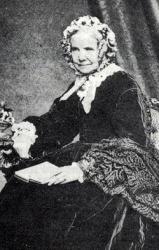
Charlotte Elliott

1789 - 1871 Author of "Just as I Am" in Christian Endeavor Hymns Elliott, Charlotte, daughter of Charles Elliott, of Clapham and Brighton, and granddaughter of the Rev. H. Venn, of Huddersfield, was born March 18, 1789. The first 32 years of her life were spent mostly at Clapham. In 1823 she removed to Brighton, and died there Sept. 22, 1871. To her acquaintance with Dr. C. Malan, of Geneva, is attributed much of the deep spiritual-mindedness which is so prominent in her hymns. Though weak and feeble in body, she possessed a strong imagination, and a well-cultured and intellectual mind. Her love of poetry and music was great, and is reflected in her verse. Her hymns number about 150, a large percentage of which are in common use. The finest and most widely known of these are, "Just as I am” and "My God, my Father, while I stray." Her verse is characterized by tenderness of feeling, plaintive simplicity, deep devotion, and perfect rhythm. For those in sickness and sorrow she has sung as few others have done. Her hymns appeared in her brother's Psalms & Hymns and elsewhere as follows:— (1) Psalms and Hymns for Public, Private, and Social Worship; selected by the Rev. H. V. Elliott, &c., 1835-48. In this Selection her signature is "C. E." (2) The Christian Remembrancer Pocket Book. This was originally edited by Miss Kiernan, of Dublin. Miss Elliott undertook the editorship in 1834. (3) The Invalid's Hymn Book. This was originally compiled by Miss Kiernan, but before publication was re-arranged by Miss Elliott, who also added 23 hymns in the first edition., 1834. These were increased in the following edition to the sixth in 1854, when her contributions amounted to 112. From that date no change was made in the work. (4) Hours of Sorrow Cheered and Comforted; or, Thoughts in Verse, 1836. (5) Morning and Evening Hymns for a Week, printed privately in 1839 for sale for a benevolent institution in Brighton, and published in 1842. (6) Thoughts in Verse on Sacred Subjects, 1869. Miss Elliott's Poems were published, with a Memoir by her sister, Mrs. Babington, in 1873, and an additional volume of Leaves from her unpublished Journals and Poems, also appeared in 1870. In addition to her more important hymns, which are annotated under their respective first lines, there are in common use:— i. From The Invalid's Hymn-book, 1834-1841:— 1. Clouds and darkness round about thee. (1841.) Resignation. 2. Not willingly dost Thou afflict [reject]. (1841.) Divine Chastisement. 3. O God, may I look up to Thee. (1841.) Teach us to Pray. 4. This is enough; although 'twere sweet. (1834.) On being debarred from Divine Worship. 5. With tearful eyes I look around. (1841.) The Invitation "Come Unto Me." ii. From H. V. Elliott's Psalms & Hymns, 1835-1839:— 6. Glorious was that primal light. Christmas. 7. Hail, holy day, most blest, most dear. Easter. 8. My only Saviour, when I feel. Jesus His people's Rest. 9. Now let our heavenly plants and flowers. Monday Morning. 10. The Sabbath-day has reached its close. Sunday Evening. iii. From Miss Elliott's Hours of Sorrow, 1836:— 11. Father, when Thy child is dying. Prayer for a Departing Spirit. 12. Leaning on Thee, my Guide, my Friend. Death Anticipated. 13. My God, is any hour so sweet? The Hour of Prayer. 14. O faint and feeble-hearted. Resignation enforced. 15. There is a holy sacrifice. The Contrite Heart. iv. From her Hymns for a Week, 1839:— 16. Guard well thy lips; none, none can know. Thursday Morning. 17. There is a spot of consecrated ground. Pt. i. 18. This is the mount where Christ's disciples see. Pt. ii. Monday Evening. 19. This is the day to tune with care. Saturday Morning. v. From Thoughts in Verse on Sacred Subjects, 1869:— 20. As the new moons of old were given. On a Birthday. 21. I need no other plea. Pt. i. 22. I need no prayers to saints. Pt. ii. Christ, All in All. 23. Jesus, my Saviour, look on me. Christ, All in All. Several of the earlier of these hymns were repeated in the later works, and are thus sometimes attributed to the wrong work. [Rev. James Davidson, B.A.] -- John Julian, Dictionary of Hymnology (1907) ================ Elliott, Charlotte, p. 328, i. Other hymns are:— 1. O how I long to reach my home. Heaven desired. From the Invalid's Hymn Book, 1834. 2. The dawn approaches, golden streaks. Second Advent. From Thoughts in Verse, &c, 1869. Of her hymns noted on p. 328, Nos. 6, 7, 8, 9, 10,11, and 13, all appeared in the 1st edition of Elliott's Psalms & Hymns, 1835. --John Julian, Dictionary of Hymnology, Appendix, Part II (1907) ======================== Elliott, Charlotte, pp. 328, i.; 1561, ii. Further research enables us to give amended dates to some of her hymns as follows:— 1. With tearful eyes I look around (No. 5). This is in the 1835 Appendix to The Invalid's Hymn Book. 2. My only Saviour, when I feel (No. 8). Also in the 1835 Appendix. 3. Father, when Thy child is dying (No. 11). In the 1833 Appendix. 4. I want that adorning divine, p. 559, i. In the Christian Remembrancer 1848, p. 22. --John Julian, Dictionary of Hymnology, New Supplement (1907)

William Cowper

1731 - 1800 Translator of "O Lord, how full of sweet content" in Book of Worship with Hymns and Tunes William Cowper (pronounced "Cooper"; b. Berkampstead, Hertfordshire, England, 1731; d. East Dereham, Norfolk, England, 1800) is regarded as one of the best early Romantic poets. To biographers he is also known as "mad Cowper." His literary talents produced some of the finest English hymn texts, but his chronic depression accounts for the somber tone of many of those texts. Educated to become an attorney, Cowper was called to the bar in 1754 but never practiced law. In 1763 he had the opportunity to become a clerk for the House of Lords, but the dread of the required public examination triggered his tendency to depression, and he attempted suicide. His subsequent hospitalization and friendship with Morley and Mary Unwin provided emotional stability, but the periods of severe depression returned. His depression was deepened by a religious bent, which often stressed the wrath of God, and at times Cowper felt that God had predestined him to damnation. For the last two decades of his life Cowper lived in Olney, where John Newton became his pastor. There he assisted Newton in his pastoral duties, and the two collaborated on the important hymn collection Olney Hymns (1779), to which Cowper contributed sixty-eight hymn texts. Bert Polman ============ Cowper, William, the poet. The leading events in the life of Cowper are: born in his father's rectory, Berkhampstead, Nov. 26, 1731; educated at Westminster; called to the Bar, 1754; madness, 1763; residence at Huntingdon, 1765; removal to Olney, 1768; to Weston, 1786; to East Dereham, 1795; death there, April 25, 1800. The simple life of Cowper, marked chiefly by its innocent recreations and tender friendships, was in reality a tragedy. His mother, whom he commemorated in the exquisite "Lines on her picture," a vivid delineation of his childhood, written in his 60th year, died when he was six years old. At his first school he was profoundly wretched, but happier at Westminster; excelling at cricket and football, and numbering Warren Hastings, Colman, and the future model of his versification. Churchill, among his contemporaries or friends. Destined for the Bar, he was articled to a solicitor, along with Thurlow. During this period he fell in love with his cousin, Theodora Cowper, sister to Lady Hesketh, and wrote love poems to her. The marriage was forbidden by her father, but she never forgot him, and in after years secretly aided his necessities. Fits of melancholy, from which he had suffered in school days, began to increase, as he entered on life, much straitened in means after his father's death. But on the whole, it is the playful, humorous side of him that is most prominent in the nine years after his call to the Bar; spent in the society of Colman, Bonnell Thornton, and Lloyd, and in writing satires for The Connoisseur and St. James's Chronicle and halfpenny ballads. Then came the awful calamity, which destroyed all hopes of distinction, and made him a sedentary invalid, dependent on his friends. He had been nominated to the Clerkship of the Journals of the House of Lords, but the dread of appearing before them to show his fitness for the appointment overthrew his reason. He attempted his life with "laudanum, knife and cord,"—-in the third attempt nearly succeeding. The dark delusion of his life now first showed itself—a belief in his reprobation by God. But for the present, under the wise and Christian treatment of Dr. Cotton (q. v.) at St. Albans, it passed away; and the eight years that followed, of which the two first were spent at Huntingdon (where he formed his lifelong friendship with Mrs. Unwin), and the remainder at Olney in active piety among the poor, and enthusiastic devotions under the guidance of John Newton (q. v.), were full of the realisation of God's favour, and the happiest, most lucid period of his life. But the tension of long religious exercises, the nervous excitement of leading at prayer meetings, and the extreme despondence (far more than the Calvinism) of Newton, could scarcely have been a healthy atmosphere for a shy, sensitive spirit, that needed most of all the joyous sunlight of Christianity. A year after his brother's death, madness returned. Under the conviction that it was the command of God, he attempted suicide; and he then settled down into a belief in stark contradiction to his Calvinistic creed, "that the Lord, after having renewed him in holiness, had doomed him to everlasting perdition" (Southey). In its darkest form his affliction lasted sixteen months, during which he chiefly resided in J. Newton's house, patiently tended by him and by his devoted nurse, Mrs. Unwin. Gradually he became interested in carpentering, gardening, glazing, and the tendance of some tame hares and other playmates. At the close of 1780, Mrs. Unwin suggested to him some serious poetical work; and the occupation proved so congenial, that his first volume was published in 1782. To a gay episode in 1783 (his fascination by the wit of Lady Austen) his greatest poem, The Task, and also John Gilpin were owing. His other principal work was his Homer, published in 1791. The dark cloud had greatly lifted from his life when Lady Hesketh's care accomplished his removal to Weston (1786): but the loss of his dear friend William Unwin lowered it again for some months. The five years' illness of Mrs. Unwin, during which his nurse of old became his tenderly-watched patient, deepened the darkness more and more. And her death (1796) brought “fixed despair," of which his last poem, The Castaway, is the terrible memorial. Perhaps no more beautiful sentence has been written of him, than the testimony of one, who saw him after death, that with the "composure and calmness" of the face there “mingled, as it were, a holy surprise." Cowper's poetry marks the dawn of the return from the conventionality of Pope to natural expression, and the study of quiet nature. His ambition was higher than this, to be the Bard of Christianity. His great poems show no trace of his monomania, and are full of healthy piety. His fame as a poet is less than as a letter-writer: the charm of his letters is unsurpassed. Though the most considerable poet, who has written hymns, he has contributed little to the development of their structure, adopting the traditional modes of his time and Newton's severe canons. The spiritual ideas of the hymns are identical with Newton's: their highest note is peace and thankful contemplation, rather than joy: more than half of them are full of trustful or reassuring faith: ten of them are either submissive (44), self-reproachful (17, 42, 43), full of sad yearning (1, 34), questioning (9), or dark spiritual conflict (38-40). The specialty of Cowper's handling is a greater plaintiveness, tenderness, and refinement. A study of these hymns as they stood originally under the classified heads of the Olney Hymns, 1779, which in some cases probably indicate the aim of Cowper as well as the ultimate arrangement of the book by Newton, shows that one or two hymns were more the history of his conversion, than transcripts of present feelings; and the study of Newton's hymns in the same volume, full of heavy indictment against the sins of his own regenerate life, brings out the peculiar danger of his friendship to the poet: it tends also to modify considerably the conclusions of Southey as to the signs of incipient madness in Cowper's maddest hymns. Cowper's best hymns are given in The Book of Praise by Lord Selborne. Two may be selected from them; the exquisitely tender "Hark! my soul, it is the Lord" (q. v.), and "Oh, for a closer walk with God" (q. v.). Anyone who knows Mrs. Browning's noble lines on Cowper's grave will find even a deeper beauty in the latter, which is a purely English hymn of perfect structure and streamlike cadence, by connecting its sadness and its aspiration not only with the “discord on the music" and the "darkness on the glory," but the rapture of his heavenly waking beneath the "pathetic eyes” of Christ. Authorities. Lives, by Hayley; Grimshaw; Southey; Professor Goldwin Smith; Mr. Benham (attached to Globe Edition); Life of Newton, by Rev. Josiah Bull; and the Olney Hymns. The numbers of the hymns quoted refer to the Olney Hymns. [Rev. H. Leigh Bennett, M.A.] --John Julian, Dictionary of Hymnology (1907) ================ Cowper, W. , p. 265, i. Other hymns are:— 1. Holy Lord God, I love Thy truth. Hatred of Sin. 2. I was a grovelling creature once. Hope and Confidence. 3. No strength of nature can suffice. Obedience through love. 4. The Lord receives His highest praise. Faith. 5. The saints should never be dismayed. Providence. All these hymns appeared in the Olney Hymns, 1779. --John Julian, Dictionary of Hymnology, Appendix, Part II (1907) ===================== Cowper, W., p. 265, i. Prof. John E. B. Mayor, of Cambridge, contributed some letters by Cowper, hitherto unpublished, together with notes thereon, to Notes and Queries, July 2 to Sept. 24, 1904. These letters are dated from Huntingdon, where he spent two years after leaving St. Alban's (see p. 265, i.), and Olney. The first is dated "Huntingdon, June 24, 1765," and the last "From Olney, July 14, 1772." They together with extracts from other letters by J. Newton (dated respectively Aug. 8, 1772, Nov. 4, 1772), two quotations without date, followed by the last in the N. & Q. series, Aug. 1773, are of intense interest to all students of Cowper, and especially to those who have given attention to the religious side of the poet's life, with its faint lights and deep and awful shadows. From the hymnological standpoint the additional information which we gather is not important, except concerning the hymns "0 for a closer walk with God," "God moves in a mysterious way," "Tis my happiness below," and "Hear what God, the Lord, hath spoken." Concerning the last three, their position in the manuscripts, and the date of the last from J. Newton in the above order, "Aug. 1773," is conclusive proof against the common belief that "God moves in a mysterious way" was written as the outpouring of Cowper's soul in gratitude for the frustration of his attempted suicide in October 1773. --John Julian, Dictionary of Hymnology, New Supplement (1907)

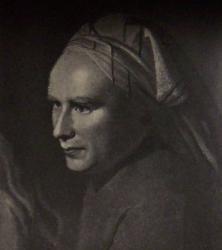
Jeanne Marie Bouvier de La Motte Guyon

1648 - 1717 Person Name: Jeanne M. B. Guyon Author of "O Lord, how full of sweet content" in Book of Worship with Hymns and Tunes Guyon, Madame. (1648-1717.) Jeanne Marie Bouyieres de la Mothe was the leader of the Quietist movement in France. The foundation of her Quietism was laid in her study of St. Francis de Sales, Madame de Chantal, and Thomas ä Kempis, in the conventual establishments of her native place, Montargis (Dep. Loiret), where she was educated as a child. There also she first learned the sentiment of espousal with Christ, to which later years gave a very marked development. She was married at sixteen to M. Guyon, a wealthy man of weak health, twenty-two years her senior, and her life, until his death, in 1676, was, partly from disparity of years, partly from the tyranny of her mother-in-law, partly from her own quick temper, an unhappy one. Her public career as an evangelist of Quietism began soon after her widowhood. Her first labours were spent in the diocese of Geneva, at Annecy, Gex, and Thonon, and in Grenoble. In 1686 she came to Paris, where she was at first imprisoned for her opinions in the Convent of St. Marie in the Faubourg St. Antoine, but released after eight months at the instance of Madame de Maintenon. She then rose to the zenith of her fame. Her life at all times greatly fascinated those around her; and the court, Madame de Maintenon, Fénelon (who ardently sympathised with her doctrine of pure and disinterested love of God), and Madame de Maintenon's College of Ladies at Cyr, came under the spell of her enthusiasm. But the affinity of her doctrines with those of Molinos, who was condemned in 1685, soon told against her. Her opinions were condemned by a commission, of which Bossuet was president. She then incurred Bossuet's displeasure by breaking the promises she had made to him to maintain a quiet attitude, and not return to Paris. She was imprisoned at Vincennes, Dec. 1695, and in the following year removed to Vaugirard, under a promise to avoid all receptions and correspondence, except by special permission. In 1698 she was immured in the Bastille, and not released until 1702. The Quietist controversy had meanwhile ruined the saintly Fénelon in the favour of Louis XIV., and obtained the condemnation by the Pope (1699) of his book (Maxima des Saints) written in defence of the doctrine of disinterested love. The remainder of Madame Guyon's life was spent in retirement with her daughter, the Marquise de Vaux, at Blois. She was visited there by numbers of persons of all ranks, some of them from foreign countries; and she had a considerable correspondence. She heard Mass daily, and died in full communion with the Roman Church. Madame Guyon's works fill 40 volumes. The principal ones are:— (1) Les Torrents (1683), a description of God's dealings with souls, founded on her own spiritual history. (2) Le Cantique des Cantiques interpreté selon le sens mystique. Le Moyen Court defaire oraison (1684). Her (3) Autobiography. (4) Poésies et Cantiques Spirituels (pub. 1722). The Cantiques Spirituels comprise nearly 900 pieces. The dates of composition are mainly to be gathered from internal evidence; some appear to have been written in the country; many were certainly written in her imprisonments at the Convent of St. Marie and Vincennes; many also apparently in her last sickness at Blois. They were composed to ballad tunes, and with an effortless facility, five or six hymns being often written in a day, while confined to her bed. She believed them to originate from the Divine impulse, more than from herself. The Cantiques are at once illustrated and interpreted by her Autobiography (which is one of the most remarkable books in the delineation of spiritual enthusiasm) and by her Commentary on the Song of Solomon, which applies its passionate love to the union of Christ with the soul. The leading ideas are, (1) the absorption of the soul, utterly emptied of self, into the Infinite Being of God: which is expressed at other times as the entire occupation of the soul, reduced to nothingness ("le néant, le rien"), and deprived of all independent will, by the Personality of God. The perfect state of the soul is one of complete passiveness; its energy is the energy of God directing and wielding the human powers; prayer becomes not the expression of desire, but rapt contemplation, wordless intercourse, and reception of the Divine Voice to the soul. (2) Pure and disinterested love of God, as Himself the Perfect Love, uninfluenced by any consideration of His favour and blessing either here or in eternity. If it be His will to cast the soul into hell itself, even this is to be accepted without fear or deprecation, if the Love of God remains as the joy of His creature. (3) The Love of God is consistent with terrible, often unintelligible or apparently capricious infliction of suffering and desertion on the soul He loves. A selection of 37 pieces from these poems was translated by the poet Cowper, in 1782 (published by his friend William Bull, in 1801). Bull had introduced the poems to him, and requested him to translate some of them. Whether Bull or Cowper selected the pieces for translation is uncertain, Their leading theme is that of Love unshaken, submissive, not asking for release, though under the extremity of desertion and suffering inflicted by God's Hand, which is heavy with anger and seems threatening destruction. Mixed with these awful seasons there are others, in which the manifestation of the Divine Love floods the soul with transport. The points of affinity with Cowper's thought are obvious; and Bull may have hoped that the spectacle of her unmoved belief in the hidden love of God might help to drive away the terrible delusion of his reprobation. The nervous style is very different from the flabby lines of the French: and Cowper designedly modified the amative metaphors, which, especially when they represent the dealings of Christ with her as His spouse, in language suggested by the caprice of Cupid or that of conjugal infidelity, are very painful and unconsciously irreverent. (See his letters to W. Unwin, 1782-3.) The most characteristic pieces are those beginning, "Twas my purpose on a day," "I suffer fruitless anguish," "Long plunged in sorrow," and "Source of Love, my brighter Sun." The translations from Madame Guyon's hymns which are in common use are mainly in American hymnbooks. They include :— 1. Ah! régnez sur toute la terre. Triumph of heavenly love desired. From her Cantique des Cantiques, vol. ii. No. 236. Translated by W. Cowper in his posthumous Poems Translated from the French of Madame de la Mothe Guion, fee., 1801, p. 14, in 3 stanzas of 4 lines, as, "Ah! reign, wherever man is found." It is in Spurgeon’s Our Own Hymnbook, 1866. 2. Amour que mon âme eat contente. The soul that loves God finds Him everywhere. From vol. ii., Cantique 108. Translated by W. Cowper, 1801, p. 33, in 9 stanzas of 4 lines, as "0 Thou, by long experience tried." This has been abbreviated and altered to "My Lord, how full of sweet content," in Hatfield's Church Hymn Book, N. Y., 1872, and others, and as "0 Lord, how full of sweet content," in the Andover Sabbath Hymn Book, 1858; the Songs for the Sanctuary, 1865, &c. It is also in use in its original form. Cowper's translation is more nervous than the original, but not always close thereto. 3. Divin objet, auquel nul objet n'est pareil. The Nativity. From her works, vol. iv., Poëmes Héroїques, 1. W. Cowper's translation of the poem (1801, p. 1) begins "Tis folly all—-let me no more be told." The cento in common use begins on p. 4 with "Infinite God, Thou great unrivall'd One," and is composed of 14 lines, not consecutive in all cases, and with extraneous additions. 4. Esprit Saint, viena dedans nos cœurs. Charity. From vol. ii., Cant. 96, beginning with stanza iii. Translated by W. Cowper, 1801, p. 26, as "Spirit of charity dispense.” This is in American common use. 5. Je n'aime plus d'un amour mien. Life in the love of God. From vol. iv., sect. 2, cant. 80. An anonymous translation of a part of this as "I love my God, but with no love of mine," appeared in the Andover Sabbath Hymn Book, 1858; the Church Praise Book, N. Y., 1881, &c, in 2 stanzas of 6 lines. Of this translation st. i. is apparently an expansion of the four first lines of this short hymn; stanza ii. may be only an expansion of the two remaining lines, or may have added to it some verse of a hymn not identified. Guyon, vol. iii., cant. 136, is somewhat similar, especially at its close, but is on a much larger scale. 6. L'amour me tient asservie. Divine love. From vol. ii., cant. 155. Translated by W. Cowper, 1801, p. 38, in 8 stanzas of 4 lines, as “Love is the Lord whom I obey." It is generally used in an abbreviated form. 7. La fontaine dans sa source. Living Water. From vol. iv., cant. 81. Translated by W. Cowper, 1801, p. 28, in 2 stanzas of 4 lines, as “The fountain in its source." In 1812 it was given in Collyer's Selections, No. 322, with an additional stanza by Collyer. This is the form of the text in common use in Great Britain and America. 8. Mon cœur depuis longtems plongé. The Joy of the Cross. From vol. iii., cant. 97. Translated by W. Cowper, 1801, pp. 81-84, in 12 stanzas of 6 lines, as "Long plung'd in sorrow, I resign." The following centos therefrom are in common use:— 1. "Long plunged in sorrow, I resign." 2. "O Lord, in sorrow I resign." 3. "Self-love no grace in sorrow sees." Of these centos 1 is in Spurgeon's Our Own Hymn Book, 1866; and 2 and 3 in American collections. 9. Nous portons un doux témoignage. God's Chosen. Vol. ii., cant. 78. Translated by W. Cowper, 1801, p. 35, as "How happy are the newborn race." This is usually altered to "O happy they, God's chosen race," as in Mercer, 1854, and others. 10. Souffrons, puisqu’l le faut, souffrons toute la vie. The love of God the end of Life. From vol ii., cant. 165. Translated by W. Cowper, 1801, p. 50, in 4 stanzas of 4 lines, as “Since life in sorrow must be spent." In the Songs for the Sanctuary, 1865, and other American collections it is altered to "If life in sorrow must be spent." In addition to these there are also translations of hymns in common use, the originals of which are attributed to Madame Guyon. These we have not identified in her poetical works:— 11. By suffering only can we know. Resignation. This is part of a poem written at nineteen. In a letter written from Blois in 1717, Madame Guyon thus alludes to it: "I remember that when I was quite young, only nineteen years of age, I composed a little song in which I expressed my willingness to suffer for God. ... A part of the verses to which I refer is as follows: ‘By suffering only can we know.’ ”The translation in the American Hymns for the Church of Christ, 1853, is anonymous. 12. I would love Thee, God and Father. This we cannot identify. It appeared in the Andover Sabbath Hymnbook, 1858, No. 649, in 5 stanzas of 4 lines. It is in Songs for the Sanctuary, 1865, Hatfield's Church Hymn Book, 1872, and others. 13. 'Tis not by skill of human art. Love. Not identified. The translation appeared in the Hymns for the Church of Christ, 1853, No. 606. [Rev. H. Leigh Bennett, M.A.] -- John Julian, Dictionary of Hymnology (1907) ===================== Guyon, Madame, p. 475, i. Other translations in common use are:— 1. From No. 3 on p. 476, i., the cento in Martineau's Hymns, 1840, No. 160, "Almighty Former of creation's plan" is taken. 2. Source of love, and Light of day. This in Martineau's Hymns, 1840, No. 425, is from W. Cowper's translation of Cantique 125, in 1801, p. 40. 3. To me remains nor place, nor time. This cento In Dale's English Hymn Book, 1874; "My country, Lord, art Thou alone," in Spurgeon's Our Own Hymn Book, 1866; and "All scenes alike engaging prove," are from No. 2 on p. 476, i. --John Julian, Dictionary of Hymnology, Appendix, Part II (1907)

Thomas Kelly

1769 - 1855 Author of "How Sweet to Leave the World Awhile" in Gloria Deo Kelly, Thomas, B.A., son of Thomas Kelly, a Judge of the Irish Court of Common Pleas, was born in Dublin, July 13, 1769, and educated at Trinity College, Dublin. He was designed for the Bar, and entered the Temple, London, with that intention; but having undergone a very marked spiritual change he took Holy Orders in 1792. His earnest evangelical preaching in Dublin led Archbishop Fowler to inhibit him and his companion preacher, Rowland Hill, from preaching in the city. For some time he preached in two unconsecrated buildings in Dublin, Plunket Street, and the Bethesda, and then, having seceded from the Established Church, he erected places of worship at Athy, Portarlington, Wexford, &c, in which he conducted divine worship and preached. He died May 14, 1854. Miller, in his Singers & Songs of the Church, 1869, p. 338 (from which some of the foregoing details are taken), says:— "Mr. Kelly was a man of great and varied learning, skilled in the Oriental tongues, and an excellent Bible critic. He was possessed also of musical talent, and composed and published a work that was received witli favour, consisting of music adapted to every form of metre in his hymn-book. Naturally of an amiable disposition and thorough in his Christian piety, Mr. Kelly became the friend of good men, and the advocate of every worthy, benevolent, and religious cause. He was admired alike for his zeal and his humility; and his liberality found ample scope in Ireland, especially during the year of famine." Kelly's hymns, 765 in all, were composed and published over a period of 51 years, as follows:— (1) A Collection of Psalms and Hymns extracted from Various Authors, by Thomas Kelly, A.B., Dublin, 1802. This work contains 247 hymns by various authors, and an Appendix of 33 original hymns by Kelly. (2) Hymns on Various Passages of Scripture, Dublin, 1804. Of this work several editions were published: 1st, 1804; 2nd, 1806; 3rd, 1809; 4th, 1812. This last edition was published in two divisions, one as Hymns on Various Passages of Scripture, and the second as Hymns adapted for Social Worship. In 1815 Kelly issued Hymns by Thomas Kelly, not before Published. The 5th edition, 1820, included the two divisions of 1812, and the new hymns of 1815, as one work. To the later editions of 1820, 1826, 1836, 1840, 1846, and 1853, new hymns were added, until the last published by M. Moses, of Dublin, 1853, contained the total of 765. As a hymn-writer Kelly was most successful. As a rule his strength appears in hymns of Praise and in metres not generally adopted by the older hymn writers. His "Come, see the place where Jesus lay" (from "He's gone, see where His body lay"),"From Egypt lately come"; “Look, ye saints, the sight is glorious"; "On the mountain's top appearing"; "The Head that once was crowned with thorns"; "Through the day Thy love has spared us"; and “We sing the praise of Him Who died," rank with the first hymns in the English language. Several of his hymns of great merit still remain unknown through so many modern editors being apparently adverse to original investigation. In addition to the hymns named and others, which are annotated under their respective first lines, the following are also in common use:— i. From the Psalms and Hymns, 1802:— 1. Grant us, Lord, Thy gracious presence. Commencement of Divine Worship. 2. Jesus, Immortal King, go on [display]. Missions. 3. Saviour, through the desert lead us. Divine Guidance Desired. 4. The day of rest once more [again] comes round. Sunday. 5. We've no abiding city here. Seeking Heaven. ii. From the Hymns on Varous Passages of Scripture, first edition, 1804 :— 6. Boundless glory, Lord, be thine. Praise for the Gospel. 7. By whom shall Jacob now arise? Epiphany. 8. Glory, glory to our King. Praise to Christ as King. 9. How pleasant is the sound of praise. Praise for Redemption. 10. How sweet to leave the world awhile. In Retirement, or For a Retreat. 11. Inform I long had bowed the knee. Jesus, the Saviour, or Praise for Salvation. 12. It is finished! sinners, hear it. Good Friday. 13. Jesus, the Shepherd of the sheep. The Good Shepherd. 14. Let reason vainly boast her power. Death. 15. Poor and afflicted, Lord, are Thine. Affliction. 16. Praise we Him to Whose kind favour. Close of Service. 11. Spared a little longer. Safety in God. 18. Stricken, smitten, and afflicted. Passiontide. ii. From the Hymns, &c, second edition, 1806:— 19. Far from us be grief and sadness. Joy of Believers. 20. Give us room that we may dwell. Missions. 21. Glory, glory everlasting. Praise of Jesus. 22. God has.turned my grief to gladness. Joy after Sorrow. 23. Happy they who trust in Jesus. Peace in Jesus. 24. Hark, the notes of angels singing. Angels praising Jesus. 25. Hark! 'tis a martial sound. Christian Life a Warfare. 26. I hear a sound [voice] that comes from far. The Gospel Message. 27. Jesus is gone up on high. Divine Worship. 28. Now [O] may the Gospel's conquering power. Home Missions. In the 1853 edition of the Hymns it begins “O may the Gospel's conqu'ring force." 29. O Zion, when I think on thee. Desiring Heaven. 30. Praise the Saviour, ye who know Him. Praise of Jesus. 31. See from Zion's sacred mountain. The Fountain of Life. 32. The atoning work is done. Jesus the High Priest. 33. Zion is Jehovah's dwelling. The Church of God. 34. Zion stands by hills surrounded. The Safety of the Church. 35. Zion's King shall reign victorious. Missions. iv. From the Hymns, &c, 3rd edition, 1809:— 36. Behold the Temple of the Lord. The Church a Spiritual Temple. 37. Blessed Fountain, full of grace. Fountain for Sin. 38. Brethren, come, our Saviour bids us. Holy Communion. 39. Fly, ye seasons, fly still faster. Second Advent Desired. 40. God of Israel, we adore Thee. Evening. 41. Gracious Lord, my heart is fixed. Trust and Peace. 42. Hark, a voice! it comes from heaven. Death. 43. Hark, that shout of rapt'rous joy. Second Advent. 44. If our warfare be laborious. Labour and Rest . 45. Lo, He comes, let all adore Him. Missions. 46. Nothing know we of the season. Time of Second Advent uncertain. 47. O had I the wings of a dove. Holiness and Heaven desired. 48. O where is now that glowing love. Despondency. 49. Our Father sits on yonder throne. God the Father. 50. Ours is a rich and royal Feast. Holy Communion. 51. Shepherd of the chosen number. Safety in the Good Shepherd. 52. We're bound for yonder land. Life, a Voyage. 53. Welcome sight! the Lord descending. The Advent. 54. What is life? 'tis but a vapour. Death anticipated. 55. Who is this that comes from Edom? Ascension. 56. Why those fears ? Behold 'tis Jesus. Stilling the Sea. 57. Without blood is no remission. Passiontide. 58. Yes, we trust the day is breaking. Missions. v. FromHymns: Not before Published, 1815:— 59. Behold the Lamb with glory crowned. Exaltation of Christ. 60. God is love, His word has said it. God is Love. 61. God of our salvation, hear us. Opening or Close of Divine Worship. 62. In Thy Name, O Lord, assembling. Commencement of Divine Worship. 63. Keep us, Lord, O [and] keep us ever. Divine Worship. 64. Let sinners saved give thanks, and sing. Praise for Salvation. 65. Praise the Lord Who died to save us. Passiontide. 66. Salvation is of God alone. God the Author of Salvation. 67. Saviour, come, Thy [saints] friends await Thee [are waiting] . Second Advent desired. 68. Sweet were the sounds that reached our ears. Divine Mercy. 69. We'll sing of the Shepherd that died. The Lost Sheep. 70. When we cannot see our way. Trust and Peace. 71. Who is this that calms the ocean? Stilling the Sea. vi. From the Hymns on F. Passages of Scripture, &c, eds. 1820 and 1826 :-— 72. Grace is the sweetest sound. Divine Grace. 73. Now let a great effectual door. Missions. 74. Now may the mighty arm awake. Missions. 75. Now may the Spirit from above. Home Missions. 76. Sing, sing His lofty praise. Praise of Jesus. 77. Sound, 6ound the truth abroad. Missions. 78. Speed Thy servants, Saviour, speed them. Departure of Missionaries. vii. From the Hymns on Various Passages, &c, 1836:— 79. Come, O Lord, the heavens rending. Prayer for Blessings. 80. The night is far spent, the day is at hand. The Second Advent. viii. From the Hymns on Various Passages, &c, circa 1845:— 81. Joyful be the hours today. Sunday. 82. Lord, behold us few and weak. Opening of Divine Service. 83. Meet Thy people, Saviour, meet us. Meetings for Prayer. 84. Saviour, send a blessing to us. Prayer for Blessings. 85. Sing of Jesus, sing for ever. Praise of Jesus. ix. From the Hymns on Various Passages, &c, 1853:— 86. Precious volume, what thou doest. Holy Scripture. 87. Unfold to us, O Lord, unfold. Divine aid to reading Holy Scripture. All these hymns, together with those annotated under their respective first lines are in the 1853 edition of Kelly's Hymns published in Dublin by M. Moses, and in London by Simpkin, Marshall & Co. Kelly's musical editions are issued by the same publishers. -- John Julian, Dictionary of Hymnology (1907) ================== Kelly, Thomas, p. 615, i. Other hymns in common use are: 1. Behold the Man! How glorious He. (1809.) Good Friday. 2. Jesus the [Thou] Shepherd of the Sheep. (1804.) Good Shepherd. 3. Saved ourselves by Jesu's blood. (1802.) For a Revival. 4. Saviour, 'tis to [unto] Thee. (1853*.) Lent. 5. See the vineyard lately planted. (1806.) Missions. Sometimes given as "See, O Lord, the vineyard planted." 6. Sing aloud to God our strength. (1809.) Praise to the Father. 7. Sing, sing His lofty praise. (1820.) Praise to Jesus. Sometimes as "Hail our eternal King" (p. 615, No. 76). 8. Sing of Him Who bore our guilt. (1853*.) Praise to Jesus. 9. Sing we praise to God above, God our Saviour, &c. (1815.) Praise for Divine Mercy. 10. Sing we praise to God above, Sing we praise, &c. (1853*.) Praise. 11. Sons of Zion, raise your songs. (1820-26) The Exalted Saviour. 12. The Lord Himself will keep. (1809.) From “We're bound for yonder land" (sec p. 615, No. 52.) 13. The God [Lord] of glory dwells on high. (1809.) Humility and Love of Christ. 14. The people of the Lord Are on their way, &c. (1820.) Life a Pilgrimage. 15. Thus saith God of His Anointed. (1809.) Missions. 16. 'Tis to us no cause of sorrow. (1815.) Resignation. 17. To the Ark away, or perish. (1815.) Safety in Jesus only. 18. To our Lord a throne is given. (1838.) Christ the King. 19. Trust ye in the Lord for ever. (1853*.) Trust in God. 20. We'll sing in spite of scorn. (1806.) Christmas. From this "The long-expected morn" is taken. 21. What tongue can tell, what fancy paint. (1806.) Saints in Glory 22. What were Sinai's awful wonders. (1809.) Advent. 23. Whence those sounds symphonious? (1815.) Christmas. 24. While in the [this] world we still [yet] remain. (1806.) Communion of Saints. 25. Yes, 'tis a rough and thorny road. (1809.) Resignation. Sometimes given as "Though rough and thorny be the way." The dates given above are those of the various editions of Kelly's Hymns. The date 1853* indicates that the hymn is in the 1853 ed. of the Hymns, but had also appeared in a previous edition which we have not seen. --John Julian, Dictionary of Hymnology, Appendix, Part II (1907)

Catherine Winkworth

1827 - 1878 Person Name: Catherine Winkworth, 1827-1878 Translator of "Oh, blest the house whate'er befall" in The Hymnal Catherine Winkworth (b. Holborn, London, England, 1827; d. Monnetier, Savoy, France, 1878) is well known for her English translations of German hymns; her translations were polished and yet remained close to the original. Educated initially by her mother, she lived with relatives in Dresden, Germany, in 1845, where she acquired her knowledge of German and interest in German hymnody. After residing near Manchester until 1862, she moved to Clifton, near Bristol. A pioneer in promoting women's rights, Winkworth put much of her energy into the encouragement of higher education for women. She translated a large number of German hymn texts from hymnals owned by a friend, Baron Bunsen. Though often altered, these translations continue to be used in many modern hymnals. Her work was published in two series of Lyra Germanica (1855, 1858) and in The Chorale Book for England (1863), which included the appropriate German tune with each text as provided by Sterndale Bennett and Otto Goldschmidt. Winkworth also translated biographies of German Christians who promoted ministries to the poor and sick and compiled a handbook of biographies of German hymn authors, Christian Singers of Germany (1869). Bert Polman ======================== Winkworth, Catherine, daughter of Henry Winkworth, of Alderley Edge, Cheshire, was born in London, Sep. 13, 1829. Most of her early life was spent in the neighbourhood of Manchester. Subsequently she removed with the family to Clifton, near Bristol. She died suddenly of heart disease, at Monnetier, in Savoy, in July, 1878. Miss Winkworth published:— Translations from the German of the Life of Pastor Fliedner, the Founder of the Sisterhood of Protestant Deaconesses at Kaiserworth, 1861; and of the Life of Amelia Sieveking, 1863. Her sympathy with practical efforts for the benefit of women, and with a pure devotional life, as seen in these translations, received from her the most practical illustration possible in the deep and active interest which she took in educational work in connection with the Clifton Association for the Higher Education of Women, and kindred societies there and elsewhere. Our interest, however, is mainly centred in her hymnological work as embodied in her:— (1) Lyra Germanica, 1st Ser., 1855. (2) Lyra Germanica, 2nd Ser., 1858. (3) The Chorale Book for England (containing translations from the German, together with music), 1863; and (4) her charming biographical work, the Christian Singers of Germany, 1869. In a sympathetic article on Miss Winkworth in the Inquirer of July 20, 1878, Dr. Martineau says:— "The translations contained in these volumes are invariably faithful, and for the most part both terse and delicate; and an admirable art is applied to the management of complex and difficult versification. They have not quite the fire of John Wesley's versions of Moravian hymns, or the wonderful fusion and reproduction of thought which may be found in Coleridge. But if less flowing they are more conscientious than either, and attain a result as poetical as severe exactitude admits, being only a little short of ‘native music'" Dr. Percival, then Principal of Clifton College, also wrote concerning her (in the Bristol Times and Mirror), in July, 1878:— "She was a person of remarkable intellectual and social gifts, and very unusual attainments; but what specially distinguished her was her combination of rare ability and great knowledge with a certain tender and sympathetic refinement which constitutes the special charm of the true womanly character." Dr. Martineau (as above) says her religious life afforded "a happy example of the piety which the Church of England discipline may implant.....The fast hold she retained of her discipleship of Christ was no example of ‘feminine simplicity,' carrying on the childish mind into maturer years, but the clear allegiance of a firm mind, familiar with the pretensions of non-Christian schools, well able to test them, and undiverted by them from her first love." Miss Winkworth, although not the earliest of modern translators from the German into English, is certainly the foremost in rank and popularity. Her translations are the most widely used of any from that language, and have had more to do with the modern revival of the English use of German hymns than the versions of any other writer. -- John Julian, Dictionary of Hymnology (1907) ============================ See also in: Hymn Writers of the Church

Anonymous

Person Name: Anon. Author of "Teach Me, O Lord, Thy Holy Way" in The Greatest Hymns In some hymnals, the editors noted that a hymn's author is unknown to them, and so this artificial "person" entry is used to reflect that fact. Obviously, the hymns attributed to "Author Unknown" "Unknown" or "Anonymous" could have been written by many people over a span of many centuries.

Pages


Export as CSV
It looks like you are using an ad-blocker. Ad revenue helps keep us running. Please consider white-listing Hymnary.org or getting Hymnary Pro to eliminate ads entirely and help support Hymnary.org.