

 My Starred Hymns
 My FlexScores
 My Hymnals
 My Purchased Files
Planning worship?
Check out our sister site, ZeteoSearch.org,
for 20+ additional resources related to your search.
- |
User Links
Person Results
Aurelius Clemens Prudentius
348 - 410 Person Name: Aurelius Clemens Prudentius, 348 - 413 Author of "Despair not, O heart, in thy sorrow" in Service Book and Hymnal of the Lutheran Church in America Marcus Aurelius Clemens Prudentius, "The Christian Pindar" was born in northern Spain, a magistrate whose religious convictions came late in life. His subsequent sacred poems were literary and personal, not, like those of St. Ambrose, designed for singing. Selections from them soon entered the Mozarabic rite, however, and have since remained exquisite treasures of the Western churches. His Cathemerinon liber, Peristephanon, and Psychomachia were among the most widely read books of the Middle Ages. A concordance to his works was published by the Medieval Academy of America in 1932. There is a considerable literature on his works.
--The Hymnal 1940 Companion
=============
Prudentius, Aurelius Clemens , with the occasional prefix of Marcus (cf. Migne, vol. lix. p. 593, and Dressel, p. ii. n), is the name of the most prominent and most prolific author of sacred Latin poetry in its earliest days. Of the writer himself we know nothing, or next to nothing, beyond what he has himself told us in a short introduction in verse to his works. From that source we learn that he was a Spaniard, of good family evidently, and that he was born A.D. 348 somewhere in the north of Spain, either at Saragossa, Tarragona, or Calahorra, but at which is left uncertain, by his applying the same expression to all, which if applied only to one would have fixed his place of birth. After receiving a good education befitting his social status he applied himself for some years to practising as a pleader in the local courts of law, until he received promotion to a judgeship in two cities successively:—
"Bis legum moderanrine
Frenos nobilium reximus urbium
Jus civile bonis reddidimus, terruimus reos;"
and afterwards to a post of still higher authority:
"Tandem militiae gradu
Evectum pietas principis extulit."
Archbishop Trench considers this last to have been "a high military appointment at court," and such the poet's own words would seem to describe; but it may well be doubted whether a civilian and a lawyer would be eligible for such employment; in which case we may adopt the solution of the difficulty offered in the Prolegomena to our author's works (Migne, vol. lix. p. 601):—
"Evectus indeest ad superiorem rnilitia? gradum, nimirum militia? civil is, palatinae, aut praesidialis, non bellicae, castrensis, aut cohortalis; nam ii qui officiis jure consultorum praesidum, rectorum et similium funguntur, vulgo in cod. Theod. militare et ad superiores militias ascendere dicuntur."
It was after this lengthened experience at a comparatively early age of positions of trust and power that Prudentius, conscience-smitten on account of the follies and worldliness that had marked his youth and earlier manhood, determined to throw up all his secular employments, and devote the remainder of his life to advancing the interests of Christ's Church by the power of his pen rather than that of his purse and personal position. Accordingly we find that he retired in his 57th year into poverty and private life, and began that remarkable succession of sacred poems upon which his fame now entirely rests. We have no reason however to regard him as another St. Augustine, rescued from the "wretchedness of most unclean living" by this flight from the temptations and engrossing cares of official life into the calm seclusion of a wholly devotional leisure. He had probably rather learnt from sad experience the emptiness and vanity for an immortal soul of the surroundings of even the high places of this world. As he himself expresses it:—
"Numquid talia proderunt
Carnis post obitum vel bona, vel mala,
Cum jam, quicquid id est, quod fueram, mors aboleverit?"
and sought, at the cost of all that the world holds dear, those good things which God hath prepared for them that love Him. Beyond the fact of his retirement from the world in this way, and the fruits which it produced in the shape of his voluminous contributions to sacred poetry, we have no further information about our author. To judge from the amount he wrote, his life must have been extended many years after he began his new career, but how long his life was or where he died we are not told. Probably he died circa 413. His works are:—
(1) Liber Cathemerinon. "Christian Day, as we may call it" W. S. Lilly, "Chapters in European History," vol. i. p. 208).
(2) Liber Peristephanon. "Martyrs' Garlands" (id.).
(3) Apotheosis. A work on the Divine Nature, or the Deification of Human Nature in Christ.
(4) Hamartigenia. A treatise on the Origin of Sin, directed against the Marcionites.
(5) Psychomachia or "The Spiritual Combat"-—an allegorical work.
(6) Libri contra Symmachum. A controversial work against the restoration in the Senate House at Rome of the altar of Victory which Gratian had removed. Symmachus had petitioned Valentinian II. for its restoration in 384, but the influence of St. Ambrose had prevailed against him at that time. In 392 the altar was restored, but removed again by Theodosius in 394. After the death of the latter the attempt to restore it was renewed by Arcadius and Honorius, and it was at that time that Prudentius wrote his first book. The second (for there are two) was written in 405. Fague considers that the first may date in 395.
(7) The Dittochseon = the double food or double Testament, is a wordy collection of 49 sets of four verses each, on Old and New Testament scenes.
Of these different works the most important are the first two, and it is from them that the Liturgical hymns enumerated below have been chiefly compiled. The general character of Prudentius's writings it is not easy fairly to estimate, and to judge by the wholesale laudation he obtains from some of his critics, and the equally unsparing censure of others, his judges have so found it. In venturing upon any opinion upon such a subject, the reader must bear in mind the peculiar position in which the period at which he was writing found the poet. The poetry of classical Rome in all its exact beauty of form had long passed its meridian, and was being replaced by a style which was yet in its infancy, but which burst forth into new life and beauty in the hands of the Mediaeval hymnologists.
Prudentius wrote before rhyming Latin verse was thought of, but after attention had ceased to be given to quantities. Under such circumstances it were vain to look for very finished work from him, and such certainly we do not find. But amidst a good deal of what one must confess is tasteless verbiage or clumsy rhetorical ornament-—however varied the metres he employs, numbering some 17—-there are also passages to be found, not unfrequently, of dramatic vigour and noble expression, which may well hold their own with the more musical utterances of a later date. He writes as a man intensely in earnest, and we may gather much from his writings concerning the points of conduct which were deemed the most important in Christian living at a time when a great portion of mankind were still the victims or slaves of a morality which, heathen at the best, was lowered and corrupted the more as the universality of its influence was more and more successfully challenged by the spread of the Gospel of Christ. If, there¬fore, we can scarcely go as far in our author's praise as Barth—-much given to lavish commendation—-who describes him as "Poeta eximius eruditissimus et sanctissimus scriptor; nemo divinius de rebus Christianis unquam scripsit"; or as Bentley—-not given to praise--who calls him the "Horace and Virgil of the Christians," we shall be as loath, considering under what circumstances he wrote, to carp at his style as not being formed on the best ancient models but as confessedly impure; feeling with Archbishop Trench that it is his merit that "whether consciously or unconsciously, he acted on the principle that the new life claimed new forms in which to manifest itself; that he did not shrink from helping forward that great transformation of the Latin language, which it needed to undergo, now
that it should be the vehicle of truths which, were all together novel to it." (Sacred Latin Poetry, 1874, p. 121.)
The reader will find so exhaustive an account of the various writings of Prudentius in the account given of him and them in Smith and Wace's Dictionary of Christian Biography, and Smith's Dictionary of Greek and Roman Biography, that it is only necessary in this work to refer very briefly to them as above. The poems have been constantly reprinted and re-edited, till the editor who produced the best edition we have of them, Albert Dressel (Leipsic, 1860), is able to say that his is the sixty-third.
The use made of Prudentius's poems in the ancient Breviaries and Hymnaries was very extensive. In the form of centos stanzas and lines wore compiled and used as hymns; and it is mainly from these centos, and not from the original poems, that the translations into English were made. Daniel, i., Nos. 103-115, gives 13 genuine hymns as having been in use for "Morning," "Christmas," "Epiphany," "Lent," "Easter," "Transfiguration," "Burial," &c, in the older Breviaries. ….Many more which were used in like manner have been translated into English. When to these are added the hymns and those which have not been translated into English, we realise the position and power of Prudentius in the hymnody of the Church. [Rev. Digby S. Wrangham, M.A.]
--John Julian, Dictionary of Hymnology (1907)
==============
Prudentius, A. C, p. 915, ii. Two somewhat full versions of Prudentius are: (1) The Cathemerinon and other Poems of Aurelius Prudentius Clemens in English Verse, Lond., Rivington, 1845; and (2) Translations from Prudentius. By Francis St. John Thackeray, M.A.. F.S.A. Lond., Bell & Sons, 1890.
--John Julian, Dictionary of Hymnology, Appendix, Part II (1907)
Aurelius Clemens Prudentius
Petrus Herbert
1530 - 1571 Author of "Denk, Mensch, wie dich dein Heiland liebet" in Sonntagschulbuch Herbert, Petrus, seems to have been a native of or resident at Fulnek in Moravia. He was ordained priest of the Brethren's Unity in 1562, became a member of the Select Council in 1567, and was latterly Consenior of the Unity. By the Unity he was entrusted with many important missions. He was sent as a deputy to confer with Calvin: and again in 1562 to arrange with Duke Christoph of Württemberg for the education at Tübingen of young men from the Bohemian Brethren. He was also one of the deputies sent to Vienna to present the revised form of the Brethren's Confession of Faith to the Emperor Maximilian II. in 1564, and in 1566 to present their new German Hymn Book. He died at Eibenschütz in 1571 (Koch, ii. 414, Allgemeine Deutsche Biographie, xiii. 263-264, &c.). Herbert was one of the principal compilers of the enlarged edition of the Brethren's German Hymn Book published in 1566 as their Kirchengeseng, and contributed to it some 90 hymns. In the ed. of 1639 there are 104 hymns marked as his. His hymns are distinguished by simplicity and beauty of style. A number are translations from the Bohemian. His hymns translated into English include:—
i. Die Nacht ist kommen drin wir ruhen sollen. [Evening] Written probably under the pressure of persecution and oppression. In the G. 2?., 1566, as above, in 5 stanzas of 7 lines (the last stanza being a versification of the Lord's Prayer), and thence in Wackernagel, iv. p. 442, and the Unverfälschter Liedersegen, 1851, No. 515. In J. H. Schein's Cantiona, 1627, it appears as No. 99, with an additional stanza not by Herbert, which reads—
Denn wir kein besser Zuflucht konnen haben,
,Als zu dir, 0 Herr, in dem Himmel droben,
Du veriest keinen, gibst Acht auff die deinen.
Die dich recht meyuen,"
This stanza is included as stanza v. in the version in Bunsen's Versuch, 1833, No. 43. Translated as:—
1. The night is come, wherein at last we rest, in full from Bunsen by Miss Winkworth in her Lyra Germanica, 2nd Ser., 1858, p. 77, repeated as No. 105 in R. Minton Taylor's Collection, 1872.
2. Now God be with us, for the night is closing, a good translation from Bunsen, in the original metre, by Miss Winkworth, as No. 170 in her Chorale Book for England, 1863, and repeated in her Christian Singers of Germany, 1869, p. 139. This version has been included in various recent collections, though generally abridged or altered, as in the Hymnary, 1872; Thring's Collection, 1882; and in America in the Evangelical Hymnal, N. Y., 1880, &c. In Laudes Domini, N.Y., 1884, it is in two parts (Nos. 209-210), the second beginning, "Father, Thy name be praised, Thy kingdom given." This is stanza vi. with an added doxology, as in the Hymnary, 1872.
Other translations are:—
(1) "The night comes apace," as No. 293 in pt. i. of the Moravian Hymn Book, 1754. (2) “Lo! evening's shades to sleep invite," by H. J. Buckoll, 1842, p. 64.
ii. 0 Christenmensch, merk wie sichs halt. [Faith] 1566, as above, in 18 stanzas of 4 lines, repeated in Wackernagel, iv. p. 433. In Bunsen's Versuch , 1833, No. 390 Allgemeine Gesang-Buch, 1846, No. 130), the hymn begins with stanza iii. altered to "Der Glaub’ ist ein lebend'ge Kraft," and consists of stanzas iii., viii., xi., xii., xvi., xviii. Bunsen calls it "a noble confession of the true Christian faith." Translated as:—
Faith is a living power from heaven. A good translation from Bunsen by Miss Winkworth in her Lyra Germanica, 2nd ser., 1858, p. 160, and thence in her Chorale Book for England, 1863. It is repeated, more or less altered and abridged, in Kennedy, 1863; and in America in the Presbyterian Hymnal, 1874, Baptist Service of Song, 1871, &c.
ii. Hymns not in English common use:—
iii. Des Herren Wort bleibt in Ewigkeit. [Holy Scripture.] 1566, as above, in 25 stanzas, and in Wackernagel, iv. p. 432. Translated as "God's holy Word, which ne’er shall cease," by J. Swertner, as No. 3 in the Moravian Hymn Book1789 (1849, No. 2).
iv. Fürchtet Gott, 0 lieben Leut. [Martyrs.] 1566, as above, in 13 stanzas, and in Wackernagel, iv. p. 429. The translations are, (i.) "O love God, ye people dear," as No. 267 in pt. i. of the Moravian Hymn Book, 1754. (2) "O exalt and praise the Lord" (from the version in the Brüder Gesang-Buch1778, beginning "Liebet Gott"), as No. 871 in the Moravian Hymn Book, 1789 (1886, No. 1306).
v. Lasst uns mit Lust und Freud aus Olauben singen. [Eternal Life.] A fine hymn on the Joys of Heaven. 1566, as above, in 12 stanzas, and in Wackernagel, iv. p. 447. Translated as "In faith we sing this song of thank-fulness," by Mrs. Bevan, 1858, p. 34.
vi. 0 höchster Trost, heiliger Geist [Whitsuntide.] 1566, as above, in 13 stanzas, and Wackernagel, iv. p. 407. The translations are, (1) "O highest comfort, Holy Ghost," as No. 262 in pt. i. of the Moravian Hymn Book, 1754. (2) "O Comforter, God Holy Ghost," as No. 203 in the Moravian Hymn Book, 1789 (1849, No. 265).
Besides the above a number of hymns by Herbert (all of which appeared in the Kirchengeseng, 1566, and are included in Wackernagel’s vol. iv.) were translated in pt. i. of the Moravian Hymn Book, 1754. The numbers in the 1754 are 166, 259, 263, 264, 265, 266, 274, 277, 281, 287, and 294. [Rev. James Mearns, M.A.]
-- John Julian, Dictionary of Hymnology
Petrus Herbert
Hans Adolf Brorson
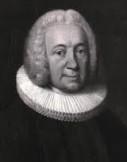
1694 - 1764 Person Name: Hans Adolf Brorson Author of "Now found is the fairest of Roses" in The Concordia Hymnal
Hans Adolf Brorson
Edward T. Horn
Person Name: Edward Traill Horn III, b. 1909 Translator of "Despair not, O heart, in thy sorrow" in Service Book and Hymnal of the Lutheran Church in America
Edward T. Horn
Peder J. Hegelund
Person Name: P. Hegelund Translator of "Med Sorgen og Klagen hold Maade" in M. B. Landstads Kirkesalmebog og "Nokre Salmar" ved Professor Dr. E. Blix, samt følgende tillæg
Peder J. Hegelund
J. C. Aaberg
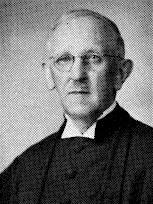
1877 - 1970 Translator of "Now found is the fairest of Roses" in The Concordia Hymnal Jens Christian Aaberg (b. Moberg, Denmark, 1877; d. Minneapolis, MN, 1970) immigrated to the United States in 1901. Educated at Grand View College and Seminary in Des Moines, Iowa, he entered the ministry of the Danish Evangelical Lutheran Church in America and served congregations in Marinette, Wisconsin; Dwight, Illinois; and Minneapolis, Minnesota. Aaberg wrote Hymns and Hymnwriters of Denmark (1945), translated at least eighty hymns from Danish into English, and served on four hymnal committees. In 1947 King Frederick of Denmark awarded him the Knight Cross of Denmark.
--Psalter Hymnal Handbook, 1987
J. C. Aaberg
Ole T. Arneson
1853 - 1917 Person Name: O. T. Sanden Translator of "Despair not, O heart, in thy sorrow" in The Concordia Hymnal Ole T. Arneson was born in Highland township, Winnesheik county, Iowa, May 4, 1853, to Tollef Arneson and Margrete Olson (Rudringen) Sanden, farmers.
Mr. Arneson attended the common school until he was confirmed in the Lutheran church. He then took the elementary course at the state normal school, Winona, Minn., from where he graduated Dec. 31, 1871.
He now commenced teaching school in his home district and later continued teaching in various places. For three years he was principal of the graded school at Spring Grove, Minn. In the spring of 1879 he moved to North Dakota and took up a homestead near Hatton, Traill county. Here he taught school part of the time while holding the claim, which he proved up in 1884 and sold in 1886, when he moved to Decorah, la. He was then employed in the mailing department of "Decorahposten" until Sept. 1887, when he accepted a position as shipping and mailing clerk with the Lutheran Publishing House. . With this institution he remained 17 years. In October 1904 he accepted a position as manager of "Skandinaven's" Book Department, of which he is still in charge.
July 7, 1877, Mr. Arneson was joined in holy wedlock to Miss Inger Tobiason.
From A History of the Norwegians in Illinois, compiled and edited by A. E. Strand. Published by John Anderson Publishing Company, 1905
Ole T. Arneson
Torstein O. Kvamme
1906 - 1983 Person Name: T. O. K. Translator of "The Fairest of Roses" in The Christmas Carolers' Book in Song and Story
Torstein O. Kvamme




