You help make Hymnary.org possible. More than 10 million people from 200+ countries found hymns, liturgical resources and encouragement on Hymnary.org in 2025, including you. Every visit affirms the global impact of this ministry.

If Hymnary has been meaningful to you this year, would you take a moment today to help sustain it? A gift of any size—paired with a note of encouragement if you wish—directly supports the server costs, research work and curation that keep this resource freely available to the world.

Give securely online today, or mail a check to:
Hymnary.org
Calvin University
3201 Burton Street SE
Grand Rapids, MI 49546

Thank you for your partnership, and may the hope of Advent fill your heart.

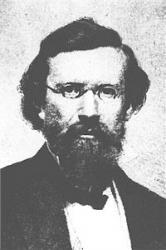
Joseph Philbrick Webster

Joseph Philbrick Webster
www.hymntime.com/tch
Short Name: Joseph Philbrick Webster
Full Name: Webster, Joseph Philbrick, 1819-1875
Birth Year: 1819
Death Year: 1875

Webster composed and performed popular music. He studied with Lowell Mason and was active musically in New York, New Jersey and Connecticut, and directed a quartet company called the Euterpeans. In 1851, he moved to Madison, Indiana, followed by Chicago, Illinois (1855); Racine, Wisconsin (1856); and finally Elkhorn, Wisconsin (1859).

Webster wrote over a thousand ballads and many hymns. His most famous secular song was his 1857 Lorena (words by Henry D. L. Webster). In its day, it was said to have been second in popularity only to Stephen Foster’s Suwanee River, and was sung by thousands of soldiers on both sides of the American civil war. An instrumental version appears in the 1939 film Gone with the Wind, when Scarlett O’Hara is manning the stall at the charity dance in her mourning outfit. The tune also made an appearance in two John Ford films: The Searchers, 1956, arranged by Max Steiner, and The Horse Soldiers, 1959, arranged by David Buttolph.

(http://www.hymntime.com/tch)

Wikipedia Biography

Joseph Philbrick Webster, also known as J.P. Webster (February 18, 1819 – January 18, 1875), was an American songwriter and composer most notable for his musical compositions during the antebellum and American Civil War periods of United States history, and his post-war hymns.

Data Sources

Suggestions or corrections? Contact us
It looks like you are using an ad-blocker. Ad revenue helps keep us running. Please consider white-listing Hymnary.org or getting Hymnary Pro to eliminate ads entirely and help support Hymnary.org.