

 My Starred Hymns
 My FlexScores
 My Hymnals
 My Purchased Files
Planning worship?
Check out our sister site, ZeteoSearch.org,
for 20+ additional resources related to your search.
- |
User Links
Person Results
John Henry Newman
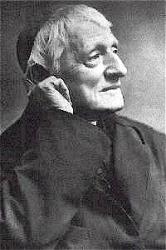
1801 - 1890 Person Name: J. H. Newman Author of "Lead, Kindly Light" in Great Songs of the Church Newman, John Henry , D.D. The hymnological side of Cardinal Newman's life and work is so small when compared with the causes which have ruled, and the events which have accompanied his life as a whole, that the barest outline of biographical facts and summary of poetical works comprise all that properly belongs to this work. Cardinal Newman was the eldest son of John Newman, and was born in London, Feb. 21, 1801. He was educated at Ealing under Dr. John Nicholas, and at Trinity College, Oxford, where he graduated in honours in 1820, and became a Fellow of Oriel in 1822. Taking Holy Orders in 1824, he was for a short time Vice-Principal of St. Alban's Hall, and then Tutor of Oriel. His appointment to St. Mary's, Oxford, was in the spring of 1828. In 1827 he was Public Examiner, and in 1830 one of the Select University Preachers. His association with Keble, Pusey, and others, in what is known as "The Oxford Movement," together with the periodical publication of the Tracts for the Times, are matters of history. It is well known how that Tract 90, entitled Bernards on Certain Passages in the Thirty-nine Articles, in 1841, was followed by his retirement to Littlemore; his formal recantation, in February, 1843, of all that he had said against Rome; his resignation in September of the same year of St. Mary's and Littlemore; and of his formal application to be received into the communion of the Church of Rome, Oct. 8, 1845. In 1848 he became Father Superior of the Oratory of St. Philip Neri, at Birmingham; in 1854 Rector of the newly founded Roman Catholic University at Dublin; and in 1858 he removed to the Edgbaston Oratory, Birmingham. In 1879 he was created a Cardinal, and thus received the highest dignity it is in the power of the Pope to bestow. Cardinal Newman's prose works are numerous, and his Parochial Sermons especially being very popular. His Apologia pro Vita Sua, 1864, is a lucid exposition and masterly defence of his life and work.
Cardinal Newman's poetical work began with poems and lyrical pieces which he contributed to the British Magazine, in 1832-4 (with other pieces by Keble and others), under the title of Lyra Apostolica. In 1836 these poems were collected and published under the same title, and Greek letters were added to distinguish the authorship of each piece, his being δ. Only a few of his poems from this work have come into use as hymns. The most notable is, "Lead, kindly Light". His Tract for the Times, No. 75, On the Roman Breviary, 1836, contained translations of 14 Latin hymns. Of these 10 were repeated in his Verses on Religious Subjects, 1853, and his Verses on Various Occasions, 1865, and translations of 24 additional Latin hymns were added. Several of these translations are in common use, the most widely known being "Nunc Sancte nobis" ("Come, Holy Ghost, Who ever One"). His collection of Latin hymns from the Roman and Paris Breviaries, and other sources was published as Hymni Ecclesiae, in 1838, and again in 1865. His Dream of Gerontius, a poem from which his fine hymn, "Praise to the Holiest in the height," is taken, appeared in his Verses on Various Occasions, in 1868. Cardinal Newman's influence on hymnology has not been of a marked character. Two brilliant original pieces, and little more than half a dozen translations from the Latin, are all that can claim to rank with his inimitable prose.
--John Julian, Dictionary of Hymnology (1907)
=================
Newman, John Henry, p. 822, ii. He died at Edgbaston, Birmingham, Aug. 11, 1890.
--John Julian, Dictionary of Hymnology, Appendix, Part II (1907)
==============
Newman, Card. J. H., pp. 802, ii.; 1581, ii. The following are also in use at the present time, but, except No. 13, almost exclusively in R. C. collections. The dates in brackets are those given in Newman's Verses, 1868; all thus marked were composed in the Birmingham Oratory at these dates:—
i. In the Rambler, 1850.
1. In the far North our lot is cast. [S. Philip Neri.] (1850.) March, 1850, p. 250. In the Birmingham Oratory Hymn Book, 1857 and 1906, it begins, " On Northern coasts," and in the Parochial Hymn Book, 1880, with st. ii. " Founder and Sire! to mighty Rome."
2. The Angel-lights of Christmas morn. [Candlemas.] (1849.) March, 1850, p. 251.
3. There sat a Lady all on the ground. [B. V. M.] (1849.) May, 1850, p. 425.
ii. Verses, 1853.
4. All is Divine which the Highest has made. [For an inclement May.] (1850.) 1853, p. 128.
5. Green are the leaves, and sweet the flowers. [May.] (1850.) 1853, p. 125.
6. My oldest friend, mine from the hour. [Guardian Angel] (1853.) 1853, p. 12.
7. The holy monks conceal'd from men. [S. Philip Neri.] (1850.) 1853, p. 134.
8. The one true Faith, the ancient Creed. [The Catholic Faith.] 1853, p. 140.
9. This is the saint of sweetness and compassion. [S. Philip Neri.] 1853, p. 136. Rewritten (1857) as "This is the saint of gentleness and kindness" in the Birmingham Oratory Hymn Book, 1857, No. 49.
iii. Birmingham Oratory Hymn Book, 1857.
10. Help, Lord, the souls which Thou hast made. [The Faithful Departed.] (1857.) 1857, No. 76.
iv. Birmingham Oratory H. Book, 1862.
11. I ask not for fortune, for silken attire. [S. Philip Neri.] (1857.) 1862, No. 54.
12. Thou champion high. [S. Michael.] (1862.) 1862, No. 41.
v. Dream of Gerontius, 1866.
13. Firmly I believe and truly. [The Faith of a Christian.] 1866, p. 9; Verses, 1868, p. 318; The English Hymnal 1906. [Rev. James Mearns, M.A.]
--John Julian, Dictionary of Hymnology, New Supplement (1907)
-----
John Henry Newman was born in London, in 1801. He studied at Trinity College, Oxford, graduating B.A. in 1820, and was subsequently Fellow of Oriel College. In 1825, he became Vice Principal of S. Alban's Hall, and was Tutor of his college for several years. In 1828, he became incumbent of S. Mary's, Oxford, with the chaplaincy of Littlemore. In 1842, he went to preside over a Brotherhood he had established at Littlemore. He was the author of twenty-four of the "Tracts for the Times," amongst them the celebrated Tract No. 90, which brought censure upon its author. In 1845, he left the Church of England and entered the Church of Rome. He was appointed Father Superior of the Oratory of S. Philip Neri, at Birmingham, and in 1854, Rector of the new Roman Catholic University at Dublin, an office he filled till 1858. He has published a large number of works.
--Annotations of the Hymnal, Charles Hutchins, M.A. 1872.
====================
John Henry Newman
A. J. Showalter
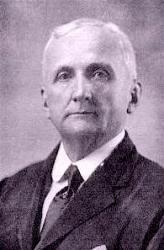
1858 - 1924 Composer of "[Lead, kindly Light, amid th'encircling gloom]" in Great Songs of the Church Anthony Johnson Showalter USA 1858-1924/ Born in Cherry Grove, VA, he became an organist, gospel music composer, author, teacher, editor, and publisher. He was taught by his father and in 1876 received training at the Ruebush-Kieffer School of Music, Dayton, VA. He also attended George Root’s National Normal school at Erie, PA, and Dr Palmer’s International Normal at Meadville, PA. He was teaching music in shape note singing schools by age 14. He taught literary school at age 19, and normal music schools at age 22, when he also published his first book. In 1881 he married Lucy Carolyn (Callie) Walser of TX, and they had seven children: Tennie, Karl, Essie, Jennie, Lena, Margaret, and Nellie. At age 23 he published his “Harmony & composition” book, and years later his “Theory of music”. In 1884 he moved to Dalton, GA, and in 1890 formed the Showalter Music Company of Dalton. His company printed and published hymnals, songbooks, schoolbooks, magazines, and newspapers, and had offices in Texarkana, AR, and Chattanooga, TN. In 1888 he became a member of the M T N A (Music Teachers National Association) and was vice-president for his state for several years. In 1895 he went abroad to study methods of teachers and conductors in Europe. He held sessions of his Southern Normal Music Institute in a dozen or more states. He edited “The music teacher & home magazine” for 20 years. In 1895 he issued his “New harmony & composition” book. He authored 60+ books on music theory, harmony, and song. He published 130+ music books that sold over a million copies. Not only was he president of the A J Showalter Music Company of Dalton, GA, but also of the Showalter-Patton Company of Dallas, TX, two of the largest music publishing houses in the American south. He was a choir leader and an elder in the First Presbyterian Church in Dalton (and his daughter, Essie, played the organ there). He managed his fruit farm, looking after nearly 20,000 trees , of which 15,000 are the famous Georgia Elberta peaches, the rest being apples, plums, pecans, and a dozen other varieties of peaches. He was also a stockholder and director of the Cherokee Lumber Company of Dalton, GA, furnishing building materials to a large trade in many southern, central and eastern states. He died in Chattanooga, TN, and is buried in Dalton, GA. He loved hymns, and kept up with many of his students over the years, writing them letters of counsel and encouragement. In 2000 Showalter was inducted into the Southern Gospel Music Hall of Fame.
Note: Showalter received two letters one evening from former music students, both of who were grieving over the death of their wives. He had heard a sermon about the arms of Moses being held up during battle, and managed to form a tune and refrain for a hymn, but struggled to find words for the verses that fit. He wrote to his friend in OH, Rev Elisha Hoffman, who had already composed many hymns and asked if he could write some lyrics, which he gladly did.
John Perry
A. J. Showalter




