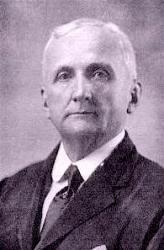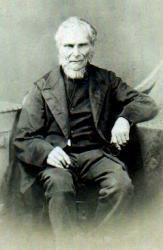
1803 - 1877 Person Name: Burton Author of "Oh, Thou That Hearest Prayer" in Praise and Rejoicing Burton, John, jun, a popular hymn-writer for children, was b. July 23, 1803, at Stratford in Essex, in which place he carried on business as a cooper for about 50 years. He died in 1877. Mr. Burton was a member of the Congregational body, and a Deacon of the Chapel where he attended, His contributions to hymnody began in 1822, when he sent his first production to the Evangelical Magazine. He continued to contribute to that and other periodicals for many years, his signature in the former being "Essex, J. B.," and in the Child's Companion, J. B. Essex." His publications are:—
(1) One Hundred Original Hymns for the Young, 1850; (2) Hymns for Little Children, 1851; (3) The Child-Life of David; (4) The Book of Psalms in English Verse, 1871; (5) Scripture Characters in Verse, &c.
His Hymns for Little Children, containing 54 pieces, has been republished in Philadelphia, U.S.A., as My Own Hymn Book. He also contributed to the Union Hymn Book for Scholars, 1840. Some of his hymns have attained a measure of popularity, including “Thou that nearest prayer," "Come, let us sing our Maker's praise," and many others. In addition, the following are also in common use:—
1. Children who are gone to glory. Saints' days.
2. Children, you have gone astray. Invitation. Published in the Child's Companion, April, 1834, and his One Hundred Hymns, 1850, &c.
3. Come, let us sing our Maker's praise. For Orphans. In his One Hundred Hymns, 1850, No. 86, in 6 stanzas of 4 lines.
4. Father of mercies, hear; On us, &c. Influence implored. In his One Hundred Hymns,1850, No. 97, in 6 stanzas of 4 lines; and partly rewritten in 2 stanzas of 8 lines. In Kennedy, 1863, No. 1209, beginning: "Father Of mercies, hear The song Thy children raise.
5. God is love, delightful truth. Love of God. Published in the Child's Companion, Aug., 1835, and again in his One Hundred Hymns, 1850, No. 20, in 5 stanzas of 4 lines. It is given in the Silver Street Sunday School Hymn Book 1880.
6. Happy would it be for me. Early Piety.
7. Hark! a still small voice is heard. Christ's love for Children. This appeared in the Child's Companion, July, 1836, and the revised edition of the Union Hymn Book,&c, 1850, No. 14, in 4 stanzas of 6 lines. It is in various collections, including the Methodist Sunday School Hymn Book, 1879, and others.
8. Heavenly Father, we draw near Thee. Sunday Schools. Published in his One Hundred Hymns,1850, &c.
9. I often say my prayers. Prayer. Also from the Union H. Book, I84o; into Major's Bk. of Praise, &c.
10. None is like God, who reigns above. Omnipresence. Dated 1849, and given in his One Hundred Hymns, No. 4, in 5 stanzas of 4 lines. It is reprinted in several school collections, as Stevenson's School Hymnal, 1880, No. 139.
11. Pilgrims we are and strangers. Life a Pilgrimage. From the Evangelical Magazine, 1829, 5 stanzas of 8 lines, commencing “Now let our praise be given," and headed "The Pilgrim's Song," into the Baptist Psalms & Hymns, 1858, No. 553, in 4 stanzas of 8 lines, st. i. being omitted.
12. Remember thy Creator now. Early Piety. From the Child's Companion, Sept. 1833, into his One Hundred Hymns, 1850, and the Methodist Sunday School Hymn Book, No. 243.
13. Saviour, while my heart is tender. Early Piety. Also from the One Hundred Hymns. It is in the Baptist Hymnal, 1879; Horder's Congregational Hymns, 1884; and others.
14. That kind eye which cannot sleep. Omniscience. But little known.
15. The Lord attends when children pray. Prayer. 1st printed in the Child's Companion, July, 1835, and again in Dec. 1837, and in the revised edition of the Union Hymn Book, 1840; and his One Hundred Hymns, 1850, No. 31, in 5 stanzas of 4 lines. It is in several collections, including Dr. Allon's Children's Worship, 1878, &c.
16. Though we are young our sins are great. Lent. In the revised edition of the Union Hymn Book, 1840; and his One Hundred Hymns, 1850 (in the latter as "Though I am," &c), No. 9, in 6 stanzas of 4 lines. It is included in Major's Book of Praise, &c.
17. We do not love Thee as we ought. Lent. In the Methodist Sunday School Hymn Book, 1879, No. 286.
18. Why did Jesus come from heaven? Passiontide. From his One Hundred Hymns, 1850, No. 61, in 4 stanzas of 6 lines, into Major's Book of Praise.
19. Why should we spend our youthful days? Youthful Piety. Printed in the Child's Companion, May, 1835, in his One Hundred Hymns, 1850, and as No. 252 in the Methodist. Sunday School Hymn Book, 1879.
--John Julian, Dictionary of Hymnology (1907)
John Burton


 My Starred Hymns
 My FlexScores
 My Hymnals
 My Purchased Files