You help make Hymnary.org possible. More than 10 million people from 200+ countries found hymns, liturgical resources and encouragement on Hymnary.org in 2025, including you. Every visit affirms the global impact of this ministry.

If Hymnary has been meaningful to you this year, would you take a moment today to help sustain it? A gift of any size—paired with a note of encouragement if you wish—directly supports the server costs, research work and curation that keep this resource freely available to the world.

Give securely online today, or mail a check to:
Hymnary.org
Calvin University
3201 Burton Street SE
Grand Rapids, MI 49546

Thank you for your partnership, and may the hope of Advent fill your heart.

Person Results

Tune Identifier:"^olives_brow_bradbury$"
In:people

Planning worship? Check out our sister site, ZeteoSearch.org, for 20+ additional resources related to your search.
Showing 1 - 10 of 29Results Per Page: 102050

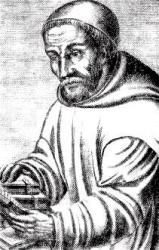
Rabanus Maurus

776 - 856 Author of "Come, O Creator, Sprit blest!" in Evangelical Lutheran hymnal Rabanus Maurus (c. 776-856) or Hrabanus Magnentius Maurus, was born of noble parents at Mainz, and educated at Fulda and Tours under Alcuin, who is reputed to have given him the surname, Maurus, after the saint of that name. In 803, he became director of the school at the Benedictine Abbey at Fulda. He was ordained priest in 814, spending the following years in a pilgrimage to Palestine. In 822, he became Abbott at Fulda, retiring in 842. In 847, he became archbishop of Mainz. He died at Winkel on the Rhine, February 4, 856. This distinguished Carolingian poet-theologian wrote extensive biblical commentaries, the Encyclopaedic De Universo, De Institutione Clericorum, and other works which circulated widely during the Middle Ages. Some of his poems, with English translations, are in Helen Waddell's Mediaeval Latin Lyrics. He is the author of: O Come, Creator Spirit, come Christ, the fair glory of the holy angels Come, Holy Ghost, our souls inspire Come, Holy Ghost, Creator blest Creator Spirit, by whose aid --The Hymnal 1940 Companion, New York: The Church Pension Fund (1949) =========================== Hrabanus (Rabanus) Maurus, son of one Ruthard, was born probably at Mainz, about 776. At an early age he was sent to the Monastery of Fulda to receive a religious education. In 801 he was ordained Deacon, and the following year he went to the monastic school of St. Martin at Tours to study under Alcuin, a celebrated teacher of that time, who gave to Hrabanus the name of Maurus to which Hrabanus added Magnentius. On his return to Fulda in 804 he became the head of the school connected with the Monastery. Towards him Ratgar the abbot showed great unkindness, which arose mainly from the fact that Ratgar demanded the students to build additions to the monastery, whilst Hrabanus required them at the same time for study. Hrabanus had to retire for a season, but Ratgar's deposition by Ludwig the Pious, in 817, opened up the way for his return, and the reopening of the school In the meantime, in 814, he had been raised to the Priesthood. Egil, who succeeded Ratgar as abbot, died in 822, and Hrabanus was appointed in his stead. This post he held for some time, until driven forth by some of the community. In 847, on the death of Archbishop Otgar, Ludwig the younger, with whom Hrabanus had sided in his demand for German independence as against the imperialism of his elder brother Lothar, rewarded him with the Archbishopric of Mainz, then the metropolitan see of Germany. He held this appointment to his death on Feb. 4, 856. He was buried first in St. Alban's, Mainz, and then, during the early days of the Reformation, in St. Maurice, Halle, possibly because of the opposition he is known to have made to the doctrine of Transubstantiation. With German historians Hrabanus is regarded as the father of the modern system of education in that country. His prose works were somewhat numerous, but the hymns with which his name is associated are few. We have the "Christe sanctorum decus Angelorum”; “Tibi Christe, splendor Patris”; and the "Veni Creator Spiritus”; but recent research convinces us that the ascription in each case is very doubtful; and none are received as by Hrabanus in Professor Dümmler's edition of the Carmina of Hrabanus in the Poetae Latini aevi Carolini, vol. ii. 1884. Dümmler omits them even from the "hymns of uncertain origin." --John Julian, Dictionary of Hymnology, Appendix I (1907) ======================= http://en.wikipedia.org/wiki/Rabanus_Maurus

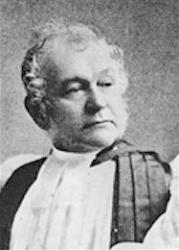
A. Cleveland Coxe

1818 - 1896 Author of "O, who like thee so calm, so bright" in The Century Hymnal Coxe, Arthur Cleveland, D.D. LL.D. One of the most distinguished of American prelates, and son of an eminent Presbyterian minister, the Rev. Samuel H. Cox, D.D., was born at Mendham, New Jersey, May 10,1818. Graduating at the University of New York in 1838, and taking Holy Orders in 1841, he became Rector of St. John's, Hartford, Connecticut, in the following year. In 1851 he visited England, and on his return was elected Rector of Grace Church, Baltimore, 1854, and Calvary, New York, 1863. His consecration as Bishop of the Western Diocese of New York took place in 1865. His residence is at Buffalo. Bishop Coxe is the author of numerous works. His poetical works were mostly written in early life, and include Advent, 1837; Athanasion, &c, 1842; Christian Ballads, 1840 (Preface to the English edition, April, 1848); Hallowe'en and Other Poems, 1844; Saul, a Mystery, 1845, &c. Some of Bishop Coxe's hymns are found in the collections of every religious body in America, except the official collections of his own. This is accounted for by his too scrupulous modesty. As a member of the Hymnal Committee, in 1869-71, he refused to permit the insertion of his own lyrics. As he has not preserved memoranda, and has no precise recollection of dates, several dates here given are somewhat uncertain. 1. Behold an Israelite indeed. St. Bartholomew. First appeared in "Poems," published with his Christian Ballads, 1840, and found in an altered form in the People's H. and the Hymnary. 2. Body of Jesus, 0 sweet Food. Holy Communion. Written at St. James's College, Maryland (since broken up by the Civil War), Ascension Day, 1858. It was first printed for private use, and then published in the Cantate Domino, Boston, 1859, No. 53, and again in other American collections. It is also in Schaff’s Christ in Song, 1869, and in The Churchman's Altar Manual, 2nd ed., 1883. 3. Breath of the Lord, 0 Spirit blest.Whitsuntide. Bishop Coxe considers this more worthy of being called a hymn than anything else from his pen. It was written long before it appeared in the New York Independent, Whitsuntide, 1878. It is in the Schaff-Gilman Library of Religious Poetry, 1881, and Brooke's Churchman's Manual of Private and Family Devotion, 1883. 4. Christ is arisen. Easter. This is suggested by, and partly translated from, the famous Easter Chorus in Goethe's Faust, "Christ ist erstanden" (see Goethe), and appeared in Hallowe'en, 1844. 5. He who for Christ hath left behind. St. Matthew. From his Christian Ballads, &c, 1840. 6. In the silent midnight watches. Christ knocking. From his Athanasion, &c, 1842; an impressive moral poem rather than a hymn on Christ knocking at the door, extensively used in America, and sometimes in England. Original text, Schaff's Christ in Song, 1869. 7. Lord, when Thou didst come from heaven. A hymn for Epiphany, on behalf of Western Missions, appeared among the "Lays "appended to Hallowe'en, 1844, and again in later editions of the Christian Ballad. It is sometimes abbreviated, as in Lyra Sac. Amer., " Westward, Lord, the world alluring." 8. Now pray we for our country. National Hymn. A stanza from Chronicles, or meditations on events in the history of England, called up by visiting her abbeys and cathedrals, and appeared in Christian Ballads, 1840. Originally it began, "Now pray we for our mother," and, with the succeeding stanza, was a call upon Americans to pray for their mother country. It is adopted by Dr. Martineau in his Hys., 1873. 9. 0 walk with God, and thou shalt find. Holiness. Appeared in his Hallowe’en, &c, 1844, and is found in Lyra Sac. Amer. 10. 0 where are kings and empires now! Church of God. The 6th stanza of his ballad "Chelsea," which appeared in the Churchman, 1839, and again in his Christian Ballads, 1840. 11. Saviour, sprinkle many nations. Missions. “Begun on Good Friday, 1850, and completed 1851, in the grounds of Magdalen College, Oxford." 1st published. in Verses for 1851, in Commemoration of the third Jubilee of the Society for the Propagation of the Gospel, edited by the Rev. Ernest Hawkins, 1851. It was subsequently appended to the English edition of his Christian Ballads. It is regarded as Bishop Coxe's best piece, and to many minds it is the loveliest of missionary hymns. Its use in England is very extensive. It is not found in the American Episcopal hymnal for the reason given above. 12. Still as our day our strength shall be. Temptation. Appeared in his Hallowe'en, &c, 1844, and Lyra Sac. Amer. 13. Soldier, to the contest pressing. Christian Conflict. From his Hallowe'en, &c, 1844, and Lyra Sac. Amer. It was written in 1834. 14. There is a land like Eden fair. From Hallowe'en, &c, into a few collections. 15. We are living, we are dwelling. Christian Soldiers. An impressive moral poem rather than a hymn, but extensively used. It appeared in his Athanasion, &c, 1840, and Lyra &xc. 16. Who is this, with garments gory. Passiontide. From his “Lays" appended to Hallowe'en, 1844, and again in his Christian Ballads. It is found in the Child's Christian Year, 4th ed. N.D., the People's Hymns, and other collections. It is in 4 stanza of 8 1. The last stanza is sometimes given as a separate hymn:—"Hail, all hail, Thou Lord of Glory." 17. When o'er Judea's vales and hills. Written cir. 1840, and published in his Hallowe'en, &c, 1844, and again, with the author's final corrections, made in 1869, in Schaff's Christ in Song (1870 ed. p. 112). Also in the English edition of his Christian Ballads. From this "Hymn to the Redeemer," two shorter hymns have been com¬piled : (1) " How beauteous were the marks divine." This is in almost universal American and occasional English use. (2) "O who like Thee, so calm, so bright," in the Hymnary, 1872. Bishop Coxe has also translated the Pange lingua gloriosi corporis (q. v.), and is the author of the beautiful Christmas Carol, "Carol, carol, Christians," given in his Christian Ballads, &c. [Rev. F. M. Bird] -- John Julian, Dictionary of Hymnology (1907)

William B. Bradbury

1816 - 1868 Composer of "OLIVES' BROW" in Hymns of Zion William Batchelder Bradbury USA 1816-1868. Born at York, ME, he was raised on his father's farm, with rainy days spent in a shoe-shop, the custom in those days. He loved music and spent spare hours practicing any music he could find. In 1830 the family moved to Boston, where he first saw and heard an organ and piano, and other instruments. He became an organist at 15. He attended Dr. Lowell Mason's singing classes, and later sang in the Bowdoin Street church choir. Dr. Mason became a good friend. He made $100/yr playing the organ, and was still in Dr. Mason's choir. Dr. Mason gave him a chance to teach singing in Machias, ME, which he accepted. He returned to Boston the following year to marry Adra Esther Fessenden in 1838, then relocated to Saint John, New Brunswick. Where his efforts were not much appreciated, so he returned to Boston. He was offered charge of music and organ at the First Baptist Church of Brooklyn. That led to similar work at the Baptist Tabernacle, New York City, where he also started a singing class. That started singing schools in various parts of the city, and eventually resulted in music festivals, held at the Broadway Tabernacle, a prominent city event. He conducted a 1000 children choir there, which resulted in music being taught as regular study in public schools of the city. He began writing music and publishing it. In 1847 he went with his wife to Europe to study with some of the music masters in London and also Germany. He attended Mendelssohn funeral while there. He went to Switzerland before returning to the states, and upon returning, commenced teaching, conducting conventions, composing, and editing music books. In 1851, with his brother, Edward, he began manufacturring Bradbury pianos, which became popular. Also, he had a small office in one of his warehouses in New York and often went there to spend time in private devotions. As a professor, he edited 59 books of sacred and secular music, much of which he wrote. He attended the Presbyterian church in Bloomfield, NJ, for many years later in life. He contracted tuberculosis the last two years of his life. John Perry

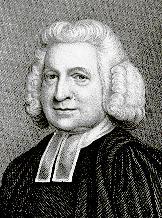
Charles Wesley

1707 - 1788 Author of "O That My Load of Sin Were Gone?" in The New and Living Way or Burning Bush Songs No. 5 Charles Wesley, M.A. was the great hymn-writer of the Wesley family, perhaps, taking quantity and quality into consideration, the great hymn-writer of all ages. Charles Wesley was the youngest son and 18th child of Samuel and Susanna Wesley, and was born at Epworth Rectory, Dec. 18, 1707. In 1716 he went to Westminster School, being provided with a home and board by his elder brother Samuel, then usher at the school, until 1721, when he was elected King's Scholar, and as such received his board and education free. In 1726 Charles Wesley was elected to a Westminster studentship at Christ Church, Oxford, where he took his degree in 1729, and became a college tutor. In the early part of the same year his religious impressions were much deepened, and he became one of the first band of "Oxford Methodists." In 1735 he went with his brother John to Georgia, as secretary to General Oglethorpe, having before he set out received Deacon's and Priest's Orders on two successive Sundays. His stay in Georgia was very short; he returned to England in 1736, and in 1737 came under the influence of Count Zinzendorf and the Moravians, especially of that remarkable man who had so large a share in moulding John Wesley's career, Peter Bonier, and also of a Mr. Bray, a brazier in Little Britain. On Whitsunday, 1737, [sic. 1738] he "found rest to his soul," and in 1738 he became curate to his friend, Mr. Stonehouse, Vicar of Islington, but the opposition of the churchwardens was so great that the Vicar consented that he "should preach in his church no more." Henceforth his work was identified with that of his brother John, and he became an indefatigable itinerant and field preacher. On April 8, 1749, he married Miss Sarah Gwynne. His marriage, unlike that of his brother John, was a most happy one; his wife was accustomed to accompany him on his evangelistic journeys, which were as frequent as ever until the year 1756," when he ceased to itinerate, and mainly devoted himself to the care of the Societies in London and Bristol. Bristol was his headquarters until 1771, when he removed with his family to London, and, besides attending to the Societies, devoted himself much, as he had done in his youth, to the spiritual care of prisoners in Newgate. He had long been troubled about the relations of Methodism to the Church of England, and strongly disapproved of his brother John's "ordinations." Wesley-like, he expressed his disapproval in the most outspoken fashion, but, as in the case of Samuel at an earlier period, the differences between the brothers never led to a breach of friendship. He died in London, March 29, 1788, and was buried in Marylebone churchyard. His brother John was deeply grieved because he would not consent to be interred in the burial-ground of the City Road Chapel, where he had prepared a grave for himself, but Charles said, "I have lived, and I die, in the Communion of the Church of England, and I will be buried in the yard of my parish church." Eight clergymen of the Church of England bore his pall. He had a large family, four of whom survived him; three sons, who all became distinguished in the musical world, and one daughter, who inherited some of her father's poetical genius. The widow and orphans were treated with the greatest kindness and generosity by John Wesley. As a hymn-writer Charles Wesley was unique. He is said to have written no less than 6500 hymns, and though, of course, in so vast a number some are of unequal merit, it is perfectly marvellous how many there are which rise to the highest degree of excellence. His feelings on every occasion of importance, whether private or public, found their best expression in a hymn. His own conversion, his own marriage, the earthquake panic, the rumours of an invasion from France, the defeat of Prince Charles Edward at Culloden, the Gordon riots, every Festival of the Christian Church, every doctrine of the Christian Faith, striking scenes in Scripture history, striking scenes which came within his own view, the deaths of friends as they passed away, one by one, before him, all furnished occasions for the exercise of his divine gift. Nor must we forget his hymns for little children, a branch of sacred poetry in which the mantle of Dr. Watts seems to have fallen upon him. It would be simply impossible within our space to enumerate even those of the hymns which have become really classical. The saying that a really good hymn is as rare an appearance as that of a comet is falsified by the work of Charles Wesley; for hymns, which are really good in every respect, flowed from his pen in quick succession, and death alone stopped the course of the perennial stream. It has been the common practice, however for a hundred years or more to ascribe all translations from the German to John Wesley, as he only of the two brothers knew that language; and to assign to Charles Wesley all the original hymns except such as are traceable to John Wesley through his Journals and other works. The list of 482 original hymns by John and Charles Wesley listed in this Dictionary of Hymnology have formed an important part of Methodist hymnody and show the enormous influence of the Wesleys on the English hymnody of the nineteenth century. -- Excerpts from John Julian, Dictionary of Hymnology (1907) ================== Charles Wesley, the son of Samuel Wesley, was born at Epworth, Dec. 18, 1707. He was educated at Westminster School and afterwards at Christ Church, Oxford, where he graduated M.A. In 1735, he took Orders and immediately proceeded with his brother John to Georgia, both being employed as missionaries of the S.P.G. He returned to England in 1736. For many years he engaged with his brother in preaching the Gospel. He died March 29, 1788. To Charles Wesley has been justly assigned the appellation of the "Bard of Methodism." His prominence in hymn writing may be judged from the fact that in the "Wesleyan Hymn Book," 623 of the 770 hymns were written by him; and he published more than thirty poetical works, written either by himself alone, or in conjunction with his brother. The number of his separate hymns is at least five thousand. --Annotations of the Hymnal, Charles Hutchins, M.A., 1872.

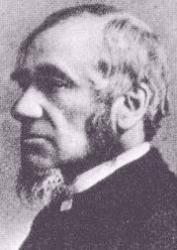
Henry Twells

1823 - 1900 Person Name: Henry Twells (1823-1900) Author of "At even ere the sun was set" in The University Hymn Book Twells, Henry, M.A., was born in 1823, and educated at St. Peter's College, Cambridge. B.A. 1848, M.A. 1851. Taking Holy Orders in 1849, he was successively Curate of Great Berkhamsted, 1849-51; Sub-Vicar of Stratford-on-Avon, 1851-54; Master of St. Andrew's House School, Mells, Somerset, 1854-56; and Head Master of Godolphin School, Hammersmith, 1856-70. In 1870 he was preferred to the Rectory of Baldock, Herts, and in 1871 to that of Waltham-on-the Wolds. He was Select Preacher at Cambridge in 1873-74, and became an Honorary Canon of Peterborough Cathedral in 1884. Canon Twells is best known by his beautiful evening hymn, "At even ere the sun was set." He also contributed the following hymns to the 1889 Supplemental Hymns to Hymns Ancient & Modern:— 1. Glorious is Thy Name, O Lord. The Name of God. 2. Know ye the Lord hath borne away? Ascension. 3. Not for our sins alone. Plea for Divine Mercy. 4. The voice of God's Creation found me. The Word of God a Light. -- John Julian, Dictionary of Hymnology (1907) ================== Twells, H., p. 1189, i. Canon Twells was born on March 13, 1823, at Ashted, Birmingham, and died at Bournemouth, Jan. 19, 1900. His Memoir, by W. Clavell Ingram, D.D., was published in 1901. His Hymns and other Stray Verses, appeared in 1901i. From it the following additional hymns have come into common use:— 1. Spirit of Truth and Might, 'Tis Thou alone can teach. [Our Words.] On "The Responsibility of Speech," p. 26. In the Sunday School Hymnary, 1905. 2. The day of Pentecost is fully come. [Whitsuntide.] Usually the second stanza is taken as the opening of this hymn. In this form it is given as "Awake, 0 Lord, as in the days of old," in Hymns Ancient & Modern, 1904, the Sunday School Hymnary, 1905, and other collections. --John Julian, Dictionary of Hymnology, New Supplement (1907)

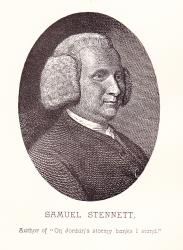
Samuel Stennett

1727 - 1795 Person Name: Samuel Stennett, D. D. Author of "'Tis finished!" so the Savior cried" in Evangelical Lutheran hymnal Samuel Stennett was born at Exeter, in 1727. His father was pastor of a Baptist congregation in that city; afterwards of the Baptist Chapel, Little Wild Street, London. In this latter pastorate the son succeeded the father in 1758. He died in 1795. Dr. Stennett was the author of several doctrinal works, and a few hymns. --Annotations of the Hymnal, Charles Hutchins, M.A. 1872. ====================== Stennett, Samuel, D.D., grandson of Joseph Stennett, named above, and son of the Rev. Joseph Stennett, D.D., was born most pro;bably in 1727, at Exeter, where his father was at that time a Baptist minister. When quite young he removed to London, his father having become pastor of the Baptist Church in Little Wild Street, Lincoln's Inn Fields. In 1748, Samuel Stennett became assistant to his father in the ministry, and in 1758 succeeded him in the pastoral office at Little Wild Street. From that time until his death, on Aug. 24, 1795, he held a very prominent position among the Dissenting ministers of London. He was much respected by some of the statesmen of the time, and used his influence with them in support of the principles of religious freedom. The celebrated John Howard was a member of his congregation and an attached friend. In 1763, the University of Aberdeen conferred on him the degree of D.D. Dr. S. Stennett's prose publications consist of volumes of sermons, and pamphlets on Baptism and on Nonconformist Disabilities. He wrote one or two short poems, and contributed 38 hymns to the collection of his friend, Dr. Rippon (1787). His poetical genius was not of the highest order, and his best hymns have neither the originality nor the vigour of some of his grandfather's. The following, however, are pleasing in sentiment and expression, and are in common use more especially in Baptist congregations:— 1. And have I, Christ, no love for Thee? Love for Christ desired. 2. And will the offended God again? The Body the Temple of the Holy Ghost. 3. As on the Cross the Saviour hung. The Thief on the Cross. 4. Behold the leprous Jew. The healing of the Leper. 5. Come, every pious heart. Praise to Christ. 6. Father, at Thy call, I come. Lent. 7. Great God, amid the darksome night. God, a Sun. 8. Great God, what hosts of angels stand. Ministry of Angels. 9. Here at Thy Table, Lord, we meet. Holy Communion. 10. How charming is the place. Public Worship. 11. How shall the sons of men appear? Acceptance through Christ alone. 12. How soft the words my [the] Saviour speaks. Early Piety. 13. How various and how new. Divine Providence. 14. Not all the nobles of the earth. Christians as Sons of God. 15. On Jordan's stormy banks I stand. Heaven anticipated. 16. Prostrate, dear Jesus, at thy feet. Lent. Sometimes, "Dear Saviour, prostrate at Thy feet." 17. Should bounteous nature kindly pour. The greatest of these is Love. From this, "Had I the gift of tongues," st. iii., is taken. 18. Thy counsels of redeeming grace. Holy Scripture. From "Let avarice, from shore to shore." 19. Thy life 1 read, my dearest Lord. Death in Infancy. From this "'Tis Jesus speaks, I fold, says He." 20. 'Tis finished! so the Saviour cried. Good Friday. 21. To Christ, the Lord, let every tongue. Praise of Christ. From this,"Majestic sweetness sits enthroned," st. iii., is taken. 22. To God, my Saviour, and my King. Renewing Grace. 23. To God, the universal King. Praise to God. 24. What wisdom, majesty, and grace. The Gospel. Sometimes, “What majesty and grace." 25. Where two or three with sweet accord. Before the Sermon. 26. Why should a living man complain? Affliction. From this, "Lord, see what floods of sorrow rise," st. iii., is taken. 27. With tears of anguish I lament. Lent. 28. Yonder amazing sight I see. Good Friday. All these hymns, with others by Stennett, were given in Rippon's Baptist Selection, 1787, a few having previously appeared in A Collection of Hymns for the use of Christians of all Denominations, London. Printed for the Booksellers, 1782; and No. 16, in the 1778 Supplement to the 3rd edition of the Bristol Baptist Selection of Ash and Evans. The whole of Stennett's poetical pieces and hymns were included in vol. ii. of his Works, together with a Memoir, by W. J. Jones. 4 vols., 1824. [Rev. W. R. Stevenson, M.A.] --John Julian, Dictionary of Hymnology (1907)

Anonymous

Person Name: Anon. Author of "O God, Thou Righteous, Faithful Lord" in American Lutheran Hymnal In some hymnals, the editors noted that a hymn's author is unknown to them, and so this artificial "person" entry is used to reflect that fact. Obviously, the hymns attributed to "Author Unknown" "Unknown" or "Anonymous" could have been written by many people over a span of many centuries.

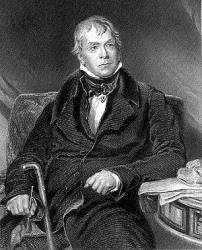
Sir Walter Scott

1771 - 1832 Person Name: Sir Walter Scott, 1805 Author of "The day of wrath, that dreadful day" in Evangelical Lutheran hymnal Walter Scott was born in Edinburgh, August 15, 1771. In 1786, he commenced his apprenticeship as writer to the Signet. In 1796, he first appeared before the public in a translation of Burger's "William and Helen." Many poetical works followed, until in 1814, he began the series of "Waverly Novels." He died at Abbotsford, September 21, 1832. It is related that on his death-bed he distinctly repeated portions of the Latin original, upon which "That day of wrath, that dreadful day" is based. --Annotations of the Hymnal, Charles Hutchins, M.A., 1872 ====================== Scott, Sir Walter, Bart., was born in Edinburgh, Aug. 15, 1771, and died at Abbotsford, Sept. 21, 1832. Although so successful and widely known as a poet, he made no direct contributions to hymnody whatever. His condensed rendering of the “Dies Irae", and his hymn of Rebecca in Ivanhoe, "When Israel of the Lord beloved" (q.v.) were utilized as hymns for congregational use by others, but were never intended for such a purpose by himself. His work and rank as poet, novelist, and historian are fully set forth in his Life by J. G. Lockhart. --John Julian, Dictionary of Hymnology (1907)

Federico J. Pagura

1923 - 2016 Person Name: Federico Pagura Translator of "Es medianoche" in Himnos de la Iglesia Federico José Pagura was an Argentine Methodist bishop and author and translator of hymns. Leland Bryant Ross

Thomas Grassi

Arranger of "OLIVE'S BROW" in Psalms of Grace

Pages


Export as CSV
It looks like you are using an ad-blocker. Ad revenue helps keep us running. Please consider white-listing Hymnary.org or getting Hymnary Pro to eliminate ads entirely and help support Hymnary.org.